Review · ITALY FOOD TOURS
Alberobello: Gastronomic Walking Tour
Alberobello is at its best when you look beyond the postcard view. This two-hour walk takes you through the town’s famous trulli, then adds three simple but worthwhile tastes: fresh focaccia, creamy burrata, and homemade gelato served inside a trullo. It is a neat way to connect the buildings with everyday food from the area.
I like the small group size, limited to 10 people, and the chance to enter Angelo’s trullo, said to be the oldest in Alberobello. I also like the local feel of the guides. Lorenzo, Antonio, and Emanuela are named as guides, and Emanuela’s family has lived in the area for generations. The main drawback is that two hours passes quickly, and the word gastronomic may promise more food depth than the tour actually delivers.
Key points at a glance
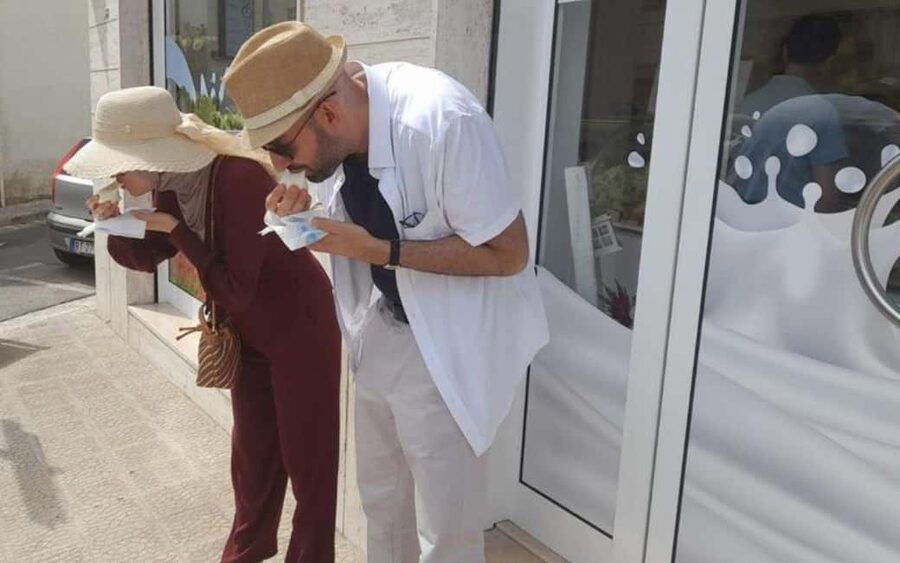
- Three classic Apulian tastes: Try freshly baked focaccia, burrata, and homemade ice cream during the walk.
- Two important trulli districts: See the residential Aia Piccola and the more commercial Rione Monti.
- A visit inside Angelo’s trullo: Enter one of Alberobello’s oldest and most distinctive dwellings.
- A guide-led history walk: Learn about trulli, local architecture, and the town’s centuries-old heritage.
- Small-group format: The tour is limited to 10 people, which makes conversation with the guide easier.
- A practical two-hour outing: It fits well into a day in Alberobello, though it is not a full meal or a long food workshop.
Why this Alberobello walk works
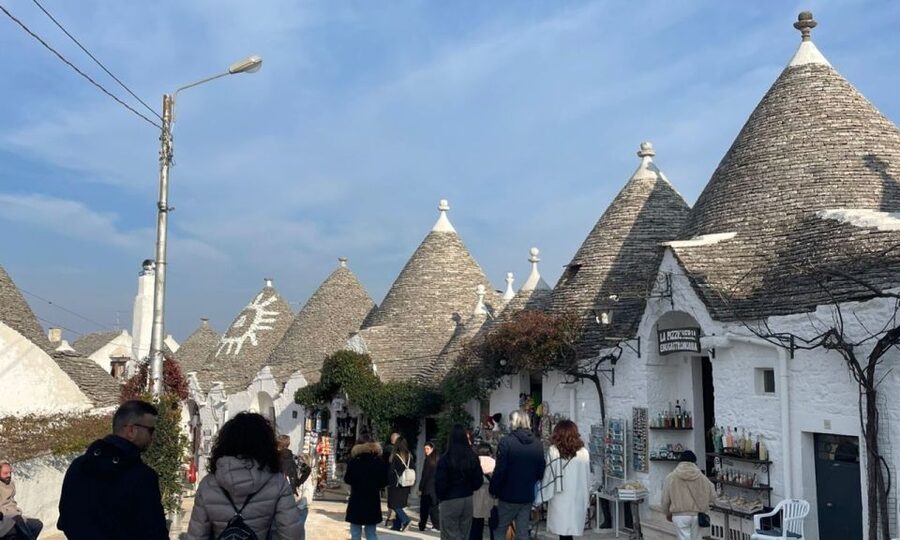
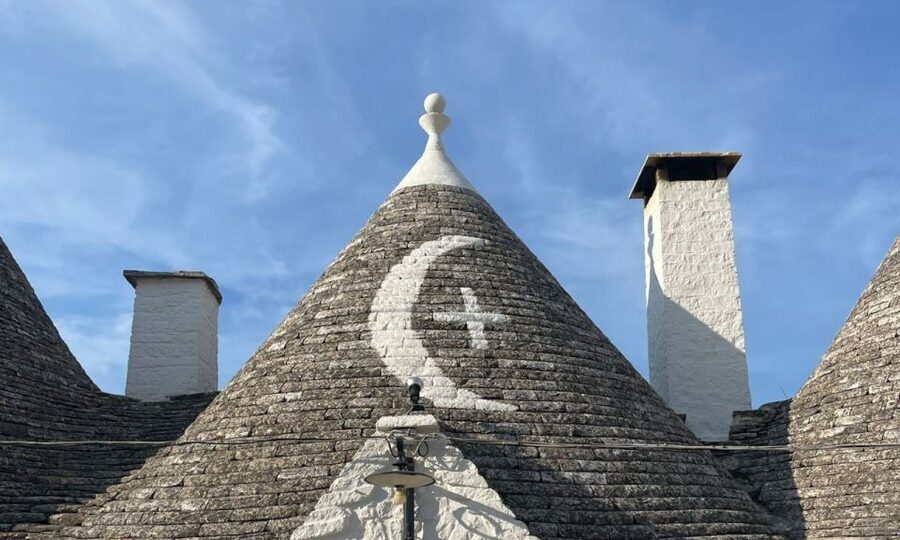
Alberobello can feel almost too picturesque. The whitewashed trulli, cone-shaped roofs, and narrow lanes are easy to photograph, but it takes a guide to explain how the town fits together. This walk gives you the basic story while you move through both of its best-known districts.
I like the mix of looking and tasting. You are not stopping at restaurants for a long meal. Instead, the food breaks keep the walk moving. A piece of focaccia from Giuseppe’s bakery gives you something warm and filling early in the route. Burrata offers a taste of Puglia’s fresh cheese tradition. Gelato closes the tour on a sweet note.
The guides also appear to be a major part of the experience. Lorenzo is described as having a strong command of English and a clear love for Alberobello. Emanuela brings family ties to the area and a natural connection with local people. Antonio is identified as a professional guide for the tour. Since the guide can change, you should think of the names as examples of the local style rather than a promise that one particular person will lead your departure.
This is a walking tour, not a food class. You will taste local products, but you will not spend hours learning recipes, visiting farms, or sitting down to a multi-course meal. If your main goal is Alberobello’s history and architecture with a few good bites along the way, the balance is right.
More food tours in Italy:
- Winner 2025 Rome Twilight Trastevere Food Tour by Eating Europe
★ 5.0 · 5,157 reviews - Winner 2025 Florence Sunset Food & Wine Tour by Eating Europe
★ 5.0 · 5,015 reviews - Naples: Street Food Walking Tour with Local Guide
★ 4.9 · 4,976 reviews
Starting at Via Indipendenza
The tour begins at Via Indipendenza, 4, in front of the Terra Mossa restaurant. That meeting point matters because Alberobello’s lanes can look similar, especially when you are arriving for the first time. Give yourself enough time to find the restaurant and locate the guide before the scheduled start.
The route returns to the same address, so you do not need to arrange a pickup or figure out a new meeting place at the end. Transfers are not included, and none are needed for the tour itself. The entire experience takes place on foot in central Alberobello.
The published duration is two hours. That is long enough for a useful introduction, but short enough to fit around a train arrival, a hotel check-in, or another afternoon plan. Keep in mind that a relaxed stroll through narrow streets, with several food stops, can feel full rather than leisurely if the group spends a lot of time asking questions.
Entering Angelo’s oldest trullo
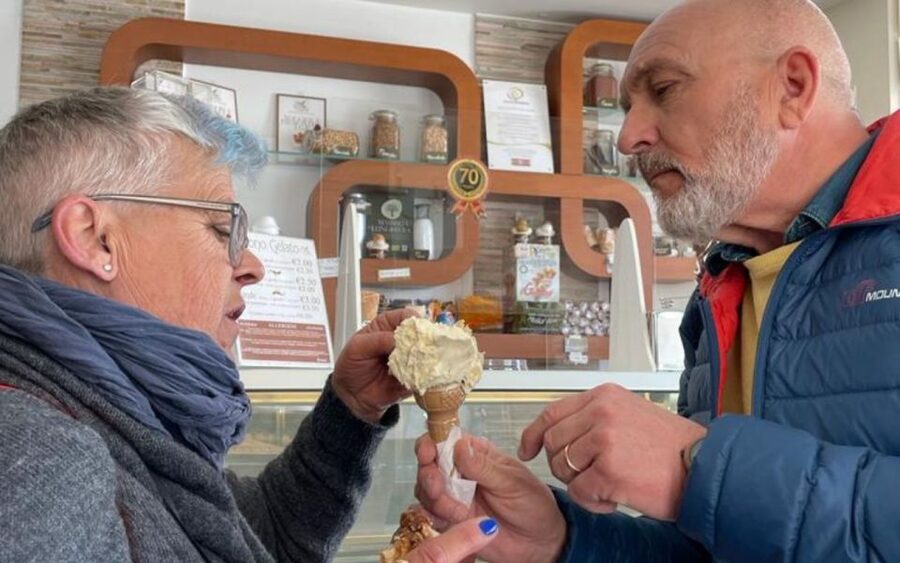
One of the most useful early stops is Angelo’s trullo. You do not simply look at the cone-shaped roofs from a street corner. You enter a trullo and get a better sense of how these homes work from the inside.
The trulli are presented as dwellings linked to the Messapian peoples, who lived in central Apulia from the eighth century until the arrival of the Romans. That historical frame gives the buildings more meaning. The structures are not just quaint holiday rentals or souvenir shops. They belong to a long local building tradition.
Angelo’s trullo is described as the oldest in Alberobello. That makes the stop especially worthwhile for anyone who wants more than a quick photo. Space inside an old home can be limited, so expect a brief visit rather than a large museum-style display. The value is in seeing the form of the building up close and hearing the guide explain its place in the town.
Aia Piccola, the quieter side of Alberobello

Aia Piccola is one of Alberobello’s two main trulli neighborhoods on the route. It is important because it helps you see the buildings as homes and streets, not only as shops aimed at day visitors.
The district is part of the UNESCO heritage area, and the guide uses the lanes and architecture to explain the town’s development. Look at how the trulli sit against one another, how the conical roofs change the skyline, and how small alleys create different views from one turn to the next.
I would pay attention here to the overall pattern rather than rushing after the next photograph. The charm of Aia Piccola comes from the repeated shapes and the way the neighborhood feels tied to domestic life. The tour does not promise a long stop in each building, so listen while walking and save your most detailed questions for the guide.
For people who have only seen Alberobello in pictures, this is the part that can make the town click. You begin to understand that the trulli are not one isolated monument. They form a whole urban district.
Same appetite, a different neighbourhood:
- Rome: Street Food Tour with Local Guide
★ 4.8 · 4,077 reviews - From Florence: Small Group Wine Tasting Tour to Tuscany
★ 4.9 · 3,902 reviews - Rome Food Tour: Unlimited Tastings with Fine Wine & Barolo
★ 5.0 · 3,365 reviews - Rome Food Tour: Campo de’ Fiori, Ghetto, Trastevere Winner 2024
★ 5.0 · 3,205 reviews
Focaccia at Giuseppe’s bakery
The bakery stop supplies the first substantial taste. You receive a piece of typical focaccia, freshly baked at Giuseppe’s bakery. It is a smart choice for a walking tour because it is easy to eat, familiar enough for cautious eaters, and filling enough to carry you through the rest of the route.
This is also where the tour’s food approach becomes clear. You are tasting everyday local specialties at working food businesses, not sitting down for a formal tasting menu. The focaccia gives you a direct connection to Apulia’s bakery culture without taking 45 minutes out of the walk.
If you are visiting in warm weather, the bread may feel especially welcome, but bring water and use the included water thoughtfully. One account of the experience also refers to wine, while the stated inclusions list water. If a drink beyond water matters to you, ask before booking rather than assuming wine is part of every departure.
The Belvedere Terrace and Rione Monti
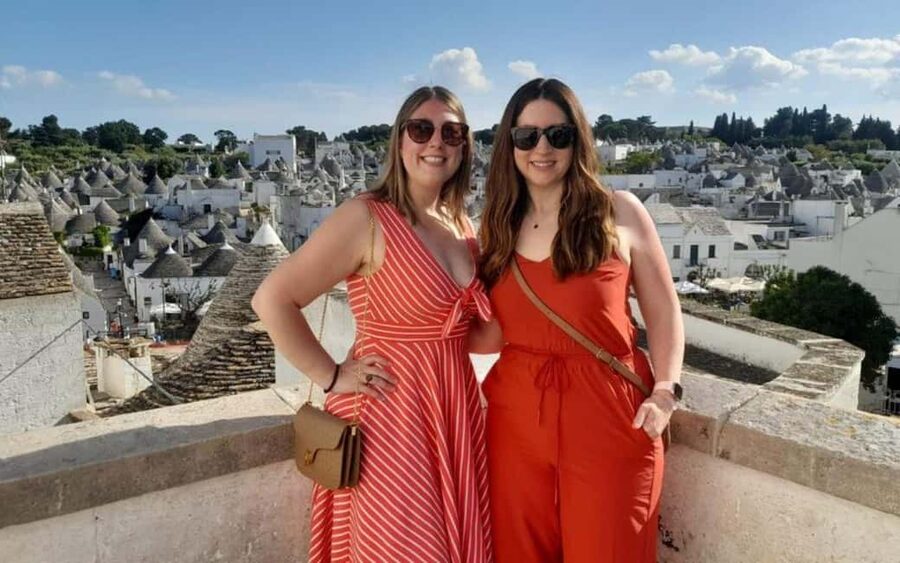
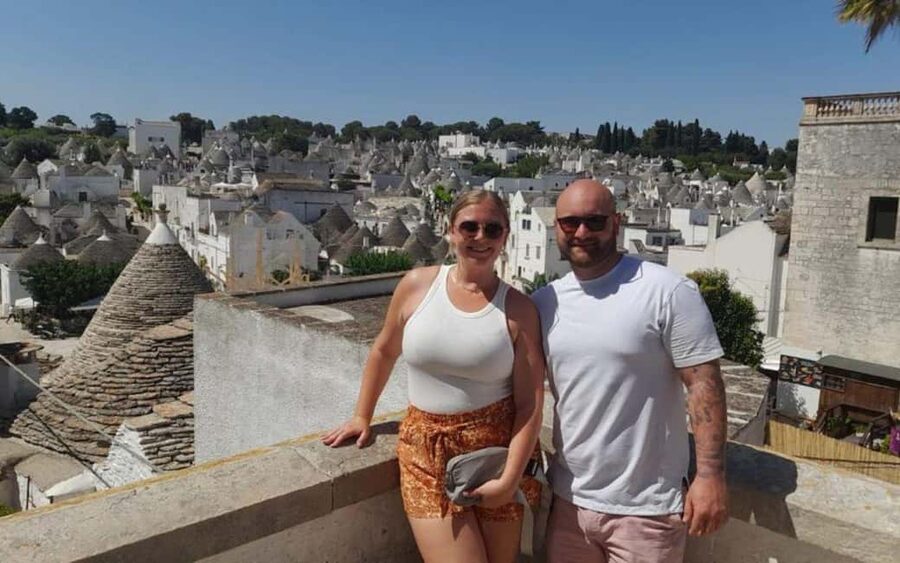
The Belvedere Terrace provides one of the route’s best chances to pause and take in Alberobello from above. A viewpoint is useful here because the trulli are easier to understand as a connected town when you can see the roofs and lanes together.
The walk then reaches Rione Monti, the other major district named in the route. Compared with Aia Piccola, Rione Monti is a more prominent part of the sightseeing circuit, with many trulli-lined lanes and commercial activity. The guide helps you read the architecture while explaining how the neighborhood fits into Alberobello’s identity.
This section may be the busiest part of the walk, depending on the time of day. The narrow streets can make it harder to stay together or hear every word, especially if other groups are nearby. The small group limit helps, but you should still expect a town center rather than a quiet countryside walk.
Rione Monti is also where the contrast between old homes and tourism becomes most obvious. Some trulli now hold shops and food businesses. That does not erase their architectural interest, but it does mean the experience is not purely residential or untouched. I appreciate having both districts in the same tour because you can compare the quieter residential setting of Aia Piccola with the more visitor-oriented streets of Rione Monti.
Sant’Antonio’s trullo-shaped church
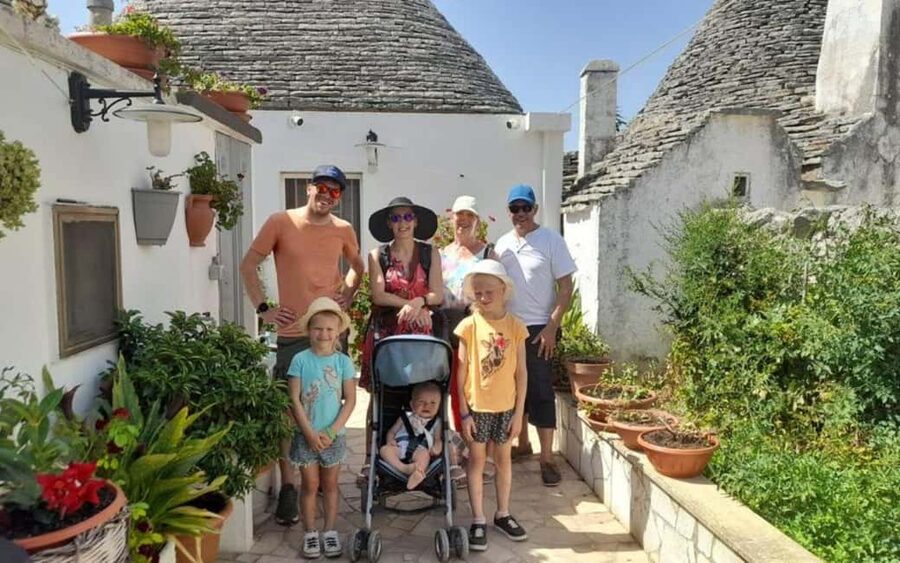
The route continues through the alleys to Sant’Antonio, a church built in the shape of a trullo. It is a memorable stop because the familiar roof form appears in a religious building rather than a home.
The church gives the guide another chance to explain how local identity reaches beyond private dwellings. You see the cone-shaped style repeated in a different setting, which makes the architecture feel less like a single novelty and more like a language used across the town.
The supplied details do not promise a long interior visit or a religious service, so think of Sant’Antonio mainly as a landmark on the walk. It is still a useful point to include in your photographs and a natural transition from the architecture portion of the tour to the final food stop.
Burrata from a local shop
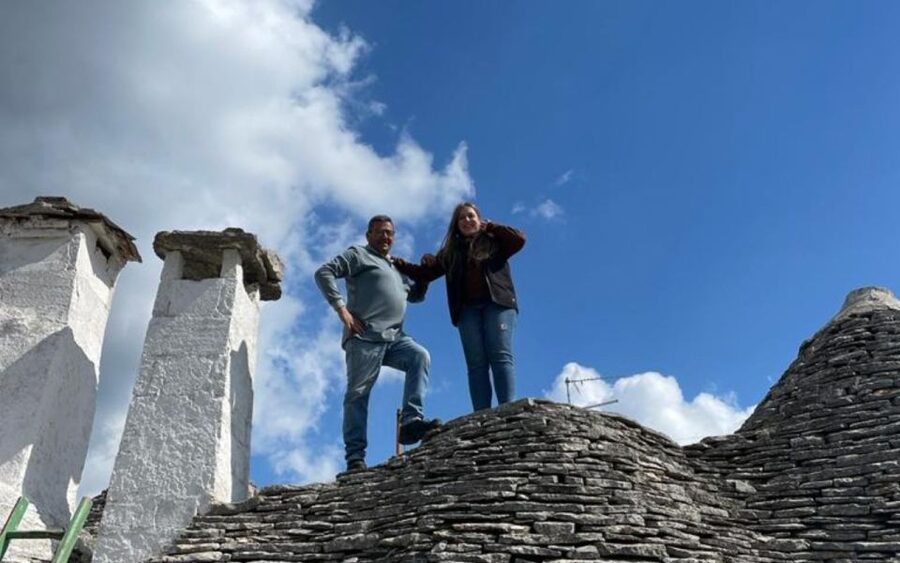
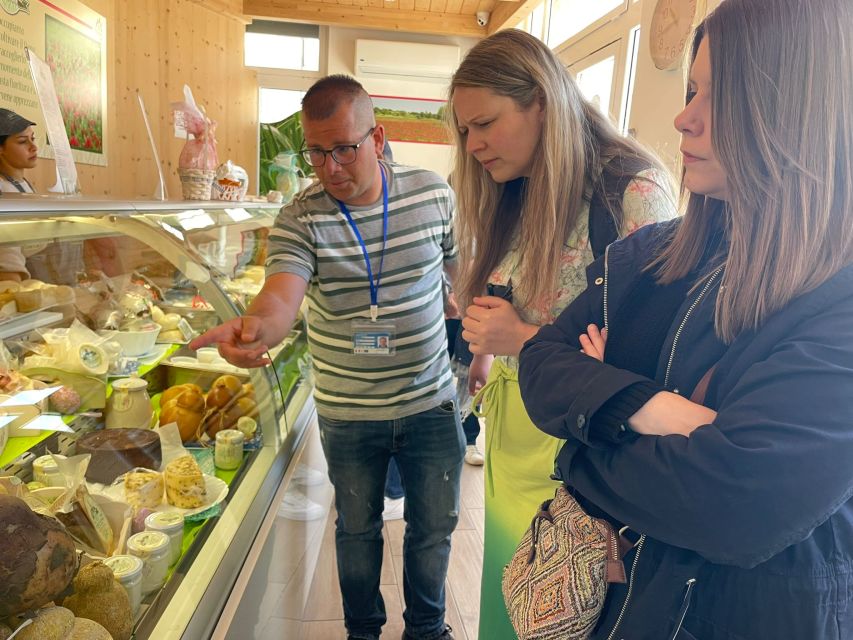
Near Sant’Antonio, the group stops at a characteristic shop to taste burrata. This is likely the most distinctive food of the three for many people. Burrata has a soft, creamy center and is one of the foods most closely associated with Puglia in the minds of many visitors.
The portion is a tasting, not a complete meal. That distinction matters if you arrive hungry. The focaccia gives you some substance, but burrata and gelato are best treated as samples that add flavor and local character to the walk.
I would make this stop a reason to ask questions. Find out how the cheese is made, how fresh it is, and what locals pair with it. The guide’s value is not only in handing you food. A good explanation can help you understand why this simple product belongs in a Puglian food tour.
The strongest food reactions connected with this tour center on the burrata and focaccia. If you already know you love fresh cheese, this stop may be the highlight. If you avoid dairy, the food side of the tour will offer less value, since the named tastings focus heavily on bread, cheese, and gelato.
Homemade gelato inside a trullo
The final taste is homemade ice cream in a small ice cream shop inside a trullo. It is an appealing ending because the setting continues the architectural theme instead of sending you to an unrelated modern storefront.
The description emphasizes ice cream made with patience and care, but it does not list the available flavors. You should expect a sweet tasting rather than a full dessert course. As with the burrata, the portion and selection may vary.
Ending with gelato also keeps the tour relaxed. After the guide has explained the town’s origins, pointed out its two main neighborhoods, and taken you through several narrow lanes, an ice cream stop provides an easy finish before returning to Via Indipendenza.
What $81 buys you
At $81 per person, this is not the cheapest way to see Alberobello’s trulli. The price makes more sense if you value a live guide, small-group attention, and the three included tastings. You are paying for interpretation and local access as much as for the food.
The total amount of food is modest. Focaccia, burrata, and ice cream should not replace lunch or dinner. If you visited the neighborhoods on your own and bought similar portions separately, you might spend less. The tour earns its price through the route, the explanations, the chance to enter Angelo’s trullo, and the convenience of having someone connect the stops.
The small group limit of 10 is important. In a crowded town, a group of this size is easier to keep together than a large coach-style party. You can also ask about local life, architecture, and food without shouting across a crowd.
Free cancellation up to 24 hours before the start and the option to reserve now and pay later reduce the risk of booking. Those policies are useful if your Apulia schedule is still changing, but they do not alter the basic value calculation: book this for guided context and local tasting, not for a full meal.
Who should book this tour
I would choose this walk if you are visiting Alberobello for the first time and want a clear introduction without spending half a day on a formal excursion. It suits couples, small families, and anyone who enjoys learning through food and conversation.
It is also a good choice if you want to meet a local guide. The strongest personal accounts describe guides who talk freely about the town, answer questions, know people along the route, and bring family connections to the experience. Emanuela, in particular, is associated with generations of local ties. Lorenzo is repeatedly praised for his history explanations and easy manner.
You should think twice if you want a serious food tour. There is no mention of a market visit, cooking demonstration, winery stop, or sit-down meal. The food is an enjoyable thread running through a history and architecture walk.
The route may also be less appealing if you dislike narrow streets, walking, or dairy products. Transfers are not included, and the tour begins and ends at the central meeting point. English and Italian are available, and the small group format makes either language easier to follow than it would be in a large group.
Should you book the Alberobello Gastronomic Walking Tour?
Book it if you want to understand Alberobello while tasting a few of Puglia’s best-known everyday foods. The combination of Angelo’s trullo, Aia Piccola, the Belvedere Terrace, Rione Monti, Sant’Antonio, focaccia, burrata, and gelato gives you a lot in two hours.
I would not book it expecting an elaborate culinary event. For that, the $81 price may feel high. But as a compact introduction to Alberobello, the value is solid, especially if you get a guide such as Lorenzo, Antonio, or Emanuela who brings the town to life through local stories and conversation.
The best reason to go is simple: you leave with more than photographs of cone-shaped roofs. You understand how the neighborhoods fit together, why the trulli matter, and what to taste while you are there.
FAQ
How long does the Alberobello Gastronomic Walking Tour last?
The tour lasts two hours. Starting times vary, so you should check availability when booking.
Where does the tour begin?
The meeting point is Via Indipendenza, 4, in front of the Terra Mossa restaurant. The tour also returns to this address.
What food is included?
The tour includes focaccia, burrata, and homemade ice cream. Water is included as the listed drink.
Which languages are available?
The live guide is available in English or Italian.
How large is the group?
The tour is limited to 10 participants, making it a small-group experience.
Can I cancel the booking?
You can cancel up to 24 hours in advance for a full refund. The reserve-now-and-pay-later option is also available.
New food tours we have reviewed in Italy
- Private tour of Etna and Winery Visit with Food and Wine Tasting from Taormina★ 5.0 · 221 reviews
- Street food tour of Catania by night★ 4.5 · 31 reviews
- Catania Sicilian Street Food Tour: Small Group by Do Eat Better★ 5.0 · 293 reviews
- Mt Etna and Wine tasting tour from Catania★ 5.0 · 282 reviews
- Cagliari: A Full Meal Sardinian Food Tour with Do Eat Better★ 5.0 · 265 reviews
- Small-Group Food and Wine Tour from Cagliari★ 5.0 · 237 reviews
- Taste Bolzano: Food Tour with Full Meal by Do Eat Better★ 5.0 · 21 reviews
- Devour Bologna Tastes & Traditions Food Tour with Market Visit★ 5.0 · 69 reviews
Italy Food Tours, compared.
Winner 2025 Rome Twilight Trastevere Food Tour by Eating Europe
Read our review →
Winner 2025 Florence Sunset Food & Wine Tour by Eating Europe
Read our review →
Naples: Street Food Walking Tour with Local Guide
Read our review →

From Florence: Small Group Wine Tasting Tour to Tuscany
Read our review →
Rome Food Tour: Unlimited Tastings with Fine Wine & Barolo
Read our review →
Rome Food Tour: Campo de’ Fiori, Ghetto, Trastevere Winner 2024
Read our review →