
Review · MARKET FOOD TOURS
Budapest Great Market Hall Chef‑Led Private Tasting Tour
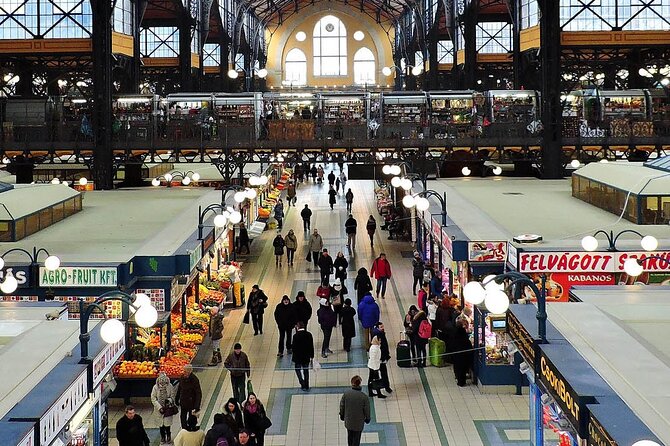
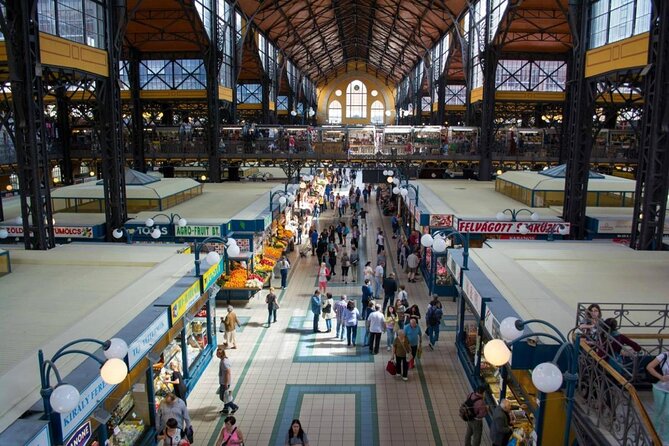
Budapest’s Central Market Hall is much easier to understand with someone who can explain what you are seeing. On this private two-hour walk, a local former chef guides you through produce, cured meats, pastries, paprika, pickles, and everyday Hungarian foods, with tastings along the way. The food is the hook, but the real prize is learning what belongs on a Hungarian table and why.
I like the personal format, since you can steer the conversation toward cooking, history, or shopping. I also like the practical help with souvenirs, especially paprika, textiles, and other market goods. Andrew is the guide named most often in the available details, and he is praised for clear English, humor, and a friendly pace. One account names Brian, so confirm the guide when booking if that matters to you.
The main consideration is the $78.60 price for about two hours. It is fair if you value a private guide, a generous tasting list, and useful local advice, but it is not the cheapest way to grab a snack in the market. The 9:00 am start also means this works best for an early riser.
Key points at a glance
- Private and flexible: Only your group takes part, so the guide can spend more time on the foods and questions that interest you.
- A former chef leads the walk: Expect cooking explanations, not just names and prices.
- A broad tasting menu: Try langos, cured sausage, pickles, pogacsa, pork crackling, strudel, Turo Rudi, and konyakmeggy.
- Useful shopping advice: The guide can help you make sense of paprika, gifts, embroidery, porcelain, and other goods.
- Optional palinka: A shot of homemade palinka is included if you want to try it.
- Simple meeting plan: Start and finish at Central Market Hall at 9:00 am, with no transport provided.
Why a chef-led market walk works
A market can be a great place to eat, but it can also be confusing. Rows of sausages, jars, powders, pastries, and unfamiliar cuts of meat do not explain themselves. A guide who has worked as a chef can connect the display in front of you with the food served in Hungarian homes.
That practical link is the strongest part of this experience. You are not just told that paprika matters. You can ask which kind suits a particular dish, how Hungarians use it, and how to recognize the difference between useful cooking advice and a souvenir-shop sales pitch.
The guide also explains how dishes developed and how food connects to Hungarian history and daily life. The discussion can move from a pastry to a custom, or from a pickle to the way people shop. I like that this gives you a better sense of ordinary life rather than presenting Hungarian food as a short list of famous dishes.
The private format matters here. In a large group, one person’s question can take over, while another person may never get a chance to ask about a food allergy, a recipe, or a gift. With your own group, you can slow down at a stall, move on quickly, or ask for help choosing something to take home.
More Market Food Tours in Budapest:
- Budapest Food Tour: Market to Tavern with 14+ Tasters & Wines
★ 5.0 · 434 reviews - Budapest: Food Tour Market to Tavern: 14+ Tasters & Wines
★ 4.9 · 375 reviews - Budapest: Central Market Hall Guided Food Tour with Tastings
★ 4.9 · 46 reviews
Starting at Central Market Hall at 9:00 am
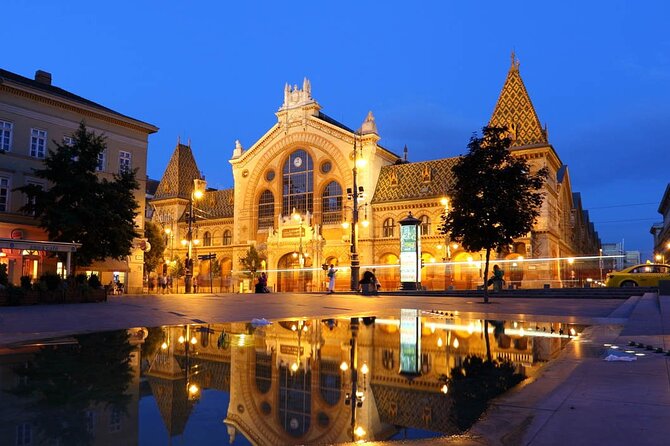
The tour begins at Budapest’s Central Market Hall and ends there, so the meeting point is also convenient if you plan to continue shopping afterward. You arrange your own way to the market, since transportation to and from the hall is not included.
A 9:00 am start shapes the whole experience. You get food before a full day of sightseeing, and the early timing leaves your afternoon free. It also means you should plan breakfast carefully. You will be tasting soon after arrival, so a light breakfast may make more sense than a large meal.
The experience focuses on one market rather than trying to connect several neighborhoods. That keeps the two-hour route manageable and gives the guide time to explain what you see. You will move through different sections, looking at seasonal produce, cured meats, pastries, spices, and basic ingredients used in Hungarian cooking.
The hall itself is not presented as a fast-paced food crawl. The stated aim is a relaxed walk. That should suit you if you want to ask questions and understand the food, but it may feel slow if you prefer to race from one sample to the next.
The savory tasting: langos, sausage, and pickles
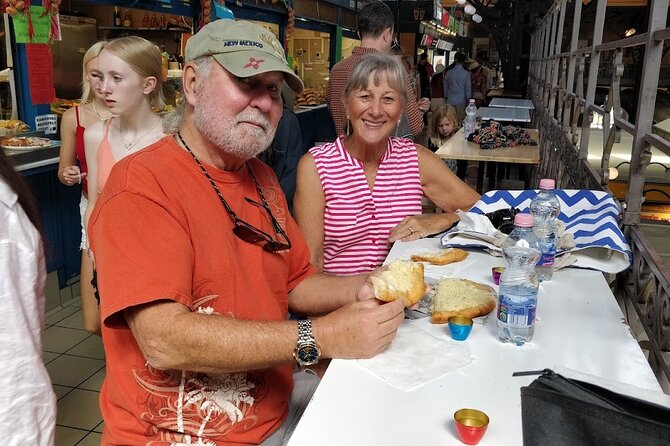
The tasting begins with some of Hungary’s most useful snack foods. Langos is deep-fried bread dough topped here with sour cream and cheese. It is filling, salty, and best understood as casual comfort food rather than a delicate first course.
You also sample a variety of cured sausages. This is one place where a guide adds real value, since the market offers more than one generic sausage option. You can ask about texture, seasoning, and how these products fit into Hungarian meals.
Pogacsa gives you another look at everyday Hungarian baking. The tasting includes three savory versions: cheese, potato, and pork crackling. In British terms they resemble savory scones, while in American terms they are closer to biscuits. The comparison helps, but the important point is that each version has its own flavor and texture.
Pork crackling appears as a separate tasting too. It is not the lightest part of the morning, but it gives you a direct taste of an old-fashioned ingredient and a useful contrast to the pastries and dairy-based sweets.
The assortment of pickles keeps the savory side from becoming too heavy. You may encounter familiar vegetables alongside less expected options. One especially memorable item noted in the tour details is pickled baby watermelon. That sort of sample is valuable because it shows how preservation can turn an ordinary ingredient into something surprising.
Sweets that explain more than dessert
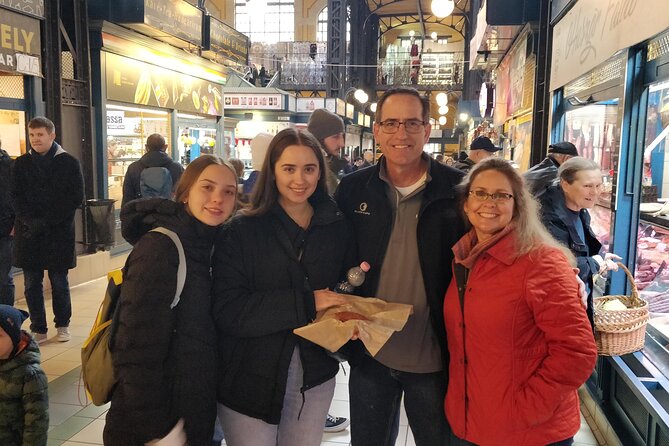
The sweet tastings are broad enough to show several sides of Hungarian food culture. Strudel is offered with a filling based on what is available, wrapped in layers of phyllo and baked fresh on the premises. The changing filling is worth noting: you do not get a fixed dessert every time, so the exact choice depends on the market’s selection.
Turo Rudi is another distinctive stop. It combines cottage cheese with a hint of lemon and a dark chocolate coating. The result is unlike the heavy cakes many visitors expect from a market tasting. It is compact, sweet, slightly tangy, and easy to carry if you are already full.
Konyakmeggy is a dark chocolate sweet filled with cognac and sour cherry. Since the filling contains alcohol, it may not suit every diner, so ask before trying it. Its combination of fruit, chocolate, and spirits gives you a quick lesson in Hungarian confectionery without requiring another full portion of food.
The food list is generous for a two-hour walk. You receive savory samples, pastries, sweets, and water, so pacing matters. I would not arrive after a large breakfast, and I would let the guide know early if you have dietary limits. The supplied details do not promise substitutions, so you should not assume every item can be changed.
More private departures in Budapest:
- The Award-Winning Private Food Tour of Budapest: 6 or 10 Tastings
★ 4.5 · 185 reviews - Budapest: Private Food Tour – 10 Tastings with Locals
★ 4.5 · 90 reviews - Private Street Food Tour by Motorbike/Car with Local Students
★ 5.0 · 3,950 reviews - Private Street Food Evening Walking Tour in Ho Chi Minh City
★ 5.0 · 3,175 reviews
Paprika, shopping, and making sense of the stalls
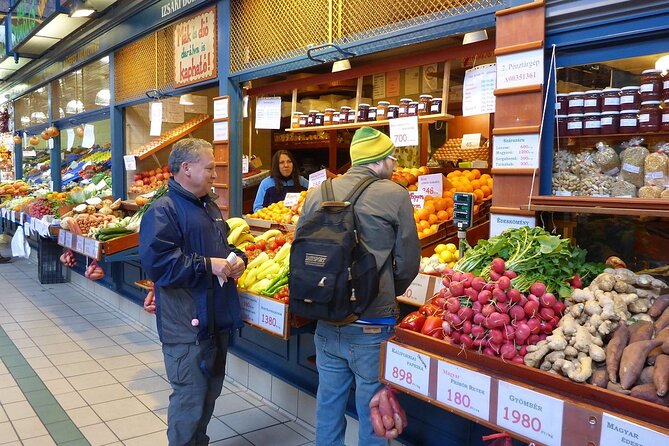
Paprika receives special attention, and that is useful. Many visitors know the word but are less sure how Hungarian cooks use different forms of it. The guide explains the paprika story and helps you understand an ingredient that can look simple while carrying a lot of culinary importance.
Shopping advice may be one of the most practical benefits of the tour. The market sells many versions of common gifts, and it is not always obvious what is good quality or fairly priced. The guide has helped people choose paprika to take home and has also advised on textiles.
That help extends beyond food. The market includes local porcelain and embroidery, and the guide can explain what you are looking at. If you are tempted by a textile or decorative item, a second opinion can prevent a poor purchase. You still make the final choice, but you are less likely to buy something simply because it looks Hungarian at first glance.
The guide also points guests toward vendors who are not pushy. That matters in a market, especially if you prefer to browse without being pressured. The aim is not to turn the tour into a shopping trip, but the advice can make the rest of your market visit more comfortable.
History and culture without a classroom lecture
The best conversations here connect food to people. You learn about the market, Hungarian ingredients, and the way locals shop, but the tone is meant to stay informal. Previous descriptions of the experience emphasize a friendly walk, with humor mixed into the explanations.
That balance suits me. A food tour needs enough history to explain why a dish or ingredient matters, but not so much that you spend the whole morning listening to dates and names. The guide’s role is to make the market easier to read, then let the food do some of the teaching.
You can shape the conversation around your interests. If you cook, ask about ingredients and uses. If you are more interested in Budapest and Hungarian history, ask how the market fits into city life. If you mainly want to eat, the guide can keep the talk connected to the samples rather than turning the experience into a formal lecture.
The private setting also helps families and mixed-interest groups. One person can ask about food, another about souvenirs, and another about local customs without forcing the whole group into a single narrow theme.
What the $78.60 price buys you
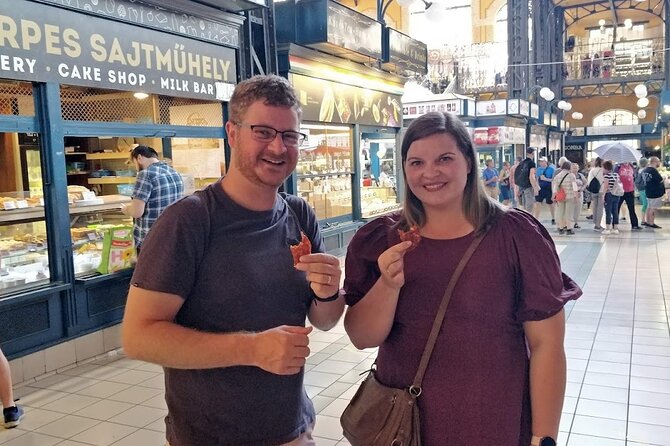
At $78.60 per person, this is not a bargain snack stop. You are paying for the guide’s time, the private format, the food tasting, the market interpretation, and the ability to ask questions throughout the visit.
The value is strongest for two people or a small group that wants personal attention. If you are traveling with several people, the total cost rises quickly, but the private arrangement may still work well if everyone wants the same type of experience. The tour is booked an average of 85 days ahead, so planning early is sensible if your dates are fixed.
Compare it with the cost of eating your way through the hall alone. You could certainly spend less, but you would need to identify the foods, choose the stalls, manage the portions, and make sense of the souvenirs by yourself. This experience bundles those decisions with a former chef who can explain them.
The price is less compelling if you already know Hungarian food, speak the language, or mainly want a quick meal. It is also not the right choice if you want a full city sightseeing tour. The focus stays on the market, food, culture, and shopping advice.
Who should book this experience
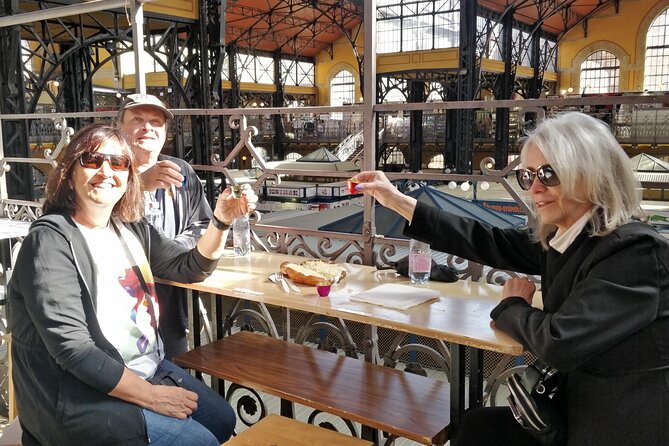
I would recommend it to first-time visitors who want an easy introduction to Hungarian food. It is also a good match for curious eaters who like asking questions and trying unfamiliar items, including pork crackling, unusual pickles, and chocolate filled with sour cherry and cognac.
Couples may get especially good value from the private setup, since the guide can adjust the pace to two people. Families and small groups can also benefit, provided everyone is comfortable with the tasting list and the early start.
This is less suited to people who need a completely fixed menu. The strudel filling depends on availability, and the supplied details do not list vegetarian, vegan, gluten-free, or allergy substitutions. Service animals are allowed, and most people can participate, but you should raise food concerns before the tasting begins.
The tour is also not designed for people who want to sit down for a long meal. You walk through the market, stop at selected stalls, and taste as you go. That format keeps things moving, but it is not a substitute for a restaurant lunch.
Practical details worth knowing
Your mobile ticket is accepted, and the experience is offered in English. The guide is described as having perfect English, which is important when the discussion turns to unfamiliar ingredients, cooking methods, or buying advice.
Bottled water and the food tastings are included. An optional shot of homemade palinka is also included if you choose to have it. Palinka is strong fruit brandy, so treat it as a small tasting, not a casual soft drink. If you do not drink alcohol, you can skip it.
The tour lasts about two hours, though one account describes a visit lasting more than two hours. Allow a little flexibility if you have a tight morning appointment afterward. The official start and end point is Central Market Hall, and no transport is provided.
Free cancellation is available up to 24 hours before the start time for a full refund. Cancellations or changes made less than 24 hours before the start are not accepted for a refund.
Should you book the Central Market Hall tasting?
Book it if you want more than a handful of snacks. The strongest reasons are the private format, the former chef’s practical explanations, the wide tasting range, and the help choosing paprika and other gifts. You should also book early, since this experience is often reserved well ahead.
Skip it if you want a cheap meal, a large city tour, or a guaranteed menu tailored to strict dietary needs. For everyone else, the price buys a useful first look at Hungarian food and market life, with enough tasting and conversation to make the hall easier to understand on your own afterward.
FAQ
Where does the Budapest market tour start?
It starts at Central Market Hall in Budapest, Hungary.
What time does the experience begin?
The tour starts at 9:00 am.
How long does the tour last?
It lasts approximately two hours.
Where does the tour end?
The activity ends back at Central Market Hall, the meeting point.
Is this a private experience?
Yes. Only your group participates.
What food is included?
The tasting includes langos with sour cream and cheese, cured sausages, pogacsa in cheese, potato, and pork crackling versions, pork crackling, assorted pickles, strudel, Turo Rudi, and konyakmeggy. The strudel filling depends on what is available.
Is a drink included?
Bottled water is included. An optional shot of homemade palinka is also provided.
Is transportation included?
No. You are responsible for getting to and from Central Market Hall.
Can I cancel for a full refund?
Yes, if you cancel at least 24 hours before the experience start time. Changes or cancellations made less than 24 hours before the start are not accepted for a refund.
New food tours we have reviewed in Budapest
- The Award-Winning Private Food Tour of Budapest: 6 or 10 Tastings★ 4.5 · 185 reviews
- Budapest Food Tasting Tour with Nelli & her local guides★ 5.0 · 190 reviews
- Budapest Ruin Bars Evening Walking Tour with Drinks & Snacks★ 5.0 · 25 reviews
- Budapest Food Tour in Obuda with 8+ Tastings of Hidden Food Gems★ 5.0 · 94 reviews
- Small-Group Culinary Walking Tour in Budapest★ 5.0 · 148 reviews
- Budapest Ruin Bars Evening Walking Tour with Drinks & Street Food★ 5.0 · 104 reviews
- Food and Wine Tasting in Budapest City Center with Sommelier★ 5.0 · 57 reviews
- Budapest Food Tour: Market to Tavern with 14+ Tasters & Wines★ 5.0 · 434 reviews
Market Food Tours, compared.
Tokyo Tsukiji Fish Market Food and Culture Walking Tour
Read our review →
London Bridge & Borough Market Food Tour with 7 Authentic Dishes
Read our review →
Small Group Cooking Class & Market Food Tour in Florence
Read our review →
Nishiki Market Brunch Walking Tour (7 Tastings + Brunch)
Read our review →
Bologna Food & Market Tour with 6 Tastings, Pasta, Wines & More
Read our review →
Browse the lists this tour appears in