
Review · FOOD TOURS BY SCOOTER AND MOTORBIKE
Bangkok Electric Tuk Tuk: Thonburi, Wang Lang & Food Tour
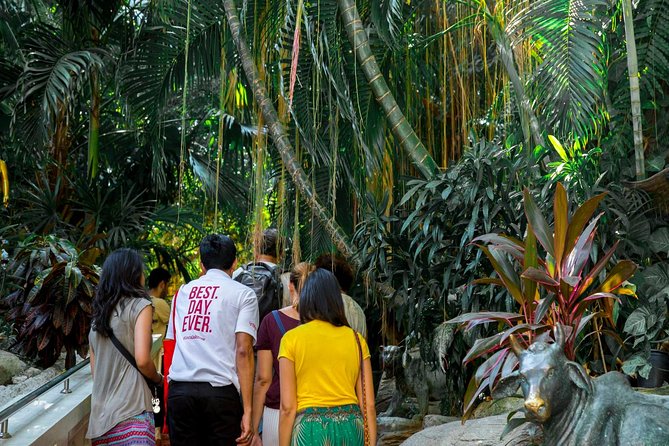
Bangkok’s electric tuk-tuk is the star here, but the real pleasure is where it takes you: beyond the usual temple circuit and into Thonburi lanes, old communities, local markets, and riverside corners. You’ll ride for about two hours, walk roughly 1.5 kilometers, and see Bangkok as a working city rather than a collection of postcard stops.
I like the quiet, low-emission vehicle and the chance to visit Baan Bu, where pottery has been made for six generations. I also like the food stop at Wang Lang Market, where fried pork with sticky rice, Thai sweets, and kanom bueng give you a useful introduction to everyday Bangkok eating.
The main drawback is value. At $65.03 per person, this is not the cheapest way to visit markets and temples, and some stops are brief. You also need to reach Sanam Chai yourself and make your own way home from the flower market.
Key points to know before booking
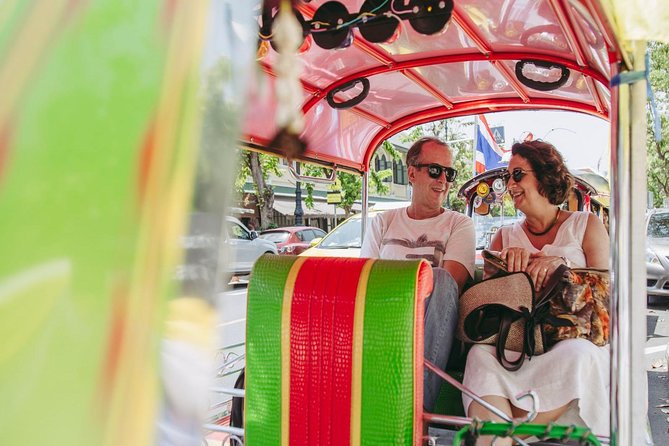
- Ride an electric tuk-tuk for about two hours: You get the fun and close-up views of a tuk-tuk ride with less engine noise and less exhaust.
- See Thonburi beyond Wat Arun: The route includes local lanes, temples, Baan Bu pottery makers, and historic Thon Buri Train Station.
- Eat at Wang Lang Market: Food is included in portions intended to equal a full meal, with seasonal choices and vegetarian options available.
- Cross the Chao Phraya by public boat: Your ticket is included, and the short ride adds a useful local transport experience.
- Finish at Pak Khlong Talat: Bangkok’s major flower market is open around the clock and gives the tour a strong final stop.
- Expect a small group: The maximum is nine people, with a private option also available.
Why this tuk-tuk tour feels different from a standard Bangkok outing
Many Bangkok tours focus on the Grand Palace, Wat Pho, and Wat Arun. This one gives those famous sights some context, but it spends more time on the Thonburi side of the Chao Phraya River, where daily life takes place in narrow lanes and older communities.
That choice matters. You see market stalls, working neighborhoods, a historic railway site, food vendors, and a pottery tradition that has continued for more than 200 years. The tour is not a deep archaeological study, and it does not include entrance tickets to the major royal temples. Instead, it gives you a guided four-hour sampler of Bangkok’s streets and local customs.
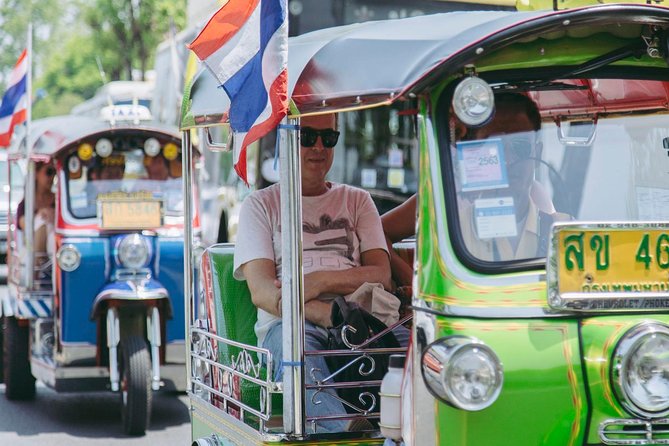
The electric tuk-tuk is well suited to this route. It is quieter than the familiar petrol-powered version, so you can better hear your guide and take in the sounds of the neighborhood. You still get the open-air sensation and quick movement through traffic, though you should expect a ride rather than a long sightseeing talk from the back seat.
The group limit of nine is another plus. Guides such as Pam, Pat, Pe-Pae, and Bo have been praised for being friendly, attentive, and good at explaining Bangkok’s past and present. The exact guide depends on the date, but the format allows for questions and some adjustment to the group’s interests.
More Food Tours by Scooter in Bangkok
- Bangkok: Midnight Food Tour by Tuk-Tuk
★ 4.9 · 2,054 reviews - Bangkok: Michelin Guide Street Food Tour by Tuk Tuk
★ 4.4 · 1,274 reviews - Bangkok: Tuk Tuk Adventure Chinatown Michelin Food & Temples
★ 4.3 · 725 reviews
Starting at Sanam Chai and heading into Thonburi
The meeting point is at Sanam Chai, with a listed start time of 2:00 pm. You do not get hotel pickup, so allow time to reach the meeting point. This matters especially if you are staying on the opposite side of Bangkok or arriving by taxi during heavy traffic.
Once you meet your guide and driver, you board the electric tuk-tuk and begin the half-day route. The early ride takes you toward Thonburi, Bangkok’s former capital area on the western side of the river.
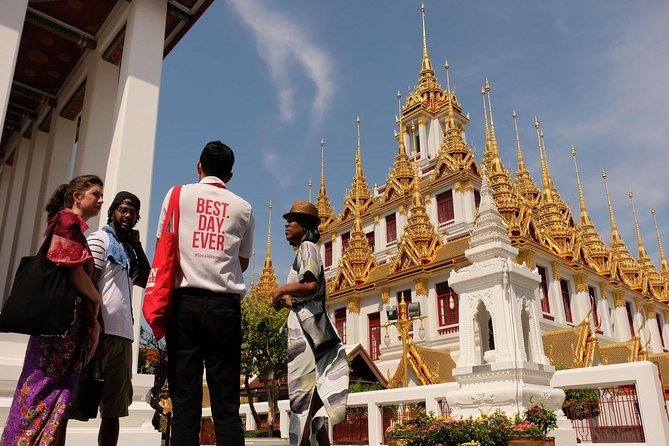
You pass several notable temples, including Wat Arun, the Temple of Dawn. The tour does not function as a full temple-entry visit, so you should not book it expecting extended time inside Bangkok’s grandest religious buildings. Its value is the road between the landmarks, where your guide can explain the area’s traditions and point out details that are easy to miss from a regular car.
The tuk-tuk also makes the route feel more immediate. You are close to the street, close to shopfronts, and more aware of how quickly the city shifts from major monuments to quiet residential lanes. Bangkok traffic can be unpredictable, but the short vehicle sections and small group keep the experience manageable.
Baan Bu pottery and a living craft tradition
One of the most distinctive stops is Baan Bu, a traditional community known for stoneware pottery. The craft has continued for six generations, or more than 200 years, making this more than a quick photo stop.
You get a pottery demonstration and a look at how a community keeps an old skill in use. This is the sort of visit that gives the tour its strongest local character. You are not simply looking at an old building. You are seeing a working tradition and meeting people connected to it.
The stop may be especially appealing if you have already seen Bangkok’s major temples and want something less familiar. It also gives the guide an opening to explain community life, local materials, and the difference between visiting a monument and visiting a place where people still work.
Keep your expectations sensible. The tour description does not promise a long hands-on workshop or a pottery purchase, so treat this as a demonstration and cultural visit rather than a craft class.
Thon Buri Train Station and old railway history
The route continues to Thon Buri Train Station, opened in 1906. Historic steam locomotives are still housed there, offering a brief look at Thailand’s railway past and the engineering behind the old trains.
The scheduled stop is about 15 minutes. That is enough for an introduction and a few photographs, but not enough for a long railway museum visit. If old trains are one of your main interests, you may wish the stop were longer. For most people, it works best as a change of pace between neighborhood touring and the food market.
This is also where the guide’s role matters. A short stop can feel worthwhile when someone explains why the station matters. Guides including Pe-Pae and Bo have been singled out for clear explanations and an easy manner, while Pam and Pat have received similar praise for combining facts with a friendly pace.
More Food Tours by Scooter in Thailand
- Bangkok Tuk-Tuk Tour by Night with Chinatown Street Food Meal
★ 5.0 · 635 reviews - Bangkok: E-Scooter Night Tour with Local Street Food
★ 4.8 · 488 reviews - Bangkok Michelin Food by Tuk Tuk – Hotel-pickup Lunch or Dinner
★ 5.0 · 324 reviews - Bangkok Tuk-Tuk by Night with Chinatown Street Food Meal
★ 4.6 · 263 reviews
Eating your way through Wang Lang Market
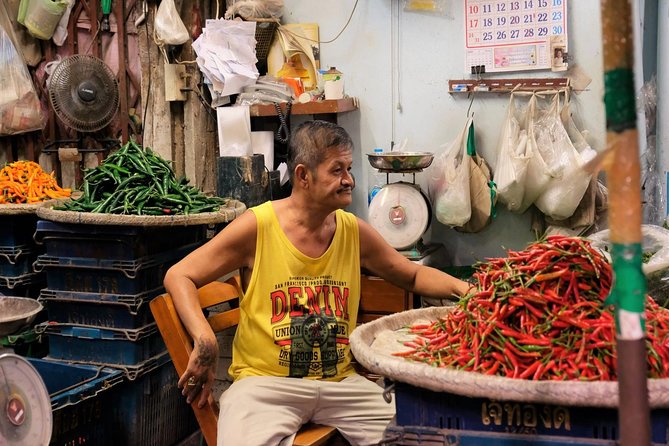
Wang Lang Market is the tour’s central food stop, with about an hour devoted to the market and its vendors. This is not a formal restaurant meal. You sample local foods as you move through an active market area, with choices and portion sizes changing according to the season and the day’s stops.
Included examples are fried pork with sticky rice, Thai desserts, and kanom bueng, a crisp Thai snack often filled with sweet or savory toppings. The total food provided is intended to equal a full meal, though you should not expect every person to receive the exact same dishes.
I like this approach because it connects food with place. You are eating where local vendors sell to the surrounding community, not in a restaurant designed mainly for sightseeing groups. Your guide can also help explain what you are trying and suggest other foods to look for during the rest of your Bangkok stay.
Vegetarian requirements can be accommodated. Other dietary needs are not listed as supported, so this tour is a poor choice if you need gluten-free, vegan, allergy-specific, halal, or other carefully controlled meals. Additional food and drinks are not included.
Wang Lang also brings the river into view. From across the Chao Phraya, you can look toward the Grand Palace area. The view is different from the usual close approach to the palace grounds, and it helps you understand how the river shapes Bangkok’s neighborhoods.
A riverside cafe and a short public-boat ride
After the market, you walk back to Pran Nok Pier. The walking portion is not extreme, but the full tour includes about 1.5 kilometers on foot, often in Bangkok’s heat. Comfortable shoes and water are sensible, even though the route also includes a relaxed cafe stop.
At the riverside cafe, you can sit with coffee or tea and take in the water views. This pause gives the afternoon a welcome breather after the market’s noise and close quarters. It is also a useful moment to ask your guide for food, temple, or sightseeing suggestions for the rest of your stay.
The next step is one of the tour’s most practical details: you cross the river by Chao Phraya Express Boat, with the ticket included. You travel from Pran Nok Pier to Saphan Phut Pier before continuing to the flower market.
This is not just a transfer. The river is one of Bangkok’s main transport routes, and the boat gives you a short taste of how residents move around the city. It also breaks up the tuk-tuk riding and adds another form of transport without asking you to arrange it yourself.
Pak Khlong Talat, Bangkok’s flower-market finale
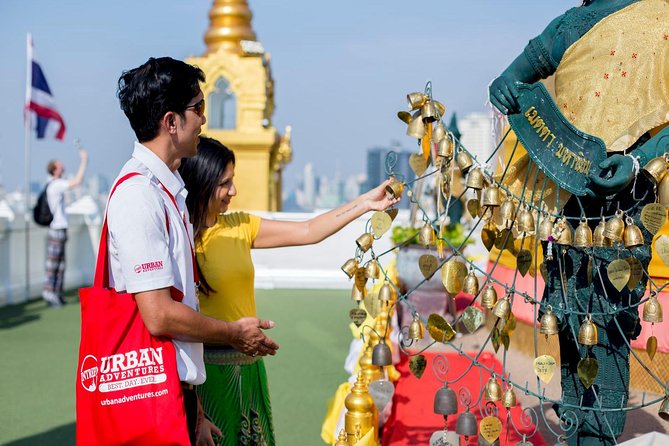
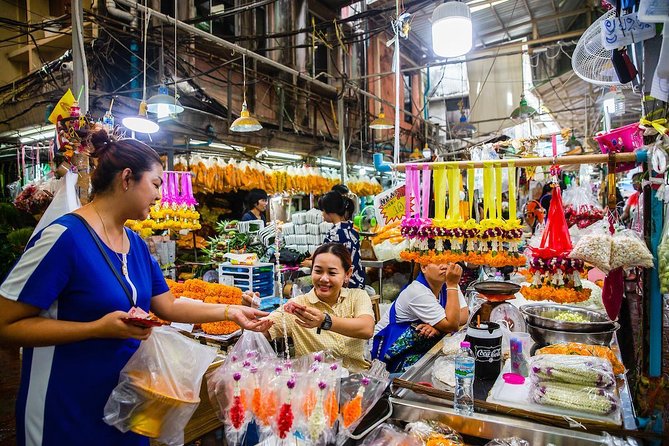
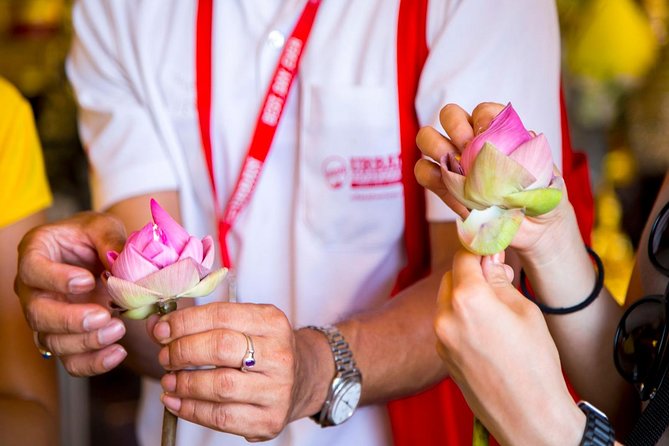
The final stop is Pak Khlong Talat, Bangkok’s largest flower market. It operates 24 hours a day, seven days a week, and acts as a distribution center for flowers shipped onward to other cities in Thailand.
The market is a fine ending because it engages more than your eyes. You can expect strong floral scents, piles of cut flowers, and the working energy of a place that supplies the country rather than merely entertaining sightseers. The visit is scheduled for about 30 minutes.
One practical caution: do not assume the market stop will be leisurely if the group is moving quickly. The market is easy to walk past without noticing its best sections, and one past itinerary experience was criticized for nearly missing the main flower area. Stay close to the guide, but also speak up if you want a few extra minutes to look around.
The tour ends at the market. From there, you can continue by Chao Phraya Express Boat or use MRT Sanam Chai. Since there is no hotel drop-off, plan your next move before the tour begins.
How much value do you get for $65.03?
The price sits above what you would pay to visit these areas independently by public transport, especially if you are comfortable choosing food stalls and navigating markets on your own. You can see many Bangkok sights cheaply, and some people will feel that this itinerary could be recreated with a tuk-tuk, boat tickets, and a little planning.
The price makes more sense if you value guidance and convenience. You receive roughly four hours of transport, a small group capped at nine, local food equal to a full meal, a pottery demonstration, the express-boat ticket, a riverside drink stop, and explanations along the route.
You are also paying for the connections between places. Baan Bu, the train station, Wang Lang, and Pak Khlong Talat are not a single compact attraction. A guide saves you from working out each transfer and gives the stops a common thread.
Still, the tour is not ideal for every budget. One direct assessment found it overpriced for the number of temples and markets visited, while other experiences considered it worth the cost because the guide made the city easier to understand. I would call it good value for a first Bangkok visit, a short stay, or anyone who dislikes planning transport. Independent explorers may prefer to spend the money on a longer food tour or a temple visit with entrance fees.
Who should choose this four-hour experience?
I would recommend it to first-time visitors who want an introduction to Bangkok away from the most obvious route. It also suits families with children aged six and older, couples, and people who enjoy mixing food, local transport, history, and markets in one afternoon.
It is a particularly good fit if you want:
- A small group rather than a large coach
- An English-speaking local guide
- A low-emission way to move through Bangkok
- A full meal made from market food
- A gentle mix of riding and walking
- A tour that ends near public transport
You may want something else if your top priorities are the Grand Palace, Wat Pho, or a long visit inside major temples. The royal palace is not included, and the route gives some religious sites only passing attention. You should also look elsewhere if you want a dedicated cooking class, a serious railway tour, or extensive shopping time at the markets.
The tour is suitable for most people, but remember the heat, the walking, and the food limitations. Vegetarian meals are supported. Other dietary requests are not.
My take: book it for context, not for a checklist
I would book this tour when I wanted a well-organized first look at Bangkok’s western side, especially if I had only a few days in the city. The combination of electric tuk-tuk travel, Baan Bu pottery, Wang Lang food, a river crossing, and Pak Khlong Talat gives you a useful spread of Bangkok experiences in four hours.
I would not book it simply to collect famous sights. The strongest parts are the local community visit, the market food, the guide’s explanations, and the way the route links several forms of transport. Guides such as Pam, Pat, Pe-Pae, and Bo have been praised for warmth, patience, and clear information, which can make a real difference when the itinerary moves quickly.
At $65.03, the tour earns its price when convenience and context matter more than finding the absolute cheapest route. If you are happy navigating Bangkok on your own, save your money. If you want a friendly guide to show you a less familiar side of the city without putting together four separate stops yourself, this is a sensible choice.
FAQ
How long does the Bangkok Electric Tuk Tuk tour last?
The experience lasts approximately four hours, beginning at 2:00 pm.
Where does the tour begin?
The meeting point is Sanam Chai in Bangkok. Hotel pickup is not included.
Where does the tour end?
The tour ends at Pak Khlong Talat flower market. From there, you can continue by the Chao Phraya Express Boat or MRT Sanam Chai.
How much walking is involved?
The tour includes about 1.5 kilometers, or one mile, of walking, along with approximately two hours of tuk-tuk travel.
Is food included?
Yes. Included samples can include fried pork with sticky rice, Thai desserts, and kanom bueng. The total amount is intended to equal a full meal, but dishes and portions vary by season and stop.
Can vegetarians join the food portion?
Yes. Vegetarian requirements can be accommodated. Other dietary requirements are not listed as supported.
How many people can join the tour?
The small-group tour has a maximum of nine people. A private option is also available.
New food tours we have reviewed in Bangkok
- Bangkok 3-in-1 Tour: Longtail Boat,TukTuk & Street Food Adventure★ 5.0 · 73 reviews
- 4-Hour Hidden Bangkok TukTuk Street Food Guided Tour★ 5.0 · 23 reviews
- Private Tuktuk Authentic Food Tour (Chinatown-Flower Market)★ 5.0 · 75 reviews
- Train & Floating Market Food Adventure + Scenic train ride★ 5.0 · 102 reviews
- Bangkok Tuk Tuk Food Tour By Night★ 5.0 · 198 reviews
- Timeless Thonburi Canal and Food Tour★ 5.0 · 31 reviews
- Authentic Street Food Tour in China Town Bangkok★ 5.0 · 25 reviews
- The 10 Tastings of Bangkok: Private Street Food Tour★ 4.5 · 49 reviews
Food Tours by Scooter and Motorbike, compared.
Ho Chi Minh City Street Food Tour & Sightseeing By Motorbike
Read our review →
Saigon By Night and Street Food By Motorbike | Opt: Ao Dai Riders
Read our review →
Private Street Food Tour by Motorbike/Car with Local Students
Read our review →
Saigon: Street Food Tasting & Sightseeing Tour by Motorbike
Read our review →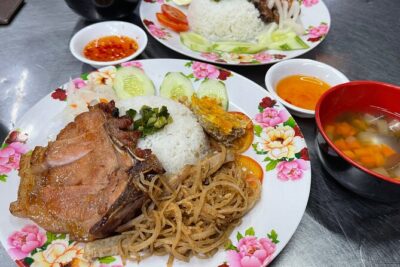
Top Notch Street Food Motorbike Tour In Ho Chi Minh City
Read our review →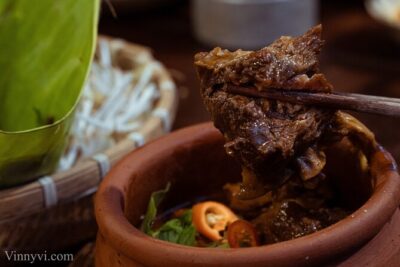
Private Street Food Motorbike Tour in Ho Chi Minh City
Read our review →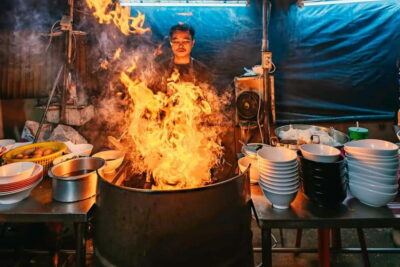
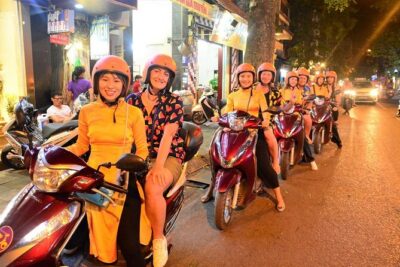
Hanoi Motorbike Tours Led By Women: Hanoi By Night Foodie Motorbike Tours
Read our review →Browse the lists this tour appears in