
Review · COLOMBIA FOOD TOURS
Bogota´s Gastronomic Wonders – Experience the best traditional food
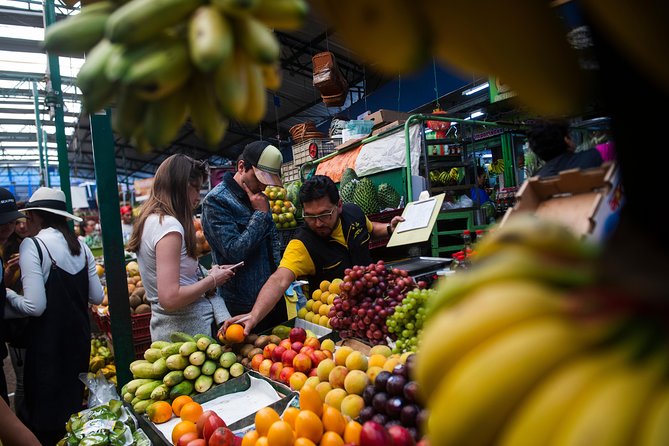
Bogotá’s food story is best understood one bite at a time. This four-hour private walk takes you from La Perseverancia Market to old bakeries, street activity along Seventh Street, La Macarena, and the colonial lanes of La Candelaria. You may taste fruit, pastries, regional food, Amazonian ice cream, hot chocolate with cheese, and coca products.
I like the market contact and the chance to eat far beyond a standard restaurant meal. I also like the mix of food and city context, from working-class La Perseverancia to the former bohemian quarter of La Macarena and the old center.
The main caution is consistency. Some people have enjoyed a generous stream of samples, while others received only a few fruits and bakery items. Book a morning departure, and confirm the food plan and market opening days before you pay.
Key points to know before booking
- La Perseverancia Market is the food heart of the walk: Expect fruit tasting, conversations with cooks and vendors, and a look at a market shaped by Bogotá’s working-class residents.
- The menu changes by timing and guide: Past outings have included empanadas, tamales, coffee, juices, lechón, chicken soup, chicha, churros, and unusual fruits.
- Hot chocolate with cheese is a Bogotá classic: The sweet, salty combination at La Florida Bakery is one of the tour’s signature tastes.
- You walk through several distinct districts: La Perseverancia, La Macarena, Seventh Street, and La Candelaria each show a different side of central Bogotá.
- It is private and language-friendly: Only your group participates, with a guide in Spanish or English.
- The $93 price buys guidance and access, not a conventional lunch: Designated tastings are included, but lunch, tips, transport, and personal purchases are not.
A food walk that starts with Bogotá’s working-class roots
Meet your guide at Origen Bistro in the Centro Histórico, at Cra. 4 #12 C 88. From there, the route heads toward La Perseverancia, a neighborhood and market connected to working-class residents who established the area at the beginning of the 20th century.
That background matters. A food tour can easily become a parade of fashionable cafés, but this one begins in a place where everyday cooking and neighborhood life are central. You are not only looking for something to eat. You are seeing where local food traditions have remained part of daily life.
The first stop at Origen Bistro is brief, about 10 minutes, and the admission ticket is not included. Treat it as the meeting point rather than a major tasting stop. The real food portion begins at La Perseverancia Market.
More food tours in Colombia:
- Medellín: Comuna 13 True Story and Street Food Tour
★ 4.9 · 1,779 reviews - Cartagena: Guided Street Food Tour with Tastings
★ 4.9 · 833 reviews - Bogota Food Tour with over 12 Tastings & Tejo
★ 4.9 · 454 reviews
La Perseverancia Market: fruit, cooks, and timing
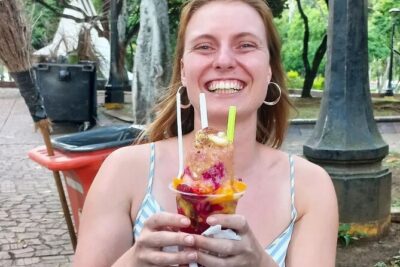
Plan on about an hour at the market. You will see traditional cooks, local shoppers, and stalls selling fresh produce. The guide should help you identify unfamiliar fruits and explain how they fit into Colombian eating habits. This is one of the best parts of the experience for curious eaters because the fruit can be unfamiliar even if you regularly shop at large city markets.
Past food selections have included fresh juices, unusual fruits, catfish, and other market foods. Some outings have also moved to different markets, including Paloquemao, where a guest tasted fruits, vegetables, potatoes in many shapes and colors, coffee, bread, a pork and rice dish, and traditional soup. That suggests the exact market route can vary, so ask for confirmation if visiting a particular market matters to you.
Timing is the key issue here. A Monday afternoon departure has caused disappointment because the larger market activity was closed or limited. Another late visit found many vendors already gone. In practical terms, choose the morning if you can. You will have a better chance of seeing open stalls and finding the full range of food.
The market is not a polished food hall. You may need to stand, walk around wet or uneven areas, and decide how adventurous you want to be. That is part of its value, but it also means you should not expect every tasting to be arranged in advance like a restaurant course.
La Macarena adds art, restaurants, and a change of pace
After the market, you walk through La Macarena for about 10 minutes. This district was once known as a bohemian part of Bogotá and is now associated with international restaurants and art galleries.
The stop is short, so do not expect a full neighborhood tour. Its value is visual contrast. You move from a traditional market setting into an area with a more contemporary restaurant and arts scene. A good guide can use this transition to explain how central Bogotá has changed without turning the tour into a long lecture.
The private format helps here. You can ask why certain areas changed, which restaurants are worth considering later, or how the district compares with La Candelaria. Guides such as Sandra, Emilio, Jorge, Luis Suarez, Jaime, and Juan Frederick have been singled out for warmth, flexibility, city knowledge, or strong food explanations on different departures. You cannot choose a particular guide from the information provided, but the private setup gives you room to ask for the kind of commentary you want.
La Florida Bakery and the flavors of Seventh Street
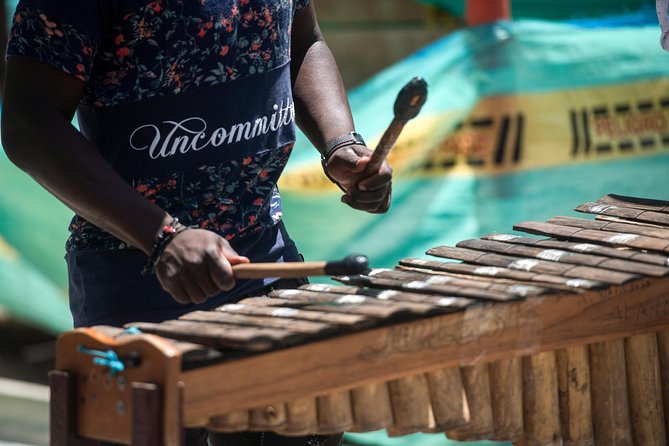
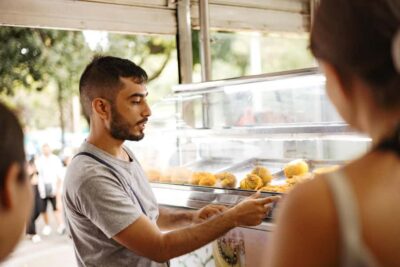
The route then follows Seventh Street, known locally as the Septimazo. Here you may encounter street artists, singers, food carts, handicrafts, and notable buildings. This section is less about sitting down to eat and more about seeing central Bogotá as a public stage.
The planned bakery stop is La Florida, a traditional Bogotá institution. The tasting includes pastries and a hot drink such as aguapanela or hot santafereño chocolate with cheese. The chocolate and cheese pairing is one of the city’s most recognizable food experiences. You dip or eat the cheese with the hot chocolate, creating a sweet and salty combination that may sound odd until you try it.
Some departures have also included tamales, empanadas, churros, coffee, or other bakery items. But do not assume every one of these foods is guaranteed. The tour’s route and tastings appear to depend on opening hours, guide choices, and what is available that day.
From the bakery, you continue southeast toward La Candelaria. Along the way, you see newer cultural, commercial, and student buildings set beside colonial and republican structures. That contrast gives the walk some useful city context. You are not simply eating between attractions. You are watching older central Bogotá adapt to new uses.
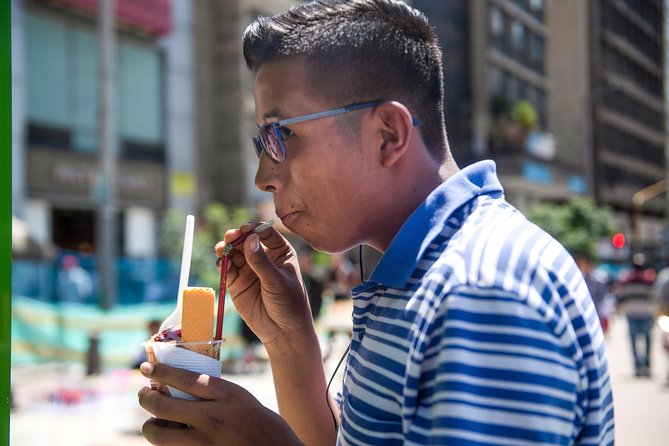
The planned sweet finish in this section is an artisanal ice cream made with exotic Amazonian fruits. It is a smart choice for a food tour because it introduces flavors tied to another part of Colombia rather than repeating familiar bakery sweets.
Same appetite, a different neighbourhood:
- Medellin: Street Food and Poblado Rooftop Tour with a Local
★ 4.8 · 317 reviews - Medellin: Party Bus with DJ & Street Food Tastings
★ 4.5 · 112 reviews - Medellín: E-bike and Foodie Tour
★ 4.8 · 102 reviews - The Cali Street Food Walking Tour
★ 5.0 · 81 reviews
La Candelaria turns the tasting into a cultural lesson
The final major section takes about 1 hour and 25 minutes in La Candelaria, Bogotá’s historic center. You walk through narrow streets and restored colonial buildings before eating a savory dish in a restored colonial house. The meal is meant to show recipes from different regions of Colombia.
This is where the tour can become more than a snack crawl. Colombian food varies widely by region, and a single dish cannot represent the entire country. A guide who explains the origin of each recipe can help you understand why Bogotá’s food includes influences and ingredients from far beyond the capital.
One important practical point: the description says lunch is not included, even though the route includes a savory meal and enough designated tastings to make up a full meal. Read that as a substantial food walk rather than a formal lunch reservation. You may leave comfortably full, but you should not expect a multi-course restaurant lunch or unlimited food.
The last stop is an Indigenous store, where you can taste coca leaf products and speak with an Emberá Indigenous woman. She explains that coca is not cocaine and discusses its place as a sacred plant and part of Indigenous nutrition. The conversation also covers the pressures faced by Indigenous communities from narcotics trafficking, industry, government policy, and efforts to preserve culture and economic traditions.
That subject gives the tour unusual depth. It also deserves a respectful attitude. This is not a novelty tasting designed to shock you. The plant has an important cultural and nutritional role in some Indigenous traditions, while cocaine is a processed narcotic with a very different meaning and effect. Listen carefully and avoid treating the exchange as a photo opportunity.
What the $93 price really covers
At $93 per person, this is not the cheapest way to sample Bogotá. You are paying for a private guide, language support in Spanish or English, local interpretation, a planned route, and designated food and drink tastings. Transportation between stops is not included, but the route is designed as a walk, and the meeting point is near public transportation.
For me, the price makes more sense if you value explanation and access to several parts of central Bogotá. A market visit on your own will cost little, and you can buy fruit or pastries without a guide. The added value is having someone identify foods, explain customs, connect neighborhoods, and help you order.
The price makes less sense if you want a guaranteed list of specific dishes. The experiences described on different departures vary widely. Some have included many samples and even continued beyond the scheduled time after a delay. Others have had only three or four fruits, a bakery stop, and limited explanation.
The private format is a real advantage for families, couples, and solo visitors who want to set the pace. The minimum age is 10, and most people can participate. Wear comfortable clothes and walking shoes, and tell the operator about dietary requirements when booking.
Why the best guide matters
A strong guide can make this experience excellent. Sandra has been praised for making sure a group tried typical snacks and for staying beyond the scheduled time after an unavoidable delay. Emilio has been appreciated for combining food with geographic and historical background and for suggesting other things to do in Bogotá.
Jorge adapted a Monday afternoon outing when the market was not operating at full strength. Juan Frederick, described as both a chef and guide, led a food-focused day that included Paloquemao, coffee, breads, fruit, pork and rice, and soup. These examples show what you should want from your guide: active recommendations, context for each dish, and flexibility when the market does not cooperate.
The weaker experiences had a common problem. The guide was pleasant, but did not recommend enough food or explain the dishes in much detail. In one case, the group chose its own bakery order and finished the tour with little more food. That is a serious issue for an experience sold around gastronomy.
I would ask at the start: What are we tasting today? Is the market fully open? Are empanadas, tamales, or other savory foods available? Clear questions may help set expectations before the walk gets underway.
Who will enjoy this Bogotá food experience
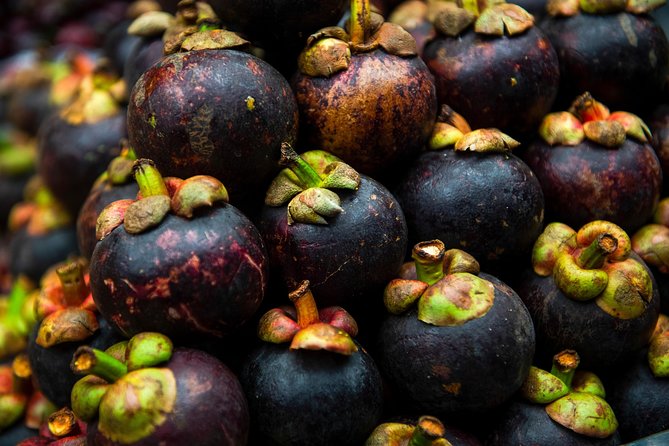
You are a good match if you like trying unfamiliar fruit, asking questions, walking through older districts, and learning how food connects with culture. It also suits a first visit because the route gives you a basic orientation to central Bogotá while introducing foods you might not order on your own.
Solo visitors can benefit from the private format, though one person may find the experience quieter than a shared food tour. Families with children aged 10 or older can take part, but young eaters may not enjoy every unfamiliar flavor or the longer walking sections.
This is less suitable if you need a fixed menu, guaranteed restaurant seating, or a formal lunch. It is also not the best choice for someone who wants to avoid markets, street activity, or foods selected according to the day’s availability.
My call: book it with one important condition
I would book this tour if I wanted a guided introduction to Bogotá’s central districts and was willing to accept some variation in the food. The combination of La Perseverancia Market, La Florida Bakery, Amazonian fruit ice cream, regional dishes, and the Emberá conversation is more interesting than a simple restaurant meal.
I would book a morning time and confirm that the market will be active. I would also ask exactly which tastings are included and remind the operator of any dietary needs. If the answer is vague and your main goal is to eat a long list of classic dishes, choose another food tour.
For curious eaters who value people, place, and context as much as quantity, this can be a rewarding half-day. Just remember that the guide makes or breaks it, and the market sets the day’s menu.
FAQ
How long does the Bogotá food tour last?
The experience lasts approximately four hours, including the market, neighborhood walks, bakery stop, La Candelaria visit, and Indigenous store.
Where does the tour start?
It starts at Origen Bistro in the Centro Histórico, at Cra. 4 #12 C 88, Bogotá, Colombia. The tour ends back at the meeting point.
Is transportation between stops included?
No. Transportation between sites is not included. The route is primarily conducted on foot, and the meeting point is near public transportation.
Is lunch included?
Lunch is listed as not included. The experience does include designated meals and snacks, and the tastings may be enough to make up a full meal.
What foods might I taste?
The planned experience includes Colombian fruits, pastries, aguapanela or hot santafereño chocolate with cheese, Amazonian fruit ice cream, regional savory food, and coca leaf products. Other departures have included empanadas, tamales, juices, coffee, churros, chicha, pork and rice, and soup, but these are not guaranteed.
Is the tour available in English?
Yes. An expert guide is available in Spanish or English. You should state your preferred language when booking.
Can children join the tour?
The minimum age is 10. Most travelers can participate, and the activity is private, meaning only your group takes part.
New food tours we have reviewed in Colombia
- Private Cartagena city and street food tour.★ 5.0 · 31 reviews
- Street Food Tour – Live A Unique Gastronomic Experience★ 5.0 · 34 reviews
- The Cali Street Food Walking Tour★ 5.0 · 81 reviews
- Street Food Tour in Bogotá with Tastings★ 5.0 · 34 reviews
- PALOQUEMAO MARKET FOOD TOUR. EXOTIC FRUIT. LOCAL SNACKS. /Min 2 pax★ 5.0 · 70 reviews
- Food Tour in La Candelaria Bogotá★ 5.0 · 63 reviews
- Cali: Street Food Tour★ 4.8 · 71 reviews
- Santa Marta: Guided Walking Food Experience★ 4.8 · 33 reviews
Colombia Food Tours, compared.
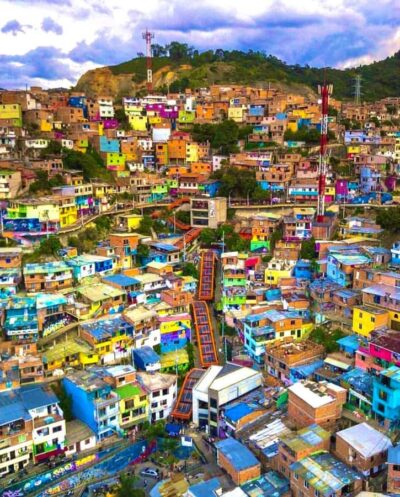
Medellín: Comuna 13 True Story and Street Food Tour
Read our review →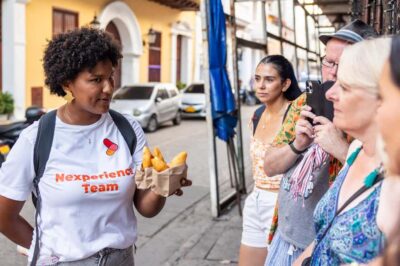
Cartagena: Guided Street Food Tour with Tastings
Read our review →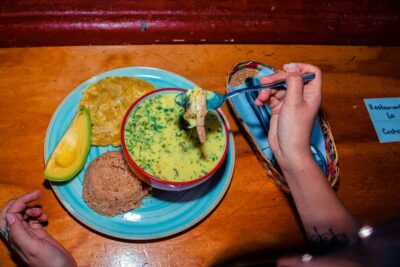

Medellin: Street Food and Poblado Rooftop Tour with a Local
Read our review →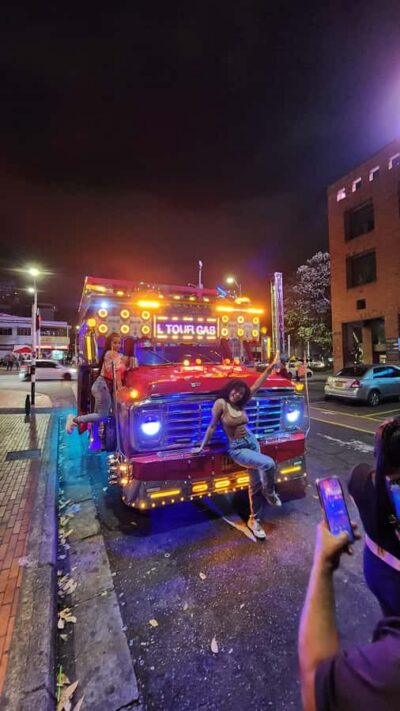
Medellin: Party Bus with DJ & Street Food Tastings
Read our review →
Browse the lists this tour appears in