
Review · WINE TOURS
Budapest Culinary & Wine Walk—Budapest’s Signature Food Tour
Budapest’s food story begins at the Central Market Hall, where paprika, pork fat, goose liver, produce, and old market traditions give you a useful key to Hungarian cooking. I like the way this tour moves from the grand market into ordinary neighborhood food stops, rather than keeping you in a single tourist district. I also like the finish: three Hungarian wines served with enough explanation to help you understand the country’s wine regions. The main drawback is the amount of walking, and the route is not wheelchair accessible.
Guides such as Barbara and George bring a personal touch to the four-hour outing. Barbara is praised for answering questions and keeping the pace comfortable, while George is known for his patient, funny approach. Come hungry, wear good walking shoes, and do not plan a large meal before you arrive.
Key points to know before booking
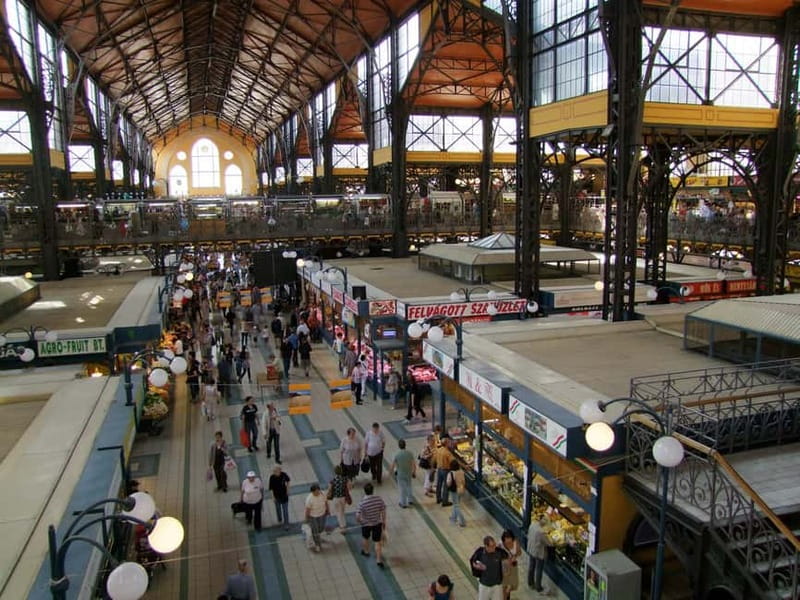
- The Central Market Hall sets the scene: Learn how Budapest’s grand indoor market shaped local food life before tasting your way through the city.
- You visit four or five food venues: The stops may include a spice shop, kosher bakery, coffee house, candy maker, or artisan chocolate shop.
- The food is shared and varied: Expect samples from a butcher, a traditional patisserie, cafés, and other local businesses.
- The wine tasting covers three regions: The final stop introduces three essential Hungarian wines, not just one local label.
- Small groups keep questions easy: The standard group holds between 2 and 8 people, with private tours available by request.
- Plan for a full afternoon on foot: The eating breaks are welcome, but this is still a walking tour rather than a sit-down food crawl.
Starting inside Budapest’s Central Market Hall
The tour begins inside the main entrance of Central Market Hall at Vámház körút 1-3. Look for the guide near the up escalators and a canvas tote bag carrying the tour operator’s logo. This is a useful meeting point, since the market is large and the building can feel confusing at first.
You can reach the hall from Kálvin tér on metro line M3 or Fővám tér on metro line M4. Trams 47 and 49 also stop at Fővám tér. Give yourself a few extra minutes to find the entrance, especially if you are carrying shopping bags or arriving during a busy part of the day.
The market is not simply a place to grab a snack. Its size and design help explain Budapest’s commercial life, and the guide spends time discussing the building and the role of markets in Hungarian food culture. I find this opening useful because it gives context to the ingredients you taste later.
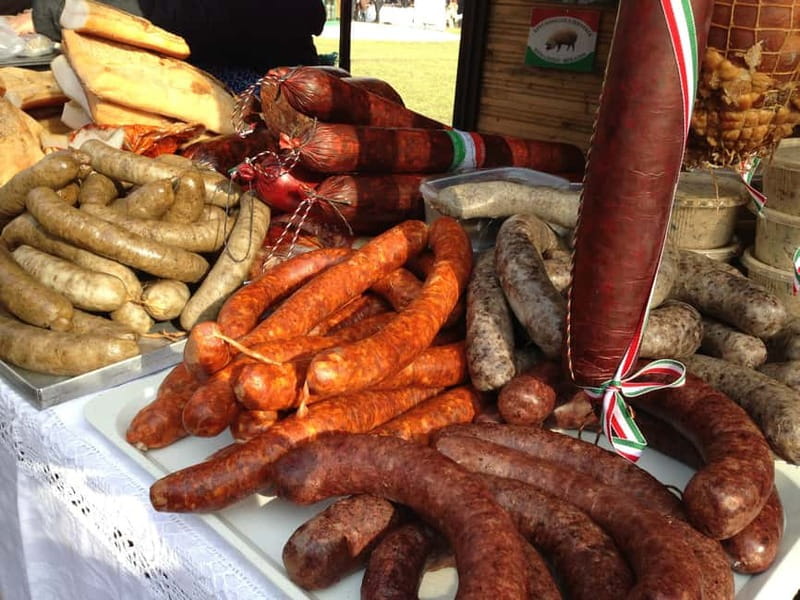
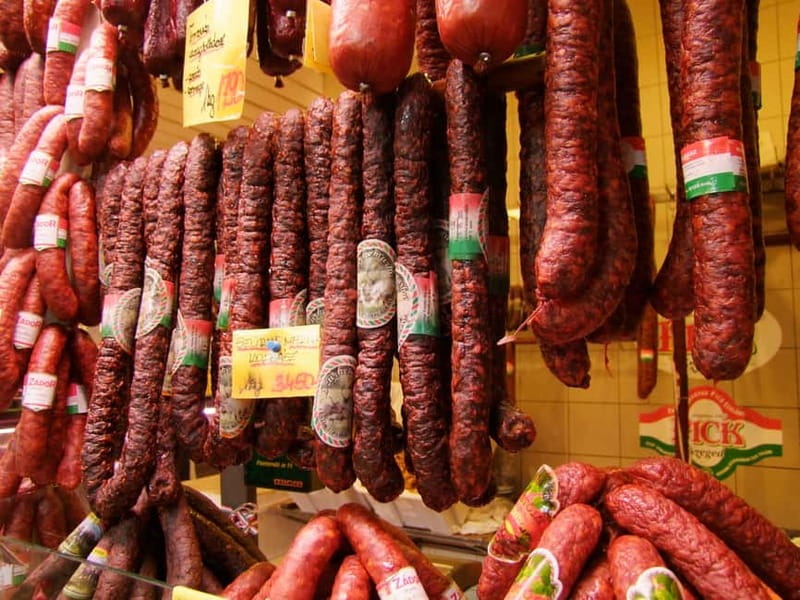
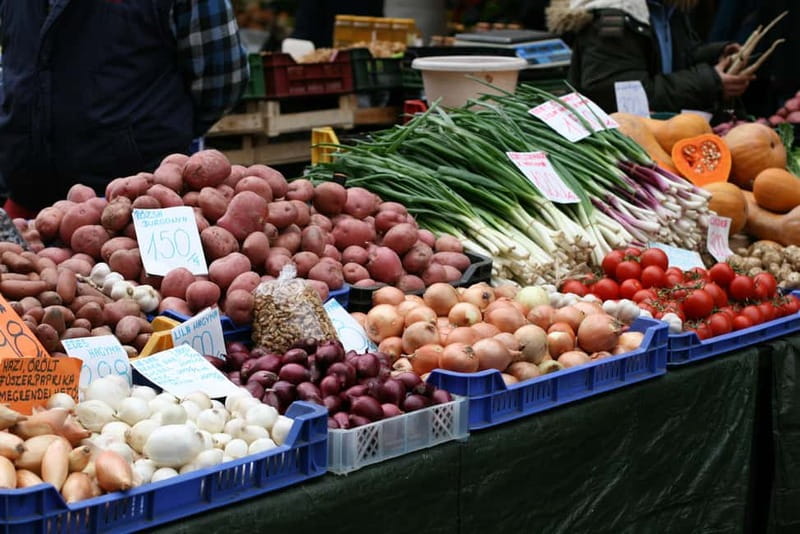
You will see produce and pantry goods before you eat them. Paprika, pork fat, and goose liver are not treated as random samples. Instead, the guide explains how these ingredients appear in Hungarian cooking and how local eating habits differ from simplified tourist versions.
That distinction matters. Hungarian food can be reduced to goulash and paprika in guidebooks, but the market visit gives you a broader picture. You begin to see how cooking depends on fat, spice, preserved foods, meat, sweets, and seasonal produce.
More Wine Tours in Budapest:
- Budapest Centre Food Tour with 10+ Tastings, Wine & Street Food
★ 5.0 · 810 reviews - From Budapest: Etyek Wine Tasting Tour with 3-Course Meal
★ 4.8 · 557 reviews - Budapest Food Tour: Market to Tavern with 14+ Tasters & Wines
★ 5.0 · 434 reviews
Tasting your way through the market
The Central Market Hall portion is part lesson, part tasting stop. You can ask questions as you go, and there is time for photographs and food shopping. The pace allows you to look around instead of being hurried from one bite to the next.
The exact tasting lineup can change, but the tour promises generous food and drink samples. You might taste products linked to the ingredients being discussed, then compare those with prepared foods later in the route.
This is one of the strongest parts of the experience for first-time visitors. You get a basic food vocabulary early in your trip, which can make later visits to restaurants, bakeries, and shops much easier. You also have a guide beside you to explain what you are seeing and how it is used.
The market can be visually intense, so do not expect a quiet museum visit. You are walking through a working food hall with plenty to see, and the tour is designed to use that atmosphere rather than avoid it. Keep your camera ready, but pay attention to the guide’s explanations too.
The neighborhood stops change with the day
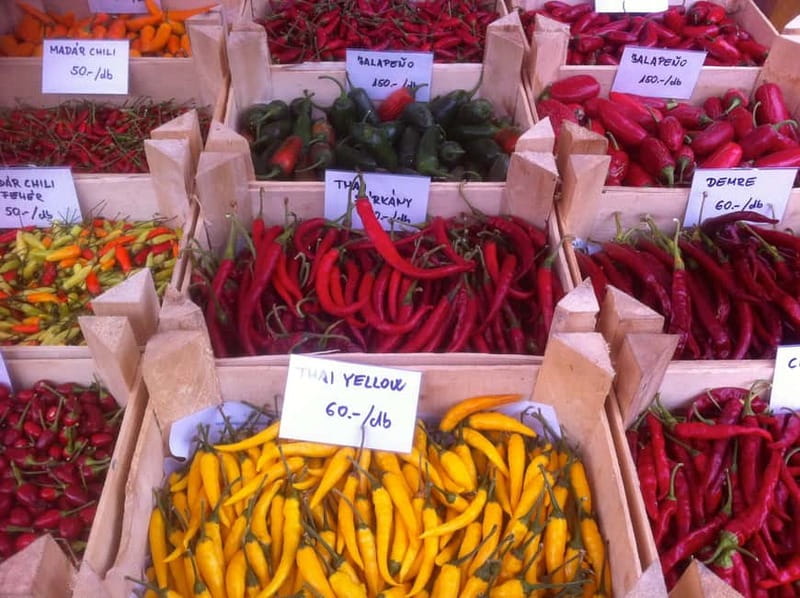
After the market, the route moves into nearby neighborhoods and visits four or five additional venues. This is where the tour gains variety. Depending on the day, you might visit a spice shop, kosher bakery, coffee house, candy producer, or artisan chocolate shop.
Because the stops can change, you should not book this expecting one fixed list of shops. That flexibility is practical. Local businesses have different opening days, and the route can include places that fit the schedule rather than forcing every group through the same sequence.
The kosher bakery adds another angle to Budapest’s food culture. The coffee house and traditional patisserie shift the focus toward sweets and café customs, with elegant cakes as part of the tasting. A candy producer or chocolate shop gives you another look at how Hungarian treats are made and sold.
I like this section because it takes you beyond the famous market. The food stores are smaller and more specialized, and the guide can explain how ingredients are used in daily cooking. You also have opportunities to ask questions that would be easy to skip in a large group.
There is a practical benefit here as well. If you find a spice, sweet, or packaged food you want to take home, the tour includes time for food shopping. Bring a little room in your bag, but remember that this is still a walking route, so heavy purchases may become inconvenient.
Savory samples at a local butcher’s shop
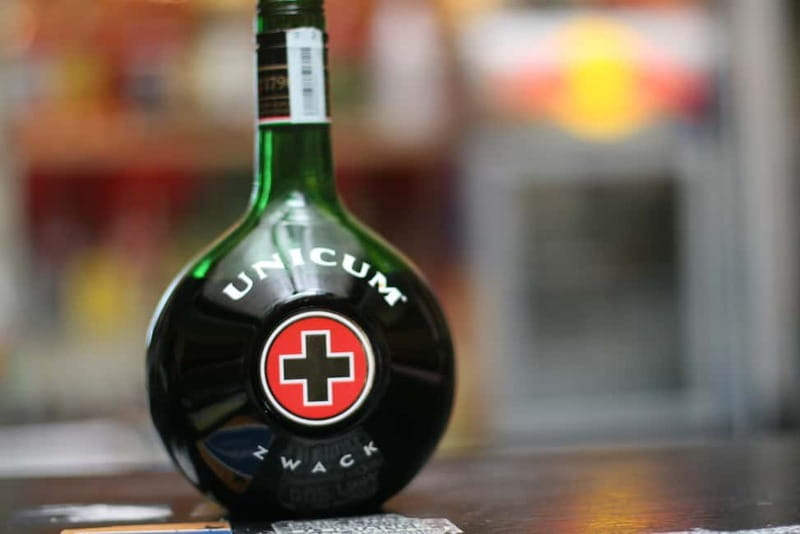
One of the more distinctive stops is a butcher’s shop, where the guide orders typical Hungarian dishes for the group to share. Instead of receiving one standardized plate, you may get several items to sample. That format lets you compare flavors and textures without committing to a full meal.
A similar shared approach was used at a small, popular café, where several dishes were ordered for tasting. This is helpful if you are curious about Hungarian food but unsure which dish to choose from a menu. You get a wider introduction, and the guide can explain what you are eating as it arrives.
Do not mistake the tasting format for a full restaurant lunch. The portions are designed to add up across the afternoon, and the tour includes many stops. You should arrive hungry, but not so hungry that you rush through the explanations.
The food may be unfamiliar to some visitors, particularly if you do not often eat dishes built around pork, liver, or rich sauces. The guide’s role is important here. You can ask what an ingredient is, how it is traditionally eaten, and which foods may suit your taste.
More food tours in Budapest:
- Budapest Food Walking Tour: Eat, Sip & Explore Like a Local
★ 4.8 · 1,027 reviews - Budapest Guided Food Walking Tour with Drinks Included
★ 4.8 · 472 reviews - Budapest Culinary & Wine Walk
★ 5.0 · 397 reviews - Budapest: Food Tour Market to Tavern: 14+ Tasters & Wines
★ 4.9 · 375 reviews
Coffee, cake, and Budapest’s pastry tradition
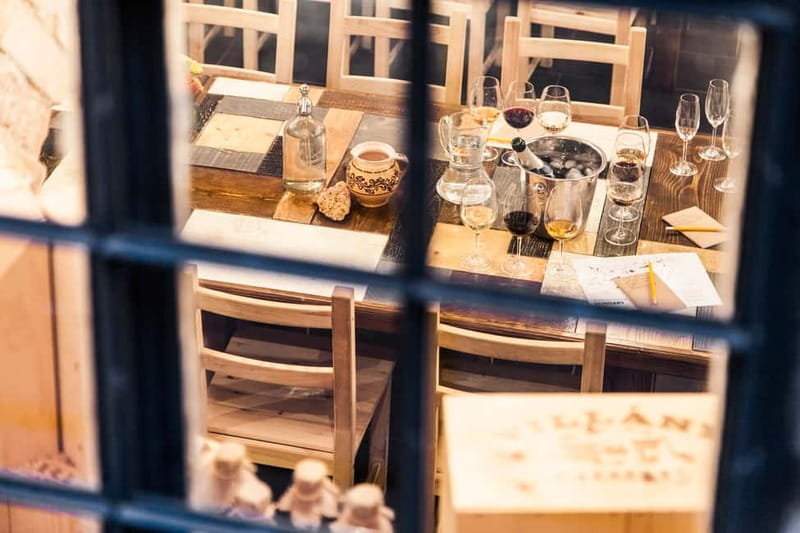
The sweet course comes at a traditional patisserie or coffee house. Here, you taste elegant cakes and have time to slow down with coffee. This is a welcome change after the market and savory food stops.
Budapest’s café culture is part of the city’s identity, and the patisserie visit gives you a social setting for the food rather than treating cake as a quick sample. The combination of coffee and pastry also breaks up the walking route.
One stop may include locally produced chocolates eaten at a coffee house with cakes. If you like sweets, this can be a highlight. If you prefer savory food, the pastry portion may feel generous after the earlier tastings, so pace yourself.
The coffee house also gives the group a chance to sit, talk, and ask questions. Guides such as Barbara are praised for making the tour interactive, and this is the sort of stop where that quality matters. You are not just receiving a lecture. You can shape the conversation around your own interests.
Three Hungarian wines to finish the afternoon
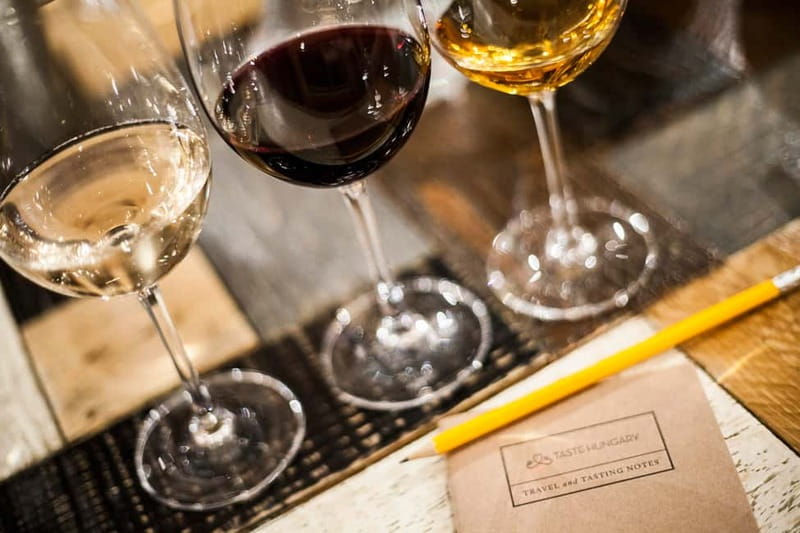
The final tasting introduces three essential wines from different Hungarian wine regions. This is a smart way to finish because Hungarian wine is often overlooked by first-time visitors, even though the country has several distinct wine areas.
The tasting is not presented as a single regional snapshot. Three wines from different parts of Hungary give you a starting point for noticing contrasts between regions and styles. You do not need much wine knowledge to enjoy this part. The guide and tasting host explain what you are drinking, and the atmosphere is social rather than formal.
One guide, Carlos, received particular praise for hosting the wine session. That suggests the final stop has its own personality rather than feeling like a rushed add-on. Still, keep the schedule in mind. The tour lasts four hours, and the wine tasting comes after a full food route.
The wine stop is also where the tour’s value becomes clearest. A $120 price can look high for a walking tour, but it includes an English-speaking guide, mineral water, generous food and drink samples, the market visit, four or five additional venues, and three wines. If you paid separately for several dishes, café items, pastries, and a wine tasting, the cost would add up quickly.
You are also paying for selection and explanation. The guide chooses a range of foods and manages the route, saving you from guessing which shops are worth your time. For a first visit, that practical guidance can be more useful than a basic market tour with one snack.
How the four-hour pace feels
The schedule is well suited to someone who wants a broad introduction rather than a long meal at one restaurant. You keep moving, but the tasting breaks prevent the experience from becoming a simple sightseeing walk.
The pace has been described as comfortable, with time for questions and group interaction. That said, you cover a lot of ground. Wear shoes suited to several hours on foot, and do not assume that the food stops mean you will be sitting most of the afternoon.
Small groups of 2 to 8 make the format more personal. You can ask about a dish, stop for a photograph, or clarify something about Hungarian cooking without having to shout over a large crowd. Private tours can be requested and customized, which may suit families or groups with specific interests.
The minimum group size is two people. If that number is not reached, the tour may be canceled after confirmation, with an alternative or full refund offered. That possibility is worth considering if you are booking alone or on a tight schedule.
The tour operates Monday through Saturday, except on Hungarian national holidays when venues may close. It is not offered on Sundays. Check the available start time for your date before building the rest of your day around it.
Who will get the most from this food walk
I would choose this tour early in a Budapest visit. The market orientation, ingredient explanations, and neighborhood route help you get your bearings and give you ideas for later meals and shopping.
It suits first-time visitors especially well, along with anyone who wants food explained in plain terms. The tour also works for people who like history and culture but do not want a museum-heavy introduction to the city.
Food-focused visitors will appreciate the range of stops, while less adventurous eaters may value the chance to sample small portions. You can ask about unfamiliar items before taking a full bite, and the shared format reduces the risk of ordering one large dish you do not enjoy.
This is less suitable if you want a leisurely four-hour restaurant meal, a fully fixed menu, or a route with almost no walking. It is also not suitable for wheelchair users because the tour is not wheelchair accessible.
The English-language format is straightforward. Guides including Barbara, George, Anna, and others have led the experience, and the strongest feedback centers on their friendliness, patience, and ability to answer questions. If guide quality matters to you, the small group setup is a useful advantage.
Practical value at $120 per person
At $120, this is not a budget snack tour. The price makes sense if you plan to use the tour as a full introduction to Hungarian food, rather than as a quick market visit.
You receive a four-hour route, multiple venues, food samples, café items, a wine tasting, mineral water, and a guide who handles the ordering and explanations. The variety is the key point. You are not paying for one famous dish, but for a sequence that covers market ingredients, savory food, pastries, sweets, coffee, and wine.
The value is strongest for first-time visitors and anyone who would otherwise spend hours choosing places without knowing what to order. It is weaker for people who already know Budapest’s food scene or prefer to choose every restaurant independently.
Free cancellation up to 24 hours before the tour and the option to reserve now and pay later make planning easier. Those terms are helpful if your Budapest schedule may change, but they do not remove the need to check the holiday and Sunday restrictions.
Should you book the Budapest Culinary and Wine Walk?
Book it if you want a friendly, food-centered introduction to Budapest with plenty of tasting and useful local context. The Central Market Hall gives you a strong opening, the neighborhood shops add variety, and the three-wine finish makes the experience feel complete.
I would especially recommend it for a first or second day in the city. You can use what you learn for the rest of your trip, from recognizing paprika and local sweets to choosing a Hungarian wine with dinner.
Skip it if you dislike walking, need wheelchair access, want a fixed menu, or prefer a single long restaurant meal. For everyone else, arrive hungry, leave room for cake and wine, and expect the afternoon to cover much more than the market.
FAQ
Where does the Budapest Culinary and Wine Walk begin?
Meet inside the main entrance of Central Market Hall at Vámház körút 1-3, near the up escalators. The guide will hold a canvas tote bag with the tour operator’s logo.
How long does the tour last?
The experience lasts four hours. Check the available start times for your chosen date when booking.
How many people are in a small group?
The small group option requires at least 2 participants and allows a maximum of 8. Private tours can also be requested and customized.
What food and drink is included?
The tour includes generous tastings at the Central Market Hall and four or five additional venues. Stops may include a butcher’s shop, patisserie, spice shop, bakery, coffee house, candy producer, or artisan chocolate shop, followed by three Hungarian wines.
Is the tour available every day?
It operates Monday through Saturday, but not on Sundays or Hungarian national holidays when some venues are closed.
Is the tour wheelchair accessible?
No. The tour is not wheelchair accessible, and participants should be prepared to walk a lot during the four-hour route.
New food tours we have reviewed in Budapest
- The Award-Winning Private Food Tour of Budapest: 6 or 10 Tastings★ 4.5 · 185 reviews
- Budapest Food Tasting Tour with Nelli & her local guides★ 5.0 · 190 reviews
- Budapest Ruin Bars Evening Walking Tour with Drinks & Snacks★ 5.0 · 25 reviews
- Budapest Food Tour in Obuda with 8+ Tastings of Hidden Food Gems★ 5.0 · 94 reviews
- Small-Group Culinary Walking Tour in Budapest★ 5.0 · 148 reviews
- Budapest Ruin Bars Evening Walking Tour with Drinks & Street Food★ 5.0 · 104 reviews
- Food and Wine Tasting in Budapest City Center with Sommelier★ 5.0 · 57 reviews
- Budapest Food Tour: Market to Tavern with 14+ Tasters & Wines★ 5.0 · 434 reviews
Wine Tours, compared.
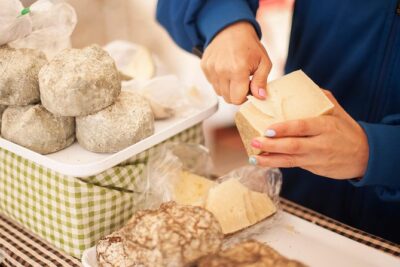
Montserrat Half-Day Tour with Tapas and Gourmet Wines
Read our review →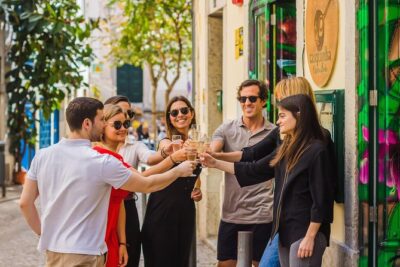
Winner 2025 Undiscovered Lisbon Food & Wine Tour by Eating Europe
Read our review →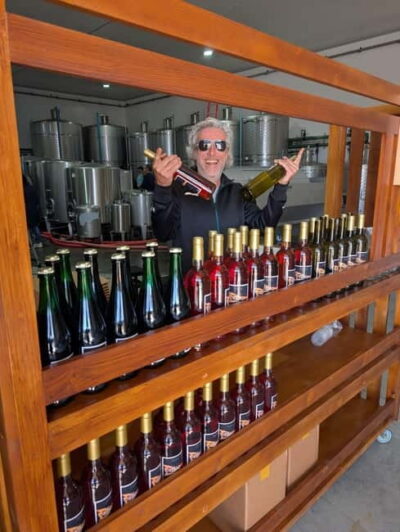
From Porto: 2 Wine Regions, Farm-to-Table Lunch & Boat
Read our review →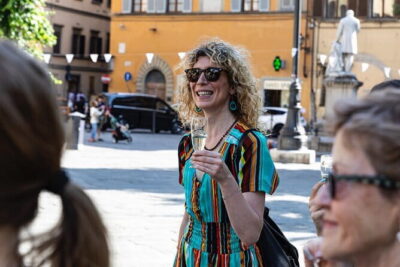
Winner 2025 Florence Sunset Food & Wine Tour by Eating Europe
Read our review →
Authentic Parisian Gourmet Food Tour with 10 Local Dishes & Wines
Read our review →
Barcelona: Tapas Walking Tour with Food, Wine, and History
Read our review →
Lisbon: Food and Wine Small Group Walking Tour
Read our review →
Lisbon Small-Group Portuguese Food and Wine Tour
Read our review →Browse the lists this tour appears in