
Review · STREET FOOD TOURS
Guided Walking Street Food Tour of De Pijp & Beyond
Amsterdam reveals itself one bite at a time on this small-group food walk through Albert Cuyp Market and De Pijp. You move between family-run stalls, Indonesian and Surinamese toko shops, Dutch snack counters, and newer food spots rather than sitting down for one long meal.
I like the mix of Dutch and international food, and I like the way the tour connects what you eat with ordinary life in Amsterdam. Guides such as Sharmain and Sara bring a social, easygoing feel, with room for banter as the group walks. The main drawback is the price: at $155.68 per person, it only feels like good value if you want a meal-sized tasting tour plus local orientation.
Key points to know before booking
- Seven or more tastings can include herring, broodje pom, kroket, stroopwafels, fries, poffertjes, and Japanese sandos.
- Albert Cuyp Market provides the opening food stops, with family businesses and market vendors.
- De Pijp adds Indonesian, Surinamese, Dutch, and newer international food shops.
- Groups are capped at eight, which makes conversation with the guide easier.
- The tour lasts about four to five hours, beginning at 11:00 a.m. and ending somewhere different from the starting point.
- The $155.68 price covers a substantial food walk, but it is best for people who want both eating and neighborhood context.
Why De Pijp is a smart place to eat in Amsterdam
De Pijp gives you a useful look at Amsterdam beyond the postcard center. Its small streets mix long-running local businesses with food shops shaped by Dutch, Indonesian, Surinamese, Japanese, and other influences. That combination makes the neighborhood a natural setting for a food tour.
You begin at Albert Cuypstraat 75 at 11:00 a.m. The meeting point sits near the Albert Cuyp Market, one of the country’s best-known street markets. You are not simply walking past stalls and taking photos. The point is to stop at small businesses that local residents have used for years, along with newer food makers.
I like this setup because food gives you a practical way to understand Amsterdam. A herring stand, a Surinamese snack, or a stroopwafel is not just a sample for your plate. Each one points to a different part of the city’s food culture. The guide helps connect those tastes with daily life and local habits.
The group limit of eight matters here. Food walks can become awkward when a crowd blocks a narrow shop or spreads across a market lane. A small group is easier to manage, and you have a better chance to ask questions without turning the outing into a lecture.
More Street Food Tours in Amsterdam:
- Amsterdam’s Market Street Food Tour with Streat Bites
★ 5.0 · 398 reviews - Dubai: Old Town, Creek, Museums, Souks, & Street Food Tour
★ 4.8 · 10,816 reviews - Ho Chi Minh City Street Food Tour & Sightseeing By Motorbike
★ 5.0 · 9,413 reviews
Albert Cuyp Market: a first taste of Amsterdam
The opening 45 minutes take place in and around Albert Cuyp Market. This is a strong first stop because the market brings together classic Dutch snacks, produce, small food businesses, and newer vendors in one compact area.
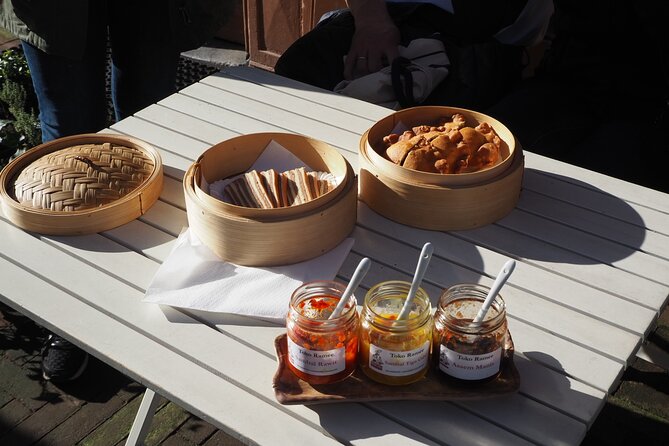
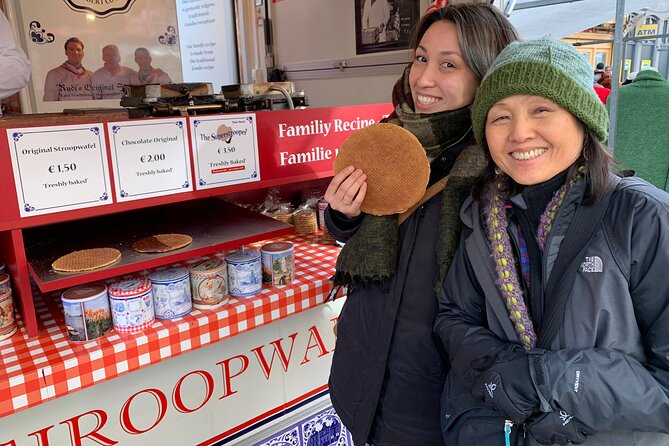
The food selection may include herring, kroket, stroopwafels, and broodje pom. These give you a quick introduction to both familiar Dutch favorites and food traditions shaped by Amsterdam’s international population.
Herring is one of the city’s classic tastes. If you have never tried it, this is a useful place to do so because the guide can frame the food as part of normal local eating rather than a dare for tourists. A kroket offers a different experience, with a crisp outside and a warm filling. Stroopwafels bring the sweet course, while broodje pom introduces a Surinamese dish that many visitors would not find by simply following the main sightseeing routes.
The market portion is not a formal attraction with a separate admission charge. That keeps the focus on the businesses and food rather than on entering a ticketed sight. It also means the feel can depend on the day, the vendors operating at that time, and the pace of the group.
You should arrive ready to walk and eat in small portions. At least seven tastings are included across the whole experience, so treating the first stop as a full lunch would be a mistake. The appeal is variety: a bite here, another sample there, and enough time to notice how different foods fit together.
Three hours through De Pijp’s narrow streets
After the market, the tour spends about three hours in De Pijp. This is the longer and more important part of the outing. You move through narrow local streets and stop at a mix of toko shops, Dutch snack places, and newer international eateries.
A toko is often a small grocery store or eatery connected with Indonesian or Surinamese food, along with Asian products. These shops help explain why Amsterdam’s food culture cannot be reduced to cheese, pancakes, and herring. The tour makes room for those classic Dutch foods, but it also shows the wider influences found in an everyday neighborhood.
You may try fries, poffertjes, additional kroket or herring, stroopwafels, and Japanese sandos. Poffertjes are small, soft pancakes and make a good contrast with the crisp fried foods. Japanese sandos add a newer style of food to the route, showing that De Pijp’s eating scene includes both long-established shops and newer ideas.
I like the balance between traditional and newer stops. A tour made up only of famous Dutch foods could feel narrow. One focused only on fashionable international places could miss the local character. Here, the range is the point.
The long De Pijp section also gives the guide time to talk about everyday Amsterdam. The stated focus is not just on food preparation. You learn about the neighborhood through the businesses people use, the types of shops found on side streets, and the way different food traditions sit alongside each other.
What the food list means for your appetite
This is not a tasting of one specialty. It is closer to a moving lunch with drinks and repeated small samples. The experience includes at least seven local street foods and a few drinks, so you should plan to arrive hungry but not expect a single restaurant-style meal.
The exact balance of savory and sweet can vary, but the named foods give you a useful sense of the range:
- Herring offers a traditional Dutch taste.
- Kroket provides a familiar fried snack.
- Stroopwafels cover the sweet side.
- Broodje pom brings a Surinamese influence.
- Fries and poffertjes add other Dutch staples.
- Japanese sandos bring a newer international option.
This spread works well for first-time visitors who want to sample instead of ordering large portions they may not recognize. It also suits repeat visitors who have seen the central sights but have not spent much time eating in De Pijp.
The drinks matter, too. A few drinks help break up the food and give the group time to talk. The available information does not specify the exact drinks, so you should not book this expecting a particular beer, coffee, or soft drink.
Food allergies and dietary restrictions are another point to consider. The tour information does not give a detailed substitution policy or a fixed menu. If you have strict dietary needs, ask the provider before booking rather than assuming every stop can accommodate you.
More guided departures in Amsterdam:
- Amsterdam: Guided Zaanse Schans, Windmills & Cheese Tour
★ 4.4 · 4,826 reviews - Zaanse Schans and Cheese Tasting Guided Tour from Amsterdam
★ 4.0 · 661 reviews - Amsterdam: Guided Cultural Food Tour in English or German
★ 4.9 · 137 reviews - Top 10 Tastings of Amsterdam: Guided Walking Food Tour
★ 4.8 · 61 reviews
The guide makes or breaks a food walk
A food tour succeeds when the guide can keep the group moving while still allowing conversation. Sharmain is described as a host who read the group well and kept the banter flowing. That detail matters because four to five hours is a long time to spend with strangers if the tone feels stiff.
Sara is also identified as a guide who combines food with historical context. That is the kind of explanation I want on a tour like this. You do not need a long academic talk at every stop, but you do want to understand why a dish belongs in Amsterdam and how it fits into the city’s daily life.
The best guides on this sort of walk do more than name each snack. They give you a reason to care about the shop, the dish, or the neighborhood. They also adjust the pace when people are full, curious, or eager to keep moving. The small group helps with that flexibility.
The experience is offered in English. If you want a tour conducted in another language, this is not the right choice.
Is $155.68 a fair price?
At $155.68 per person, this is not a budget way to grab street food. You can buy individual snacks for less if you are comfortable finding the market and neighborhood on your own.
The value comes from several things bundled together: four to five hours of guiding, a minimum of seven food tastings, a few drinks, neighborhood orientation, and access to small businesses you might overlook. The group size also helps. A maximum of eight people is much more personal than a large coach-style food excursion.
I would compare the price with the cost of a substantial lunch, a neighborhood walk, and several trial-and-error food stops. If you want only a quick taste of a stroopwafel and fries, the price is too high. If you want to spend half a day learning how Dutch, Indonesian, Surinamese, Japanese, and other influences meet in one Amsterdam neighborhood, the cost is easier to justify.
The tour is especially useful early in an Amsterdam visit. You can get your bearings in De Pijp, learn which types of food interest you, and return later on your own. It is less useful for someone who prefers to choose every stop independently or who dislikes eating on a set schedule.
Timing, walking, and the end point
The tour starts at 11:00 a.m. and lasts about four to five hours. That timing makes it a substantial late morning and afternoon activity, so avoid scheduling another major attraction too tightly afterward.
You will be on foot for most of the experience. The route includes a market and narrow neighborhood streets, with several food stops along the way. Wear comfortable shoes and leave room in your schedule for the group to pause.
The activity ends at a different location from the starting point. The exact end point is not provided, so check the final details before planning a timed train, museum entry, or restaurant reservation.
The start is near public transportation, which makes arrival practical. The mobile ticket is also useful for a walking tour, since you can keep the booking details on your phone rather than manage paper documents.
Who will enjoy this experience most?
I would choose this tour if you want food to lead the sightseeing. It fits first-time visitors who want a gentle introduction to Amsterdam’s local neighborhoods, as well as repeat visitors looking for a part of the city beyond the central canals.
It is a good match for people who enjoy trying unfamiliar foods in small portions. The mix of herring, broodje pom, toko dishes, fried snacks, sweets, and Japanese sandos keeps the outing from becoming repetitive.
It also suits couples, friends, and solo visitors who like conversation. Sharmain’s easy banter and Sara’s food context suggest a social style rather than a silent march from shop to shop.
I would hesitate if you need a fully fixed menu, have serious dietary restrictions, dislike walking for several hours, or want a low-cost food option. The tour is also not ideal if you prefer major monuments over neighborhood wandering.
Most people can participate, and service animals are allowed. The tour is near public transportation, but the details provided do not specify a route length, stair-free access, or exact accessibility arrangements.
Should you book the De Pijp food tour?
Book it if you want a small-group food walk with real variety, a few drinks, and enough time to understand the neighborhood rather than simply collect snacks. The combination of Albert Cuyp Market and De Pijp gives you both a famous market setting and the smaller businesses that make the area worth exploring.
The strongest reasons to go are the range of food, the eight-person group limit, and the guides’ friendly, conversational approach. The main question is value. At $155.68, you are paying for guidance, context, and a half-day experience, not just the cost of the food itself.
Free cancellation is available up to 24 hours before the start time for a full refund. If the minimum number of participants is not reached and the activity is canceled, you are offered another date or experience, or a full refund.
FAQ
How long does the street food tour last?
The experience lasts approximately four to five hours.
What time does the tour start?
The tour begins at 11:00 a.m.
Where does the tour begin?
It begins at Albert Cuypstraat 75, 1072 CN Amsterdam, Netherlands.
Where does the tour end?
It ends in a different location from the starting point. The exact end point is provided in the booking details.
What food can I try?
The food may include herring, broodje pom, kroket, stroopwafels, fries, poffertjes, and Japanese sandos. The tour includes at least seven local street foods and a few drinks.
How large is the group?
The activity has a maximum of eight participants.
Can I cancel for a full refund?
Yes. You can cancel at least 24 hours before the start time for a full refund. Cancellations or changes made less than 24 hours before the start time are not refunded or accepted.
New food tours we have reviewed in Amsterdam
- Private Dutch Food Tour – Eat Like a Local★ 5.0 · 35 reviews
- Amsterdam High-End Dutch Food & History Tour – Up to 8 guests★ 5.0 · 482 reviews
- Devour Amsterdam Ultimate Food Tour★ 5.0 · 26 reviews
- Amsterdam Food Tour: +10 Tastes, Culture and Canals with Sherpa★ 5.0 · 241 reviews
- Amsterdam Food Tour of 10+ Local Classic Tastings in Jordaan Area★ 5.0 · 334 reviews
- Amsterdam Private Food & Drinks Tour by UNESCO Canals & Jordaan★ 5.0 · 120 reviews
- Private Amsterdam Red Light District and Food Tour (TOP RATED)★ 4.5 · 124 reviews
- Amsterdam’s Market Street Food Tour with Streat Bites★ 5.0 · 398 reviews
Street Food Tours, compared.
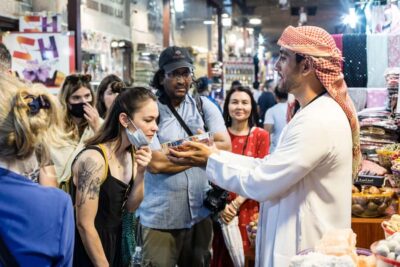
Dubai: Old Town, Creek, Museums, Souks, & Street Food Tour
Read our review →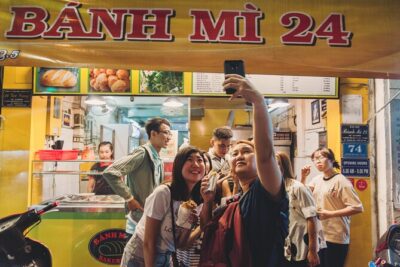
Ho Chi Minh City Street Food Tour & Sightseeing By Motorbike
Read our review →
Dubai: Old Town, Souks, Street Food, Guided Tour & Abra Ride
Read our review →
Naples: Street Food Walking Tour with Local Guide
Read our review →
Small Group Hanoi Street Food Tour with a Real Foodie
Read our review →
Saigon By Night and Street Food By Motorbike | Opt: Ao Dai Riders
Read our review →
Private Street Food Tour by Motorbike/Car with Local Students
Read our review →Browse the lists this tour appears in