
Review · WINE TOURS
Palace District Evening Culinary, Wine, and History Walk
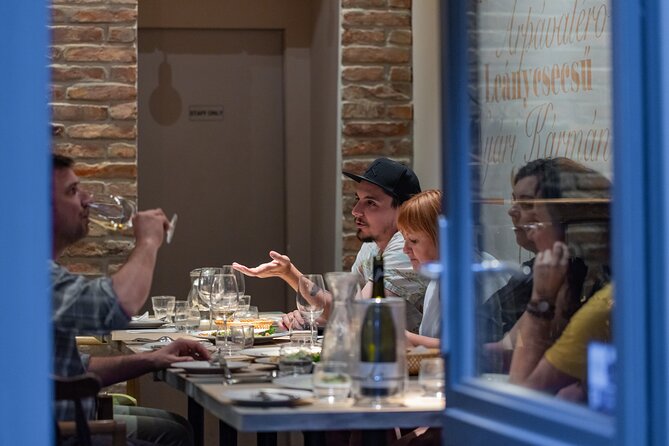
This is a progressive Hungarian dinner disguised as a neighborhood walk. You begin in a wine cellar, then move through bakeries, bars, bistros, and an old coffeehouse while the Palace District’s grand buildings provide the backdrop. By the time you reach Astoria, you have tasted wine, cheese, cured meats, goulash, pálinka, pastries, coffee, and several other local dishes.
I like the six-stop food route, which gives you a broader introduction to Budapest than a single restaurant meal. I also like the balance between eating and walking: guides such as George, Angela, Andrea, Barbara, Elza, Lila, and David have brought plenty of food knowledge and local stories to different departures. The main consideration is the price, $145 per person, and the fact that the evening includes a fair amount of history along with dinner.
Key points at a glance
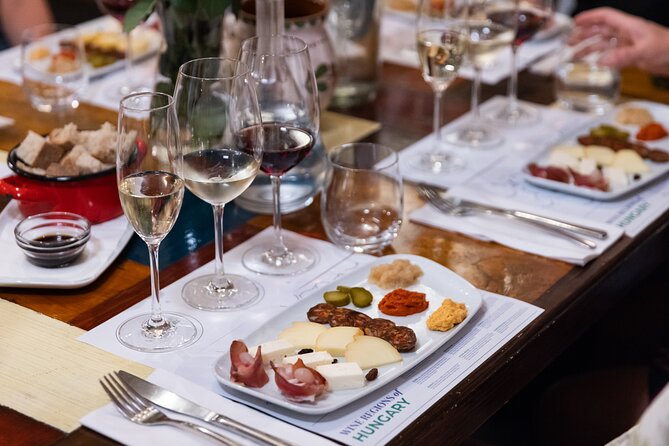
- Three Hungarian wines to start: Taste wine with a sommelier at Tasting Table, paired with local cheese and charcuterie.
- A full progressive meal: You visit several venues for bakery snacks, pálinka, goulash, savory dishes, and dessert.
- Palace District setting: Explore the VIII District, where old palaces now sit among universities, cafés, bars, and local businesses.
- Small-group format: Most departures are limited to two to eight people, with a maximum of 16 listed for the activity.
- No dinner beforehand: The portions add up quickly, including a substantial savory course and dessert.
- Central start and finish: Meet at Bródy Sándor utca 9 at 5 p.m. and finish near Astoria around 9 p.m.
Why the Palace District makes a good dinner setting
Budapest has plenty of food walks, but this one focuses on the Palace Quarter, or Palota Negyed, in District VIII. The neighborhood is known for its old aristocratic palaces, many built during the 1800s, and for the way those grand façades now share streets with university buildings, small bars, cafés, and everyday city life.
That contrast gives the evening some character. You are not simply moving between polished restaurants. You are walking through a part of Pest where historic architecture and student life sit side by side. Your guide uses the buildings and streets to explain how Budapest changed from the nineteenth century to the present.
The route also reaches the Jewish Quarter and a courtyard bar associated with Budapest’s ruin-bar culture. The experience does not treat food as a separate subject. You learn about Hungarian eating and drinking while moving through the places where those habits still make sense.
The 5 p.m. start is well judged. You have daylight for the first part of the walk, then see the neighborhood as evening settles in. The finish around 9 p.m. leaves you in a central part of town, with Astoria’s public transport connections nearby.
More Wine Tours in Budapest:
- Budapest Centre Food Tour with 10+ Tastings, Wine & Street Food
★ 5.0 · 810 reviews - From Budapest: Etyek Wine Tasting Tour with 3-Course Meal
★ 4.8 · 557 reviews - Budapest Food Tour: Market to Tavern with 14+ Tasters & Wines
★ 5.0 · 434 reviews
Tasting Table sets the tone with Hungarian wine
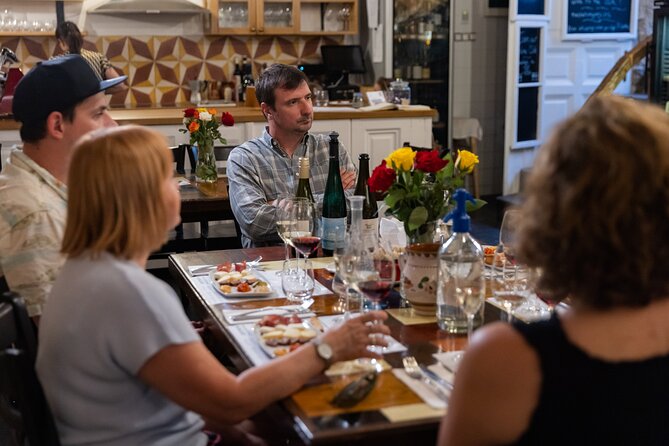
The evening begins at Tasting Table Cellar, operated by Taste Hungary, at Bródy Sándor utca 9. This is not just a quick glass before the walk. A sommelier introduces three Hungarian wines and gives you some background on the country’s wine regions and traditions.
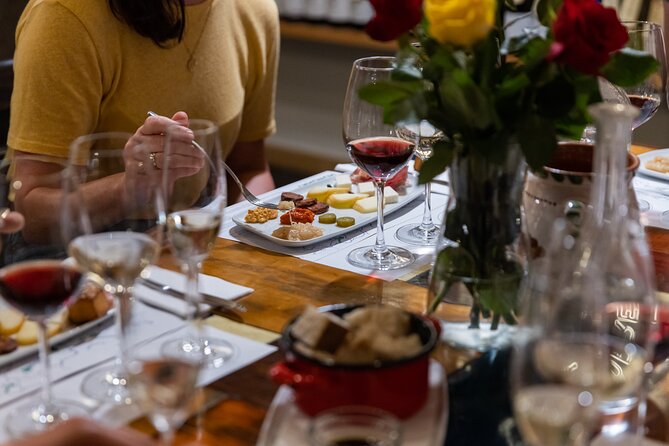
The wines are served with a board of local cheeses and charcuterie. That opening course matters because it gives you a quiet start before the walking begins. You can ask questions, compare the wines, and get a sense of how Hungarian food is paired with them.
Past guides have included people such as Andrea, Barbara, and George, and the quality of the evening depends in part on how well your guide connects this opening tasting to the rest of the route. The best version of the experience treats the wine as part of Hungarian culture, not as a formal tasting exam.
You do not need to arrive with a working knowledge of Hungarian grapes. The purpose is to learn enough to recognize the country’s wine style and to understand what you are drinking. One past group particularly enjoyed the red wine, while another appreciated receiving a map and an overview of the wine regions.
The bakery stop adds an everyday local touch
After the cellar, the route moves through the Palace District and includes a bakery run by a family whose business dates to 1870. That detail gives the stop more weight than a generic pastry tasting. You are seeing a long-running food tradition in a neighborhood where old institutions remain part of daily life.
The bakery snack also breaks up the heavier courses that follow. Hungarian food is not only stews and meat. Bread, pastries, and baked goods are part of the country’s food culture, and this stop lets you see that side of it.
Exact selections can vary, so you should think of this as a chance to sample what the bakery offers rather than a promised single pastry. If you have a sweet tooth, save room. Dessert comes later, and the evening is deliberately generous.
Goulash is more than a quick sample
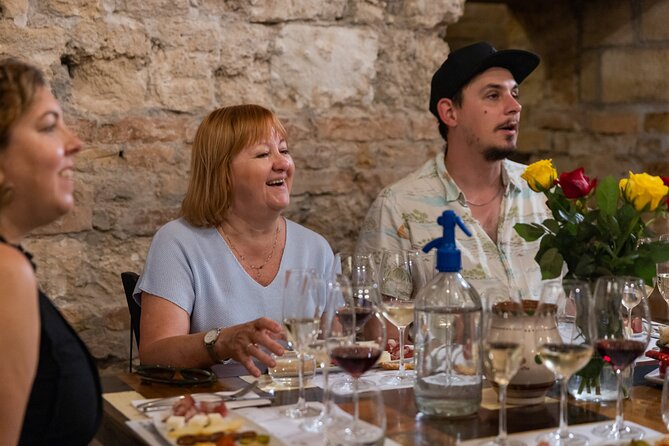
At a neighborhood bistro, you can expect goulash and other appetizers, with drinks paired along the way. The goulash soup has been a highlight for several people on the route, especially because it arrives as a warming, substantial course rather than a token spoonful.
This is useful context for first-time visitors. Outside Hungary, goulash is often treated as a thick meat stew. In Budapest, gulyás can refer to a soup with a different texture and presentation. The tour gives your guide a chance to explain that distinction while you eat it in a local setting.
The savory portion may continue beyond the soup. The experience has been described as a progressive dinner, and some departures have included a full-size main course with a choice of dishes. Since menus can change, I would not book it expecting one fixed entrée. Book it expecting enough food to replace dinner.
The pacing is part of the appeal. You do not sit for four straight hours at one restaurant. You walk, stop, eat, listen, and walk again. That keeps the evening lively, though it also means you should wear comfortable shoes and be prepared for several hours on your feet.
More history tours in Budapest:
- Barcelona: Tapas Walking Tour with Food, Wine, and History
★ 4.8 · 4,261 reviews - Sevilla Food Tour: Tapas, Wine, History & Traditions
★ 5.0 · 3,468 reviews - Madrid Tapas & Taverns Small Group Food & History Tour
★ 5.0 · 2,664 reviews - Historic Ybor City Food Walking Tour
★ 5.0 · 2,210 reviews
Pálinka and courtyard bars show another side of Budapest
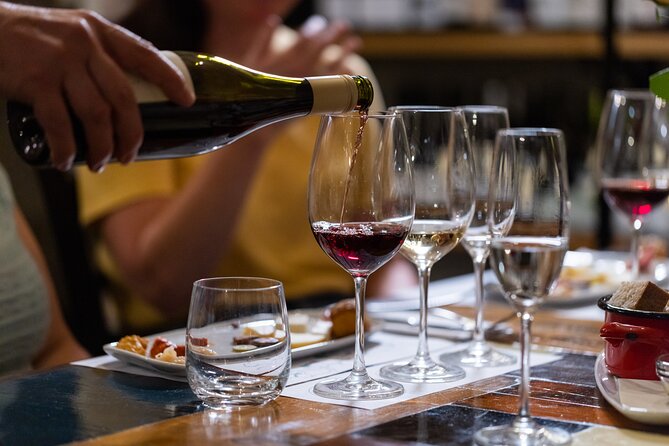
One stop features pálinka in a fun courtyard bar. Pálinka is Hungary’s traditional fruit brandy, and it is usually served in small quantities because the flavor and alcohol are both strong. This is a tasting, not a large drink.
The courtyard setting adds a useful look at Budapest’s casual bar culture. The guide explains the idea behind ruin bars and the nearby Jewish Quarter, connecting the drink to the changing social life of the district.
This part of the walk may appeal most to people who want more than a formal restaurant meal. You get a sense of how Budapest uses old courtyards and worn historic spaces for modern nightlife. At the same time, anyone sensitive to alcohol should be aware that the evening includes wine and pálinka, with additional drinks at later stops.
The guides named for past departures, including George and Elza, were praised for mixing food, drink, and history without turning the walk into a lecture. That balance is worth noting. One person found the history portion a little too long, so if your priority is eating rather than city interpretation, you should know that stories are built into the route.
The final coffeehouse stop gives the night a proper finish
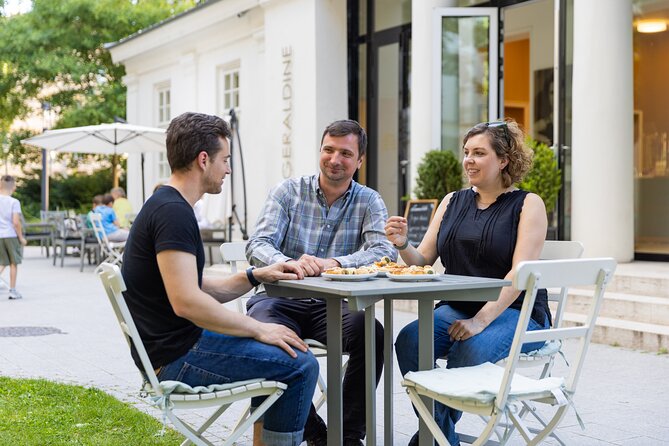
The last food stop is dessert at an old coffeehouse, often with coffee and traditional Hungarian pastries. This is a fitting end because Budapest’s café tradition is one of the city’s most recognizable food experiences.
After several savory courses, the coffeehouse changes the rhythm. You sit down, slow down, and finish with something sweet. Several guides have made this stop a strong part of the evening, and it is easy to see why. Dessert in a historic café feels more distinctively Budapest than simply ending at another bar.
You should not count on a specific pastry unless the provider confirms the menu for your date. The important point is the format: traditional dessert and coffee in an old-style café setting. If you have already eaten before the tour, this is the point at which you may regret it.
What the four hours feel like
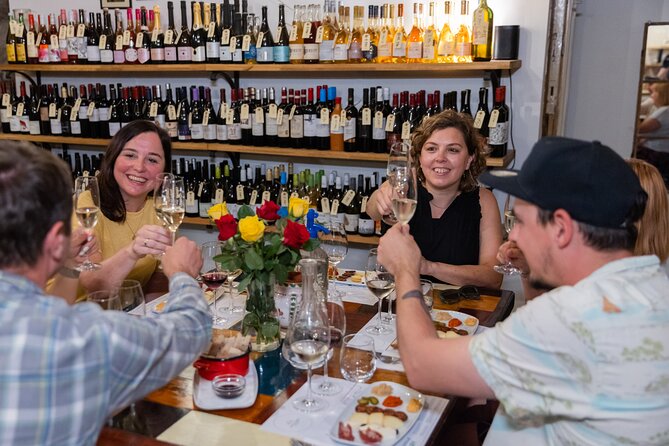
The route runs approximately from 5 p.m. to 9 p.m. It combines a seated wine tasting, short walks between venues, standing or seated tastings, neighborhood explanations, and a final café stop.
The four-hour length works because the food is spread across the evening. You are not rushed from one dish to the next, and there are regular chances to ask questions or take photographs. The tour also starts and ends in central Budapest, so you do not lose time traveling out to a remote neighborhood.
There is a practical tradeoff. This is not a fast overview of Budapest. The route focuses on one part of Pest and adds food stops along the way. If you have only one evening in the city and want to see the Parliament, Buda Castle, and the Danube, this is not the right use of your time. If you want to understand one central neighborhood through its food and buildings, the pace makes sense.
The group size is another advantage. The stated small-group size is two to eight people, while the overall activity information gives a maximum of 16. Large groups are handled as private tours. A smaller group makes it easier to hear the guide, get answers, and keep the movement between venues manageable.
How much food and drink should you expect?
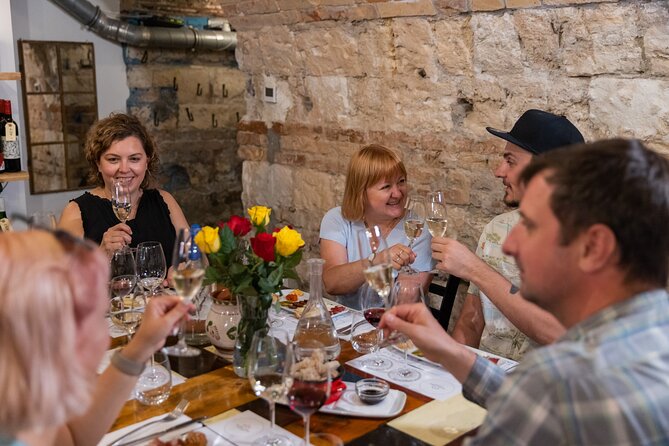
You should treat this as dinner. The opening wine tasting includes three wines, cheese, and charcuterie. Later stops add bakery food, goulash, appetizers, a savory meal, pálinka, dessert, coffee, and other drinks.
The exact number of separate dishes can change, but the overall amount is generous. One past departure stopped at six locations, and another included several courses at different restaurants and bars. The tour is designed so you do not need a dinner reservation afterward.
Do not eat a full meal beforehand. A small snack earlier in the afternoon may be sensible if you are accustomed to early dining, but arriving hungry is the better plan. You also need to pace yourself with alcohol. Three wines at the cellar are followed by other drink tastings, and the tour can feel long if you accept every alcoholic serving without considering the total.
Dietary restrictions require advance attention. The provider tries to accommodate vegetarian diets, allergies, and religious restrictions, but says local food customs can make options quite limited and cannot guarantee every request. Contacting the provider before booking is wise if food restrictions are central to your decision.
Is $145 a fair price?
At $145 per person, this is not a budget dinner. The price makes more sense when you count what is included: an English-speaking food guide, three wines, cheese and charcuterie, several food venues, a substantial progressive meal, dessert, coffee, and neighborhood interpretation over four hours.
You are also paying for access to a planned route. Finding one good Hungarian restaurant is easy enough. Finding a bakery with a long family connection, a suitable wine cellar, a courtyard bar, a traditional café, and a neighborhood bistro, then fitting them into one evening, takes more work.
The value is strongest if you want a first taste of Hungarian food and do not want to spend time choosing restaurants. It is weaker if you do not drink, eat very little, or prefer to order exactly what you want from one menu. The price includes drinks and multiple tastings, so nondrinkers may not receive the same value unless the provider can offer useful alternatives.
The 96 percent recommendation rate and 4.9 rating from 55 ratings indicate strong satisfaction, but the more useful point is the pattern of praise: guides are repeatedly described as personable, informed about food and wine, and good at making the walk enjoyable. The individual guide can shape the evening, so it is worth asking who is scheduled if you have a preference. Guides who have led versions include Angela, George, Andrea, Barbara, Elza, Lila, and David.
Who should book this evening walk?
I would choose this experience for a first visit to Budapest, especially if you enjoy trying local food but want some help understanding it. It also suits couples, friends, and solo visitors who prefer a small group to a formal cooking class or a large bus tour.
Food-focused visitors will get the most from it, but you do not need to be an expert. The guide handles the explanations, and the format gives you several chances to ask about dishes, wine, bars, and places to eat later in your trip.
It is less suitable for anyone who wants a light snack, avoids alcohol, has strict dietary needs, or dislikes walking between stops. It may also be a poor fit for someone who wants only food and no city history. The route includes plenty of stories about Budapest and the buildings around the Palace District.
Most people can take part, and service animals are allowed. The tour is near public transportation, though the supplied details do not specify how much walking is required or whether every venue is step-free. If mobility is a concern, ask before booking.
The experience requires at least two people. If that minimum is not met, the provider may cancel after confirmation and offer another date or a full refund. The cancellation terms are strict: the experience is non-refundable and cannot be changed for any reason, so choose your date carefully.
Should you book the Palace District dinner walk?
Book it if you want a full evening of Hungarian food, wine, local bars, and neighborhood stories, all handled by one English-speaking guide. The route gives you more range than a single restaurant and more substance than a simple tasting crawl.
I especially like the opening wine cellar, the bakery with its long family connection, the goulash course, and the final coffeehouse dessert. Together, they create a useful introduction to Budapest’s food culture without requiring you to plan six separate stops.
Skip it if $145 feels too high for dinner, if you need complete control over every ingredient, or if you would rather spend the evening at a single restaurant. For everyone else, arrive hungry, wear comfortable shoes, pace the drinks, and let the Palace District provide the setting.
FAQ
Where does the tour begin?
The tour begins at Tasting Table Cellar by Taste Hungary, at Bródy Sándor utca 9, Budapest 1088.
What time does the tour start and finish?
It starts at 5 p.m. and lasts about four hours, normally finishing around 9 p.m.
Where does the tour end?
The tour ends near Astoria in central Budapest, at postal code 1053.
How many people are in the group?
The stated small-group size is a minimum of two and a maximum of eight people. The overall activity information lists a maximum of 16 travelers, and large groups receive private tours.
Is dinner included?
Yes. The experience includes generous food and drink tastings across several venues, including wine, cheese, charcuterie, bakery food, goulash, appetizers, a savory meal, pálinka, dessert, and coffee. You do not need a separate dinner reservation.
Can dietary requirements be accommodated?
The provider tries to accommodate vegetarian diets, allergies, and religious dietary restrictions, but options may be limited because of local food customs. Accommodation cannot be guaranteed in every case.
What happens if the tour does not reach its minimum number?
The experience requires at least two participants. If it is canceled because that minimum is not reached, you will be offered an alternative date or experience, or a full refund.
More after-dark experiences in Budapest
- Budapest Ruin Bars Evening Walking Tour with Drinks & Street Food
★ 5.0 · 104 reviews - Budapest Ruin Bars Evening Walking Tour with Drinks & Snacks
★ 5.0 · 25 reviews - Winner 2025 Florence Sunset Food & Wine Tour by Eating Europe
★ 5.0 · 5,015 reviews - Saigon By Night and Street Food By Motorbike | Opt: Ao Dai Riders
★ 5.0 · 4,066 reviews
New food tours we have reviewed in Budapest
- The Award-Winning Private Food Tour of Budapest: 6 or 10 Tastings★ 4.5 · 185 reviews
- Budapest Food Tasting Tour with Nelli & her local guides★ 5.0 · 190 reviews
- Budapest Ruin Bars Evening Walking Tour with Drinks & Snacks★ 5.0 · 25 reviews
- Budapest Food Tour in Obuda with 8+ Tastings of Hidden Food Gems★ 5.0 · 94 reviews
- Small-Group Culinary Walking Tour in Budapest★ 5.0 · 148 reviews
- Budapest Ruin Bars Evening Walking Tour with Drinks & Street Food★ 5.0 · 104 reviews
- Food and Wine Tasting in Budapest City Center with Sommelier★ 5.0 · 57 reviews
- Budapest Food Tour: Market to Tavern with 14+ Tasters & Wines★ 5.0 · 434 reviews
Wine Tours, compared.
Montserrat Half-Day Tour with Tapas and Gourmet Wines
Read our review →
Winner 2025 Undiscovered Lisbon Food & Wine Tour by Eating Europe
Read our review →
From Porto: 2 Wine Regions, Farm-to-Table Lunch & Boat
Read our review →
Winner 2025 Florence Sunset Food & Wine Tour by Eating Europe
Read our review →
Authentic Parisian Gourmet Food Tour with 10 Local Dishes & Wines
Read our review →
Barcelona: Tapas Walking Tour with Food, Wine, and History
Read our review →
Lisbon: Food and Wine Small Group Walking Tour
Read our review →
Lisbon Small-Group Portuguese Food and Wine Tour
Read our review →Browse the lists this tour appears in