
Review · PRIVATE FOOD TOURS
Split: Private Food Tasting Tour
Split’s best food stories begin at the market, not at a restaurant table. This private walk takes you from the Green Market and Fish Market to small sweet shops, with tastes of prosciutto, Soparnik, anchovies, olive oil, local wine, and pastries along the way. The food is the hook, but the stories behind each bite give the tour its real value.
I like the small private format, which lets you ask questions and adjust the pace. I also like the smart route through Split’s food landmarks, including a chocolate shop with a Guinness World Record and the city’s oldest pastry shop. The main consideration is that this is a tasting walk, not a full sit-down meal, and the wine portion can be limited or separate from the food tour.
Key points at a glance
- Market-first route: Start at Split’s Green Market and Fish Market, where local ingredients connect directly to Dalmatian cooking.
- Traditional bites: Try prosciutto, cheese, Soparnik, salted anchovies, almonds in sugar, olive oil, wine, pastries, and other small tastes.
- Private group: The $176 rate covers a group of up to two, making this more attractive for couples than for solo visitors.
- Strong local guiding: Guides including Marta, Antonio, Antonia, Jakov, and Darko have been praised for food, culture, and Split history.
- Two-hour length: It gives you a useful introduction without taking over your day.
- Practical limits: Hotel pickup is not included, children must stay with an adult, and the route is not suitable for wheelchair users.
Why this food walk works in Split
Split is easy to admire from its Roman walls and seafront, but food gives you a better sense of daily life. Dalmatian cooking is built around straightforward ingredients: cured meat, fresh fish, olive oil, bread, vegetables, cheese, anchovies, and sweets. This tour connects those ingredients to the people and places that sell them.
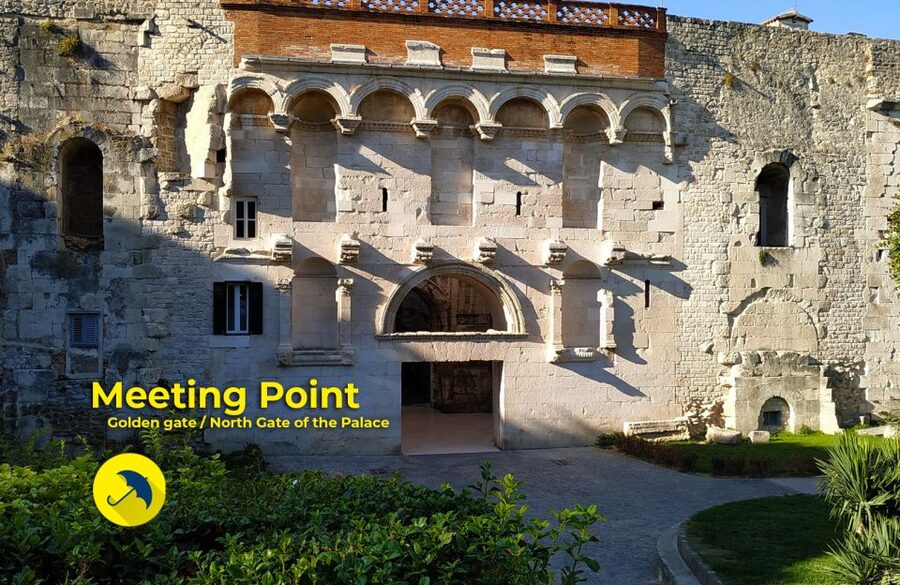
You meet at the Golden Gate of Diocletian’s Palace, down the stairs from the bronze statue of Gregory of Nin. Look for the guide carrying a blue umbrella. That detail matters in a busy old center where several groups may be meeting at once.
The tour lasts two hours and stays in Split. You do not spend time getting in and out of transport, so the short schedule is used for food and conversation. The walk is described as moderate, with enough movement to cover several stops but not so much that it becomes a sightseeing march.
I see this as a useful first activity in Split. Guides such as Marta, Antonio, Antonia, Jakov, and Darko have all led versions of the experience, and their strengths vary slightly. Marta has been especially praised for connecting food with culture and history. Antonio has a clear, friendly way of explaining local dishes. Jakov brings a strong interest in history and cooking, while Darko has been noted for his local food and drink advice.
More Private Food Tours in Croatia:
- Lisbon Exclusive PRIVATE Food Tour with 6 or 10 Tastings
★ 4.5 · 1,113 reviews - The Award-Winning PRIVATE Food Tour: 10 Tastings of 3 Cultures
★ 4.5 · 1,017 reviews - Rome Private Food Tour with 6 or 10 Tastings
★ 4.5 · 902 reviews
From the Golden Gate to the Green Market
The Golden Gate is a fitting starting point. It places you inside the historic core immediately, but the tour does not spend the whole time looking at stonework. Instead, it quickly turns your attention toward the ingredients that have fed Split for generations.
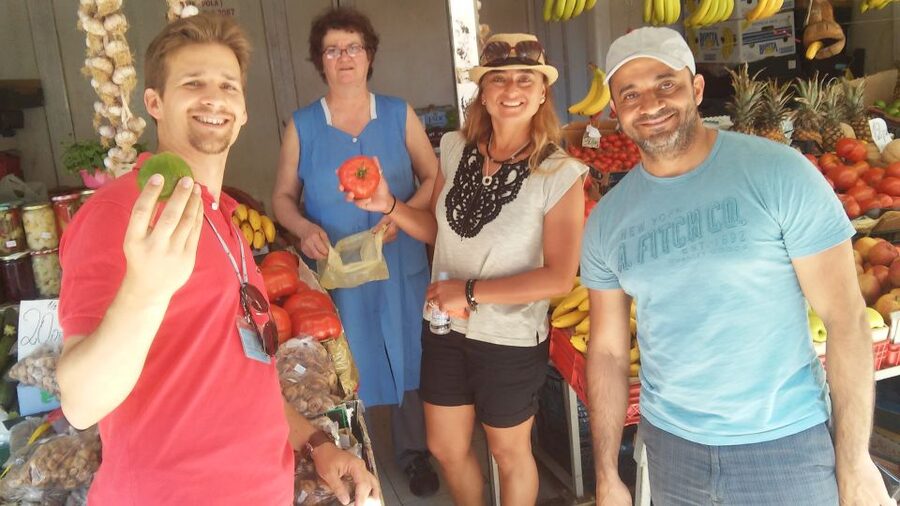
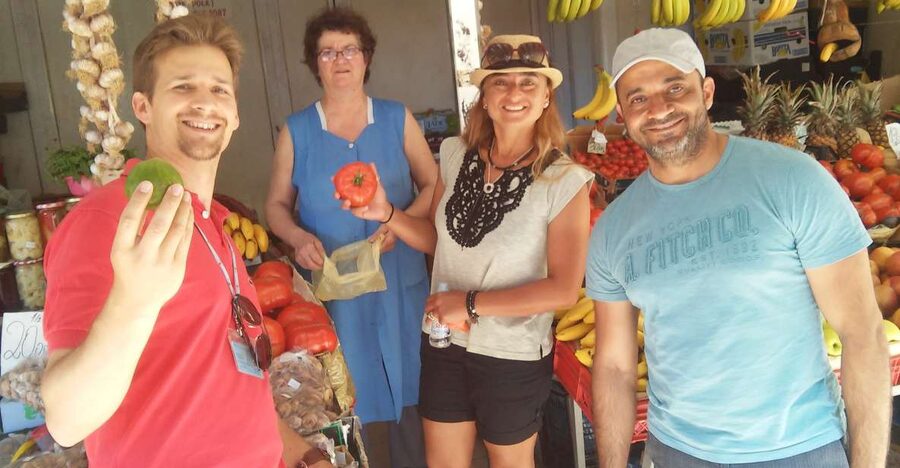
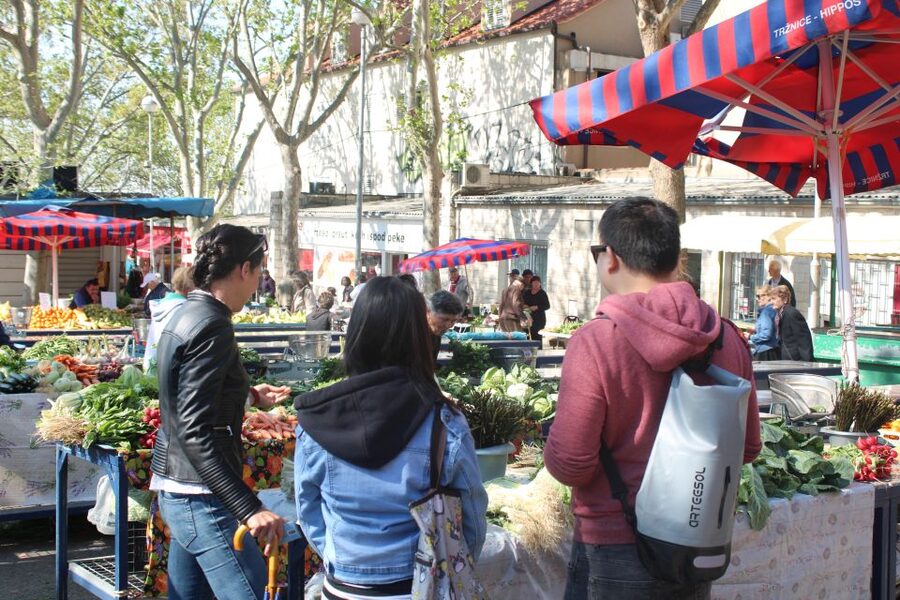
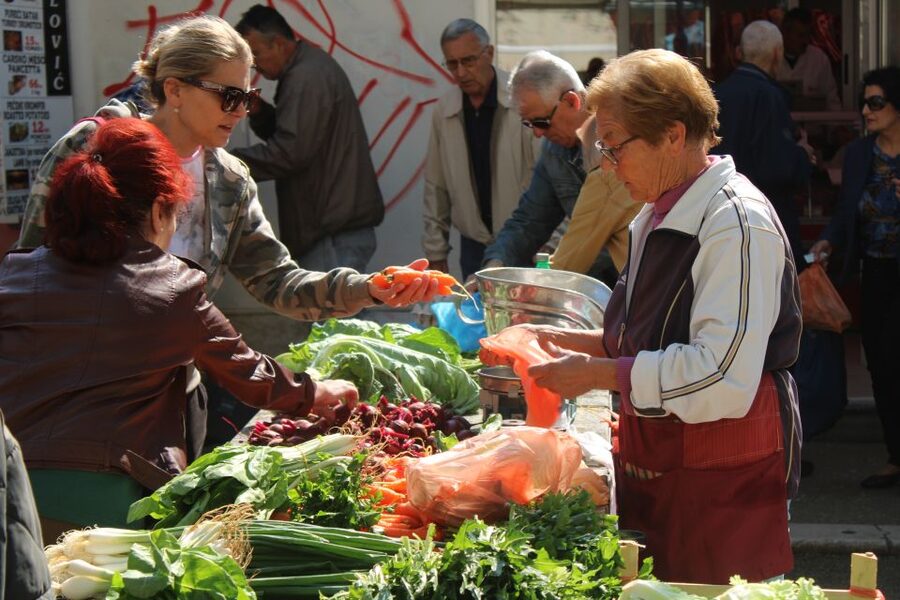
The Green Market is one of the most useful stops because it shows food before it reaches a plate. You can expect to hear about vegetables, almonds, olive oil, and other products used in Dalmatian cooking. The market visit gives context to later tastings. A piece of bread with olive oil means more after you have seen the kinds of produce sold nearby.
Market conditions can change with the season, so the exact selection is not fixed. That is a benefit rather than a flaw. A good market visit should reflect what is available that day, not force every season into the same script.
The guide also explains how ingredients fit into local habits. You are not simply handed food and told its name. The purpose is to understand why certain snacks have stayed part of Dalmatian cooking for so long.
The Fish Market and the seafood connection
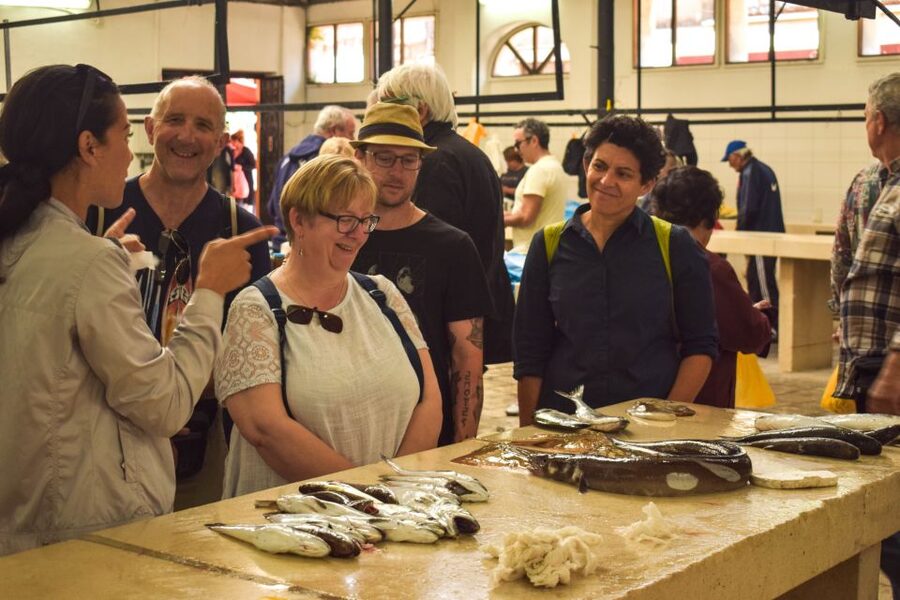
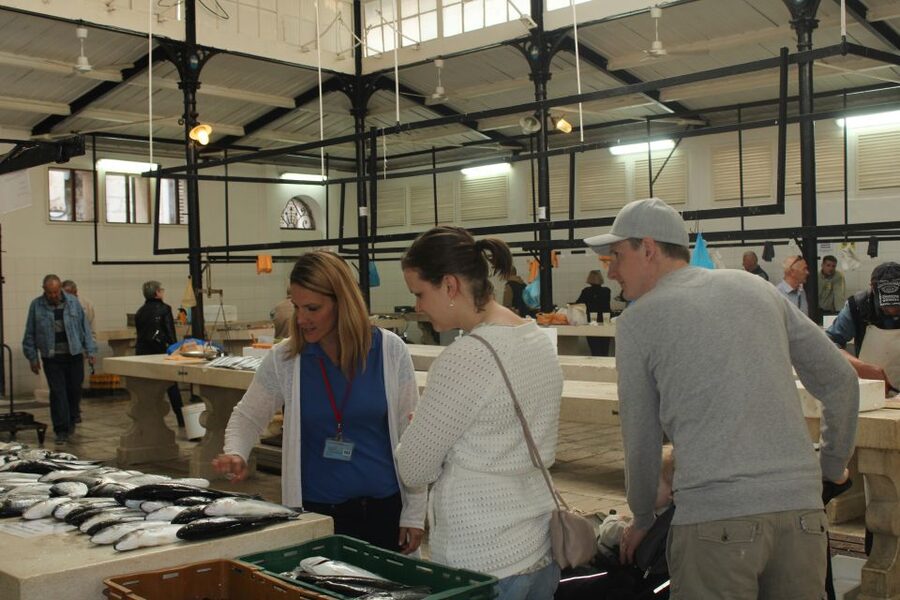
The Fish Market adds another side of Split’s food culture. Here, the focus shifts toward the Adriatic and the practical business of choosing fish. One version of the experience has included selecting fish and discussing how it would traditionally be prepared, followed by vegetables from the market and cooking at a restaurant.
That market-to-meal format is worth clarifying when you book. The current experience is presented as a two-hour tasting walk, with salted anchovies included among the listed samples. Earlier versions described a longer food experience with fish purchased at the market and cooked for lunch. The supplied details do not guarantee that a full fish lunch is part of every current departure, so do not book this expecting a restaurant meal unless the operator confirms it.
Still, the Fish Market is valuable even without a full lunch. It shows how closely Split’s cooking is tied to the sea, and it gives your guide a natural way to explain seafood customs, preservation, and preparation.
Soparnik, prosciutto, and the real taste of Dalmatia
The food selection is strongest when it stays with simple, traditional items. Dalmatian prosciutto with homemade bread is a classic pairing: salty cured meat, fresh bread, and the kind of uncomplicated flavor that depends on good ingredients.
Soparnik is another important taste. This savory pie is associated with the Dalmatian region and gives you something different from meat and seafood. The tour uses it as a way to introduce an old local dish rather than just another snack on a plate.
You may also taste cheese, salted anchovies, almonds in sugar, olive oil, and local wine. These are small portions, but the range is broad. In two hours, you get a useful sample of salty, savory, oily, sweet, and fermented flavors.
The guide’s explanation is as important as the food. Jakov, for example, has been praised for combining historical knowledge with cooking advice. That makes the experience more useful for anyone who wants to bring home ideas, not only photographs.
If you have strong food restrictions, ask before booking. The available information lists several ingredients but does not promise substitutions or a specific allergy policy. The tour is built around tasting local specialties, so it is not designed as a dedicated vegetarian, vegan, gluten-free, or alcohol-free program.
More private departures in Croatia:
- Split: Small Group Food Tour with Private Option
★ 4.8 · 116 reviews - Private Street Food Tour by Motorbike/Car with Local Students
★ 5.0 · 3,950 reviews - Private Street Food Evening Walking Tour in Ho Chi Minh City
★ 5.0 · 3,175 reviews - Private Street Food Motorbike Tour in Ho Chi Minh City
★ 5.0 · 2,180 reviews
Chocolate, pastries, and the sweet finish
The route includes a local chocolate shop with a Guinness World Record and the oldest pastry shop in Split. These stops add variety and keep the tour from becoming a parade of cured meat and seafood.
The chocolate shop is an unusual addition to a Dalmatian food walk. Its record gives the guide a memorable story to tell, and it offers a break from the older savory traditions. The pastry shop, meanwhile, provides a direct link to Split’s long habit of ending a meal with something sweet.
The exact pastries and sweets can vary, but the point is clear: dessert is treated as part of the local food tradition, not as an afterthought. I like this balance because a tasting tour should finish with a change of pace. The almonds in sugar also bridge the gap between traditional pantry ingredients and confectionery.
Do not expect a large dessert spread. This is still a compact walking tour. You will get samples and explanations, not a full bakery crawl.
What the two-hour schedule really gives you
Two hours is enough to cover the food stops without turning the experience into a half-day commitment. That works well if you are arriving in Split for a short stay, have a cruise-day schedule, or want to leave room for Diocletian’s Palace, the waterfront, or an evening meal.
Timing matters. One group appreciated starting an hour earlier to avoid cruise ship crowds. If your date falls during a busy port day, ask about the earliest available start. An early departure may make the market easier to navigate and give you a calmer conversation with the guide.
The short schedule also means you should arrive ready to move. You begin at the Golden Gate and finish back there, with no hotel pickup. Wear comfortable shoes, although the route has been described as not involving excessive walking.
The private format is a major advantage for couples. You can ask why Soparnik is made a certain way, how to use the olive oil, or which pastry to seek out later. A larger group would make those questions harder. The tradeoff is price: $176 per group of up to two is $88 per person if fully shared, which is not cheap for a two-hour experience. It becomes better value if you want personal attention and a guided introduction at the start of your stay.
Wine and olive oil: know what is included
Local wine and olive oil are included among the listed tastes, but the boundaries of the wine experience deserve attention. Some food and wine bookings have involved a separate wine tasting later in the day, with different guides and a gap between activities.
Do not assume that booking the food walk automatically gives you an extended winery visit. One account specifically found the wine portion smaller than expected, while another described a separate wine tasting with guides named Ivan, Ancia, and Duke. Those details point to a possible add-on or linked experience rather than a guaranteed part of the two-hour food route.
For this food tour, think of wine as one element in a wider tasting rather than the main event. The olive oil is similarly part of the food story, not necessarily a formal tasting class. If wine is your priority, confirm the number of pours, the timing, and whether a separate booking is required.
The minimum drinking age is 18. Children can join only when accompanied by an adult, and unaccompanied minors are not allowed.
The guides make the difference
This experience depends heavily on the person leading it. The strongest guide comments focus on warmth, clear explanations, local food knowledge, and a genuine interest in Split.
Marta has been singled out for making the tour a good introduction to the city, combining food, culture, and history. Antonio has been praised for explaining the background of the dishes and for maintaining a friendly style. Antonia has been described as thorough, with generous samples and clear information about food and drink.
Jakov brings an especially useful combination for food-minded visitors: an interest in history and a passion for cooking. He has also shared cultural cooking tips, which can help you understand how to use ingredients after you leave Croatia. Darko has been praised for his command of local food and drink.
Guides can differ, so do not expect an identical performance every time. That is normal with a local walking tour. The format gives each guide room to bring personal stories and recommendations into the conversation.
Who should book this experience?
I would recommend it to couples who want a private introduction to Split’s food culture without spending half a day at a restaurant. It also suits first-time visitors who prefer to learn through markets and snacks rather than through a formal cooking class.
It is useful early in a stay because you can ask what to order later, which sweets to try, and where local ingredients fit into Dalmatian meals. The Golden Gate meeting point also makes it easy to continue sightseeing afterward.
Food-focused visitors should enjoy the range, especially if they like cured meat, seafood, cheese, olive oil, wine, and pastry. People who want a full lunch, extensive wine tasting, or a hands-on cooking session may find the format too light.
The tour is not suitable for wheelchair users. The information provided does not describe step-free access, and the route includes market and old-town areas. Hotel pickup is not included, so plan to reach the Golden Gate on your own.
Cancellation is flexible, with a full refund available when you cancel at least 24 hours before the start. You can also reserve now and pay later, which helps if your Split schedule is still changing.
Should you book the Split food tasting tour?
Book it if you want a personal, compact introduction to Dalmatian food and value a guide who can explain the story behind each taste. The market visits, Soparnik, prosciutto, anchovies, olive oil, sweets, and small-shop stops make this more than a simple snack sampler.
At $176 for up to two people, it is best viewed as a private orientation rather than a cheap meal. The value comes from the guide, the market access, and the chance to ask questions while you taste. Confirm the wine details if that is central to your plans, and do not expect hotel pickup or a guaranteed full fish lunch.
For a couple beginning a stay in Split, I would book it early in the trip. You will leave with a better sense of what to eat, where to look, and why these ordinary-looking foods matter.
FAQ
Where does the Split food tasting tour begin?
It begins at the Golden Gate of Diocletian’s Palace, down the stairs from the bronze statue of Gregory of Nin. Look for a guide with a blue umbrella.
How long does the food tour last?
The experience lasts two hours.
What markets are included?
The route includes Split’s Farmers’ or Green Market and the Fish Market.
What food can I taste?
Listed tastings include prosciutto, cheese, almonds in sugar, Soparnik, salted anchovies, homemade bread, olive oil, local wine, pastries, and other traditional snacks.
Is the tour private?
Yes. It is a private group experience for up to two people at the listed group price.
Is hotel pickup included?
No. You must make your own way to the Golden Gate meeting point.
Is wine tasting part of the tour?
Local wine is listed among the tastings, but a longer or separate wine tasting may require a different booking. Confirm the exact wine arrangements before reserving if this is important to you.
Can children join the tour?
Children must be accompanied by an adult. Unaccompanied minors are not allowed, and the minimum drinking age is 18.
New food tours we have reviewed in Croatia
- Split: Food Tasting Walking Tour★ 4.9 · 102 reviews
- Split: Small Group Food Tour with Private Option★ 4.8 · 116 reviews
- Korcula: Buggy Safari with Local Food and Wine Tasting★ 5.0 · 97 reviews
- Pelješac Full-Day Wine and Food Tour from Dubrovnik★ 5.0 · 72 reviews
- From Split: Krka Waterfalls with Wine & Cheese Tasting Tour★ 4.6 · 33 reviews
- Zagreb: Food Tour with Tastings★ 4.9 · 153 reviews
- Dubrovnik: Oyster, Mussles, and Wine Tasting Tour in Ston★ 5.0 · 77 reviews
- Krka Waterfalls, Food & Wine Tasting, Boat Ride & Zadar Old Town★ 5.0 · 420 reviews
Private Food Tours, compared.
Lisbon Exclusive PRIVATE Food Tour with 6 or 10 Tastings
Read our review →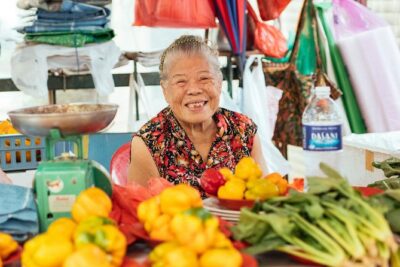
The Award-Winning PRIVATE Food Tour: 10 Tastings of 3 Cultures
Read our review →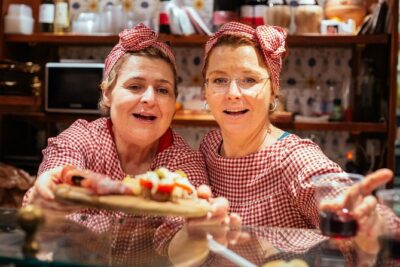
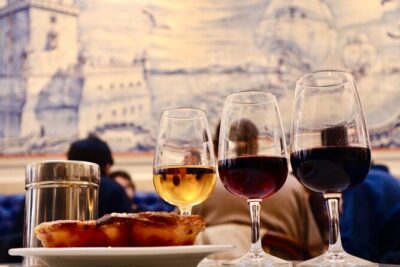
Lisbon Private Food Tour – Taste 10+ Local Dishes & Wines
Read our review →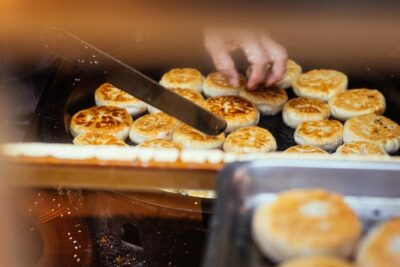
The Award-Winning Private Food Tour of Taipei: The 10 Tastings
Read our review →
Florence Exclusive PRIVATE Food Tour with 6 or 10 Tastings
Read our review →
Porto Private Food and Drink Tasting Tour with Local
Read our review →
Exclusive Naples Private Food Tour: 6 or 10 Tastings
Read our review →Browse the lists this tour appears in