
Review · MARKET FOOD TOURS
Munich: Christmas Markets Food & Drink Tour
Munich’s Christmas markets are at their best when you know what you’re looking at. This tour links the famous market on Marienplatz with smaller seasonal stops around the Old Town, adding tastings and stories about Advent customs, market traditions, and the German origins of the Christmas tree and Advent calendar.
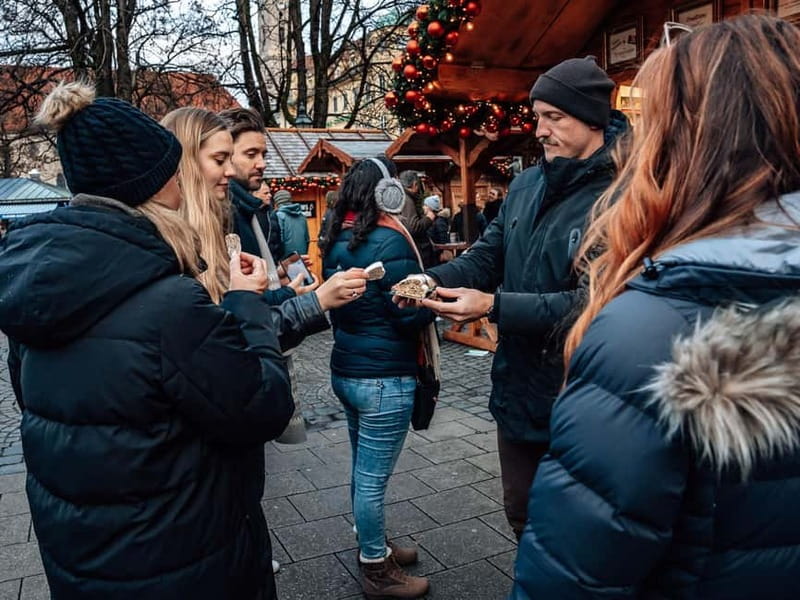
I like the practical route and the generous food focus. You get mulled wine, gingerbread, and sugar-roasted almonds while walking between several markets, and public transport tickets are included. The main consideration is pace: three hours gives you a good introduction, but not much time for leisurely shopping at every stop.
One recent tour was led by Leon, and the experience earned a 4.6 rating from 50 reviews. It works especially well early in your Munich stay, since you can use the tour to learn which markets deserve a second visit.
Key points to know before booking
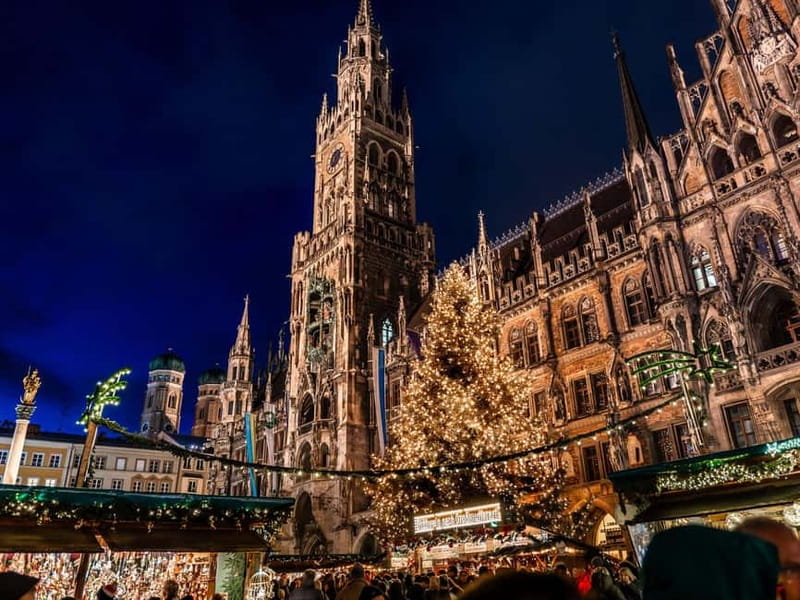
- Four very different market settings: See Marienplatz, the Christmas village at the royal Rezidenz, the Crib Market, and the Medieval Market near Odeonsplatz.
- Tastings are part of the price: Expect seasonal specialties such as mulled wine, Lebkuchen gingerbread, and sugar-roasted almonds.
- A useful first-day orientation: The route helps you understand Munich’s market scene before returning on your own.
- Public transport is included: The ticket is useful for moving between the meeting point and the Old Town.
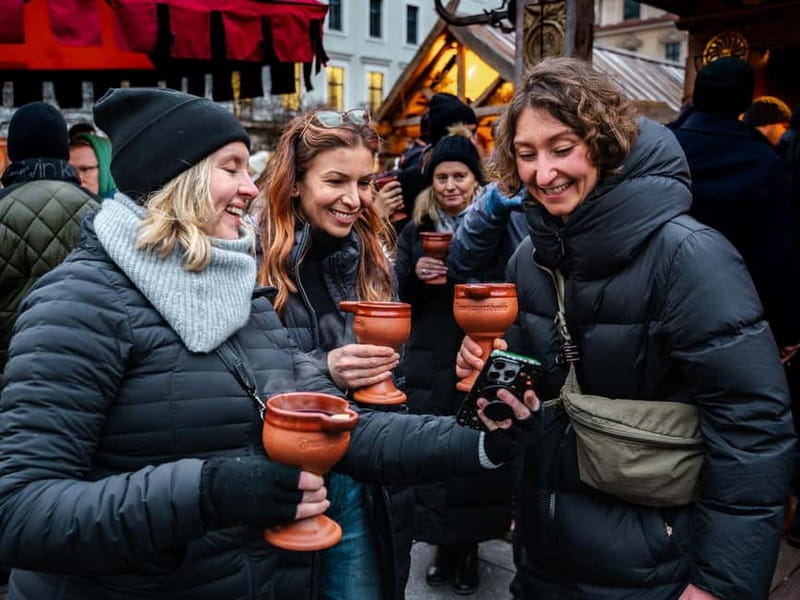
- Bring a €15 cup deposit: You receive a special cup for your final drink and get the deposit back at the end.
- English-speaking guide: The tour is conducted in English and lasts three hours, with about two hours listed as guided touring in the Old Town.
Why a guided Christmas market walk helps
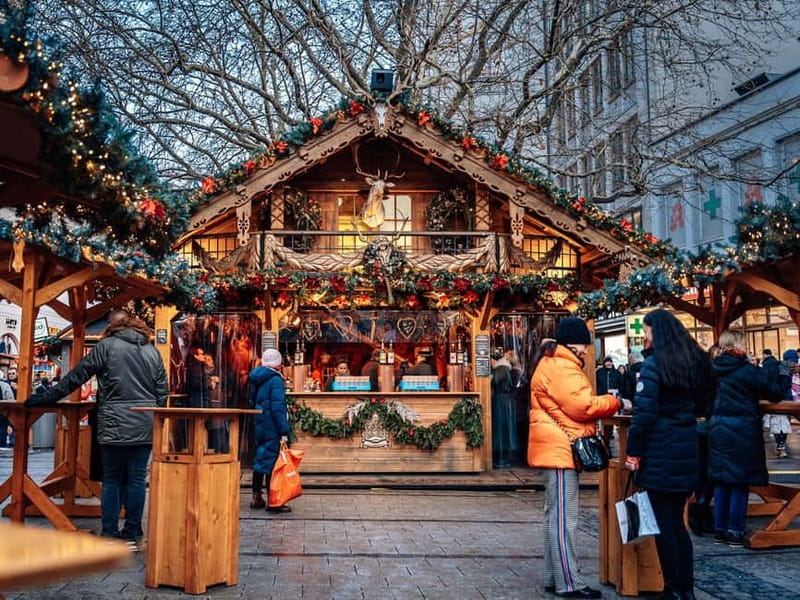
Munich’s markets can look simple at first glance: wooden stalls, lights, ornaments, food, and steaming mugs. A guide gives those details some meaning. You learn why certain displays appear, how Advent customs fit into the season, and how the markets developed as part of German Christmas culture.
That context matters because the markets are not just shopping areas. They are seasonal meeting places, with food, drink, crafts, music, and religious imagery woven together. The tour’s stops show how the same Christmas idea changes from one location to another.
I also like the timing. Three hours is long enough to sample several specialties without turning the outing into an all-day commitment. If this is one of your first activities in Munich, the route gives you a clear sense of where to return for shopping, photographs, or another mug of mulled wine.
The experience is conducted in English, so it suits visitors who want explanation without having to translate signs or menus as they walk. The guide handles the route and the stories, leaving you free to watch the stalls and enjoy the food.
More Market Food Tours in Germany:
- Berlin Christmas Markets with Culinary Tour
★ 4.5 · 28 reviews - Chef Guided Food Tour of Pike Place Market
★ 5.0 · 3,733 reviews - Tokyo Tsukiji Fish Market Food and Culture Walking Tour
★ 5.0 · 3,184 reviews
Starting at Dachauer Straße 4
You meet at the local operator’s office at Dachauer Straße 4, 80335 Munich. The same location is used at the end, which makes the arrangement fairly simple, especially if you prefer not to navigate a new meeting point in the evening.
Public transport tickets are included. That is a small but useful benefit in December, when cold weather and crowded central streets can make walking every segment less appealing. The route itself focuses on the Old Town, but the included transport helps connect the starting point with the market area.
Give yourself enough time to reach Dachauer Straße 4. The supplied information does not specify a particular starting time, so you need to check the available departure options when booking. Arriving early is sensible, since the group leaves from the office and the tour returns there after the market walk.
Marienplatz, Munich’s central Christmas market
The first major stop is the market around Marienplatz, Munich’s central square. This is the most obvious place to begin because it puts you right in the middle of the city’s Christmas scene, with the Old Town forming the backdrop.
The guide explains the displays and the seasonal customs as you walk through the stalls. You will have a chance to taste market specialties, rather than simply hearing about them. That makes the visit more useful than a standard sightseeing walk, since you can connect the stories with the food and decorations in front of you.
Marienplatz is also the place where you get the classic Munich Christmas market atmosphere. It is likely to be the most popular and visually familiar stop on the route. The tradeoff is that a central market can feel busy, and a guided group cannot stop at every stall for as long as you might like.
Treat this stop as an introduction, not your only shopping opportunity. Pay attention to the stalls that interest you, then return later if you want to browse carefully or buy gifts.
The Rezidenz Christmas village
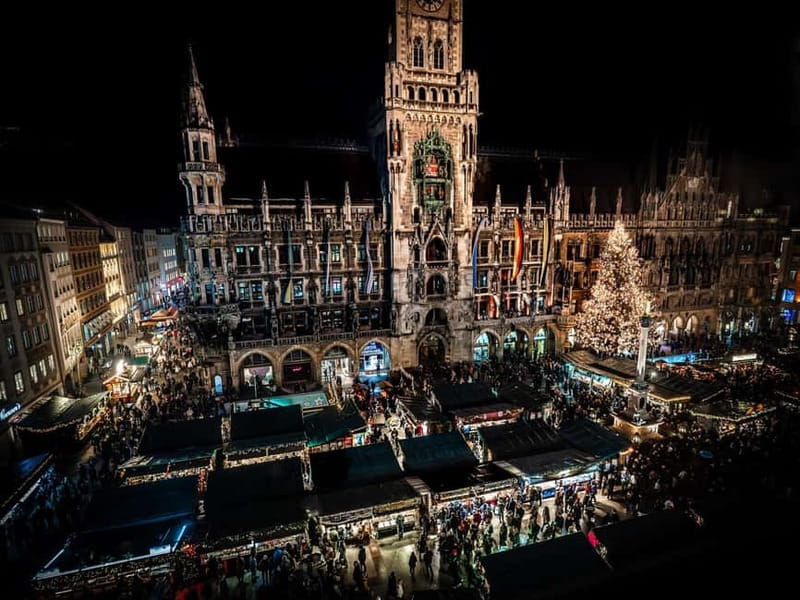
The route continues to the Christmas village in the courtyard of the royal Rezidenz. This stop changes the setting from a major city square to a more enclosed historic courtyard.
The location matters because the market feels tied to Munich’s royal past and traditional architecture. Your guide explains the meaning of the displays and the customs connected with Advent, giving the setting more depth than a quick walk through decorated stalls.
This is also a useful reminder that Munich’s markets are not all alike. Some are broad public squares, while others fit into smaller, more contained spaces. The Rezidenz stop gives you a different sense of how the city uses historic places during the Christmas season.
You should expect the group to keep moving. The tour includes several markets and food stops, so this is not designed as a long palace visit or a detailed tour of the Rezidenz interiors. The focus is the seasonal village and its traditions.
More Christmas outings in Germany:
- Nuremberg: Christmas City Culinary Tour
★ 4.6 · 40 reviews - NYC: Christmas Eve Gourmet Brunch or Dinner Harbor Cruise
★ 4.6 · 31 reviews
The Crib Market and Christmas displays
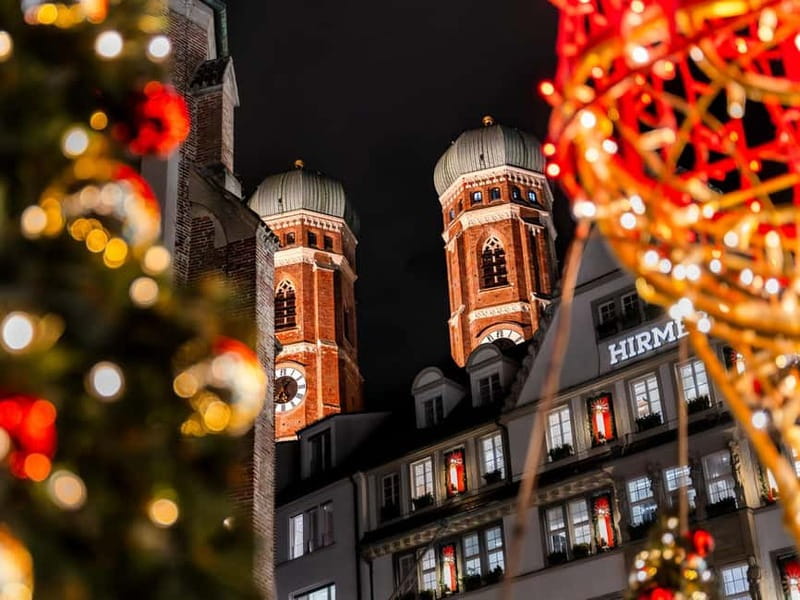
The Crib Market adds another distinct theme to the route. Its focus is on nativity displays and related decorations, making it particularly useful if you want to see the religious side of German Christmas traditions.
Your guide discusses the meaning of the displays and the rituals associated with Advent and Christmas. That explanation helps you read the market as more than a collection of decorative objects. You get a sense of why certain figures, scenes, and handmade items matter during the season.
This stop may appeal most to you if you enjoy traditional crafts and religious customs. It may be less important if your main goal is food or souvenir shopping, but it broadens the experience and shows a side of Christmas culture that is easy to miss when you visit only the biggest market.
As with the other stops, use the guided visit to decide if you want to return on your own. Three hours is enough for an overview, but not enough for close inspection of every display.
The Medieval Market near Odeonsplatz
The Medieval Market near Odeonsplatz provides the strongest change in character. Its theme reaches back to older market traditions and gives the route a historical flavor that differs from the modern central market.
The guide connects the market with Munich’s past and explains how seasonal customs developed. The setting near Odeonsplatz also keeps the tour within the historic core, so you continue seeing important parts of the Old Town rather than being taken far from the center.
This stop should suit you if you like themed markets and want something beyond standard Christmas stalls. It is also a good place to compare the atmosphere of different markets. Marienplatz gives you the central city experience, the Rezidenz offers a royal courtyard setting, the Crib Market focuses on nativity traditions, and the Medieval Market presents an older style.
The tour does not promise time to eat a full meal at each market. Think of the food as a series of well-chosen samples, with the guide keeping the group on schedule.
What you actually taste
Food and drinks are included in the tour rate, which makes the $64 price easier to assess. You are not just paying for a walking route. You are also receiving several tastings, public transport tickets, and live explanations throughout the outing.
The listed specialties include:
- Mulled wine, the classic warm Christmas market drink
- Lebkuchen gingerbread cakes
- Sugar-roasted almonds
- Other market specialties selected along the route
Mulled wine is central to the Christmas market experience, but it is also where the cup deposit comes in. Bring €15 per person in cash or another accepted form of payment for the special cup used for your last beverage. The deposit is returned after the tour ends.
That detail is easy to overlook. The €15 is not an extra tour charge, but you need to have it with you. If you would rather not carry a souvenir cup, make sure you understand that the deposit is tied to the cup and returned when it is handed back.
Lebkuchen and roasted almonds give you a taste of the sweet side of German Christmas markets. The food stops are especially helpful if you have limited time in Munich and want to sample traditional items without guessing at unfamiliar stalls.
What the history adds
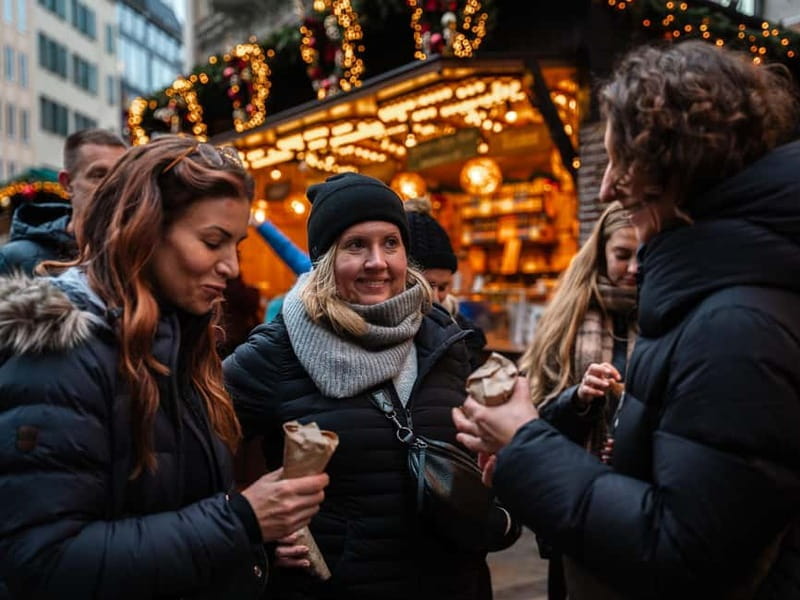
The tour highlights the German origins of two familiar seasonal traditions: the Christmas tree and the Advent calendar. Those facts are not just trivia. They explain why German Christmas markets place so much emphasis on decorated trees, countdown rituals, handmade ornaments, and Advent displays.
You also hear about the history of the markets themselves and the customs connected with them. This helps you understand why a Christmas market feels different from a regular outdoor food fair. The season, the religious calendar, the crafts, and the shared drinks all belong to the experience.
I find this kind of explanation most useful when it stays connected to what you can see. As the guide points out displays and explains rituals, you have a reason to look more closely at the stalls instead of simply walking past them.
The tour also gives you language for future visits. Afterward, you should have a better idea of what interests you: ornaments, nativity scenes, sweets, drinks, or themed markets. That is why this can be a smart early-trip activity.
Is $64 a fair price?
At $64 per person, this is not the cheapest way to see Munich’s Christmas markets. You could walk through Marienplatz and nearby markets on your own for no tour fee. The price becomes more reasonable if you value the guide, included tastings, and public transport.
The food and drink included in the rate help offset some of the cost. So does the chance to visit multiple markets in one organized route without having to plan the connections yourself. If you were already planning to buy several samples and use public transport, the practical value improves.
The tour is less compelling for confident independent visitors who want to spend hours shopping at one market. You will have limited free time because the guide must keep the group moving between stops. Independent visitors may prefer to choose one market, settle in, and explore at their own speed.
For most first-time visitors, I would judge the price by asking one question: do you want an introduction with tastings, or do you only want access to the markets? If you want the first option, $64 is a reasonable convenience price. If you only want photographs and browsing, save the money and walk on your own.
Who will enjoy this tour most?
This outing suits first-time visitors, couples, families, and anyone who wants seasonal food without spending hours researching which market to visit. It is also a good choice if you want a social activity in English and prefer having the route handled for you.
You will get the most from it if you enjoy short walks, traditional food, and historical explanation. Come ready to sample rather than expecting a sit-down meal. Comfortable shoes and warm clothing make sense, since the experience centers on outdoor markets in winter.
It may be less suitable if you dislike group pacing, crowded public spaces, or sweet seasonal food. The tour covers several stops, so you should not expect a quiet, private visit at every market.
A recent booking was especially useful at the start of a Munich stay because it helped the visitor decide where to return during the rest of the trip. I agree with that approach. Take this tour early, then use what you learn to plan a longer independent market visit later.
Final recommendation
Book this tour if you want a friendly, organized introduction to Munich’s Christmas markets, with traditional tastings and clear background on German Advent customs. The mix of Marienplatz, the Rezidenz village, the Crib Market, and the Medieval Market gives you more variety than visiting one square alone.
Skip it if you already know Munich well or want complete freedom to shop at your own pace. For a first visit, though, the route, food, transport, and seasonal stories make the $64 worthwhile. Bring the €15 cup deposit, check the meeting time carefully, and consider scheduling it near the beginning of your stay.
FAQ
Where does the Munich Christmas market tour start?
The meeting point is the local operator’s office at Dachauer Straße 4, 80335 Munich.
Where does the tour finish?
The tour returns to Dachauer Straße 4, the same location where it begins.
How long does the experience last?
The full tour lasts three hours. The Old Town guided portion is listed as two hours.
Which language is the tour conducted in?
The live tour guide conducts the experience in English.
Which Munich Christmas markets are included?
The route includes the central market at Marienplatz, the Christmas village in the royal Rezidenz courtyard, the Crib Market, and the Medieval Market near Odeonsplatz.
Is food included in the price?
Yes. Food and drinks are included, with listed samples including mulled wine, Lebkuchen gingerbread cakes, and sugar-roasted almonds.
Why should I bring €15?
The €15 is a refundable deposit for a special cup used for your last beverage. The deposit is returned after the tour ends.
Are public transport tickets included?
Yes. Public transport tickets are included in the tour price.
New food tours we have reviewed in Germany
- East Meets West: Berlin Food Culture & Street Art★ 5.0 · 157 reviews
- Classic Bites and Culinary Trends Neighborhood Food Tour in Berlin★ 5.0 · 191 reviews
- Private Tour: Daytime Food Tour Trends & Classics★ 5.0 · 24 reviews
- Small-Group Berlin Sightseeing and Food Tour of Prenzlauer Berg and Mitte★ 5.0 · 25 reviews
- Private Berlin Street Food Tour by Bike★ 5.0 · 87 reviews
- The 10 Tastings of Berlin Kreuzberg Private Food Tour With Locals★ 4.5 · 31 reviews
- Berlin Evening Culinary Tour – Award Winning★ 5.0 · 118 reviews
- Food tasting tour in Berlin of HIDDEN GEMS (Small Groups)★ 4.5 · 60 reviews
Market Food Tours, compared.

Tokyo Tsukiji Fish Market Food and Culture Walking Tour
Read our review →
London Bridge & Borough Market Food Tour with 7 Authentic Dishes
Read our review →
Small Group Cooking Class & Market Food Tour in Florence
Read our review →
Nishiki Market Brunch Walking Tour (7 Tastings + Brunch)
Read our review →
Bologna Food & Market Tour with 6 Tastings, Pasta, Wines & More
Read our review →
Browse the lists this tour appears in