
Review · SINGAPORE FOOD TOURS
Personalised 3in1 Food Tour: 3 Cultural Trails of Singapore
Singapore’s best food stories often begin at a hawker table, then lead you to a temple, mosque, market, or old shophouse. This five-hour tour links Little India, Kampong Glam, and Chinatown through food, faith, and everyday city life. I like the generous tasting list of 9 to 10 dishes, including one alcoholic drink, and I like that the guide explains what you are eating instead of simply pointing to a stall.
I also like the small-group limit of 10 people. Guides such as Kelvin, Ronnie, Jeanette, Monica, and We Soon have been praised for adjusting the route to personal interests, from clothing to model cars. The trade-off is a demanding walking schedule, with possible waits at hawker centres and no guarantee that special diets can be handled on a standard group tour.
Key points at a glance
- Three cultural districts in five hours: Walk through Little India, Kampong Glam, and Chinatown in one connected outing.
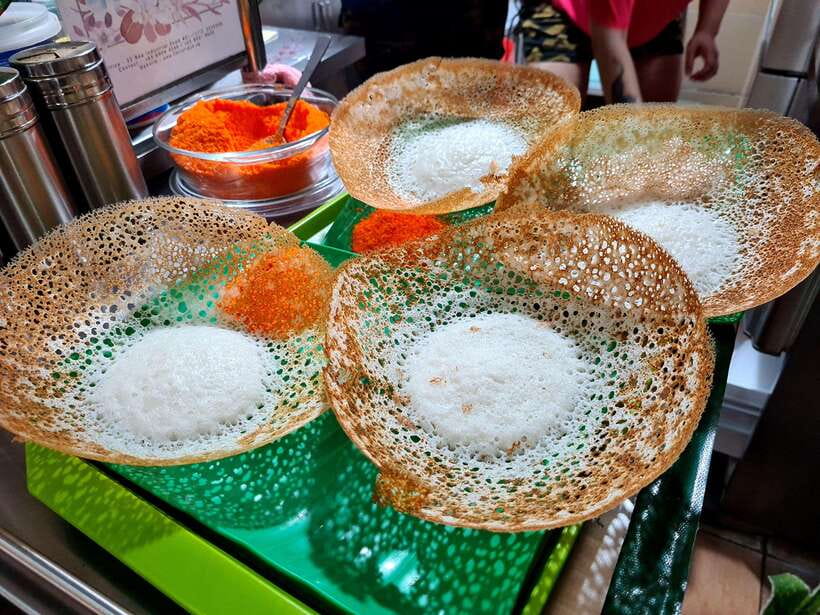
- Nine to ten tastings: Expect a full meal’s worth of local dishes, snacks, desserts, and drinks rather than a few token samples.
- Food with context: Temples, mosques, markets, murals, and museums give each dish a cultural setting.
- Small group size: The maximum of 10 makes it easier to ask questions and request small changes.
- Hawker-centre reality: Tables cannot be booked and food cannot be pre-ordered, so short waits are part of the experience.
- A serious walking day: Wear comfortable shoes, carry water, and bring rain protection.
Why this food tour feels different from a standard tasting walk
Many food tours stay inside one neighborhood. This one crosses three of Singapore’s best-known cultural areas, so you see how the city’s food traditions sit side by side. You begin at Little India MRT station and finish near Maxwell MRT station, with the route moving through temples, markets, heritage streets, and food centres along the way.
The key idea is not simply to collect dishes. You learn why certain foods appear in particular neighborhoods and how religion, migration, trade, and daily life shaped Singapore. That gives the meal more meaning. A plate at Tekka Centre feels different after you have seen Sri Veeramakaliamman Temple. Chinatown’s food stalls make more sense after a stop at the Buddha Tooth Relic Temple and Chinatown Heritage Centre.
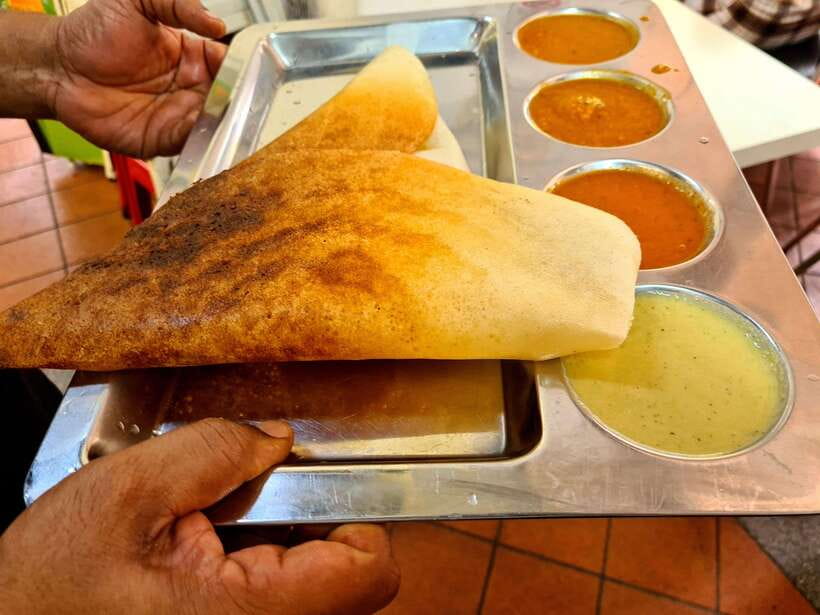
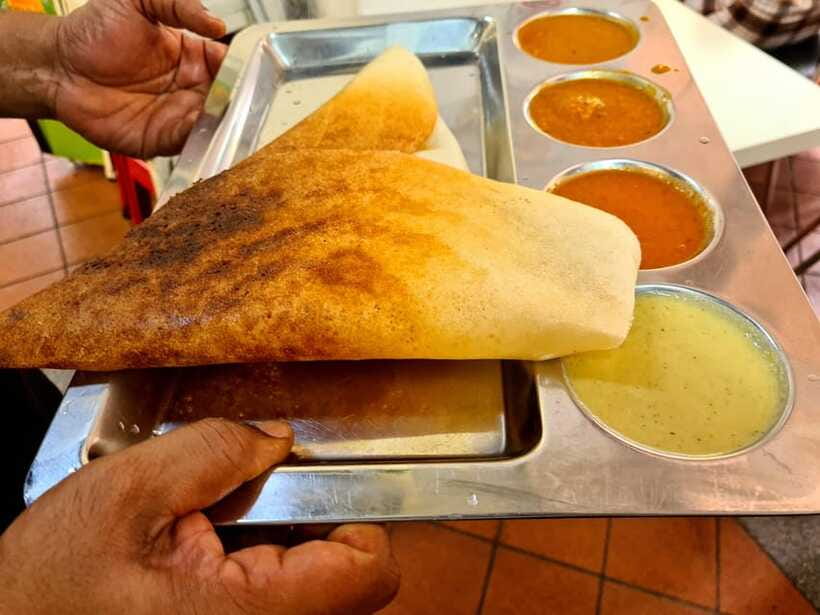
The food is also substantial. You taste 9 to 10 must-try dishes, including one alcoholic drink, with choices ranging from Michelin-rated hawker food to humble local stalls. I would not eat breakfast before this tour. Several people who took the route found the food so plentiful that it became a full day’s meal.
More food tours in Singapore:
- Small Group: Michelin and Local Hawker Food Tour with 9 tastings
★ 5.0 · 1,890 reviews - Small Group: Singapore Street Food & Night Tour with 9 tastings
★ 5.0 · 1,240 reviews - The Award-Winning PRIVATE Food Tour: 10 Tastings of 3 Cultures
★ 4.5 · 1,017 reviews
Little India: temples, markets, and a strong start
Meet your guide at Little India MRT station, Exit C, at street level. This is a practical starting point because the neighborhood gives you an immediate sense of Singapore’s Indian culture through color, food smells, religious buildings, and shopfronts.
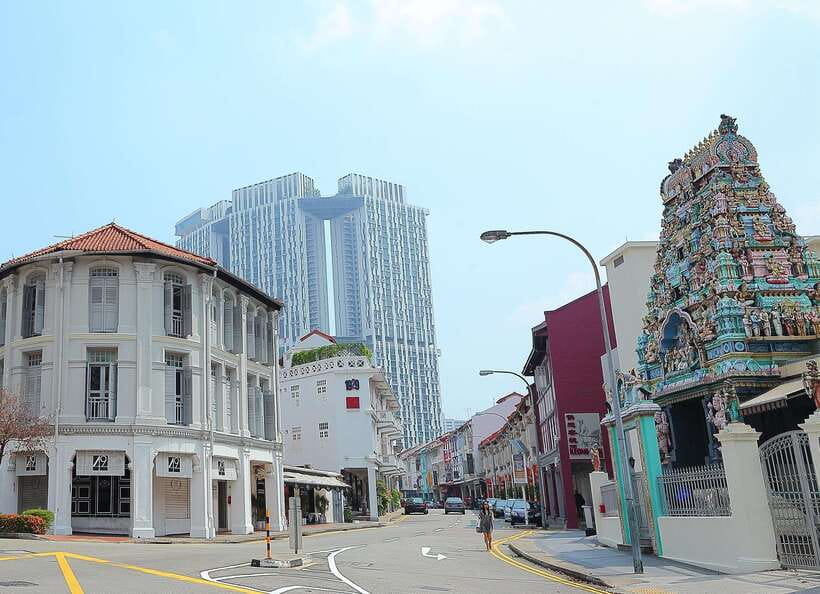
The first major stop is Sri Veeramakaliamman Temple. Dedicated to the goddess Kali, the temple is known for its colorful facade and detailed sculptures. Your guide can explain the role of the temple and point out details you might otherwise pass without understanding. As with all religious sites, dress and behavior matter, so follow the guide’s instructions and be respectful during ceremonies or prayer.
Tekka Centre brings you from worship to daily life. It combines a wet market with a hawker centre, giving you a chance to see ingredients, food preparation, and local shopping in one place. Indian dishes are a major part of the visit, and your guide chooses the tastings rather than leaving you to guess what is worth ordering.
That is one of the tour’s strongest practical benefits. Singapore’s hawker centres can feel confusing on a first visit. Stall names, queues, unfamiliar ingredients, and shared tables make the experience less simple than it first appears. A guide can help you focus on tasting instead of spending half your lunch deciding what to buy.
The route continues through Little India Arcade, where small shops sell traditional clothing, fabrics, and handicrafts. It is a good place to browse rather than rush. If you like textiles, clothing, or small souvenirs, tell your guide early. We Soon, one of the guides praised for personalizing the route, made room for clothing interests and even included model-car shops for one couple.
The Indian Heritage Centre adds a more formal historical layer. Entrance tickets to museums are not included, so check with your guide about what is covered during your visit. Even if you do not enter, the building and surrounding streets help explain the Indian community’s place in Singapore. The tour also uses the neighborhood itself as a kind of open-air museum, with murals, markets, and older streets providing plenty of photo stops.
Kampong Glam: from Haji Lane murals to Sultan Mosque
From Little India, the tour heads to Kampong Glam, another district with a clear cultural character. Haji Lane is the most camera-friendly part of this section, with colorful murals, quirky boutiques, and narrow alleyways. It is lively and photogenic, but the lanes can be tight, so expect to move at a steady pace rather than stop at every shop.
Sultan Mosque provides the main architectural and religious focus. Its domes and broad facade give the district a strong visual centre, while the surrounding streets show how Malay, Arab, and other influences shaped the area. Your guide connects the mosque to the neighborhood rather than treating it as an isolated photo stop.
The route includes the Malay Heritage Centre and Spice Garden around Kandahar Street. Museum entrance fees are not included, so this part may be an exterior visit unless you arrange and pay for entry separately. The Spice Garden is a useful stop because it links the area’s cultural story to the ingredients that shaped trade and cooking. You get a stronger sense of place when you recognize that spices are not just menu items but part of Singapore’s wider past.
Muscat Street and Bussola Street bring more food into the picture. The stated route includes tastes of exotic flavors, but the exact dishes can change according to availability, the guide’s choices, and the group’s preferences. That flexibility is useful, particularly if you have already eaten similar foods or want to try something unfamiliar.
The tour may also use Singapore’s MRT or bus network as it moves between districts. That break matters. Five hours on foot in Singapore’s heat can be tiring, and a short ride gives you time to cool down while still seeing how the neighborhoods connect. Comfortable footwear is essential, and an umbrella or poncho is sensible because rain can arrive quickly.
Chinatown: temples, heritage, and the biggest food stop
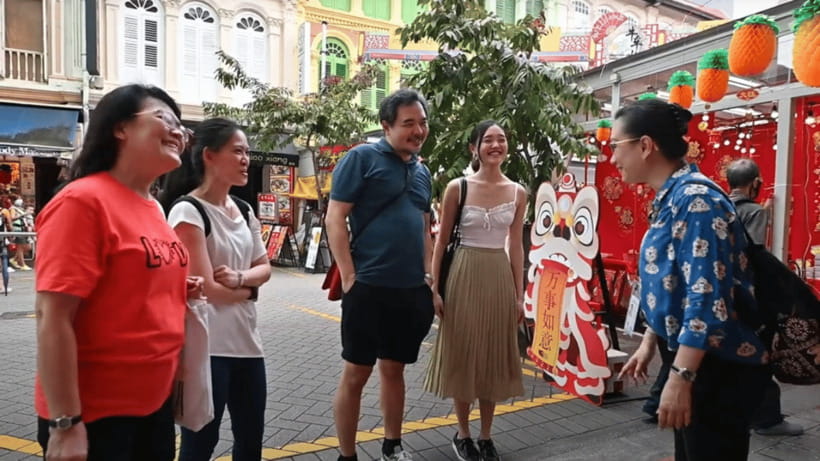
The final district is Chinatown, where religious landmarks, restored shophouses, food stalls, and tourist shops sit close together. The Buddha Tooth Relic Temple and Museum is the main architectural highlight. Your guide explains the building and the Buddhist tradition connected with it, giving you more than a quick exterior photograph.
The Chinatown Heritage Centre provides another look at the district’s past. Entrance tickets are not included, so you should treat it as an optional paid museum visit unless your booking details say otherwise. The centre is useful for putting the surrounding streets into context, especially if you want to understand how earlier Chinese immigrants lived and worked.
The route also passes through Chinatown’s street market, where you can browse crafts and souvenirs. Ann Siang Hill and Club Street offer a change of mood, with restored shophouses, cafes, bars, and boutiques. These streets are especially pleasant for photographs, though they are not the main food focus of the tour.
Maxwell Food Centre is the final major tasting stop and the place where the day’s food story comes together. You may try local staples such as chicken and rice, kaya toast, chendol, or other regional dishes, but the precise menu is not fixed. One stop may include a Michelin-rated hawker stall, while another may be a modest counter known mainly to locals.
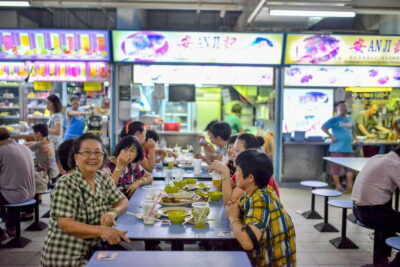
Do not expect a reserved table. The tour operator cannot book tables or pre-order food, and your guide may need time to find seats and collect dishes. That can feel slow if you are hungry, but it reflects how hawker centres actually work. Shared tables, queues, and changing availability are part of the system.
The tour ends near Maxwell MRT station, making it easy to continue exploring Chinatown or head elsewhere. If you are staying in Singapore for only a short time, this is a useful final location because you can remain in the area for dinner, shopping, or an evening walk.
Same appetite, a different neighbourhood:
- Singapore: Chinese, Indian & Arabic Quarters, Culture & Food Tour
★ 5.0 · 789 reviews - Singapore: UNESCO Street Food & Cultural Experience
★ 5.0 · 524 reviews - Singapore: Guided Street Food Tour at Night
★ 4.5 · 393 reviews - Singapore: Foodie Experience Guided Tour with 5 Tastings
★ 4.7 · 291 reviews
What the food is really worth at $150
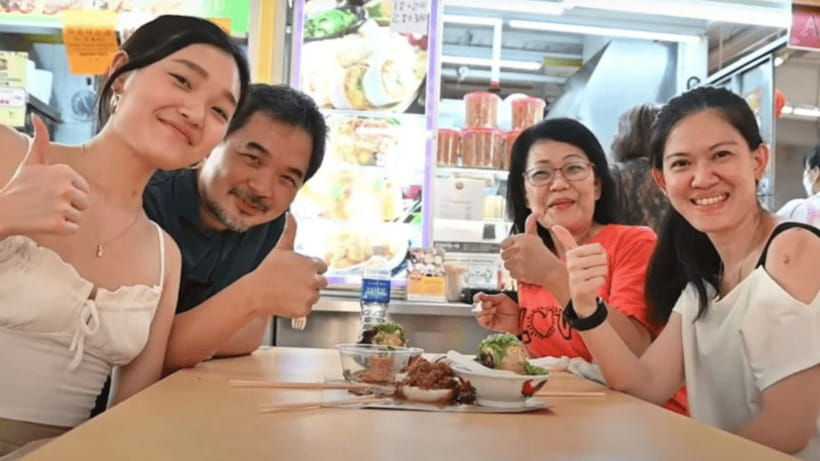
At $150 per person, this is not a cheap hawker meal. The value comes from combining food with five hours of guiding, transport between districts where needed, cultural interpretation, one bottle of water, and 9 to 10 tastings. You are paying for access to a planned route and for someone to make the food choices easier.
The number of dishes matters. A conventional tasting walk might leave you looking for lunch afterward. This one is designed to feed you properly, with enough food that you should arrive hungry. It also includes one alcoholic drink, which adds a small extra benefit, though the drink itself is not specified.
The tour makes better financial sense if you would otherwise pay for separate museum visits, several meals, and a private guide. It is less appealing if you prefer to wander at your own speed, eat only a few small samples, or avoid paid guided experiences.
The personalized aspect can improve the value. Guides have adjusted stops for clothing interests, model cars, and individual food preferences. That does not mean every request can be met, but the small group gives you a better chance of being heard than a large coach tour.
Walking, weather, and the small-group rhythm
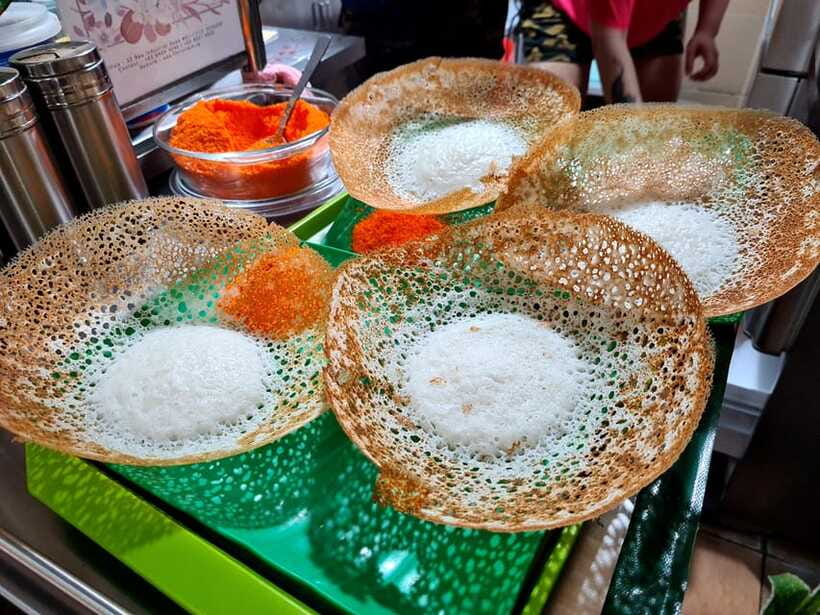
Five hours is a long time to spend walking and eating. One person covered roughly 6.5 miles across the three districts, which gives you a useful idea of the possible effort. The itinerary includes many 20 to 35-minute stops, but those minutes add up quickly once you include transfers, queues, photographs, and time at food centres.
Singapore is hot and humid, and rain is always possible. Wear supportive shoes, drink the provided water, and bring an umbrella or poncho. The tour is not wheelchair-accessible, and the combination of walking, uneven areas, crowded food centres, and public transport may be difficult for anyone with limited mobility.
The maximum group size is 10. That is small enough for personal questions and easier movement through markets, but it is not a private tour. If you want the route built entirely around your preferences, ask about a private option and discuss dietary needs before booking.
Special diets require particular care. The standard group experience may not be able to handle every dietary request, so contact the operator before paying if you need specific food substitutions. Hawker-centre kitchens may also have shared preparation areas, which is important for serious allergies.
Guides are available in English, Chinese, and Japanese. Names associated with the experience include Kelvin, Ronnie, Jeanette, Monica, Edwin, Julian, and We Soon. The strongest guide experience depends on the person leading your departure, but the consistent qualities to look for are clear explanations, patience at food stalls, and a willingness to adjust choices within the limits of the route.
Who should book this three-district food tour?
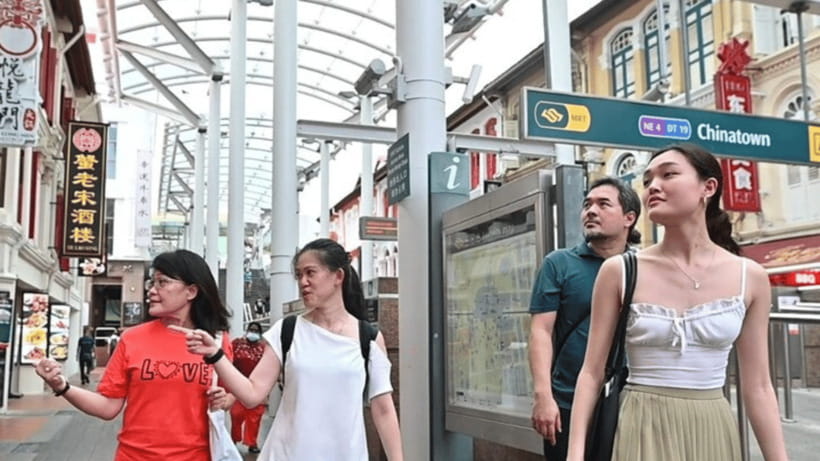
I would recommend it to first-time visitors who want a fast but meaningful introduction to Singapore. It works especially well at the start of a trip, since you learn the layout of several districts, discover dishes to seek out later, and get a practical feel for the MRT, buses, and hawker-centre system.
It also suits people who enjoy food but want more than restaurant recommendations. Temples, mosques, markets, museums, murals, and old streets give the day substance. Families with young children can join, but children aged 0 to 2 are free and the child-ticket rules limit the number of child tickets per adult booking. The walking and food-centre waits may still be tiring for small children.
I would be cautious if you need full accessibility, have strict dietary restrictions, dislike group schedules, or want a slow museum day. You also need patience when tables are scarce or a popular stall has a queue.
Should you book it?
Book this tour if you want to understand Singapore through its food and neighborhoods, not just tick off famous sights. The combination of 9 to 10 tastings, three cultural districts, and a small group gives you a lot in five hours, and the guides’ personal touches can make the route feel less generic.
Skip it if $150 feels high for hawker food, or if you would rather choose every dish and explore each district independently. For most first-time visitors with limited time, I see the price as reasonable when you count the meals, guidance, transport between areas, and cultural background. Arrive hungry, wear good shoes, and keep your schedule light afterward.
FAQ
Where does the tour start?
The meeting point is at Little India MRT station, Exit C, at street level.
Where does the tour finish?
The tour finishes at Maxwell MRT station, listed as TE18.
How long does the experience last?
The tour lasts five hours.
How many dishes and drinks are included?
You receive 9 to 10 must-try food and drink tastings, including one alcoholic drink.
What languages are available?
The tour is available in English, Chinese, and Japanese.
Is the tour wheelchair-accessible?
No. The activity is not wheelchair-accessible.
Can the tour accommodate dietary needs?
Special dietary needs may not be accommodated on the standard group tour. Contact the operator before booking to discuss your requirements.
New food tours we have reviewed in Singapore
- Street Food, Cultural & Historical Tour of 3 Ethnic Quarters★ 5.0 · 23 reviews
- Singapore: Local Street Food Tasting Tour★ 4.8 · 36 reviews
- Singapore: Local Hawker Food Tour with Tastings★ 4.7 · 181 reviews
- Singapore: Private Food Tour – 10 Tastings with Locals★ 4.7 · 194 reviews
- Singapore: Guided Street Food Tour at Night★ 4.5 · 393 reviews
- Singapore: Chinatown Hawker Guided 8-Dish Tasting Tour★ 4.9 · 41 reviews
- Singapore: Foodie Experience Guided Tour with 5 Tastings★ 4.7 · 291 reviews
- Singapore: Hawker Culture Food Tour and Sightseeing★ 4.8 · 23 reviews
Singapore Food Tours, compared.
Small Group: Michelin and Local Hawker Food Tour with 9 tastings
Read our review →
Small Group: Singapore Street Food & Night Tour with 9 tastings
Read our review →
The Award-Winning PRIVATE Food Tour: 10 Tastings of 3 Cultures
Read our review →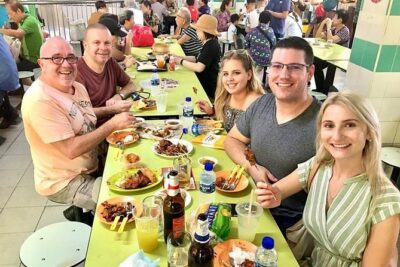
Singapore: Chinese, Indian & Arabic Quarters, Culture & Food Tour
Read our review →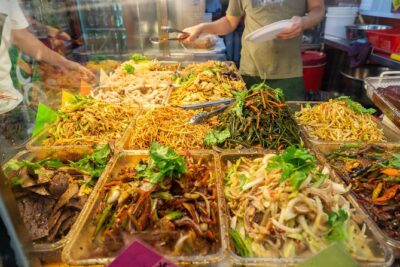
Singapore: UNESCO Street Food & Cultural Experience
Read our review →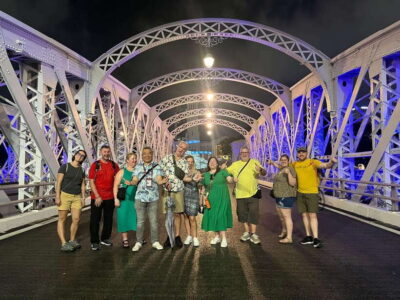
Singapore: Foodie Experience Guided Tour with 5 Tastings
Read our review →
Singapore: Private Food Tour – 10 Tastings with Locals
Read our review →Browse the lists this tour appears in