
Review · SPLIT FOOD TOURS
Split: Small Group Food Tour with Private Option
Split’s best food stories begin in the markets, not at a table. This 90-minute walk starts at the Golden Gate and threads through Diocletian’s Palace, the Green Market, Fish Market, bakeries, cafés, and small food stops. Along the way, you taste Dalmatian staples such as soparnik, prosciutto, salted anchovies, rafiol, almonds, chocolate, and local wine.
I like the market-to-mouth approach, which shows you where Split’s food culture actually lives. I also like the local guides, including Marta, Antonia, Jakov, and Slavko, who add family memories, buying tips, and stories about everyday life. The main drawback is the short running time: the tasting is generous, but the pace can feel brisk, and $58 is a little high if you are mainly looking for a full meal.
Key points to know before booking
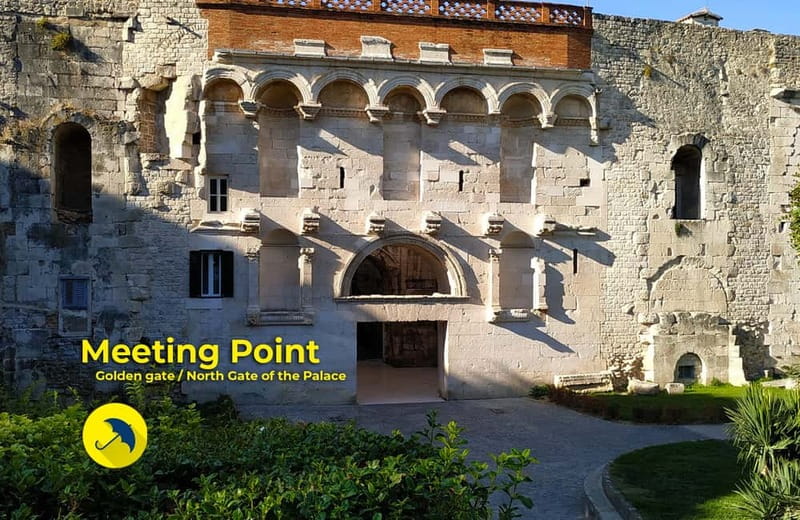
- Start at the Golden Gate: Meet under the blue umbrella at the northern entrance to Diocletian’s Palace.
- Taste across several stops: Expect sweet and savory food, wine, chocolate, pastries, prosciutto, olive oil, and fish-market specialties.
- See working food markets: The Green Market and Fish Market provide more local context than a restaurant-only tasting.
- Learn the food’s backstory: Guides explain traditional recipes, production methods, Dalmatian customs, and the role of marenda, the local midmorning meal.
- Plan for a standing and walking experience: The route uses old streets and market areas and is not suitable for wheelchair users.
- Choose private if you want more attention: Small groups keep the experience personal, while the private option works well for families or couples.
Starting at the Golden Gate of Diocletian’s Palace
The tour begins at the Golden Gate, the northern entrance to Split’s 1,700-year-old Diocletian’s Palace. Look for the blue umbrella. This is a sensible meeting point because you begin in the historic center rather than spending time on transport.
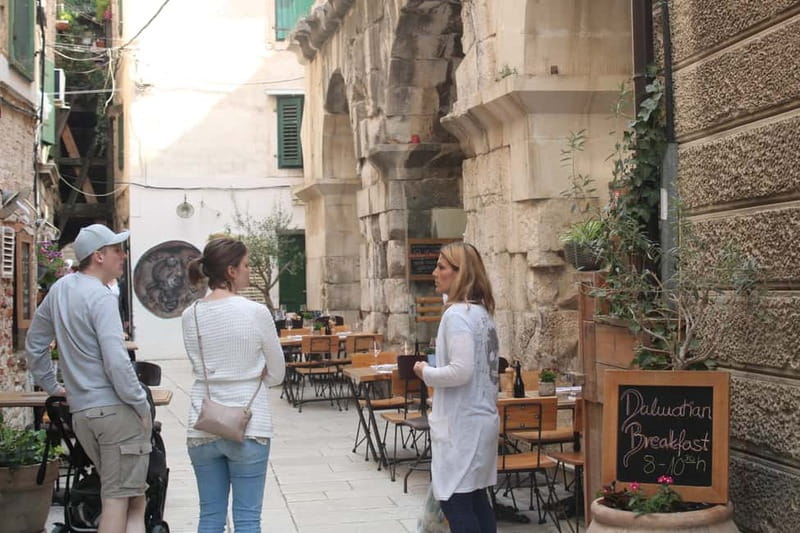
The palace is not a museum sealed off from daily life. Its Roman walls and medieval lanes still form the center of Split, with cafés, shops, bakeries, homes, and market routes woven into the old stone. Your guide uses the walk to connect the food with the setting.
That connection matters. A plate of local cheese or a pastry means more when you understand how Dalmatian families shop, eat, preserve food, and use the markets. The history portion is not a long formal lecture. It comes in short stories as you move from one stop to the next.
The route is generally easy walking, but the paving inside the old city can be uneven. Wear comfortable shoes, and keep some cash with you for optional purchases at the markets.
More private departures in Croatia:
- Split: Private Food Tasting Tour
★ 4.9 · 36 reviews - Private Street Food Tour by Motorbike/Car with Local Students
★ 5.0 · 3,950 reviews - Private Street Food Evening Walking Tour in Ho Chi Minh City
★ 5.0 · 3,175 reviews
Green Market: the most useful first stop
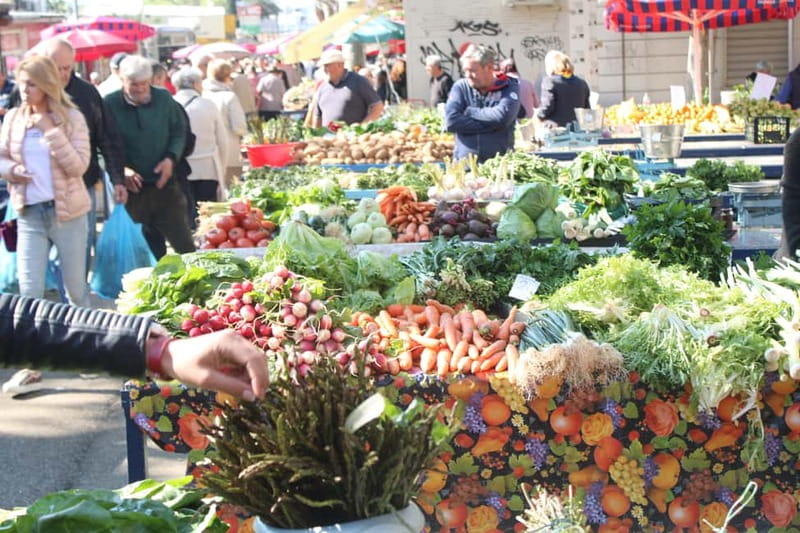
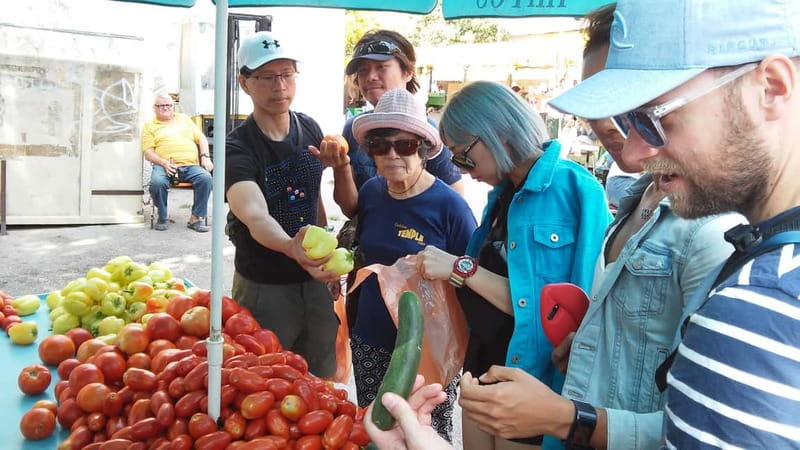
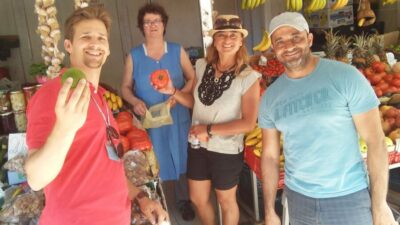
Split’s Green Market, called Pazar, is where the food side of the tour becomes practical. You see the fruit, vegetables, nuts, preserves, and other ingredients that shape home cooking in Dalmatia.
The first taste is often arancini, almonds covered in sugar. It is a small sweet, but it gives the morning a clear local flavor. Your guide may also introduce you to market sellers and explain how certain foods are prepared. This is one of the better parts of the experience because you are not simply handed a sample. You get some sense of who sells it and how it reaches the plate.
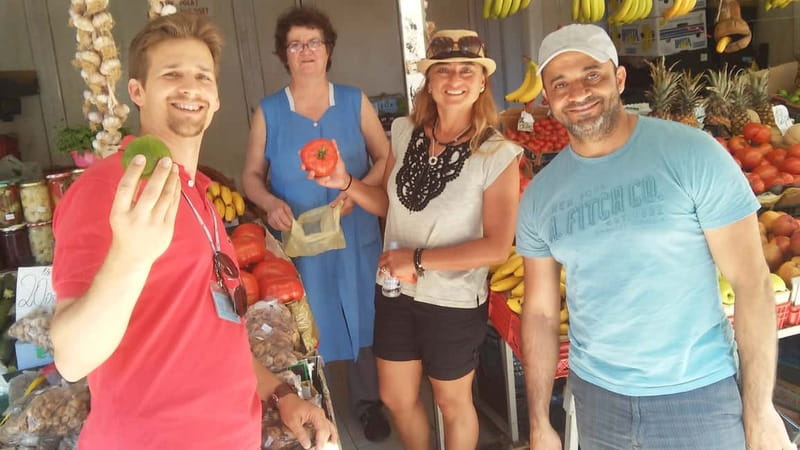
The market is also the place to ask questions. Guides such as Slavko, who grew up in Split, have been praised for explaining local favorites and introducing the group to sellers. That kind of personal connection can make the market less confusing, especially if you are not familiar with Croatian food names or market customs.
You may see items that tempt you to shop. The tour price does not cover extra market purchases, so carry cash if you want to take home almonds, figs, olive oil, or other food. The tasting itself is included, but shopping is your own expense.
Soparnik and wine, a taste with local roots
One of the more distinctive samples is soparnik, a thin savory pie associated with the Dalmatian hinterland. It is traditionally made with greens between layers of dough, and it has protected cultural status connected with Croatian heritage.
The tour pairs it with a glass of local wine. That gives you a useful lesson in balance: the simple, earthy food is not treated as a fancy dish, but as something that belongs with a drink and conversation.
I especially like this stop for visitors who want more than generic Mediterranean food. Soparnik is not simply another pastry chosen because it is easy to serve. It points toward regional cooking, old recipes, and the difference between coastal Split and the inland areas that supply it.
Food quantities vary by group and day, but the combined samples can be substantial. Several people have found they did not need lunch afterward. If you arrive hungry, that is helpful. If you plan a large restaurant meal soon after, schedule some time between the tour and dinner.
Walking through the palace with a local guide
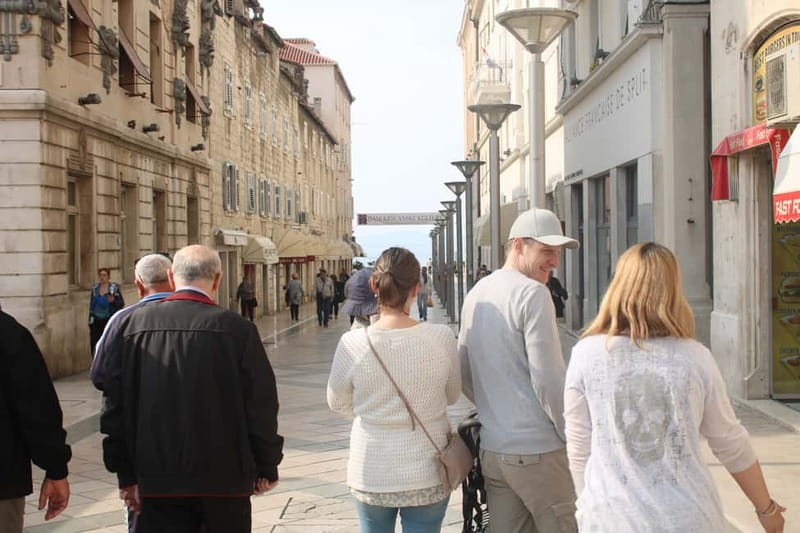
Between food stops, the guide fills in the story of Split. You walk along streets formed by Roman construction and later medieval changes, with food stalls and small businesses occupying spaces that have served people for centuries.
The best guides make this feel like a conversation rather than a history class. Marta has been praised for answering questions and linking dishes to her childhood. Antonia is described as friendly, enthusiastic, and clear when explaining local specialties. Jakov and Slavko have also been singled out for their strong connection to Split and Croatian culture.
Guides change, so you should not book solely for a particular person. Still, the repeated pattern is clear: the experience depends heavily on who leads it. A good guide turns a series of tastings into a portrait of local life. The guide also helps with pronunciation, explains unfamiliar ingredients, and points out places worth returning to later.
The route includes lesser-known corners of the old center, but this is not a separate sightseeing tour of every major monument. You will see Diocletian’s Palace and medieval Split while walking between tastings. If your main goal is detailed Roman archaeology, book a dedicated palace tour as well.
More food tours in Croatia:
- Split: Blue Lagoon and 3 Island Cruise with Food and Drinks
★ 4.8 · 1,969 reviews - Split: Blue Lagoon, Borkko Beach & Šolta with Food & Drinks
★ 4.5 · 759 reviews - Dubrovnik Food and Drink Walking Tour with a Local Guide
★ 5.0 · 654 reviews - Krka Waterfalls, Food & Wine Tasting, Boat Ride & Zadar Old Town
★ 5.0 · 420 reviews
Chocolate, rafiol, and the sweet side of Split
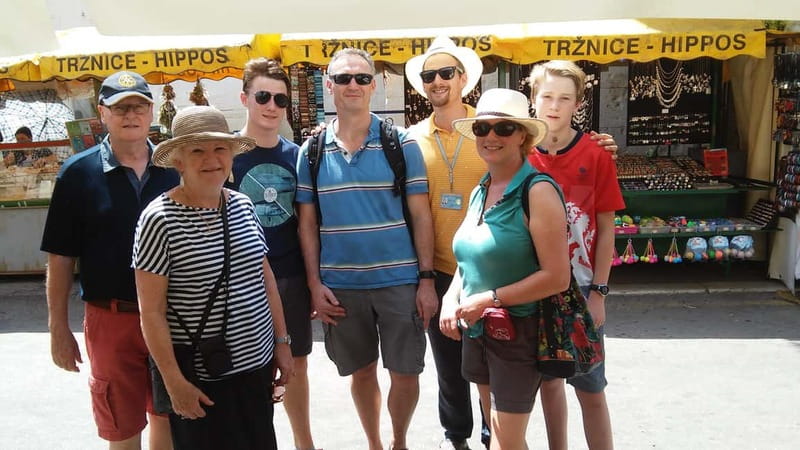
The food changes from savory to sweet at a chocolate shop. The shop is associated with a Guinness record for the world’s largest chocolate bar, which adds a playful stop to the route.
The chocolate visit works well as a change of pace. After market food, prosciutto, and soparnik, something sweet resets your palate. It also shows that the tour is not limited to old-fashioned dishes. Split’s food identity includes traditional recipes and modern specialty shops.
Next comes rafiol, a filled pastry associated with Dalmatia. The tour visits the oldest bakery in Split to try this local cake. This is a useful contrast with the chocolate stop. One taste is tied to a specialty shop and a record, while the other is linked to an established bakery and a regional sweet.
Expect samples rather than a long sit-down dessert course. That is important when judging the price. You are paying for guidance, several tastings, and cultural context, not simply the retail value of the food.
Fish Market and the meaning of marenda
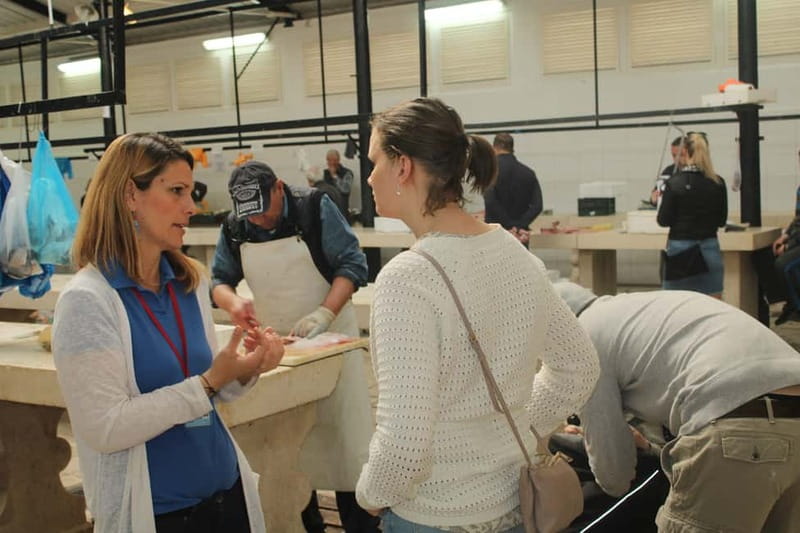
The Fish Market, or Peškarija, is one of the most characterful stops. It is described as the second-oldest fish market in Europe, with original benches more than 120 years old. The age of the benches gives the market a tangible link to the city’s working food culture.
Here you learn how to eat salted anchovies, a traditional part of marenda. Marenda is a Dalmatian midmorning meal, somewhere between breakfast and lunch. It reflects a practical eating pattern built around small portions, strong flavors, bread, fish, and whatever is available.
This part of the tour is valuable even if you are unsure about anchovies. The guide explains how the food fits into local life instead of presenting it as a dare. You may also learn how to recognize local fish and how residents use the market, though the precise fish selection can change with the season.
The fish market can be busy and crowded, and there may be strong smells. That is part of the point, but it may not suit someone who wants a polished food setting. You are seeing an active market, not a staged tasting room.
What the tasting portions add up to
The advertised route includes food tasting at a local café, the Green Market, a bakery, a local bar, and a local restaurant. The descriptions also include wine, prosciutto, soparnik, arancini, chocolate, rafiol, olive oil, bread, and salted anchovies.
Do not expect each stop to function as a full course. Instead, you collect small portions across several locations. The variety is the strength: sweet and savory, market goods and prepared food, coastal fish and inland-style dishes.
Some past versions of the experience appear to have included a longer market-shopping format, with ingredients selected and cooked into a meal at a restaurant. The current description focuses on a 90-minute tasting walk, so you should not book expecting the old multi-hour lunch format.
That distinction matters. A 90-minute tour is easy to fit into a first morning in Split. It gives you an introduction before you choose your own restaurants and market purchases. But if you want a leisurely lunch with wine and a cooked main course, this shorter format may feel limited.
Is $58 good value for 90 minutes?
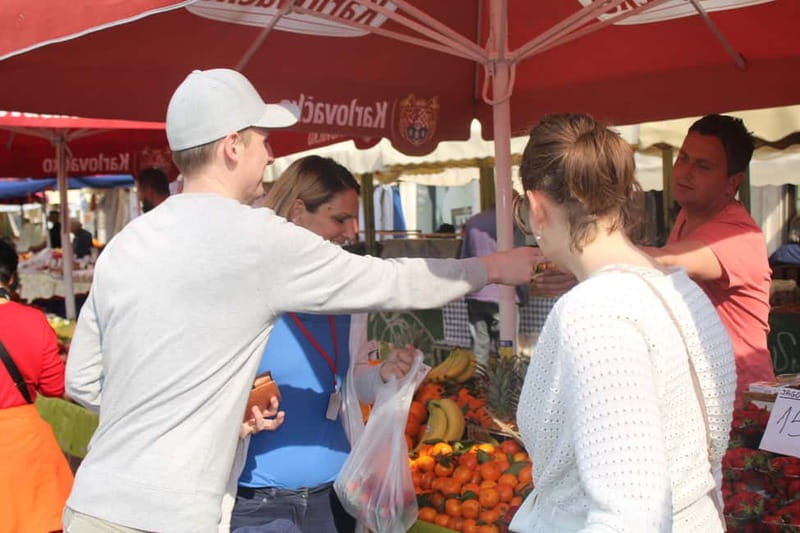
At $58 per person, this is not the cheapest way to eat in Split. You can buy individual pastries, market snacks, and drinks for less. The value comes from the combination of tastings, a licensed English-speaking guide, historic interpretation, and access to food places that may be difficult to understand on your own.
The price makes the most sense if you are new to Split, enjoy trying many small portions, and want a guide to explain what you are eating. It also has value early in a trip because you can return to the Green Market or Fish Market with more confidence.
The calculation is less favorable if you are a light eater or mainly want a large lunch. One person felt the tour was somewhat expensive compared with similar food walks elsewhere. That is a fair concern, especially since optional purchases at the markets cost extra.
I would judge the tour by the experience rather than the number of calories. If you enjoy stories, local customs, and food variety, $58 is reasonable. If you simply want the cheapest route to a meal, spend the money at a restaurant instead.
Small group or private tour?
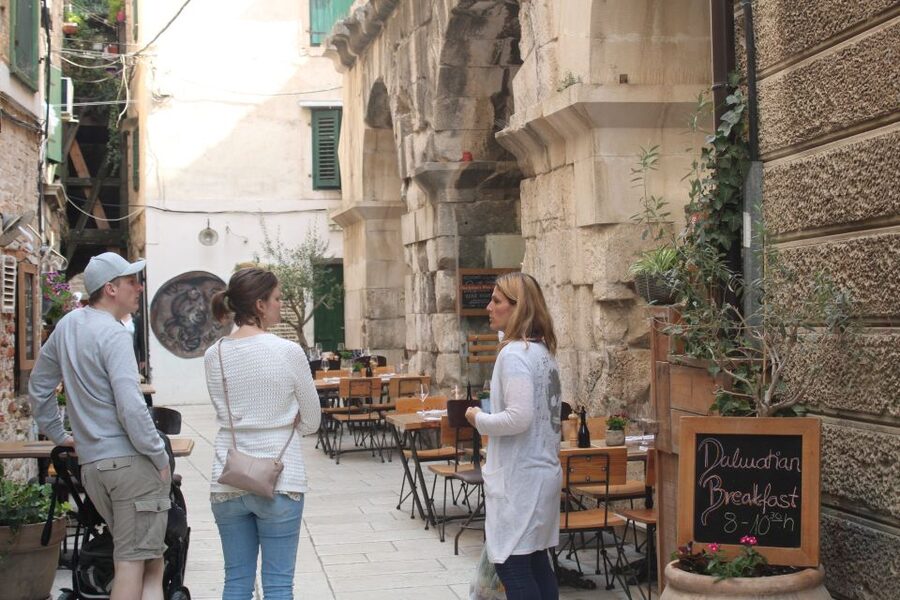
The small-group format is the better value for most people. You get the benefit of a guide without paying the full cost of arranging a private experience. The group size is described as small, though no exact maximum is provided.
A private option is useful if you want to ask many questions, move at your own pace, or arrange the experience around children or a particular diet. The supplied information confirms that private tours are available, but it does not provide a separate private price.
The guide’s personality matters in either format. The strongest feedback centers on friendliness, enthusiasm, clear explanations, and the ability to connect food with personal memories. You will get the most from the tour if you ask about dishes you see in the markets and tell the guide what you would like to try again later.
Who should book this Split food walk?
I would recommend it to first-time visitors who want an introduction to Split that mixes history, food, and daily life. It is also a good fit for curious eaters who like trying unfamiliar dishes but want someone to explain them first.
It suits couples, friends, and small families who can manage a walking route through old streets. It is especially useful on your first or second day, when you still need a sense of where locals shop and what foods to order.
Food lovers should appreciate the range, but serious restaurant hunters may want a longer tour with a proper meal. People with limited mobility should note that the experience is not suitable for wheelchair users.
Arrive ready to eat. The samples may add up to more than expected, and you will enjoy the tour more if you have room for several tastes rather than arriving after a large breakfast.
Practical details that affect your morning
The tour lasts 90 minutes and runs in English with a live local guide. Starting times vary, so check availability when booking. The listed meeting point is the Golden Gate at the northern entrance of Diocletian’s Palace, marked by a blue umbrella.
Bring cash. It is needed for optional purchases at the markets, not for the included guide service and tastings. Comfortable shoes are a good idea because the route moves through historic streets and market areas.
Free cancellation is available up to 24 hours before the start time, with a full refund. You can also reserve and pay later, which helps if your Split plans are still changing.
Should you book the Split food tour?
Book it if you want a guided introduction to Dalmatian food rather than a simple restaurant meal. The strongest parts are the Green Market, Fish Market, local specialties, and guides who explain how food fits into Split life.
Skip it if you need a fully accessible route, dislike fish or market settings, or want a long sit-down lunch. At $58, the tour earns its price through variety and local explanation, not sheer meal size.
For most first-time visitors, I would schedule it early in the stay. You will leave with a better idea of what soparnik, marenda, rafiol, and salted anchovies mean, plus a useful map in your head of where Split’s food culture takes place.
FAQ
Where does the Split food tour begin?
It begins at the Golden Gate, the northern entrance to Diocletian’s Palace. Look for the blue umbrella.
How long does the tour last?
The advertised duration is 90 minutes.
What food and drinks are included?
Tastings can include arancini, soparnik, local wine, prosciutto, chocolate, rafiol, bread, olive oil, and salted anchovies. The route includes food stops at a café, bakery, bar, and local restaurant, along with visits to the Green Market and Fish Market.
Is the tour conducted in English?
Yes. It includes a live, licensed English-speaking guide.
Can I book a private tour?
Yes. Private and small-group options are available.
Are market purchases included?
No. The included tastings are covered, but extra purchases at the markets are your own expense. Bring cash.
Is the tour suitable for wheelchair users?
No. The experience is listed as unsuitable for wheelchair users.
New food tours we have reviewed in Croatia
- Split: Food Tasting Walking Tour★ 4.9 · 102 reviews
- Split: Private Food Tasting Tour★ 4.9 · 36 reviews
- Korcula: Buggy Safari with Local Food and Wine Tasting★ 5.0 · 97 reviews
- Pelješac Full-Day Wine and Food Tour from Dubrovnik★ 5.0 · 72 reviews
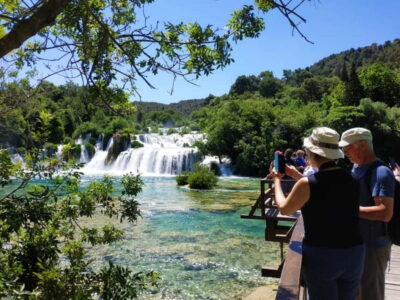
- From Split: Krka Waterfalls with Wine & Cheese Tasting Tour★ 4.6 · 33 reviews
- Zagreb: Food Tour with Tastings★ 4.9 · 153 reviews
- Dubrovnik: Oyster, Mussles, and Wine Tasting Tour in Ston★ 5.0 · 77 reviews
- Krka Waterfalls, Food & Wine Tasting, Boat Ride & Zadar Old Town★ 5.0 · 420 reviews
Split Food Tours, compared.
Split: Blue Lagoon and 3 Island Cruise with Food and Drinks
Read our review →
Split: Blue Lagoon, Borkko Beach & Šolta with Food & Drinks
Read our review →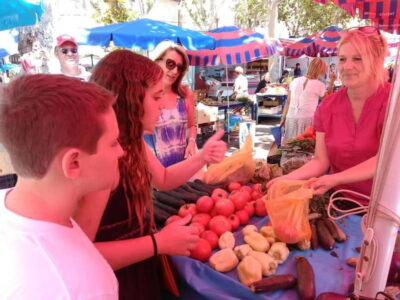
From Split: Krka Waterfalls with Wine & Cheese Tasting Tour
Read our review →Browse the lists this tour appears in