
Review · ATHENS FOOD TOURS
The Greek Food Experience (Max 8 persons)
Athens reveals itself especially well through food, and this 4.5-hour walking tour makes a meal of the city center. You move from Syntagma to Monastiraki, stopping for pies, coffee, honey, souvlaki, cheeses, olives, sweets, and local spirits.
I like the maximum of eight people, which gives your guide room to explain what you are eating and answer questions. I also like the route itself: it links famous sights with working food streets, family shops, the Central Market, and small producers you could easily miss on your own.
The main catch is the sheer amount of food. You should arrive hungry and pace yourself, especially if you have dinner plans. Vegetarians can be accommodated, but this is not a good choice for vegans or anyone following a gluten-free diet.
Key points at a glance
- Ten or more Greek specialties: Tastings range from spinach pie and koulouri to souvlaki, PDO cheeses, olives, honey, and loukoumades.
- A small group of no more than eight: You get more room to talk with the guide and keep the walking pace comfortable.
- A useful Athens orientation: The route connects Syntagma, Aiolou Street, Kotzia Square, the Central Market, Psiri, and Monastiraki.
- Enough food for lunch: This is not a light sampling walk. The portions add up quickly.
- A mix of old and new Athens: You see long-running family businesses, newer food spots, market stalls, historic squares, and ancient remains.
- A practical end point: The tour finishes at Monastiraki Square, only about two minutes from the nearest metro station.
Why this food walk gives you a useful first look at Athens

The best feature here is the route. You are not confined to one market or a single restaurant district. Instead, the walk cuts across central Athens, using food to connect Syntagma’s formal city center with the market lanes and lively squares around Monastiraki.
I like this approach because it gives you both a meal and an orientation. Along the way, your guide shares culinary, cultural, and historical details, plus advice on places to eat and drink later in your stay. That practical local advice may be as useful as the food itself.
The tour starts at 10:00 am on Ermou Street near Syntagma. It ends at Monastiraki Square, close to the metro and within easy walking distance of Syntagma. You should wear comfortable shoes, bring water, and dress for the weather. Athens can be sunny and warm, and much of this experience takes place outdoors.
At $118.56 per person, this is not a budget breakfast. Still, the price covers more than 10 food and drink tastings, usually enough to replace lunch, plus 4.5 hours with a guide and a small group. If you would otherwise pay for breakfast, lunch, several snacks, and a paid food workshop, the value becomes more reasonable.
More restaurant experiences in Athens:
- Bateaux Parisiens Seine River Gourmet Dinner & Sightseeing Cruise
★ 4.5 · 6,930 reviews - Sorrento Farm and Food Experience including Olive Oil, Limoncello, Wine tasting
★ 5.0 · 2,524 reviews - Rome: Gourmet Food Tour with Dinner & Barolo Wine
★ 4.9 · 2,347 reviews
Syntagma begins with pies, coffee, and a city lesson
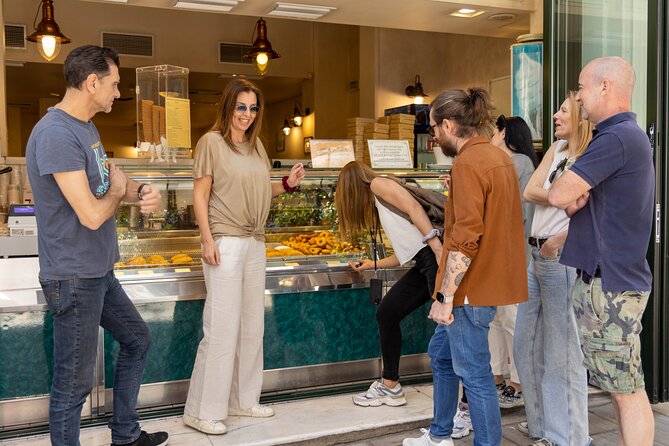
The first hour takes place around Syntagma, where you stroll through central Athens and visit traditional street-food vendors. The focus is on Athenian food institutions, family-run businesses passed through generations, and newer food entrepreneurs earning a place in the city’s food scene.
The first samples include sweet and savory pies. Expect examples such as cheese pie and spinach pie, two useful introductions to the Greek habit of turning pastry into breakfast, snack, or quick lunch. These are filling foods, so resist the urge to eat too quickly at the start.
You also taste koulouri, the sesame-coated bread ring that is a standard breakfast on the run in Greece. It is simple, portable, and more substantial than its modest appearance suggests. If you are trying to understand everyday Greek eating, this is a better starting point than a formal restaurant dish.
An organic olive oil tasting follows, along with traditionally brewed Greek coffee. The coffee is a small but important part of the experience because it lets your guide explain how Greek food culture extends beyond headline dishes. You get a sense of breakfast habits, pantry staples, and the role of coffee in daily life.
Agia Irini Square adds Cretan pie and rakomelo
The next stop is Platia Agias Irinis, a compact square that once served as Athens’ flower market. A few flower vendors remain, but cafes and eateries now fill much of the area. It is a good place to pause because it feels separate from the main traffic, yet it is easy to reach from several parts of central Athens.
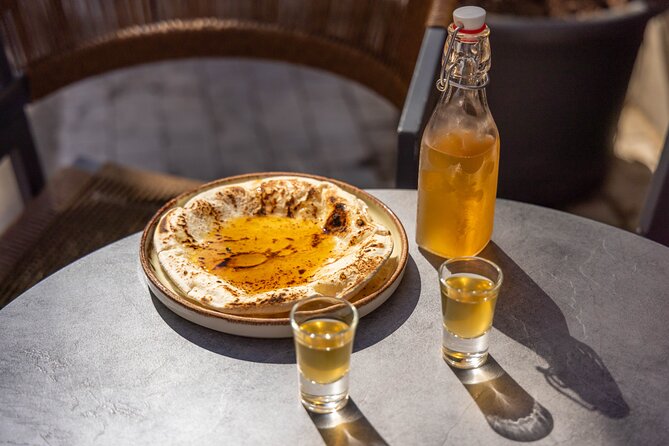
Here you try sfakiani, a thin Cretan pie that is closer to a crepe than a thick pastry. Soft cheese sits inside, with honey on top. The combination gives you salty, creamy, and sweet flavors in one bite, and it shows how Greek regional food can be quite different from the familiar moussaka and Greek salad found abroad.
You also taste rakomelo, made with raki, honey, warm spices such as cardamom and cinnamon, and local herbs. This is alcoholic, so take that into account if you do not drink. Since it appears relatively early in a food-heavy morning, you may want to sip rather than treat it like a full drink.
Aiolou Street saves room for loukoumades
Aiolou Street is one of the older paved roads in central Athens, linking Omonia Square with Ermou Street. Its name refers to Aeolus, the ancient Greek god of the winds. The street provides a change of scene from the quieter square, with a more direct connection to the commercial center.
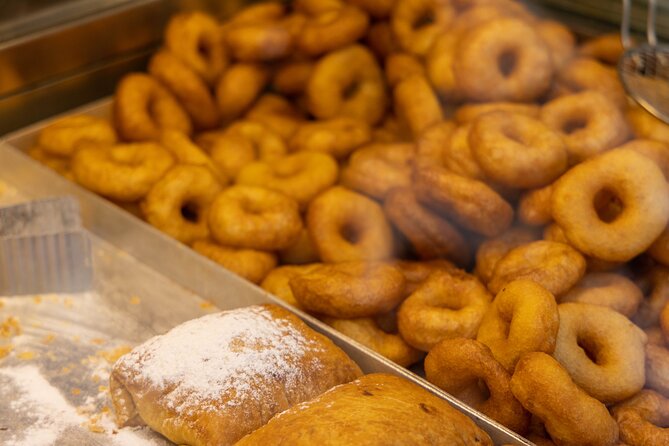
The food stop here is loukoumades, small fried dough puffs finished with honey. They are among Greece’s classic street sweets, and this stop is tied to a shop that has specialized in them for about a century.
This is one of the tastings most likely to appeal to children and anyone with a sweet tooth. It is also where the tour’s generous portions begin to catch up with you. If you have already eaten every sample in full, the later stops may feel like a challenge rather than a pleasure.
More food tours in Athens:
- Greek Food Walking Tour in Athens
★ 5.0 · 4,740 reviews - Athens: Street Food Tasting Tour
★ 4.9 · 3,343 reviews - Athens: Guided Greek Food Walking Tour with Tastings
★ 4.9 · 2,859 reviews - Small Group Greek Traditional Food Tour in Athens 20+ Tastings
★ 5.0 · 1,759 reviews
Kotzia Square brings honey and old Athens into view
Kotzia Square is surrounded by neoclassical buildings, including the old town hall. A small archaeological site here exposes part of Athens’ ancient water-supply system, dating back about 2,000 years. The site is easy to overlook if you simply walk from one food stop to another, so having the square included adds useful context.
The tasting is focused on three distinct varieties of Greek honey. This is a good reminder that honey is not just a topping for yogurt or pastry. Differences in taste can come from the plants visited by the bees and the area where the honey is produced.
The stop itself lasts about 15 minutes, which is enough for a focused tasting and a short look around. Do not expect a long archaeological visit. The food remains the main purpose, with the square providing a pleasant historical pause.
The Central Market is the tour’s most energetic stop
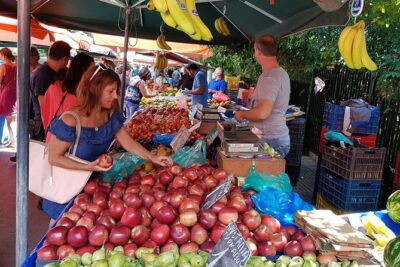
The open fish and meat market is one of the most memorable parts of the route. You see a working market rather than a polished food hall, with the sights, smells, and directness that come with a place where Athenians shop for ingredients.
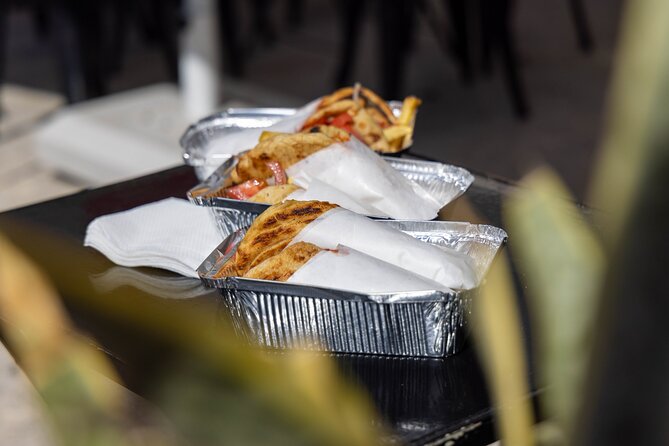
The main tasting here is souvlaki. Athens has countless souvlaki shops, but the tour takes you to one regarded as particularly good and authentic. This is the point where the experience feels most like a proper lunch, not just a series of samples.
The Central Market stop lasts about 45 minutes. That gives your guide time to put souvlaki into context and to lead you through a part of the city that can feel confusing on a first visit. I would pay attention to the route here, because the market and surrounding streets are useful reference points for later independent eating.
The market can be intense if you dislike meat displays or strong food smells. That is not a flaw in the tour, but it is worth knowing before you book. This is a working market, not a quiet sightseeing stop.
Evripidou Street is Athens’ pantry
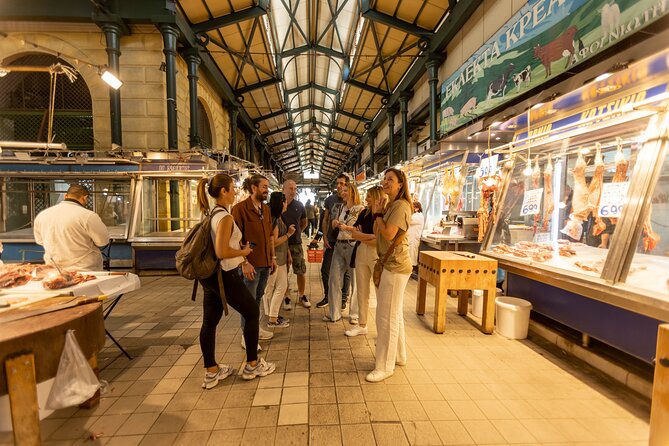
Evripidou is the food-shop section of the walk. Small family businesses selling spices, herbs, cheeses, and cured meats have made this street a first stop for many Athenians shopping for serious ingredients.
The tasting includes Greek cheeses with protected designation of origin status, along with pastourma and tsipouro. Pastourma is a strongly seasoned cured meat, while tsipouro is a grape-distilled spirit served either plain or flavored with anise.
Tsipouro can appear as a welcome drink, with meze, or in a cafe among friends. It gives you another example of how food and drink fit into social life in Greece. Again, it is alcoholic, and the combination of rakomelo earlier in the route means you should pace yourself.
This is the least suitable section for vegans. The tour specifically notes that there is one stop with no meat alternative, and the meat and cheese tastings make the overall experience unsuitable for a vegan diet. Vegetarians can take part, but you should mention your needs when booking.
Theatrou Square and Psiri change the pace
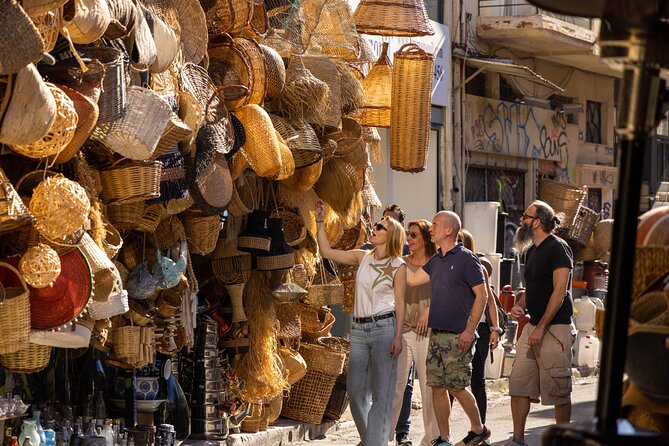
At Platia Theatrou, you taste several varieties of Greek olives. The stop is short, about 15 minutes, but it rounds out the tour’s look at everyday Greek ingredients. After pies, meat, cheese, sweets, and spirits, olives give your palate something briny and simple.
The route then reaches Psiri, also spelled Psyri, a central neighborhood known for artisans, specialty shops, restaurants, tavernas, bars, theaters, and small hotels. The area has a colorful, unconventional feel and is useful for anyone deciding where to return after the tour.
Psiri is not treated as a long separate meal stop. Think of it as part of the walking orientation and a chance to see one of central Athens’ food and nightlife districts. Your guide can also point out places that may suit your plans for later in the trip.
Monastiraki finishes the walk beneath the Acropolis
The walk ends in Monastiraki, in the shadow of the Acropolis. This district brings together several eras and styles, with connections to Psiri, Plaka, and Thisio. Monastiraki Square itself is lined with restaurants, cafes, shops, the flea market, and reminders of the city’s long past.
You can see the sunken Church of Pantanassa, the remaining part of a Byzantine-era monastery or nunnery that gave the area its name. Monastiraki means little monastery. The route also puts you near the flea market and antique shops leading toward Abyssinia Square.
Ending here is practical. The nearest metro station is about two minutes away, and Monastiraki is roughly a 13-minute walk from the starting area around Syntagma. You can continue sightseeing, return to your hotel, or use the metro to reach another part of Athens.
The small group matters more than it first appears
A cap of eight people is a real advantage on a food walk. It is easier to hear explanations in busy streets, ask about unfamiliar ingredients, and stay together while moving between small shops and market lanes.
The guide is central to the experience. Guides such as Valentini bring the food stops together with stories about Athens and suggestions for later meals. A strong guide can also help you understand what to order independently, how to recognize regional products, and which foods are meant as snacks rather than full meals.
The tour is offered in English. Confirmation arrives when you book, and service animals are allowed. It is near public transportation, and most people can take part, though you should expect several hours on foot.
Who should book this Athens food tour?
I would choose this tour early in an Athens stay, ideally on your first or second day. The route gives you a working map of central neighborhoods, and the eating advice can shape the rest of your visit.
It suits you best if you:
- Want a full lunch made up of Greek specialties
- Prefer local food shops and markets to a formal cooking class
- Like learning the background behind everyday dishes
- Enjoy walking through several central neighborhoods
- Want a small group rather than a large bus tour
- Eat meat, dairy, and gluten
- Are happy to sample alcoholic drinks in moderation
I would skip it if you need a fully vegan or gluten-free menu. I would also think twice if you dislike open meat markets, cannot walk comfortably for several hours, or want a quiet sit-down meal with plenty of time at each table.
The tour requires good weather and a minimum number of participants. If poor weather or low enrollment cancels it, you can receive a different date or a full refund. You can cancel for a full refund up to 24 hours before the 10:00 am start time.
Should you book it?
Book it if you want Athens explained through food rather than viewed only from monuments. The route is broad, the tastings are generous, and the small group keeps the experience personal. The strongest parts are the Central Market, the old food streets around Evripidou, and the chance to try modest everyday foods such as koulouri alongside better-known souvlaki.
At $118.56, it makes sense when you count the included lunch-sized food, drinks, guide, and city orientation. It is less appealing if you are a light eater or mainly want one relaxed restaurant meal. Arrive hungry, wear good shoes, and leave room for the final tastings.
FAQ
How long does The Greek Food Experience last?
The experience lasts approximately 4 hours and 30 minutes, beginning at 10:00 am.
Where does the tour start?
It starts at Ermou 2 in Athens, near Syntagma Square.
Where does the tour finish?
The tour ends at Monastiraki Square. The nearest metro station is about a two-minute walk away.
How many people can join the tour?
The group has a maximum of eight people.
Is enough food provided for lunch?
Yes. The included tastings cover more than 10 specialties at about eight to ten locations and are described as more than enough for lunch.
Is the tour suitable for vegetarians or people with dietary restrictions?
The tour is suitable for vegetarians, but not for vegans or people following a gluten-free diet. One stop has no alternative to meat.
What happens if the tour is canceled because of weather?
You will be offered a different date or a full refund if poor weather causes the cancellation.
New food tours we have reviewed in Athens
- Best Food Tasting Tour of Athens, taste 18+ iconic Greek foods!★ 5.0 · 448 reviews
- Classic Athens Food Tour with Local Drink & Market Visit★ 5.0 · 34 reviews
- Athens: The Classic Food Tasting Tour★ 5.0 · 106 reviews
- Taste of Athens Small-Group Food Tour★ 5.0 · 33 reviews
- Athens Street Food Tour: Explore City’s Iconic Eateries★ 5.0 · 155 reviews
- Greek Gastronomy & Wine Pairing Cruise with a Sommelier in Athens★ 5.0 · 120 reviews
- Private Greek Food Tour in Athens★ 5.0 · 56 reviews
- Acropolis Mythology & Food Tour★ 5.0 · 26 reviews
Athens Food Tours, compared.

Small Group Greek Traditional Food Tour in Athens 20+ Tastings
Read our review →
Food Market Visit and Cooking Class with Wine
Read our review →
Athens Authentic Greek Food Walking Tour (Small Group)
Read our review →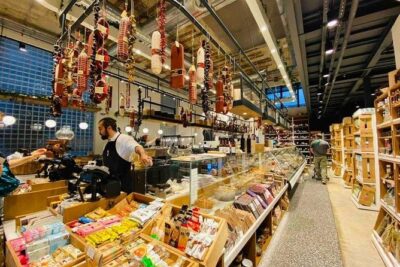
Browse the lists this tour appears in