
Review · BANGKOK FOOD TOURS
Bangkok Backstreets Food Tour with 15+ Tastings
Bangkok’s Chinatown is best understood one bite at a time. This four-hour walk takes you from the neon of Yaowarat Road into narrow lanes that tuk-tuks cannot reach, with 15 or more tastings spread across eight or nine food stops. You may try everything from chicken satay and noodles to green curry, shrimp dumplings, grilled prawns, and mango sticky rice.
I like the small maximum group of eight, which keeps the food stops manageable and lets you ask questions without shouting over a crowd. I also like the two-person team: one guide explains the dishes and local customs while an assistant helps keep food and seating ready at the next stop.
The main drawback is the menu’s heavy use of pork, shellfish, peanuts, and other common street-food ingredients. This is not a good choice for vegetarians, pescatarians, people avoiding pork, or anyone with severe allergies, celiac disease, or strict halal requirements.
Key points at a glance
- More than 15 tastings: Expect a full progression of snacks, soups, mains, seafood, and sweets rather than one large meal.
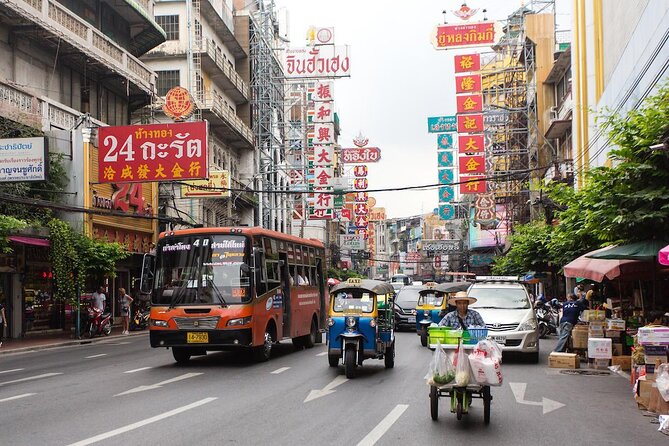
- Chinatown after dark: Evening departures let you see Yaowarat’s bright signs and lively food streets, while afternoon tours can cover both daylight and nightfall.
- Two staff for eight people: The guide leads the conversation while the assistant helps prepare tables, dishes, and timing.
- Two Michelin-listed stops: The route includes street-food businesses recognized by Michelin, alongside less famous local shops.
- A Chinese-Thai food story: Noodles, stir-fries, dumplings, curry, and sweets show how Chinese cooking has shaped food in Thailand.
- Come very hungry: With 15 or 16 small dishes, breakfast or lunch may need to be light.
Why this Chinatown food walk works
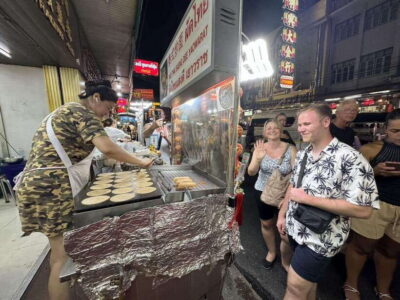
Many Bangkok food tours stay on the obvious roads. This one uses Yaowarat Road as a starting point, then turns into side streets and back lanes where you see a more ordinary part of Chinatown. The route is still centered on food, but the walking gives each dish a setting and a story.
The tour lasts about four hours and costs $59 per person. That is not the price of a casual street meal, but the comparison is not quite fair. You are paying for more than food: a local guide, an assistant, bottled water, explanations, access to a planned sequence of stops, and a small group that can move through crowded lanes without becoming a minor parade.
I see the value most clearly if you are new to Bangkok or nervous about ordering from unfamiliar stalls. You get to sample widely without guessing at menus, portions, or ingredients. You also avoid spending your first few days finding one good place, only to discover that the next stall is even better.
The trade-off is control. You follow the route and eat what is served, with limited alternatives for dietary needs. If you prefer to choose every dish yourself, a self-guided evening along Yaowarat Road may suit you better.
More food tours in Bangkok:
- Bangkok: Backstreets Food Tour with 15+ Tastings
★ 4.9 · 2,880 reviews - Bangkok: Midnight Food Tour by Tuk-Tuk
★ 4.9 · 2,054 reviews - Bangkok: Michelin Guide Street Food Tour by Tuk Tuk
★ 4.4 · 1,274 reviews
Starting at Shanghai Mansion on Yaowarat Road
The meeting point is Shanghai Mansion Bangkok at 479, 481 Yaowarat Road. The tour begins and ends there, so you do not need to arrange a hotel transfer or work out a one-way route home from an unfamiliar neighborhood.
Allow time to reach the meeting point. The area has public transportation nearby, but the tour does not include pickup or drop-off. A mobile ticket is accepted, and confirmation arrives when you book.
The hotel is a useful landmark because Yaowarat can feel confusing once the signs, traffic, vendors, and side lanes begin to overlap. Wear comfortable shoes. Four hours on foot, with frequent stops and Bangkok heat, calls for practical clothing rather than anything formal.
The tour is offered at morning and afternoon or evening departure times. Morning trips use many of the same stops, but a few vendors change because some businesses open only during the day. A 4 p.m. departure can be especially appealing if you want to see Chinatown in daylight and then watch it shift toward its evening glow.
The first hour: Chinatown’s Chinese-Thai food connection
The opening section introduces Chinatown and the long Chinese influence on Thai cooking. This is not a museum lecture. The information arrives while you walk, stop, taste, and look around.
That context matters because many dishes in Bangkok do not fit neatly into a Thai-only or Chinese-only box. Noodles, stir-fries, dumplings, sauces, and cooking methods reflect generations of exchange. The guide uses the food in front of you to explain that connection, which makes the background easier to remember.
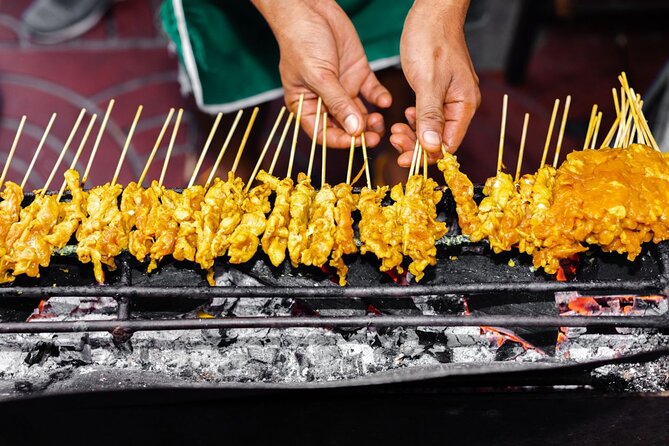
You may begin with familiar street-food forms such as chicken satay, noodles, or small savory bites, then move into dishes that show more of the local mix. The exact order can change, especially on the morning departure, but the goal is variety rather than a single style of meal.
I appreciate this kind of introduction because it gives you a better way to read Bangkok’s food stalls later. Instead of seeing an unfamiliar noodle bowl as just another quick meal, you begin to notice the Chinese techniques, Thai herbs, sweet-salty sauces, and regional touches that shape it.
The middle stretch: 15 or more small tastings
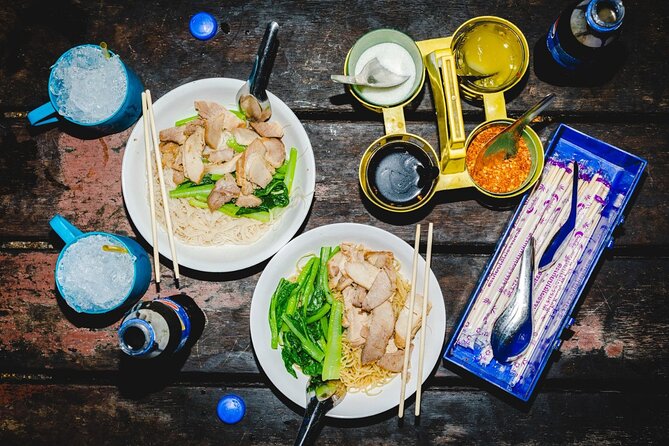
The heart of the tour is a moveable feast through eight or nine stops. You might sample soups, mains, seafood, fried snacks, curries, vegetables, and desserts. The portions are designed for tasting, but the total amount adds up quickly.
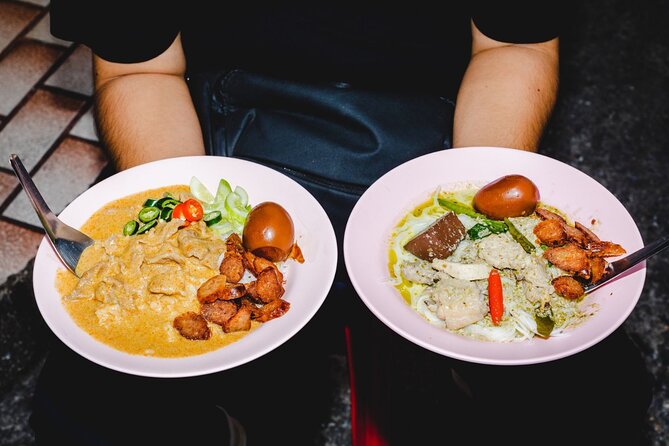
Several dishes praised in the tour’s food line-up include Thai curry, chicken satay, noodles, green curry, shrimp dumplings, morning glory, grilled prawns, and mango sticky rice. One unusual finish is soy sauce ice cream, a sweet-salty combination that may sound odd until you try it.
The variety is one of the strongest reasons to book. You are not eating fifteen versions of the same noodle dish. You move between textures and flavors, from soft dumplings and brothy noodles to grilled seafood, vegetables, curry, and sweets.
Spice levels can vary. The food is not described as uniformly hot, and one tasting account noted that most dishes were mild, with the sauce accompanying a grilled prawn providing more heat. Taste sauces before covering a whole portion. That small step is useful when you want the flavor without an unexpected mouthful of chili.
The quantity deserves a warning. Several hours of tasting can feel closer to a very large meal than a snack crawl. Skip breakfast for a morning tour, or eat lightly beforehand for an afternoon or evening departure. You can enjoy the range more if you are hungry but not already full.
Same appetite, a different neighbourhood:
- Old Siam Bangkok Food Tour with 15+ Tastings
★ 5.0 · 867 reviews - Bangkok Authentic Tasting Thai-Chinatown Walking Food Tour
★ 4.9 · 852 reviews - Bangkok: Tuk Tuk Adventure Chinatown Michelin Food & Temples
★ 4.3 · 725 reviews - Bangkok Tuk-Tuk Tour by Night with Chinatown Street Food Meal
★ 5.0 · 635 reviews
Michelin-listed street food without the fuss
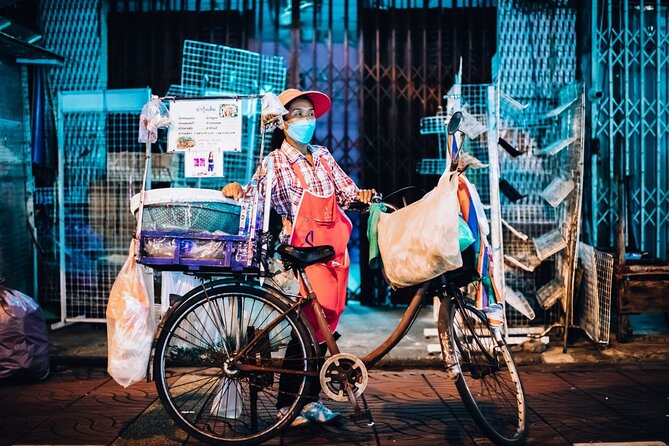
Two of the stops are Michelin-listed street-food venues. That gives the route a little extra interest, but the appeal is not simply the label.
A Michelin mention can help identify a stall or shop that is worth trying, particularly when you have limited time in Bangkok. Yet the best part is the contrast between those recognized venues and the other neighborhood businesses along the route. You get a broader picture of Chinatown food instead of spending the whole tour chasing one famous name.
The guide also explains the places you visit. One useful local detail is the Thai equivalent of Michelin recognition, sometimes associated with the Green Bowl. That kind of information helps you understand how food reputations work in Thailand, rather than treating an international award as the only measure of quality.
Do not expect a polished restaurant crawl. Some stops are street vendors or modest local shops. That is part of the point, but it also means seating, heat, noise, and pace may vary. The assistant helps by getting seats and food ready where possible, which reduces idle waiting.
Back lanes, local life, and Yaowarat after sunset
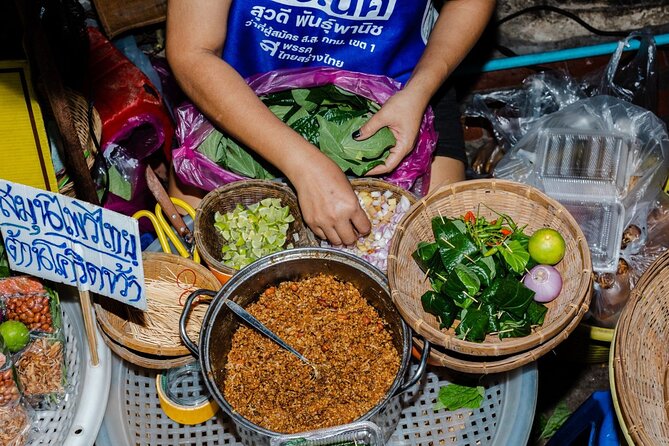
The walking route is a major part of the experience. In the side streets, you see more than the famous food signs. The back lanes offer glimpses of daily life and neighborhoods that are easy to miss if you stay on the main road.
The group size helps here. Eight people or fewer can move through narrow spaces more easily than a large coach group. You still need to watch for scooters, uneven pavement, and other pedestrians, but the walk feels more personal and less like being moved from one major attraction to another.
Evening tours add the visual drama of Yaowarat’s illuminated signs. An afternoon start gives you a useful middle ground: Chinatown in daylight, then the changing atmosphere as the evening trade gets going.
Keep your phone ready for photos, but do not let photography replace the walk. Some of the best moments are small: a vendor preparing food, a crowded lane opening into a quieter corner, or the contrast between a busy main road and a calm side street.
Rain is possible, and the practical advice is simple: bring an umbrella or rain gear if the forecast looks uncertain. The tour continues on foot, so comfortable shoes matter more than stylish ones.
The guides and the two-person system
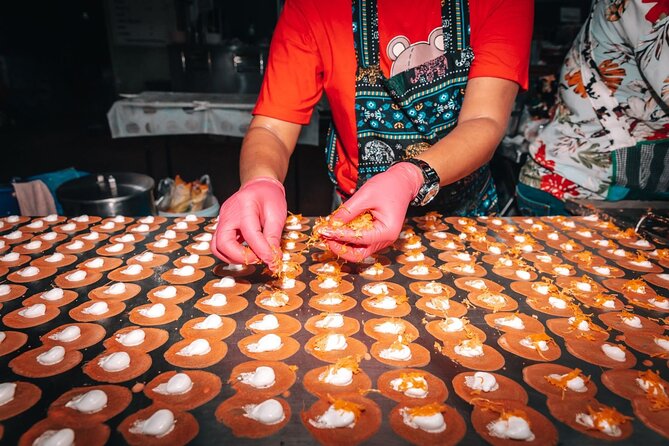
The guide is central to the experience because the food arrives quickly and the route covers a lot of ground. Past departures have been led by guides including Annie, Rach, Aom, Ant, Bew, Ploy, Nood, Wan, Putpik, Pang, Johnny, Noa, and Windy. Your guide will depend on the date and departure.
The strongest guide qualities described across the tour are clear explanations, warmth, humor, and an ability to connect food with culture. Annie is noted for making people feel welcome, while Rach and Aom are praised as a strong guide-and-assistant team. Ant is singled out for explaining each dish carefully, and Bew for sharing local food traditions and the Green Bowl detail.
You should not book this expecting a scripted performance from one fixed host. The staff changes, but the format stays consistent: one professional food guide and one assistant for a maximum of eight people.
That arrangement has a practical benefit. The guide can talk with you while the assistant handles logistics. Food and seats may already be waiting at the next stop, keeping the pace moving. It also means questions are easier to manage, especially when several people want to know what they are eating or how a dish is prepared.
Dietary limits you should take seriously
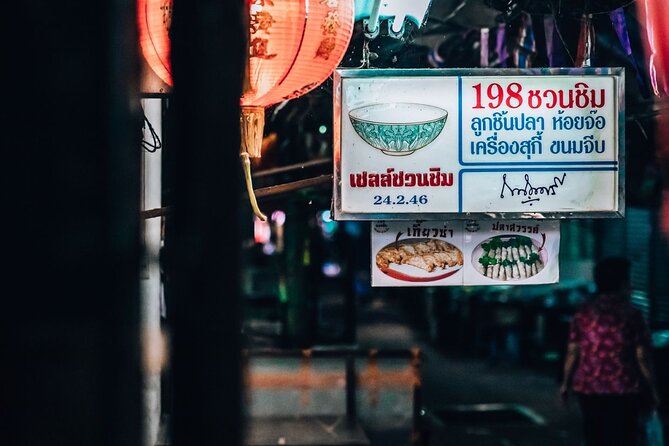
This is a meat-and-seafood-centered tour. It is not suitable for vegetarians or pescatarians, and it is not recommended if you avoid pork. Street vendors often have limited menus, so the team cannot reliably replace every dish.
The same caution applies to severe allergies, especially shellfish and peanuts. Cross-contamination and traces are possible in street-food kitchens. People with celiac disease or strict halal requirements should also choose another experience.
Other dietary restrictions may mean missing some tastings. That can reduce the value of a tour built around fifteen or more dishes, so check your needs carefully before booking.
For most other eaters, the variety is a plus. The menu can include appetizers, main dishes, vegetables, seafood, and sweets. You may not love every item, but the format encourages you to try foods you might not order alone.
Is $59 a fair price?
At $59, this sits above the cost of eating independently in Chinatown. You could certainly spend less by choosing a few stalls yourself. You would also need to find them, decide what to order, manage portions, and work out how to communicate when a menu is unfamiliar.
I think the price is fair for three types of visitor. First, it suits a first visit to Bangkok when you want a guided introduction. Second, it works for people who care more about variety and local context than about finding the cheapest meal. Third, it is useful for anyone who wants to reach back lanes and small vendors without planning a food route in advance.
The value is weaker if you are already confident ordering street food, have several days in Bangkok, and enjoy making your own route. It is also weaker if you cannot eat much of the menu.
Bottled water is included. Alcohol is not, so plan to buy drinks separately if you want them.
Who should book this Bangkok food tour?
I would choose this tour if you want a concentrated introduction to Chinatown, enjoy trying many small portions, and like having someone explain what is on the plate. It is also a good early-trip activity because you can learn dishes and neighborhoods to revisit later.
It suits adventurous eaters, couples, friends, and solo visitors who like meeting a small group. The maximum of eight keeps the social side manageable without making the experience feel private.
I would skip it if you dislike walking in heat, need a fully controlled menu, avoid pork and seafood, or prefer a slow restaurant meal. The tour is active, packed with food, and built around street vendors rather than comfort.
Final call: book it if you want range, not just one famous dish
Book this tour if you want to eat your way through Chinatown with a local guide, try at least fifteen different tastes, and see the area beyond Yaowarat’s main road. The two-person staff, small group, Michelin-listed stops, and strong mix of savory dishes and sweets make $59 reasonable for a four-hour introduction.
Before booking, check the food restrictions and choose your departure time with care. Bring comfortable shoes, arrive hungry, and use the 24-hour cancellation window if your plans change. For a first look at Bangkok’s street food, this is a generous and well-organized way to begin.
FAQ
Where does the Bangkok Backstreets Food Tour start and finish?
It starts and ends at Shanghai Mansion Bangkok, 479, 481 Yaowarat Road in Bangkok’s Chinatown. Hotel pickup and drop-off are not included.
How long does the tour last?
The tour lasts approximately four hours and includes walking through Chinatown and its backstreets.
How many food tastings are included?
The tour includes more than 15 tastings, with some departures sampling 16 dishes. The route usually includes eight or nine food stops.
What is the maximum group size?
The maximum is eight travelers. The group is accompanied by one professional food guide and one assistant.
Is the tour suitable for vegetarians or people with food allergies?
No. It is not suitable for vegetarians, pescatarians, or people who do not eat pork because vendors have limited alternatives. It is also unsuitable for severe allergies, especially shellfish and peanut allergies, as well as celiac disease and strict halal requirements.
Can I cancel for a refund?
Yes. You can cancel at least 24 hours before the experience starts for a full refund. Cancellations or changes made less than 24 hours before the start time are not refunded.
New food tours we have reviewed in Bangkok
- Bangkok 3-in-1 Tour: Longtail Boat,TukTuk & Street Food Adventure★ 5.0 · 73 reviews
- 4-Hour Hidden Bangkok TukTuk Street Food Guided Tour★ 5.0 · 23 reviews
- Private Tuktuk Authentic Food Tour (Chinatown-Flower Market)★ 5.0 · 75 reviews
- Train & Floating Market Food Adventure + Scenic train ride★ 5.0 · 102 reviews
- Bangkok Tuk Tuk Food Tour By Night★ 5.0 · 198 reviews
- Timeless Thonburi Canal and Food Tour★ 5.0 · 31 reviews
- Authentic Street Food Tour in China Town Bangkok★ 5.0 · 25 reviews
- Night Street Food Tour of Bangkok’s Chinatown★ 5.0 · 173 reviews
Bangkok Food Tours, compared.
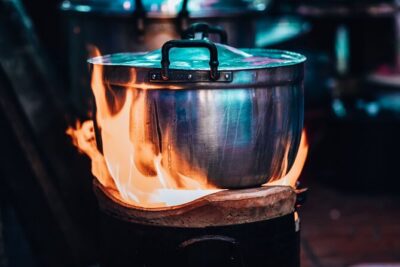
Bangkok: Backstreets Food Tour with 15+ Tastings
Read our review →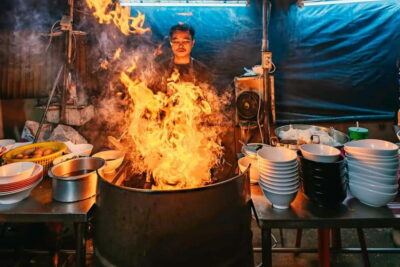
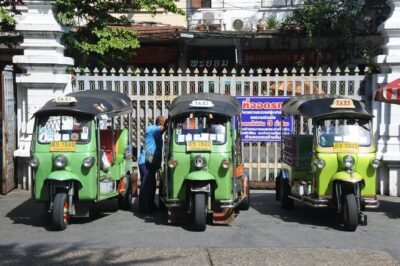
Bangkok: Michelin Guide Street Food Tour by Tuk Tuk
Read our review →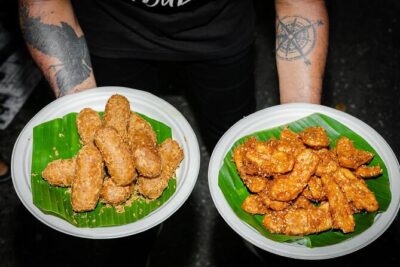
Bangkok Authentic Tasting Thai-Chinatown Walking Food Tour
Read our review →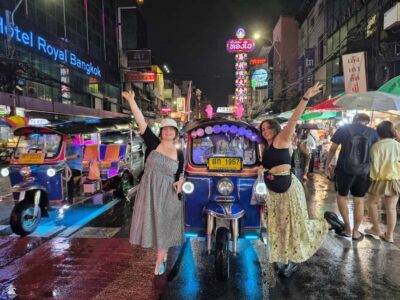
Bangkok: Tuk Tuk Adventure Chinatown Michelin Food & Temples
Read our review →
Bangkok Tuk-Tuk Tour by Night with Chinatown Street Food Meal
Read our review →
Bangkok: Must-Try Hidden Bike & Food Experience
Read our review →Browse the lists this tour appears in