
Review · FOOD TOURS WITH LOCALS
Dubrovnik Food and Drink Walking Tour with a Local Guide
Dubrovnik’s best food tour is also a walking lesson in the city itself. Over about three hours, you move from the Onofrio Fountain through Stradun and the old squares, stopping at four local restaurants for Croatian dishes, wine, coffee, and liqueur. I like the way the meal and the city explain each other.
I especially like the small group limit of 12, which gives you room to ask Ana, Dražen, or another local guide about food, war, customs, and daily life. I also like that the price includes the food and drinks, so you can focus on the meal instead of keeping track of add-on costs.
The main consideration is the balance. This is not a quick circuit of tiny samples. Portions are generous, and part of the time is spent standing outdoors while the guide explains a monument. If you want constant eating or a short list of many bites, this may feel more like a history-and-food walk.
Key points to know before booking
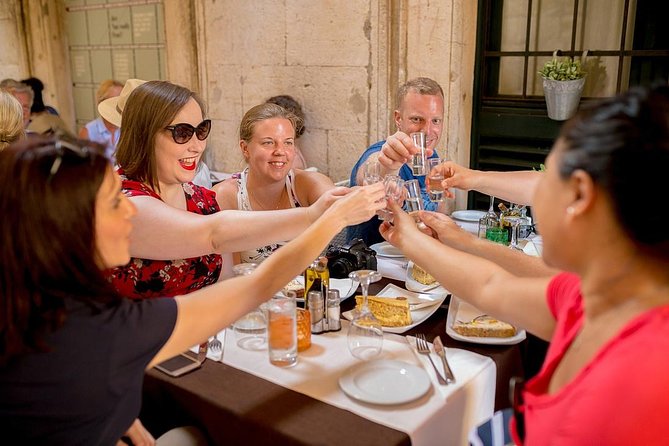
- Four restaurant stops: Expect a starter, two main courses, dessert, wine, water, coffee or tea, and a local liqueur.
- A useful first-day activity: The route gives you restaurant ideas and practical advice for the rest of your stay.
- Major Old Town sights included: The walk passes the Rector’s Palace, Stradun, the Cathedral, the Old Port, and more.
- Groups stay small: A maximum of 12 people makes conversation with the guide much easier.
- Vegetarians can be accommodated: Tell the provider when booking. Vegan meals are not available.
- No transport is involved: You meet at Poljana Paska Miličevića and return there on foot.
Why this Dubrovnik food tour works
Dubrovnik’s Old Town can feel like a stone maze, especially when cruise-day crowds fill Stradun. A food tour gives you a reason to move through it slowly. You are not simply passing monuments for a photograph. You stop, hear the local story, then sit down to eat food tied to the region.
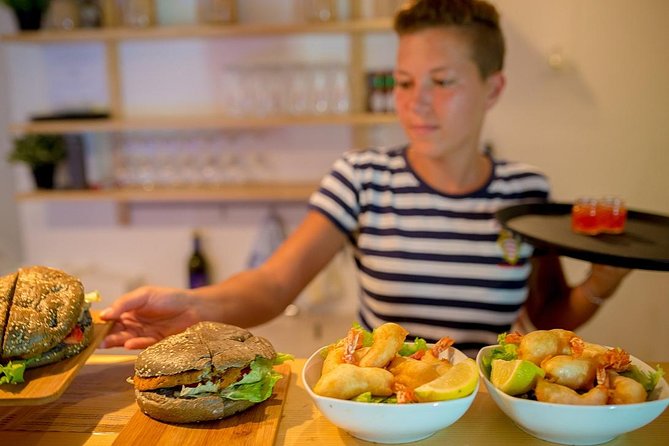
The route is guided by the city’s landmarks, but the meal is the heart of the experience. You may taste a charcuterie board first, followed by dishes such as creamy barley with Adriatic shrimp, Pag Island cheese, kopun salad, seasonal produce, and Dubrovnik carob cake with wild bitter orange jam.
The food is served in stages, not dumped on the table all at once. That helps you keep pace over three hours, though generous servings mean you should arrive hungry but not starving. Wine is included at three stops, and dessert comes with a local brandy or liqueur. Coffee or tea and bottled water are also covered.
I see this as a particularly useful introduction to Dubrovnik. Guides such as Ana and Dražen do more than name dishes. They connect the food to Croatian customs, local restaurants, city history, and personal experience. Ana has also shared what growing up during the war was like, adding a human layer to the stone walls and polished tourist streets.
More Food Tours with Locals in Croatia:
- Naples: Street Food Walking Tour with Local Guide
★ 4.9 · 4,976 reviews - Rome: Street Food Tour with Local Guide
★ 4.8 · 4,077 reviews - Eat Like a Local: Venice 3-Hour Small-Group Food Tasting Tour
★ 5.0 · 3,137 reviews
Starting at the Onofrio Fountain
The meeting point is Poljana Paska Miličevića, by the Large Onofrio Fountain near Pile Gate. This is a sensible place to begin because it is easy to identify and sits at the western entrance to the Old Town.
The fountain was built in 1438 by the Italian engineer Onofrio della Cava. Its water system carried water from a spring more than seven miles away, a remarkable feat for medieval Dubrovnik. The fountain survived damage from the 1667 earthquake and the Croatian War of Independence, and it still provides public drinking water.
You spend about 15 minutes here. It is not a food stop, so use the time to settle in, meet the group, and listen to the opening explanation. Comfortable shoes matter from the start. Dubrovnik’s paving is hard underfoot, and you will spend part of the tour walking and part standing.
From Bošković Square to the Rector’s Palace
The first short walk leads to Ruđer Bošković Square. It is named for the Dubrovnik-born physicist, astronomer, mathematician, philosopher, diplomat, poet, theologian, and Jesuit priest Ruđer Bošković. The list of occupations sounds almost comic, but it gives the guide a useful way to show how much intellectual and cultural life came from this small maritime republic.
The square sits among narrow lanes and old stone buildings. The stop lasts only about five minutes, so expect a brief orientation rather than a long visit. That rhythm continues through much of the route: a monument, a story, then food.
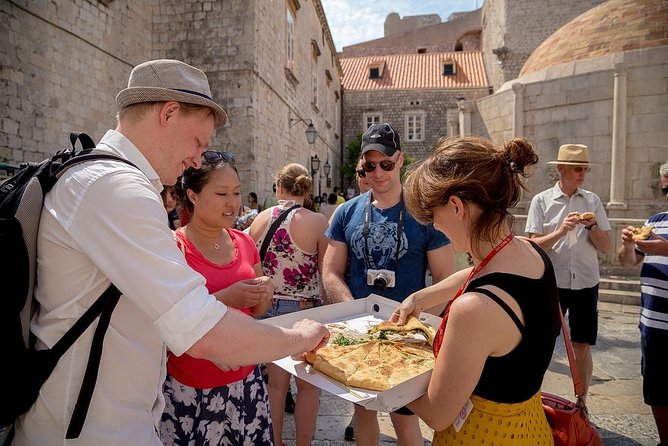
Nearby, the Rector’s Palace recalls the Republic of Ragusa, Dubrovnik’s former name and political identity. The Gothic-Renaissance building once housed the elected rector, who led the republic. You see it from outside during the walk, with about five minutes for the explanation.
This is one of the places where the tour’s history component matters. The guide can explain Dubrovnik as a trading state, not just a pretty walled town. That context makes the later discussion of ingredients, imports, and local cooking easier to follow.
Saint Blaise, Stradun, and Orlando’s Column
The Church of Saint Blaise is dedicated to Dubrovnik’s patron saint. Its Baroque facade and central location make it one of the easiest churches to spot in the Old Town. The stop is brief, about five minutes, but it gives you a chance to understand how strongly Saint Blaise is tied to local identity.
Next comes Stradun, the limestone-paved main street. It runs about 300 meters between Pile Gate and Ploče Gate and forms the main spine of the Old Town. Stradun can be crowded, so listen closely and stay near the guide. The short stop here is more about orientation than a detailed architectural lecture.
The Orlando Column is another compact but useful stop. The limestone statue of the medieval knight Orlando was erected in 1418. The column once served as a place for public announcements and a symbol of justice. Its length was also used as a local measure for cloth sellers, a small detail that helps turn an ordinary-looking monument into a glimpse of working life in medieval Dubrovnik.
If you are hoping for a long seated explanation at every sight, adjust your expectations. Some stories are told while standing in public spaces, and that can be less comfortable in heat, rain, or heavy foot traffic. The advantage is that the history stays attached to the place where it happened.
More guided departures in Croatia:
- Dubai: Old Town, Souks, Street Food, Guided Tour & Abra Ride
★ 4.9 · 7,170 reviews - Hanoi: Guided Food Tour with Train Street Visit
★ 4.9 · 6,239 reviews - Amsterdam: Guided Zaanse Schans, Windmills & Cheese Tour
★ 4.4 · 4,826 reviews - Chef Guided Food Tour of Pike Place Market
★ 5.0 · 3,733 reviews
Gundulić Square and the first food stop
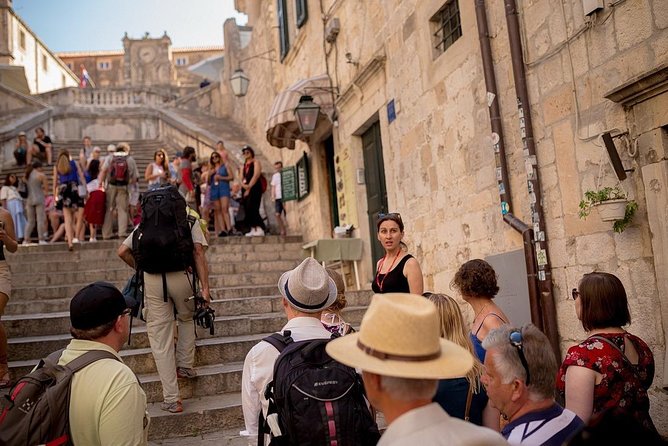
Gundulićeva Poljana becomes an open-air market in the morning. It is named for Ivan Gundulić, one of Dubrovnik’s best-known poets. Market stalls add a practical food angle to the walk, even though the included meal takes place at restaurants rather than as a market tasting.
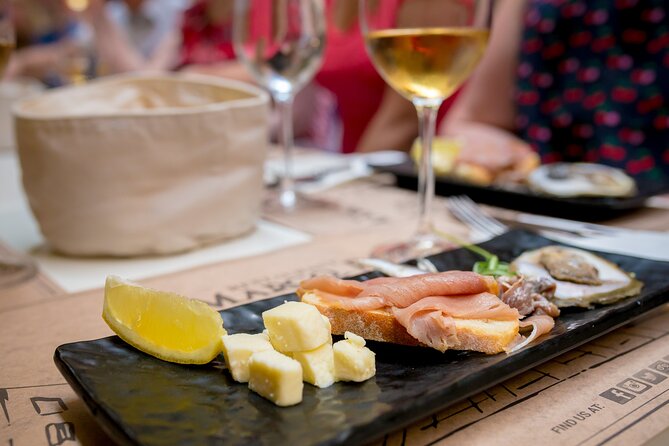
The first food serving is a starter and includes a charcuterie board. Seasonal fruit and vegetables may also appear during the meal. This is a good opening course because it lets you begin with small tastes before the heavier dishes arrive.
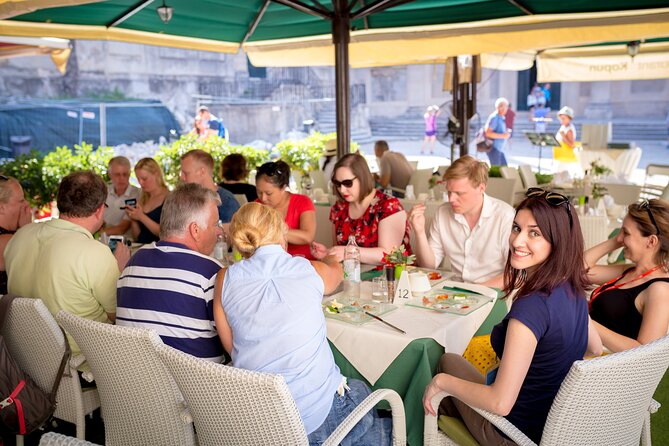
The tour visits local, small restaurants rather than relying on a single dining room. That gives you a wider look at the Old Town food scene and lets you compare different settings and preparations. You should not expect a formal wine class, but the guide explains the food and wine as part of the broader Croatian experience.
One practical advantage is the follow-up advice. Guides have offered restaurant recommendations for later meals, including suggestions that helped people find dishes such as peka. If you take this tour early in your stay, you can use those tips instead of choosing a restaurant at random on a busy evening.
Sponza Palace, the Old Port, and Dubrovnik’s maritime side
Sponza Palace sits near the end of Stradun, close to the bell tower. Known as Divona in Croatian, it is one of the Old Town’s most admired historic buildings. During the walk, it helps shift the focus from religious and political power to commerce.
The Old Port, or Porat Dubrovnik, brings the city’s seafaring past into view. Dubrovnik’s fortunes depended on trade across the Mediterranean, and the port connected the city to that wider world. The stop lasts about five minutes, enough for a clear explanation before the next part of the meal.
A second main course follows somewhere along the route. The sample menu lists creamy barley with Adriatic shrimp and cheese from the island of Pag. These are useful examples of what the tour aims to show: local ingredients, coastal seafood, and regional products rather than generic international fare.
Because the menu can vary, I would treat the sample dishes as a guide rather than a promise of every plate. If you have dietary needs, give notice when you book. Vegetarian meals are available, but vegan meals are not.
The Cathedral, Orthodox Church, and final courses
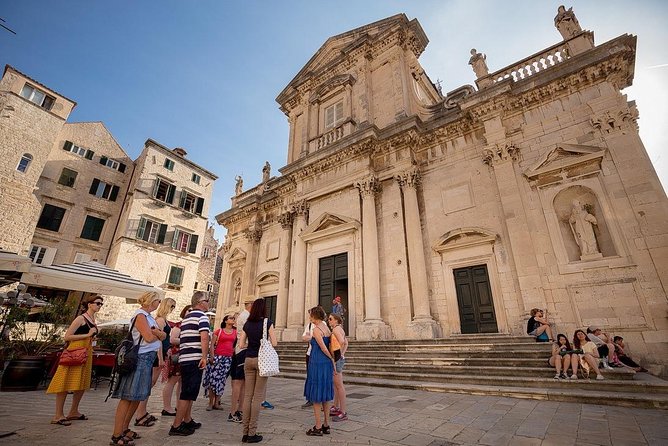
The Cathedral of the Assumption of the Virgin Mary is a Baroque landmark in the center of the Old Town. Its art and architecture reflect Dubrovnik’s religious importance and its long connections with the wider Adriatic world. The stop is about five minutes.
The tour also pauses briefly at the Holy Annunciation Orthodox Church, sometimes called the Serbian Orthodox Church of Dubrovnik. Its Byzantine and southern Adriatic influences offer another view of the city’s religious life. This is only a two-minute stop, so expect a quick note rather than an interior tour.
The final food stages bring the tour back to the table. Kopun salad with seasonal vegetables and fruit is listed as one of the featured dishes. Dessert is Dubrovnik carob cake served with wild bitter orange jam, followed by a glass of local brandy or liqueur.
Carob and bitter orange are especially fitting flavors for a coastal Croatian setting. The dessert also gives the meal a clear local finish instead of ending with a standard cake or ice cream. Coffee or tea is included, useful after a meal that may be more substantial than the word tasting suggests.
Ending by the Bell Tower
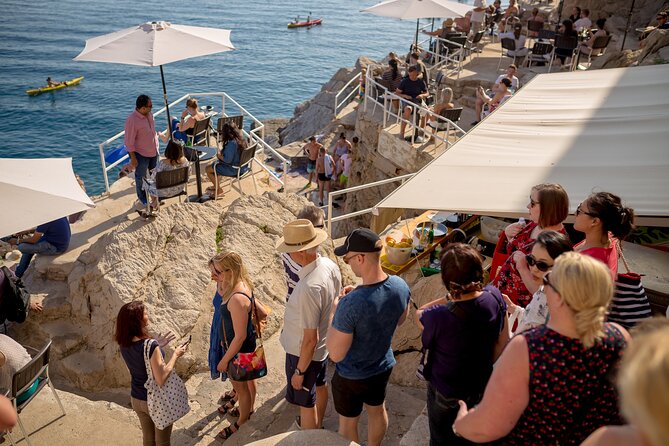
The Bell Tower rises 31 meters at the eastern end of Stradun. The original tower was built in 1444 and reconstructed in 1928 after it began to lean. It is a strong final landmark because it brings you back to the central axis of the Old Town.
The activity ends at the original meeting point. There is no hotel pickup, drop-off, or transport between stops. That is not a problem if you are staying near the Old Town, but you should allow time to reach the meeting point on your own.
The walk operates in all weather conditions, although poor weather can lead to a new date or a full refund. Bring clothing suitable for the forecast and shoes that can handle uneven stone. Children must be with an adult, and service animals are allowed.
Is the $175.35 price fair?
At $175.35 per person, this is not a bargain snack crawl. The price makes more sense if you value a full meal, several glasses of wine, a local guide, and a structured introduction to Dubrovnik.
You receive a starter, two main courses, dessert, wine at three stops, water, coffee or tea, and a local liqueur. You also receive the guide’s time across four restaurant visits and a walking route through many of the Old Town’s main sights. Buying a comparable meal and several drinks separately could take a sizable part of the price, especially in the Old Town.
The value is strongest for people who want guidance along with food. If you already know Dubrovnik well and only want many tiny tastes, you may find the tour too expensive and too focused on history. If you are new to the city, the restaurant advice alone can help you avoid a disappointing dinner later.
The maximum group size of 12 also matters. This is not a private tour, but it is small enough for questions and conversation. The guides make an effort to bring people together, which suits solo visitors and couples who enjoy meeting others over a shared meal.
Who should book this experience?
I would choose this tour early in a Dubrovnik visit, especially if you enjoy learning a city through food. It suits people who want Croatian dishes, wine, Old Town landmarks, and practical restaurant suggestions in one outing.
It is also a good fit if you prefer a relaxed pace and a guide who can explain local customs. The strongest guide feedback centers on Ana and Dražen, both praised for their warmth, personal stories, food knowledge, and sense of humor.
Think twice if you are vegan, since no vegan option is available. Also reconsider it if you dislike walking on stone, standing outdoors, or listening to history between courses. The one less enthusiastic assessment found the explanations too long and wanted more small samples instead of larger portions. That is a fair warning: this is a meal with a city walk, not a rapid-fire tasting menu.
Should you book the Dubrovnik Food and Drink Walking Tour?
Book it if you want a substantial Croatian meal paired with Old Town history, and schedule it near the beginning of your stay. You will get food, wine, a useful orientation, and restaurant advice you can use afterward.
Skip it if you want a short, snack-heavy food crawl, need vegan food, or prefer to explore at your own pace. For most people who enjoy both a story and a full plate, the combination offers a sensible way to get under Dubrovnik’s polished surface.
Free cancellation is available up to 24 hours before the start time. A minimum of two people is required, and the group can include no more than 12.
FAQ
How long does the Dubrovnik food and drink tour last?
The tour lasts approximately three hours.
Where does the tour begin and end?
It begins at Poljana Paska Miličevića in Dubrovnik’s Old Town and ends back at the same meeting point.
What food and drinks are included?
The tour includes a charcuterie starter, two main courses, dessert, coffee or tea, water, three glasses of red or white wine, and a glass of local brandy or liqueur with dessert.
Is a vegetarian option available?
Yes. Vegetarian meals are available, but you must advise the provider of the requirement when booking.
Is there a vegan option?
No. The tour is not recommended for vegans.
How large is the group?
The tour requires at least two people per booking and allows a maximum of 12 participants.
What happens if bad weather cancels the tour?
If poor weather causes a cancellation, you will be offered a different date or a full refund. You can also cancel for a full refund if you do so at least 24 hours before the start time.
New food tours we have reviewed in Croatia
- Split: Food Tasting Walking Tour★ 4.9 · 102 reviews
- Split: Private Food Tasting Tour★ 4.9 · 36 reviews
- Split: Small Group Food Tour with Private Option★ 4.8 · 116 reviews
- Korcula: Buggy Safari with Local Food and Wine Tasting★ 5.0 · 97 reviews
- Pelješac Full-Day Wine and Food Tour from Dubrovnik★ 5.0 · 72 reviews
- From Split: Krka Waterfalls with Wine & Cheese Tasting Tour★ 4.6 · 33 reviews
- Zagreb: Food Tour with Tastings★ 4.9 · 153 reviews
- Dubrovnik: Oyster, Mussles, and Wine Tasting Tour in Ston★ 5.0 · 77 reviews
Food Tours with Locals, compared.
Naples: Street Food Walking Tour with Local Guide
Read our review →
Eat Like a Local: Venice 3-Hour Small-Group Food Tasting Tour
Read our review →
Marrakech: Street Food Tour with a Local Guide
Read our review →
Venice: Street Food Tour with a Local Guide and Tastings
Read our review →
Madrid: Tapas & Wine Tasting Tour with Local Guide
Read our review →
Hungry Osaka Street Food Tour:15 Tastings & 3 Drinks with a Local
Read our review →Browse the lists this tour appears in