
Review · ROME FOOD TOURS
Rome Food Tour: Campo de’ Fiori, Ghetto, Trastevere Winner 2024
Rome’s best food lesson may happen on foot, one bite at a time. This tour connects Campo de’ Fiori, the Jewish Ghetto, and Trastevere, pairing family-run shops with Roman staples such as pizza bianca, supplì, fried artichokes, cacio e pepe, and gelato.
I like the generous food count and the small maximum of 12 people. I also like the way the tour links food with place, from the market’s seasonal produce to the Jewish Quarter’s fried specialties and Trastevere’s old neighborhood restaurants. The main consideration is the amount of food and walking. You will cover cobblestones and varied terrain, and many people will have no room for another meal afterward.
Key points to know before booking
- Fifteen tastings at five food stops make this a full meal, not a light nibble walk.
- Three wine tastings are included, along with Roman pizza, pasta, fried foods, cured meat, cheese, and gelato.
- Morning departures include Campo de’ Fiori market, except on Sunday. Afternoon tours and Sunday morning tours replace the market visit with time around local shops.
- The group is capped at 12 people, which gives you a better chance to hear the guide and ask questions.
- The route ends in Trastevere, at Via della Lungaretta, rather than returning to the starting point.
- Food allergies need careful planning. Milk, eggs, soya, mustard, nuts, and gluten may be present, and some serious allergies cannot be accommodated on the shared tour.
Three Roman neighborhoods, one very filling walk
The tour begins at Piazza Farnese, near the corner of Via dei Baullari. That is a useful starting point because you move quickly into one of central Rome’s most interesting food areas instead of spending time on a bus or waiting for transfers.
The route is designed as a progression. You begin with market produce and traditional shops, move through the Jewish Quarter for fried Roman specialties, cross the Tiber, and finish among Trastevere’s restaurants and late-night streets. In practical terms, this means the tour gives you both food and orientation. You get a sense of how these districts connect, and you can return later on your own.
The guides vary, but several names appear often in the tour’s feedback: Clelia, Luca, Natalia, Lisa, Anastasia, Silvia, Andy, and Bennie. The strongest part of the guiding is the combination of food knowledge and Roman background. Guides explain not only what is on your plate but also why a dish belongs to this part of the city.
More food tours in Rome:
- Winner 2025 Rome Twilight Trastevere Food Tour by Eating Europe
★ 5.0 · 5,157 reviews - Rome: Street Food Tour with Local Guide
★ 4.8 · 4,077 reviews - Rome Food Tour: Unlimited Tastings with Fine Wine & Barolo
★ 5.0 · 3,365 reviews
Campo de’ Fiori: market produce and old Roman food shops
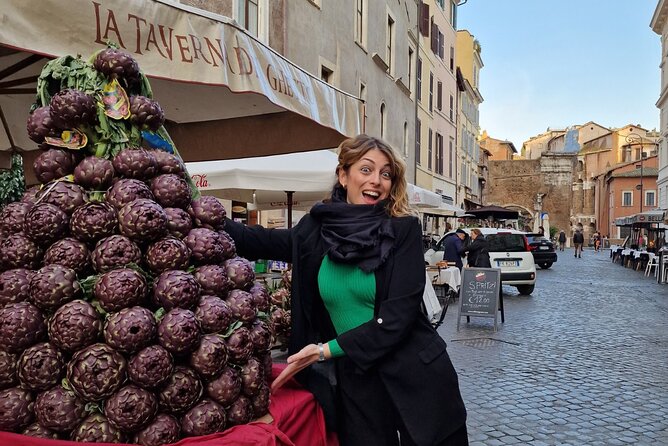
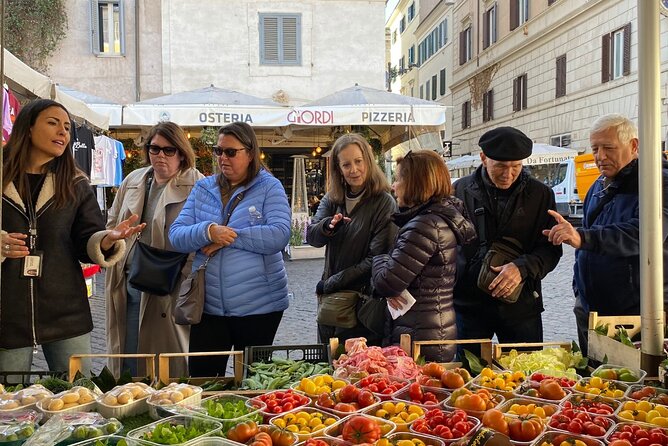
On a morning tour, Campo de’ Fiori is the first major stop. Stalls display seasonal vegetables, meats, and cheeses, giving you a quick lesson in what Romans are buying and eating at that time of year.
This is a better use of the market than simply taking a few photographs. You learn to notice seasonality, and that helps explain why the menu can change. Fried artichokes are associated with the Roman Jewish culinary tradition and are served when they are at their best. At other times of year, the tasting may include fried zucchini flower instead.
The statue of Giordano Bruno adds a short historical pause. The guide connects the square’s past, including the period of the Inquisition, with Roman food traditions. It is not a long sightseeing lecture, but it gives the first food stop some context.
The exact market experience depends on your departure. Afternoon tours do not include the market, and Sunday morning departures also leave it out. You will instead have some time to browse nearby local shops, so check the departure option carefully if the market matters to you.
Family shops, cured meat, and Roman pizza
At Ancient Pizzicheria Ruggeri, you meet members of the Ruggeri family and taste specialties from a long-running grocery shop. This is the sort of stop that makes a food walk worthwhile. You are not simply handed a prepared dish in a generic dining room. You see the connection between the shop, its products, and the people who have run it.
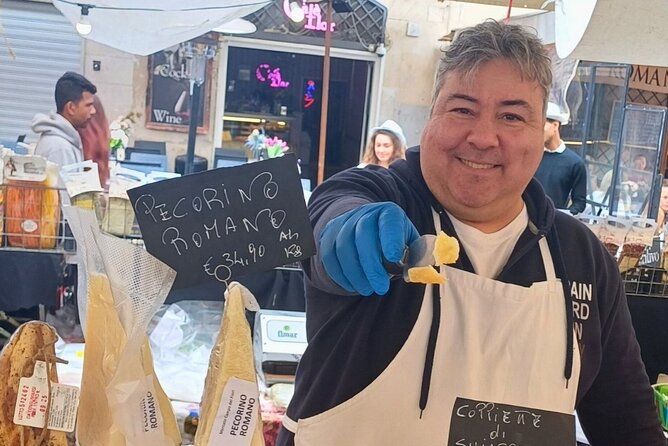
Norcineria Viola dal 1890 brings a more theatrical food moment. Cured pork hangs overhead, including guanciale, salami, and prosciutto. The sample menu also lists Roman salami, buffalo mozzarella, and pecorino Romano. These bites help you understand the building blocks of Roman cooking, where cured meat and sharp sheep’s cheese often provide much of the flavor.
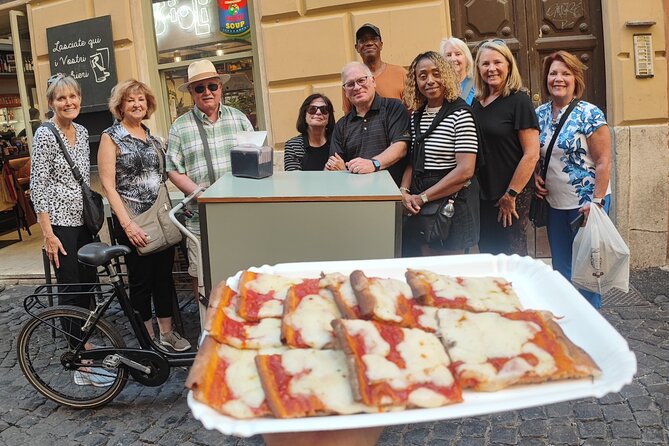
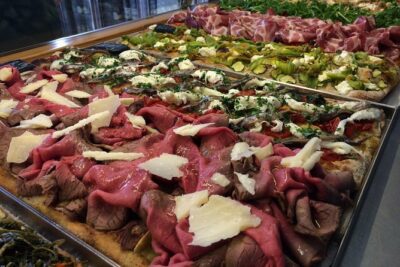
Next comes Antico Forno Roscioli, described as the oldest bakery in town. Here you taste Roman-style pizza, including pizza bianca with mortadella and pizza rossa. Roman pizza is not the same experience as a large Neapolitan pie. The emphasis here is on bakery-style pieces, crisp edges, and toppings that work as a quick snack or simple meal.
These early stops also explain why you should arrive hungry. The tour calls for 15 samples, and those samples are not all tiny tastes. Several portions combine bread, meat, cheese, or fried food. If you have a substantial breakfast beforehand, you may feel the effect by the pasta course.
The Jewish Ghetto and the food of Piazza della Cinque Scole
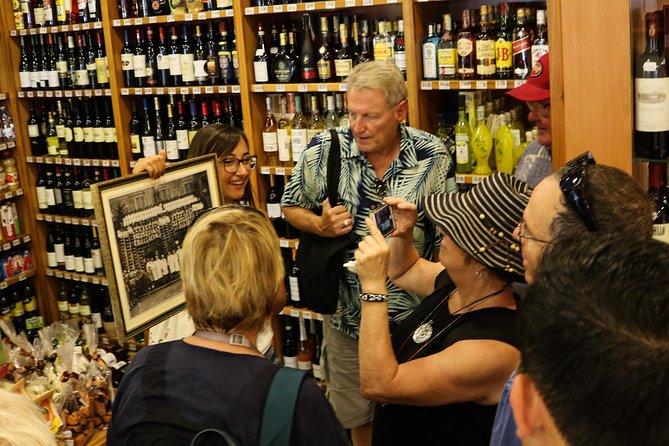
From Campo de’ Fiori, the route heads toward the ancient Jewish Quarter. The neighborhood includes vintage shops, art studios, the oldest synagogue in Rome, and streets with a quieter feel than the main tourist routes.
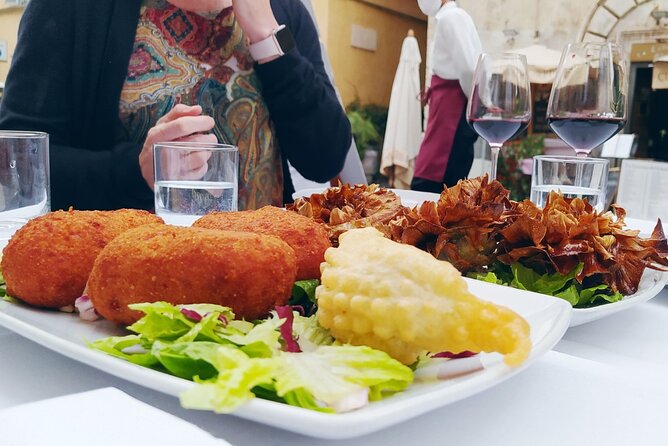
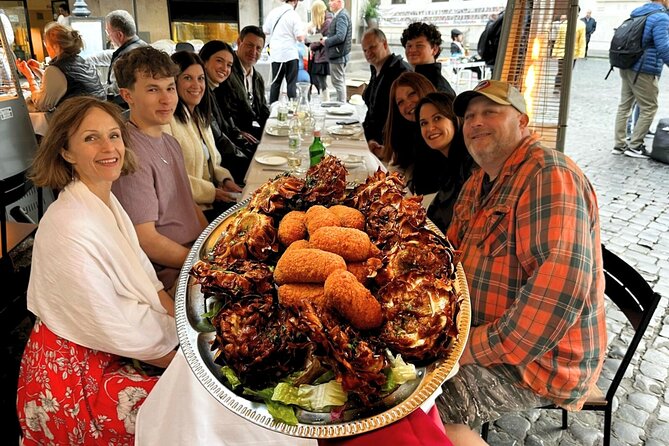
The food focus here is especially useful because the Jewish Ghetto has its own Roman cooking traditions. At or near Piazza della Cinque Scole, you may taste supplì, fried artichokes, fried zucchini flowers, and codfish. Supplì are fried rice croquettes, usually with a crisp outside and a soft interior. They are a classic Roman street snack and a good contrast to the bread, cheese, and cured meat served earlier.
Fried artichoke is one of the signature foods associated with the district. But the season matters. In summer, a zucchini flower may take its place. That is a positive sign if you want a food experience tied to local produce rather than a fixed menu that ignores the calendar.
The Jewish Quarter portion is not just a walk between restaurants. Guides such as Luca and Clelia have been praised for explaining the area’s history and its connection to food. You will spend only a few minutes at some sights, including the synagogue’s exterior, so think of this as a food tour with historical context, not a synagogue visit or a formal neighborhood tour.
Same appetite, a different neighbourhood:
- Rome: Guided Food Walking Tour with Wine in Trastevere
★ 4.9 · 3,105 reviews - Rome: Trastevere Food tour with Free-Flowing Fine Wine
★ 5.0 · 2,853 reviews - Rome: Trastevere & Campo de Fiori Street Food Walking Tour
★ 4.9 · 2,768 reviews - Rome Street Food Tour with Local Guide
★ 5.0 · 2,361 reviews
Tiber Island and a proper Roman pasta course
The route crosses Ponte Fabricio toward Isola Tiberina, Rome’s only island. It is a short scenic break between the fried specialties and the sit-down food portion.
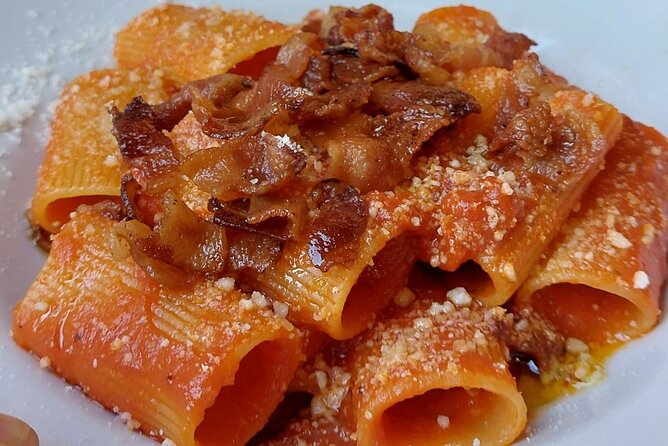
At Il Portico di Ottavia, you continue with fried Roman food. Then the tour moves to Ristorante Sette Oche in Altalena for a pasta and wine pairing. The sample menu lists cacio e pepe and amatriciana, two dishes that explain a lot about Roman cooking.
Cacio e pepe is built around pecorino Romano, black pepper, and pasta water. The sauce can be smooth and creamy in texture without containing cream. Amatriciana brings tomato and guanciale into the picture, with a stronger, more savory character. Tasting both helps you compare two of Rome’s most famous pasta styles.
The meal is a real part of the tour, not an optional add-on. A restaurant entrance is included as part of the longer experience, and wine is served at several points. If you do not drink alcohol, you can ask about your options, but the advertised package centers on three wine tastings. Soft drinks are available at your own expense.
One useful caution: food quality can vary from day to day, and personal taste matters. Most of the feedback is strongly positive, but one food-focused participant found some dishes greasy, the cacio e pepe too heavily sauced, and the wine disappointing. That is worth keeping in mind if you are a very serious food specialist. For most people, the value lies in trying a broad range of Roman foods in one afternoon or morning, rather than receiving a carefully controlled fine-dining menu.
Trastevere, pasta, cured meat, and the final gelato
After crossing back into Rome, the tour reaches Trastevere. Its narrow lanes, restaurants, and nightlife make it a natural place to finish a food walk. You are seeing the neighborhood at a useful point in the day, when you can note places to revisit later.
At Ercoli Trastevere, the tasting includes cacio e pepe with an appetizer and wine, surrounded by shelves of food and bottles. The setting gives you another look at the way modern Roman food shops mix retail products with dining.
The tour also visits a shop known for suspended salami and prosciutto. That detail may sound small, but it is one of the memorable visual touches on the route. It turns a food store into part of the sightseeing.
Fiordiluna provides the final course: artisan gelato. The shop is associated with Eugenio Morrone, winner of a 2020 world gelato title. Gelato is a smart ending because it gives your palate something cold and sweet after the salty meats, fried foods, and rich pasta.
The last stop is near Via della Lungaretta, and the tour ends there. You are not taken back to Piazza Farnese, so plan your next move from Trastevere. That is convenient if you want to stay for dinner or nightlife, but less convenient if you have a timed booking near the starting point.
How much food do you really get?
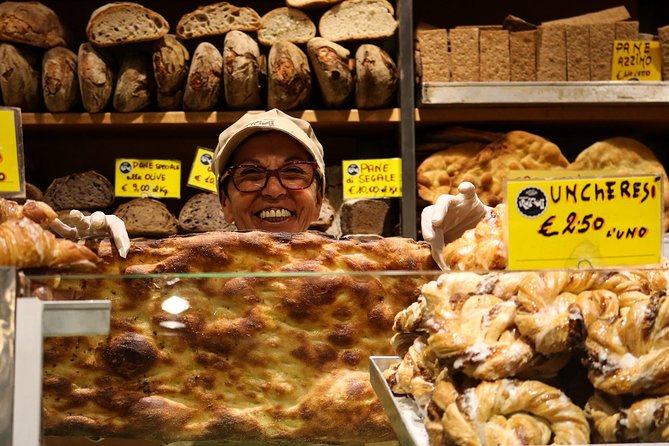
The advertised menu covers nearly a full Roman meal:
- Pizza bianca with mortadella and pizza rossa
- Supplì
- Fried artichoke or zucchini flower
- Roman salami
- Buffalo mozzarella
- Pecorino Romano
- Roman-style pasta, including cacio e pepe and amatriciana
- Artisan gelato
- Three wine tastings
The full experience includes 15 samples at five food locations. The portions are generous enough that several people finish without wanting lunch or dinner afterward. I would treat this as a meal replacement, especially if you book the morning departure.
That also means you should not plan a major restaurant reservation immediately afterward. Give yourself time to digest, browse Trastevere, or take a slow walk along the river.
Vegetarian and dairy-free options are available if you request them when booking. The tour is not recommended for vegans. Gluten, nuts, milk, eggs, soya, mustard, and other ingredients may be present, and people with dangerous food allergies or life-threatening celiac disease are advised to arrange a private tour instead.
Is $88.28 a fair price?
At $88.28 per person, the price is not cheap for a walking tour, but it is reasonable if you use it as a half-day meal and neighborhood introduction. You receive food at five locations, three wine tastings, a local English-speaking guide, a small group capped at 12, and a food guidebook and cookbook.
The value improves if you are visiting Rome for the first time. You sample dishes that you might not order confidently on your own, get practical restaurant advice, and learn where Campo de’ Fiori, the Jewish Quarter, Tiber Island, and Trastevere fit together.
The value is weaker if you only want a quick street-food snack. A shorter two-hour option exists, but it does not include the Jewish Ghetto, pasta, or fried artichoke. The full three-and-a-half-hour tour is the better choice if you want the neighborhood walk and sit-down pasta experience.
Pace, group size, and practical comfort
A small group makes a real difference in food shops. With no more than 12 people, you have a better chance of hearing the guide, asking about ingredients, and staying together on narrow streets. Some departures may be smaller, and one reported departure had only two people, but you should book expecting a small group rather than a private tour.
The route involves cobblestones, walking, and varied terrain. Comfortable shoes matter more than stylish ones. Most people can participate, but the shared tour is not suited to travelers with reduced mobility. A private option is recommended for people who need more flexibility.
The tour operates in all weather. Rain has not prevented people from enjoying the food and stories, but you should dress for the forecast. There is no hotel pickup or drop-off, so make your own way to Piazza Farnese and arrange your onward route from Trastevere.
Free cancellation is available up to 24 hours before the start time. Inside that window, refunds are not available, and changes are not accepted.
Who will enjoy this Roman food tour most?
I would choose this tour for a first or second visit to Rome, especially if you want food to guide your sightseeing. It works well for couples, families, and older participants who can walk comfortably. The pace has been described as manageable even for people over 65, although the cobblestones still require care.
It also suits anyone who wants food history without signing up for a formal lecture. Guides such as Lisa, Natalia, Anastasia, Clelia, and Luca have been praised for mixing Roman stories with practical food advice. That can help you make better choices for the rest of your stay.
I would hesitate if you have severe allergies, follow a vegan diet, dislike rich food, or want a highly polished restaurant crawl. The route favors variety, local shops, and a large quantity of traditional food. It is informal and active, with conditions that can change by season.
Should you book it?
Book this tour if you want a filling introduction to Roman food and three central neighborhoods in one well-planned walk. The best reasons are the small group, the mix of market, bakery, grocery shops, restaurants, and gelateria, and the amount of food included for the price.
Choose a morning departure if the Campo de’ Fiori market is important to you, but remember that Sunday morning does not include it. Wear comfortable shoes, arrive hungry, and avoid scheduling another large meal soon afterward. If you need strict allergy control or mobility support, contact the operator about a private option before booking.
FAQ
How long does the Rome food tour last?
The tour lasts approximately three and a half hours.
Where does the tour begin?
It begins at Piazza Farnese, near the corner of Via dei Baullari. The listed meeting point is Via dei Baullari 106, Rome.
Where does the tour end?
The tour ends in Trastevere at Via della Lungaretta 12.
How many people can join the tour?
The group has a maximum of 12 participants.
How many food tastings are included?
The full tour includes 15 food samples at five locations.
Are wine tastings included?
Yes. Three quality wine tastings are included at different stops.
Does every tour visit the Campo de’ Fiori market?
No. The market visit is included on morning tours except Sunday morning. Afternoon tours and Sunday morning tours offer time to browse local shops instead.
Can vegetarians or people avoiding dairy join?
Vegetarian and dairy-free options are available if you advise the operator when booking.
Is the tour suitable for vegans or people with severe allergies?
The tour is not recommended for vegans. Ingredients including milk, eggs, soya, mustard, nuts, and gluten may be present, and people with dangerous food allergies or life-threatening celiac disease should contact the operator about a private option.
New food tours we have reviewed in Rome
- Rome: 3-Hour Guided Food Tour with Tastings★ 4.9 · 41 reviews
- Rome: Vatican Street Food and Wine Tour with Farmers Market★ 5.0 · 37 reviews
- Rome: Vegan Street Food Tour with Local Guide★ 5.0 · 37 reviews
- Rome Trastevere Walking Food Tour★ 4.8 · 97 reviews
- Rome: Trionfale and Prati Food and Wine Tasting Tour★ 4.8 · 115 reviews
- Rome: Trastevere & Tiber Island Street Food Tour at Sunset★ 4.9 · 71 reviews
- Rome: Trastevere Quarter Street Food Tour with Sightseeing★ 4.9 · 21 reviews
- Rome: The Ultimate Trastevere Food Tour with a Local★ 4.9 · 114 reviews
Rome Food Tours, compared.
Winner 2025 Rome Twilight Trastevere Food Tour by Eating Europe
Read our review →
Rome Food Tour: Unlimited Tastings with Fine Wine & Barolo
Read our review →
Rome: Guided Food Walking Tour with Wine in Trastevere
Read our review →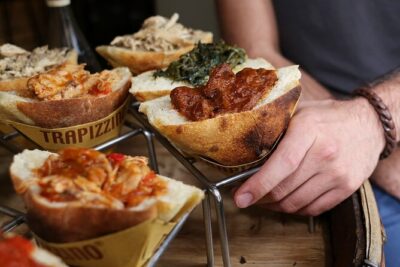
Rome: Trastevere Food tour with Free-Flowing Fine Wine
Read our review →
Rome: Trastevere & Campo de Fiori Street Food Walking Tour
Read our review →
Rome: Gourmet Food Tour with Dinner & Barolo Wine
Read our review →Browse the lists this tour appears in