
Review · MARKET FOOD TOURS
Downtown Seoul Guided Food & Market Tour with 8+ Local Tastings
Seoul’s food culture makes the most sense one bite at a time, and this tour gets you quickly from a market stall to a local eating spot, then on to a quiet teahouse in Insadong. You’ll try eight or more Korean tastings, including mung bean pancakes, mandu, tteokbokki, fish soup, kimbap, cream bread, honey snacks, rice cake, and tea.
I like the small group, capped at 12 people, and the way guides such as Alex, Jae, Youla, and Ji Yoon explain not just what you’re eating but why it matters. I also like the useful first-day timing: several stops help you learn what to order later, and guides share restaurant and market tips you can use for the rest of your stay.
The main caution is price. At $98 per person, this costs more than simply grazing through a Seoul market on your own, and the menu leans toward sweets for some people. If you want barbecue, noodles, or a full traditional meal, this may feel less complete than expected.
What makes this Seoul food tour worth considering
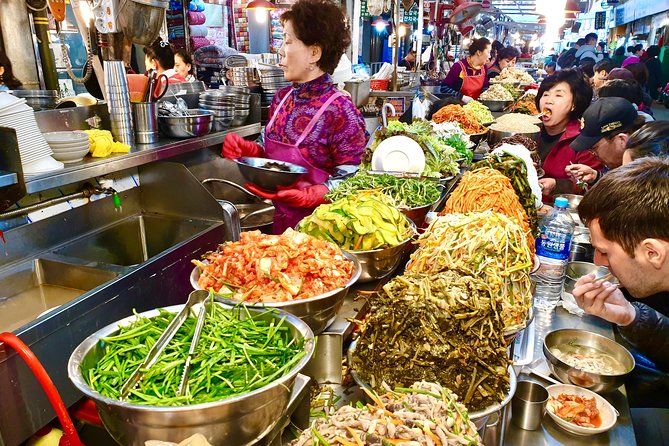
- Starts with Korean market food: Begin near Jongno and taste classic dishes in a busy local market setting.
- Eight or more planned tastings: The food ranges from savory dumplings and pancakes to bread, honey snacks, tea, and a secret dish.
- Palaces and old neighborhoods along the way: The route passes Gyeongbokgung Palace, Gwanghwamun Gate, Bukchon Hanok Village, Changdeokgung Palace, and Namdaemun Market.
- Guides who add useful context: Alex, Jae, JaeSun, Youla, Taesong, and Ji Yoon are among the guides named in the feedback, though your guide will depend on the date.
- Ends at a traditional teahouse: The final stop in Insadong is about 100 meters from Anguk Station on Seoul Subway Line 3.
- Private option available: You can choose a private tour for your own group instead of joining the shared departure.
Starting near Jongno with an appetite
The tour begins at 214 Jong-ro in Seoul’s Jongno District. There is no hotel pickup, so you’ll need to reach the meeting point yourself, but the location is near public transportation and easy to fit into a day of sightseeing around central Seoul.
Come hungry. The tour moves quickly to its first food stop, rather than spending the opening stretch on a long introduction. That is good news if you want lunch and a practical start to Korean eating. It also means you should not eat a large breakfast first.
The route is designed for walking between food stops and landmarks. Comfortable shoes matter, especially because Seoul’s older market streets and hillier neighborhoods can be uneven or crowded. The walking is not described as strenuous, but you will want room in your schedule for a relaxed three hours rather than treating this like a quick meal.
A shared tour is capped at 12 people, with the experience often described as a group of about 10. That is small enough for questions and conversation without the rigid feel of a large coach outing. If your group wants complete control over the pace, a private option is available.
More Market Food Tours in the world:
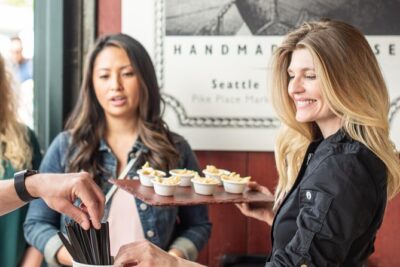
- Chef Guided Food Tour of Pike Place Market
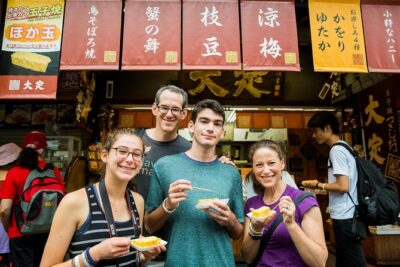
★ 5.0 · 3,733 reviews - Tokyo Tsukiji Fish Market Food and Culture Walking Tour
★ 5.0 · 3,184 reviews - London Bridge & Borough Market Food Tour with 7 Authentic Dishes
★ 5.0 · 1,972 reviews
Mung bean pancakes and Seoul market flavors
One of the first major tastings is nokdujeon, a fried mung bean pancake paired with sweet onions. It is a strong introduction to Korean market food: crisp at the edges, soft inside, and filling without being a full meal by itself.
This dish was a clear favorite for several people, and it makes sense as an early stop. It is warm, savory, and more substantial than many street snacks. The onion pairing also gives you a simple way to notice how Korean food balances fried texture with fresh sweetness.
The route includes time in a traditional market, with Namdaemun Market listed among the important areas connected to the tour. Namdaemun is next to the old southern gate of Seoul and is one of Korea’s oldest and largest markets. You should expect plenty to look at, from food stalls to souvenirs, though the exact stalls and order of stops can change.
A useful tip: do not fill up at the first stop. The tastings arrive in small portions, but there are enough of them to make the full spread quite filling. You may also want to note which stalls you would like to revisit later. One benefit of having a guide is that you can return with more confidence after the tour ends.
Mandu, tteokbokki, and fish soup
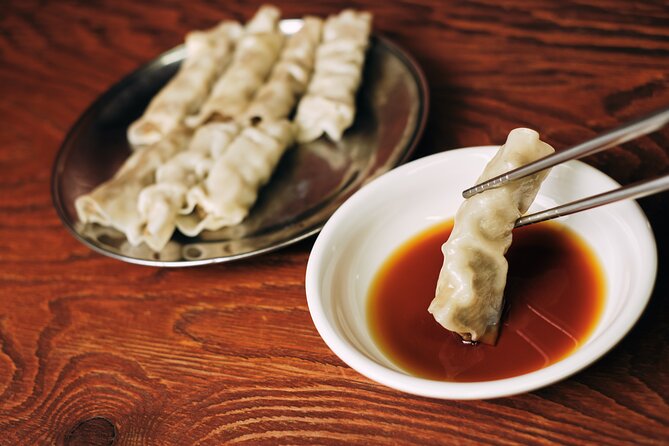
The savory portion continues with mandu, Korean dumplings, and tteokbokki, chewy rice cakes in a spicy sauce. The tteokbokki is described as slightly spicy, so it should be manageable for many people, but anyone sensitive to heat should ask the guide about the level before tasting.
You’ll also try minced fish fillets paired with a little fish soup. Fish cake in broth is a familiar Korean street-food combination, and the warm soup gives the menu a different feel from the fried and sauced dishes.
This is where the tour is useful for first-time Korean food explorers. You can taste several dishes without ordering full portions, and the guide can explain names, ingredients, and local eating customs as you go. Guides Alex and Jae were especially praised for explaining the food clearly and giving practical suggestions for other places to eat.
There is one point to watch closely. The advertised tasting list includes mandu, but one person reported not receiving it. Menus can change, and food tours sometimes adjust stops, so do not book this expecting every single named item to appear exactly as written. The overall range is more dependable than any one dish.
Kimbap, bread, and the sweeter side of Seoul
Freshly prepared kimbap gives the tour a rice-based break from the heavier snacks. These seaweed rolls are convenient, portable, and often filled with several ingredients, making them a good example of everyday Korean food rather than a special-occasion dish.
The menu then shifts toward sweet items. You may try sweet and salty cream bread, a Korean honey snack, a grilled rice cake, and traditional tea. Some people especially enjoyed the cream bread and salt bread, while others felt the tour gave too much space to sweets compared with noodles, barbecue, chicken, or pickled side dishes.
That split is important when deciding if the tour suits you. I like the fact that the route shows more than the familiar Korean barbecue image. Bread, honey snacks, and tea are part of the city’s food culture too, and they can be easy to overlook if you focus only on the main savory dishes.
Still, this is not a complete survey of Korean cuisine. You should not expect a barbecue meal, a noodle bowl, or a broad selection of banchan unless the guide makes an unlisted adjustment. The sweet stops make the tour more varied, but they also account for much of the criticism about value.
More guided departures in the world:
- Dubai: Old Town, Souks, Street Food, Guided Tour & Abra Ride
★ 4.9 · 7,170 reviews - Hanoi: Guided Food Tour with Train Street Visit
★ 4.9 · 6,239 reviews - Naples: Street Food Walking Tour with Local Guide
★ 4.9 · 4,976 reviews - Amsterdam: Guided Zaanse Schans, Windmills & Cheese Tour
★ 4.4 · 4,826 reviews
The secret dish and the final tea stop
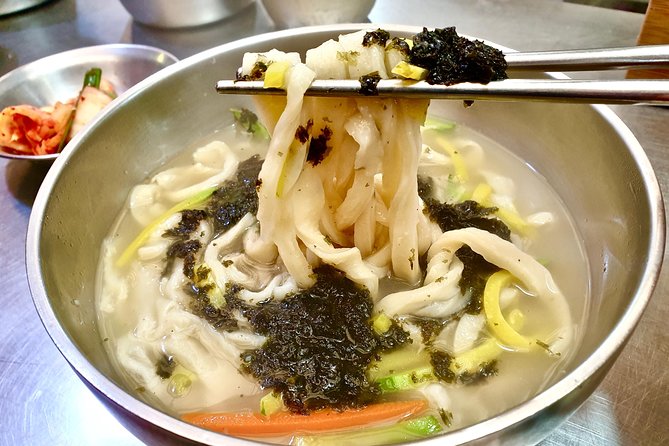
The tour includes one secret dish, so the full menu is not revealed in advance. That adds a little surprise, but it also makes the experience harder to assess if you have strict food preferences. Contact the operator before booking if you have dietary restrictions, since some restrictions may not be accommodated.
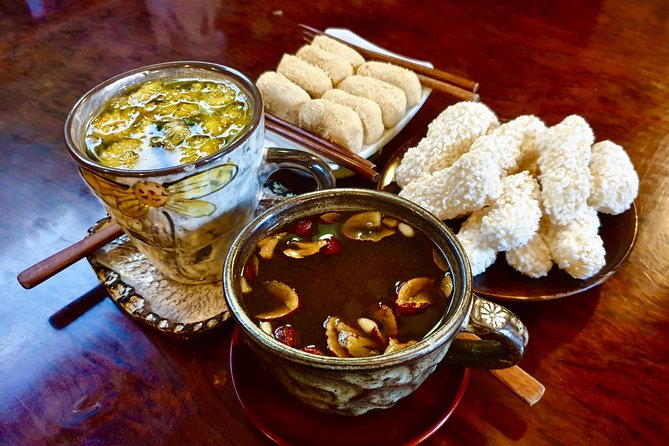
The final food stop is in Insadong at a traditional teahouse. This gives the tour a calm finish after the market noise and walking. Traditional tea with grilled rice cake is a more gentle ending than another fried snack, and it gives you time to ask questions or compare favorite dishes from earlier in the morning.
The tour ends in Insadong, about 100 meters from Anguk Station on Line 3, the orange line. That is a practical finish. You can continue exploring Insadong’s shops and galleries, walk toward Bukchon Hanok Village, or take the subway to another part of Seoul without returning to the starting point.
Palaces, gates, and old Seoul between meals
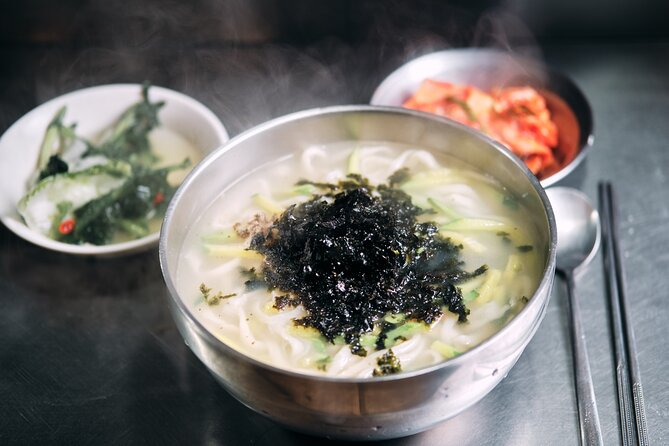
Food is the main event, but the route also gives you useful orientation around central Seoul. You may pass Gyeongbokgung Palace, the main royal palace of the Joseon dynasty, built in 1395, and Gwanghwamun Gate, its large principal gate.
Bukchon Hanok Village is another listed sight. Its traditional houses sit on a hill between Gyeongbokgung, Changdeokgung, and Jongmyo Royal Shrine. The area is attractive and historic, but it is also hilly, so comfortable footwear is more than a polite suggestion.
Changdeokgung Palace appears in the route as well. It is one of Seoul’s Five Grand Palaces and sits in a park setting in Jongno. The tour is not presented as a palace-entry tour, so think of these places as surroundings and orientation points rather than a substitute for a dedicated palace visit.
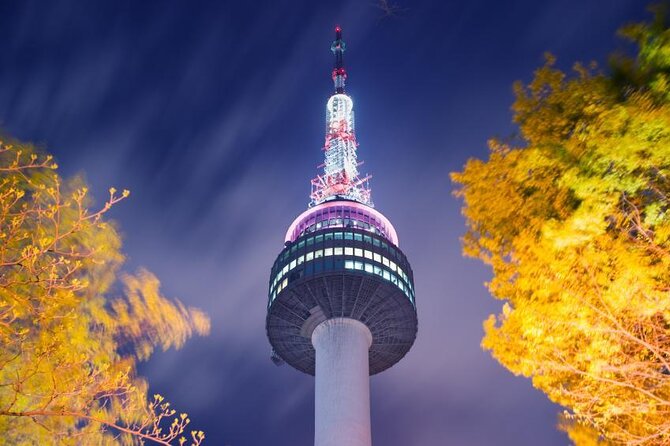
N Seoul Tower is also listed among the route stops. It sits on Namsan Mountain and is one of Seoul’s best-known observation and communication towers. Since the food tour lasts about three hours and ends in Insadong, you should confirm how much time is spent near each landmark if seeing the tower is a priority. The clear value here is the connection between food stops and major central Seoul districts, not a detailed guided visit inside every sight.
What the guides add to the meal
The guide can make or break a food tour, and the named guides receive some of the strongest praise in the feedback. Alex is repeatedly described as patient, clear in English, and generous with practical Seoul tips. Jae and JaeSun are noted for explaining the names of dishes, the reasons behind them, and the way food connects to Korean culture.
Youla is associated with a well-organized market route and a broad range of tastings. Ji Yoon received especially warm praise for staying attentive after the tour, helping arrange a taxi, and offering dinner suggestions. Those extra touches are not guaranteed, but they show the kind of personal help a small group can sometimes receive.
Taesong was also described as friendly, though the same experience prompted criticism about price and food variety. That balance matters. A good guide can explain an unfamiliar dish and help you feel comfortable in a busy market, but strong guiding cannot change the basic menu or make $98 feel inexpensive.
Is $98 a fair price?
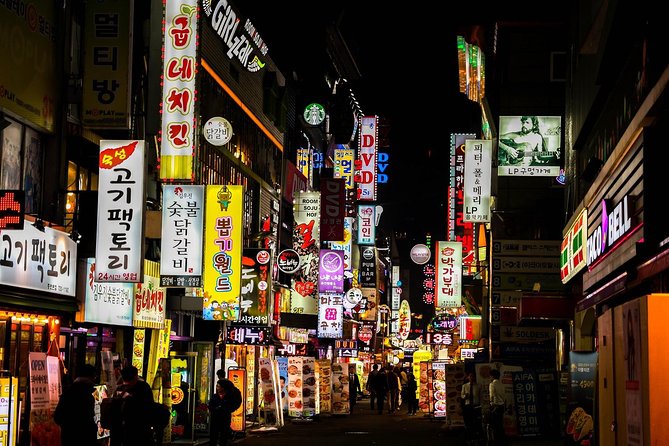
At $98 per person, the tour is not the cheapest way to eat in Seoul. You could spend much less buying individual snacks in a market, especially if you are comfortable ordering without help.
The price pays for more than the food itself. You are paying for a guide, a planned route, cultural explanations, the chance to try small portions without committing to full dishes, and a group size capped at 12. Lunch is included, and the tour combines eating with neighborhood orientation around Jongno and Insadong.
I think the price works best for a first visit, especially if you are unsure how to read menus or approach market stalls. It is less convincing for experienced Korean-food fans who already know what they like and want a wider spread of noodles, barbecue, banchan, and regional dishes.
The tour also has a free cancellation policy up to 24 hours before the start time. Changes or cancellations made less than 24 hours ahead are not accepted for a refund. Confirmation arrives within 48 hours, subject to availability.
Who should book this experience?
I would choose this tour for a first or second day in Seoul. The food helps you get oriented, and the guides can point you toward places to return to later. One person joined shortly after landing and found the route useful for deciding where to eat and shop during the rest of the trip.
It is also a good match for cautious eaters who want to try unfamiliar food in small amounts. One tasting even involved beef tartare for someone who would not have ordered it alone. The guide’s presence can make the market feel less intimidating.
Vegetarians should contact the operator before booking. One vegetarian group found plenty of suitable choices, but the company warns that some dietary restrictions cannot be accommodated. Pets are not permitted on the food tour.
I would be more hesitant if your main goal is Korean barbecue, noodles, chicken, or a large sit-down meal. I would also compare other options if $98 feels high for a tasting menu with several sweet items.
Should you book this Seoul food tour?
Book it if you want a friendly, compact introduction to Korean food, market customs, and central Seoul neighborhoods. The small group, clear explanations, and finish at a traditional teahouse give it a pleasant shape, and the route can help you order with more confidence later.
Skip it if you already know Seoul’s food scene well or want maximum savory variety for the price. The strongest reason to book is not the sheer amount of food. It is the mix of guided tasting, local context, and useful neighborhood advice in one well-timed morning or afternoon.
FAQ
How long does the Seoul food tour last?
The tour lasts approximately three hours.
How many people can join the shared tour?
The maximum group size is 12 people. The experience is also described as a small group of about 10 people.
Where does the tour start?
It starts at 214 Jong-ro in Jongno District, Seoul, South Korea.
Where does the tour end?
It ends in Insadong at a traditional teahouse, about 100 meters from Anguk Station on Seoul Subway Line 3.
Is hotel pickup included?
No. Hotel pickup and drop-off are not included.
What food is included?
The tastings include mung bean pancake with sweet onions, mandu, slightly spicy tteokbokki, minced fish fillets with fish soup, fresh kimbap, sweet and salty cream bread, a Korean honey snack, grilled rice cake with traditional tea, and a secret dish.
Can the tour accommodate dietary restrictions?
You should contact the operator before booking. Some dietary restrictions may not be accommodated, although suitable vegetarian choices have been available on some departures.
Can I cancel for a full refund?
Yes, if you cancel at least 24 hours before the experience start time. Cancellations or changes made less than 24 hours in advance are not accepted for a refund.
New food tours we have reviewed in the world
- ChattaBrunch Food Tour★ 5.0 · 87 reviews
- Downtown Chattanooga Food Tour★ 5.0 · 290 reviews
- Charlottetown waterfront SOLAR PartyBike food & drink experience!★ 4.0 · 92 reviews
- Historic Southside Food Tour in Chattanooga★ 5.0 · 32 reviews
- Tastes Through Time – Charleston’s Best Food & History Tour★ 4.5 · 95 reviews
- Charleston’s Savor the Flavors of Upper King Street Walking Food Tour★ 4.5 · 130 reviews
- Charlottetown Food Walking Tour★ 5.0 · 59 reviews
- Charleston Private Brunch Tour: Biscuits, Shrimps, Grits and More★ 5.0 · 48 reviews
Market Food Tours, compared.
Tokyo Tsukiji Fish Market Food and Culture Walking Tour
Read our review →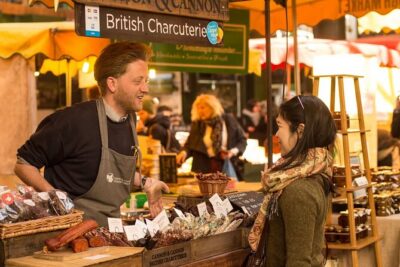
London Bridge & Borough Market Food Tour with 7 Authentic Dishes
Read our review →
Small Group Cooking Class & Market Food Tour in Florence
Read our review →
Nishiki Market Brunch Walking Tour (7 Tastings + Brunch)
Read our review →
Bologna Food & Market Tour with 6 Tastings, Pasta, Wines & More
Read our review →
Browse the lists this tour appears in