
Review · HOI AN FOOD TOURS
Hoi An food tour
Hoi An’s best food story is told one small plate at a time. This evening walk links the old town’s lantern-lit lanes with family eateries and local food stops, giving you a taste of the Vietnamese, Chinese, and Japanese influences that shaped the town’s cooking.
I like the small group of up to eight, which makes it easier for Lily to explain each dish and keep track of allergies. I also like the generous range of food, from Hoi An’s famous cao lau and banh mi to tea, che, and mango cake. The main caution is simple: portions can be large, so eat lightly beforehand if you want to try everything.
Key points to know before you book
- Cao lau and Hoi An banh mi: Try two of the town’s best-known specialties, including noodles said to be exclusive to Hoi An.
- Lily’s local perspective: Lily guides the walk in English and adds stories about food, family life, history, and local customs.
- A full evening of eating: The menu includes savory dishes, drinks, dessert, and a bottle of water, so arrive hungry.
- Lantern-lit old town: The tour begins at 6 pm, when Hoi An’s yellow buildings and colored lanterns take on their evening glow.
- Family restaurants and small food stops: You visit places you might not notice while walking alone, including restaurants, tea houses, and street food stops.
- Good allergy communication: Tell the guide about dietary restrictions or allergies before the tour so dishes can be adjusted.
A three-hour taste of Hoi An after sunset
This Hoi An food tour starts at 6 pm at 40 Tran Hung Dao, near the ancient town. From there, you walk between food stops for about two and a half to three hours.
That timing works well. The heat of the day has eased, the old town begins to glow with lantern light, and dinner becomes part of a wider look at Hoi An’s streets and local life. You are not simply taken from one restaurant to the next. The walk gives Lily room to explain what you are eating and how the dishes fit into the town’s past and present.
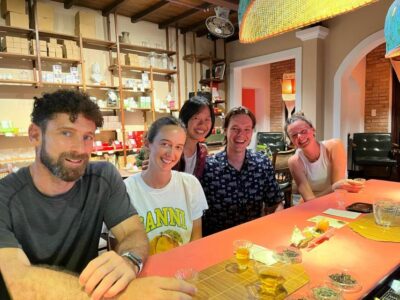
The group is limited to eight people. That is a useful size for a food walk. You can hear the guide, ask questions, and share tables without the stop feeling like a large organized outing. One group of eight found the size made it easier to get to know the other people along the way, while smaller bookings may have a more private feel.
Lily is the guide most often named in the tour details. Her role is central to the experience. She introduces the dishes, talks about Hoi An and Vietnam, and helps the group move from one stop to the next. Several people especially valued her warmth and her habit of learning everyone’s name. That personal touch matters when a food tour involves several shared stops.
More food tours in Vietnam:
- Ho Chi Minh City Street Food Tour & Sightseeing By Motorbike
★ 5.0 · 9,413 reviews - Hanoi: Guided Food Tour with Train Street Visit
★ 4.9 · 6,239 reviews - Small Group Hanoi Street Food Tour with a Real Foodie
★ 5.0 · 4,682 reviews
Banh mi begins the food trail
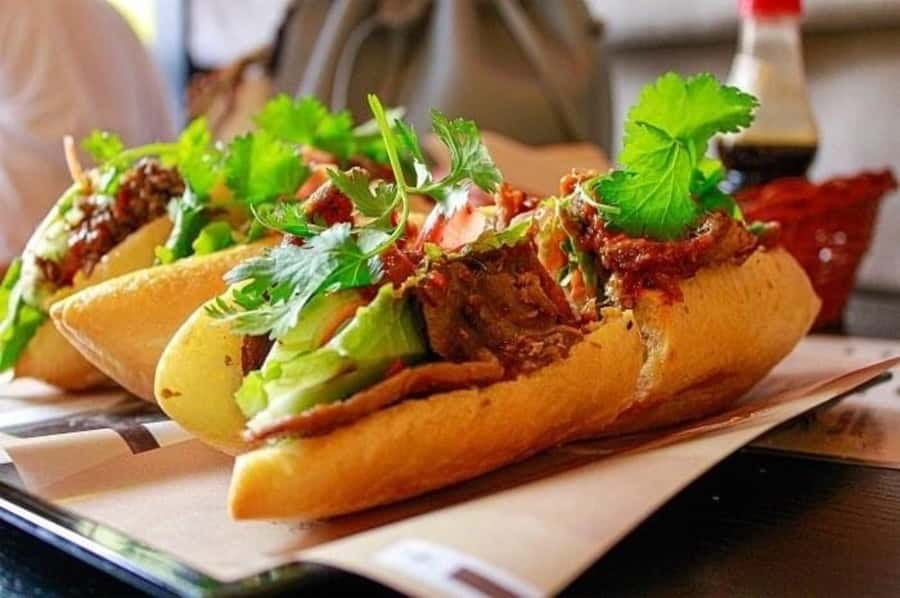
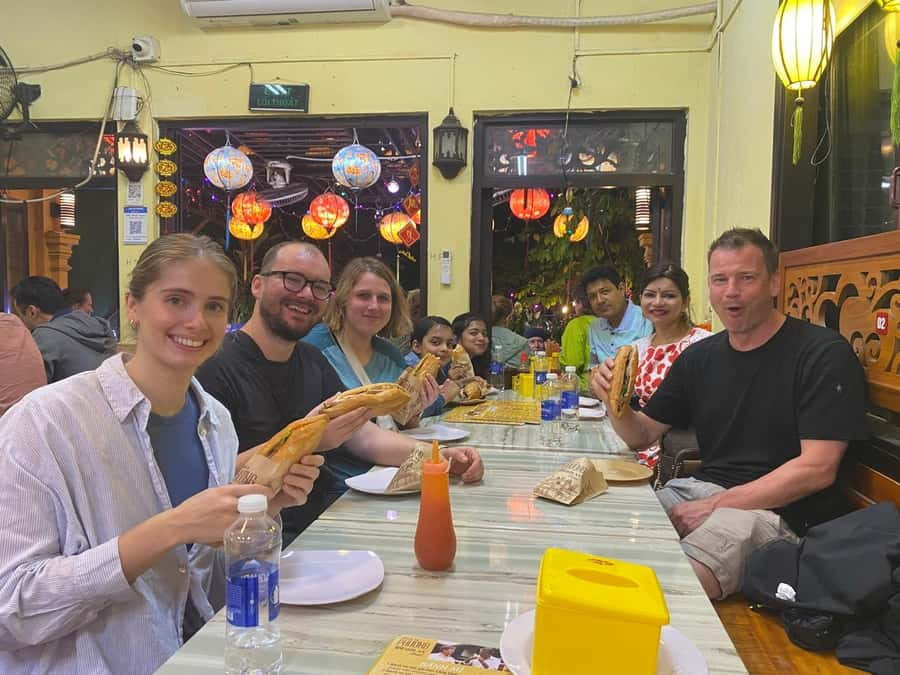
Vietnamese banh mi is more than a French-style baguette filled with local ingredients. In Hoi An, the filling and seasoning give the sandwich a character of its own, and this tour includes a Hoi An-style version near the beginning of the meal.
This is a useful first taste because it is familiar enough for most people to approach easily, yet still shows how local cooks have made the dish their own. You can expect a crisp baguette, savory filling, and the sharp, fresh flavors that make Vietnamese sandwiches so satisfying.
Banh mi was one of the dishes praised most often during the tour. One person called it the best banh mi of their trip through Vietnam, while another singled it out as the favorite dish of the evening. I would treat that as a sign that this stop is not filler. It is one of the main reasons to arrive hungry.
The practical issue is quantity. This is not a tasting menu built around tiny bites. Portions can be substantial, and banh mi is filling early in the evening. If you want to sample every dish, keep lunch or an afternoon snack modest.
Cao lau gives the tour its Hoi An signature
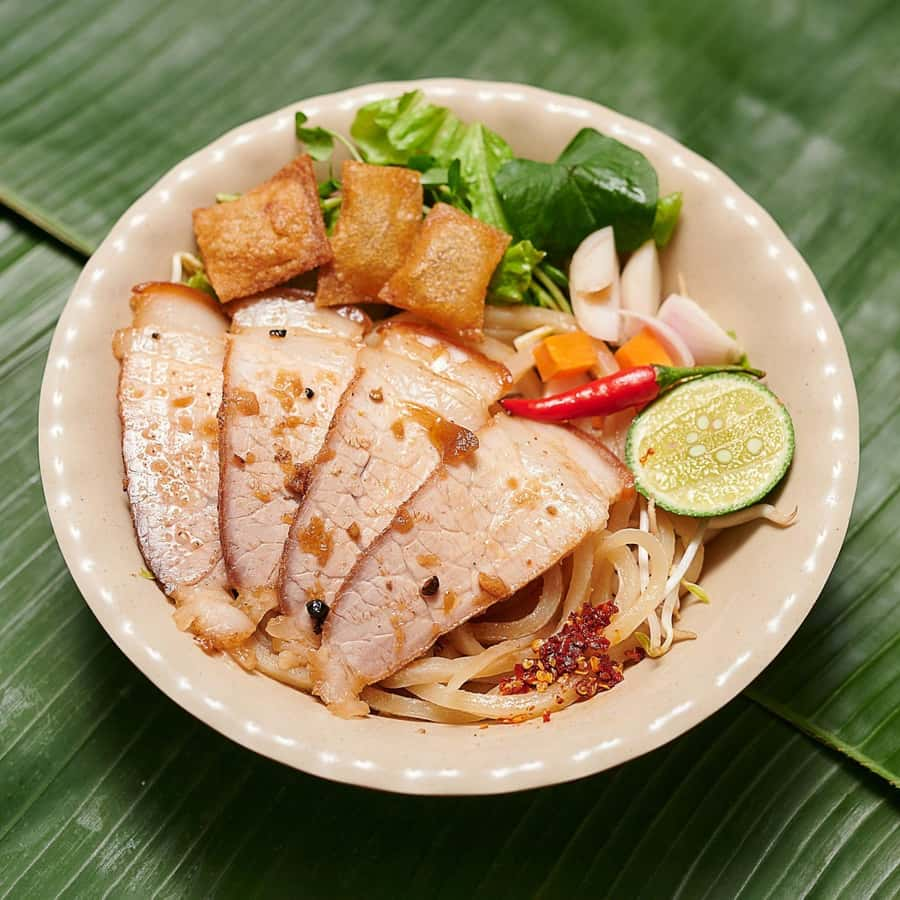
The essential noodle stop is cao lau, a dish closely tied to Hoi An. It combines thick noodles with meat, greens, herbs, and a savory broth or sauce, creating a bowl that feels distinct from the pho and bun dishes found elsewhere in Vietnam.
The appeal here is not just flavor. Cao lau is part of Hoi An’s food identity, and Lily explains why the dish belongs to this town. The tour description highlights a special broth recipe, while the food itself is presented as something you are unlikely to find in quite the same form outside Hoi An.
One person praised the noodles for their firm, satisfying texture. That is important with cao lau, since the noodles are meant to have more bite than soft rice noodles. You will also get the chance to ask about the ingredients and local traditions instead of simply receiving a bowl with no context.
Cao lau can be quite hearty. If the portions at earlier stops have already filled you up, you may need to pace yourself. The generous servings are good value, but they leave less room for extra tastings if you eat every dish as a full dinner.
Crispy banh xeo and the pleasure of wrapping your own bite
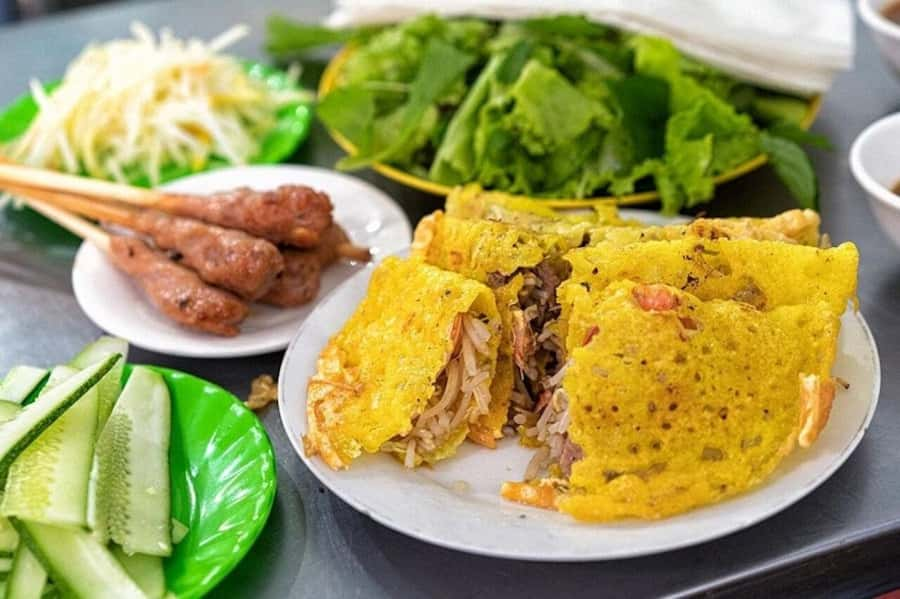
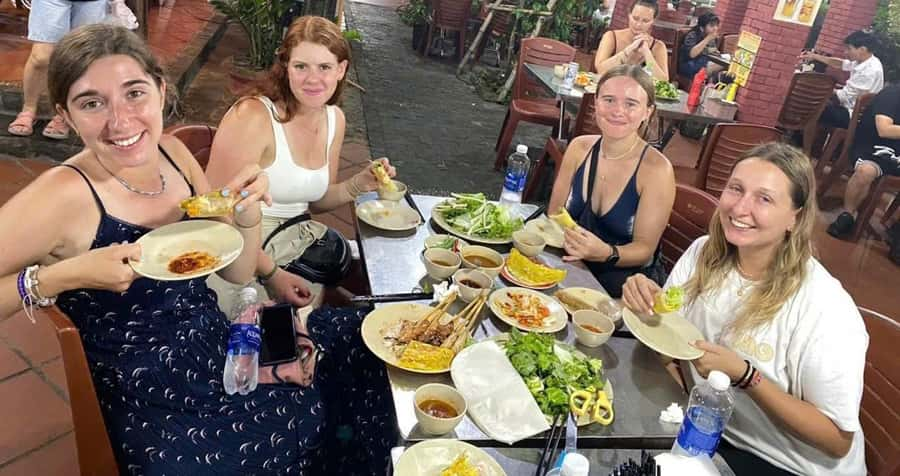
Banh xeo is a golden Vietnamese pancake with a crisp outside and a savory center. It is served with fresh herbs and rice paper, so the eating method becomes part of the fun.
You tear off a piece of pancake, add herbs and other fillings, wrap it in rice paper, and dip or season it to taste. The combination of crunch, freshness, and herbs gives you a change of texture after the baguette and noodles.
This is one of the tour’s more hands-on dishes. It also shows an important part of Vietnamese food culture: meals often balance cooked ingredients with raw herbs and greens. Those herbs are not a decoration. They bring fragrance and freshness to richer foods.
The drawback is that banh xeo, like cao lau, can be filling. This is where the tour’s pace matters. Stops are not rushed, giving you time to eat and listen, but the meal is still substantial. You should think of the experience as dinner with several courses, not a quick sampling walk.
Same appetite, a different neighbourhood:
- Saigon By Night and Street Food By Motorbike | Opt: Ao Dai Riders
★ 5.0 · 4,066 reviews - Private Street Food Tour by Motorbike/Car with Local Students
★ 5.0 · 3,950 reviews - Saigon: Street Food Tasting & Sightseeing Tour by Motorbike
★ 4.9 · 3,578 reviews - Private Street Food Evening Walking Tour in Ho Chi Minh City
★ 5.0 · 3,175 reviews
Grilled meat and spring rolls bring smoky flavor
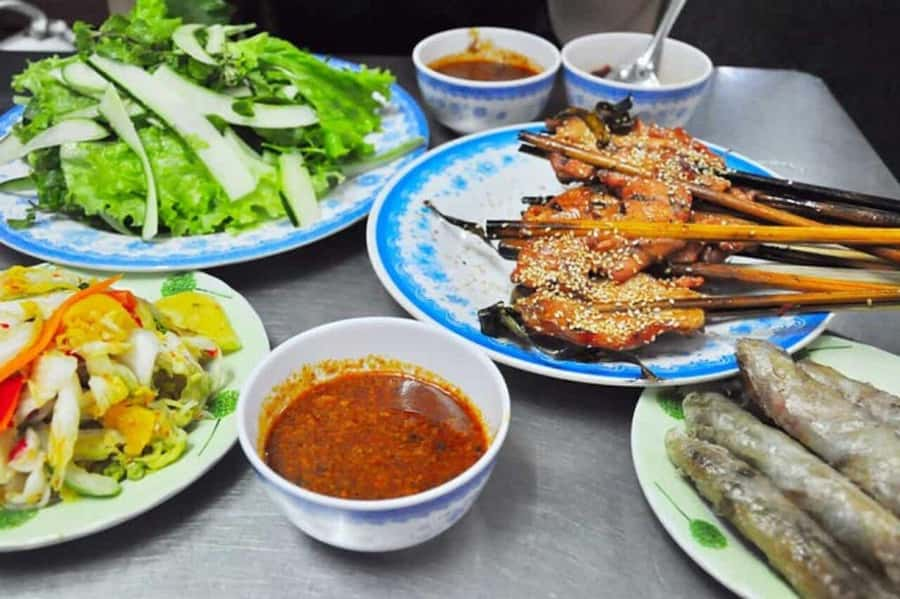
The menu also includes nem, described as fragrant grilled spring rolls, and thit nuong, charcoal-grilled meat. These dishes add smoky, savory notes to an evening that already includes bread, noodles, and pancakes.
Fresh rice paper is part of the spring-roll experience. Wrapping the grilled filling with herbs and rice paper keeps the texture light and lets you adjust each bite. The charcoal-grilled meat provides a stronger, darker flavor, which gives the middle of the tour a satisfying change of pace.
These stops are also where the range of the menu becomes clear. You are not eating one famous dish in several forms. You move through bread, noodles, pancakes, grilled food, herbs, tea, and sweets. That variety is one reason the tour works well for someone trying to understand Hoi An food in a single evening.
The exact order and serving style may change, and the tour allows the guide to adjust food for allergies. You should explain restrictions before setting out, not after a dish arrives. The guide has handled several allergies on one booking, but advance notice gives the best chance of making sensible adjustments.
Tea, che, and mango cake finish the meal
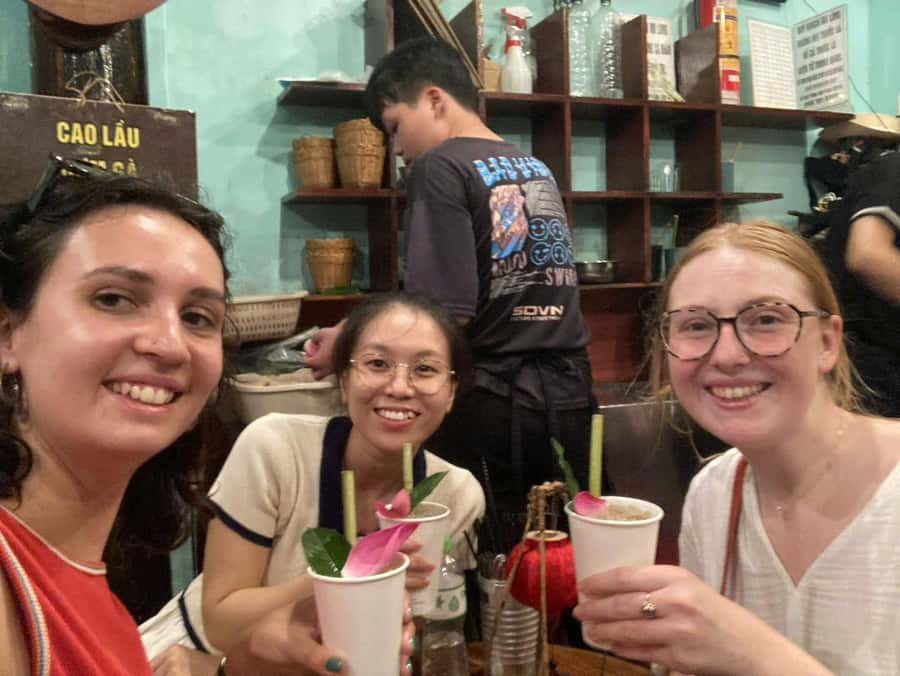
After the savory food, the tour turns to drinks and sweets. You may have tea or che, a sweet Vietnamese dessert, followed by banh xoai, also called mango cake.
Tea was a particular favorite for one person, while another appreciated a local signature drink after several savory dishes. That pause is welcome. By this point, you have eaten a broad range of food, and a sweet drink or tea gives the evening a calmer finish.
Banh xoai is a traditional local treat with mango in its name. Despite the name, you should not expect a large Western-style cake. It is better understood as a small sweet finale connected with Hoi An’s food traditions.
Dessert also helps the tour feel like a complete evening meal rather than a list of snacks. Tea houses and sweet stops add a different setting from the family restaurants and street food stalls earlier in the walk.
What the old town adds to the food
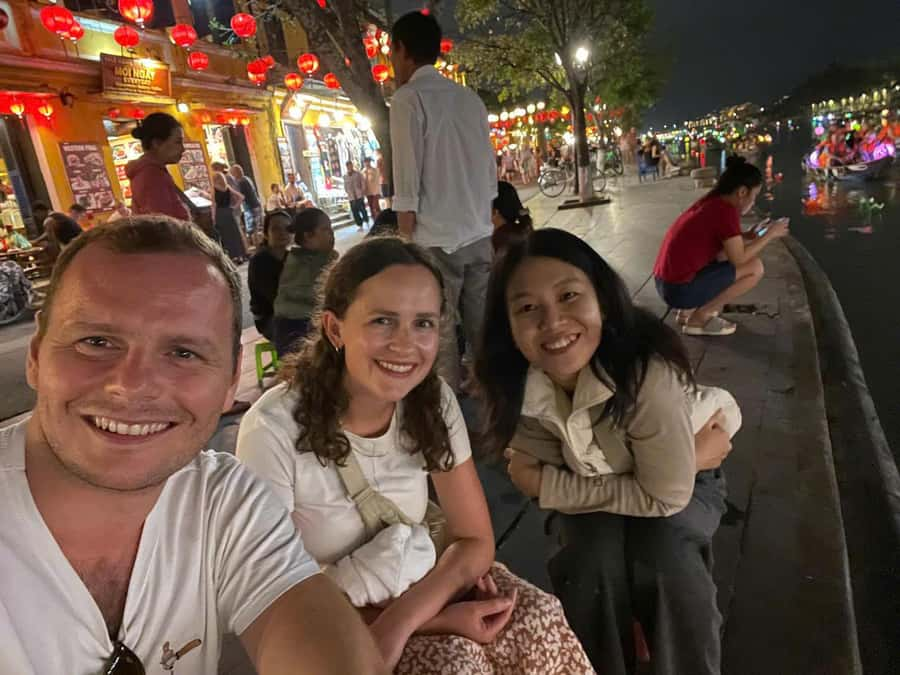
The food is the main event, but the setting gives the tour its sense of place. Hoi An’s old town is known for yellow heritage buildings, narrow lanes, and lanterns that glow after dark. Walking between dishes lets you see those details while Lily explains the local background.
The tour description presents Hoi An as a meeting point for Vietnamese, Chinese, and Japanese culinary traditions. That helps explain why the town’s food feels specific rather than simply being a smaller version of food found elsewhere in Vietnam.
Lily also talks about local culture and personal life in Vietnam. This can make the walk more useful than a guide who only names ingredients. You gain a sense of how food connects with families, neighborhood businesses, and everyday routines.
Do not expect a formal historical tour with long stops at monuments. The cultural information is woven into the walk and meal. That is a strength if you want food first, but a limitation if your main goal is a detailed architectural tour of Hoi An.
Family eateries instead of a polished restaurant meal
The stops include family restaurants, tea houses, and street food locations. That mix is valuable because it gives you different views of Hoi An’s food scene.
Family-run places often specialize in a particular dish. One stop may be best known for noodles, another for banh mi, another for sweets or tea. You get a more useful introduction than you would from sitting in one restaurant and ordering a broad menu without local guidance.
The settings may be simple. This is not an upscale dining experience, and you should not book it expecting formal service or a quiet private table at every stop. The reward is access to ordinary local food places that can be easy to miss when you are exploring on your own.
The food stops were described as clean and well cared for, with owners who took pride in their businesses. That is reassuring if you are cautious about street food but still want to eat locally. The guide also helps you choose what to try and gives the food a clear context.
Is the $26 price good value?
At $26 per person, the tour includes the English-speaking guide, all listed food and drinks, and one bottle of water. For two and a half to three hours of eating and walking, that is a fair price, especially if you would otherwise pay for several separate meals and spend time deciding where to go.
The real value is the access and organization. Lily arranges the sequence of stops, helps the group get seated, and explains the dishes. One person noted that the group was able to avoid waiting in lines and have seats ready at each location. That can matter in Hoi An, where a popular food stop may not have much spare space.
There is one extra cost to keep in mind. An ancient town entrance ticket of $6 per person is not included. Pickup and drop-off are also excluded, so you need to reach 40 Tran Hung Dao yourself. The meeting point is in Hoi An, and this is a walking tour rather than a vehicle-based excursion.
The food quantity makes the price feel stronger for people with a healthy appetite. If you prefer tiny tastings and want to visit many more places, the large portions may feel less efficient. Two people specifically thought smaller servings would allow more dishes, while others felt the amount and number of stops were just right.
Who should book this Hoi An food tour?
I would choose this tour if you want a friendly introduction to local dishes without spending your first evening guessing which places to enter. It is especially useful early in your Hoi An stay, since Lily can give you ideas for foods and restaurants to seek out later.
It suits people who enjoy conversation as much as eating. The small group encourages shared tables and easy discussion, and Lily’s approach includes questions about the people on the tour, not just a prepared speech.
It is also a good choice if you are nervous about ordering unfamiliar food. You can try local specialties with explanations, and the guide can discuss allergy adjustments in advance.
You may want a different experience if you dislike walking, prefer a formal restaurant meal, or eat very small portions. Comfortable shoes are required, pets are not allowed, and the activity is not suitable for babies under one or people over 95. Those restrictions are worth noting before you book.
Cancellation is free up to 24 hours before the start, and you can reserve while paying later, which gives you some flexibility when planning your Hoi An evenings.
My verdict on the evening
This is a well-priced, food-heavy way to meet Hoi An after dark. Its strongest points are the small group, the wide menu, the local family-run stops, and Lily’s personal way of connecting food with the town.
Book it if you want cao lau, banh mi, banh xeo, grilled dishes, tea, and sweets in one organized evening, with someone who can explain what makes them local. Skip it only if large portions, shared stops, or a walking meal do not suit you. For most food-focused visitors to Hoi An, I would schedule it near the start of the stay and use Lily’s recommendations for the meals that follow.
FAQ
Where does the Hoi An food tour meet?
The meeting point is 40 Tran Hung Dao in Hoi An ancient town.
What time does the tour begin?
Pickup at the meeting point is scheduled for 6 pm.
How long does the food tour last?
The tour lasts about two and a half to three hours.
What food is included?
The menu includes Hoi An-style banh mi, cao lau, banh xeo, nem, thit nuong, tea or che, and banh xoai, also called mango cake. Food and drinks listed in the itinerary are included.
Is a tour guide included?
Yes. An English-speaking live guide is included. Lily is the guide named in the tour details and is a local of Hoi An.
Can food allergies or dietary restrictions be accommodated?
You should tell the guide about allergies or food problems in advance so the dishes can be adjusted where possible.
Is the ancient town entrance ticket included?
No. The ancient town entrance ticket costs $6 per person and is not included. Pickup and drop-off service are also not included.
New food tours we have reviewed in Vietnam
- Ho Chi Minh City: Super Niche Walking Street Food Tour★ 5.0 · 438 reviews
- Hanoi: Street Food Walking Tour & Water Puppet Show★ 4.8 · 205 reviews
- Saigon: Private Food Tour Discovery & City Tour by Jeep★ 4.6 · 38 reviews
- Saigon: Night Craft Beer And Street Food Tour By Vespa★ 5.0 · 25 reviews
- Saigon at Sunset: Ultimate Street Food Experience★ 4.7 · 153 reviews
- Saigon: Michelin Guide Food Tour with Ao Dai Female Riders★ 4.9 · 25 reviews
- Saigon: Private Backstreets Walking Food Tour★ 4.9 · 83 reviews
- Saigon: Best Price Authentic Food Tour with Female Rider★ 5.0 · 37 reviews
Hoi An Food Tours, compared.
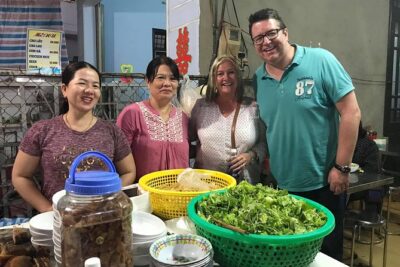
Evening Walking Food Tour, folk game and lantern boat
Read our review →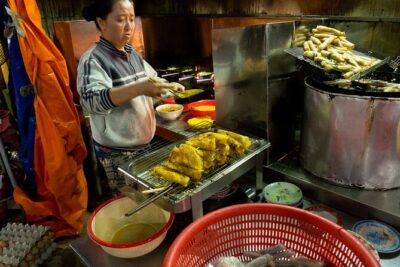
Hoi An at Sunset: Authentic Local Street Food Tour
Read our review →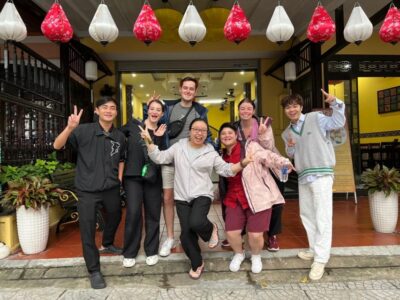
Hoi An: Evening Food Tour with 7 Tastings and Boat Trip
Read our review →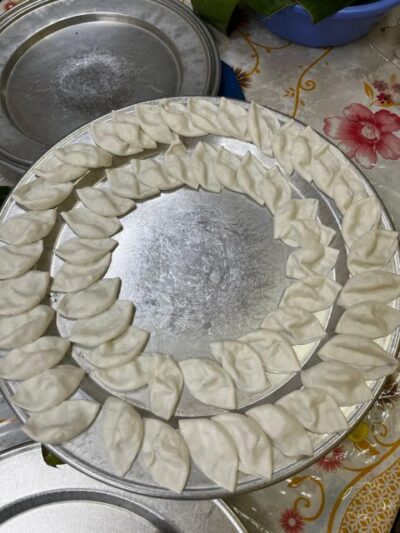
Cook Like a Local: Your Personalized Vietnamese Culinary Journey
Read our review →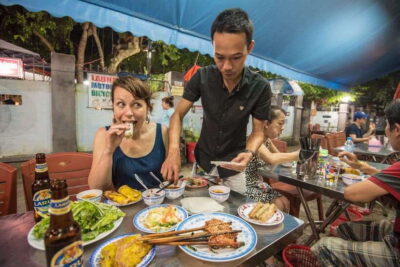
Browse the lists this tour appears in