
Review · FOOD WALKING TOURS
Central Budapest Food Walking Tour with Drinks Included
Budapest’s best food lessons often happen between the bites. This three-hour walk begins at the Orthodox Synagogue on Kazinczy Street, then links Jewish-quarter streets, ruin bars, local eateries, and Andrassy Avenue with four substantial tastings. I like the clear connection between Jewish culture and Hungarian cooking, and I like that the guides, including Eszti, Laura, Peter, Kitti, and Nika, offer practical restaurant tips for the rest of your stay.
I also like the small maximum of 15 people, which gives you room to ask questions and settle into the group. The main drawback is the amount of walking, with some backtracking reported along the route. Come hungry, wear good shoes, and do not expect a light snack crawl. The portions can add up quickly.
Key points to know before booking
- Four food stops: You receive a planned dinner at four Hungarian eateries, rather than a string of tiny samples.
- District 7 setting: The walk ties Jewish heritage, ruin bars, nightlife, and Hungarian food together.
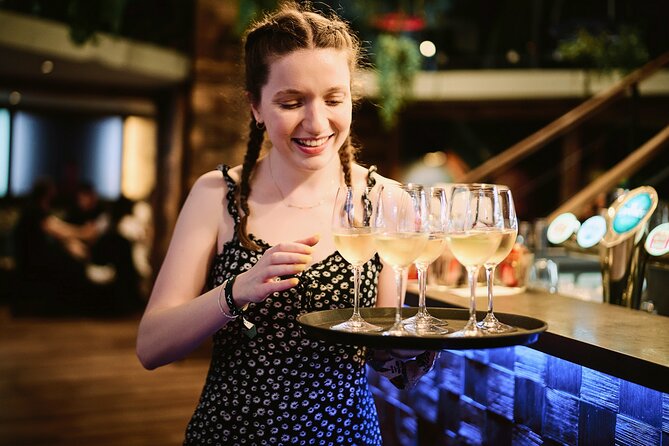
- Three alcoholic drinks: Expect wine, beer, and shots, with alcohol-free choices available.
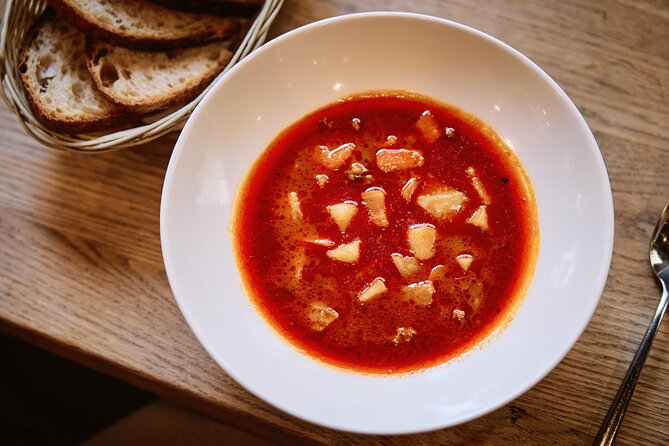
- Traditional dishes: Possible tastings include goulash soup, lángos, paprikash, pörkölt with nokedli, somlói cake, and Tokaji dessert wine.
- Small-group format: The maximum group size is 15, though the actual number can vary.
- Diet limits matter: Vegetarian and alcohol-free options are available, but gluten-free and vegan diets cannot be accommodated.
A food-first introduction to Budapest
At $83.45 per person, this is not the cheapest way to eat in Budapest. It is also more than a simple restaurant dinner. Your price covers food at four places, three alcoholic drinks, a guide, and a walking introduction to central neighborhoods. If you would otherwise order several courses and drinks on your own, the value becomes easier to see.
I would judge the price mainly by how much you want help choosing local dishes. Hungarian menus can be unfamiliar, and the guide explains what you are eating, how it fits into local customs, and what to order later. That advice has real value on a first visit.
The format is relaxed rather than formal. You move from place to place, eat some food on the go, and sit down for other tastings. The route ends back at the starting point, so you do not need to arrange a ride from an unfamiliar neighborhood after dinner.
Because the tour is offered in English, you can ask questions throughout the evening. The guides have been praised for being warm, attentive, and easy to talk with. Eszti is often described as energetic and engaging, while Peter is noted for sending along a helpful list of the dishes and places visited. Laura, Kitti, Nika, and Agnes are also described as friendly guides who explain the food and local customs with care.
More Food Walking Tours in Budapest:
- Budapest Food Walking Tour: Eat, Sip & Explore Like a Local
★ 4.8 · 1,027 reviews - Budapest Guided Food Walking Tour with Drinks Included
★ 4.8 · 472 reviews - Small-Group Culinary Walking Tour in Budapest
★ 5.0 · 148 reviews
Starting at the Orthodox Synagogue on Kazinczy Street

The meeting point is the Budapest Orthodox Synagogue at Kazinczy u. 29-31. The first hour begins with a short introduction to the synagogue and the Jewish influence on Hungarian cooking. Admission to the stop is included at no extra cost.
This opening is useful because it gives the meal a cultural frame. Hungarian cuisine is not just paprika, stews, and pastries. Jewish traditions helped shape the food of Budapest, and the Jewish Quarter offers a clear place to discuss that connection.
You should not expect a long synagogue visit or a full architectural tour. The stop is presented as an introduction before the food begins. That makes it a good fit if you want context without spending the entire afternoon inside a religious site.
Kazinczy Street also puts you in a lively part of District 7. The streets are known for restaurants, bars, and the famous ruin-bar scene. The tour uses that setting to show how an old neighborhood has become one of Budapest’s main evening districts while still carrying traces of its Jewish past.
Walking through District 7 and its ruin bars
The second part takes you deeper into Budapest’s historic Jewish neighborhood. You walk through streets near Europe’s largest synagogue, pass nightlife spots, and hear how the district’s past connects with its food today.
The guide’s local view is especially useful here. From street level, District 7 can look like a collection of bars and restaurants. A guide can point out details you would probably pass without noticing and explain why the area matters beyond its nightlife.
At some point, you may see a ruin bar or step inside one. The tour description treats this as part of the neighborhood experience, not as a separate bar crawl. That distinction matters. You are there to understand the district and taste Hungarian food, not to spend three hours drinking in nightlife venues.
The walking also gives your meal a natural rhythm. You eat a bite, walk a little, hear a story, then sit down again. Still, do not underestimate the route. Several people found there was a fair amount of walking, including some doubling back between nearby stops. Comfortable shoes are a sensible choice.
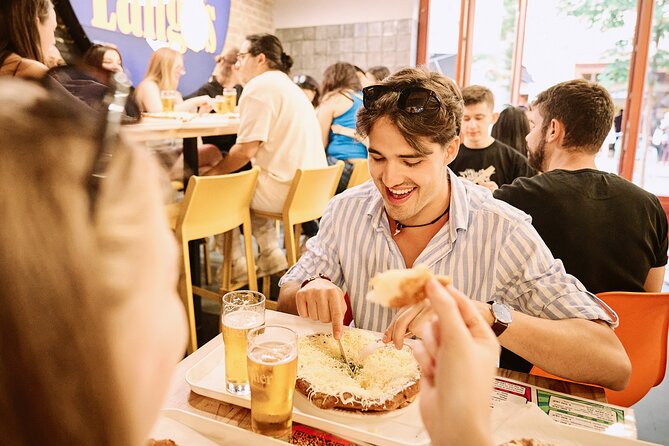
The first street-food tasting may be something such as lángos with sour cream and cheese. Lángos is filling, salty, and easy to eat without utensils, which makes it a fitting start to a walk. It is also the kind of Hungarian staple you might overlook if you only dine in polished central restaurants.
What you may eat at the four stops
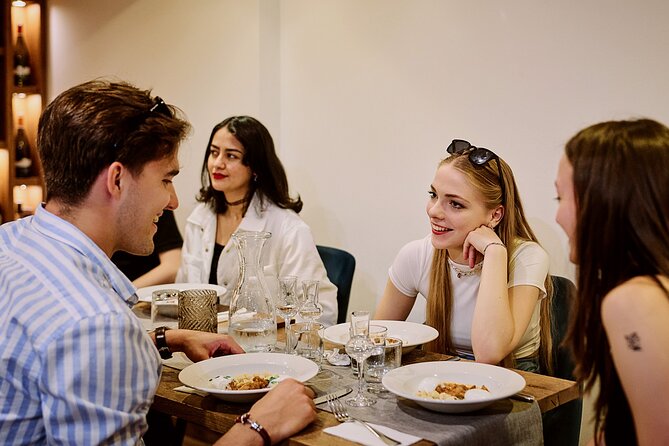
The exact menu can change, so you should treat the sample dishes as a guide rather than a promise. Soup may be goulash, but it is not always goulash soup. Other possible courses include a Hungarian stew, chicken paprikash, pörkölt with nokedli, and a traditional dessert.
A typical progression begins with soup. Goulash soup is the most recognizable possibility, and it gives you an early taste of paprika, meat, and the hearty style associated with Hungarian cooking. One tasting described the soup as the star of the meal, though individual preferences will vary.
The main course may be chicken paprikash or another Hungarian stew. Chicken paprikash is often served with a creamy paprika sauce, while pörkölt is a more concentrated stew commonly paired with nokedli, small Hungarian dumplings. The menu may also include pork and egg-based dumplings, depending on the evening.
Portions appear to be generous. That is good news if you want a real dinner, but it also means you should avoid eating a large meal beforehand. This is not a tour built around two-bite samples. By the end, you should expect to feel well fed.
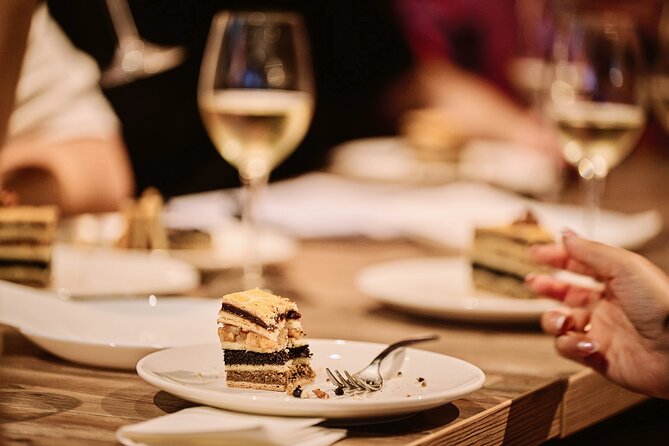
Dessert may be somlói, flódni, or Rákóczi túrós. Somlói is a layered dessert, flódni reflects the Jewish baking tradition, and Rákóczi túrós is made with sweet curd cheese. The dessert course gives the meal a pleasant finish and introduces you to sweets that may not be familiar from standard international menus.
The food is described as traditional and, in several cases, as dishes people would not have found on their own. That is the tour’s strongest culinary purpose: it gives you a starting point for Hungarian food instead of leaving you to guess from a menu.
More food tours in Budapest:
- Budapest Centre Food Tour with 10+ Tastings, Wine & Street Food
★ 5.0 · 810 reviews - From Budapest: Etyek Wine Tasting Tour with 3-Course Meal
★ 4.8 · 557 reviews - Budapest Food Tour: Market to Tavern with 14+ Tasters & Wines
★ 5.0 · 434 reviews - Budapest Culinary & Wine Walk
★ 5.0 · 397 reviews
Three drinks, including pálinka and Tokaji
Three alcoholic drinks are included. The selection can feature beer, wine, a shot of pálinka, and Tokaji dessert wine, though the exact serving pattern may depend on the menu.
Pálinka is a strong Hungarian fruit spirit, usually served in a small measure. It is worth trying if you are comfortable with spirits, but you do not need to force yourself to drink it. Alcohol-free alternatives are available.
Tokaji Aszú, the sweet wine associated with the Tokaj region, can accompany dessert. Its sweetness makes sense with somlói, flódni, or Rákóczi túrós and gives the final course a distinctly Hungarian touch.
Only people aged 18 and older are served alcohol. If you do not drink, the tour still includes nonalcoholic options, so the experience does not depend entirely on alcohol. That is a useful point for mixed groups.
Andrassy Avenue and the polished side of Budapest
The final section moves toward Andrassy Avenue, one of Budapest’s grander streets. Here, the setting shifts from the rougher, nightlife-focused character of District 7 to a more polished part of the city.
You stop at atmospheric restaurants for classic Hungarian dishes and finish with something sweet. The contrast between the two areas is part of the appeal. District 7 shows you the casual, crowded food-and-bar side of central Budapest, while Andrassy Avenue gives the evening a more graceful finish.
This final walk also helps you see how close different versions of Budapest can be. You are not confined to one restaurant or one type of neighborhood. The route connects Jewish heritage, street food, traditional cooking, and the city’s upscale central streets.
The drawback is that walking between places may not always feel perfectly direct. If you care most about an efficient route, you may find the backtracking mildly frustrating. If you see the walking as part of the city lesson, it is easier to accept.
Why the guide can make or break the evening
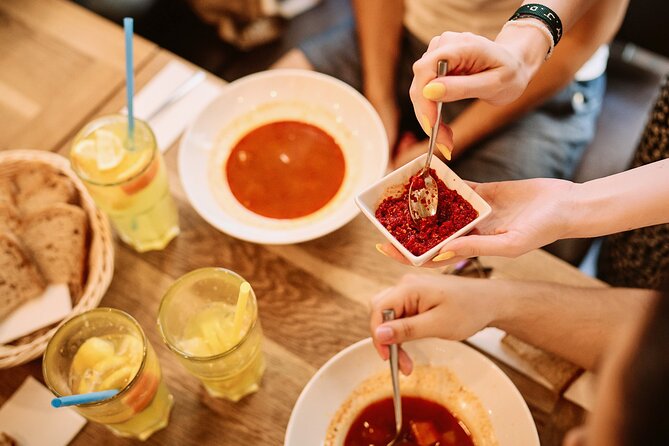
The food is important, but the guide is the part you cannot replicate with a restaurant reservation. A good guide explains the dish, answers questions, watches the pace, and keeps the group together as the route shifts from street to restaurant.
Eszti is described as lively, attentive, and good at giving quieter people space. Peter is noted for his personal recommendations and for following up with a list of the food and places visited. Laura is praised for clear English and useful stories about the neighborhoods.
Kitti is described as energetic and gracious, even with a larger group. Nika is noted for asking about allergies and taking time with questions about other places to eat and see. Agnes is described as warm, funny, and patient during a full evening of food.
Guide quality can vary from one departure to another, but the repeated pattern is clear: this experience depends heavily on a personable local guide. You are not simply being led from one address to the next. You are getting explanations, ordering help, and suggestions for later meals.
Group size, pace, and physical effort
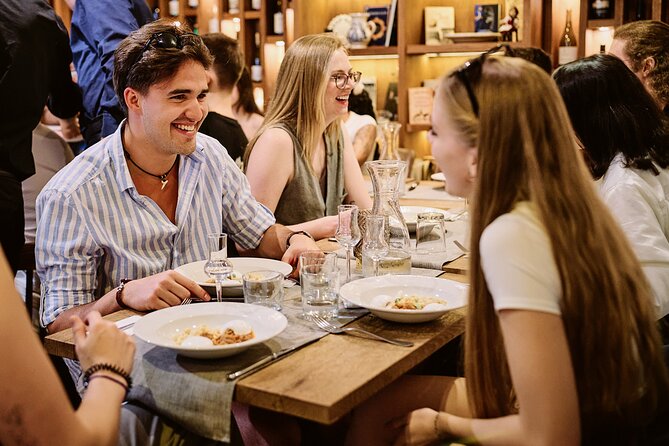
The maximum group size is 15 people. That is small enough for questions, though the actual group may still feel fairly full. One group had about 13 people, while another had only three plus the guide, so the atmosphere can change from date to date.
The pace is described as relaxed, with time to sit and finish the food. You should still be ready to walk for much of the three hours. The tour is near public transportation, but the supplied details do not give a precise walking distance or accessibility rating.
Most people can participate, but anyone who has difficulty walking should consider the route carefully. The combination of District 7 streets, several food stops, and some reported backtracking makes sturdy shoes more important than stylish ones.
The experience ends at the original meeting point. That is convenient if you want to continue your evening in District 7 or return to nearby public transport.
Dietary restrictions and what to tell the operator
Vegetarian options are available, and alcohol-free choices can be arranged. The tour cannot accommodate gluten-free or vegan diets, so this is not a suitable choice if either restriction applies to you.
If you have allergies, raise them at the start. One guide specifically asked about allergies, which is a useful habit, but you should not assume every dietary need can be met. The set menu and pre-planned restaurant visits limit how much the route can be changed.
The menu is also not fixed in every detail. Soup may vary, and the main or dessert can change among the listed Hungarian options. I see that as a modest advantage if you enjoy trying local food as it is served, but it may disappoint you if you are booking for one exact dish.
Who should book this Budapest food walk?
I would choose this tour for a first or second day in Budapest. It gives you a quick sense of the city’s food customs, introduces District 7, and leaves you with ideas for later meals. The guide’s recommendations can save you from relying only on restaurants aimed at passing tourists.
It also suits people who want a full dinner while walking through the city. You will not need to choose between sightseeing and eating, because the two are tied together.
This is less suitable for a strict foodie itinerary built around one chef or one restaurant. It is also not right for vegan or gluten-free diners, and people who dislike group pacing may prefer to eat independently.
The price is fair if you value three drinks, a generous meal, a local guide, and four organized stops. It is less attractive if you plan to spend $83.45 mainly for small tastes or if you already know Hungarian cuisine well.
Free cancellation is available up to 24 hours before the start time. Within 24 hours, the payment is not refunded, and changes are not accepted.
My verdict on the Central Budapest Food Walking Tour
I would book this tour if I wanted an easy, filling introduction to Hungarian cuisine with a strong neighborhood angle. The best parts are the Jewish-quarter context, the traditional dishes, the generous servings, and the chance to ask a local guide what to eat next.
Go in hungry, wear good walking shoes, and keep your dietary limits in mind. If those conditions suit you, this is a practical way to get your bearings in central Budapest while tasting food you might not order on your own.
FAQ
How long is the Budapest food walking tour?
The tour lasts approximately three hours.
Where does the tour start?
It starts at the Budapest Orthodox Synagogue, Budapest, Kazinczy u. 29-31, 1075 Hungary.
Where does the tour end?
The tour ends back at the meeting point.
How many food stops are included?
Dinner includes a variety of tastings at four Hungarian eateries.
Are drinks included?
Yes. Three alcoholic drinks are included, with options that can include wine, beer, and shots. Alcohol-free options are available.
Can the tour accommodate vegetarian, vegan, or gluten-free diets?
Vegetarian options are available. The tour cannot accommodate vegan or gluten-free diets.
New food tours we have reviewed in Budapest
- The Award-Winning Private Food Tour of Budapest: 6 or 10 Tastings★ 4.5 · 185 reviews
- Budapest Food Tasting Tour with Nelli & her local guides★ 5.0 · 190 reviews
- Budapest Ruin Bars Evening Walking Tour with Drinks & Snacks★ 5.0 · 25 reviews
- Budapest Food Tour in Obuda with 8+ Tastings of Hidden Food Gems★ 5.0 · 94 reviews
- Small-Group Culinary Walking Tour in Budapest★ 5.0 · 148 reviews
- Budapest Ruin Bars Evening Walking Tour with Drinks & Street Food★ 5.0 · 104 reviews
- Food and Wine Tasting in Budapest City Center with Sommelier★ 5.0 · 57 reviews
- Budapest Food Tour: Market to Tavern with 14+ Tasters & Wines★ 5.0 · 434 reviews
Food Walking Tours, compared.
Reykjavik Food Walk – Local Foodie Adventure in Iceland
Read our review →
New Orleans Food Walking Tour of the French Quarter with Small-Group Option
Read our review →
Naples: Street Food Walking Tour with Local Guide
Read our review →
Savannah First Squares Culinary & Cultural Walking Food Tour
Read our review →
Rome: Guided Food Walking Tour with Wine in Trastevere
Read our review →
Rome: Trastevere & Campo de Fiori Street Food Walking Tour
Read our review →Browse the lists this tour appears in