
Review · LISBON FOOD TOURS
Devour Lisbon: The Ultimate Portuguese Food Tour
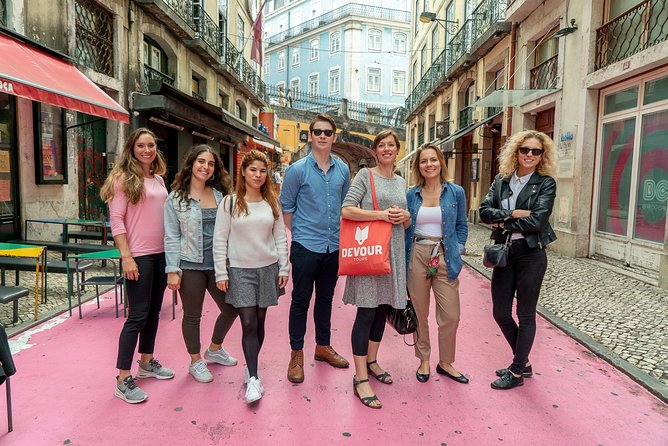
Lisbon makes more sense when you eat it. This small-group walk links old pastry shops, a sour-cherry bar, family-run food counters, and a sit-down tasca meal across Baixa, Chiado, and Cais do Sodré. You get nine food tastings and three drinks, enough for a full meal rather than a few token bites.
I like two things right away: the maximum of 10 people, which gives you a real chance to hear your guide, and the mix of famous Portuguese staples with places you could easily pass without noticing. Guides such as Helena, Cecilia, Merritt, Alicia, Nina, Natalia, and Anastasiia have been praised for connecting food with Lisbon’s past and daily life.
The main caution is appetite. This is a lot of food over three and a half hours, and one lunch stop may feel less exciting than the earlier snacks. You also need to arrange dietary needs in advance, and this tour is not suitable for vegans or people with gluten intolerance or celiac disease.
Key points at a glance
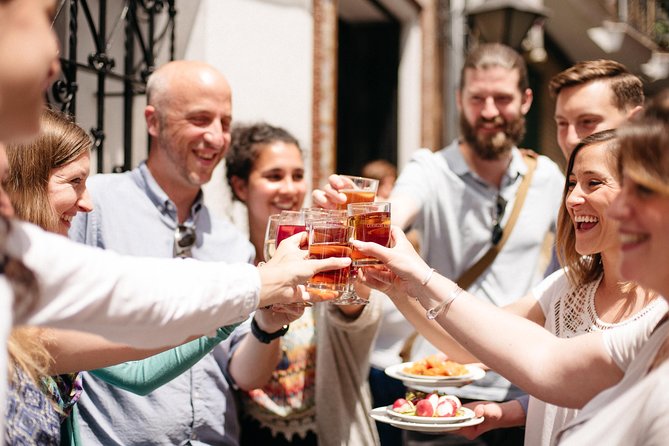
- Nine tastings and three drinks: Plan for breakfast, lunch, sweets, coffee, wine, and ginjinha in one outing.
- Seven local food businesses: Stops include Confeitaria Nacional, Manteigaria Silva, Ginjinha Sem Rival, O Trevo, O Gaiteiro, Time Out Market, and Manteigaria.
- Three central neighborhoods: The route covers Baixa, Chiado, and Cais do Sodré, with food stops tied to the streets around them.
- A strong introduction to Portuguese food: Expect bifana, salted cod, sardines, Iberian ham, traditional sausage, fish rice, and pastel de nata.
- A compact English-speaking group: No more than 10 people means better access to the guide and easier movement between stops.
- Best booked early: This experience averages 44 days booked ahead, so last-minute spaces may be hard to find.
Why food is the best way to meet Lisbon
Portuguese food tells a practical story. Salted cod points to long-distance trade and preservation. Sardines connect the city to its Atlantic setting. Pork sandwiches, sausages, stews, pastries, and strong coffee show how ordinary meals have shaped life here more than grand monuments ever could.
This tour uses food as a walking lesson. Your guide does not simply hand you a snack and name it. The point is to explain how a dish became popular, how locals eat it, and why a certain shop matters. The strongest guides, including Helena, Cecilia, Merritt, Alicia, Nina, Natalia, and Anastasiia, have been praised for making those connections clear and entertaining.
I especially like this approach early in a Lisbon visit. You get your bearings in the downtown core while building a short list of foods to seek out later. Several stops are central enough that you can return on your own after the tour.
The route begins at the Statue of John I at Praça da Figueira and ends at Mercado da Ribeira, better known as Time Out Market Lisboa. The walking is moderate, and you should be comfortable moving through city streets for about three and a half hours.
More food tours in Lisbon:
- Winner 2025 Undiscovered Lisbon Food & Wine Tour by Eating Europe
★ 5.0 · 6,390 reviews - Lisbon: Food and Wine Small Group Walking Tour
★ 4.9 · 4,082 reviews - Lisbon Small-Group Portuguese Food and Wine Tour
★ 5.0 · 3,972 reviews
Confeitaria Nacional begins with Lisbon’s sweet tooth
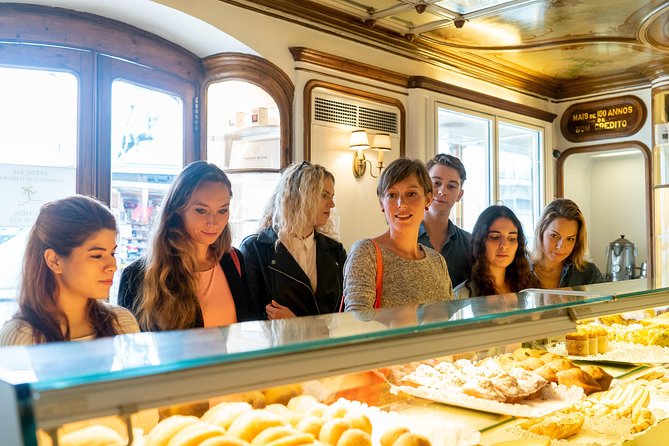
The first stop is Confeitaria Nacional, one of Lisbon’s old pastry institutions. It sets the tone for the tour: this is not only about savory dishes and port-style drinking. Portuguese food has a strong pastry tradition, and coffee with something sweet is part of the daily rhythm.
You may receive a pastry or coffee-related tasting here, depending on the day’s running order. The value of this stop is the setting and the sense of continuity. A traditional confectionery gives you a better feel for Lisbon than a modern café designed only for quick photographs.
The downside is that a historic pastry shop can be busy, and the stop may feel brief compared with the later meal. Still, it is a useful first taste and a gentle start before the heavier dishes arrive.
Manteigaria Silva brings out cured meats and cod
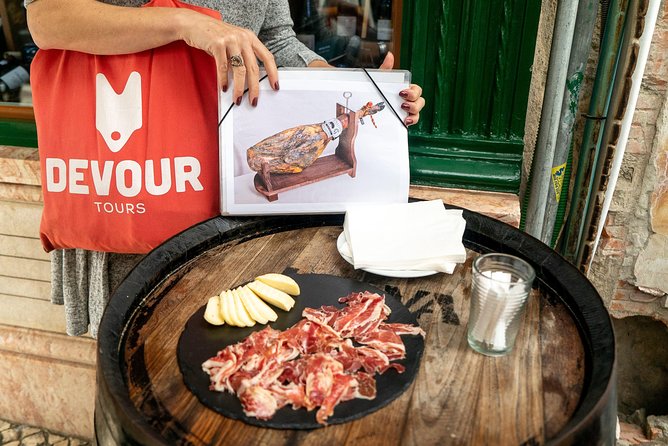
Manteigaria Silva is known for traditional Portuguese food products, including cured meats and salted cod. Here, the tasting may include Iberian ham or another savory starter, giving you a look at ingredients commonly found on Portuguese tables.
Salted cod, or bacalhau, deserves attention. It is not caught fresh off the Lisbon coast in the form you eat it. It is preserved with salt and dried, then prepared in countless ways. Portuguese cooks treat it almost like a national building block, and you will encounter it again later in the meal.
This stop is valuable because it shows the ingredient before it becomes a finished dish. You can compare the direct, salty flavor of the product with the softer, more elaborate bacalhau à Brás later in the route.
Ginjinha Sem Rival serves Lisbon in a tiny glass
At Ginjinha Sem Rival, you taste ginjinha, Lisbon’s sour cherry liqueur. It is usually served in a small portion, but the flavor is concentrated: sweet fruit, alcohol, and a sharp cherry note.
This is one of the easiest tastings to understand as part of Lisbon’s street life. Ginjinha is not a grand ceremonial drink. It is a quick local pleasure, often taken standing up, and it gives the walking tour a short, lively pause.
You should not expect a full drink here. The portion is small, and alcohol can add up because wine and other beverages appear later. Non-alcoholic options are available for people who need them, but you should state that requirement when booking.
Same appetite, a different neighbourhood:
- Lisbon: Baixa District Food Tour with Dinner and Drinks
★ 4.9 · 1,997 reviews - Lisbon Small-Group Food Tour with 18 Tastings in Alfama District
★ 5.0 · 1,967 reviews - Lisbon Food Tour with 10+ Tastings of Local Delicacies & Wines
★ 5.0 · 1,339 reviews - Award-Winning Original Lisbon Food Wine Tour: 19 Curated Tastings
★ 5.0 · 1,288 reviews
O Trevo makes the bifana a serious sandwich
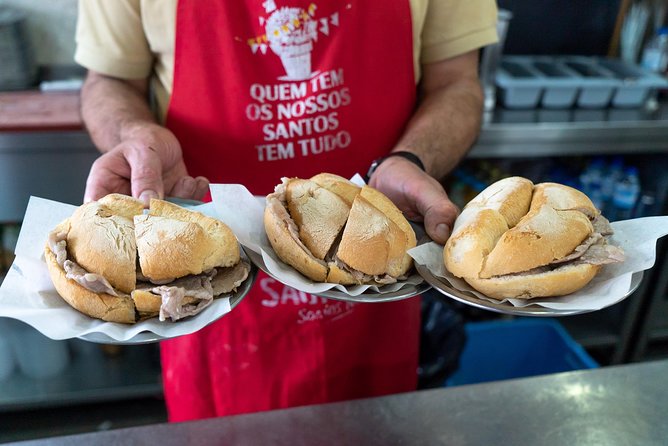
O Trevo is associated with the bifana, one of Portugal’s most useful foods. It is a pork sandwich, generally served in a bread roll with cooking juices and seasoning. It looks simple, but the flavor depends on the pork, the sauce, and the bread working together.
Several people who have taken this tour singled out the bifana as an early favorite. That makes sense. It is filling without being fussy, and it shows how much Portuguese cooking can do with a few basic ingredients.
This is also a good example of why a food tour beats a checklist of restaurant reservations. Your guide can explain how locals approach the sandwich, point out the style of the shop, and help you understand why a modest counter can matter more than a polished dining room.
O Gaiteiro offers the most substantial local meal

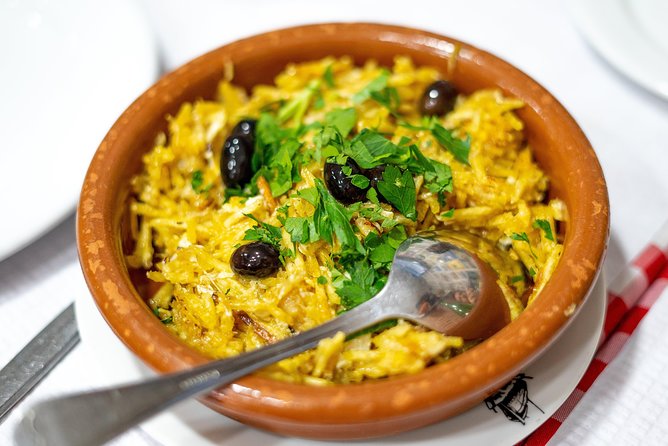
O Gaiteiro is the traditional Portuguese tasca stop, and it is likely to be the heart of the tour. Here you may sit down to a spread that includes bacalhau à Brás, alheira, fish rice, beans with pork, or other local dishes from the stated menu.
Bacalhau à Brás combines salted cod, thin potato, egg, and onion into a soft, comforting dish. It is very different from eating cod as a plain fillet. Alheira is a traditional sausage with a complicated past, including Jewish influence in Portugal. Its texture and seasoning make it unlike the standard pork sausage you may know from elsewhere.
Fish rice gives you another view of Portuguese cooking. It is hearty and spoonable, with the seafood folded into a rice dish rather than presented as a separate centerpiece. Depending on the group and the day, you may taste several dishes together rather than receive one large personal plate.
This lunch stop is generous, but it is also where expectations should be measured. One four-star assessment found the earlier snack foods more impressive than the actual lunch. I would treat that as a fair warning rather than a reason to skip the tour. The meal provides context and quantity, but individual dishes may vary in appeal.
Time Out Market Lisboa closes the route in a modern setting
The tour ends at Time Out Market Lisboa in Mercado da Ribeira. This is a change of pace from old pastry counters and traditional shops. The market brings many food businesses under one roof, so it gives you a modern view of Lisbon’s dining scene.
The stop is useful for orientation. If you are still hungry, you know where to continue eating. If you are full, you can explore the market later without needing to plan another route through the city.
The market can feel more commercial than the smaller stops. That is the trade-off. The earlier places offer a stronger sense of old Lisbon, while Time Out Market makes it easy to see how the city’s food culture is presented today.
Manteigaria finishes with the pastry most visitors seek
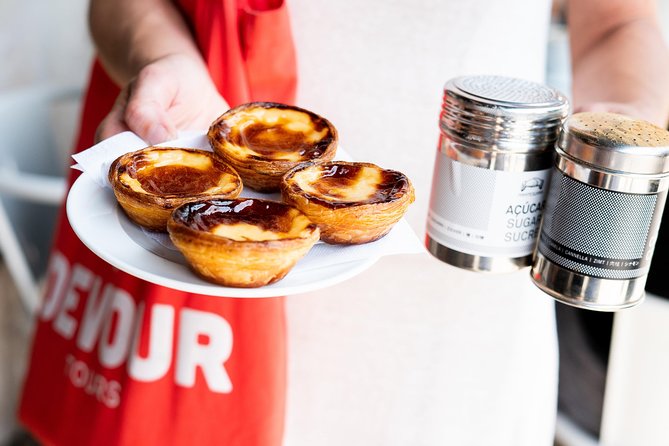
Manteigaria is the final pastry stop, and the pastel de nata is the expected star. This custard tart has a crisp, flaky shell and a warm, creamy center. A fresh one can be far more impressive than a pastry that has sat in a display case for hours.
The sample menu also includes pão de Deus, Bola de Berlim, coffee, and other sweets. Pão de Deus is a soft, coconut-topped bread, while Bola de Berlim is a Portuguese doughnut-style pastry often filled with cream. Together, these tastings show that Portuguese desserts go well beyond the famous custard tart.
Do not arrive after a large breakfast. One detailed account of the route described enough food to cover breakfast and lunch, plus dessert and drinks. If you want to try everything, arrive hungry but not uncomfortable.
Three neighborhoods, one compact downtown walk
The route through Baixa, Chiado, and Cais do Sodré is one of the tour’s strongest features. You are not being driven from one distant restaurant to another. The food stops are close enough together to create a connected walk through central Lisbon.
Baixa gives you the broad downtown streets and formal squares. Chiado adds older commercial streets and traditional businesses. Cais do Sodré brings you toward the riverfront and the Mercado da Ribeira area.
The walking also helps balance the food. You will still be eating a substantial amount, but moving between stops keeps the experience from becoming a long seated meal. A guide can point out nearby landmarks and explain how food fits into the city around you.
You should have moderate physical fitness and be able to walk at a steady pace without difficulty. This is not a sightseeing bus with occasional bites. Comfortable shoes are a sensible choice.
The guides make or break the experience
Food quality matters, but the guide determines how much you take away. The strongest feedback centers on guides who are warm, energetic, and good at telling stories without turning the walk into a lecture.
Helena has been praised for connecting Portuguese spirit, food, social life, and local shopkeepers. Cecilia is known for keeping the group welcome and engaged. Merritt has been singled out for taking groups to places that feel local and for making the tour work well for families, including a 10-year-old.
Alicia has received strong marks for energy and clear explanations. Nina has been praised for easy-to-understand English, for keeping a small group together, and for making sure a vegetarian received food at each stop. Natalia and Anastasiia have also been praised for explaining both Lisbon’s past and the origins of its dishes.
Guide assignments can change, so you should not book solely in hopes of getting one particular person. The useful point is that this experience depends heavily on guide quality, and the company has a deep bench of guides who bring personality to the route.
What the $95.53 price really includes
At $95.53 per person, the cost is not low for a walking tour. But it covers nine food tastings, three drinks, a meal-sized amount of food, the guide, taxes, and a small-group format capped at 10 people.
The value improves if you use the tour as both lunch and a city introduction. You are paying for food, but also for access to several businesses, ordering help, cultural explanation, and a route you could spend days piecing together on your own.
The price is less appealing if you eat very little, avoid most of the menu, or mainly want a formal history walk. It also may not feel worth it if you are already confident ordering Portuguese food and have a long list of restaurants planned.
A useful bonus is the Devouring Lisbon guide provided with the tour. It gives you more places to eat and drink after the walk, which can help you use the tour as the start of a broader food plan.
Dietary needs and practical limits
The tour can adapt for pescatarians, vegetarians, dairy-free diets, pregnant people, and those avoiding alcohol. You must email the Guest Experience team after booking so ingredients can be arranged.
The important limitation is that you may not receive a replacement at every stop. The experience is not suitable for vegans, people with gluten intolerance, or people with celiac disease. Serious food allergies require an allergy waiver at the start, so this is not the right choice if you need complete control over cross-contact.
The tour is offered in English. Confirmation arrives at booking, and the meeting point is near public transportation. The route begins at Praça da Figueira and finishes at Time Out Market Lisboa, so you do not return to the starting point.
Free cancellation is available up to 24 hours before the start time. Changes made inside that window are not accepted, and poor weather may lead to a new date or a full refund.
Who should book this Lisbon food walk
I would choose this tour for a first or second day in Lisbon. It gives you a practical introduction to central neighborhoods, common dishes, local drinks, and places you can revisit later.
It suits people who like variety more than a single polished meal. You move from ham and bifana to cod, sausage, sardines, pastries, coffee, wine, and ginjinha. Families can enjoy it, though younger children may tire during the walking and may not want every strong or unfamiliar flavor.
It is also a good fit for solo visitors and couples who want company without joining a huge group. A group of eight or nine leaves enough room for conversation, while a full group of 10 remains manageable.
Should you book Devour Lisbon?
Book it if you want a substantial, food-first introduction to Lisbon and you are willing to try familiar and unfamiliar dishes. The route covers a lot in a short time, and the guide adds the cultural context that turns separate tastings into a picture of Portuguese life.
Skip it if you need vegan or gluten-free food, dislike walking, or prefer to spend $95.53 on one carefully chosen restaurant meal. Also keep your expectations realistic about the lunch stop: the snacks and pastries may be the highlights for you.
For most food-focused visitors, I would book this near the beginning of the trip, avoid a heavy breakfast, and keep the rest of the day flexible. You will leave full, better oriented, and ready to recognize what you see on Lisbon menus.
FAQ
How long does the Devour Lisbon food tour last?
The tour lasts approximately 3 hours and 30 minutes.
How many people can join the tour?
The small-group tour has a maximum of 10 people.
Where does the tour start?
It starts at the Statue of John I at Praça da Figueira, 1100-240 Lisboa, Portugal.
Where does the tour end?
The tour ends at Time Out Market Lisboa, also called Mercado da Ribeira, at Av. 24 de Julho, 1200-479 Lisboa.
What food and drinks are included?
The menu can include Iberian ham, bifana, canned sardines, bacalhau à Brás, alheira, fish rice, pastel de nata, pão de Deus, Bola de Berlim, coffee, wine, and ginjinha.
Is the tour suitable for vegetarians or people who do not drink alcohol?
The tour can adapt for vegetarians, pescatarians, dairy-free diets, non-alcoholic options, and pregnant people. You need to email the Guest Experience team after booking, and a replacement may not be available at every stop.
Is the tour suitable for vegans or people with celiac disease?
No. The tour is not suitable for vegans, people with gluten intolerance, or people with celiac disease.
Can I cancel for a full refund?
Yes. You can cancel at least 24 hours before the experience starts for a full refund. Cancellations or changes made less than 24 hours before the start time are not accepted.
New food tours we have reviewed in Lisbon
- No Diet Club – Unique food tour in Lisbon with many Tastings★ 4.9 · 50 reviews
- Lisbon: Portuguese street food cooking class with Drinks★ 4.9 · 37 reviews
- Lisbon: Private Food Tour – 10 Tastings with Locals★ 4.8 · 73 reviews
- Lisbon: Private Food & Wine City Tour by Eco Tuk Tuk★ 4.8 · 21 reviews
- Lisbon: Original Morning Food Tour★ 4.6 · 26 reviews
- Lisbon Private Setúbal Region Wine Tasting Tour★ 4.9 · 149 reviews
- Lisbon Small-Group Food & Wine Tour Eat & Drink like a Local★ 4.9 · 77 reviews
- Lisbon: Food and Culture 3-Hour Walking Tour★ 4.7 · 95 reviews
Lisbon Food Tours, compared.
Winner 2025 Undiscovered Lisbon Food & Wine Tour by Eating Europe
Read our review →
Lisbon: Food and Wine Small Group Walking Tour
Read our review →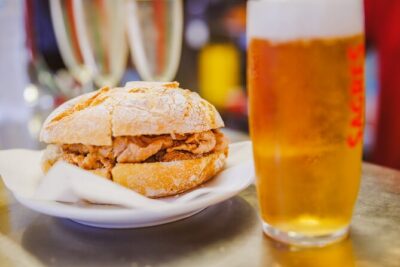
Lisbon Small-Group Portuguese Food and Wine Tour
Read our review →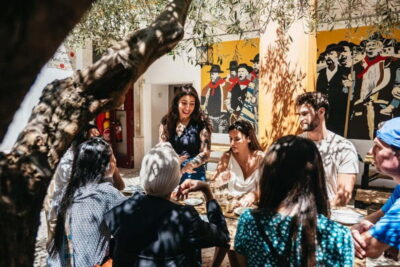
Lisbon: Baixa District Food Tour with Dinner and Drinks
Read our review →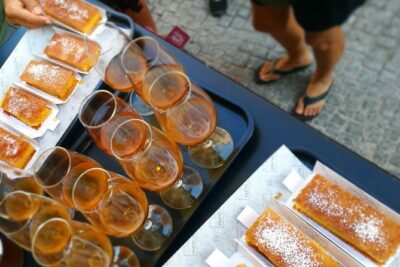
Lisbon Small-Group Food Tour with 18 Tastings in Alfama District
Read our review →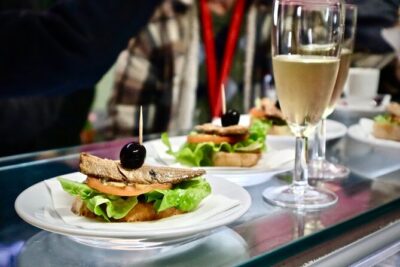
Lisbon Food Tour with 10+ Tastings of Local Delicacies & Wines
Read our review →
Award-Winning Original Lisbon Food Wine Tour: 19 Curated Tastings
Read our review →
Lisbon Exclusive PRIVATE Food Tour with 6 or 10 Tastings
Read our review →Browse the lists this tour appears in