Review · PRIVATE
Discover Bucharest: Private Highlights and Traditional Food Tour
Bucharest makes the most sense when you connect its grand avenues, old churches, Ottoman traces, French-style buildings, and communist scars in one walk. This private tour does that, then puts you at a table for a three-course Romanian meal with a drink included. It is a smart first morning in the city.
I like the personal pace and the food choice. Guides such as Elena, Dana, Andrea, and Cristina have adjusted explanations to match each group, while the meal can include classics such as mici, sarmale, and papanas. The main consideration is that four hours on foot can feel long in bad weather, and the $143.61 price per person is best justified by the private format.
Key points at a glance
- Start with King Carol I: Meet at the equestrian statue near Revolution Square at 11:00, then set off with a private English-speaking guide.
- Walk Calea Victoriei: See one of Bucharest’s oldest avenues and learn how French influence shaped the city.
- Read the communist past: Hear how historic neighborhoods were cleared for the Palace of the Parliament and its enormous surrounding complex.
- Eat Romanian classics: Finish with a three-course meal, plus Romanian wine, local beer, or a soft drink.
- Ask for local advice: Your guide can point you toward useful bars, restaurants, and things to do after the tour.
- Expect a flexible pace: Only your group takes part, so questions, pauses, and walking speed can be adjusted.
Why this is a strong first morning in Bucharest
Bucharest is not a city you understand by ticking off monuments alone. Its appeal comes from the sharp changes between grand boulevards, quiet passages, ornate churches, patched-up historic buildings, and huge communist-era projects. A guide gives those contrasts a storyline.
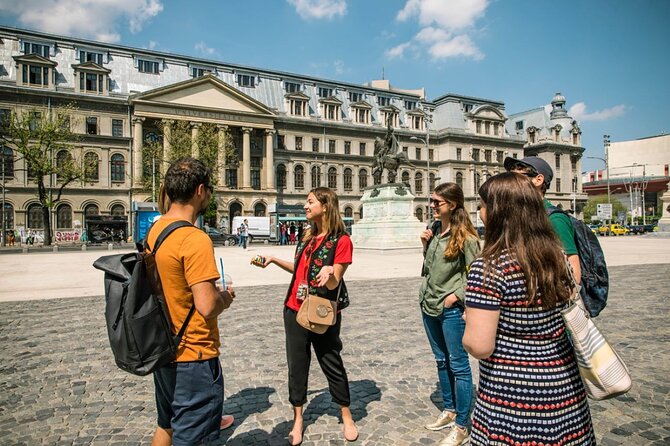
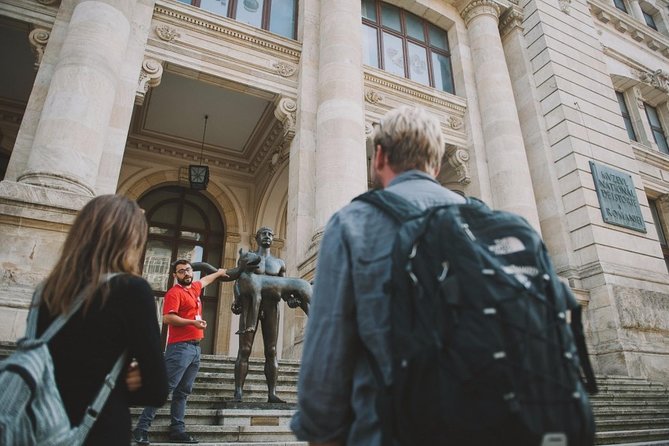
The tour begins at the equestrian statue of King Carol I, close to Revolution Square. That is a useful place to start because the square connects Romania’s monarchy, modern political history, and the 1989 revolution. Guides have used the statue itself to explain small details, including the meaning attached to the position of the horse’s tail.
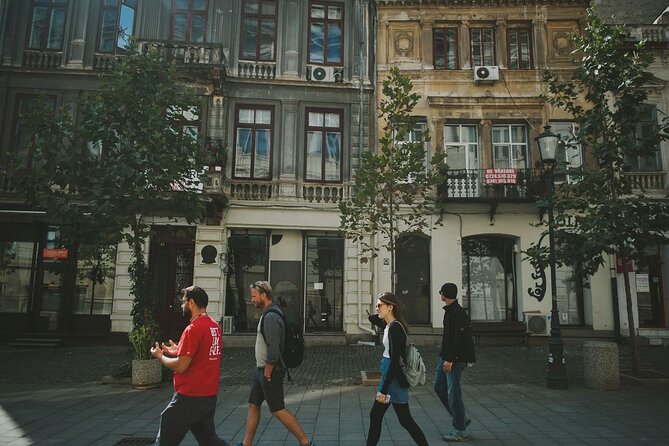
From there, you walk rather than sit behind a bus window. That matters in Bucharest. The streets and passages are part of the lesson, and a private guide can stop when you want to ask why a building looks French, where Ottoman influence appears, or how the city changed under communist rule.
I especially like the balance of serious history and ordinary local life. Guides have explained not only buildings and political events, but also what it is like to live in Bucharest now. That makes the tour more useful than a list of dates.
More private departures in the world:
- Private Street Food Tour by Motorbike/Car with Local Students
★ 5.0 · 3,950 reviews - Private Street Food Evening Walking Tour in Ho Chi Minh City
★ 5.0 · 3,175 reviews - Private Street Food Motorbike Tour in Ho Chi Minh City
★ 5.0 · 2,180 reviews
Calea Victoriei and the city’s changing style
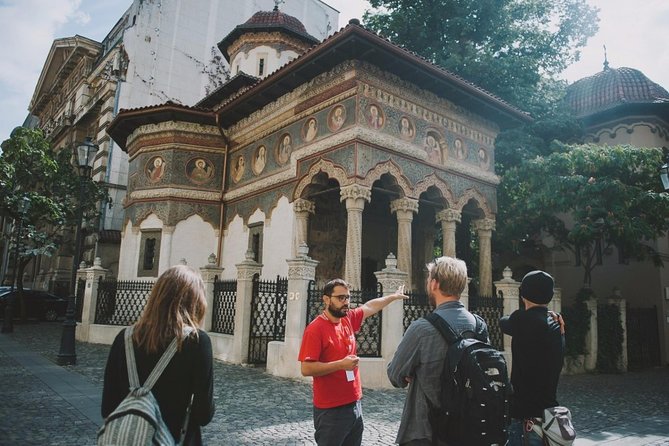
One of the early sights is an 18th-century Eastern Orthodox church on Calea Victoriei. Its age gives you an immediate reminder that Bucharest is older than its broad boulevards and modern traffic suggest. You will also see how religious buildings sit beside later architectural styles, often within a short walk.
Calea Victoriei is one of the city’s oldest and most appealing avenues. It carries royal, aristocratic, commercial, and cultural associations, so it is a good route for explaining Bucharest’s French architectural influence. The guide can help you notice details that are easy to miss when walking alone, especially if you are still learning to read the city’s mixture of styles.
This section is not a museum visit with a fixed script. It is an outdoor orientation walk. You will likely spend time looking at facades, monuments, and streets rather than entering every building. If interiors are your priority, ask the guide early what can be visited during your particular departure.
Old Town through back streets and passages
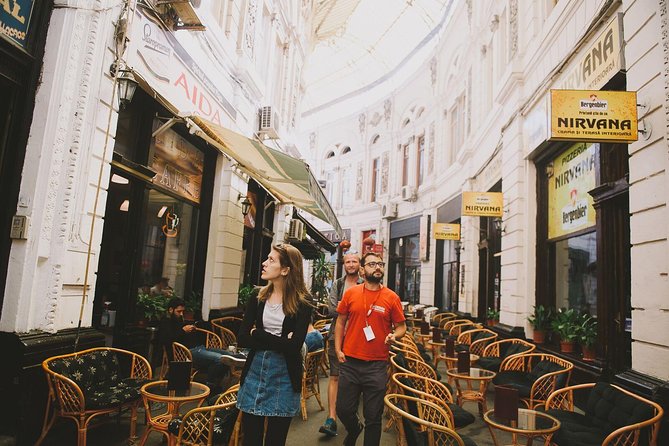
The walk continues toward the historic center, often called Lipscani or Old Town. The streets here carry several layers of Bucharest’s past, from Ottoman pressure and trade connections to French cultural influence and later political change. Your guide fills in the gaps as you move through the narrow lanes.
One appealing feature of a private walk is the freedom to pause. Past groups have stopped at a tiny hat shop and met the hat maker, browsed handmade jewelry connected with Roma artisans, and explored an old caravansary. These are not guaranteed scheduled stops, but they show the sort of unscripted moment that can make a private tour feel personal.
You should still keep your expectations sensible. Old Town is not preserved as one untouched historic quarter. It includes restored buildings, businesses, busy streets, and areas that feel worn. That mixture is part of Bucharest’s character, but anyone expecting a perfectly polished medieval center may find it uneven.
The guide’s role is especially useful here. You can ask about the meaning behind local monuments, the city’s old trading life, or the way Bucharest’s residents use the center today. Guides have also offered tips on bars and restaurants for later in the visit, which is one of the most practical benefits of taking this walk early in your stay.
Revolution Square and the stories behind the monuments
Revolution Square gives the tour a political center. It is not simply another open space for photographs. The square helps explain Romania’s monarchy, the communist period, and the 1989 uprising that changed the country.
A good guide can make the monuments easier to read. One unusual example is the monument sometimes nicknamed the potato, a reference to its shape. Another memorial honors people who were tortured. Details like these help you see how public art in Bucharest can carry grief, irony, and political memory at the same time.
This is also where the tour’s style matters. The history of Romania can become heavy, but the guides described for this experience bring humor and personal perspective to difficult subjects. You get facts, but you also hear how Romanians make sense of a complicated past.
You should not expect a long formal lecture. The experience is a walking conversation, with the guide explaining places as you reach them. If you want more time at a particular monument, say so. Since no other group is setting the pace, the route can respond to your interests within the four-hour schedule.
More food tours in the world:
- Reykjavik Food Walk – Local Foodie Adventure in Iceland
★ 5.0 · 18,952 reviews - Dubai: Old Town, Creek, Museums, Souks, & Street Food Tour
★ 4.8 · 10,816 reviews - Ho Chi Minh City Street Food Tour & Sightseeing By Motorbike
★ 5.0 · 9,413 reviews - Montserrat Half-Day Tour with Tapas and Gourmet Wines
★ 5.0 · 7,359 reviews
The Palace of the Parliament and the cost of grand ideas
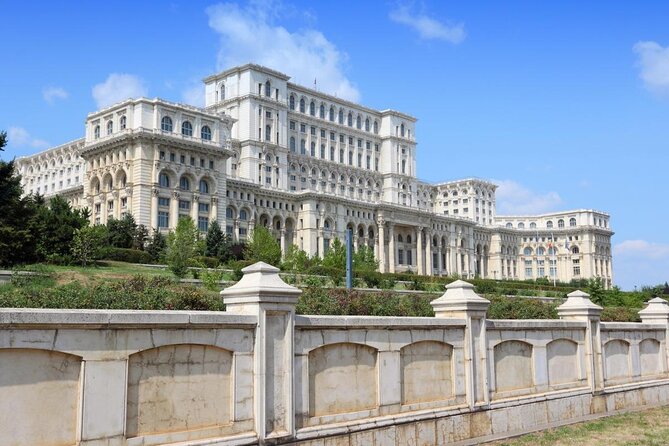
The tour moves on to another major square and views of the Palace of the Parliament, the world’s second-largest administrative building after the Pentagon. Its scale is the point. The complex is deliberately overwhelming, and it tells you a great deal about the priorities of Nicolae Ceaușescu’s communist government.
The important story is not only the size of the building. Historic neighborhoods were destroyed to create the complex, including homes and older urban fabric that could not be recovered. Your guide explains what was lost and why the project remains controversial.
You will see the colossal architecture and relics of the former era from outside as part of the walking route. This tour does not promise an interior visit to the Palace. If going inside is a must for you, arrange that separately and check how it fits with your schedule.
I find this portion valuable because it keeps the building from becoming just a dramatic photo stop. The Palace can look almost theatrical from a distance. The context gives its scale a human cost.
The route ends at Piața Unirii, which makes practical sense if you want to continue exploring central Bucharest afterward. You are not returned to the starting point, so plan your onward route from the finish rather than assuming a round trip.
What appears on the Romanian menu
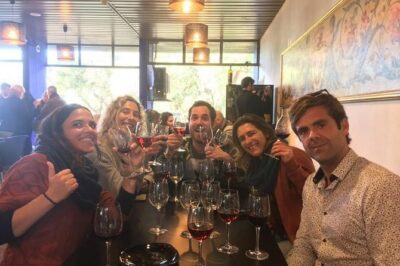
The food portion is more than a snack break. You sit down for a three-course traditional Romanian meal in a charming local restaurant, with a choice of Romanian wine, locally brewed beer, or a soft drink included.
The exact menu can vary, but classic dishes associated with the experience include mici, grilled mixed-meat sausages pronounced meesh, sarmale, cabbage rolls filled with meat, Romanian soups, meat dishes, and papanas, a rich doughnut-style dessert often served with cream and jam. The portions can be generous, so arrive hungry.
One useful advantage is flexibility. Guides have helped people switch to different traditional plates when they had already tried certain dishes. That is worth discussing at the table, especially if you have dietary preferences or want to avoid ordering something familiar.
The meal may take place at a historic restaurant such as Caru’ cu Bere, a well-known Bucharest venue that has been used for this type of experience. The restaurant is not presented as a fixed promise for every departure, so treat the specific venue as subject to the day’s arrangements.
The food is also a good point at which to ask about Romanian eating customs and regional dishes. Your guide can explain what you are ordering instead of leaving you to decode an unfamiliar menu. The included drink keeps the meal simple, though any additional food or drink is at your own cost.
Private format, guide quality, and pace
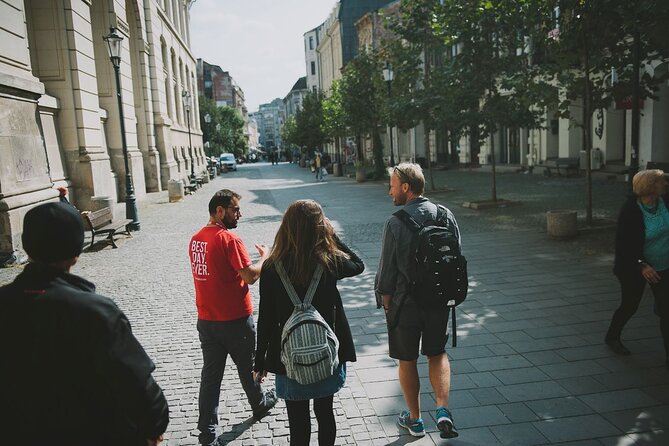
This is a private activity, so only your group takes part. That is the feature that most affects the feel of the day. You can ask as many questions as you like, slow down for photographs, or spend less time on a subject that does not interest you.
The guide team has included Elena, Dana, Andrea, Cristina, Constantin, Mircea, Andrei, Emma, and others. The strongest accounts of the tour focus on guides who were warm, patient, and able to explain Bucharest in fluent English. Dana, for example, has offered restaurant and activity suggestions after the walk, while Elena has helped adjust plans to cold weather and individual needs.
Names can change according to the departure date, so you cannot book a specific person based on the information available here. What you can count on is an English-speaking local guide and a private format.
The walking distance is not specified, but the route covers several parts of central Bucharest and can involve several kilometers. One group described a long walk at a comfortable pace, while another noted that the tour involved lots of walking. Wear supportive shoes and bring water. In summer, protect yourself from the sun. In winter, dress seriously, since the tour runs outdoors and has taken place in snow and strong wind.
The tour is child-friendly, and children under six can join free of charge. Most people can participate, and service animals are allowed. Public transportation is nearby, but the route itself is a walking experience rather than a vehicle tour.
Is $143.61 per person good value?
The price is $143.61 per person. That is not a bargain if you are comparing it with a basic free walking tour or a short restaurant meal. It becomes more reasonable when you count what is bundled together: four hours with a private guide, a substantial three-course meal, and an included drink.
For two people, the cost buys privacy, a flexible pace, and a direct chance to ask about Romania’s past and present. For a larger group, the total price rises quickly, so compare it with the cost of booking separate private guiding and a meal. The value is strongest if you want history explained clearly and prefer not to organize lunch yourself.
The carbon-neutral operation and B Corp certification may also matter to you if you choose companies that aim to use tourism for social and environmental good. Those claims do not change the route, but they are part of the company’s operating approach.
You also receive practical local orientation. A good first-day tour can save you from spending the rest of your visit guessing which streets, restaurants, and monuments deserve your time. That advice is hard to price, particularly on a short Bucharest stay.
Who should book it, and who should skip it?
I would choose this tour for a first visit, especially if you like food, architecture, political history, and conversation. It suits couples, families, and small groups that want the guide’s attention rather than a fixed large-group script.
It also works well if you arrive in Bucharest a day early. Four hours gives you a working map of the center, and the meal introduces dishes you can seek out again. Ask for restaurant ideas before the tour ends.
You may want something else if you dislike walking, want extensive museum interiors, or mainly want to visit the Palace of the Parliament inside. This route gives you outdoor views and context, not a full Palace tour. It is also a poor fit if you need a quick, low-cost overview.
Book at least several weeks ahead if your schedule is fixed. The experience is booked about 40 days in advance on average, which suggests that popular dates can fill. Free cancellation is available up to 24 hours before the 11:00 start time, but changes or cancellations inside that window are not accepted for a refund.
Should you book the Bucharest food and history tour?
Book it if you want Bucharest explained by a local person, not just photographed from a pavement. The best parts are the private pace, the frank look at communist destruction, the walk through Old Town’s less obvious corners, and the generous Romanian meal at the end.
The price is high for a four-hour outing, but the private guide and included lunch make it easier to justify. Choose it early in your stay, wear good shoes, and arrive ready to eat. If those conditions suit you, this is a practical and enjoyable way to get your bearings in Bucharest.
FAQ
How long is the Bucharest private food and history tour?
The tour lasts approximately four hours.
What time does the tour start?
The scheduled start time is 11:00 am.
Where does the tour begin?
You meet at the Equestrian Statue of King Carol I in Sector 1, Bucharest, near Revolution Square.
Where does the tour finish?
The tour ends at Piața Unirii in Bucharest.
Is the tour private?
Yes. Only your group participates in the activity.
Is the tour offered in English?
Yes. It includes a local English-speaking guide.
Is a meal included?
Yes. You receive a three-course traditional Romanian meal at a local restaurant.
Are drinks included?
One Romanian wine, locally brewed beer, or soft drink is included. Additional food and drinks cost extra.
Can children join the tour?
Yes. The tour is child-friendly, and children under six are permitted to join free of charge.
New food tours we have reviewed in the world
- ChattaBrunch Food Tour★ 5.0 · 87 reviews
- Downtown Chattanooga Food Tour★ 5.0 · 290 reviews
- Historic Southside Food Tour in Chattanooga★ 5.0 · 32 reviews
- Tastes Through Time – Charleston’s Best Food & History Tour★ 4.5 · 95 reviews
- Charlottetown waterfront SOLAR PartyBike food & drink experience!★ 4.0 · 92 reviews
- Charleston’s Savor the Flavors of Upper King Street Walking Food Tour★ 4.5 · 130 reviews
- Charlottetown Food Walking Tour★ 5.0 · 59 reviews
- Charleston Private Brunch Tour: Biscuits, Shrimps, Grits and More★ 5.0 · 48 reviews
Private, compared.
Private Street Food Tour by Motorbike/Car with Local Students
Read our review →
Private Street Food Evening Walking Tour in Ho Chi Minh City
Read our review →
Private Street Food Motorbike Tour in Ho Chi Minh City
Read our review →
Lisbon Exclusive PRIVATE Food Tour with 6 or 10 Tastings
Read our review →
Private Hanoi Street Food Walking Tour With Real Foodie
Read our review →
Private Montmartre Food Tour with Wine, Cheese & Pastries
Read our review →
The Award-Winning PRIVATE Food Tour: 10 Tastings of 3 Cultures
Read our review →