
Review · EVENING EXPERIENCES
Evening Foodie Tour of La Paz
La Paz’s best food lesson may happen away from polished dining rooms. This three-hour evening walk takes you from San Francisco Square through markets, street-food stalls, and local restaurants, using each bite to explain how Bolivians eat, drink, gather, and celebrate. You finish with a drink and conversation, not just a full stomach.
I like the mix of five food stops and the way the tour links dishes to people and daily life. I also like the practical payoff: guides such as Matt, Daniel, Max, and Marisol have helped visitors find places they would likely miss alone. The main drawback is simple: this is a large amount of food, and the street-food-heavy format may feel expensive if you only want a cheap dinner.
Key points at a glance
- Five food stops: Expect a mix of street vendors, market counters, and local restaurants, with enough food to replace dinner.
- Api may be a favorite: This warm Bolivian drink received special praise and is a good reason to pace yourself for the later stops.
- Food comes with context: Your guide explains local produce, drinking customs, family life, and the stories behind the dishes.
- Mostly an eating tour, not a long walk: You pass markets, monuments, and La Paz sights, but walking is limited.
- Good guides make the difference: Past guides have included Matt, Daniel, Max, Denise, Marisol, Roberto, and others, with English and Spanish offered.
- Bring practical essentials: Meet at the church doors with a red-capped guide, wear comfortable shoes, carry a jacket and cash, and do not eat a big meal first.
Why this food tour is useful in La Paz
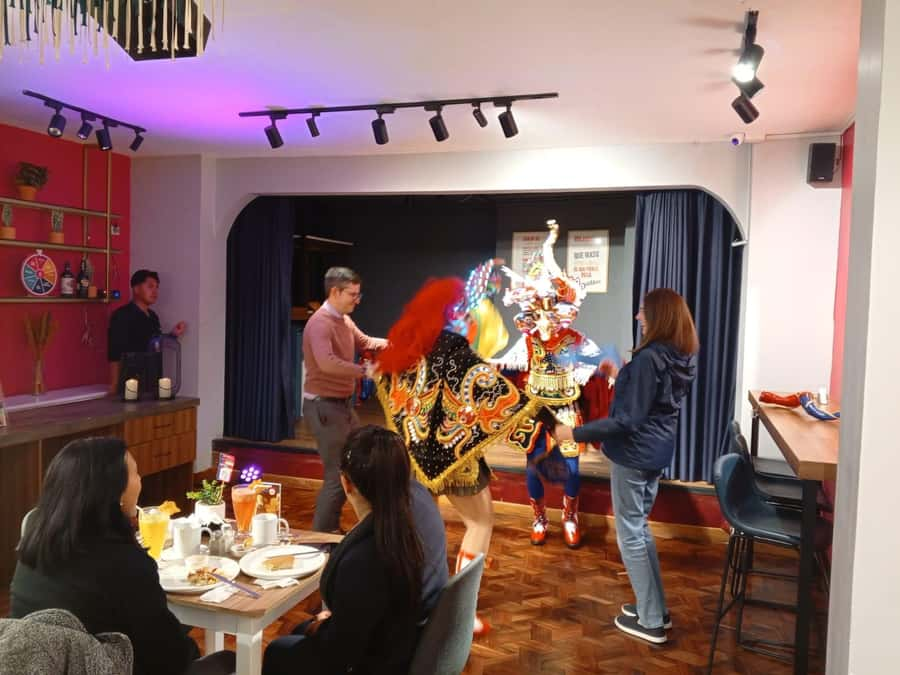
Bolivian food can be hard to decode on your own. Menus may be unfamiliar, street stalls can look intimidating, and the best local places are not always aimed at visitors. This tour gives you a friendly introduction before you start ordering by yourself.
The food is also a window into ordinary life. The tour’s central idea is that food is where the family gathers, where work pauses, and where people make time for one another. That is more useful than simply collecting a list of dishes. You learn why certain foods matter and how eating fits into Bolivian social life.
The evening starts at 18:25, a handy time for making this your main dinner. You spend about three hours moving between food stops and nearby sights. The route includes local markets, historical monuments, and parts of La Paz that you might otherwise pass without stopping.
I would choose this early in a La Paz stay. It can give you a map of places to return to, plus enough confidence to try market food later without staring at a counter and hoping for the best.
More after-dark experiences in the world:
- Winner 2025 Florence Sunset Food & Wine Tour by Eating Europe
★ 5.0 · 5,015 reviews - Saigon By Night and Street Food By Motorbike | Opt: Ao Dai Riders
★ 5.0 · 4,066 reviews - Private Street Food Evening Walking Tour in Ho Chi Minh City
★ 5.0 · 3,175 reviews
Meeting at San Francisco Church
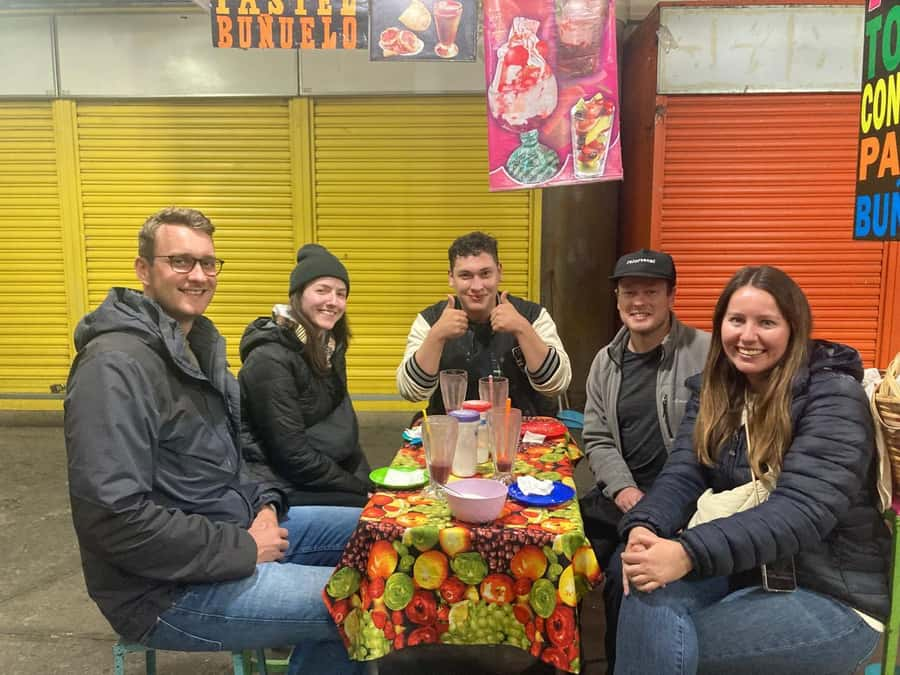
The meeting point is San Francisco Square, at the large doors of the church. Look for the guide wearing a red cap. This detail matters because the map information may point to the church office rather than the actual meeting place. You should wait at the church doors, not at an office entrance.
Give yourself enough time to locate the square before 18:25. La Paz is not a city where I would want to begin an evening by rushing through unfamiliar streets while checking a phone. Carry your booking details and identification, since a passport or ID card is listed among the things to bring.
The tour is offered in English and Spanish. Your guide may be Matt, Daniel, Max, or another member of the team. The names that come up often include Daniel and Max, while Matt has also received strong praise for clear English, humor, and attention to different needs. The exact guide is not guaranteed, but the guide can shape the evening, so it is worth paying attention to the language option when booking.
The first bites: markets and street vendors
The opening part generally takes you toward local markets and street-food venues. This is the most useful section for anyone who would not normally know where to begin. You are not simply handed a plate in a restaurant. You see the kind of places locals use for quick meals, snacks, drinks, and familiar comfort food.
Some stops may be market counters, while others may be small street stalls. That variety is a strength. It gives you a better picture of everyday eating than a restaurant-only tasting menu would.
The tradeoff is that street food can feel less polished. One stop may be a favorite, while another may seem basic or crowded. The tour provider says the restaurants included have been checked for cleanliness and proper food handling, but that does not make every setting feel equally comfortable to every person. If you are cautious about street food, tell the guide early and ask what each item contains.
The first few tastes are also where pacing matters. The portions may not look huge one by one, but several stops quickly add up. You are there to taste five specialty dishes, not to prove that you can finish every serving. Take smaller bites, share when appropriate, and save room for the later restaurants.
Five specialty dishes, plus drinks
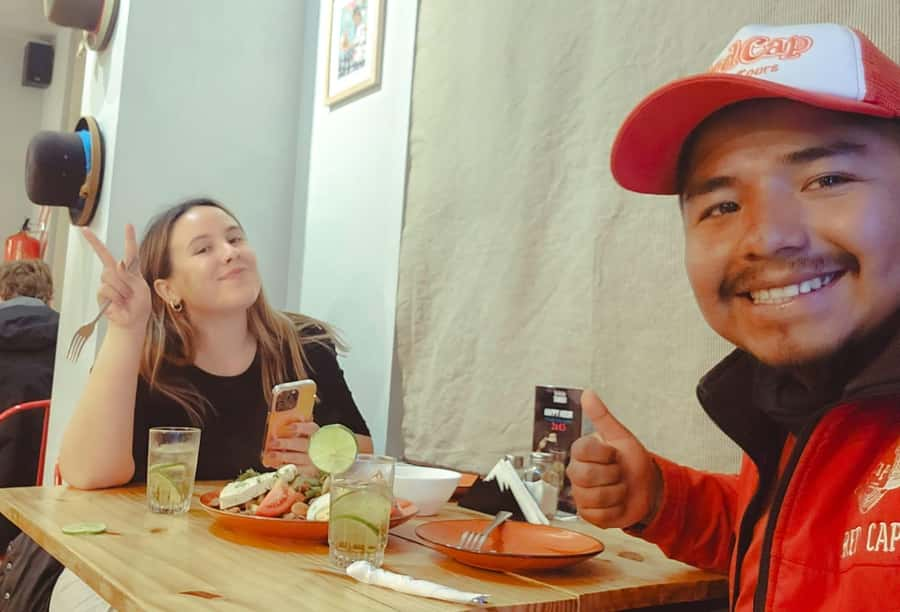
The exact dishes can vary, but the experience is built around five local specialties and a local cocktail or beer. Past groups have tried six things in total, so the number of individual tastes may be slightly higher depending on the route and drinks included.
One especially memorable item for many people is api, a warm Bolivian drink. It was singled out as a favorite, and it can be one of the tour’s more distinctive tastes. You may also receive a local beer or cocktail, depending on the evening’s plan.
The drink component helps explain Bolivian social habits, not just local flavors. One guide used the drinking culture to show how strongly community and conversation are tied to sharing refreshments. That kind of explanation is useful because it turns a beverage into part of the culture rather than an add-on.
Still, take altitude seriously. La Paz sits high, and one past participant found that alcohol and altitude did not mix well. You are allowed to pace yourself. If you feel the effects quickly, choose less alcohol, drink water when available, and do not feel obliged to finish every drink. Extra drinks are not included, so your cash is best saved for optional purchases, tips, or the taxi home.
More food tours in the world:
- Reykjavik Food Walk – Local Foodie Adventure in Iceland
★ 5.0 · 18,952 reviews - Dubai: Old Town, Creek, Museums, Souks, & Street Food Tour
★ 4.8 · 10,816 reviews - Ho Chi Minh City Street Food Tour & Sightseeing By Motorbike
★ 5.0 · 9,413 reviews - Montserrat Half-Day Tour with Tapas and Gourmet Wines
★ 5.0 · 7,359 reviews
Restaurant stops and the full-dinner problem
The route usually shifts from street and market food toward local restaurants. This gives you a useful contrast between quick informal eating and sit-down dishes. You can see how the same broad food culture works in different settings.
The last restaurants are not necessarily the strongest stops for every palate. One past group enjoyed the stalls but found one of the small restaurant visits less successful. That is a fair warning: food tours are built around variety, not five guaranteed personal favorites.
The bigger issue is quantity. Several people ended the evening completely full, and some could not finish the final two stops. I would treat the tasting as dinner and eat only a light snack beforehand, if anything. Arriving hungry is useful. Arriving starved may make you eat too fast at the first stop and regret it by the end.
You also do not need to finish every bite. The guide’s job is to help you understand the food, not watch you clean every plate. If you have a small appetite, tell the guide at the start so the evening can be managed more comfortably.
The stories behind the food
The best part of this tour is not the number of dishes. It is the explanation around them. Guides have spoken about local produce, favorite foods, preparation traditions, Bolivian history, and the way food connects with family and community.
Daniel has been praised for explaining both the food and the history of La Paz and Bolivia. Max has been noted for telling stories and making the cultural side easy to follow. Matt has been described as funny, attentive, and strong in English. Other guides, including Denise, Marisol, Roberto, and David, have also led this route.
Guide style can vary, but the recurring strength is personal attention. This is not designed as a silent march from one snack to the next. You can ask questions about ingredients, markets, customs, and places to eat later. Solo visitors can also find the social format helpful, since the meal stops give everyone a natural reason to talk.
The pace is generally relaxed, with limited walking. That makes it easier to concentrate on the food and conversation, though it also means you should not book this expecting a major evening hike through La Paz.
How much value do you get for $32?
At $32 per person, the tour costs more than buying individual street snacks. That comparison is fair, but incomplete. Your fee covers five specialty dishes, specified drinks, a bilingual guide, explanations, and an organized route through places you might not find easily on your own.
I see the strongest value in the first-time introduction. If you are unsure what to order or nervous about eating at local stalls, the guide removes much of the guesswork. You also get a chance to identify places you may want to revisit. One person enjoyed the tour so much that they returned to some of the same food spots later.
The value is weaker if you measure the outing only by food volume. Much of the food is ordinary local fare rather than expensive restaurant cooking. One person felt the price was high because of the street-food component, and that is a reasonable view.
For me, the tour earns its price through access and explanation. If you want a guided introduction to Bolivian food culture, $32 is sensible. If you already know La Paz markets well and are happy ordering on your own, spend the money on several independent meals instead.
What to bring and how to dress
Wear comfortable shoes, but do not pack as if you are heading on a full-day trek. The tour involves walking between stops and sights, though the walking is limited. A jacket is important for the evening, since La Paz can feel cold after sunset.
Bring cash for extra drinks, tips, and the taxi home. Transport to and from the meeting point is not included. The tour ends at a restaurant, but you should not assume that your accommodation is within an easy walk.
Bring your passport or ID card as well. Tell the provider about dietary restrictions when booking. Only a few vegetarian options are available, so vegetarians should not expect the same broad choice as people eating the standard route. The available information does not promise a full menu for other dietary needs, so ask before booking if your restrictions are serious.
Who should book this La Paz food experience?
I would recommend it to first-time visitors who want a gentle introduction to Bolivian food, solo visitors who enjoy meeting people over a meal, and anyone who wants to understand La Paz through ordinary eating places rather than only formal restaurants.
It is also a good fit if you like having a guide explain what is in front of you. The stops may include food you would never order alone, and that is the point. You can try a little, ask questions, and decide what deserves a second visit.
I would be more cautious if you have a very small appetite, strict dietary restrictions, or trouble with alcohol at high altitude. The tour is food-heavy, vegetarian choices are limited, and extra drinks are optional rather than essential. You can still enjoy the route, but you should state your needs clearly before setting out.
Booking details worth knowing
The activity lasts three hours and begins at 18:25, though you should check availability because starting times can change. It has free cancellation up to 24 hours before the tour for a full refund, and you can reserve now and pay later.
The meeting point is the church doors at San Francisco Square. Look for the red cap. Transport is not included, and you should plan how you will get back after the final stop.
The tour has an overall rating of 4.5 from 167 reviews, with particular praise for the guides, variety of food, relaxed pace, and cultural explanations. The consistent caution is not about a major failure. It is about quantity, occasional unevenness between stops, and the question of whether street food plus guidance is worth $32 for you.
Should you book the Evening Foodie Tour of La Paz?
Book it if you want a friendly way to get oriented to Bolivian food and find local places you might miss alone. The combination of market food, street stalls, restaurants, local drinks, and cultural explanation makes it more useful than a simple restaurant dinner.
Skip it if you prefer to choose every dish yourself, have strict dietary needs, or dislike eating large amounts in one evening. For everyone else, I would book it near the start of a La Paz visit, arrive hungry but not desperate, pace the drinks, and keep your favorite stops in mind for later.
FAQ
Where does the Evening Foodie Tour of La Paz meet?
Meet at San Francisco Square, at the large doors of the church. Look for the guide wearing a red cap. The map may show the church office, but the group meets at the church doors.
What time does the tour start?
The tour starts at 18:25. Check availability when booking because starting times can vary.
How long does the food tour last?
The experience lasts three hours.
What food is included?
You will taste five specialty dishes, with the possibility of trying six individual items depending on the route. The tour also includes a local cocktail or local beer as specified.
Are drinks included?
The drinks specified for the tour are included. Extra drinks are not included, so bring cash if you want to order more.
Is the tour available in English?
Yes. A live bilingual guide leads the experience in English or Spanish.
Are vegetarian options available?
Only a few vegetarian options are available. You should advise the provider about dietary restrictions when booking.
Is transport included?
No. Transport to the meeting point and transport afterward are not included. Bring money for a taxi home if needed.
Can I cancel the booking?
Yes. You can cancel up to 24 hours in advance for a full refund. The reserve-now, pay-later option is also available.
New food tours we have reviewed in the world
- ChattaBrunch Food Tour★ 5.0 · 87 reviews
- Downtown Chattanooga Food Tour★ 5.0 · 290 reviews
- Charlottetown waterfront SOLAR PartyBike food & drink experience!★ 4.0 · 92 reviews
- Historic Southside Food Tour in Chattanooga★ 5.0 · 32 reviews
- Tastes Through Time – Charleston’s Best Food & History Tour★ 4.5 · 95 reviews
- Charleston’s Savor the Flavors of Upper King Street Walking Food Tour★ 4.5 · 130 reviews
- Charlottetown Food Walking Tour★ 5.0 · 59 reviews
- Charleston Private Brunch Tour: Biscuits, Shrimps, Grits and More★ 5.0 · 48 reviews
Evening Experiences, compared.
Winner 2025 Florence Sunset Food & Wine Tour by Eating Europe
Read our review →
Saigon By Night and Street Food By Motorbike | Opt: Ao Dai Riders
Read our review →
Private Street Food Evening Walking Tour in Ho Chi Minh City
Read our review →
Kyoto Night Foodie Tour in Gion (9+ dishes + 6 Sake tastings)
Read our review →
Hanoi Motorbike Tours Led By Women: Hanoi By Night Foodie Motorbike Tours
Read our review →
Saigon: Day-Night Sights & Local Food Tour l Female Option
Read our review →