
Review · STREET FOOD TOURS
Heritage Walk & Street Food Tasting in Jaipur
Jaipur is easiest to understand with a snack in one hand and a guide leading you through a narrow lane. This three-hour walk starts near Golcha Cinema and threads through the old Pink City, where painted houses, market streets, temples, food stalls, and working artisans appear in quick succession.
I like the way the tour joins street food with local history, rather than treating lunch as a separate activity. I also like the small-group format, which gives guides such as Vivek, Kumar, Raj, and Pushpendra room to answer questions and adjust the pace.
The main consideration is the walking. You cover old-city streets and smaller gullies for three hours, often on uneven ground and amid ordinary city traffic. If you need a wheelchair-accessible route or prefer a quiet, seated food tour, this is not the best match.
Key points before you book
- About 15 food tastes are possible: Expect samosa, kachori, sweets, masala chai, and other local snacks at several small stops.
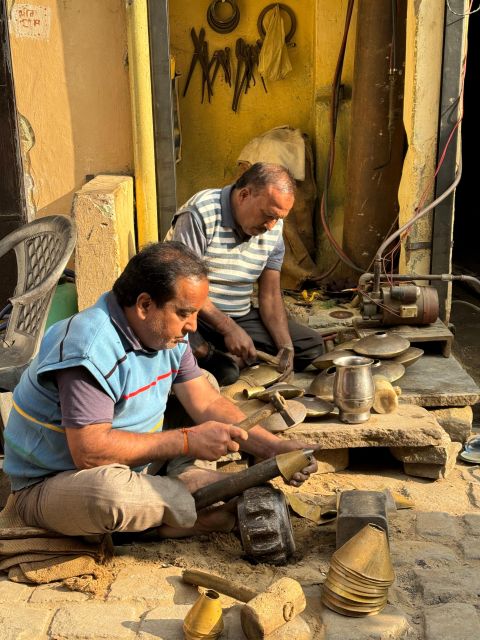
- A working side of Jaipur: The route includes the Thatheras, a community of metal beaters, plus bangle making with sealing wax.
- History is part of the meal: Your guide explains Jaipur’s entry gates, planned geometry, royal past, temples, markets, and painted façades.
- Small and personal: Groups are limited to 10, and guides often tailor food choices and the walking pace.
- Good value at $21: Food, water, the guide, and the heritage walk are included, with no hotel transport.
- Come hungry but not reckless: The portions add up quickly, especially when sweets arrive before the savoury dishes.
Starting at Golcha Cinema and entering the Pink City
The meeting point is the entry gate of Golcha Cinema. You will need to make your own way there, since hotel pickup and drop-off are not included. Confirm the exact starting time when booking, and allow a little extra time to reach the old city.
The first advantage of meeting at a fixed landmark is that the tour gets moving quickly. There is no long hotel transfer, and the walk begins right where the old streets become interesting. Your guide should help you get oriented before leading you toward Chaura Rasta.
This is a useful first walk in Jaipur. You begin to see how the old city is arranged around broad market roads, smaller lanes, and planned sections. The guide also explains the purpose of Jaipur’s entry gates and the city’s precise geometric layout.
That context matters. Without it, the Pink City can feel like a blur of shops, scooters, façades, and pedestrians. With an explanation of the plan, you start noticing the structure beneath the noise.
More Street Food Tours in India
- Mumbai: Street Food and Night Markets Tour
★ 4.9 · 719 reviews - Old Delhi Street Food Tour
★ 5.0 · 497 reviews - Delhi: Old Delhi Street Food Tour with Rickshaw Ride
★ 4.9 · 403 reviews
Chaura Rasta: tea, snacks, and city design
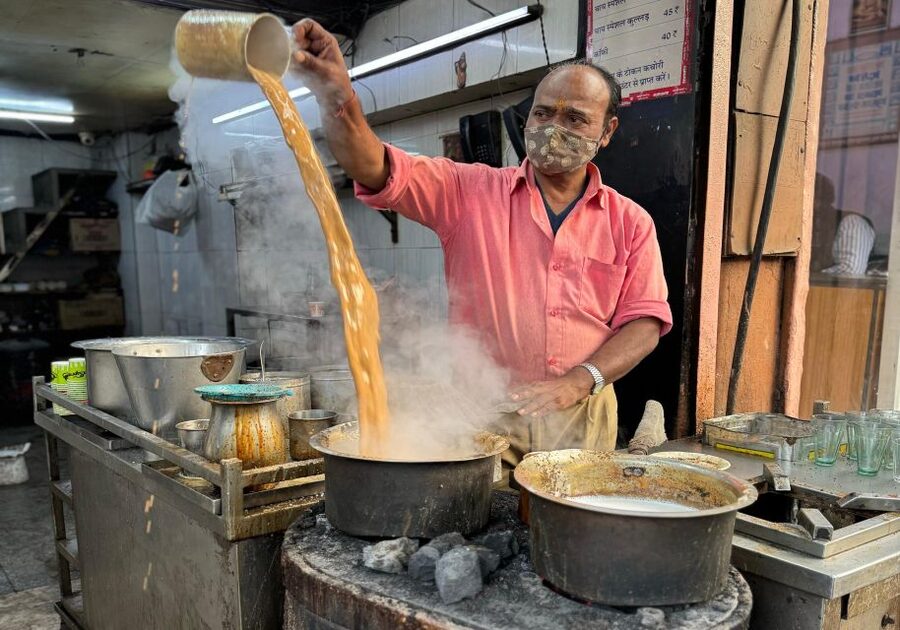
The first major stretch is Chaura Rasta, where the food tasting begins in earnest. You may stop for masala chai and early snacks, with samosa and kachori among the expected favourites. These are not formal restaurant tastings. You eat at local shops and stalls, often standing or taking a short pause before moving on.
I find this part especially useful for visitors who are cautious about Indian street food. Your guide chooses the stops, explains what to try, and can help you avoid ordering blindly. One guide, Vivek, has been praised for explaining how to judge food quality in the market, which is practical information you can use for the rest of your time in India.
The food is only half the point. As you walk, look up at the old façades and painted houses. The route gives you a chance to see ordinary buildings and shopfronts rather than only Jaipur’s major monuments.
Chaura Rasta can be busy, and the combination of traffic, pedestrians, and food stops may feel hectic. Keep your group in sight, wear shoes with a firm sole, and carry the provided bottle of water or your own refill.
Badi Chaupar and the first full round of tasting
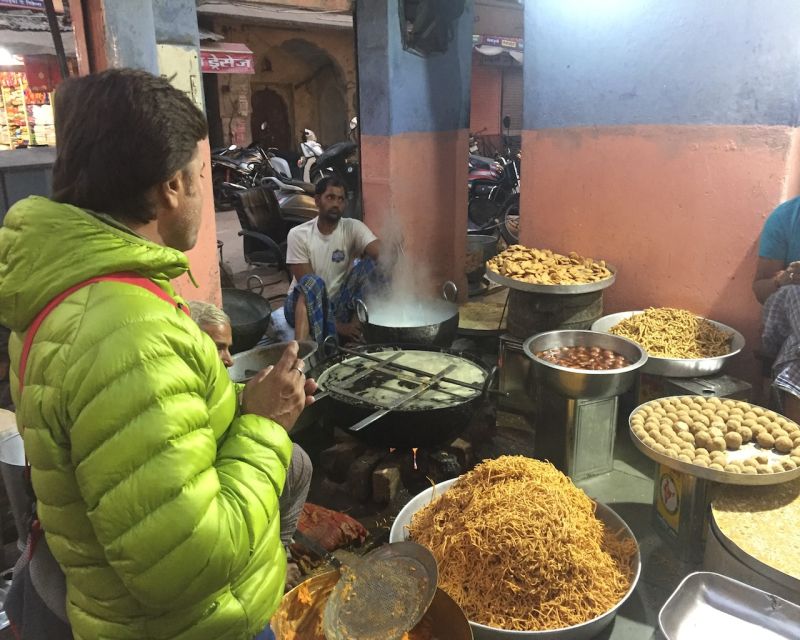
The walk continues to Badi Chaupar, one of the old city’s important open spaces. This section combines local snacks, tea, food tasting, and views along the way. It is a good place to pause and take in how the market roads meet.
By this point, you will probably have a better sense of your appetite. The food is described as plentiful, and some participants have tasted around 15 items at roughly six stops during the full experience. That does not mean every departure follows exactly the same menu, so treat the list as a guide rather than a promise.
The snacks tend to arrive in small portions, but they accumulate. Samosa and kachori are filling, and sweets can be surprisingly substantial. One useful tip is to eat lightly before the tour. Another is to tell the guide early if you have a low tolerance for spice, dietary concerns, or a preference for savoury food.
The tour can adapt to personal tastes. A guide may suggest milder choices or explain ingredients before you try them. Still, you should speak clearly about allergies or medical needs. The experience includes food from local shops, not a controlled restaurant kitchen.
Badi Chaupar also gives the guide space to explain Jaipur’s royal connections and the role of trade in the old city. You get more from the stop if you ask questions. This is not a silent tasting walk where you simply follow from one plate to the next.
Tripolia Bazar and the crafts behind the shopping streets
Tripolia Bazar shifts the focus toward markets, architecture, and skilled work. You pass through a commercial part of the old city and then move into smaller lanes where the everyday life of Jaipur becomes easier to see.
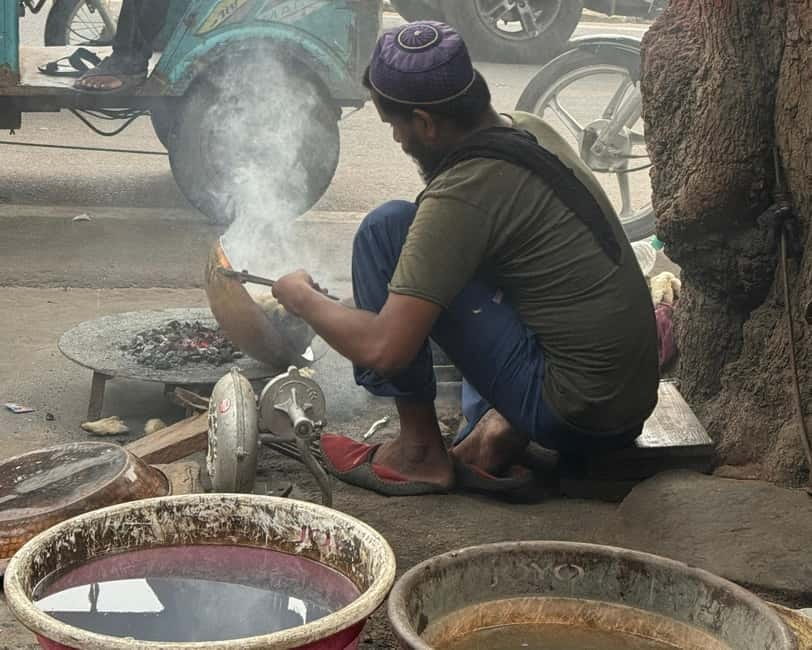
One distinctive stop is the street associated with the Thatheras, a community of metal beaters. This is a valuable addition because it shows the work behind the objects sold in markets. You are not just looking at finished handicrafts. You may see or learn about the people and methods that keep traditional trades going.
Another craft detail is bangle making with sealing wax. The process is unusual enough to make this more than a standard shopping stop. It also gives you a chance to ask about materials, skill, and the time involved in making objects by hand.
The tour presents these visits as cultural encounters, not as compulsory shopping. That matters if you dislike tours that steer you toward stores. The experience provider says it has no hidden agenda, and the route is designed around food, streets, crafts, and local knowledge rather than sales stops.
Still, market streets are active working places. Shops may be crowded, lanes may be narrow, and not every artisan will be available for a long conversation. Treat the people you meet with respect, ask before taking close-up photographs, and remember that this is their workplace.
Same appetite, a different neighbourhood:
- The Great Indian Food Tour: Old Delhi Food and Heritage Walk
★ 5.0 · 1,698 reviews - Delhi Food Walk: Rickshaw Ride, Street Eats & Market Tour
★ 5.0 · 401 reviews - Old Delhi Food Tour: A Night Time Feast
★ 5.0 · 326 reviews - Jaipur Bazaar & Food Walking Tour
★ 5.0 · 281 reviews
Choti Chaupar and the later food stops
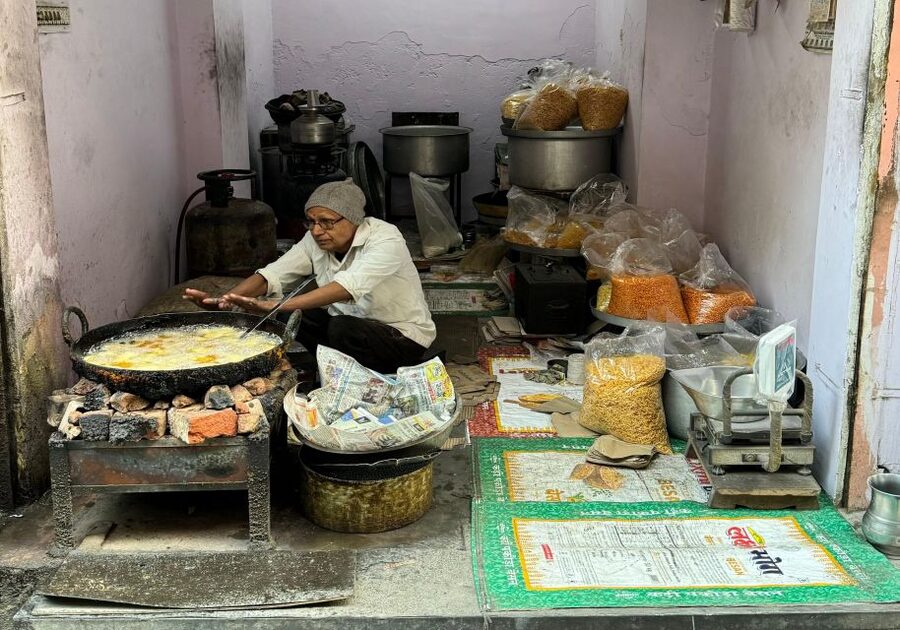
The final major section leads toward Choti Chaupar, also written as Chhoti Chopad. Here you can expect more street food, regional snacks, and additional tasting stops before the walk finishes nearby.
The order of sweet and savoury food can vary. One practical complaint was that sweets arrived early, leaving the group quite full before later savoury dishes. If you would rather finish with something salty, tell your guide at the start. Guides have shown a willingness to adjust the route and food choices when they can.
This last section is also where the walk feels most like an introduction to Jaipur’s evening or market life, depending on the departure time. The available start times vary, so check the schedule rather than assuming it will be a morning or evening tour.
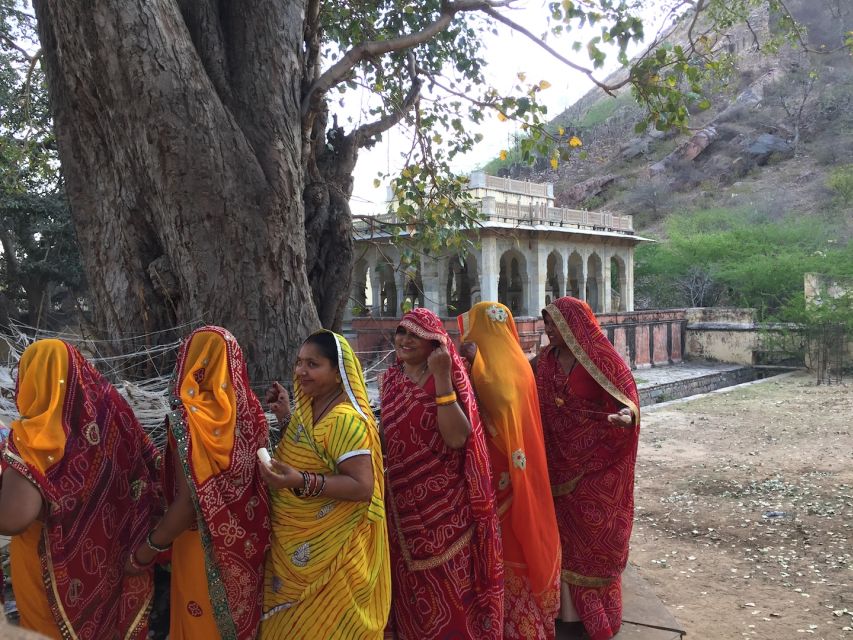
You will also visit a Hindu temple during the experience. Dress modestly, follow local customs, and do not use flash photography inside. The temple visit is brief compared with the walking and food, but it adds a religious setting to the route.
A community well is another unusual detail. It offers a glimpse of how shared water sources fit into old neighbourhood life. Small details like this help you see Jaipur as a living city rather than a collection of palace façades.
What the guide adds to the experience
The guide is the key factor here. The provider uses English-speaking cultural walk explorers, and the named guides in the feedback include Vivek, Kumar, Raj, Pushpendra, and Sam. Your assigned guide may differ, but the strongest pattern is clear: this tour depends on a person who can explain, navigate, and read the group.
Vivek receives repeated praise for his calm manner, local connections, city knowledge, and care with solo visitors. Kumar is described as clear and engaging, especially when explaining local history and food. Raj is noted for enthusiasm and storytelling, while Pushpendra is praised for discussing Indian life and culture in an open way.
That kind of guide matters in Jaipur. A map can show you Badi Chaupar and Tripolia Bazar, but it cannot easily lead you into the right lane, explain a craft, identify a snack, or help you feel comfortable when the streets become crowded.
The small group, capped at 10 people, supports conversation. Solo visitors have found the setting reassuring, and families have appreciated guides who let them move at a comfortable speed. Several people extended their time with a guide to visit the City Palace, Jantar Mantar, or other parts of the Pink City, but those extra visits are not part of the $21 tour.
Food safety, spice, and comfort
Food safety is a fair concern, especially if you are new to India. This tour takes you to local shops and street vendors, and guides choose the stops. Several participants with little experience of Indian food reported eating widely without stomach trouble, but no street-food tour can guarantee how your body will react.
You should tell the guide about allergies, IBS, spice limits, or food preferences before tasting. A recent participant with very low spice tolerance and digestive concerns managed the menu with guidance, but that is a reason to communicate, not a reason to ignore your own limits.
The food is not presented as a fixed restaurant menu. Expect regional snacks, hot tea, sweets, and whatever additional local items are available along the route. Bring medication if you need it, and do not arrive overly full.
Comfortable clothing and sturdy walking shoes are essential. Jaipur’s weather can change, so sunscreen and a hat are sensible. The experience includes a bottle of water, but carrying extra water is wise, particularly in hot weather.
Is $21 good value in Jaipur?
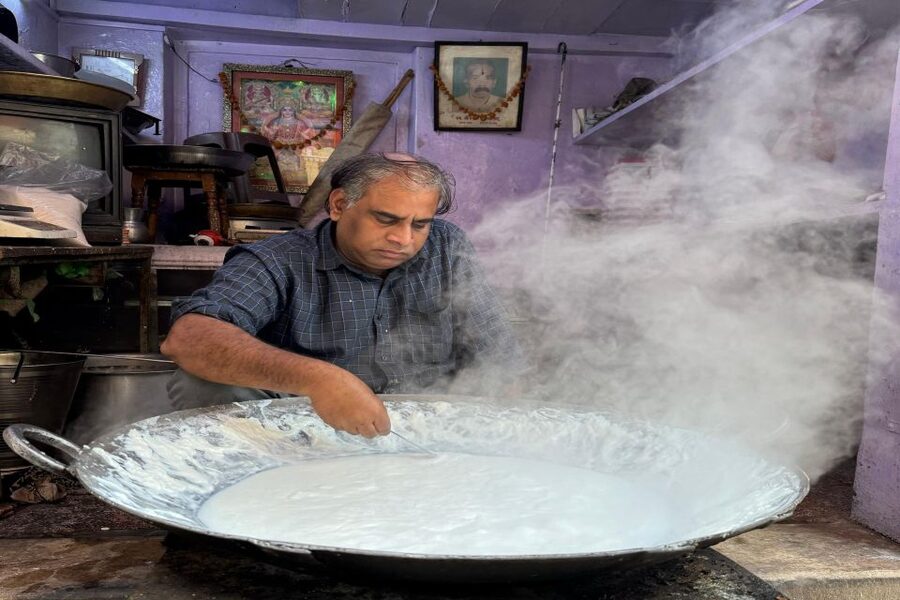
At $21 per person, the price is strong for a three-hour small-group experience that includes food, water, a guide, and the heritage walk. You are paying for more than snacks. You are also paying for navigation through streets you might not confidently find alone and for explanations that connect food, architecture, religion, and craft.
The value is best if you want to sample many items. Buying each snack independently might cost less, but you would not necessarily know which shops to choose or how the dishes fit into Jaipur’s food culture. You also would not get the same guided look at the Thatheras, bangle makers, temples, or community well.
The price does not include transport to or from Golcha Cinema, alcohol, or any extra sightseeing after Chhoti Chopad. Factor in your own ride to the meeting point and remember that this is a walking activity, not a private car tour.
For a first day in Jaipur, I consider the cost sensible. The walk gives you bearings, introduces you to local food, and may help you decide which parts of the old city deserve another visit.
Who should book this Jaipur walk?
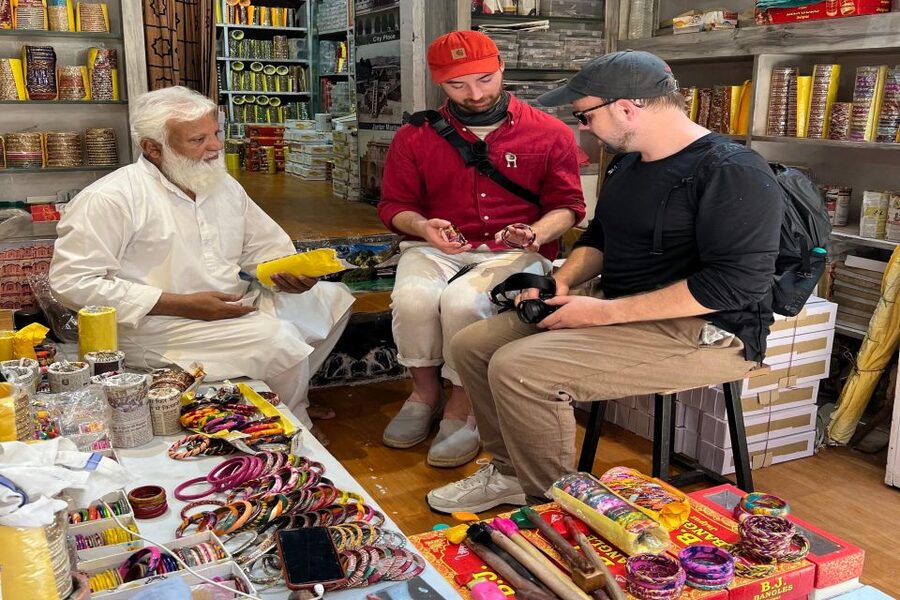
I would book this if you want a mixture of food and culture rather than a meal with a short commentary. It suits curious first-time visitors, solo explorers, couples, families with older children, and anyone who wants help entering the old city’s smaller lanes.
It is particularly useful for people who worry about ordering street food. The guide can explain choices and help you start carefully. It also works well for visitors interested in art, crafts, architecture, and ordinary neighbourhood life.
I would think twice if you dislike walking, cannot manage uneven streets, or need wheelchair access. You should also reconsider if you want a polished sit-down tasting menu, a completely predictable list of dishes, or a tour focused only on Jaipur’s major monuments.
The activity has a five-star rating from 158 bookings, and the praise centres on the guides, food quantity, local access, and sense of safety. The sensible takeaway is not that every moment will be perfect. It is that the format consistently delivers the things it promises: a friendly guide, plenty to taste, and a closer look at the old city.
Should you book it?
Book this Heritage Walk and Street Food Tasting if you want to understand Jaipur through its lanes, snacks, working crafts, and local stories. At $21, it offers good value, especially when the guide adds stops you would be unlikely to find alone.
Arrive hungry, wear comfortable shoes, dress respectfully for the temple, and tell your guide about spice or dietary limits at the start. If those conditions suit you, this is one of the better ways to get your bearings in the Pink City before exploring its larger sights.
FAQ
How long does the Heritage Walk and Street Food Tasting in Jaipur last?
The experience lasts three hours. Starting times vary, so check availability when booking.
Where does the tour start?
The meeting point is at the entry gate of Golcha Cinema in Jaipur.
Where does the tour finish?
The walk finishes at Chhoti Chopad, also called Choti Chaupar.
What food is included?
The tasting includes samosa, kachori, famous sweets, masala chai, and other local snacks from local shops.
Is water included?
Yes. A bottle of water is included, though you should carry additional water to stay hydrated.
Is hotel pickup included?
No. You must make your own way to Golcha Cinema, and hotel drop-off is not included.
What language is the tour conducted in?
The live tour guide speaks English.
How large is the group?
The activity is offered as a small group with a maximum of 10 participants.
Is the tour suitable for wheelchair users?
No. The experience is not suitable for wheelchair users because it involves extensive walking through old-city streets and lanes.
More history tours in India
- The Great Indian Food Tour: Old Delhi Food and Heritage Walk
★ 5.0 · 106 reviews - Jaipur: History Street Food Tour with Local Guide
★ 4.4 · 50 reviews - Barcelona: Tapas Walking Tour with Food, Wine, and History
★ 4.8 · 4,261 reviews - Sevilla Food Tour: Tapas, Wine, History & Traditions
★ 5.0 · 3,468 reviews
New food tours we have reviewed in India
- Street Food walking tour in Bangalore with a food evangelist★ 5.0 · 83 reviews
- Filter Kaapi: A food walk by tourism ministry approved company★ 5.0 · 26 reviews
- Amritsar Food Walk With Hidden Gems★ 5.0 · 59 reviews
- Flavours of Agra Food walk★ 5.0 · 25 reviews
- The Great Indian Food Tour: Old Delhi Food and Heritage Walk★ 5.0 · 106 reviews
- Old Delhi Street Food Tour★ 4.8 · 40 reviews
- Old Delhi Food Tour: A Night Time Feast★ 5.0 · 326 reviews
- Old Delhi: Guided Street Food Tour w/ Private Transportation★ 5.0 · 49 reviews
Street Food Tours, compared.

Dubai: Old Town, Creek, Museums, Souks, & Street Food Tour
Read our review →
Ho Chi Minh City Street Food Tour & Sightseeing By Motorbike
Read our review →
Dubai: Old Town, Souks, Street Food, Guided Tour & Abra Ride
Read our review →
Naples: Street Food Walking Tour with Local Guide
Read our review →
Small Group Hanoi Street Food Tour with a Real Foodie
Read our review →

Saigon By Night and Street Food By Motorbike | Opt: Ao Dai Riders
Read our review →
Private Street Food Tour by Motorbike/Car with Local Students
Read our review →Browse the lists this tour appears in