
Review · MIAMI FOOD TOURS
Little Havana: Authentic Food and Culture Walking Tour
Little Havana comes alive through its food, neighborhood characters, and small rituals, and this tour links them together in one compact walk. You’ll taste a full meal’s worth of Cuban specialties, watch coffee and cigars being made, and hear how Cuban-American life shaped Miami.
I like the generous food portions and the way guides such as Danny, Daniel, and Farouk connect with local shopkeepers by name. I also like the short walking route, which leaves room for stories, art, and people-watching instead of turning the afternoon into a forced march.
The main consideration is that the tour can run beyond its advertised two and a half hours, and one guide was difficult for a group to hear. Bring comfortable shoes, arrive hungry, and plan enough time afterward.
Key points to know before you book
- A full lunch in small bites: Expect Cuban sandwich, ropa vieja, seafood salad, empanada, guava pastry, churros, coffee, juice, and a mojito.
- A local guide makes the difference: Danny is a longtime Little Havana resident and tour owner, while Daniel and Farouk also lead tours.
- Less than a mile of walking: The route is manageable for many older visitors and can accommodate wheelchairs and strollers.
- Food comes with history: Stops at Domino Park, Cuban Memorial Park, the Bay of Pigs Museum, and the Tower Theater give the meal a clear Miami context.
- Come prepared for weather: Tours operate in rain or shine, so take an umbrella or poncho when the forecast calls for rain.
- Dietary limits matter: Vegetarian and some dairy-free needs can be arranged in advance, but gluten-free and celiac diets cannot be accommodated.
Why this Little Havana tour works
Little Havana is easy to visit on your own, but it is not always easy to understand. Calle Ocho has coffee windows, cigar shops, bakeries, murals, restaurants, monuments, and music, yet the meaning of each place is not always clear when you simply stroll past.
This tour gives you a local thread to follow. Your guide explains Cuban migration, the relationship between the United States and Cuba, and the role Miami played in Cuban-American life. The history is delivered while you eat, walk, and meet people who work along the street.
The strongest part is the mix of ordinary neighborhood life and formal landmarks. You are not only looking at monuments. You are also sharing a colada at a ventanita, watching a cigar roller work, and visiting Domino Park, where local players spend their afternoons.
The advertised group size is small, with a stated limit of 10 or fewer in the highlights. The general booking details also list a maximum of 14 people, so the exact size can vary. Either way, this is designed to feel more personal than a large coach excursion.
More food tours in the USA:
- New Orleans Food Walking Tour of the French Quarter with Small-Group Option
★ 5.0 · 6,118 reviews - Chef Guided Food Tour of Pike Place Market
★ 5.0 · 3,733 reviews - Savannah First Squares Culinary & Cultural Walking Food Tour
★ 5.0 · 3,229 reviews
Meeting Danny, Daniel, or Farouk on Calle Ocho
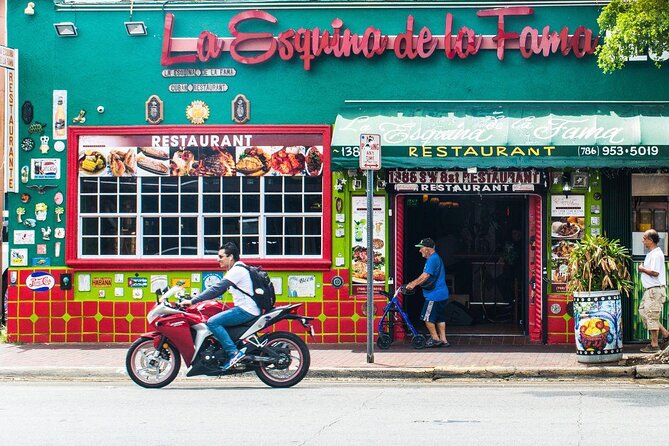
The walk begins at Tumbao, at 1652 SW 8th Street, in the heart of Little Havana. You will meet your English-speaking guide there and begin on foot.
Danny receives especially strong praise for his personal connection to the neighborhood. He has lived in Little Havana for more than 20 years, and his familiarity shows in the greetings exchanged with shopkeepers, artists, workers, and people passing along the street. That sort of contact cannot be guaranteed with every departure, but it gives the walk a genuine neighborhood feel when he leads it.
Daniel is also described as entertaining and well informed about the area. Farouk brings a strong understanding of Cuban culture and has led food-focused walks that combine local stories with generous tastings.
One practical point matters here: this is a street tour, not a quiet lecture in a museum. You may be near traffic, music, and busy sidewalks. One recent experience found the guide hard to hear, while other departures were praised for clear, engaging storytelling. Stay close to the guide and speak up if you are having trouble.
The food route, from seafood to Cuban sandwiches
The food is the main reason to arrive hungry. The tour includes enough tasting to equal a full-size lunch or dinner, spread over several local stops. The route is described as visiting six family-owned Cuban and South American restaurants, while the practical information refers to five tasting spots, so the exact number and order may change.
Your first tastes may include salpicon de mariscos, a seafood mixture prepared with olive oil, vinegar, and chopped vegetables. It is a Spanish-influenced Cuban dish, and it offers a sharper, cooler start than the heavier foods that follow.
The Cuban sandwich is usually the star of the route. It combines roasted pork, ham, Swiss cheese, pickles, and mustard on Cuban bread, then gets pressed until crisp. Portions are substantial enough that you may want to pace yourself, especially with several stops still ahead.
Ropa vieja, or stewed beef, brings a more filling taste of Cuban home cooking. The name means old clothes, a reference to the meat’s shredded appearance. You will not just hear the name and move on, you will get to taste the dish as part of the neighborhood food story.
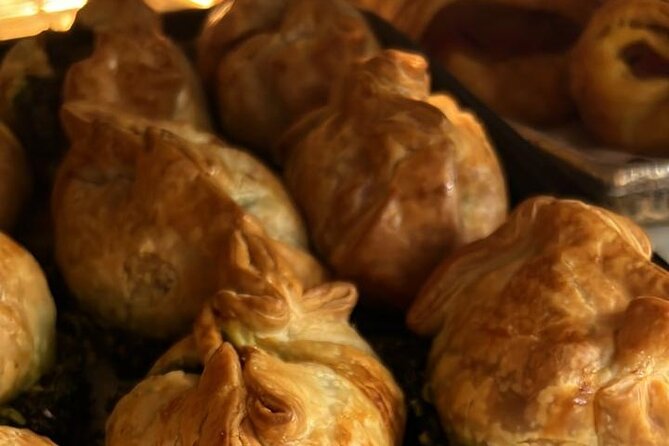
The baked beef empanada is another practical favorite. It is made daily by a local baker and provides a simple, savory contrast to the sweets.
For dessert, expect a pastelito con guayaba y queso, a flaky pastry filled with guava paste and cream cheese. Churros dusted with cinnamon and sugar finish the route. The pastry is easy to underestimate, so do not fill up during the first savory stop.
The menu may change with the season. Tropical juice can be sugarcane, guava, or mango, and fresh sugarcane juice is pressed in front of the group when available. That flexibility is part of the point: you are tasting what local businesses are serving rather than receiving a fixed restaurant meal.
Coffee, mojitos, and the ventanita ritual
Cuban coffee is served as a colada, a small, intensely sweet coffee meant for sharing. Your guide introduces the custom at a ventanita, a walk-up coffee window that is part of daily Miami life.
This is one of the most useful parts of the tour because it explains a social habit, not just a drink. You learn how locals share the tiny cups and why these coffee windows matter as meeting places.
The mojito adds a proper Cuban cocktail to the route. It is made with rum, fresh mint, lime juice, and club soda. The drink is included in the price, with no separate liquor charge listed, but you must be at least 21 to drink.
Since the tour includes many tastings, the mojito is best treated as one stop rather than an invitation to drink heavily. You are walking, eating, and listening, so moderation will make the rest of the afternoon more enjoyable.
Same appetite, a different neighbourhood:
- NYC: Chinatown & Little Italy Food Tour with 7 Flavorful Tastings
★ 5.0 · 2,733 reviews - Nashville: Food Tour with 5+ Tastings of Local Delicacies
★ 5.0 · 2,704 reviews - Historic Ybor City Food Walking Tour
★ 5.0 · 2,210 reviews - Original NYC Guided Food Tour of Chinatown and Little Italy
★ 5.0 · 2,194 reviews
Domino Park and the sound of neighborhood life
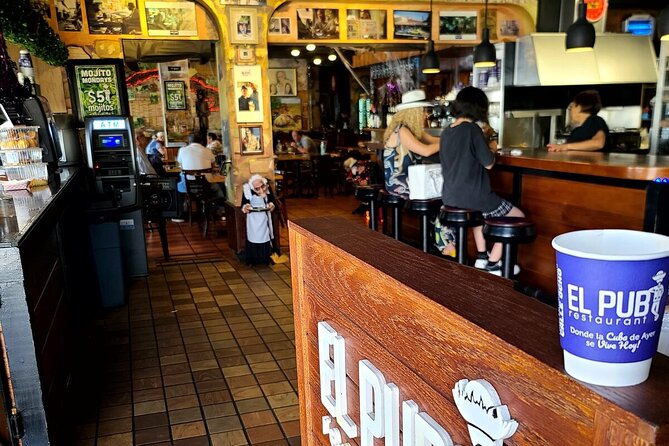
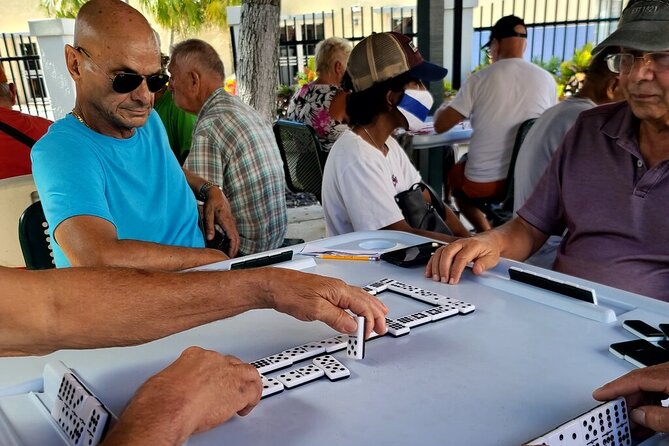
Maximo Gomez Domino Park is one of the route’s most memorable stops. Local players gather there to spend the afternoon over dominoes, and your guide explains the place as part of the neighborhood’s social life.
The value of this stop is its ordinariness. You are seeing a daily tradition in use, not a staged performance. The park also gives you a break from restaurant counters and a chance to notice how public spaces work in Little Havana.
Do not expect a long formal visit or a guaranteed conversation with every player. The guide’s role is to introduce the setting and its meaning while respecting the people using the park.
Cuban history at memorials and museums
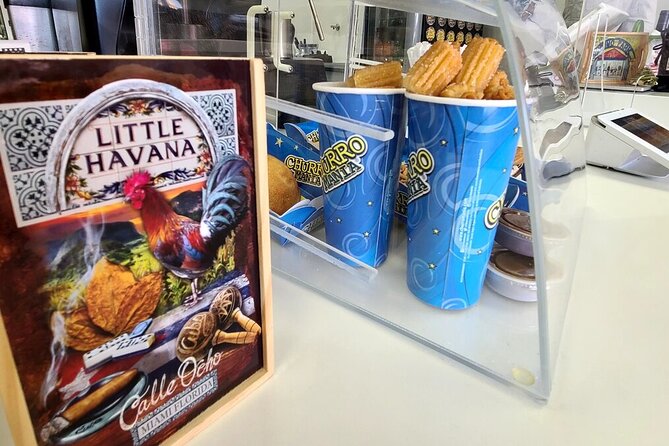
The Cuban Memorial Park and the Bay of Pigs Museum add political and military context to the food. Your guide discusses Cuban heritage in Miami and the strained relationship between the United States and Cuba as you move through the neighborhood.
These subjects can be emotional and politically complex. A good guide helps connect the larger events to the families and communities that built lives in Miami. This makes the memorial and museum stops more useful than a quick photo opportunity.
The Tower Theater is another important Calle Ocho landmark. It helps mark the older commercial center of the street and shows how entertainment, migration, and local business have shaped the area over time.
Expect commentary rather than a long museum tour. The Bay of Pigs Museum stop is part of a walking route, so anyone wanting a detailed military history lesson should allow time to return independently.
Cigars, murals, and the newer art scene
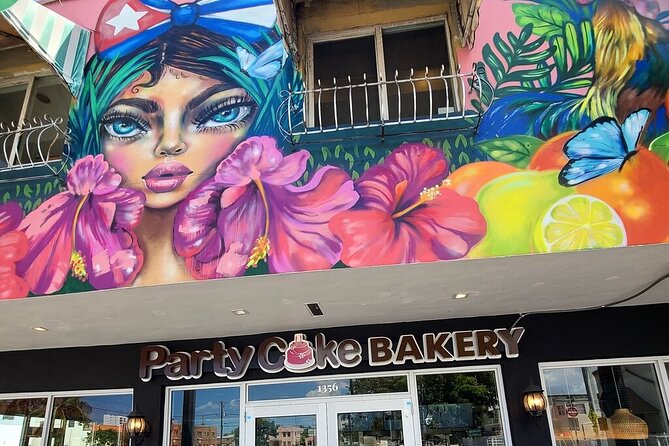
At a local Cuban cigar factory, Cuban women demonstrate how cigars are rolled. Seeing the work done by hand gives you a better sense of the craft than simply passing a cigar shop window.
You will also hear about Cuban-style shirts and other local products, with time to browse and shop at some stops. Purchases are not included, so bring a payment method if you want to take something home.
The route includes local art galleries and a growing Cuban art scene. Your guide may introduce you to artists or gallery owners, and the experience can feel more personal than looking at murals from the sidewalk.
Street art is another strong point. The route may take you away from the busiest section of Calle Ocho to see larger mural areas, and after the tour you can continue through Rooster Alley for more murals and public art.
Art stops vary more than food stops, since gallery hours and local activity can change. Still, they keep the experience from becoming only a restaurant crawl.
Walking, timing, parking, and access
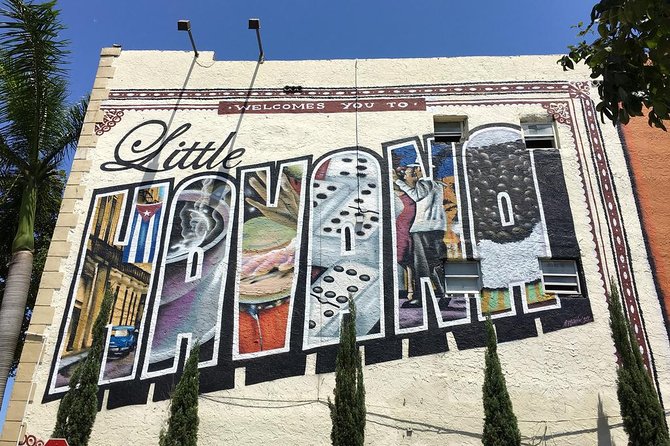
The total walk is less than a mile, with most major stops close together. That makes this a good choice if you want a food tour but do not want a long city hike. Comfortable shoes are still important because you will be standing at tasting stops and walking on city sidewalks.
The listed duration is about two hours and 30 minutes, but the route can take longer. Guides may wait while a group finishes a tasting, spends time with an artist, or enjoys a particularly good stop. Do not schedule a tight airport transfer or dinner reservation immediately afterward.
The tour operates in all weather conditions. Bring sun protection in hot weather and an umbrella or poncho when rain is forecast. Severe weather can lead to a rescheduled date or full refund, but ordinary wet weather does not necessarily stop the walk.
Street parking near the start usually costs about $2 per hour through a mobile app, with rates subject to change. Public buses stop nearby, and rideshare or taxis are also practical. The tour does not include hotel pickup or drop-off.
Wheelchairs and baby strollers can be accommodated, and most people can take part. Ask the guide when you need a restroom, since facilities are available at many stops.
Is $69 a fair price?
At $69 per person, the value depends on how much of the included food you actually eat and how much context you want. You receive a mojito, seafood tasting, Cuban sandwich, coffee, guava pastry, tropical juice, empanada, and churros, along with the walking tour and cultural stops.
Bought separately, those tastings would add up quickly, especially the sandwich, cocktail, coffee, and multiple desserts. You also avoid guessing which restaurants are worth your time during a short Miami visit.
The price is less attractive if you have strict dietary needs, do not drink, or prefer to choose your own portions. Gluten-free and celiac diets cannot be handled, and the route is built around foods containing bread, pastry, and other wheat-based items.
I see the best value for first-time visitors who want both lunch and orientation. Take it early in your stay and you can return to places you liked, use your guide’s suggestions for other neighborhoods, and avoid spending your first day wandering without context.
Who should book this walk?
This tour suits couples, families with older children, and small groups who like to eat while learning. It also works well for older visitors because the walk is short and the main sights are close together.
It is a particularly good opening activity for a Miami stay. You get a feel for Calle Ocho, learn how the food fits into Cuban-American life, and collect ideas for restaurants, art, shopping, and other parts of the city.
It is less suitable if you want a silent, carefully timed museum visit or a long restaurant meal. You will be moving between stops, sharing food, and listening on the street. Large appetites are welcome, but strict food allergies require serious caution.
Should you book the Little Havana food tour?
Book it if you want Little Havana explained through food, people, and places rather than viewed from a tour bus. The combination of a Cuban sandwich, coffee ritual, mojito, cigar rolling, Domino Park, memorials, and murals gives you a broad first look at the neighborhood.
Danny is a strong choice if his name appears when you select a departure, thanks to his long local connection and easy rapport with people along Calle Ocho. Daniel and Farouk also offer the kind of personal, history-focused guiding this tour needs.
Arrive hungry, wear shoes you can walk in, and leave room in your schedule. At $69, it is a solid buy for a meal-sized tasting route and local orientation, but skip it if you need gluten-free food or want complete control over the menu.
FAQ
How much food is included on the Little Havana tour?
The tastings are intended to equal a full-size lunch or dinner. The menu includes a Cuban sandwich, ropa vieja, seafood salad, empanada, guava and cheese pastry, churros, Cuban coffee, tropical juice, and a mojito, though the exact selection can vary.
How long is the walking route?
The route involves less than a mile of walking because the main sights and restaurants are close together. The scheduled duration is about two hours and 30 minutes, but the tour may take longer.
Where does the tour start and finish?
The meeting point is Tumbao at 1652 SW 8th Street. The tour finishes at Churromania Little Havana at 1417 SW 8th Street, about two blocks from the starting point. You can also continue to Rooster Alley for murals.
Can children and people using wheelchairs join?
Children can participate when accompanied by an adult. The tour can accommodate wheelchairs and baby strollers, and most people can take part.
Can the tour handle vegetarian or gluten-free diets?
A vegetarian option is available if you provide notice before the tour. Dairy-free needs may also be accommodated, but the operator cannot provide gluten-free food or accommodate celiac disease.
What is the cancellation policy?
You can cancel at least 24 hours before the start time for a full refund. Cancellations or changes made within 24 hours are not refunded, while cancellations caused by unsafe weather or an unmet minimum group size may be rescheduled or refunded.
New food tours we have reviewed in the USA
- ChattaBrunch Food Tour★ 5.0 · 87 reviews
- Downtown Chattanooga Food Tour★ 5.0 · 290 reviews
- Historic Southside Food Tour in Chattanooga★ 5.0 · 32 reviews
- Tastes Through Time – Charleston’s Best Food & History Tour★ 4.5 · 95 reviews
- Charleston’s Savor the Flavors of Upper King Street Walking Food Tour★ 4.5 · 130 reviews
- Charleston Private Brunch Tour: Biscuits, Shrimps, Grits and More★ 5.0 · 48 reviews
- Charleston Farm-to-Table Food Tour and Chef’s Challenge★ 5.0 · 110 reviews
- Private Charleston Walking Food Tour at the French Quarter★ 5.0 · 201 reviews
Miami Food Tours, compared.
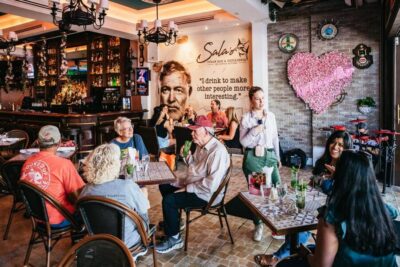
Miami: Little Havana Food Walking Tour with Tastings
Read our review →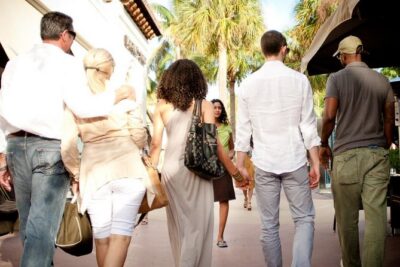
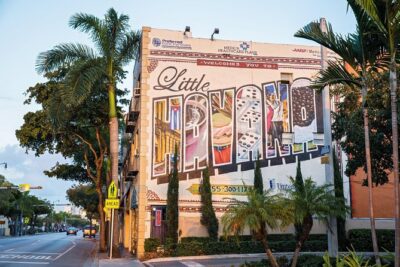
Walking Food Tour of Little Havana with Cuban Dishes Tasting
Read our review →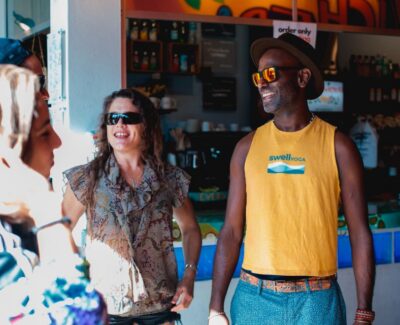
Miami: Little Havana Cuban Food and Culture Walking Tour
Read our review →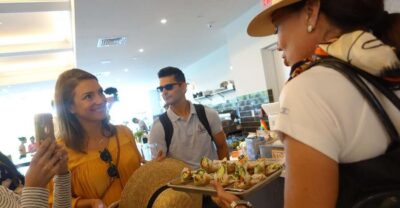

Miami: Intimate Sailing in Biscayne Bay w/ Food and Drinks
Read our review →Browse the lists this tour appears in