
Review · HISTORICAL TOURS
New Orleans Food and History Walking Tour
New Orleans explains itself through food, and this three-hour walk gives you a generous first helping. You move through the French Quarter from gumbo and hot sauce to pralines, po’boys, muffulettas, boudin, red beans and rice, and bread pudding. The guide also explains how French, African, Italian, Spanish, Cajun, and other traditions shaped the dishes on your plate.
I like the five-stop meal and the way each bite comes with a story about Louisiana’s people, geography, or language. I also like the small group limit of 16, plus guides such as Beth, Meg, Dylan, and John, who are praised for humor, clear explanations, and willingness to answer questions. The main caution is food flexibility: this is not suitable for vegan, dairy-free, or gluten-free diners, and the menu can change with availability.
Key points at a glance
- A full progressive lunch: You sample several substantial dishes rather than nibbling through a few tiny tastes.
- Five food stops in the French Quarter: The route links restaurants, a hot sauce shop, and a praline stop.
- Strong guide-led context: Expect explanations of Creole cooking, seafood harvesting, food migration, and names such as étouffée and jambalaya.
- Good for first-time visitors: Morning and afternoon departures let you fit the walk near the start of your New Orleans stay.
- Dietary limits matter: A vegetarian option is available, but vegan, dairy-free, and gluten-free meals are not offered.
- Comfortable shoes are useful: The walking distances are manageable, but the tour moves at a purposeful pace and runs in rain or shine.
Why this tour works as a first taste of New Orleans
At $85 per person, this is not a cheap lunch. It is best judged as a guided meal with several tastings, local food lessons, restaurant access, and a walking introduction to the French Quarter.
The portions are generous enough that you should arrive hungry. Several meals are served in tasting-sized portions, but the complete spread can add up to a full lunch. You may also save money by skipping a separate meal afterward, though drinks beyond water cost extra.
I especially like the mix of familiar classics and less obvious dishes. Gumbo and po’boys are easy to find in New Orleans, but a guide helps explain what separates a dark roux gumbo from other soups, why a muffuletta is tied to the city’s Italian community, and how boudin fits into Cajun cooking.
The experience also gives you useful restaurant leads. One guest returned to a few stops later for cocktails and additional food, while another used the tour to find places to buy edible gifts. That makes the $85 feel more useful if you treat it as both lunch and a short food orientation.
More history tours in the USA:
- Historic Ybor City Food Walking Tour
★ 5.0 · 2,210 reviews - Boston Food & History: Pizza, North End & Freedom Trail
★ 5.0 · 1,772 reviews - Boston’s North End Food Tour: Italian Flavors & Heritage Walk
★ 5.0 · 1,322 reviews
Starting with gumbo at 3rd Block Depot
The meeting point is 3rd Block Depot at 310 Chartres Street. From there, you begin with rustic Cajun gumbo made with chicken, andouille sausage, dark roux, and chicken stock. A spoonful of warm potato salad comes with it, in a country-style serving that may be unfamiliar if you expect potato salad on the side.
This opening dish sets the tone. Your guide can discuss the role of roux, sausage, rice, and regional cooking traditions while you get your first sense of New Orleans seasoning. The gumbo is filling, so pace yourself from the start.
You can buy a drink at the bar here, but beverages are not included. Water is included with the meal plan, while cocktails, beer, soft drinks, and other drinks are your responsibility. That extra cost is easy to overlook when comparing the tour price.
One small practical point: the first stop may take longer than the others. That can be useful if your guide begins the food and city story here, but it may feel slow if you are eager to sample more dishes. The exact serving and timing can vary.
A hot sauce stop with plenty of heat
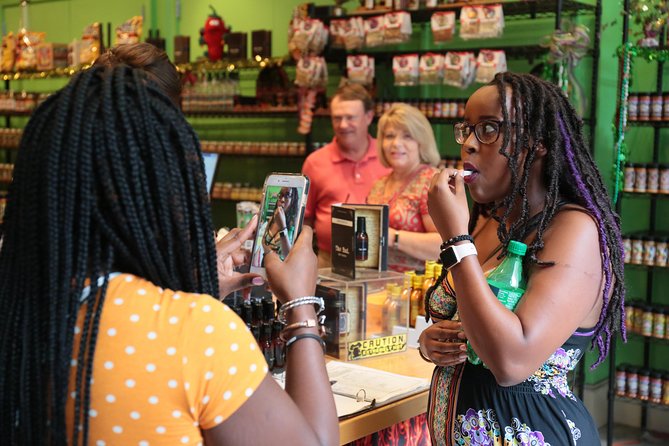
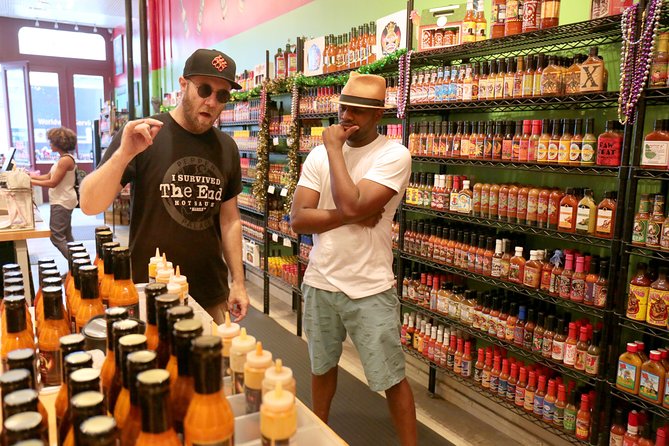
Next comes a hot sauce and seasoning shop. You can try a wide selection of hot sauces, dry rubs, barbecue sauces, marinades, Buffalo wing sauces, and related seasonings.
This is a fun change of pace from a sit-down food stop. You can compare heat levels and flavors, and you may find a bottle or spice blend to take home. The shop also gives your guide a chance to explain how sauces and seasonings shape Southern and Louisiana cooking.
Still, this stop is not food in the same sense as the gumbo or sandwich tastings. If you care most about sampling as many classic dishes as possible, you may wish the time went to another restaurant. One detailed comment made exactly that point and preferred smaller portions of more Louisiana specialties.
I see the hot sauce shop as a useful stop for cooks, spice fans, and gift shoppers. If you have a low tolerance for heat, you can sample cautiously. The tour includes many sauces, but you do not need to prove anything to the bottles.
Pralines, brittle, and a sweet Creole tradition
Leah’s Pralines supplies the first clearly sweet stop. You can sample a traditional praline made with local brown sugar, dairy, and pecans, or try a newer variation such as bacon pecan brittle.
Pralines are more than a sugar fix. They show the meeting of local ingredients, Southern candy-making, and Creole food traditions. The pecans matter here, as does the use of brown sugar and dairy to create the soft, crumbly texture associated with the classic candy.
This is also a handy place to think about souvenirs. Unlike a hot dish, pralines travel well enough to serve as a small food gift, though you should follow the shop’s own packing advice. The stop is brief and easy to fit into a walking route.
If you dislike very sweet food, keep your portion modest. You still have several savory stops ahead, and the praline is only one part of a much larger meal.
More food tours in the USA:
- New Orleans Food Walking Tour of the French Quarter with Small-Group Option
★ 5.0 · 6,118 reviews - Chef Guided Food Tour of Pike Place Market
★ 5.0 · 3,733 reviews - Savannah First Squares Culinary & Cultural Walking Food Tour
★ 5.0 · 3,229 reviews - NYC: Chinatown & Little Italy Food Tour with 7 Flavorful Tastings
★ 5.0 · 2,733 reviews
Catfish po’boy and the story of Louisiana seafood
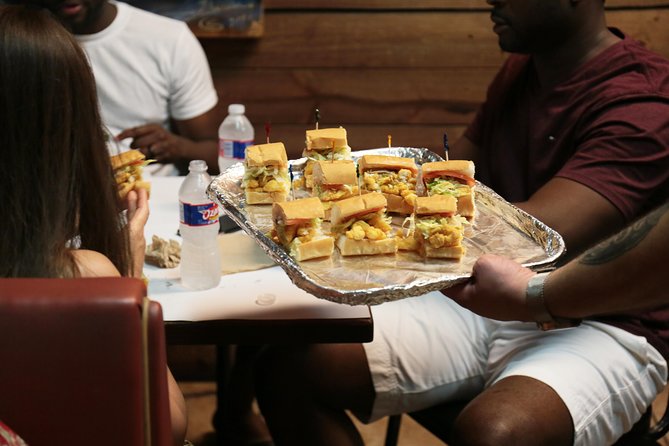
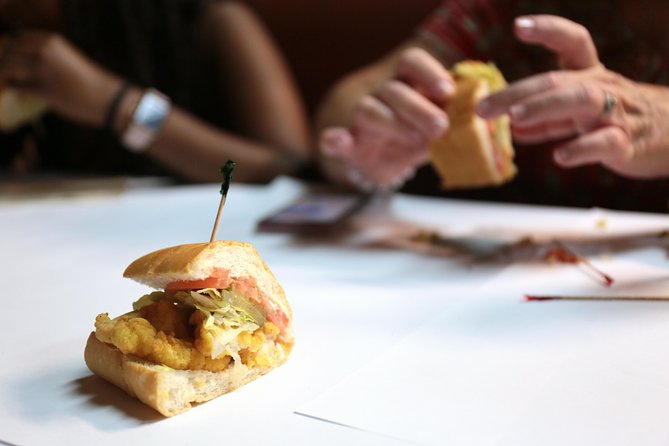
At NOLA Poboys, the main sandwich tasting is a fried catfish po’boy on local French bread. It is dressed with lettuce, tomato, mayonnaise, and pickles, with hot sauce available if you want more fire.
The texture contrast is the point: crisp fried catfish, soft bread, cool toppings, and a sharp bite from pickles or sauce. Your guide also discusses seafood harvesting in Louisiana, which adds useful context to a sandwich that can otherwise seem simple.
This is a filling portion. The local French bread is central to the po’boy, and the dressing helps distinguish the sandwich from a plain fried fish roll. You will learn why the dish became such a practical part of New Orleans food culture while you eat it.
The tour uses catfish for this tasting, but availability can affect the exact serving. Stops and dishes may change, so do not book expecting an unchangeable restaurant menu. If you have a seafood allergy, state food allergies during checkout. Food aversions should not be confused with allergies, and the tour cannot accommodate every preference.
Muffuletta, boudin, and the city’s food connections
The menu also includes a muffuletta, the round Italian-style sandwich served on Sicilian bread. It is layered with smoked ham, mortadella, Genoa salami, provolone, mozzarella, and olive salad.
This sandwich is a clear lesson in New Orleans migration. Italian ingredients and bread meet local preparation and an olive salad with its own strong character. If you have never tried one, this may be the dish that gives the tour its best sense of place.
Boudin brings another part of Louisiana cooking to the table. The boudin ball is a fried mixture of smoked pork, rice, and spices, served with Creole remoulade. It is compact but substantial, and it shows how rice, pork, seasoning, and practical cooking come together in Cajun food.
The tour may also include red beans and rice with smoked ham, andouille sausage, and green onions. This is slow, hearty food, and it helps explain why rice and beans became such important staples in the region. You are not simply collecting famous names. You are tasting the ingredients and cooking methods that made these dishes useful and lasting.
Ending with bread pudding and Bananas Foster flavors
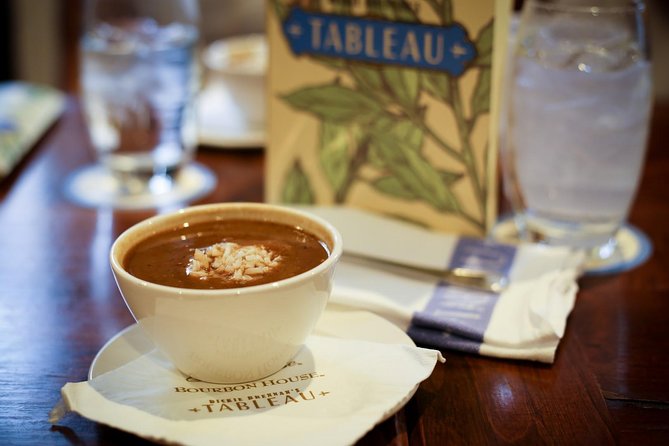
Dessert can include seasonal bread pudding, baked or fried. A fried Bananas Foster bread pudding version has been especially memorable for some diners, while the listed menu also includes traditional praline.
Bread pudding makes a fitting finish because it turns a simple leftover ingredient into a rich dessert. The exact style depends on the stop and the season, so expect the dessert to vary. You may get a baked serving, a fried version, or another seasonal preparation.
By this point, you will probably have eaten enough for a full meal. The tour is not designed as a light grazing walk. If you are a small eater, split portions when practical and let the guide know if you need to pace yourself.
The guide shapes the whole experience
The food matters, but the guide determines how much you take away. Beth is repeatedly praised for being funny, attentive, and able to connect recipes with New Orleans history. Meg is described as warm and engaging, with a strong grasp of the food. Dylan, sometimes referred to as Dr. Gumbo, is praised for placing dishes within the city’s culture and history.
John, Sarah, and Ben have also led tours, and the consistent pattern is clear: guides answer questions and keep the group involved. You might hear about the people who settled New Orleans, the foods they brought, and the way different languages shaped dish names.
The guide may explain the origins or meaning of terms such as étouffée and jambalaya. You also get a better sense of why New Orleans cuisine cannot be reduced to one style. Creole food, Cajun food, seafood cookery, Italian sandwiches, French bread, candy, and Southern staples overlap here without becoming identical.
I would book this early in your visit. You can use the guide’s restaurant suggestions later, return to a favorite stop, and order with more confidence for the rest of your stay.
How much walking and waiting to expect
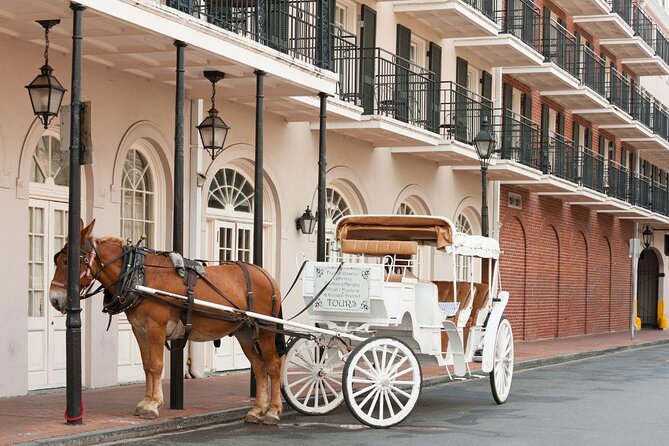
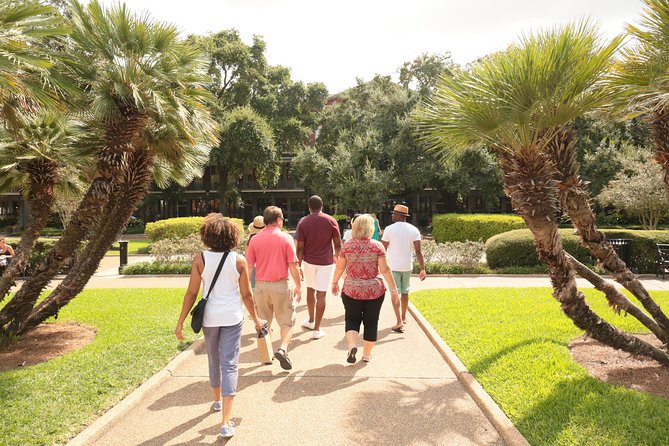
The route stays in the French Quarter and lasts about three hours. Several comments describe the walking as easy or moderate, but you should still wear walking shoes and be ready to move between stops at a steady pace.
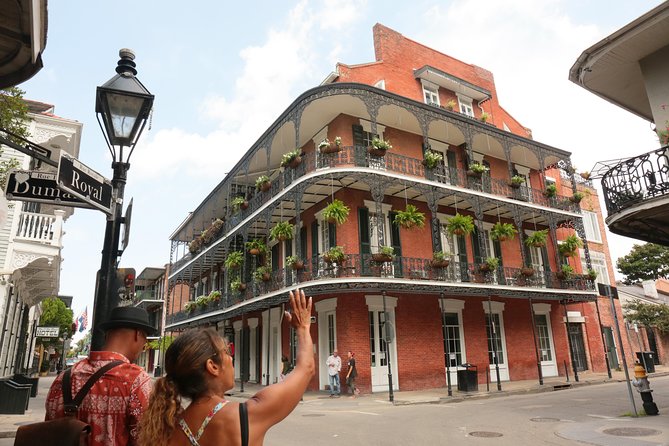
This is not a large sightseeing walk focused on architecture. You will see the French Quarter while moving between food venues, but the main subject is cuisine and the city stories attached to it. If you want a detailed tour of buildings, courtyards, and monuments, pair this with a separate history walk.
The group can have up to 16 people. That is small enough for questions without promising a private tour. Some groups may move faster than others, and the guide must manage restaurant timing, food service, and street crossings.
The tour operates in all weather. Bring suitable clothing and an umbrella or rain jacket if the forecast calls for rain. Poor weather can lead to cancellation, with a different date or a full refund offered.
Dietary needs, mobility, and timing
A vegetarian option is available if requested at checkout. The tour does not offer vegan, dairy-free, or gluten-free options, and the menu contains meat, dairy, bread, and other ingredients across several stops.
You should report food allergies during checkout. The provider asks for allergies rather than simple dislikes, so this is not a good choice if you need broad ingredient control or strict avoidance of cross-contact.
Morning and afternoon departures let you choose between an earlier lunch-style outing and a later start. The exact availability of stops may change, so leave room in your schedule rather than booking a tightly timed show or dinner immediately afterward.
The route is not recommended if you have walking or mobility problems. Service animals are allowed, and the starting point is near public transportation. Confirmation is issued when you book.
Who will enjoy the $85 price most
I think the price works best for first-time visitors, curious eaters, solo diners, couples, and anyone who wants lunch without researching five stops in advance. It also suits people who enjoy asking questions and learning why a dish tastes the way it does.
Families can enjoy it, but young children with narrow food preferences may not get much from the menu. The tour is also a better match for adults who can handle a large meal and a steady walk.
You get the most value if you:
- Arrive hungry and treat the tastings as lunch.
- Try unfamiliar dishes instead of sticking to one safe favorite.
- Ask about recipes, ingredients, and food origins.
- Plan to buy drinks separately.
- Leave free time afterward for a cocktail or a return visit to a favorite stop.
You get less value if you want a tiny tasting menu, a detailed architecture tour, or full control over ingredients. The lack of vegan, dairy-free, and gluten-free choices is a firm limitation.
Should you book this New Orleans food walk?
Book it if you want a filling introduction to New Orleans cooking, enjoy learning while you eat, and can manage a few hours on foot. The combination of gumbo, catfish po’boy, muffuletta, boudin, red beans and rice, pralines, hot sauces, and bread pudding gives you a broad first look at the city’s food traditions.
Skip it if dietary restrictions make the set menu unsafe, if you dislike large portions, or if your main goal is formal French Quarter architecture. For most first visits, I would schedule it near the beginning of your stay. You will leave with a full stomach, a short list of foods to seek again, and a better idea of how New Orleans became one of America’s great eating cities.
FAQ
How long does the New Orleans Food and History Walking Tour last?
The tour lasts approximately three hours.
Where does the tour begin?
It begins at 3rd Block Depot, 310 Chartres Street, New Orleans, Louisiana 70130.
Where does the tour end?
The tour ends at New Orleans Creole Cookery, 508 Toulouse Street, New Orleans, Louisiana 70130.
What foods are included?
Possible tastings include chicken and andouille gumbo, hot sauces and seasonings, pralines, fried catfish po’boys, muffulettas, boudin balls, red beans and rice with andouille sausage, and bread pudding. Stops and dishes can change based on availability.
Is a vegetarian option available?
Yes. A vegetarian option is available if requested at checkout.
Can the tour accommodate vegan, dairy-free, or gluten-free diets?
No. The tour does not offer vegan, dairy-free, or gluten-free options.
Are drinks included?
Water is included. Other beverages are not included and must be purchased separately.
Can I cancel for a refund?
Yes. You can cancel at least 24 hours before the start time for a full refund. Cancellations or changes made less than 24 hours before the start time are not accepted for a refund. If bad weather or an insufficient number of participants cancels the tour, you will be offered another date, another experience, or a full refund.
New food tours we have reviewed in the USA
- ChattaBrunch Food Tour★ 5.0 · 87 reviews
- Downtown Chattanooga Food Tour★ 5.0 · 290 reviews
- Historic Southside Food Tour in Chattanooga★ 5.0 · 32 reviews
- Tastes Through Time – Charleston’s Best Food & History Tour★ 4.5 · 95 reviews
- Charleston’s Savor the Flavors of Upper King Street Walking Food Tour★ 4.5 · 130 reviews
- Charleston Private Brunch Tour: Biscuits, Shrimps, Grits and More★ 5.0 · 48 reviews
- Charleston Farm-to-Table Food Tour and Chef’s Challenge★ 5.0 · 110 reviews
- Private Charleston Walking Food Tour at the French Quarter★ 5.0 · 201 reviews
Historical Tours, compared.
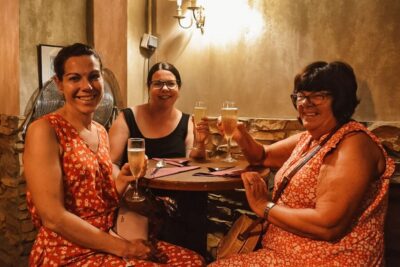
Barcelona: Tapas Walking Tour with Food, Wine, and History
Read our review →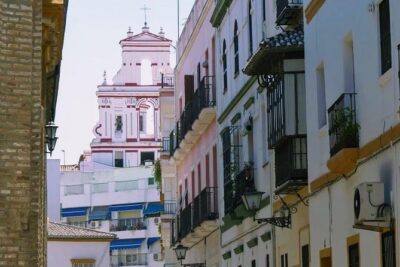
Sevilla Food Tour: Tapas, Wine, History & Traditions
Read our review →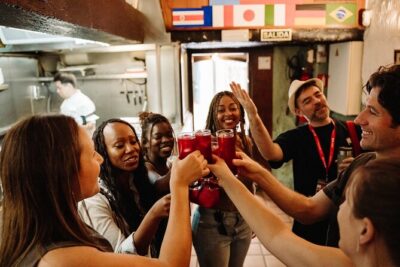
Madrid Tapas & Taverns Small Group Food & History Tour
Read our review →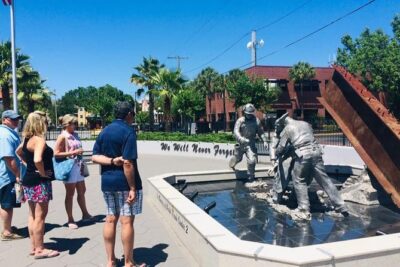
Barcelona Tapas Walking Tour: Food, Wine & History
Read our review →

Boston Food & History: Pizza, North End & Freedom Trail
Read our review →Browse the lists this tour appears in