
Review · STREET FOOD TOURS
Rome Street Food: Delights at Campo dei Fiori & Ghetto Area
Rome’s best food lessons often happen at the counter of a small shop, not at a formal restaurant. This 2.5-hour walk links Campo de’ Fiori and the Jewish Ghetto with five food stops, giving you a useful first taste of Roman cooking while you see old streets, shrines, ruins and market stalls.
I like the generous range of food, from pizza and cured meat to supplì, fried artichoke and gelato. I also like the guides’ personal touch. Francesca, Mattia, Barbara, Ramona and Arianna have each been praised for explaining both the food and the city clearly. The main catch is that this is a standing and walking tour on cobbled streets, and the Jewish Ghetto receives only one main food stop.
Key points at a glance
- Five food stops cover a proper Roman lunch: Expect pizza, cured meats, supplì, fried artichoke and gelato.
- Campo de’ Fiori sets the scene: The walk begins under the statue of Giordano Bruno, near the market and old family-run shops.
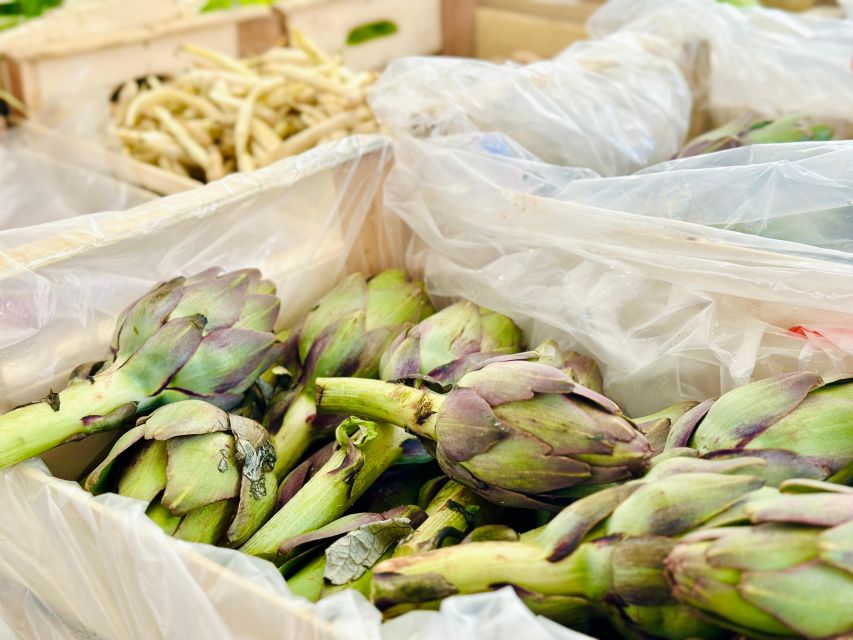
- The Jewish Ghetto adds real local character: You taste the famous fried artichoke while learning about Rome’s Jewish culinary traditions.
- History comes between bites: The route includes Via del Biscione, an old passage with frescoes and a shrine, plus Largo Argentina’s ancient ruins.
- Small drink samples are included: You receive a taste of wine and beer, but full drinks are not part of the price.
- Food restrictions need careful planning: Vegetarian food is possible if requested ahead of time, but vegan, gluten-free and dairy-free options are not available.
Starting beneath Giordano Bruno in Campo de’ Fiori
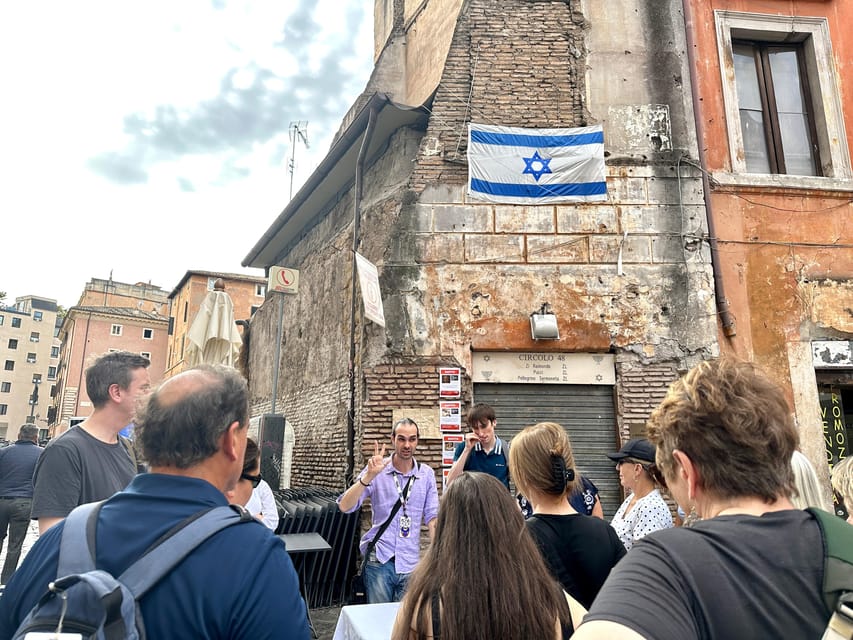
Meet your guide under the statue of Giordano Bruno, in the middle of Campo de’ Fiori. It is an easy landmark to find, but the square can be busy, so arrive with enough time to locate the statue rather than searching at the last minute.
Campo de’ Fiori is a good place to begin because it combines food, daily Roman life and a strong dose of history. In the morning, market stalls fill the square. Depending on the schedule, you may taste olive oil, truffles and balsamic vinegar at the market. You also pass traditional shops that have served local customers for generations.
The afternoon version is different. The market may be gone, and the square can look surprisingly bare after the stalls are cleared away. That is not a problem, but it does mean you should choose the morning departure if the market matters to you.
The first section lasts about 45 minutes and includes sightseeing, walking, food tasting and a small wine sample. You are not simply handed a plate and moved along. The guide uses the food to explain Italian habits, local shopping and the role of family-run businesses in Roman cooking.
More Street Food Tours in Italy
- Rome: Street Food Tour with Local Guide
★ 4.8 · 4,077 reviews - Rome: Trastevere & Campo de Fiori Street Food Walking Tour
★ 4.9 · 2,768 reviews - Rome Street Food Tour with Local Guide
★ 5.0 · 2,361 reviews
Roman pizza and cured meat at old neighborhood shops
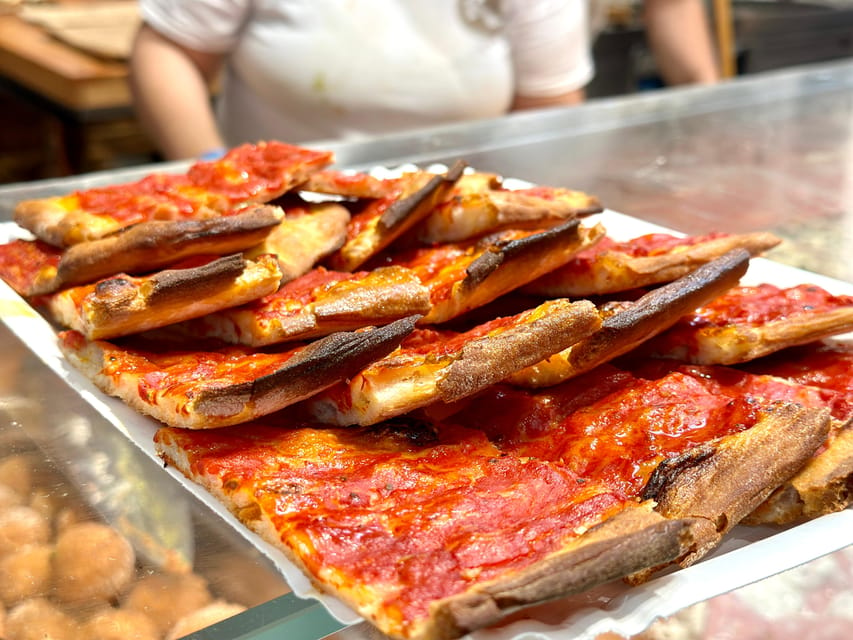
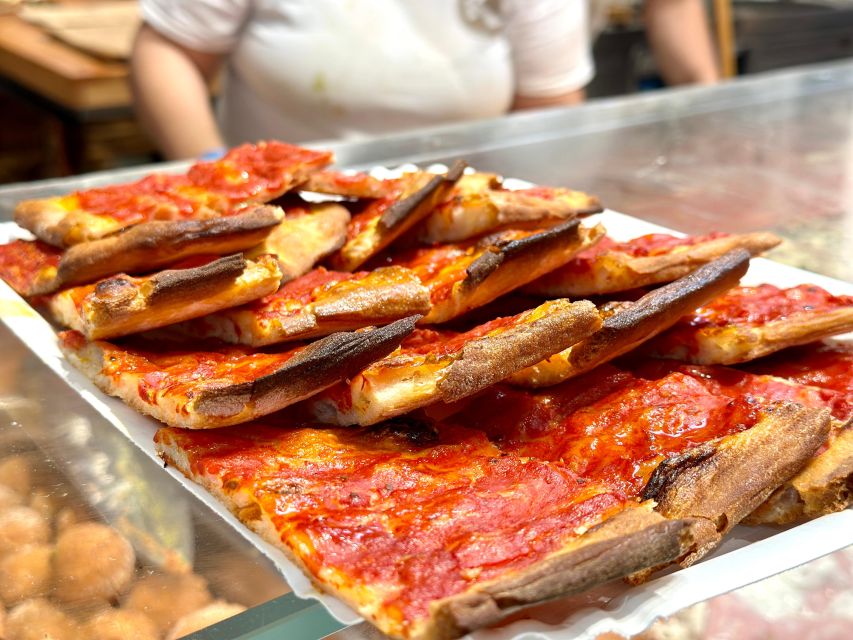
One of the early tastes is freshly baked pizza from an historic bakery. Roman pizza is often served in a casual, practical way, making it ideal for a walking food tour. The point here is not a long restaurant meal. You get a focused sample, learn what you are eating, and keep moving through the center.
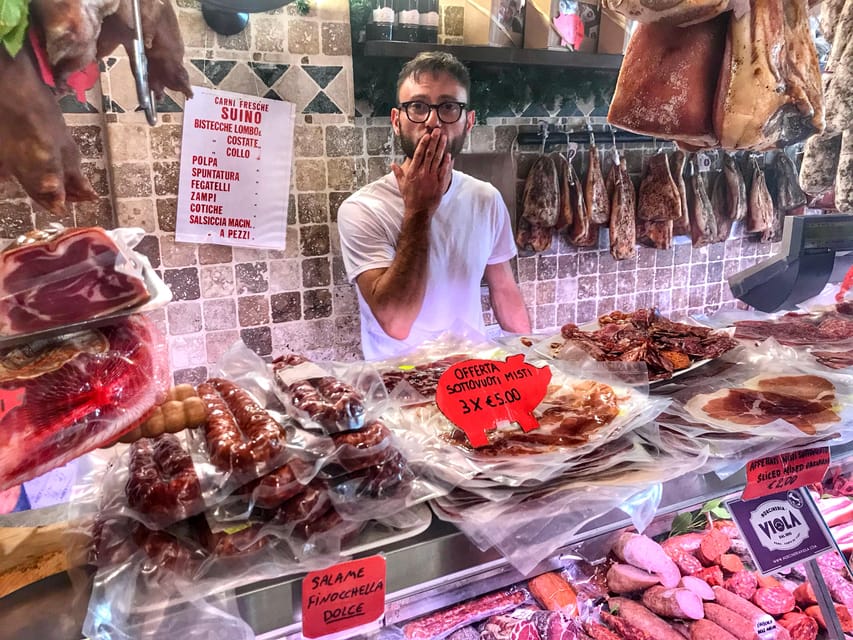
You also try assorted cured meats from a local shop dating to 1890. This stop gives you a useful contrast with the pizza. Roman food is not only pasta and sauce. Salumi, bread, cheese and small savory bites are part of everyday eating, especially when you are picking up food from a neighborhood shop.
The portions have been described as generous, and several people found that the food covered lunch and kept them satisfied until dinner. That matters at $41 per person. You are paying for food, a guide and a history walk, not just a few token samples.
The route then moves toward Via del Biscione. This short ten-minute section is more about atmosphere and close-up details than major monuments. You pass an old passageway with frescoes and a shrine, the sort of small feature that is easy to miss when you hurry between Rome’s headline sights.
Via dei Chiavari and the Roman supplì
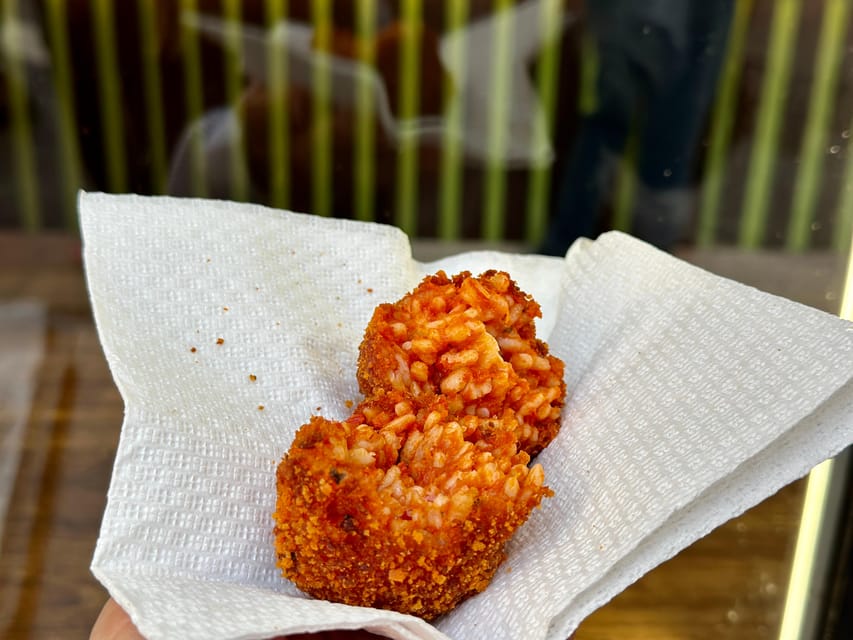
Around Via dei Chiavari, the food focus turns to supplì. This famous Roman snack is a deep-fried rice ball, usually crisp outside and soft inside. It is a simple dish, but it says a lot about Rome’s fondness for filling, portable food.
Supplì is best understood as street food rather than a grand culinary performance. You eat it standing up, often with your hands, and the texture is part of the appeal. The guide explains what makes it Roman and how it fits into local eating habits.
This stop lasts about 30 minutes, which gives the group time to eat and ask questions without feeling rushed. Guides such as Mattia and Francesca have been singled out for explaining the background of each dish rather than merely naming it. That approach makes the tasting more useful, especially if you plan to order Roman food later in your trip.
The route is generally flat, but flat does not mean effortless. You will be on your feet, and the cobblestones can be uneven. Wear shoes with a steady sole and avoid assuming that a short distance means easy walking for every person in your group.
Entering Rome’s Jewish Ghetto for fried artichoke
The Jewish Ghetto is the most distinctive part of the walk. It is one of the oldest Jewish quarters in the western world, and its food traditions have become an important part of Rome’s cooking.
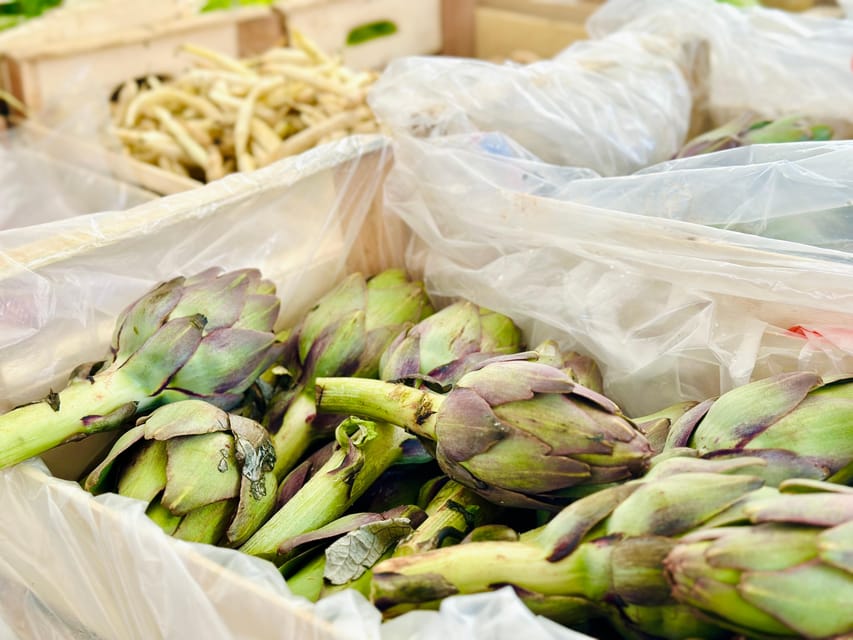
Here you taste the famous fried artichoke, known locally as carciofo alla giudia. The artichoke is prepared so that the leaves become crisp and open, giving it a striking appearance and a satisfying crunch. It is a very different experience from pizza or supplì, and it gives the tour a strong sense of place.
The guide also explains how Jewish Roman cooking developed and why this dish remains so closely linked with the quarter. You do not need to be a food expert to enjoy this stop. The value comes from connecting a familiar ingredient with a particular community and neighborhood.
This is also where I would set expectations carefully. The schedule allows about 45 minutes for the Jewish Ghetto, including sightseeing, walking and tasting, but the main food portion is centered on the artichoke. If you are booking mainly to eat your way through several Jewish Roman specialties, this tour may feel lighter than expected. If you want one signature dish plus neighborhood history, it fits well.
More Street Food Tours in Rome
- Rome: Trastevere Street Food Walking Tour with Local Expert
★ 4.8 · 1,784 reviews - Hidden Rome: Small Group E-Bike Tour with Street Food Stops
★ 4.9 · 144 reviews - Rome: Trastevere and Jewish Ghetto Street Food Walking Tour
★ 4.8 · 142 reviews - Rome: Trastevere & Tiber Island Street Food Tour at Sunset
★ 4.9 · 71 reviews
Largo Argentina and gelato at the finish
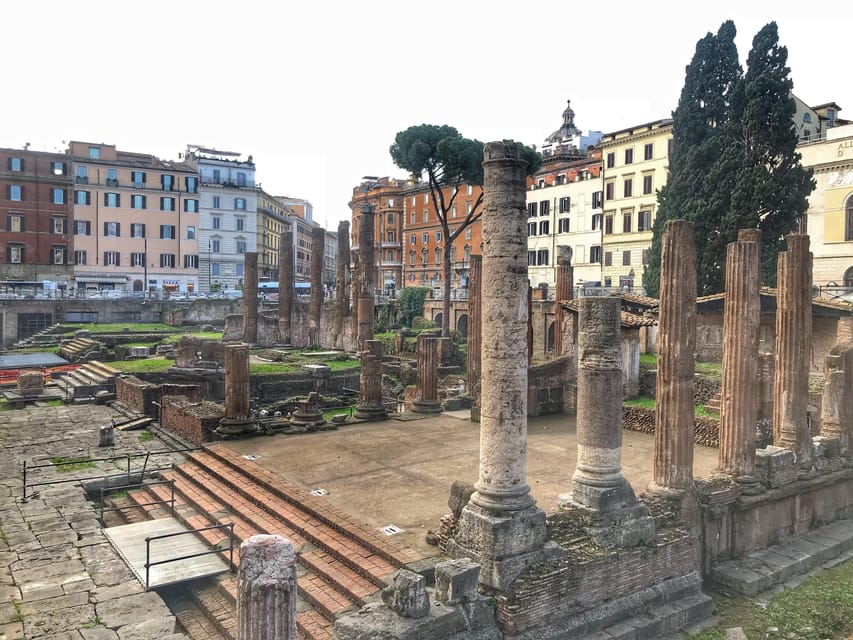
The route ends at Largo di Torre Argentina, also called the Area Sacra di Largo Argentina. Ancient ruins fill this open archaeological site, making it a memorable place to finish a food walk. The setting gives the final stop more weight than a simple dessert counter would.
Your last taste is gelato. After salty pizza, cured meat, fried rice and artichoke, gelato is a natural finish. The final 20 minutes combine dessert, sightseeing and a walk around the ruins.
The stop also helps you finish near a useful central area. The tour does not return to Campo de’ Fiori, so plan the rest of your afternoon from Largo Argentina. The endpoint is close to several central Rome sights, but the supplied details do not promise onward transport or a restaurant reservation.
How much food and drink you really receive
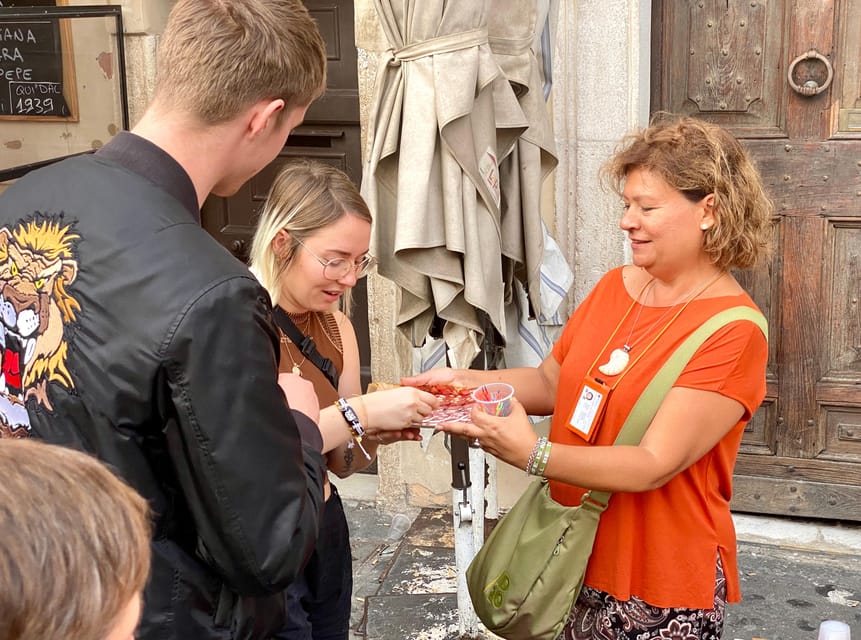
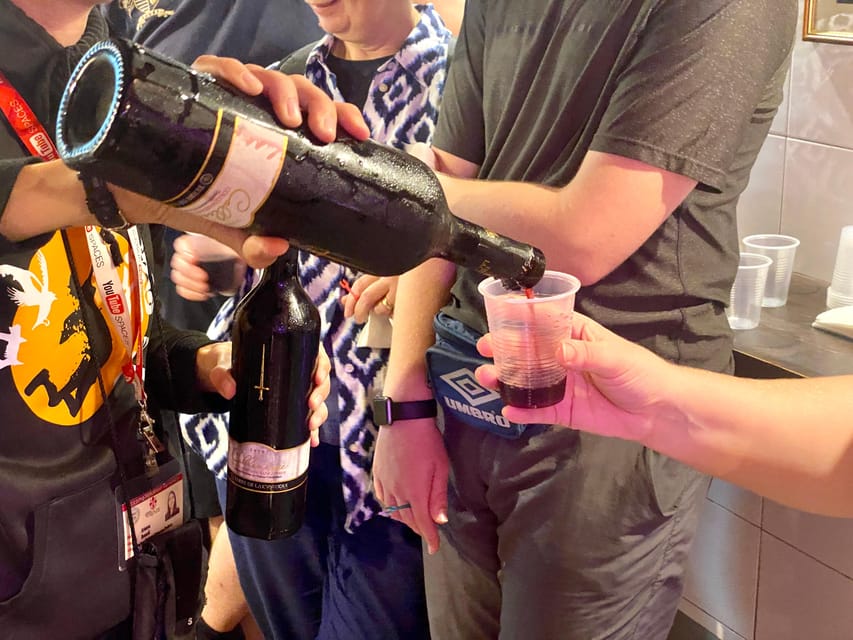
The package includes five food stops, one sample of beer and one sample of wine. Drinks beyond those tastes are not included, so do not think of this as a food and drinks pub crawl.
The food is substantial enough to function as lunch for many people. Pizza, cured meats, supplì, fried artichoke and gelato create a broad tasting menu, and the portions have been praised as generous. Still, appetite varies. You should treat it as a filling series of samples rather than a guaranteed full restaurant meal.
I especially like the variety. You move from bakery food to deli fare, then to a fried Roman classic, a Jewish Roman specialty and a cold dessert. That range helps you understand how broad Roman street food can be without spending half a day inside one restaurant.
Vegetarians can be accommodated only when requested in advance. Vegan, gluten-free and dairy-free options are not available. Anyone with a nut allergy should also understand that cross contamination is possible. If food safety is a major concern, contact the provider before booking rather than hoping the guide can change the menu on the day.
The guides make the history easy to follow
A food walk can fall flat when the guide gives too much background or turns each stop into a lecture. This experience seems to work best when the guide keeps the information tied to what you are eating and seeing.
Francesca has been praised for being friendly, flexible and clear when explaining the food. Mattia received strong praise for connecting the dishes with Roman history. Barbara was noted for her cheerful manner and local insight, while Ramona was described as especially attentive and well informed about the Jewish Ghetto. Arianna has also been praised for keeping the group engaged and seeking shade during hot weather.
Those details matter because the route has several short walking sections. You want a guide who can keep the group together, explain the next stop and answer questions without slowing the whole experience.
The tour is offered in English with a live local guide. Seats are not guaranteed, so expect to eat standing up or while walking between stops. That is normal for street food, but it is worth knowing before you book.
Is $41 a fair price?
At $41, this tour offers solid value if you want both food and orientation. Five tastings, two small drink samples, a guide and sightseeing in four central areas would cost more if you arranged each element separately, though the exact restaurant prices are not given.
The strongest value comes from the combination. A cheaper self-guided snack run could cover pizza and gelato, but you would miss the explanations about supplì, the Jewish artichoke, the old passageway and the neighborhoods. A more expensive food tour might offer a longer sit-down meal, but this one keeps you moving and includes several types of Roman food.
The price is less attractive if you have serious dietary limits, cannot stand for long periods or mainly want an in-depth culinary tour of the Jewish Ghetto. In those cases, much of what you pay for may not suit your needs.
Who should book this Roman food walk?
I would recommend it to first-time visitors who want a quick introduction to Roman food and central Rome. It is also useful early in a visit because the guide’s advice can help you understand what to order in bakeries, markets and casual food shops later.
Families can enjoy it, and one guide was praised for involving both adults and children in questions. Couples and small groups will also find the pace manageable if everyone is comfortable standing and walking on cobbles.
This is a good match for you if:
- You want food samples without committing to a long restaurant meal.
- You like local history explained through everyday dishes.
- You enjoy walking through old neighborhoods rather than only visiting major monuments.
- You eat meat, dairy and gluten.
- You want a filling midday experience at a moderate price.
You should think twice if you use a wheelchair, have limited walking or standing capacity, or need vegan, gluten-free or dairy-free food. Pets are not allowed.
Timing, weather and practical planning
The morning tour is the better choice if you want to see Campo de’ Fiori as a food market and taste olive oil, truffles and balsamic vinegar there. The afternoon option may suit you better if your morning is already filled with sightseeing, but the market experience may not be part of it.
Rome can be hot, and the route is mostly outdoors. One guide adjusted the path toward shade during a hot day, but you should still bring water, wear light clothing and protect yourself from the sun. The tour includes a wine taste and a beer taste, so drink responsibly if you are also planning a long afternoon of sightseeing.
Allow extra time to reach Campo de’ Fiori. The meeting point is precise, under Giordano Bruno’s statue, but arriving late can be stressful in a crowded square. If you need to cancel, free cancellation is available up to 24 hours in advance, and you can reserve now and pay later.
Should you book it?
Book this tour if you want a filling, history-minded introduction to Roman street food rather than a formal dining experience. The mix of pizza, cured meat, supplì, fried artichoke and gelato is broad, the route covers several worthwhile neighborhoods, and the guides have earned praise for warmth and clear storytelling.
Skip it if you need fully adapted food choices, guaranteed seating or an accessible route. Also look elsewhere if your main goal is a long, detailed tasting inside the Jewish Ghetto. For most visitors who can walk comfortably and eat the standard menu, $41 is a sensible price for two and a half hours of food, local context and central Rome.
FAQ
Where does the tour start?
The tour starts under the statue of Giordano Bruno in the middle of Campo de’ Fiori.
Where does the tour finish?
It finishes at Area Sacra di Largo Argentina, also known as Largo di Torre Argentina.
How long does the tour last?
The tour lasts 2.5 hours.
What language is the tour offered in?
The live tour guide speaks English.
How many food stops are included?
Five food stops are included.
What food will I taste?
The tastings include Roman pizza, assorted cured meats, supplì, fried artichoke and gelato. The morning tour may also include olive oil, truffles and balsamic vinegar at the local market.
Are drinks included?
A sample of wine and a sample of beer are included. Other drinks are not included.
Is there a vegetarian option?
A vegetarian option can be provided if you request it in advance.
Are vegan or gluten-free options available?
No. Vegan, gluten-free and dairy-free options are not available.
Is the tour suitable for wheelchair users?
No. The tour is not suitable for wheelchair users or people with limited walking or standing capacity. Seats are not guaranteed during the tour.
Can I cancel for a full refund?
Yes. You can cancel up to 24 hours in advance for a full refund.
New food tours we have reviewed in Rome
- Rome: 3-Hour Guided Food Tour with Tastings★ 4.9 · 41 reviews
- Rome: Vatican Street Food and Wine Tour with Farmers Market★ 5.0 · 37 reviews
- Rome: Vegan Street Food Tour with Local Guide★ 5.0 · 37 reviews
- Rome Trastevere Walking Food Tour★ 4.8 · 97 reviews
- Rome: Trionfale and Prati Food and Wine Tasting Tour★ 4.8 · 115 reviews
- Rome: Trastevere Quarter Street Food Tour with Sightseeing★ 4.9 · 21 reviews
- Rome: Trastevere & Tiber Island Street Food Tour at Sunset★ 4.9 · 71 reviews
- Rome: The Ultimate Trastevere Food Tour with a Local★ 4.9 · 114 reviews
Street Food Tours, compared.
Dubai: Old Town, Creek, Museums, Souks, & Street Food Tour
Read our review →
Ho Chi Minh City Street Food Tour & Sightseeing By Motorbike
Read our review →
Dubai: Old Town, Souks, Street Food, Guided Tour & Abra Ride
Read our review →
Naples: Street Food Walking Tour with Local Guide
Read our review →
Small Group Hanoi Street Food Tour with a Real Foodie
Read our review →

Saigon By Night and Street Food By Motorbike | Opt: Ao Dai Riders
Read our review →
Private Street Food Tour by Motorbike/Car with Local Students
Read our review →Browse the lists this tour appears in