
Review · FOOD WALKING TOURS
Local Life, Culture & Food Walking Tour at Chinatown
Bangkok’s Chinatown is best understood on foot, one incense-filled shrine, old wooden house, and steaming food stall at a time. This tour takes you from Odeon Circle through markets and narrow lanes to Talad Noi, with a local guide explaining how Chinese families shaped this part of the city.
I like the small group format, which gives you time to ask real questions and may turn the walk into a private tour if bookings are light. I also like the mix of food and local life: crispy pork belly, dumplings, herbal tea, and possibly other tastings help connect the history to the street in front of you. The main drawback is the walking itself. Heat, rain, uneven lanes, and crowded market areas can make this tiring, and the tour is not suitable for wheelchair users.
Key points at a glance
- Start at MRT Wat Mangkon: Meet at Exit 1 near the Plaeng Nam intersection, a handy rail connection for Chinatown.
- Walk beyond the main roads: Explore alleys, shrines, community spaces, old shophouses, and local markets.
- Taste Thai-Chinese food: Expect samples such as crispy pork belly, handmade dumplings, and herbal teas.
- Guides who adapt: JoJo, Kaew, Kae, and Sunee are praised for answering questions and adjusting the walk to personal interests.
- Talad Noi adds context: See one of Bangkok’s oldest Chinese-Thai communities and hear how early settlers lived beside the Chao Phraya River.
- Plan for the weather: Bring comfortable shoes, an umbrella or raincoat, and no large luggage.
Why Chinatown works best as a walking tour
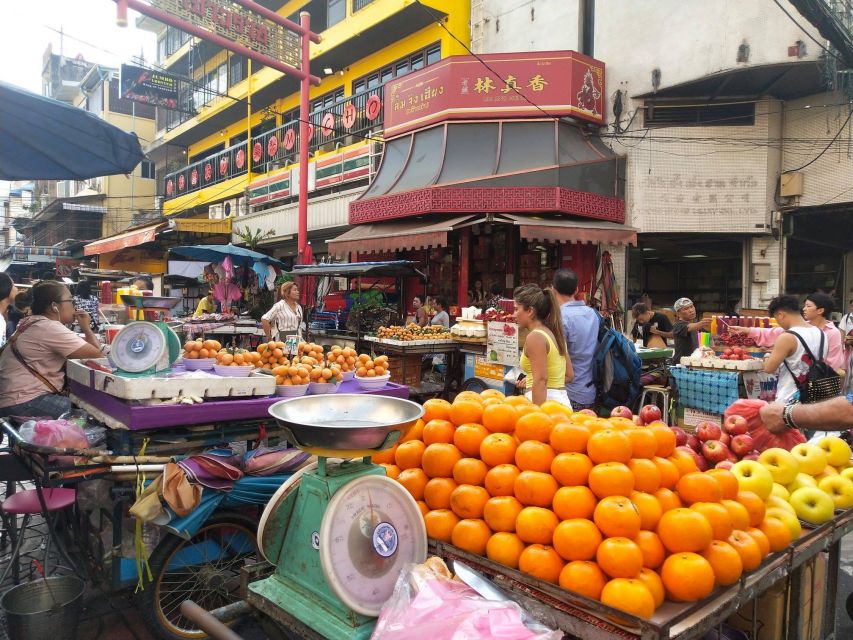
Bangkok’s Chinatown can look like a wall of signs, traffic, wires, food carts, and shopfronts when you first arrive. That first impression is part of its charm, but it does not explain much. A guide helps you notice the smaller details: the shrine tucked beside a shop, the shape of an old shophouse, or the way a narrow lane still serves as a neighborhood thoroughfare.
This is not a tour built around one famous sight. It is a moving lesson in how a district functions. You pass from markets to temples, from commercial streets to residential alleys, and from Chinese traditions to Thai customs that have developed side by side for generations.
I would choose this experience early in a Bangkok stay. It can give you a useful map of Chinatown before you return on your own for dinner or shopping. The small group setup also suits anyone who prefers conversation over a guide speaking to a large crowd.
More Chinatown food tours in Bangkok:
- Bangkok Authentic Tasting Thai-Chinatown Walking Food Tour
★ 4.9 · 852 reviews - Bangkok: Tuk Tuk Adventure Chinatown Michelin Food & Temples
★ 4.3 · 725 reviews - Bangkok Tuk-Tuk Tour by Night with Chinatown Street Food Meal
★ 5.0 · 635 reviews
Starting at Odeon Circle and MRT Wat Mangkon
The meeting point is MRT Wat Mangkon Station, Exit 1, near the Plaeng Nam intersection at 3 Plaeng Nam Road. Arrive 10 minutes early. The location is practical because the MRT avoids a slow taxi ride through Bangkok traffic, but you still need to pay attention to the exact meeting instructions.
The walk begins near Odeon Circle, the grand gateway to Chinatown. This is a good place for the opening story because it connects the district’s present-day energy with the arrival and settlement of Chinese communities in Bangkok. Your guide explains how Chinese immigrants helped shape local trade, neighborhoods, customs, and family businesses.
You may meet JoJo, Kaew, Kae, or Sunee, depending on the departure. The guides are praised for making the material easy to follow, answering basic questions without impatience, and adding personal observations. That matters here. Chinatown’s story includes names, dates, beliefs, and social customs, but the best explanations connect those facts to what you are seeing right now.
Markets, back lanes, and the everyday city
The route moves through markets selling items that go far beyond souvenirs. You might see herbal remedies, household goods, colorful trinkets, and food being prepared for local customers. These markets can be crowded and warm, but they offer a better sense of daily life than a polished shopping center.
I especially like the promise of time in the back lanes. The main streets are easy to find on your own. The narrow passages are less obvious, and they reveal how Chinatown operates behind its busy front. You may see older wooden homes, small workshops, family spaces, and lanes where residents carry on ordinary business away from the main traffic.
One particularly useful part of the walk is the chance to ask about living conditions and changing neighborhoods. A guide can explain why some old houses remain, how businesses pass through families, and how modern Bangkok presses against older buildings. The experience is not just about photographing faded doors. It is about seeing a community that is still lived in.
The paths are not designed for effortless strolling. Expect narrow sections, uneven surfaces, market crowds, and occasional stops in busy places. Keep your belongings close and wear shoes with good grip. Leave suitcases and large bags behind, since luggage is not allowed.
Temples and shrines with a local explanation
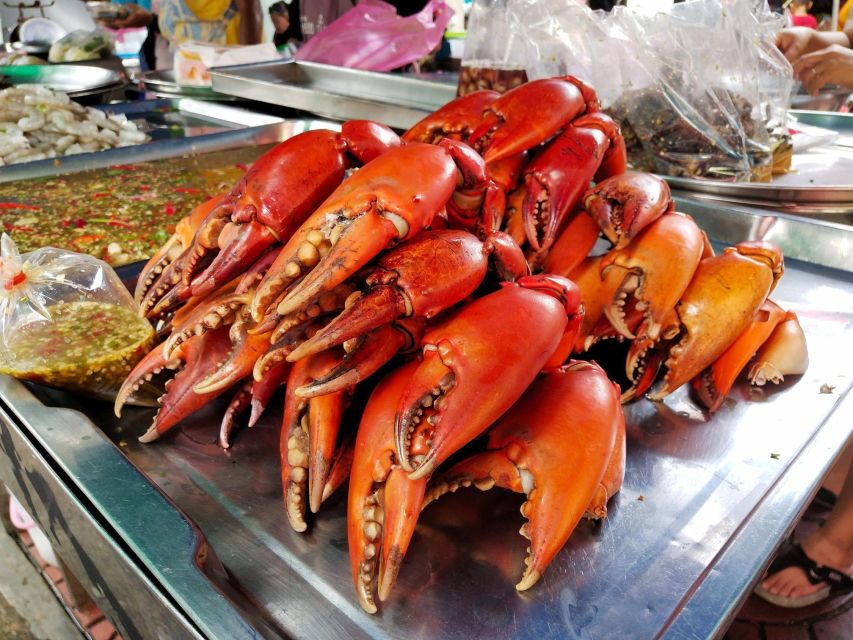
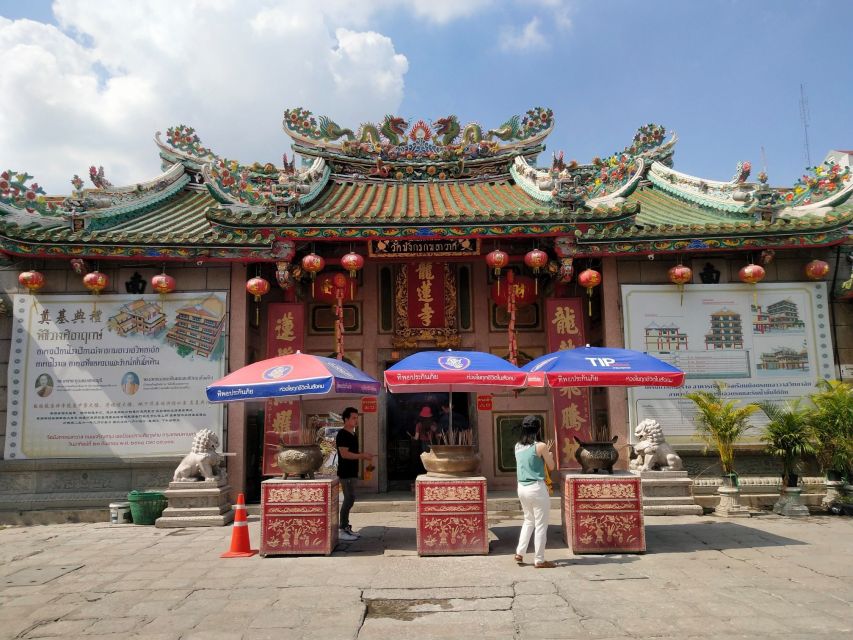
Chinatown’s temples and shrines are easy to visit quickly, take a photo, and leave. A guide adds the part you would otherwise miss: what people are doing, why incense is offered, how blessings are sought, and how Chinese religious traditions have continued across generations in Thailand.
The tour includes historic temples and shrines, with gold decoration, incense, and spaces where local people come to pay their respects. The value is not simply architectural. These places show how belief fits into the rhythm of neighborhood life.
Your guide can also explain the differences between sites and why each one matters to the community. That turns a series of attractive buildings into a clearer picture of Chinese-Thai customs. Dress casually but respectfully, and follow the guide’s instructions inside religious spaces.
The tour is also a good match for curious solo visitors. One person described receiving a private-style experience because they were the only booking, with plenty of time to ask questions. Small numbers are not guaranteed, but the advertised format is designed to keep the group personal.
More Food Walking Tours in Bangkok:
- Bangkok Private Walking Food Tour with 10+ Tastings in Chinatown
★ 5.0 · 67 reviews - Bangkok: Street Art and Street Food Walking Tour
★ 4.1 · 58 reviews - Reykjavik Food Walk – Local Foodie Adventure in Iceland
★ 5.0 · 18,952 reviews - New Orleans Food Walking Tour of the French Quarter with Small-Group Option
★ 5.0 · 6,118 reviews
Food that explains the neighborhood
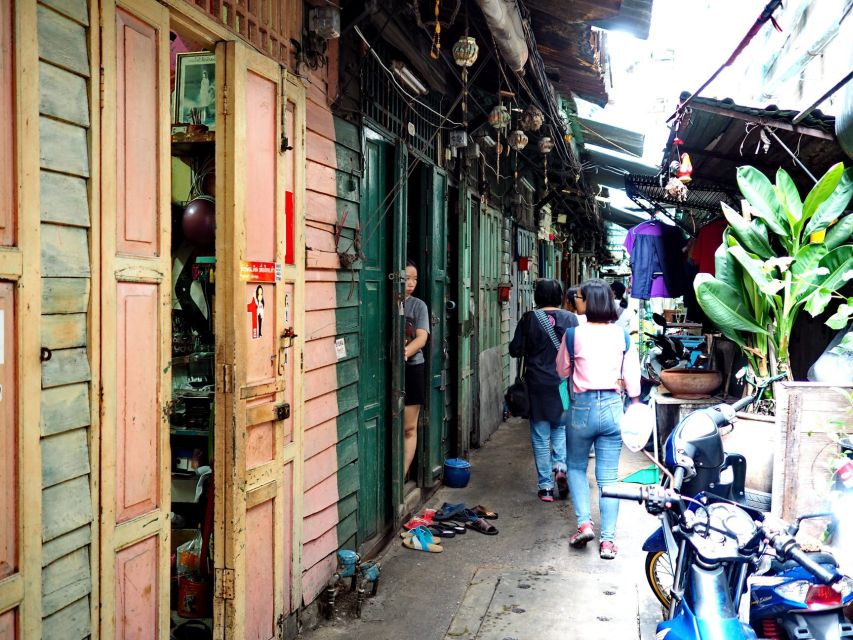
The tastings are one of the strongest reasons to book. Food gives you an immediate way into Chinatown’s mixed identity. Thai flavors, Chinese techniques, old family recipes, and local ingredients meet at street stalls and small food shops.
Planned examples include crispy pork belly, handmade dumplings, and herbal teas. These are not presented as a formal restaurant meal. Think of them as small tastes along the walk, with your guide explaining what you are eating and how it fits the neighborhood.
The food component can also make the tour more social. You can compare flavors, ask how dishes are prepared, and see how locals order and eat. Some guides have gone beyond the basic plan when guests showed interest. Past outings included making papaya salad, trying different kinds of durian, and stopping at a coffee shop to discuss cultural differences. These extras should be treated as guide-dependent possibilities, not guaranteed inclusions.
Tell the operator about allergies or dietary restrictions in advance. The standard information does not promise a vegetarian, vegan, halal, gluten-free, or allergy-free menu. If food is a major reason for booking, ask what tastings are planned for your date.
You should also budget for any extra snacks or drinks. Additional food, drinks, shopping, and souvenirs are not included in the $75 price.
Old shophouses and the details above the storefront
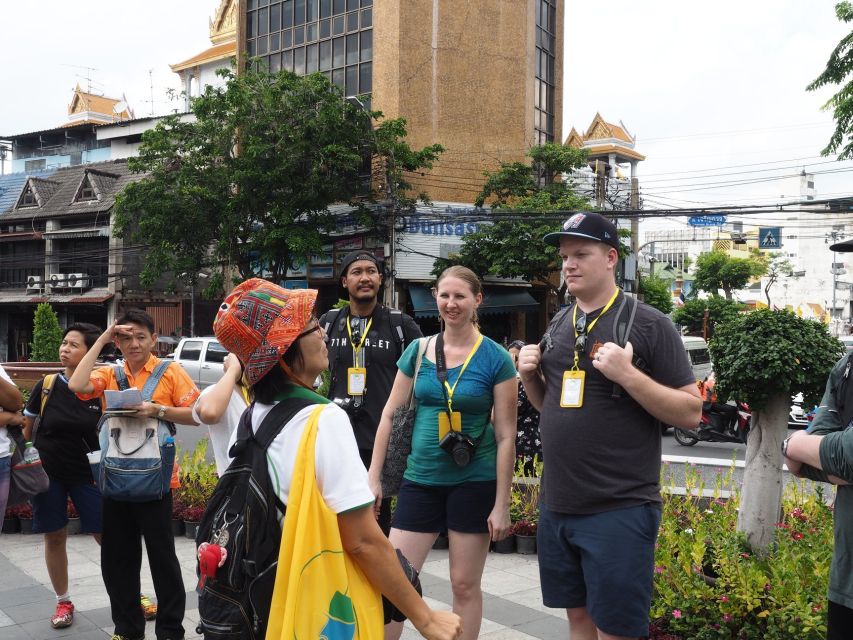
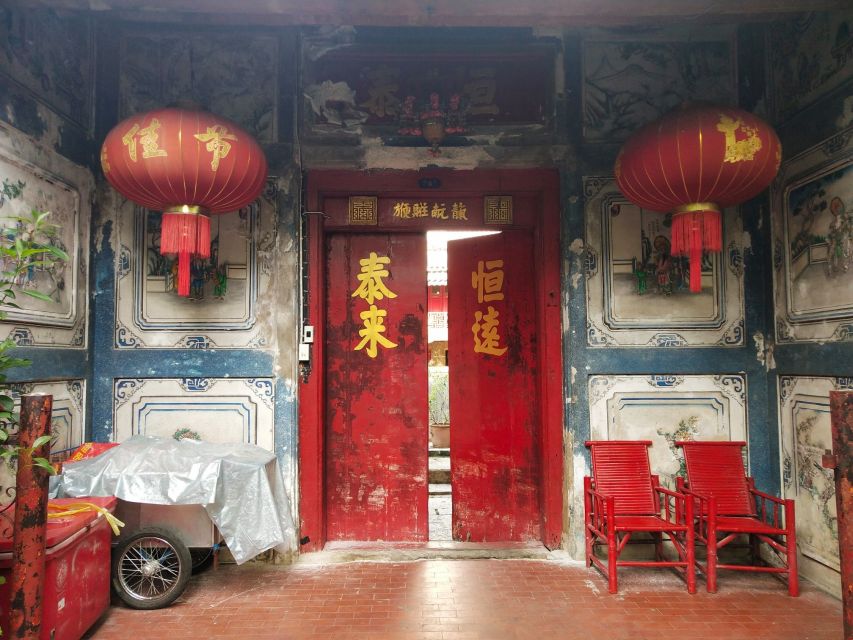
Chinatown’s old shophouses deserve more than a quick look from a passing taxi. Their narrow fronts and deep interiors reflect a practical urban design built around family life and commerce. The route pauses to examine old architecture and the stories connected with it.
Some buildings may look worn, but that wear is part of the information. It shows how the neighborhood has changed without losing every trace of its earlier character. Your guide can point out details you might otherwise walk past, then connect them to the families and trades that helped form the district.
This is where the walk feels most useful to me. A building becomes easier to remember when you hear why it was built, who used it, or how it fits into the lane. You are not only collecting photographs. You are learning how to read Chinatown after the tour ends.
Talad Noi and the Chao Phraya connection
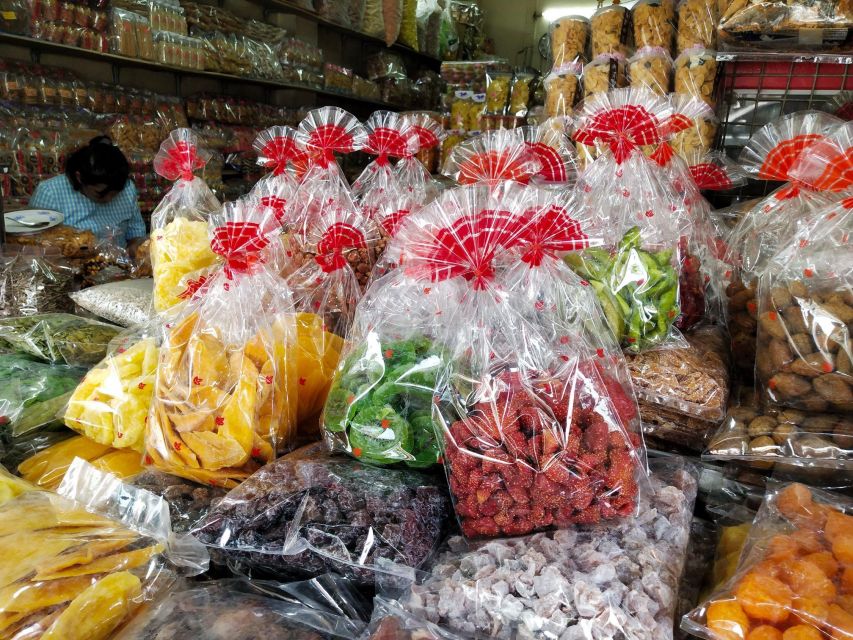
The walk continues into Talad Noi, described as Bangkok’s oldest Chinese-Thai community. This area gives the tour a wider frame. Chinatown is not only a market district. It grew from early Chinese settlement along the Chao Phraya River, where trade, transport, work, and family life shaped the city.
Talad Noi helps explain the district’s long connection to the river. The guide shares stories of the first settlers and the communities they built. You can expect more old lanes, local homes, community spaces, and traces of a neighborhood that has adapted while keeping a strong sense of place.
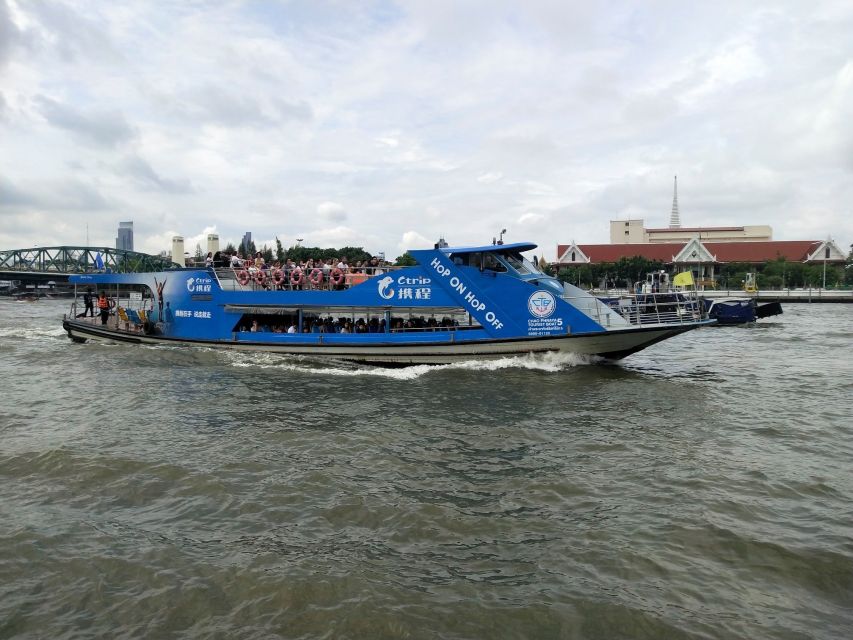
The route may include unusual stops such as small museums, street art, rooftop bars, or a ferry crossing when the guide is tailoring the outing to the group. These details appear in individual tour experiences, so they should not be treated as fixed stops on every departure. The dependable elements are the walking route, cultural explanations, temples and shrines, markets, food tastings, and Chinatown backstreets.
How much value do you get for $75?
At $75 per person, this is not the cheapest way to walk around Chinatown. You can enter some temples on your own, wander through the markets without a ticket, and buy street food for much less.
The price makes more sense if you value interpretation and careful route planning. You are paying for a local guide, access to places you might not think to seek out, cultural context, and the chance to shape the conversation. A small group also means you can ask about food, religion, architecture, shopping, or family life without waiting for a large crowd to move along.
The value is strongest for first-time visitors, solo travelers, and people who want more than a list of photo stops. It is weaker for independent walkers who already know Chinatown well or mainly want a cheap food crawl. Extra purchases are separate, so bring some spending money if you want snacks or gifts.
Weather, walking, and practical planning
The tour runs in rain or shine. Bangkok’s heat can make a walking tour feel longer than expected, and rain can turn narrow lanes into slippery routes. Wear comfortable walking shoes and casual clothing. Carry an umbrella or raincoat during wet weather.
Do not bring luggage or a large bag. A small day bag is more practical, with room for water, a phone, and personal items. The activity ends back at the meeting point, so you can use the MRT afterward or continue exploring Chinatown.
The tour is offered in English and German. It is not suitable for wheelchair users, and the combination of backstreets, markets, uneven ground, and crowded lanes may also be difficult for anyone with limited mobility.
Cancellation is allowed up to 24 hours before the tour for a full refund. You can also reserve and pay later, which helps if your Bangkok plans are still moving around.
Who should book the Chinatown walk?
I would recommend this tour if you want a human introduction to Chinatown rather than a self-guided checklist. It suits people who enjoy walking, trying unfamiliar food, asking questions, and noticing how a neighborhood works behind its main road.
It is particularly useful for solo visitors. A small group can make it easier to speak with the guide, and a light booking may result in a private-style outing. Guides such as JoJo, Kaew, Kae, and Sunee have been praised for adjusting the route, explaining customs clearly, and making guests feel cared for.
Families with older children may also enjoy it if everyone can handle the walking and food stops. It is less suitable for anyone seeking a short, polished sightseeing circuit, a guaranteed restaurant meal, or an accessible route.
Should you book it?
Book this experience if you want Chinatown explained from the inside: its shrines, old homes, markets, food stalls, and Chinese-Thai communities. The $75 cost is fair when the guide is active in shaping the walk and you take advantage of the questions, tastings, and local context.
Skip it if you prefer to wander alone, dislike crowded streets, or want to control every stop. For everyone else, this is a strong first look at Bangkok’s Chinatown, especially when you arrive ready to walk slowly, eat carefully, and let the neighborhood set the pace.
FAQ
Where does the Chinatown walking tour begin?
It begins at MRT Wat Mangkon Station Exit 1, near the Plaeng Nam intersection at 3 Plaeng Nam Road, Samphanthawong, Bangkok.
Where does the tour finish?
The activity ends back at the meeting point.
What food is included?
Food tastings can include Thai-Chinese street food such as crispy pork belly, handmade dumplings, and herbal teas. Additional food and drinks are not included.
Can I join if I have food allergies?
You should tell the operator about dietary restrictions or allergies in advance. The provided information does not guarantee a specific allergy-free menu.
What languages are available?
The tour is available in English and German.
Is the tour suitable for wheelchair users?
No. The tour is not suitable for wheelchair users.
What should I bring?
Bring comfortable walking shoes and casual clothing. An umbrella or raincoat is useful because the tour runs in rain or shine.
Can I cancel for a refund?
Yes. You can cancel up to 24 hours in advance for a full refund.
New food tours we have reviewed in Bangkok
- Bangkok 3-in-1 Tour: Longtail Boat,TukTuk & Street Food Adventure★ 5.0 · 73 reviews
- 4-Hour Hidden Bangkok TukTuk Street Food Guided Tour★ 5.0 · 23 reviews
- Private Tuktuk Authentic Food Tour (Chinatown-Flower Market)★ 5.0 · 75 reviews
- Train & Floating Market Food Adventure + Scenic train ride★ 5.0 · 102 reviews
- Bangkok Tuk Tuk Food Tour By Night★ 5.0 · 198 reviews
- Timeless Thonburi Canal and Food Tour★ 5.0 · 31 reviews
- Authentic Street Food Tour in China Town Bangkok★ 5.0 · 25 reviews
- Night Street Food Tour of Bangkok’s Chinatown★ 5.0 · 173 reviews
Food Walking Tours, compared.
Reykjavik Food Walk – Local Foodie Adventure in Iceland
Read our review →
New Orleans Food Walking Tour of the French Quarter with Small-Group Option
Read our review →
Naples: Street Food Walking Tour with Local Guide
Read our review →

Savannah First Squares Culinary & Cultural Walking Food Tour
Read our review →
Rome: Guided Food Walking Tour with Wine in Trastevere
Read our review →
Rome: Trastevere & Campo de Fiori Street Food Walking Tour
Read our review →Browse the lists this tour appears in