
Review · COFFEE TOURS
Organic Coffee Tour and Local Food Experience in Arusha
The best part of this Arusha outing is that coffee does not arrive as a finished product. You pick the berries, roast the beans, and brew your own cup at a family farm in Ambureni village. The finale comes in a treehouse, with coffee in hand and views toward the natural surroundings of Mount Meru.
I like the mix of practical farm work and homemade food, especially the chance to try dishes cooked in clay pots by local mamas. I also like the small, private setup, which feels more personal than a large commercial excursion. The main catch is transport: pickup is not included in the $45 price, and the supplied information gives both $40 and $50 as possible private transfer fees, so confirm the exact charge before booking.
Key points to know before you go

- Coffee from berry to cup: Pick beans, process dried coffee, roast them, and prepare your own drink.
- A family farm near Mount Meru: The setting includes coffee plants, bananas, jungle-like vegetation, birds, and possible blue monkey sightings.
- Local food cooked the old-fashioned way: Expect homemade snacks and traditional food prepared over firewood or charcoal in clay pots.
- Cosmas may guide your visit: One especially praised guide, Cosmas, was singled out for making the day run smoothly.
- A three-hour afternoon outing: Tours are available daily from 13:00, making this easy to fit around a morning safari or Arusha sightseeing.
- Private, but not automatically transported: Only your group takes part, yet you must arrange your own way to the meeting point unless you pay for transfer.
A coffee lesson that starts in the garden
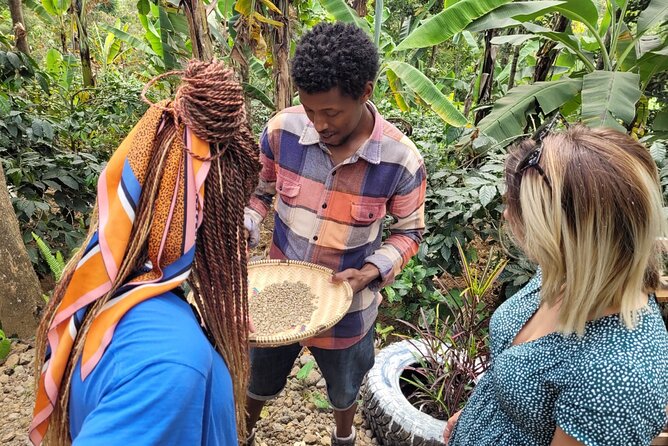
This is not a quick tasting with a few coffee facts added on top. You begin among the coffee plants, where you can handpick coffee berries with the farmers. That simple act gives you a better sense of the work behind every roasted bean.
At the farm, you learn about coffee production in Tanzania and the role coffee plantations play in local life. The available information describes the property as a small family farm with coffee and banana plants, rather than a large plantation built for tourism. That scale is important. You are seeing coffee as part of a household and farming community, not as a polished factory tour.
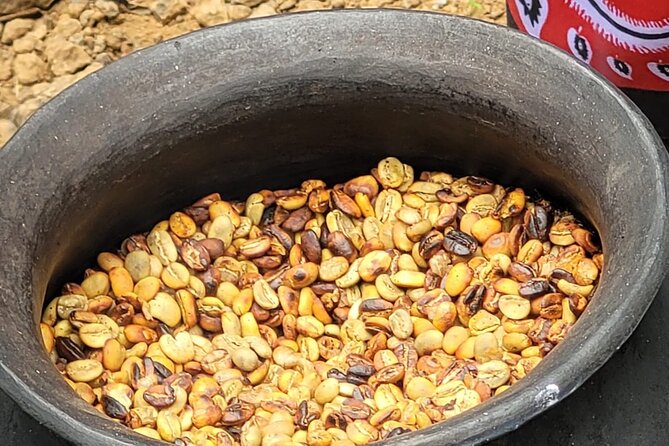
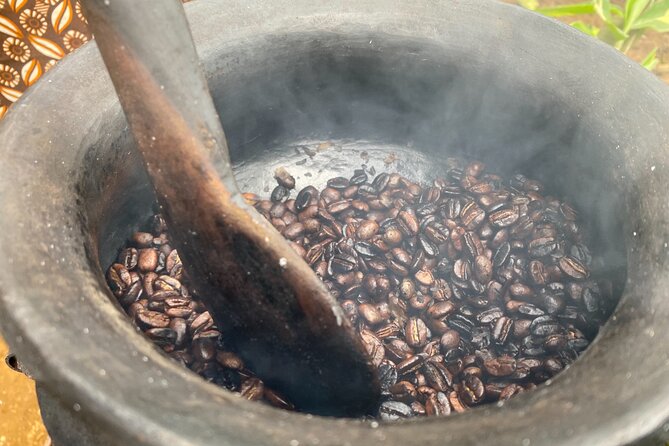
The full process runs from dried coffee beans through roasting and preparation. You should expect a hands-on demonstration, with guidance at each stage rather than a lecture from a distance. If you enjoy food and drink experiences where you can ask questions and take part, this is the heart of the tour.
The pace is likely relaxed. Three hours gives enough time to walk around the farm, handle the coffee, eat, and sit with your finished cup. It is not a rushed stop between major sights.
More Coffee Tours in the world:
- Vienna Coffee, Cake & Pastries Tour with Local Stories
★ 5.0 · 470 reviews - Hanoi: Vietnamese Street Food Tour with Egg Coffee
★ 4.9 · 315 reviews - Coffee and Gastronomic Bike Tour in Antigua
★ 5.0 · 284 reviews
Handpicking beans near Mount Meru
Ambureni village sits near Mount Meru, and the farm setting is one of the reasons to choose this tour. The surroundings are described as serene and jungle-like, with views of African nature. You may also spot blue monkeys and different bird species in their natural habitat, though wildlife sightings are never guaranteed.
The coffee garden itself is not presented as a vast plantation. One useful point to keep in mind is that this is a small garden of coffee trees and bananas. That can be a plus if you want a close look at family farming, but it may disappoint you if you are expecting miles of coffee rows or a major agricultural estate.
I would treat the walk as a cultural and food-based activity rather than a serious wildlife excursion. Bring your attention to the plants, the farming methods, and the people showing you their work. The setting adds quiet and character, but the main event remains the coffee-making lesson.
Firewood cooking and food prepared by local mamas
The second half of the outing shifts from the garden to the cooking area. Local mamas prepare traditional Tanzanian dishes over firewood or charcoal, using clay pots made through pottery. This is a useful detail because the meal is not simply a standard restaurant lunch placed in front of you. The cooking method is part of the experience.
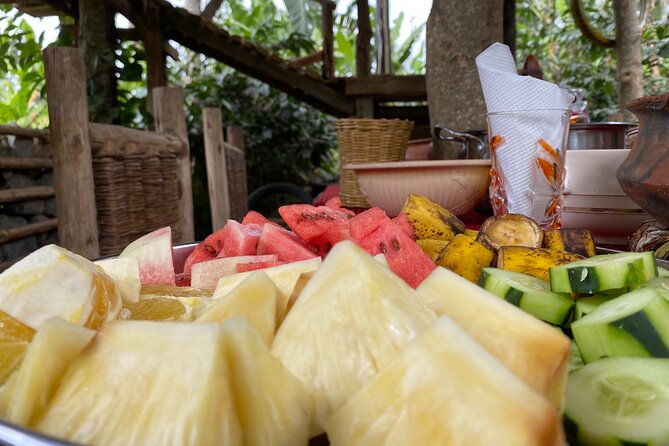
The full booking includes a selection of local foods. You may try several dishes, along with handmade snacks such as peanut brittle, biscuits, and popcorn. The food is described as a large selection rather than one fixed plate, so this suits curious eaters who want to sample instead of ordering a familiar meal.
The homemade snacks also give the visit a gentle start or mid-tour pause. Peanut brittle and biscuits are easy to try, while the traditional dishes offer a better look at everyday Tanzanian cooking. If you have dietary restrictions, ask before booking. The supplied details do not give a menu or confirm options for particular diets.
This food stop is also where the tour feels most tied to local life. Cooking in clay pots over a fire reflects household traditions that you would not learn from a standard city restaurant meal. You are not only tasting the food, you are seeing how it is made.
Your final coffee in the treehouse
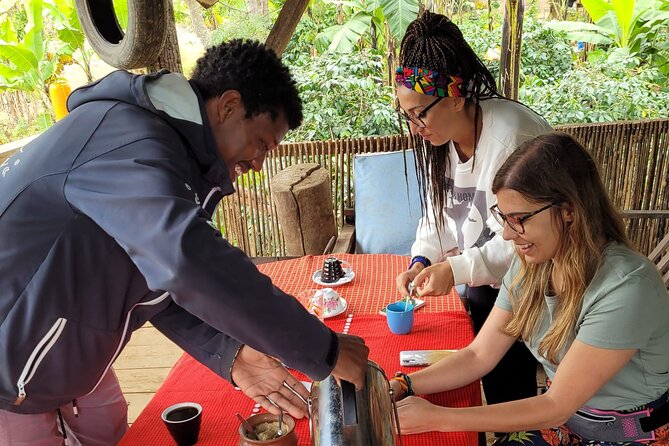
After picking, processing, and roasting, you prepare the coffee yourself. The tour description says the coffee is made from dried beans through to a finished cup, which gives the final drink a clear sense of place. You can taste the result while sitting in a treehouse.
That treehouse setting is a strong finishing touch. It gives you time to slow down after the practical parts of the tour, and it puts the coffee in context: local beans, local work, and a view of the surrounding nature. One especially memorable detail is the combination of the completed coffee and the view from above.
Do not expect a formal coffee-school qualification or a specialist tasting session. This is a cultural farm visit. The goal is to understand the process, meet the people involved, and enjoy a cup you helped create.
More restaurant experiences in the world:
- Bateaux Parisiens Seine River Gourmet Dinner & Sightseeing Cruise
★ 4.5 · 6,930 reviews - Sorrento Farm and Food Experience including Olive Oil, Limoncello, Wine tasting
★ 5.0 · 2,524 reviews - Rome: Gourmet Food Tour with Dinner & Barolo Wine
★ 4.9 · 2,347 reviews - Porto Food & Wine Tasting Tour with Lunch or Dinner Option
★ 5.0 · 2,303 reviews
Why the private format matters
This is a private activity, so only your own group participates. That makes it easier to ask questions, take your time with the coffee process, and discuss the food directly with the guide. It should also suit couples, families, or small groups who prefer a personal visit over joining a large bus.
Cosmas is one guide associated with especially strong praise for his work on the experience. He was noted for doing a great job and helping make the visit exceed expectations. Guide assignments can change, so treat Cosmas as a possibility rather than a guarantee.
The private format does not mean transport is included. The meeting point is JQM2+5J5 in Nkoanrua, Tanzania, and the activity ends back there. Pickup can be arranged, but it costs extra. The tour information lists a recommended private pickup fee of $40 in one place and $50 in another, with the actual amount possibly varying by location. Confirm the current price and pickup area before paying.
Is $45 a fair price?
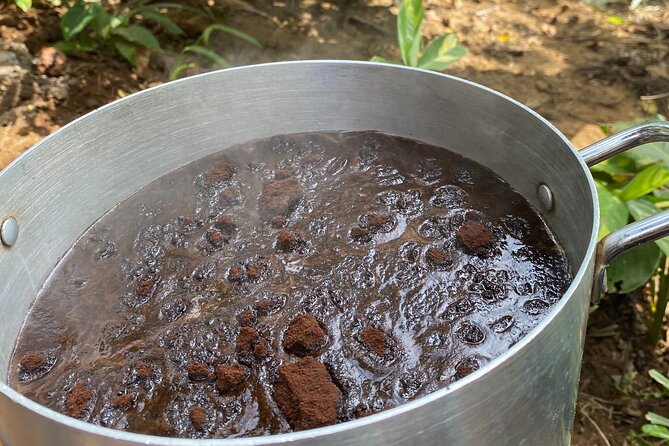
At $45 per person, the tour offers more than a coffee drink and a short farm walk. The price includes coffee and tea, handmade snacks, and lunch when you book the full Organic Coffee Tour and Local Food Experience. You also get the private format, the farm visit, the coffee-making lesson, and the cultural setting.
I see the value in the combination. A coffee-only activity might feel brief, while a food-only visit would miss the farm connection. Here, the two parts support each other. You see where one ingredient comes from, then sit down to eat food prepared by local cooks.
The value changes if you need transport. Adding a private transfer fee can make the total noticeably higher, especially for a solo visitor. Since the supplied details mention both $40 and $50, use the $45 price as the activity cost only, not the complete door-to-door total.
The experience also works best if you care about personal contact and local food. If your priority is a large coffee estate, a formal plantation tour, or a detailed professional tasting, this may feel too modest. The farm is small and family-run, which is precisely its appeal for someone seeking a closer look at local life.
Timing, meeting point, and practical planning
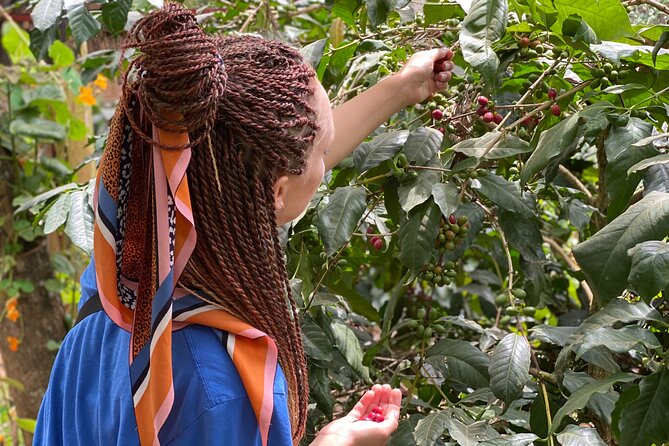
The tour is available any day of the week from 13:00 and lasts about three hours. That makes it a useful afternoon plan. You can schedule it after a morning activity, though you should leave enough time to reach Nkoanrua without rushing.
Pickup is offered only as an additional arrangement. If you are already staying near the meeting point, arranging your own transport may keep the cost down. If you are staying farther away in Arusha, ask for the exact private transfer price before confirming.
The activity ends at the original meeting point. Do not assume you will be dropped at your hotel unless you have arranged and paid for the private transfer.
Bring a phone or camera if you want photos, since the farm, coffee plants, food preparation, and treehouse all provide natural subjects. The tour has a mobile ticket, and confirmation is received at booking. The activity requires good weather. If bad weather causes cancellation, you are offered another date or a full refund.
Who should book this Arusha experience?
I would recommend it to you if you want a quiet, local afternoon built around food, farming, and conversation. It is particularly well suited to anyone curious about how coffee is grown and prepared, rather than someone who only wants to drink it.
Families may like the hands-on format, since picking berries and making a cup gives the visit a clear sense of activity. Couples and small groups should appreciate the private setting. It also suits people who have already seen Arusha’s main sights and want time outside the city.
The tour is less suitable if you have only a short layover, since the meeting point and return arrangements require planning. It may also be a poor fit if you dislike trying unfamiliar food or expect a large plantation with extensive coffee fields.
The activity is described as suitable for most people, and service animals are allowed. Still, the supplied details do not explain walking distances, ground conditions, or specific facilities, so ask the operator if you have mobility concerns.
Should you book it?
Book this tour if you want real participation rather than a staged tasting. The strongest reasons are the bean-to-cup process, the clay-pot cooking, the treehouse coffee stop, and the chance to spend time with a local family near Mount Meru.
Before you commit, settle the transport fee and confirm what food will be served. If you do that, the $45 base price offers a good mix of learning, lunch, scenery, and personal contact in about three hours. For a small group seeking a relaxed taste of Tanzanian farming and hospitality, this is a strong choice.
FAQ
Where does the coffee and food experience take place?
It takes place at a local farm in Ambureni village near Mount Meru, Tanzania. The listed meeting point is JQM2+5J5 in Nkoanrua.
How long does the activity last?
The experience lasts approximately three hours.
What time does the tour start?
Tours are available any day of the week from 13:00.
Is pickup included in the $45 price?
No. Pickup is offered as an additional private transfer service.
How much does private transportation cost?
The supplied information lists $40 in one section and $50 in another for private pickup and drop-off. Confirm the current fee and exact amount for your location before booking.
What happens during the coffee portion?
You learn about Tanzanian coffee production, pick coffee berries, process dried beans, roast them, prepare a cup, and taste the finished coffee.
What food is included?
The full tour includes handmade snacks such as peanut brittle, biscuits, and popcorn, along with traditional Tanzanian dishes cooked over firewood or charcoal in clay pots.
Where does the activity end?
It ends back at the meeting point in Nkoanrua unless you arrange a separate private transfer.
Is this a private activity?
Yes. Only your group participates in the activity.
What happens if bad weather cancels the tour?
If poor weather causes cancellation, you can choose another date or receive a full refund. Free cancellation is available when you cancel at least 24 hours before the start time.
New food tours we have reviewed in the world
- ChattaBrunch Food Tour★ 5.0 · 87 reviews
- Downtown Chattanooga Food Tour★ 5.0 · 290 reviews
- Charlottetown waterfront SOLAR PartyBike food & drink experience!★ 4.0 · 92 reviews
- Historic Southside Food Tour in Chattanooga★ 5.0 · 32 reviews
- Tastes Through Time – Charleston’s Best Food & History Tour★ 4.5 · 95 reviews
- Charleston’s Savor the Flavors of Upper King Street Walking Food Tour★ 4.5 · 130 reviews
- Charlottetown Food Walking Tour★ 5.0 · 59 reviews
- Charleston Private Brunch Tour: Biscuits, Shrimps, Grits and More★ 5.0 · 48 reviews
Coffee Tours, compared.

Vienna Coffee, Cake & Pastries Tour with Local Stories
Read our review →
Hanoi: Vietnamese Street Food Tour with Egg Coffee
Read our review →

Vienna: Guided Foodie Walking Tour with Tastings and Coffee
Read our review →
Rome: Espresso, Gelato and Tiramisù Tasting Tour
Read our review →
Ethiopian Culinary Tour – Market, Food, Coffee Ceremony & more
Read our review →
Discover Hanoi’s Street Food by Night & Mini Class Coffee
Read our review →Browse the lists this tour appears in