Review · TOURS
Cape Town: Essential Food and Drink Tour
Cape Town’s food story makes the most sense on foot, and this four-hour route links the colourful Bo-Kaap with De Waterkant, Greenpoint, and the V&A Waterfront. You’ll taste Cape Malay dishes, African staples, local beer, fynbos ice cream, and Inverroche gin while your guide explains how the city was shaped.
I especially like the range of tastings, from coffee and bobotie to a three-beer pairing and gin. I also like the way guides such as Justin and Olivia connect each dish to Cape Town’s architecture, spice routes, slavery, and apartheid rather than treating the food as a series of unrelated snacks.
The main catch is simple: this is a substantial amount of food packed into roughly two miles of walking. The route is not suited to wheelchairs or people with limited mobility, and you should bring comfortable shoes, sunscreen, and an appetite.
Key points at a glance
- Start in Bo-Kaap: Meet your English-speaking guide inside Bo Kaap Deli, among the area’s colourful buildings and Cape Malay food traditions.
- Taste across several cultures: Expect bobotie, koeksisters, bunny chow, pap, chakalaka, rooibos, and other local flavours.
- Drinks are a major part of the tour: The package includes coffee pairing, bubbles with bobotie, three beers with food, and Inverroche gin.
- Walk between neighbourhoods: The route covers about two miles, divided between tasting stops in Bo-Kaap, De Waterkant, Greenpoint, and the Waterfront.
- Guides add the context: Justin, Olivia, Marianne, and other local guides have been praised for making the food, buildings, and difficult parts of Cape Town’s past easy to understand.
- Good for flexible plans: You can cancel up to 24 hours ahead and reserve now while paying later.
Why this food tour gives you a useful first look at Cape Town
Food is a practical way to understand Cape Town. A plate of bobotie tells you something about Cape Malay cooking. A local beer pairing gives you a taste of the modern city. A walk through Bo-Kaap brings the city’s colonial, religious, and architectural stories into view.
This tour links those pieces instead of keeping them in separate boxes. You begin in one of Cape Town’s most recognisable neighbourhoods, then move through De Waterkant and Greenpoint before finishing around the V&A Waterfront. The route covers different parts of the city, so you get a feel for how old and new Cape Town sit side by side.
I would think of this as a food tour with a strong city orientation, not simply a meal spread across four hours. You will eat and drink well, but you will also spend time walking, listening, looking at buildings, and discussing the forces that shaped the city from the 1600s to today.
The format works particularly well at the start of a Cape Town visit. You get restaurant ideas, local dishes to look for later, and a better sense of where the neighbourhoods fit. It can also work near the end of a stay if you want one final sampling of South African flavours.
More food tours in the world:
- Reykjavik Food Walk – Local Foodie Adventure in Iceland
★ 5.0 · 18,952 reviews - Dubai: Old Town, Creek, Museums, Souks, & Street Food Tour
★ 4.8 · 10,816 reviews - Ho Chi Minh City Street Food Tour & Sightseeing By Motorbike
★ 5.0 · 9,413 reviews
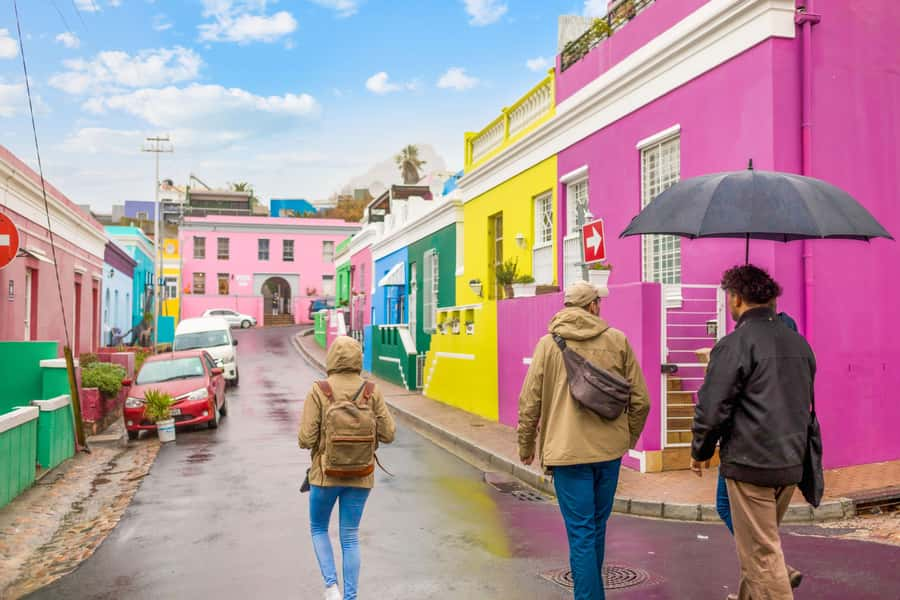
Starting among the painted houses of Bo-Kaap
The tour begins inside Bo Kaap Deli. Look for your guide at the door or inside the deli itself, rather than waiting outside at a street corner. This is an important practical detail, especially if you arrive early and the area is busy.
Bo-Kaap is an excellent place to begin because the food and the setting explain one another. Its brightly painted houses and steep streets are not just a backdrop for photographs. The neighbourhood is closely tied to Cape Town’s Cape Malay community, and its cooking reflects the movement of people, spices, and traditions across the Indian Ocean and beyond.
Your guide uses the first part of the walk to explain how Cape Town developed through international trade, forced migration, slavery, and later political separation. The subject matter is not always comfortable, but it gives the dishes more meaning. The spice in a Cape Malay recipe is connected to much more than a flavour preference.
This is also where a good guide matters most. Justin, who lives in Bo-Kaap, has led several of these walks and is especially useful if you want local recommendations after the tour. Olivia has also been praised for explaining the city, food, and culture in a friendly, clear way. Marianne has led the route with a lively approach and strong knowledge of the area.
Coffee, koeksisters, and the first Cape Malay flavours
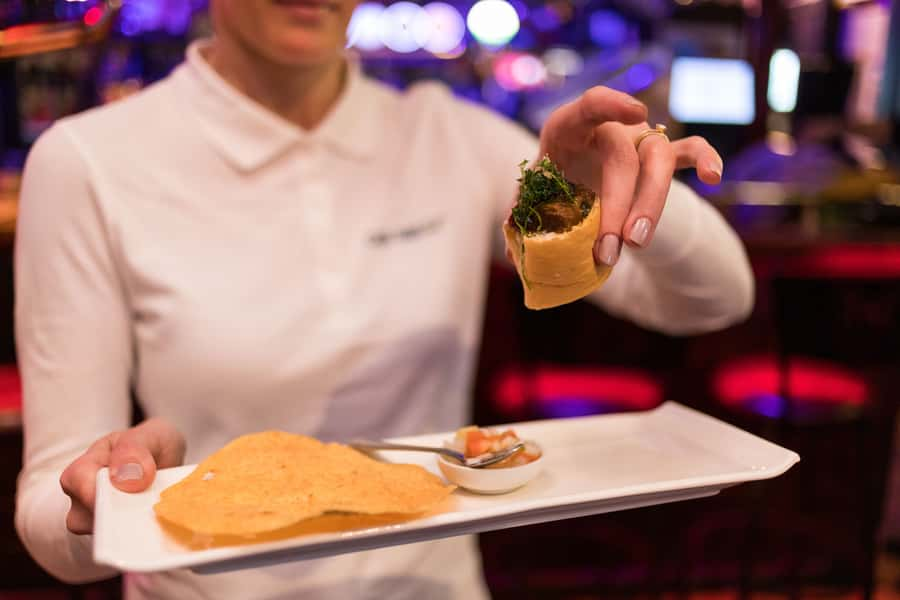
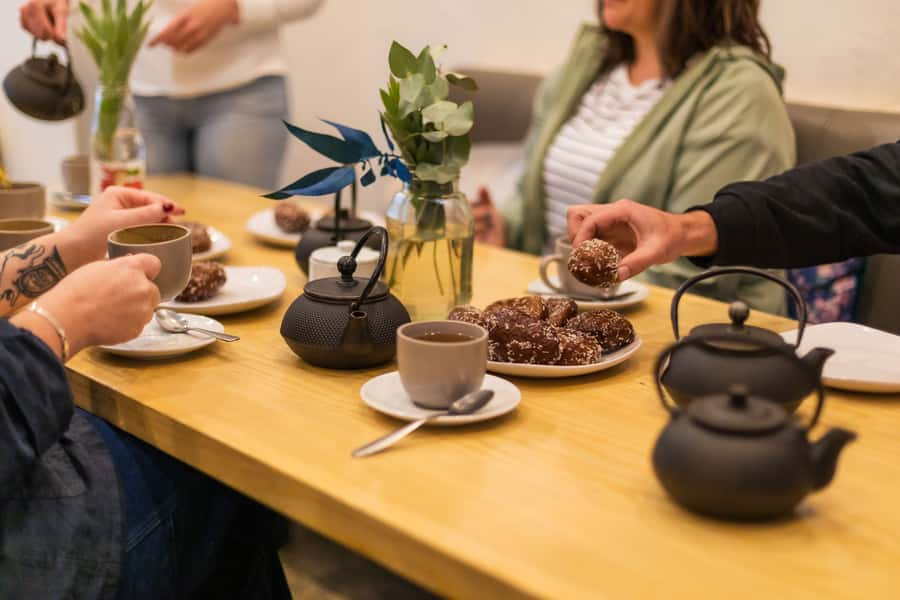
The tasting sequence includes a coffee presentation and pairing, followed by local sweets and savoury food. The exact order can vary, but the early part of the tour sets up the idea that Cape Town’s food is a meeting place for several cultures.
Koeksisters are one of the clearest examples. These sweet, syrupy pastries are familiar across South Africa, but Cape Malay versions have their own spice and texture. They are small, rich, and easy to underestimate. If you are pacing yourself for four hours of eating, take a modest portion at first.
You may also taste or hear about rooibos tea, a South African drink that is naturally caffeine-free. The tour includes both alcoholic and non-alcoholic options, so you do not need to drink alcohol to take part in the full experience.
The coffee presentation adds a little structure to the tasting rather than simply handing you a cup. That pairing approach continues throughout the tour. Food is matched with a drink or with a story, which helps you notice how the flavours work together.
Bobotie and bubbles, with a side of Cape Town history
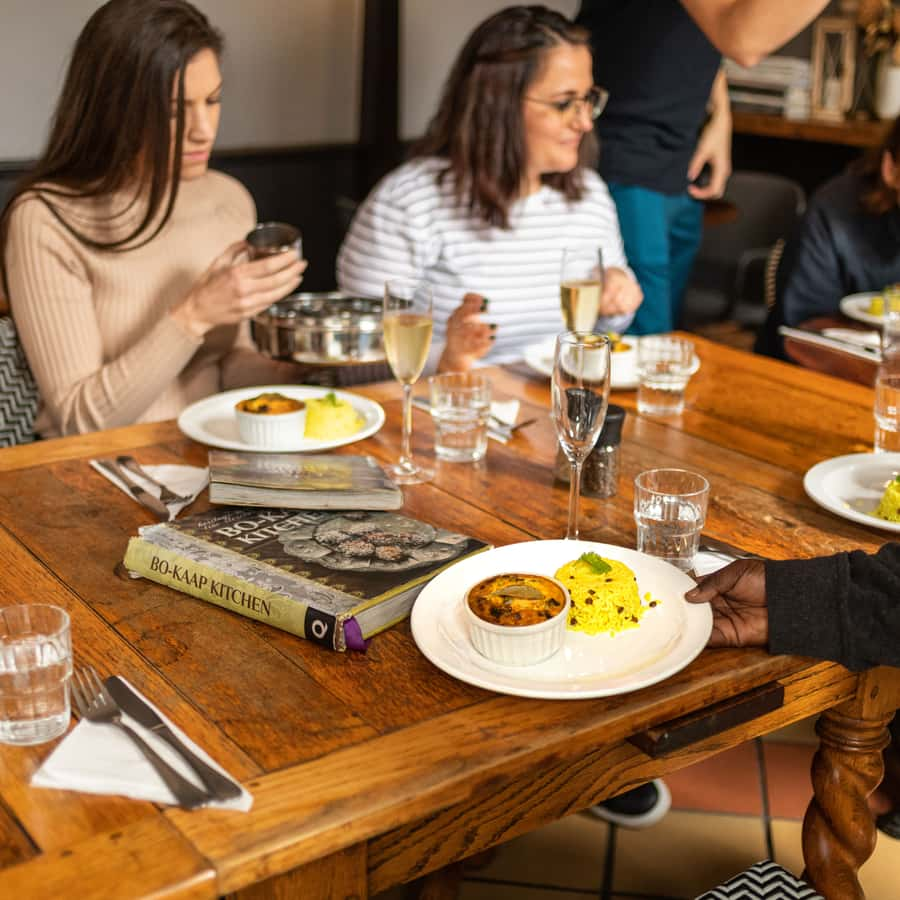
Bobotie is one of the key food stops. This baked dish typically combines spiced minced meat with an egg-based topping, although the exact preparation can differ. It is comforting, fragrant, and a useful introduction to the Malay and colonial influences that run through Cape Town cooking.
Here it is paired with bubbles, an unexpected match that gives the dish a lighter counterpoint. You should expect a tasting portion rather than a full restaurant serving, but the stops together add up. One person specifically found the overall amount of food larger than expected, while another felt the portions were just right. Your appetite will decide which camp you join.
The guide’s explanation is as important as the dish. You learn how spice routes and international trade affected Cape Town, then how slavery and apartheid changed where people lived and how communities interacted. The food becomes a way to discuss the city’s past without reducing that past to a museum display.
I appreciate that the tour does not present Cape Malay food as an exotic curiosity. It places the cooking within the lives and traditions of Cape Town’s communities. That makes the experience more respectful and more useful than a quick stop for a colourful photograph and a snack.
Same appetite, a different neighbourhood:
- Montserrat Half-Day Tour with Tapas and Gourmet Wines
★ 5.0 · 7,359 reviews - Dubai: Old Town, Souks, Street Food, Guided Tour & Abra Ride
★ 4.9 · 7,170 reviews - Bateaux Parisiens Seine River Gourmet Dinner & Sightseeing Cruise
★ 4.5 · 6,930 reviews - Tokyo: Shinjuku Food Tour (13 Dishes at 4 Local Eateries)
★ 5.0 · 6,603 reviews
Moving through De Waterkant and Greenpoint
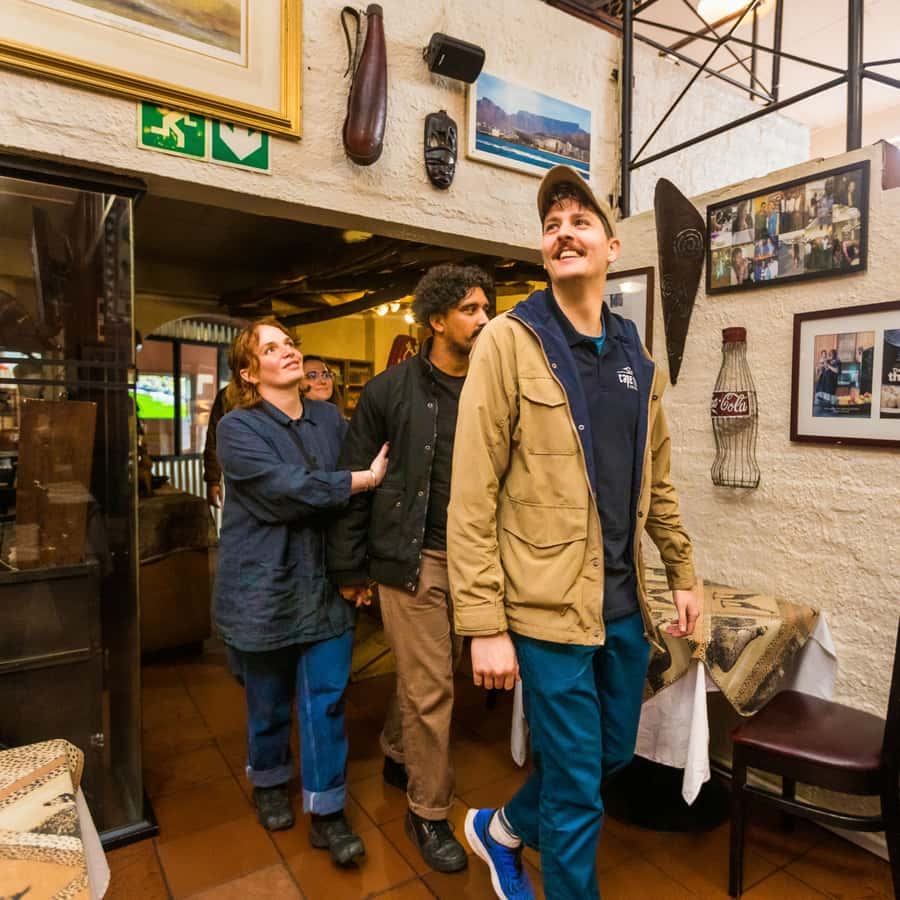
Between tastings, you walk through De Waterkant and Greenpoint. The route covers about two miles in total, broken into sections between food and drink locations. This is not a continuous march, but it is still a proper walking tour.
The neighbourhood changes help you see Cape Town as a layered city. Bo-Kaap has its own strong identity and architectural character. De Waterkant offers another view of the central city. Greenpoint and the Waterfront bring you toward newer commercial and visitor areas.
Your guide fills the walking time with details about buildings, streets, local life, and Cape Town’s development. One useful feature of the route is that the commentary continues between stops. You are not left to hurry from one venue to the next with no explanation.
Wear shoes that can handle uneven streets and several hours on your feet. High heels are specifically discouraged, and sunscreen is sensible in Cape Town’s strong sun. If wind or rain arrives, the tour generally continues unless conditions become severe, so check the forecast and dress for changeable weather.
The walking also affects the value. If you want a sit-down meal with minimal movement, this is the wrong format. If you like combining food with neighbourhoods and architecture, the distance makes the four hours feel purposeful.
African food, bunny chow, pap, and chakalaka
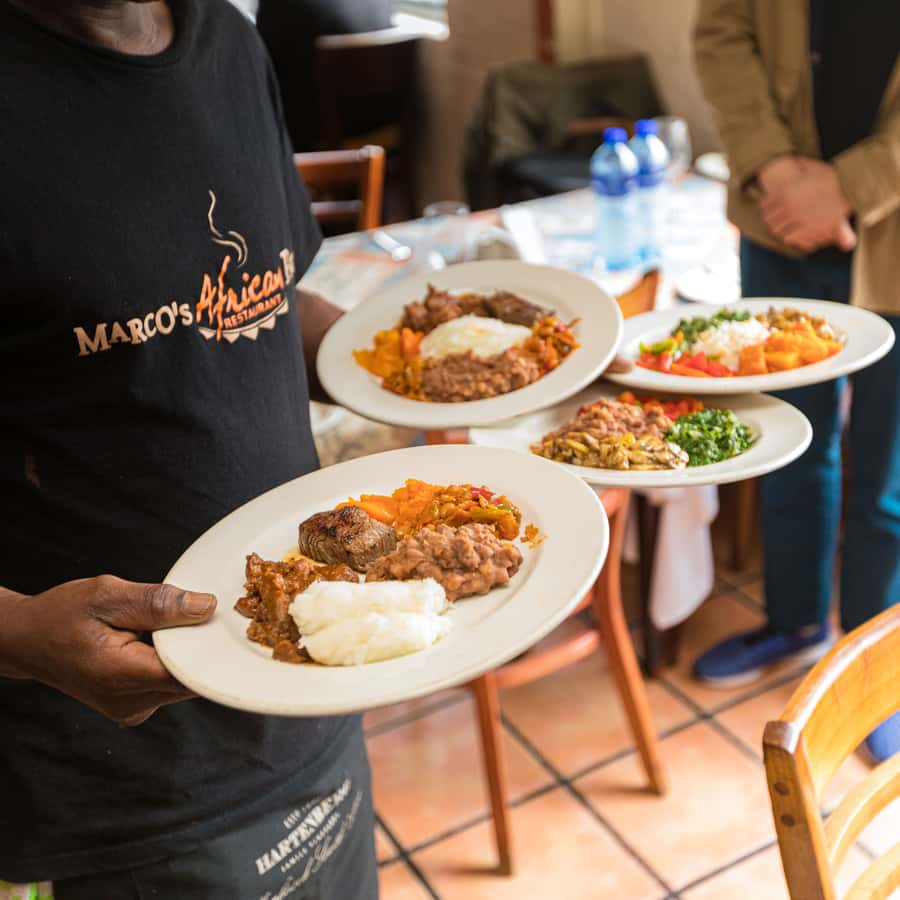
One stop focuses on African food, which several people found especially rewarding. This part of the route broadens the picture beyond Cape Malay cooking and shows that there is no single Cape Town cuisine.
Bunny chow is a well-known South African dish made by serving curry inside a hollowed-out loaf of bread. Pap is a maize-based staple, while chakalaka is a spicy vegetable relish. You might not receive a full serving of every item, but the tasting gives you a chance to compare textures, heat, and the way each food works as part of a meal.
This is one of the best reasons to choose the tour over a simple bakery crawl. You are not limited to polished cafés or fashionable restaurants. The route includes different styles of food and makes room for dishes with strong connections to everyday South African eating.
The African restaurant stop also gives your guide another chance to discuss culture and place. Listen for the connections between food, migration, work, family, and community. Those details make the meal memorable long after you have forgotten exactly which tasting came second.
Vegetarian options are available, but you should tell the local partner about allergies as soon as you book. Do not assume that a vegetarian substitution will automatically cover a serious allergy.
Three beers with a three-way food pairing
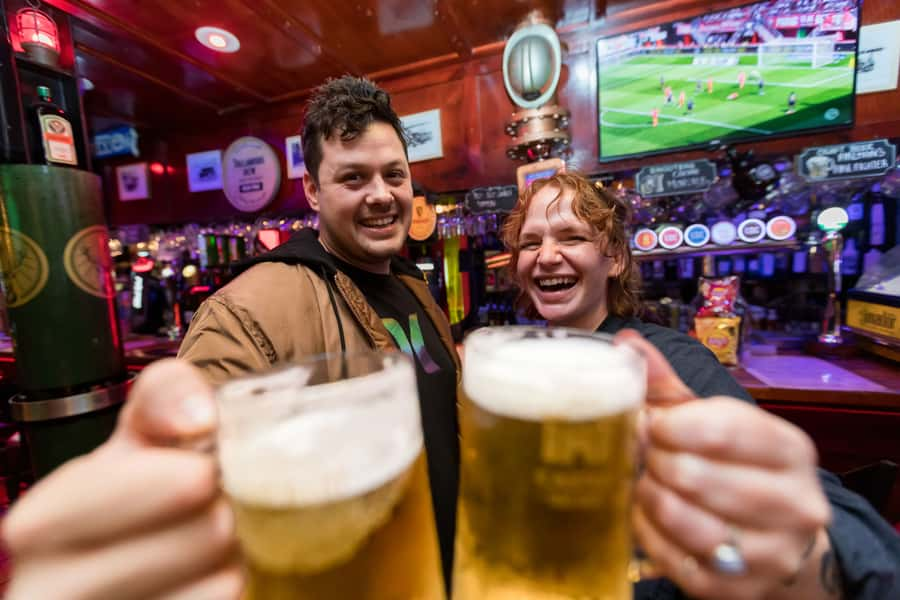
Beer is a significant part of the experience. You receive three tastings, each paired with food. This is more useful than a single sample because you can compare different styles while eating something designed to suit each one.
The tasting is also a look at Cape Town’s current food-and-drink scene. Much of the tour deals with old recipes and long cultural connections, while the beer stop shows the city’s newer craft production and social life.
You can choose the non-alcoholic route if you do not drink. The tour includes locally made beverages and non-alcoholic choices, but the supplied details do not specify the exact substitutes at each stop. If you need a fully alcohol-free experience, confirm the arrangements before booking.
Pacing matters here. You still have ice cream and gin ahead, along with the food already served. Sip slowly, drink water when available, and remember that three tastings are not the same as three full pints. Even so, anyone who is sensitive to alcohol should plan carefully.
Fynbos ice cream and Inverroche gin
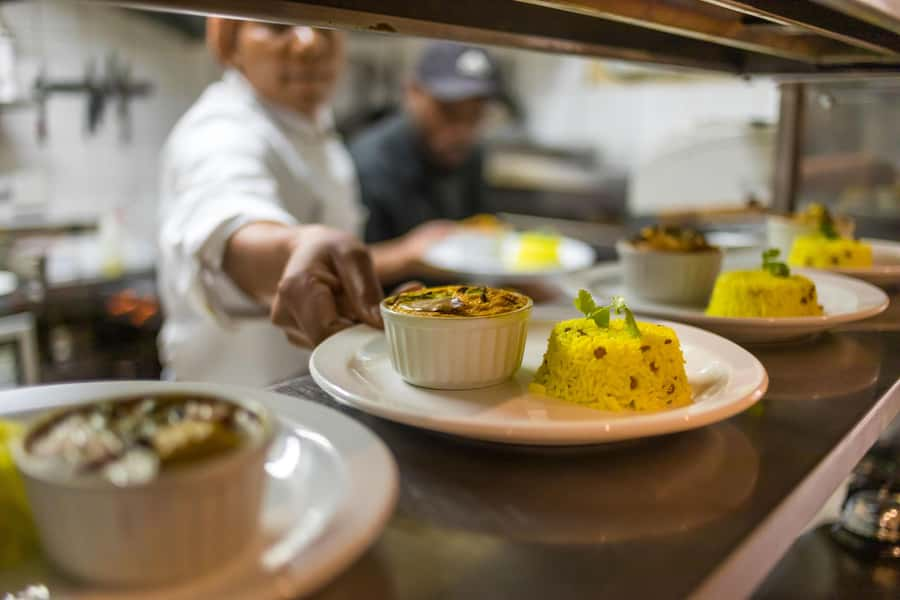
The craft ice cream infused with fynbos provides a distinctly South African finish to the sweet side of the tour. Fynbos refers to the plant life associated with the Cape region, and its use in ice cream gives you a chance to taste a local botanical idea in a modern form.
The flavour may be unfamiliar, which is part of the point. This is not simply a standard dessert added to fill a slot. It shows how local ingredients can move into contemporary food.
The final drink inclusion is an Inverroche gin tasting. South African gin often uses local botanicals, and this stop returns to the tour’s main theme: place expressed through flavour. After the spice-led dishes, beer, coffee, and sweets, gin provides a sharper finish.
Again, non-alcoholic options are available across the experience, but confirm the details if you do not drink. The tour is designed to include both drinkers and non-drinkers, yet the exact replacement for a gin tasting is not stated.
The guide can make or break the four hours
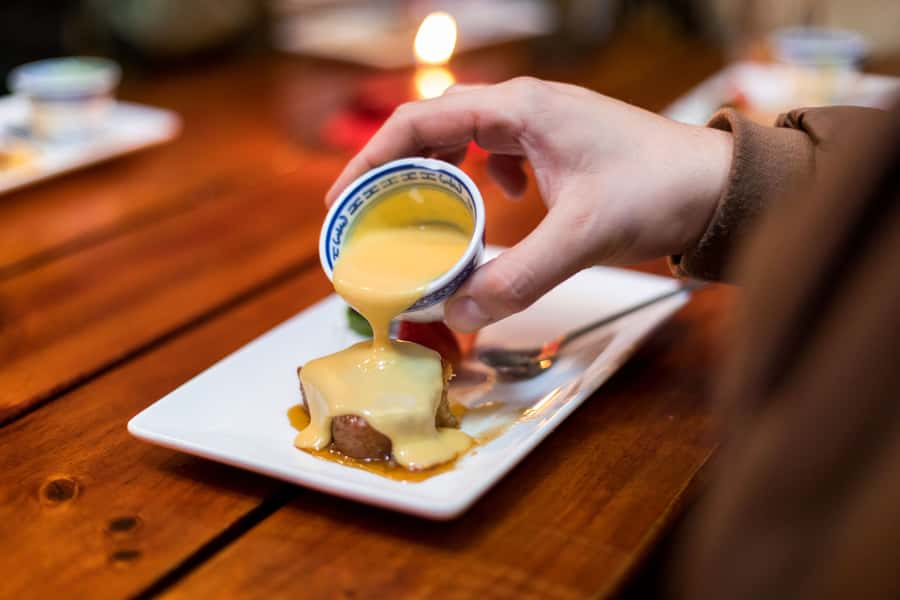
The strongest part of this experience is the guide’s role. Justin has been described as funny, engaging, and well informed about both food and local history. Olivia has led the tour with a warm, clear style, and other guides have also been praised for keeping the group moving without losing people along the way.
That matters because the route includes several stops and a fair amount of information. A guide who can explain a dish in two minutes, then keep the group together on the street, makes the day feel relaxed. A poor guide could turn the same route into a long list of ingredients.
Groups can be small enough for conversation. One reported group had nine people, while another had eight people from three continents. Group size can vary, but the format encourages you to meet people and ask questions rather than simply follow a flag through town.
English is the tour language. You should expect a conversational walking experience, not a private guide tailored only to your own interests.
The $134 price and what it includes
At $134 per person, this is not a cheap snack tour. The price makes more sense when you count the included food, several alcoholic and non-alcoholic tastings, the four-hour guide service, and the walking tour across multiple neighbourhoods.
Included tastings cover coffee and a pairing, bobotie with bubbles, three beers with a three-way food pairing, fynbos ice cream, and Inverroche gin. You also receive samples of other local dishes and drinks mentioned during the route. Additional food or drinks are not included, so bring a card or cash if you want anything beyond the planned tastings.
I would call it good value for someone who wants a guided introduction rather than a cheap way to get lunch. It gives you enough variety to shape the rest of your eating in Cape Town, and the history and architecture add value beyond the food itself.
It is less compelling for someone who already knows the city’s food scene or mainly wants full-size portions. The tasting format means you sample broadly, but you are not ordering whatever you want from a menu.
Who should book this Cape Town food walk?
I would recommend it to first-time visitors, curious eaters, couples, solo visitors, and small groups who want food plus context. It is family-friendly, though children under two are not accepted and the amount of walking may be tiring for very young children.
You should think twice if you have limited mobility, use a wheelchair, have respiratory issues, weigh more than 120 kilograms, or cannot walk around two miles with stops. The experience is specifically not designed for wheelchair users or people with mobility impairments.
It also suits a flexible schedule. You can cancel up to 24 hours in advance for a full refund, and the reserve-now, pay-later option gives you some breathing room while planning a Cape Town trip. Hotel pickup and drop-off are not provided, so arrange your own way to Bo Kaap Deli.
Should you book the Cape Town Essentials Tour?
Book it if you want to understand Cape Town through its food, not just eat in it. The combination of Bo-Kaap, African dishes, beer pairings, fynbos ice cream, gin, architecture, and difficult historical subjects gives you a broad first look at the city.
Skip it if you want a short, seated meal, a private itinerary, or a route with no hills and little walking. For everyone else, $134 buys a full afternoon of tastings and local explanation, with enough variety to keep the experience interesting from the first coffee to the final gin.
FAQ
Where does the Cape Town food tour start?
The tour starts inside Bo Kaap Deli. Look for your guide at the door of the deli or inside.
How long does the tour last?
The experience lasts four hours.
How much walking is involved?
The tour includes about two miles of walking, split between tasting locations.
Which Cape Town areas does the route cover?
The route includes Bo-Kaap, De Waterkant, Greenpoint, and the V&A Waterfront.
What food and drinks are included?
Included items include a coffee presentation and pairing, bobotie with bubbles, three beer tastings with a three-way food pairing, fynbos-infused craft ice cream, and an Inverroche gin tasting. Other local foods and drinks may also be served during the route.
Are vegetarian and non-alcoholic options available?
Yes. The tour accommodates vegetarian and non-alcoholic preferences. Contact the local partner after booking if you have food allergies.
Is the tour suitable for children?
The tour is family-friendly, but children under two are not accepted. Unaccompanied minors are also not allowed.
Is transportation included?
No. Hotel pickup and drop-off are not provided. You must make your own way to the starting point and away from the final stop.
What should I bring?
Bring a passport or ID card, comfortable shoes, and sunscreen. High heels and jewelry are not recommended.
Can I cancel the booking?
Yes. You can cancel up to 24 hours in advance for a full refund. You can also reserve now and pay later.
New food tours we have reviewed in the world
- ChattaBrunch Food Tour★ 5.0 · 87 reviews
- Downtown Chattanooga Food Tour★ 5.0 · 290 reviews
- Charlottetown waterfront SOLAR PartyBike food & drink experience!★ 4.0 · 92 reviews
- Historic Southside Food Tour in Chattanooga★ 5.0 · 32 reviews
- Tastes Through Time – Charleston’s Best Food & History Tour★ 4.5 · 95 reviews
- Charleston’s Savor the Flavors of Upper King Street Walking Food Tour★ 4.5 · 130 reviews
- Charlottetown Food Walking Tour★ 5.0 · 59 reviews
- Charleston Private Brunch Tour: Biscuits, Shrimps, Grits and More★ 5.0 · 48 reviews
Tours, compared.
Dubai: Old Town, Creek, Museums, Souks, & Street Food Tour
Read our review →
Ho Chi Minh City Street Food Tour & Sightseeing By Motorbike
Read our review →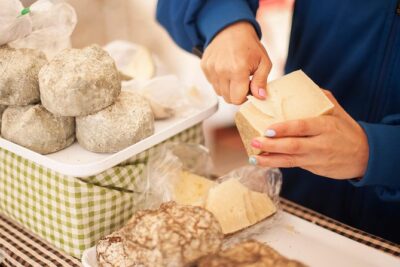
Montserrat Half-Day Tour with Tapas and Gourmet Wines
Read our review →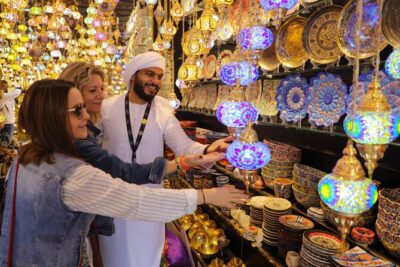
Dubai: Old Town, Souks, Street Food, Guided Tour & Abra Ride
Read our review →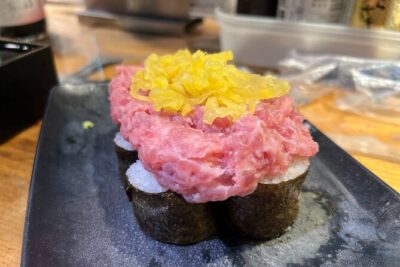
Tokyo: Shinjuku Food Tour (13 Dishes at 4 Local Eateries)
Read our review →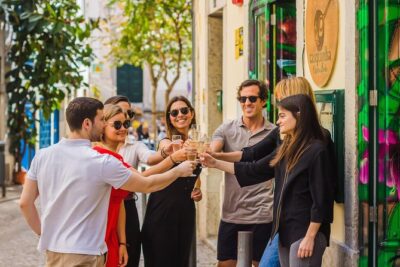
Winner 2025 Undiscovered Lisbon Food & Wine Tour by Eating Europe
Read our review →
Hanoi: Guided Food Tour with Train Street Visit
Read our review →