
Review · TOKYO FOOD TOURS
Tokyo: Shinjuku Food Tour (13 Dishes at 4 Local Eateries)
Shinjuku is easiest to enjoy when someone else handles the ordering. This three-hour food walk takes you through Omoide Yokocho, Kabukicho, and Golden Gai, with 13 dishes served at four different eateries. You get an izakaya, a food stall, a traditional restaurant, and a gastrobar, plus two drinks.
I like the small group limit of 12 and the fact that the food is included, so you can focus on tasting rather than counting yen at every stop. I also like the range: you move from narrow postwar lanes to Tokyo nightlife streets while trying several styles of Japanese food.
The main caution is that the quality of the guiding can vary. Many guides, including Hoshi, May, Igor, and Kei, receive warm praise for their food knowledge and local tips, but some visitors found the explanations too brief. If you want a detailed lesson about every dish, make a point of asking questions.
Key points at a glance
- Thirteen tastings at four venues: Food is included at a stall, izakaya, traditional eatery, and gastrobar.
- Three famous Shinjuku areas: The walk passes through Omoide Yokocho, Kabukicho, and Golden Gai.
- Two drinks included: You can choose between alcoholic and non-alcoholic options.
- A useful first-night introduction: The route helps you get comfortable ordering in Shinjuku.
- Small but social group: The maximum is 12 people, a manageable size for a walking food tour.
- Good value for first-time visitors: The $86.22 price covers the guide, dishes, drinks, and local orientation.
Why this Shinjuku food tour works
Shinjuku can feel like several cities packed into one district. One block has office towers and department stores. Another has tiny drinking spots squeezed into old lanes. A few minutes later, neon signs, restaurants, bars, and entertainment venues fill the streets around Kabukicho.
That variety is the real reason to book this experience. You are not simply sitting down for one large meal. You are moving through three distinct parts of Shinjuku and eating along the way, which gives the evening a useful shape.
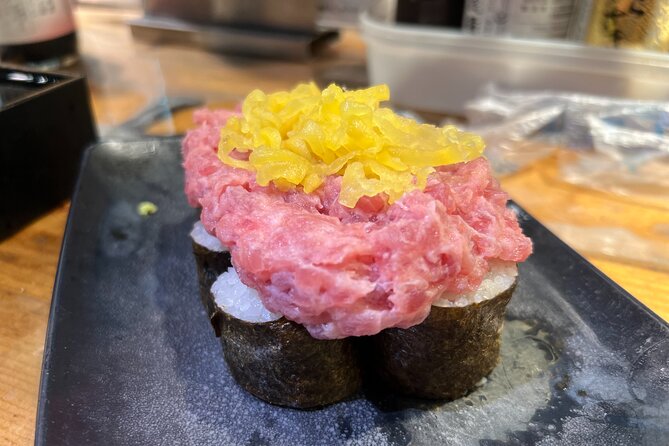
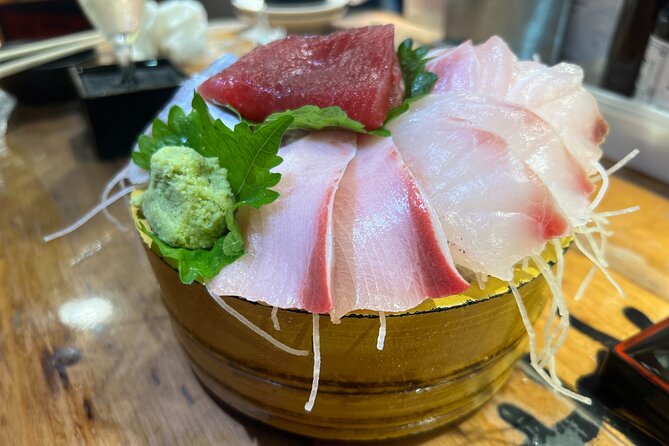
The tour includes 13 Japanese dishes, but the exact menu can vary. Food described by participants includes tonkotsu, katsu pork, taiyaki, and even snails. You should expect a broad sampling rather than a fixed tasting menu with every item listed in advance.
Your guide orders the food and explains what you are eating. That matters in small Japanese establishments, where menus may not be written in English and where ordering several shared dishes can feel awkward on your first night.
The experience is especially practical for solo visitors. The group format gives you company without requiring you to arrange a full dinner party. One participant even met fellow group members and later made plans with them for another evening.
More food tours in Tokyo:
- Sushi Making Tokyo Roll and Authentic Japanese Sushi Class
★ 5.0 · 3,971 reviews - Tokyo Tsukiji Fish Market Food and Culture Walking Tour
★ 5.0 · 3,184 reviews - Tokyo: Shinjuku Food Tour (15 Dishes and 4 Eateries)
★ 4.9 · 2,033 reviews
Omoide Yokocho: tiny lanes and a fast start
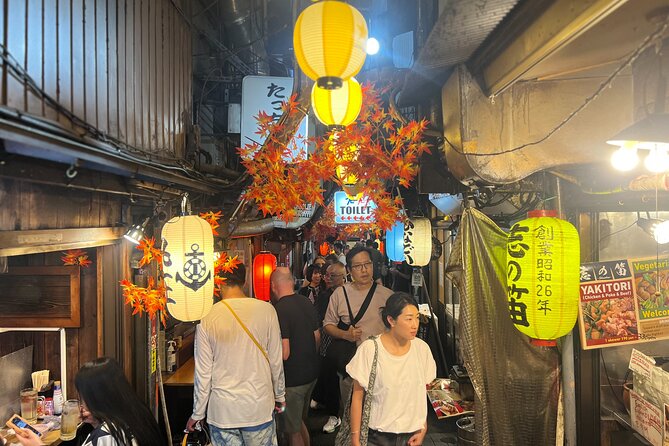
The first stop is Omoide Yokocho, an area known for narrow lanes lined with small izakayas and food stalls. It is a strong opening because the setting immediately feels different from the broad roads and tall buildings around Shinjuku Station.
The name is often translated as Memory Lane, and the area is known for its compact, old-fashioned dining spaces. Here, you get a sense of how much food can fit into a very small corner of Tokyo.
The tour allows about an hour in this first area. That time includes walking, eating, and hearing about the neighborhood. It is not simply a photo stop, so come ready to stand and move between tight spaces.
This is also where the format may feel least familiar. Some food can arrive without much ceremony, and one participant wished the guide had explained the dishes more clearly before serving them. Ask what each item is, how it should be eaten, and whether it is meant to be shared.
If your guide is as attentive as May, Hoshi, or Emma, you may also get suggestions for other places to eat during your stay. That advice can be one of the most useful parts of the evening, since Shinjuku has more dining options than any short visit can cover.
Kabukicho: nightlife, food, and local context
The walk continues into Kabukicho, Tokyo’s best-known entertainment district. The guide explains the different types of establishments in the area before taking you to a traditional Japanese restaurant.
Kabukicho has a reputation that can make first-time visitors unsure where to go. A guide gives you a clearer sense of the district and helps separate ordinary dining streets from places aimed at nightlife entertainment.
The food stop here is designed to show a more traditional restaurant setting. Katsu pork was one dish specifically praised by name, and one participant appreciated learning that the restaurant was an old and well-known place for it.
This portion of the tour has two jobs. First, it gives you another meal setting after the narrow lanes of Omoide Yokocho. Second, it gives you cultural background while you are still close to the places you may want to explore later on your own.
A few guides add short sightseeing detours along the route. Kei, for example, included stops to see the giant 3-D cat, Godzilla on a building, and the red-light district. These extras are not guaranteed on every departure, but they show how the walk can be more than a sequence of restaurant visits.
Golden Gai: old lanes and a possible question mark
Golden Gai is the final named area. It is known for narrow alleys and more than 200 tiny bars, many of them packed into small buildings that preserve an older look at Tokyo.
The area is historically interesting even if you do not enter a bar. The tight lanes make a sharp contrast with the scale of Shinjuku Station, and the preserved postwar architecture gives the walk a strong visual finish.
The advertised plan includes about an hour here, but the exact route may change. One person was disappointed because the group did not visit Golden Gai, despite expecting it from the description. That is worth noting if Golden Gai is your main reason for booking.
You can protect yourself from that disappointment by asking the guide early in the evening whether the group will walk through the area. The tour operator may adjust the route because of restaurant timing, group needs, or local conditions, but the stated plan includes Golden Gai.
The food portion connected with the area may include a fourth venue or dessert stop. Taiyaki, a filled fish-shaped cake, was served on one departure. It provides a simple sweet ending after several savory tastings.
Same appetite, a different neighbourhood:
- Tokyo: Roll and Authentic Sushi Making Class in Asakusa
★ 4.9 · 1,957 reviews - Best of Shinjuku: Izakaya Food Tour (4 Stops, 14+ Tastings)
★ 5.0 · 1,863 reviews - Tokyo: Sushi Making Class in a Happi Coat near a Famous Spot
★ 4.9 · 1,377 reviews - Sushi Making Tokyo! Popular Maki Sushi & Japanese Sushi(+Recipe!)
★ 5.0 · 1,314 reviews
What the 13 dishes really mean
Thirteen dishes sounds like a full meal, and it is. You should arrive hungry rather than treating this as a light snack walk. One participant described the experience as filling both the stomach and the senses, while another suggested you should be prepared to walk enough to work some of it off.
The number does not mean 13 full restaurant portions. The food is spread across four eateries, so the dishes are likely shared or served in tasting amounts. That format gives you more variety than ordering one dish at each restaurant on your own.
The range can include familiar and unfamiliar foods. Tonkotsu, katsu pork, and taiyaki are approachable choices for many people, while the mention of snails shows that the food can occasionally push beyond the usual tourist menu.
If you have strong dislikes or dietary limits, tell the guide before eating. Kei was praised for paying attention to food preferences and making sure people in the group had options they could enjoy, but the supplied information does not promise a special dietary menu.
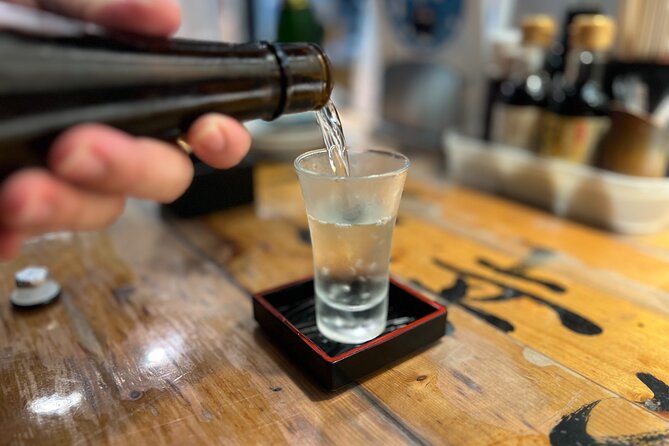
The two included drinks add value, especially since the stops include an izakaya and gastrobar. Alcoholic and non-alcoholic choices are available. If you do not drink alcohol, you can still take part without paying extra for a substitute.
The guide can make or break the evening
The most important variable is the person leading your group. Several named guides receive strong praise for being friendly, clear, and generous with local advice.
Hoshi is noted for excellent English and explanations of Japanese food and culture. Igor is praised for explaining dishes and the districts along the walk, while May is described as warm, helpful, and good at offering suggestions for the rest of a Tokyo visit.
Kei brings a slightly different strength. He added photo stops and made an effort to handle different food preferences. His background was not the point. What mattered was his familiarity with Japanese food, language, and daily life.
Lloyd was especially helpful to a parent with mobility issues, assisting with taxi arrangements between stops. The activity is listed as suitable for most people, and the walking pace was comfortable for at least one person with a leg injury, but this remains a walking tour through busy urban areas.
Not every departure will feel equally informative. One person found the guide pleasant but wanted more detail about the neighborhood and restaurants. Another felt that dishes arrived with too little explanation. You will get more from the experience if you ask direct questions instead of waiting for a long lecture.
Useful questions include:
- What is this dish called?
- Is it a local specialty?
- How should I eat it?
- What part of Shinjuku is this?
- Would you recommend this place for another meal?
Price, timing, and group size
At $86.22 per person, this is not a bargain meal in Tokyo. It can still be good value if you would otherwise spend time researching restaurants, risk ordering badly, and pay separately for several small meals and drinks.
The price includes the professional guide, 13 dishes, two drinks, and the walking tour. It does not include gratuity, which is optional. For a first evening in Shinjuku, you are paying partly for convenience and partly for access to places you may not feel ready to enter alone.
The experience lasts about three hours. That is long enough to cover several neighborhoods without taking over your whole evening. The meeting point is at AOKI Shinjukunishiguchi Honten, at 1-chome-8-5 Nishishinjuku.
The walk ends near the Southeast Exit of JR Shinjuku Station. If you prefer to return to the Starbucks meeting area, the guide can escort you back if you ask.
The group maximum of 12 is a useful middle ground. It is small enough for questions and shared plates, but large enough to create a social evening. A group of 12 can still feel crowded in tiny eateries, so do not expect an intimate private dinner.
Confirmation is provided at booking, and the meeting point is near public transportation. Free cancellation is available up to 24 hours before the start time. Cancellations or changes within 24 hours are not refunded or accepted.
Who should book this experience?
I would choose this tour for a first or second night in Tokyo, especially if Shinjuku is unfamiliar to you. It gives you a practical introduction to the district, a full meal, and a list of places and dishes to revisit later.
It is also a good fit if you are traveling alone or want a social evening without joining a large bus group. The food comes in enough variety to keep the night interesting, and the different settings help you understand how Shinjuku dining works.
You should think twice if you already know the district well and enjoy choosing restaurants independently. The tour may take you to places you could find yourself, and some participants felt the food was ordinary or not worth the price.
It may also disappoint you if Golden Gai is the central purpose of your evening. The planned route includes it, but one departure did not reach the area. Ask about the route at the start if that stop matters most.
My call: a useful first taste of Shinjuku
Book this tour if you want a guided introduction rather than a single destination meal. The combination of four eateries, 13 dishes, two drinks, and three famous Shinjuku areas gives you plenty to do in three hours.
The strongest reasons to go are the variety, the small group, and the chance to get comfortable with local food and ordering. The main risks are uneven guide detail, changing stops, and a price that only makes sense if you value convenience and local orientation.
For the best experience, arrive hungry, wear comfortable shoes, tell the guide about food limits, and ask questions at every stop. If you do that, this can become more than dinner. It can give you the confidence to explore Shinjuku on your own for the rest of your trip.
FAQ
How long does the Shinjuku food tour last?
The tour lasts approximately three hours.
How many dishes are included?
The experience includes 13 Japanese dishes served at four eateries.
Are drinks included?
Yes. Two complimentary drinks are included, with alcoholic and non-alcoholic options available.
What types of eateries are included?
The food stops include one food stall, one izakaya, one traditional Japanese eatery, and one gastrobar.
Which parts of Shinjuku does the tour visit?
The planned route includes Omoide Yokocho, Kabukicho, and Shinjuku Golden Gai.
Where does the tour start?
The listed meeting point is AOKI Shinjukunishiguchi Honten, at 1-chome-8-5 Nishishinjuku, Shinjuku City, Tokyo 160-0023.
Where does the tour finish?
The tour ends near the Southeast Exit of JR Shinjuku Station.
Can I return to the starting point?
Yes. If you prefer to return to the Starbucks meeting area, you can ask the guide to escort you back.
How many people can join the tour?
The maximum group size is 12 people.
Is gratuity included?
No. Gratuity is optional and is not included in the tour price.
New food tours we have reviewed in Tokyo
- Tokyo: West-Side Cycling and Food Tour with Guide★ 5.0 · 37 reviews
- Tokyo: Wagyu and Sushi Gastronomic Journey★ 4.3 · 24 reviews
- Tokyo Tsukiji Food & Culture Private Tour Licensed Guide★ 4.9 · 28 reviews
- Tokyo: Allstar Food Tour★ 4.7 · 29 reviews
- Tokyo: Togoshi Ginza Street Food Tour★ 5.0 · 34 reviews
- Tokyo: Sushi Making Class★ 4.9 · 390 reviews
- Tokyo: Shibuya Food Tour (13 dishes and 4 Eateries)★ 5.0 · 178 reviews
- Tokyo: Best of Shibuya Food Tour★ 4.7 · 119 reviews
Tokyo Food Tours, compared.
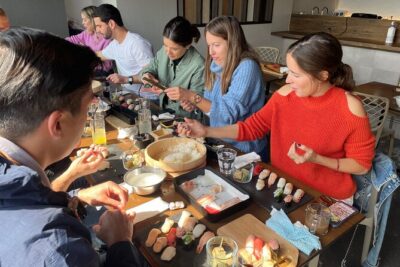
Sushi Making Tokyo Roll and Authentic Japanese Sushi Class
Read our review →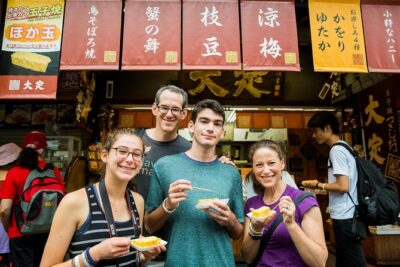
Tokyo Tsukiji Fish Market Food and Culture Walking Tour
Read our review →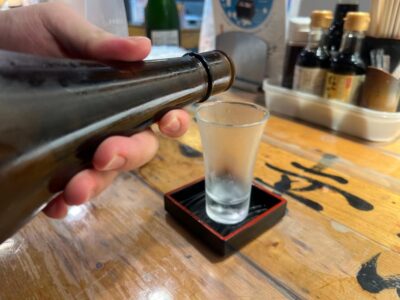
Tokyo: Shinjuku Food Tour (15 Dishes and 4 Eateries)
Read our review →
Tokyo: Roll and Authentic Sushi Making Class in Asakusa
Read our review →
Best of Shinjuku: Izakaya Food Tour (4 Stops, 14+ Tastings)
Read our review →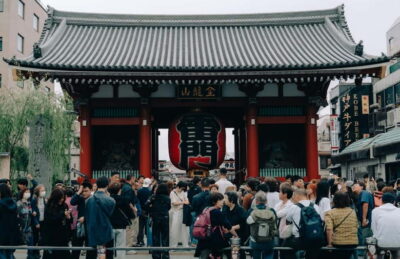
Tokyo: Sushi Making Class in a Happi Coat near a Famous Spot
Read our review →
Sushi Making Tokyo! Popular Maki Sushi & Japanese Sushi(+Recipe!)
Read our review →
Tokyo Sushi Making Class in Tsukiji with Professional Chef
Read our review →Browse the lists this tour appears in