
Review · TOKYO FOOD TOURS
Tokyo: Allstar Food Tour
Tokyo’s polished Ginza district and its scruffier Yurakucho alleys sit close together, but they offer very different views of the city. This three-hour food tour moves between both, taking you from department-store food counters and luxury streets to lantern-lit izakaya tucked beneath the train tracks.
I like the contrast between Ginza’s grand avenues and Yurakucho’s Showa-era pubs. I also like that the food is not limited to one famous dish. You sample regional specialties, seasonal tastes, old-fashioned snacks, drinks, and dessert while learning how local eating customs work.
The main consideration is the price: $181 per person is a serious outlay for three hours, especially since transportation, extra food, and additional drinks are not included. You are paying for a small group, a guide, and access to places that can be difficult to choose on your own.
Key points at a glance
- Two very different Tokyo districts: See upscale Ginza and the retro restaurant lanes of Yurakucho in one evening.
- A small group of up to 10: The size makes it easier to ask questions and stay together in narrow alleys.
- Food with a story: Try crisp rice crackers made from a recipe more than 200 years old and visit a snack shop with more than 300 years of history.
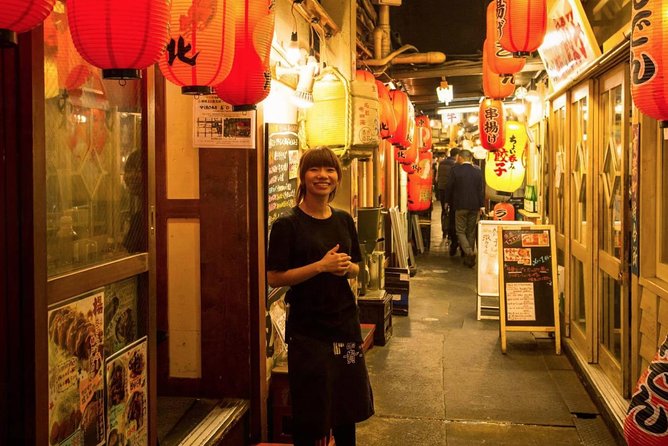
- Classic izakaya atmosphere: Eat and drink in casual Japanese pubs, including spots beneath the railway line.
- Two drinks and dessert included: The tour gives you a useful first taste of Tokyo’s evening food culture without requiring you to order every item yourself.
- Strong guide element: Past guides have included Motoko, Sandra, Josh, Ryan, Anne, and Satoshi, with praise focused on humor, cultural explanation, and practical food advice.
Starting at Ginza Wako Building
The tour begins in front of the Ginza Wako Building, about a minute from Ginza Station. The meeting point is easy to identify, but Ginza Station has several exits and passageways, so follow the signs for Ginza 4 Chome Crossing Gate and leave through Exit A9.
The Wako Building gives you an immediate sense of Ginza. This is one of Tokyo’s most expensive and polished shopping districts, with wide streets, careful storefronts, and a formal air. It is a useful starting point because the tour soon shifts from this refined setting to the compact lanes around Yurakucho.
You should arrive with enough time to find Exit A9 without rushing. The tour does not include hotel pickup, though pickup may be arranged for an additional charge. You are responsible for getting to the meeting point and for any transportation used during the evening.
More food tours in Tokyo:
- Tokyo: Shinjuku Food Tour (13 Dishes at 4 Local Eateries)
★ 5.0 · 6,603 reviews - Sushi Making Tokyo Roll and Authentic Japanese Sushi Class
★ 5.0 · 3,971 reviews - Tokyo Tsukiji Fish Market Food and Culture Walking Tour
★ 5.0 · 3,184 reviews
From luxury Ginza to old-school Yurakucho
Ginza is often presented as Tokyo at its most glamorous. On this tour, you do not simply walk past expensive shops. You use the district as a window into Japan’s changing food culture, from elegant retail spaces to practical counters where food is displayed with remarkable care.
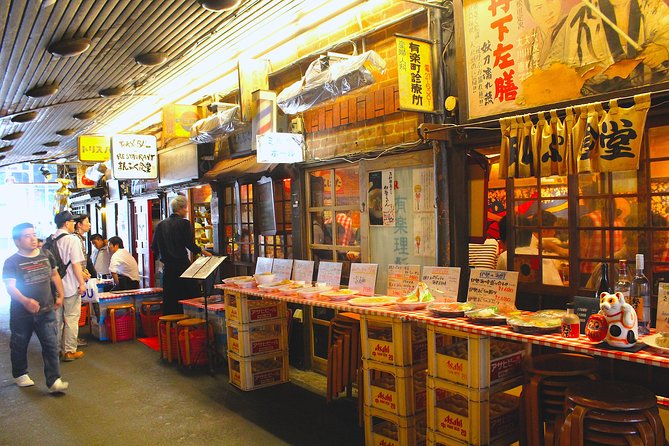
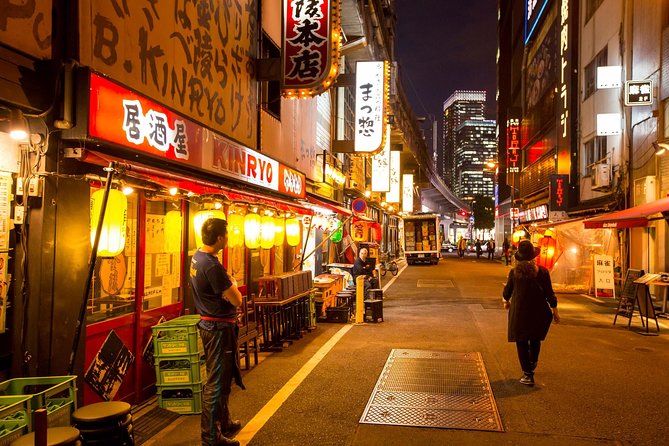
The route then moves toward Yurakucho, where the mood changes quickly. The area is known for restaurant lanes and small pubs built beneath or near the railway line. Red lanterns, neon signs, sizzling skewers, and grilled seafood create a very different setting from Ginza’s broad streets.
This contrast is one of the tour’s best features. You get a look at two sides of central Tokyo without needing to plan separate visits. The walk also gives your guide a natural way to explain how Tokyo combines polished modern commerce with long-running neighborhood habits.
The route is not only about eating. It is also about learning how people use food spaces. An izakaya is not simply a Japanese bar. It is a place for small dishes, drinks, conversation, and an easygoing meal that can stretch across an evening. Your guide can explain customs that may not be obvious when you enter one on your own.
Eating in the railway-side izakaya
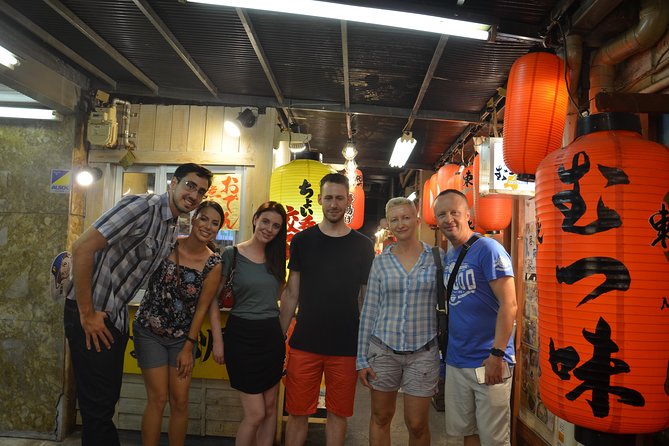
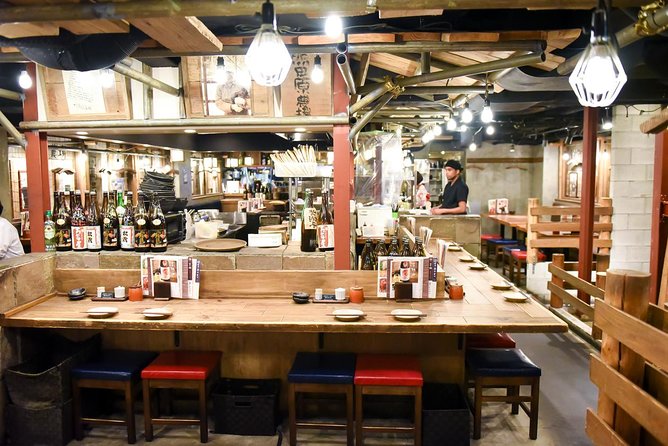
The izakaya portion is likely to be the most memorable part for many people. Past tours have included yakitori restaurants operating beneath the railway line, a small izakaya with colorful murals, side-street bars, and other compact dining rooms.
These are the sort of places that can feel intimidating on a first night in Japan. Menus may be difficult to read, seating may be tight, and ordering customs may not be clear. With a guide beside you, you can focus on the food and atmosphere instead of worrying about every small decision.
You should expect a social setting rather than a quiet restaurant meal. Conversation, cooking sounds, and the close arrangement of tables are part of the appeal. If you prefer spacious dining rooms and a slow, private dinner, this may feel crowded. If you want a taste of local evening life, the setting is a major reason to book.
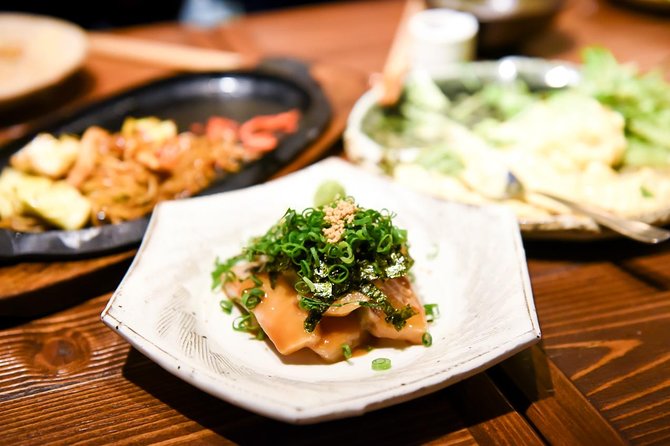
The food is served at several stops rather than as one large sit-down meal. That lets you try more styles and keeps the pace moving. You may sample skewers, seafood, regional dishes, or other small plates, though the exact selection can change.
Two drinks are included. The tour can introduce you to the role drinks play in an izakaya meal, but extra drinks cost more. If you are hoping to make this your full dinner, budget for additional food as well.
Regional and seasonal flavors
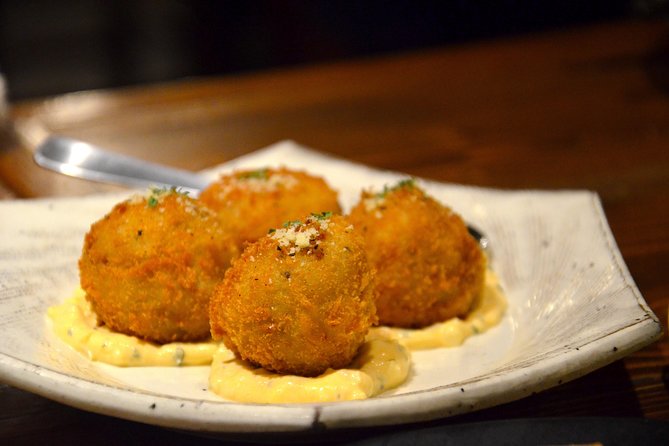
A good food tour should help you understand what you are eating, not just hand you a plate. This experience places regional and seasonal flavors at the center of the evening.
Your guide can explain where foods come from, how they are served, and how Japanese food customs differ from those in other parts of Asia. One past guide, Ulrich wrote, spent much of the tour discussing food and cultural differences. That kind of context matters because many Japanese dishes are shaped by season, texture, presentation, and local origin.
You may also encounter food that is less familiar than sushi or ramen. That is a plus. The tour is designed to show a broader range of Japanese eating, from casual pub dishes to specialty snacks and department-store food.
The word seasonal matters here. It means the menu may not be identical every month. You should expect variety, but you should not book this expecting a fixed list of dishes. The food can change according to availability and the tour’s arrangements.
Dietary options are available, but you should state your needs before booking. If you are traveling alone, email the supplier before reserving. That request is specifically noted for single participants and is worth handling early.
Same appetite, a different neighbourhood:
- Tokyo: Shinjuku Food Tour (15 Dishes and 4 Eateries)
★ 4.9 · 2,033 reviews - Tokyo: Roll and Authentic Sushi Making Class in Asakusa
★ 4.9 · 1,957 reviews - Best of Shinjuku: Izakaya Food Tour (4 Stops, 14+ Tastings)
★ 5.0 · 1,863 reviews - Tokyo: Sushi Making Class in a Happi Coat near a Famous Spot
★ 4.9 · 1,377 reviews
The centuries-old snack stop
One of the more unusual stops is a specialty snack shop with more than 300 years of history. The tour also includes crisp rice crackers made with a recipe dating back more than 200 years.
This is a welcome change from the usual Tokyo food checklist. Rice crackers may look simple, but their appeal comes from texture, seasoning, and the care given to a familiar everyday snack. A guide can make the stop more meaningful by explaining how these foods fit into Japanese gift-giving, shopping, and daily life.
The shop also shows another side of Ginza. The district is not only about luxury brands and expensive restaurants. It has places devoted to carefully made foods with long family or business histories. You get a sense of how old food traditions continue inside a modern commercial center.
If you like bringing edible gifts home, pay attention here. The tour includes snacks, but the information is also useful for later shopping. You may find that a small box of crackers gives you a more practical souvenir than a generic Tokyo trinket.
Department-store food and Tokyo shopping culture
One past route included department-store food counters with as many as 10,000 products to buy. The exact stop may vary, but this detail points to an important part of Japanese food culture.
Tokyo department-store basements are known for carefully arranged food sections, prepared meals, sweets, regional products, and gift items. For a first-time visitor, these counters can be confusing because there is so much to look at and many labels may be in Japanese.
A guide helps you see the difference between an ordinary supermarket purchase and a food item selected for presentation or gifting. You may also learn how department stores bring regional foods into central Tokyo, allowing shoppers to taste specialties from across Japan without leaving the city.
This stop is especially useful early in your trip. It can help you choose snacks for train journeys, hotel breakfasts, or gifts. It also gives you another contrast with the rougher, more casual izakaya streets.
Guides who add the most value
The food matters, but the guide can determine how well the evening works. The tour is conducted in English, and groups are limited to 10 people.
Past guides have included Sandra, Motoko, Josh, Ryan, Anne, and Satoshi. Motoko was praised for combining food knowledge with history, humor, and warm conversation. Sandra received particular praise for clear information and food quality. Josh was described as approachable and funny, while Ryan helped visitors discover local bars and eating places.
Those details suggest that the guide’s role is more than translation. You need someone who can explain customs, keep the group moving, choose a sensible pace, and make a small restaurant feel comfortable. The group limit helps. Ten people is large enough for a social evening but still small enough for questions.
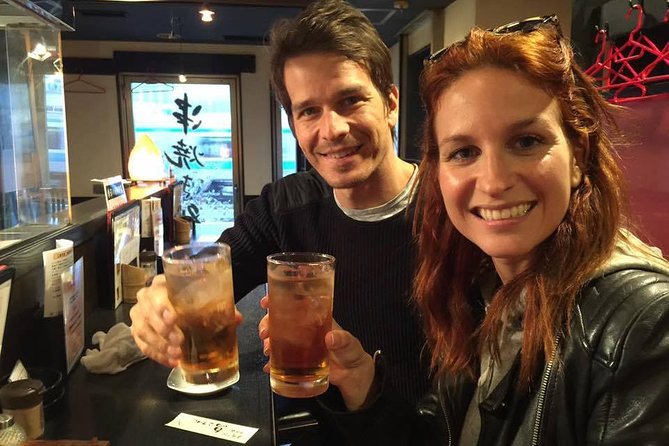
The tour has also worked well for couples and small mixed groups. One past participant liked starting before the heaviest dinner rush, which is a useful tip. If you can choose among available times, an earlier evening departure may make the first few stops easier and less crowded.
What the $181 price really covers
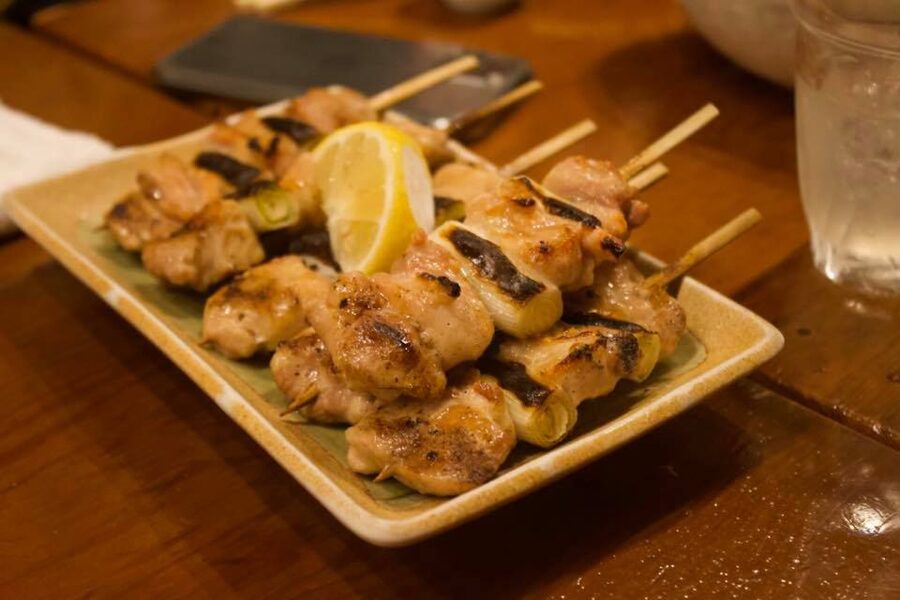
At $181 per person, this is not a budget food walk. You are paying for a three-hour guided experience, several food stops, two drinks, snacks, dessert, and an English-speaking guide in a small group.
The value depends on what you want. If you simply want to eat as much as possible, you could spend less by ordering independently in Yurakucho. If you want help choosing places, explanations of customs, and a planned route through two districts, the price becomes easier to justify.
The small group is important here. A large food tour can turn every stop into a delay, especially in narrow izakaya. A group capped at 10 has a better chance of fitting into small venues and keeping the evening personal.
You should also remember the extras. Hotel pickup is not included, transportation is not included, gratuity is not included, and extra food or drinks cost more. The included food is varied, but I would not assume it replaces a large dinner for every appetite.
Who should book the Allstar Food Tour
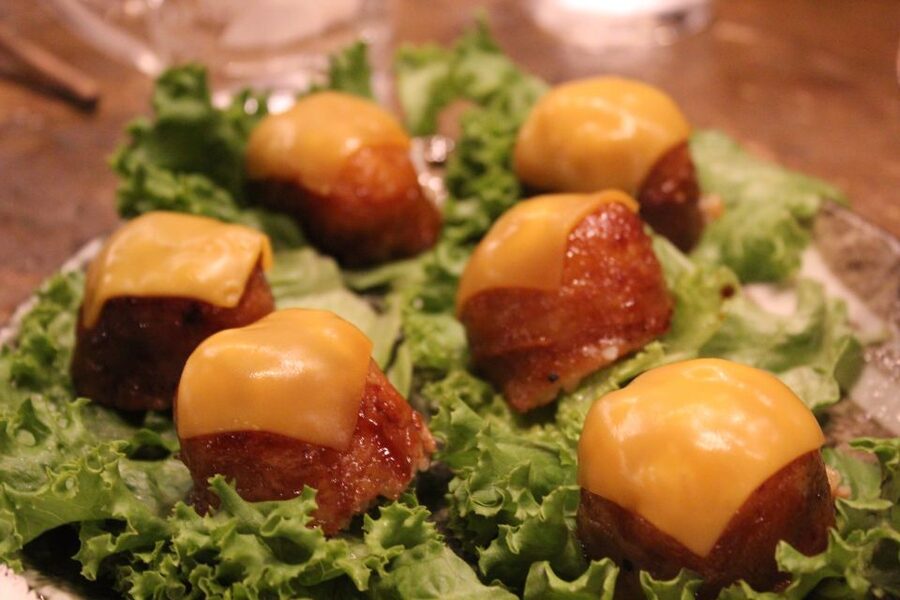
I would recommend this tour to a first-time visitor who wants a guided introduction to Tokyo food culture on the first night in town. It gives you a practical sense of how izakaya work and points you toward places you may not confidently enter alone.
It also suits people who enjoy walking, small restaurants, and conversation. The route combines history, food, shopping, and neighborhood atmosphere, so you get more than a meal.
It may be less suitable if you have a strict budget, dislike shared dining, or want a precise menu. The food selection can vary, and some stops may be compact or busy. People with dietary restrictions should contact the supplier in advance rather than assume every request can be handled at the door.
Cancellation is free up to 24 hours before the tour, and you can reserve now and pay later. Participants age 10 and older must provide a copy of their passport information. Those are small but important booking details to handle before departure.
Should you book it?
Book the Tokyo Allstar Food Tour if you want a guided first taste of central Tokyo, especially the shift from polished Ginza to the railway-side izakaya of Yurakucho. The strongest reasons are the small group, the wide range of food, the old snack traditions, and the guide’s role in explaining customs.
At $181, it is best viewed as an orientation to Tokyo’s food scene, not a cheap dinner. If that price fits your budget and you value context as much as quantity, it can give your first evening real direction. If you mainly want a full meal for the lowest cost, explore Yurakucho on your own instead.
FAQ
Where does the Tokyo Allstar Food Tour meet?
The meeting point is in front of the Ginza Wako Building, about one minute from Ginza Station.
Which Ginza Station exit should I use?
Follow signs for Ginza 4 Chome Crossing Gate, pass through the fare gate, and leave via Exit A9.
How long does the food tour last?
The tour lasts three hours.
How much does the tour cost?
The listed price is $181 per person.
How many people can join the tour?
The tour is limited to 10 participants.
What language is the tour conducted in?
The live tour guide speaks English.
Are drinks included?
Two drinks are included. Any additional drinks must be purchased separately.
Is dessert included?
Yes. The tour includes unique desserts and snacks, with dessert served toward the end.
Can dietary options be arranged?
Dietary options are available. You should provide your requirements in advance.
Is hotel pickup included?
No. Hotel pickup is not included, though it can be arranged for an additional charge.
Do solo participants need to do anything before booking?
If you are joining as a single participant, email the supplier before booking.
Is passport information required?
A copy of passport information is required for all participants aged 10 and over.
Can I cancel the tour for a refund?
You can cancel up to 24 hours in advance for a full refund.
Can I reserve now and pay later?
Yes. The tour offers a reserve-now, pay-later option.
New food tours we have reviewed in Tokyo
- Tokyo: West-Side Cycling and Food Tour with Guide★ 5.0 · 37 reviews
- Tokyo: Wagyu and Sushi Gastronomic Journey★ 4.3 · 24 reviews
- Tokyo Tsukiji Food & Culture Private Tour Licensed Guide★ 4.9 · 28 reviews
- Tokyo: Togoshi Ginza Street Food Tour★ 5.0 · 34 reviews
- Tokyo: Sushi Making Class★ 4.9 · 390 reviews
- Tokyo: Shibuya Food Tour (13 dishes and 4 Eateries)★ 5.0 · 178 reviews
- Tokyo: Best of Shibuya Food Tour★ 4.7 · 119 reviews
- Tokyo: Sushi and Ramen Cooking Class with Sake Pairing Set★ 5.0 · 81 reviews
Tokyo Food Tours, compared.
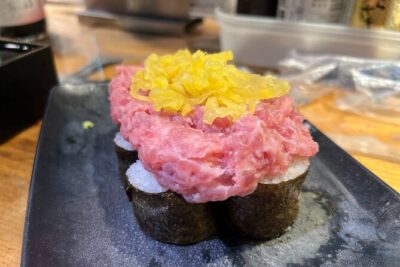
Tokyo: Shinjuku Food Tour (13 Dishes at 4 Local Eateries)
Read our review →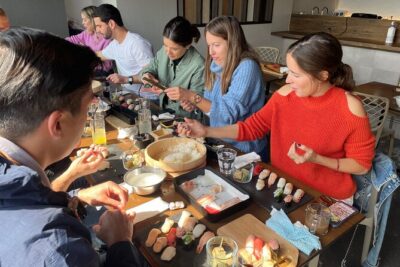
Sushi Making Tokyo Roll and Authentic Japanese Sushi Class
Read our review →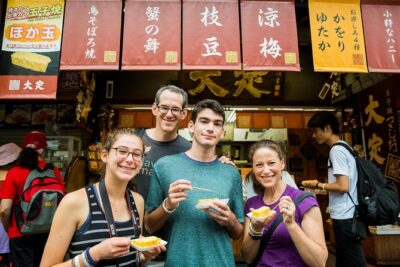
Tokyo Tsukiji Fish Market Food and Culture Walking Tour
Read our review →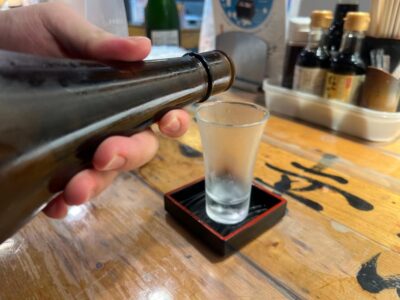
Tokyo: Shinjuku Food Tour (15 Dishes and 4 Eateries)
Read our review →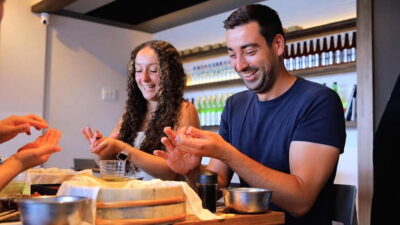
Tokyo: Roll and Authentic Sushi Making Class in Asakusa
Read our review →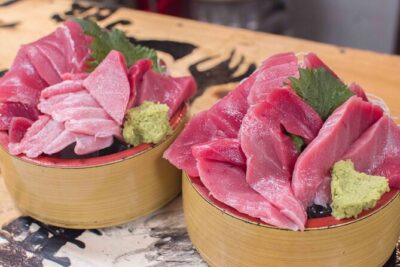
Best of Shinjuku: Izakaya Food Tour (4 Stops, 14+ Tastings)
Read our review →
Tokyo: Sushi Making Class in a Happi Coat near a Famous Spot
Read our review →
Sushi Making Tokyo! Popular Maki Sushi & Japanese Sushi(+Recipe!)
Read our review →Browse the lists this tour appears in