Review · COOKING CLASSES
Tokyo: Sushi Making Class in a Happi Coat near a Famous Spot
Tokyo’s happi-coat sushi class turns a famous Japanese food into a hands-on lesson. You learn to shape nigiri with tuna and salmon, try other sushi styles depending on the session, and then eat what you make. I like the clear, beginner-friendly teaching and the chance to learn small techniques you can repeat at home. The coat, photos, and Japanese-style setting add fun without turning the class into a costume show.
I also like the small-group feel. Many sessions use about five people per instructor, and some bookings have ended up as private lessons when demand was light. The main thing to consider is timing: the meeting point can vary by booking, and busy sessions may seat you with other customers. Tell the team about allergies or special diets before the day, since same-day changes may not be possible.
Key points at a glance
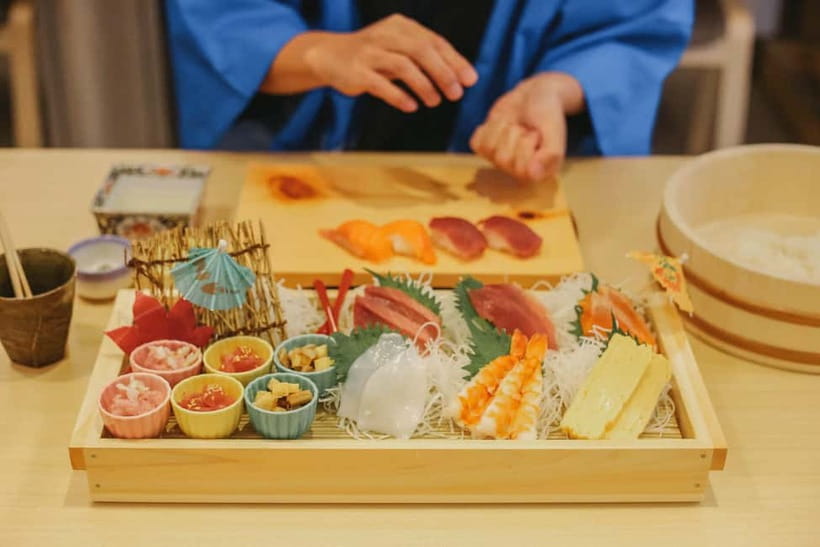
- Shape tuna and salmon nigiri: Learn the basic hand movements, rice portioning, and topping technique with a chef guiding you.
- Wear a traditional happi coat: The tube-sleeved jacket makes the class more playful and gives you good photo opportunities.
- Expect more than a tasting: You make enough sushi to serve as a proper meal, not just a token sample.
- English and Japanese instruction: Guides such as Hide, Mikoto, Ami, Masa, and Miwa have led sessions, with clear English available.
- Useful for families and couples: Children over four are charged according to the listed child rate, and the activity is designed for beginners.
- Plan dietary requests early: Vegetarian, vegan, and gluten-free options are available when requested in advance.
Why this Tokyo sushi class works for beginners
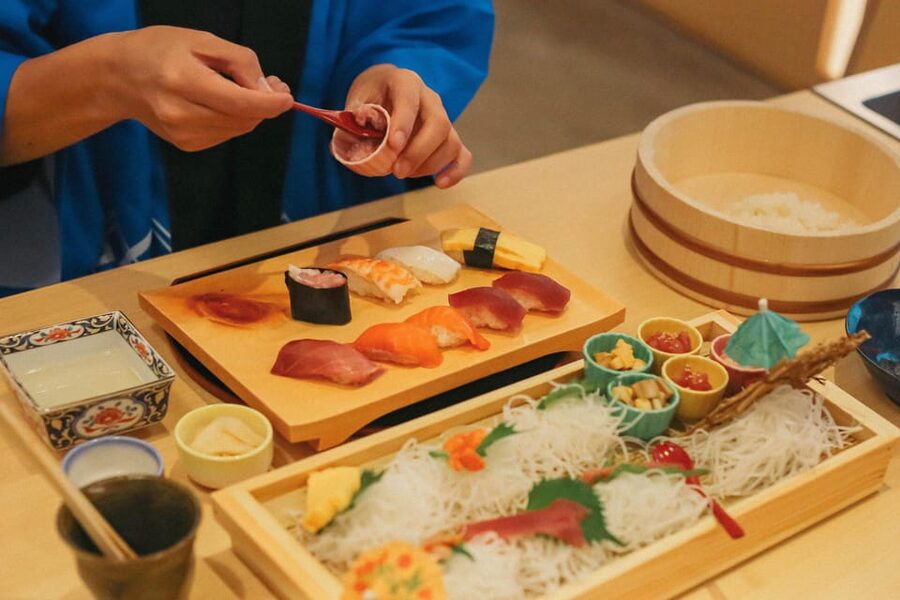
Sushi can look simple until you try to make it. The rice has to hold together without being packed too hard, the fish must sit neatly on top, and each piece needs enough shape to pick up easily. This class breaks those steps into manageable movements instead of expecting you to know Japanese techniques already.
The focus is on nigiri, the hand-shaped sushi made from seasoned rice and a slice of fish. Tuna and salmon are the key ingredients, giving you two familiar flavors while you work on the method. Depending on the class flow, you may also make maki, rolls, or another style of sushi. Anthony, one of the participants, specifically learned both maki and nigiri, while other sessions included rolls and onigiri-style preparations.
That variety matters. If you only made one kind of sushi, the lesson would be over quickly. Making several forms lets you compare how each one is assembled and gives you a better chance of finding a technique you can repeat in your own kitchen.
The instructors teach in English and Japanese. English ability can vary by person, but several sessions have been led by guides praised for clear English, including Hide, Ami, Masa, Mai, and Miwa. The teaching style is practical rather than formal. You watch a demonstration, copy the movement, and get help when your rice or fish does not cooperate.
That makes the activity a good fit if you have never handled sushi rice before. You do not need knife skills, restaurant experience, or Japanese language ability to take part.
More Cooking Classes in Japan
- Tokyo: Roll and Authentic Sushi Making Class in Asakusa
★ 4.9 · 1,957 reviews - Tokyo Sushi Making Class in Tsukiji with Professional Chef
★ 5.0 · 1,177 reviews - Ramen & Gyoza Cooking Class in Tokyo with Local Supermarket Visit
★ 5.0 · 823 reviews
From chef’s demonstration to your first nigiri
The 90-minute format is well judged. It gives you enough time to learn, make several pieces, take photos, and eat without using half a day of your Tokyo schedule.
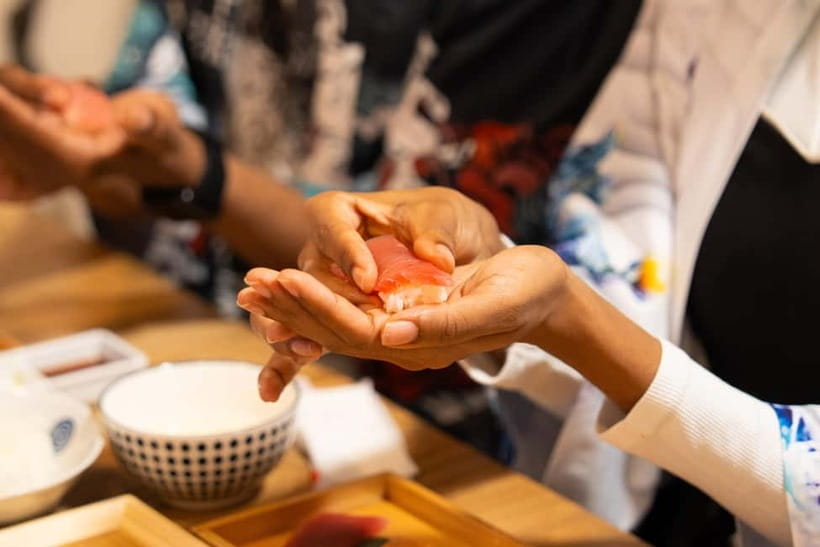
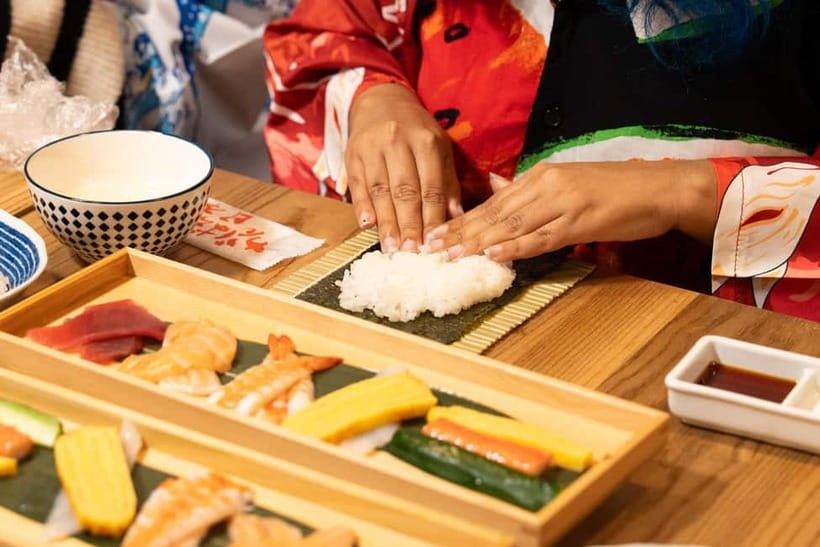
At the start, the ingredients and equipment are laid out so you can get to work quickly. The chef explains the sushi styles and shows how to handle the rice and toppings. Pay close attention here, especially to the amount of pressure used. Beginners often squeeze too firmly, which makes the rice dense. The point is to give the rice shape while keeping it pleasant to eat.
Next comes your turn. You build nigiri with tuna and salmon under supervision. The chef checks your technique and helps you adjust the shape. This is where the small-group format pays off. One session had five people per host, allowing the instructor to watch each person rather than giving a speech to a large room.
You may find yourself working alongside other customers. That can make the class more social, but it also means the amount of individual attention depends on the group size. At quieter times, two people or even one person have received a private-style lesson. I would not book on the assumption that you will have the room to yourself, but a less busy time can bring that pleasant surprise.
The pace stays relaxed. You are not being graded, and imperfect sushi is still lunch. The teachers answer questions as you work, explain small tricks, and keep the mood light. Several instructors are described as funny and patient, which helps if your first piece looks more like a rice mound than restaurant sushi.
Tuna, salmon, and a meal you make yourself
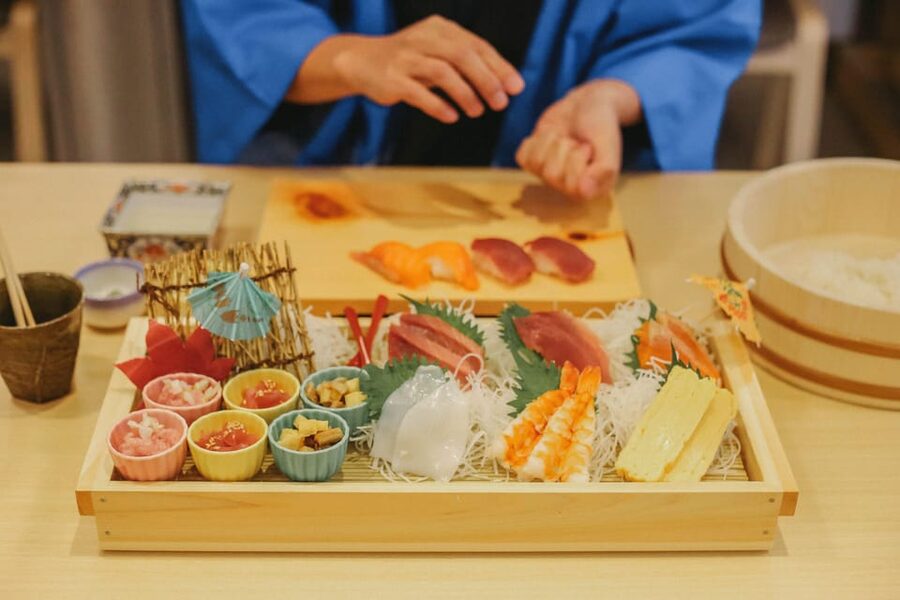
The food is the reward at the end, but it is also part of the lesson. Tuna and salmon are easy ingredients for a first class because you can focus on form rather than unfamiliar flavors. You get to see how the fish is placed, how much rice is used, and how the finished piece should be handled.
The portions appear generous. One couple found they made enough to feel completely full, and several people described the class as a lunch as well as an activity. That improves the value of the $42 price. You are paying for instruction, ingredients, and an entertaining cultural activity, then eating the result instead of buying a separate meal immediately afterward.
Taste is tied to effort here. Sushi you make yourself may not have the perfect shape of a chef’s piece, but you understand what went into it. The class also gives you a realistic sense of what can be done at home and what takes more practice.
Do not expect this to turn you into a professional sushi chef in 90 minutes. You will learn a useful foundation, not advanced fish cutting, fish sourcing, or restaurant-level presentation. The value is in learning the basic assembly and gaining confidence.
If you want to continue at home, ask questions during the lesson. Participants have left with tips they planned to use back home, though you will still need access to suitable rice, fish, and other ingredients. The exact preparation details taught can depend on your instructor.
The happi coat and the cultural side of the class
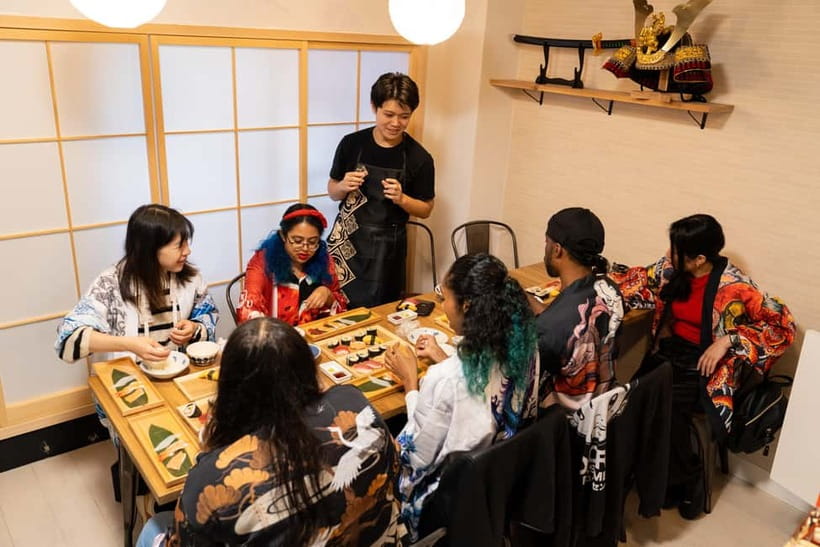
Putting on the happi coat is more than a quick photo prop. The traditional tube-sleeved jacket helps create a Japanese-style working atmosphere and gives the activity a clear sense of place. It is an easy way to feel part of the setting, even if you know little about sushi culture.
The class also covers the customs and ideas behind sushi, not just the mechanics. You learn why the food is assembled in a certain way and gain a better feel for the care involved in preparing it. The cultural explanation adds value, particularly if this is your first visit to Japan.
I like that the setting stays informal. You are not watching a demonstration from behind a barrier. You put on the coat, handle the ingredients, ask questions, and eat the finished food. Guides have also taken photos and videos during the process, giving you a record of the experience without requiring you to stop every few minutes and reach for your phone.
There are photo opportunities in the coats and with the sushi you make. That will appeal to couples, families, and friends. If you prefer a serious culinary course with long technical explanations, the playful side may feel a little light. For most visitors, though, the balance is right: enough technique to be useful, enough humor to keep it enjoyable.
More Cooking Classes in Tokyo
- Tokyo: Tsukiji Fish Market Sushi Making Class with Pro Chef
★ 4.9 · 506 reviews - Tokyo: Sushi Making Class
★ 4.9 · 390 reviews - Tokyo: Sushi and Ramen Cooking Class with Sake Pairing Set
★ 5.0 · 81 reviews - Shibuya Tokyo: Sushi Making Class (Vegan/Vegetarian/Halal)
★ 4.7 · 29 reviews
How the setting fits into a Tokyo day
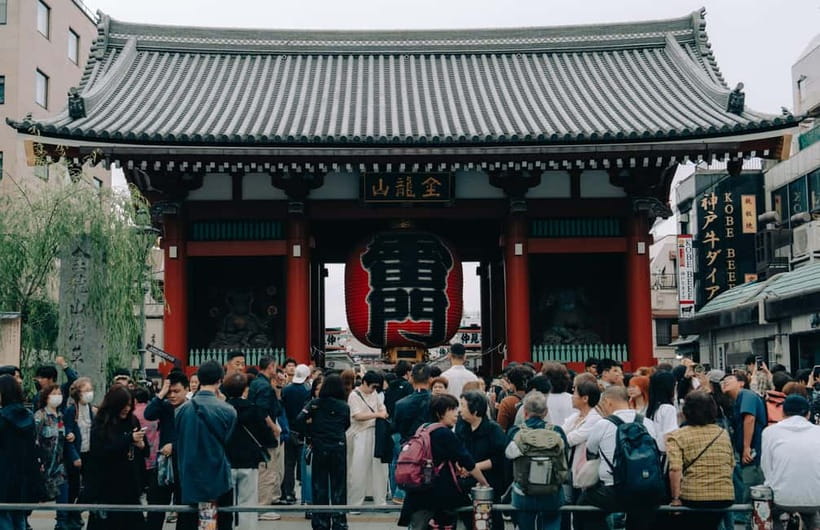
The activity takes place near a famous Tokyo spot, but the exact meeting point depends on the option you book. Check that detail carefully before setting out. One participant had a little trouble finding the venue, so allow time to locate it rather than arriving at the last minute.
The 90-minute length makes the class easy to pair with sightseeing. A late-morning booking can work as lunch, while another starting time can break up a day of temples, markets, or neighborhood walking. After one session, it was possible to continue on to a temple and markets nearby, though the precise places depend on your meeting point.
I would avoid scheduling an important train, flight, or timed attraction immediately afterward. The class itself lasts 90 minutes, but you still need time to find the venue and leave the area. The schedule is practical, but Tokyo travel can be slow when you are changing neighborhoods.
The location is also worth checking if you are using the class during a short stop in the city. One couple used it during a brief gap between flights and found it a productive way to spend the day. That works because the class gives you food, an activity, and a cultural introduction in one booking.
Who will get the most from the $42 price
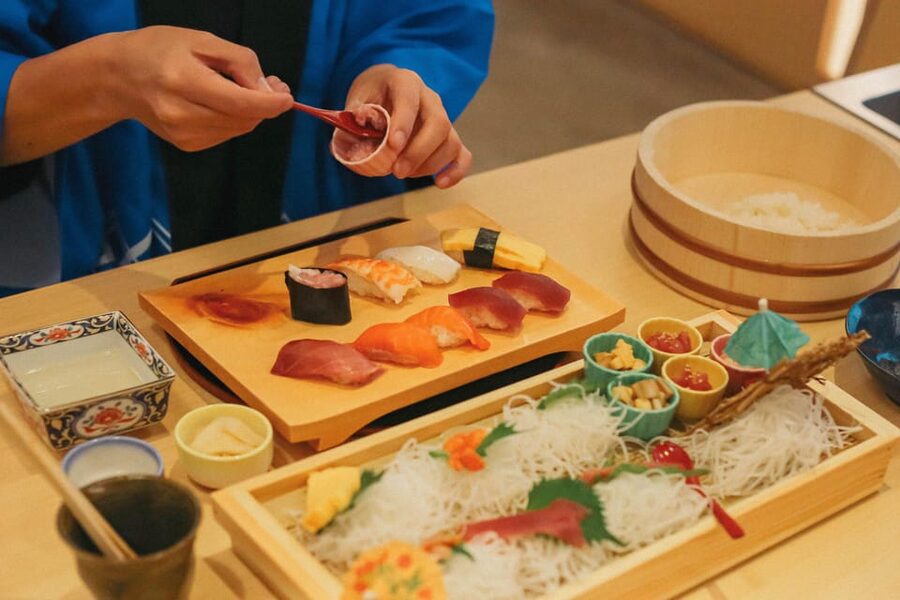
At $42 per person, this is good value if you want an activity that also functions as a meal. The fee covers the cooking class, ingredients, and instructor. You are not paying extra for a separate sushi lunch after the lesson, and the portions can be substantial.
For a couple, the class offers an easy shared activity without the pressure of booking a formal restaurant. For families, it gives children a task they can understand and complete. One family found that the children enjoyed making the sushi and were surprised by how manageable it felt.
It also works well for solo visitors. A small group gives you company without requiring you to join a full-day tour. If your session is quiet, the instructor may spend a great deal of time answering your questions and talking about Japanese food and culture.
The class is less suitable if you do not eat fish, unless you arrange an alternative in advance. Vegetarian, vegan, and gluten-free choices are available, but you must send the request ahead of time. Food allergies also need to be reported before the class. A request made on the day may not be possible.
Children under four can share a dish, while children over four are charged according to the child pricing information. Check the exact child fee when booking, since the provided information does not give a single universal amount.
The small details that affect your experience
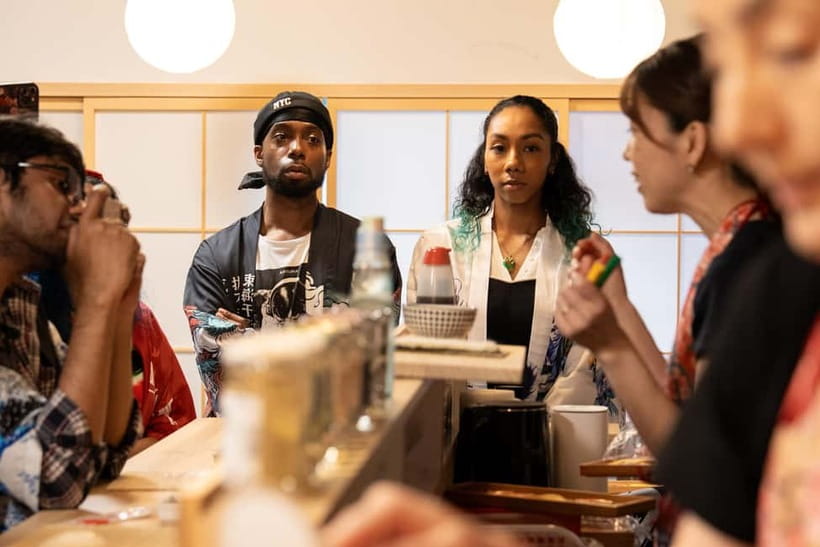
Group size is the biggest variable. A quiet booking can feel personal, while a busy session may place you with other customers. That is not a flaw, but it changes the rhythm. In a group, you gain a social atmosphere. In a quieter class, you may have more time for questions and personal coaching.
Instructor assignment also varies. Names connected with the class include Chef Hide, Mikoto, Mitsuko, Kohji, Mizuki, Ami, Emmy, Masa, Mai, Miwa, and Rikuri. You should not book expecting one particular person unless the operator confirms that in advance. What you can expect is instruction in English or Japanese and hands-on help with the sushi.
The class is beginner-friendly, but it is still an active lesson. You will handle food, shape rice, and follow a series of steps. If you want only to sit and eat sushi, a restaurant is a better choice. If you like learning by doing, this format gives you much more for the money.
The class has earned a 4.9 rating from 1,377 reviews, which matches the strongest pattern in the feedback: people repeatedly praise the friendly teaching, clear explanations, generous food, and relaxed atmosphere. The high score does not remove the practical limits, especially the changing meeting point and the need to arrange diet requests early.
Cancellation is flexible up to 24 hours before the start for a full refund, and you can reserve now and pay later. Those terms help if your Tokyo schedule is still moving around, but you should still confirm the start time and meeting point for your chosen option.
Should you book SUSHI GARYU?
Book it if you want a short, social Tokyo activity that teaches a real skill and leaves you with a meal. It is especially good for first-time visitors, couples, families, solo food lovers, and anyone who wants more than a restaurant photo.
The strongest reasons to choose it are the hands-on format, the friendly instructors, and the generous amount of sushi. The happi coat and photos add a light cultural touch, while the tuna, salmon, nigiri, and possible maki work give you enough variety to keep the 90 minutes interesting.
Skip it if you want advanced sushi training, a long chef’s demonstration, or a guaranteed private lesson. Also arrange vegetarian, vegan, gluten-free, and allergy needs before the day, and check the meeting point carefully.
For $42, SUSHI GARYU gives you a meal, a guided lesson, a cultural introduction, and a skill you can try again at home. That is a fair deal in Tokyo, especially when you place it beside a nearby temple or market visit.
FAQ
How long does the sushi-making class last?
The class lasts 90 minutes. You should also allow extra time to find the meeting point, since it may vary depending on the option booked.
How much does the experience cost?
The listed price is $42 per person. The fee includes the cooking class, ingredients, and instructor.
What kinds of sushi will I make?
The main lesson covers nigiri sushi with tuna and salmon. Depending on the session, you may also make maki, rolls, or other sushi styles.
Do I need previous cooking experience?
No. The class is designed for beginners, and the chef demonstrates each stage before you try it yourself.
Are the instructions available in English?
Yes. The instructors teach in English and Japanese. Several sessions have been led by instructors with strong English skills.
Can I request vegetarian or vegan food?
Yes. Vegetarian and vegan options are available, but you need to request them in advance by message.
Can I request gluten-free ingredients?
Yes. Gluten-free options are available when requested ahead of time. A same-day request may not be possible.
What should I do if I have a food allergy?
Tell the operator about your allergy in advance by message. Do not wait until the day of the class, since the kitchen may not be able to accommodate a late request.
Can children take part?
Children over four are charged according to the child pricing information. Children under four may share a dish. Check the child fee for your selected booking option.
Will the class be private?
Not necessarily. Depending on how busy the venue is, you may share a table with other customers. Quiet sessions can sometimes feel like private lessons, but that is not guaranteed.
More hands-on workshops in Tokyo
- Shinjuku Tokyo: Authentic Japanese Home-Style Culinary Class
★ 4.9 · 125 reviews - Ramen Making from Scratch +Akihabara Tour –Cooking Class
★ 5.0 · 25 reviews - Authentic Pizza Making Class in Naples with Appetizers and Drink
★ 5.0 · 3,178 reviews - Ramen Cooking Class at Ramen Factory in Kyoto
★ 5.0 · 1,937 reviews
More Sushi and Ramen Tours in Tokyo
- Sushi Making Tokyo Roll and Authentic Japanese Sushi Class
★ 5.0 · 3,971 reviews - Best of Shinjuku: Izakaya Food Tour (4 Stops, 14+ Tastings)
★ 5.0 · 1,863 reviews - Sushi Making Tokyo! Popular Maki Sushi & Japanese Sushi(+Recipe!)
★ 5.0 · 1,314 reviews - Tokyo Night Foodie Tour in Shinjuku – Seasonal Sushi, Wagyu Beef
★ 5.0 · 1,161 reviews
New food tours we have reviewed in Tokyo
- Tokyo: West-Side Cycling and Food Tour with Guide★ 5.0 · 37 reviews
- Tokyo: Wagyu and Sushi Gastronomic Journey★ 4.3 · 24 reviews
- Tokyo Tsukiji Food & Culture Private Tour Licensed Guide★ 4.9 · 28 reviews
- Tokyo: Allstar Food Tour★ 4.7 · 29 reviews
- Tokyo: Togoshi Ginza Street Food Tour★ 5.0 · 34 reviews
- Tokyo: Sushi Making Class★ 4.9 · 390 reviews
- Tokyo: Shibuya Food Tour (13 dishes and 4 Eateries)★ 5.0 · 178 reviews
- Tokyo: Best of Shibuya Food Tour★ 4.7 · 119 reviews
Cooking Classes, compared.
Authentic Pizza Making Class in Naples with Appetizers and Drink
Read our review →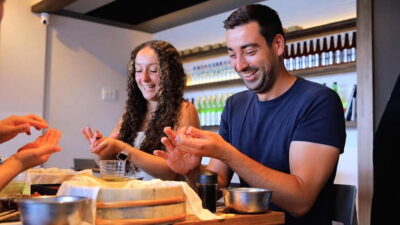
Tokyo: Roll and Authentic Sushi Making Class in Asakusa
Read our review →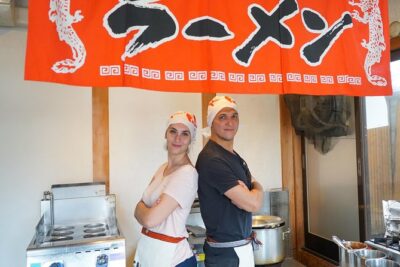
Ramen Cooking Class at Ramen Factory in Kyoto
Read our review →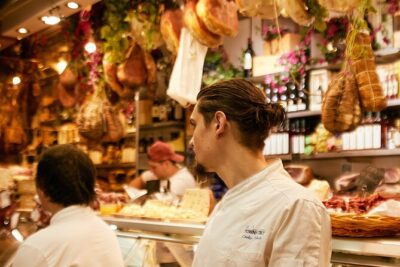
Small Group Cooking Class & Market Food Tour in Florence
Read our review →
Tokyo Sushi Making Class in Tsukiji with Professional Chef
Read our review →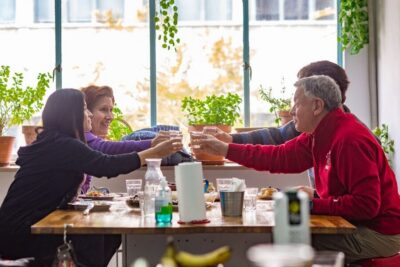
Food Market Visit and Cooking Class with Wine
Read our review →
Naples: Neapolitan Pizza and Tiramisù Making Class
Read our review →