Review · COOKING CLASSES
Ramen Making from Scratch +Akihabara Tour –Cooking Class
Akihabara is best known for electronics, anime, and arcades, but this experience takes you past the usual shopping route and into the food culture of present-day Tokyo. You’ll walk through the district, inspect ramen ingredients at a local supermarket, then make fresh noodles from flour before sitting down to eat your own Jiro-style bowl.
I like the small group limit of six, which should give you useful hands-on time rather than a distant cooking demonstration. I also like the supermarket stop, since it connects the finished dish to the everyday Japanese ingredients behind it.
The main drawback is the lack of vegetarian or vegan choices. You also pay your own train fare from Suehirocho Station to the kitchen studio, and the class ends away from Akihabara Station.
Key points at a glance
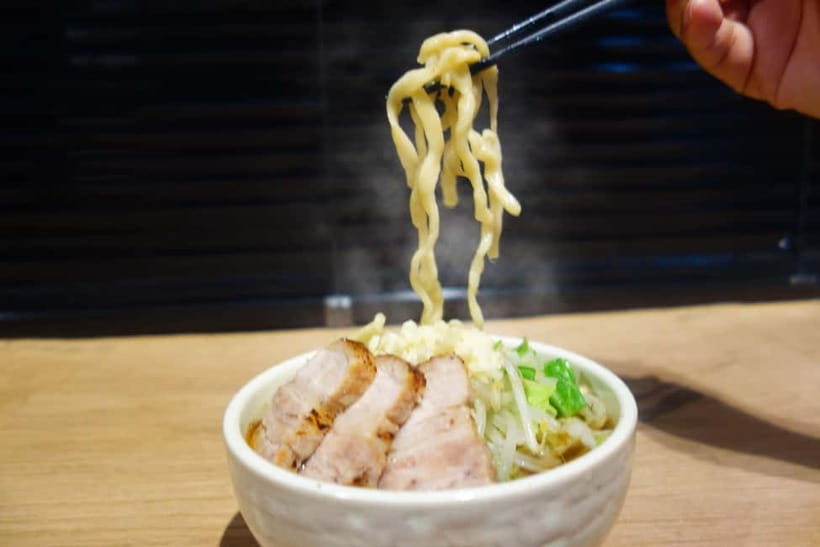
- Fresh noodles made by hand: You prepare the noodles from flour instead of simply assembling a ready-made meal.
- Akihabara beyond electronics: A short guided walk adds local context before the cooking begins.
- Supermarket ingredient tour: You see the ingredients used that day and learn how they fit into Japanese cooking.
- Jiro-style ramen in English: The class focuses on a specific, generous style of ramen and is taught in English.
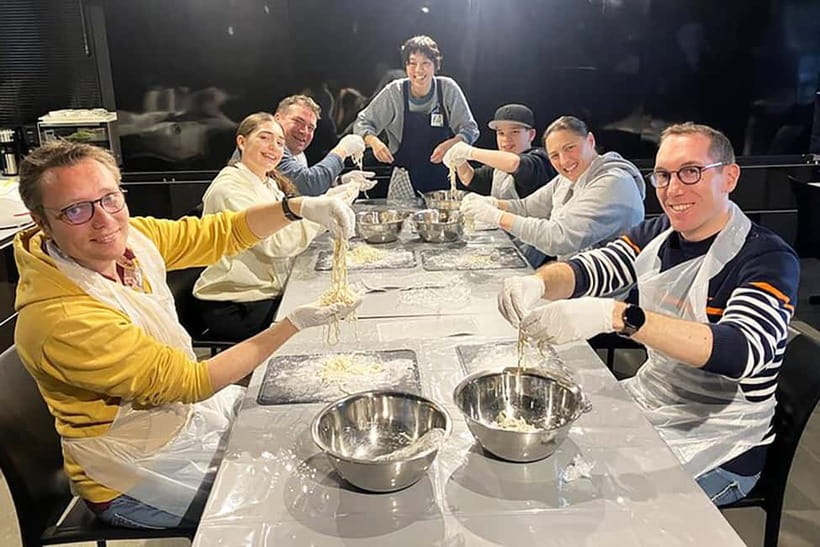
- Small group of up to six: The size suits anyone who wants direct help while making noodles and broth.
- Plan for a second location: You meet at JR Akihabara Station, but the class finishes at a Patia Kitchen Studio.
Why this Akihabara cooking class feels different
Many Tokyo food activities put you in front of a finished dish. This one gives you several steps to work through, beginning with flour and ending with a bowl of ramen. That matters because ramen is not just about the toppings. The noodles, broth, seasoning, and timing all affect the final result.
The class also begins outside the kitchen. At 11 AM, you meet at the outside central ticket gate of JR Akihabara Station. From there, your guide leads a walk of about 20 minutes through Akihabara toward a local supermarket.
That opening walk is short, but it gives the experience a useful setting. Akihabara is Tokyo’s famous electric town, filled with gadgets, anime, games, and pop culture. You get a quick look at that side of the neighborhood before turning your attention to food.
I like this combination because it prevents the cooking class from feeling sealed off from the city. You see the district first, then connect what you saw in the supermarket to the meal you make later.
More Cooking Classes in Japan
- Tokyo: Roll and Authentic Sushi Making Class in Asakusa
★ 4.9 · 1,957 reviews - Tokyo: Sushi Making Class in a Happi Coat near a Famous Spot
★ 4.9 · 1,377 reviews - Tokyo Sushi Making Class in Tsukiji with Professional Chef
★ 5.0 · 1,177 reviews
The 20-minute walk through Akihabara
Do not expect a full historical tour of Akihabara. The walk is designed to take you toward the supermarket, with popular spots along the way. Its value comes from orientation and atmosphere rather than a long list of landmarks.
For a first visit to Tokyo, this is a sensible use of time. Akihabara can feel confusing, especially if you arrive with only electronics stores and anime shops on your list. A guide helps you get your bearings before the group moves on to the food portion.
The timing also keeps the morning moving. You will not spend an hour walking before a three-hour class. After about 20 minutes, the focus shifts to the supermarket.
Meet exactly at the stated location, outside the central ticket gate. If you are more than 10 minutes late, the group may leave without you. In that case, you must make your own way to the studio, and no refund is provided for the missed departure.
What the supermarket stop adds
The supermarket visit lasts about 20 minutes. It is not a shopping break for personal souvenirs. The point is to look at the ingredients needed for that day’s ramen and hear the guide explain how they are used.
This is one of the most useful parts for anyone interested in Japanese food beyond restaurant menus. You can see the ingredients in their everyday retail setting, rather than meeting them only after they have been prepared and plated.
The guide explains the products used in the class, so the stop can help you understand why certain components belong in the broth, noodles, or toppings. You are not simply told that the ramen is Japanese. You get a look at the food system behind the recipe.
The stop is also practical. If you later want to recreate some part of the meal, seeing the ingredients in a Japanese supermarket gives you a better starting point. The class does not promise that you will leave with a full shopping list, so think of this as a guided introduction rather than a dedicated grocery lesson.
The train ride to the Patia kitchen studio
After the supermarket, you take a train to the cooking venue. The ride takes about 15 to 30 minutes, depending on the route and timing. The transportation fare is not included.
You should use your own Suica or another Japanese IC card. If you do not have one, the guide helps you buy a ticket. This is a small detail, but it is worth planning for because the class involves a change of location and does not finish where it began.
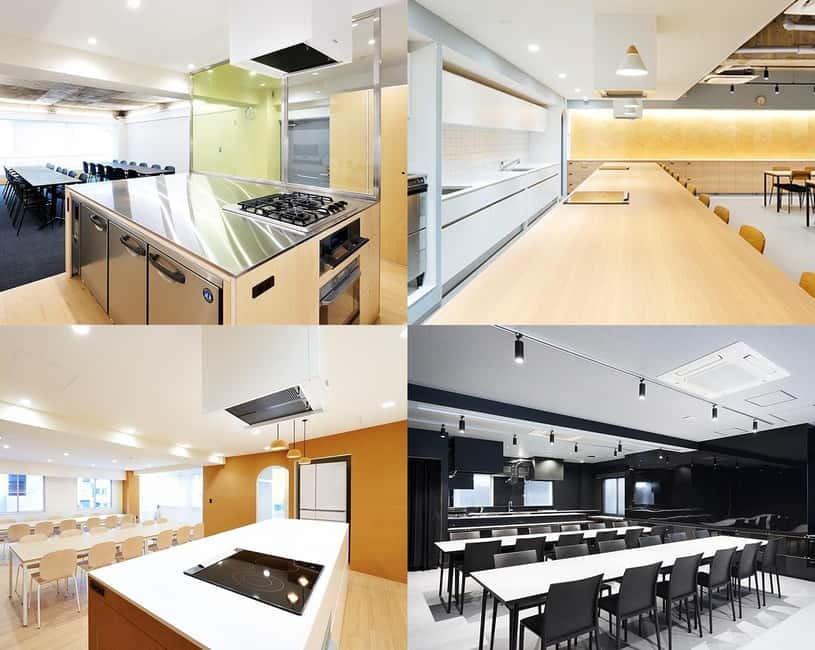
Patia Kitchen Studios are modern cooking spaces in central Tokyo. The studios are described as spacious and relaxing, with the nearest station only a few minutes away. They are also used for Japanese television programs, which gives the venue a professional kitchen setting without turning the class into a formal restaurant lesson.
The studio location creates the main logistical tradeoff. You start in central Akihabara and finish somewhere else. That is not a problem if you are happy to continue from the studio, but it matters if you have shopping plans, a timed reservation, or luggage waiting near Akihabara.
More Cooking Classes in Tokyo
- Ramen & Gyoza Cooking Class in Tokyo with Local Supermarket Visit
★ 5.0 · 823 reviews - Tokyo: Tsukiji Fish Market Sushi Making Class with Pro Chef
★ 4.9 · 506 reviews - Tokyo: Sushi Making Class
★ 4.9 · 390 reviews - Tokyo: Sushi and Ramen Cooking Class with Sake Pairing Set
★ 5.0 · 81 reviews
Making ramen from flour to finished bowl
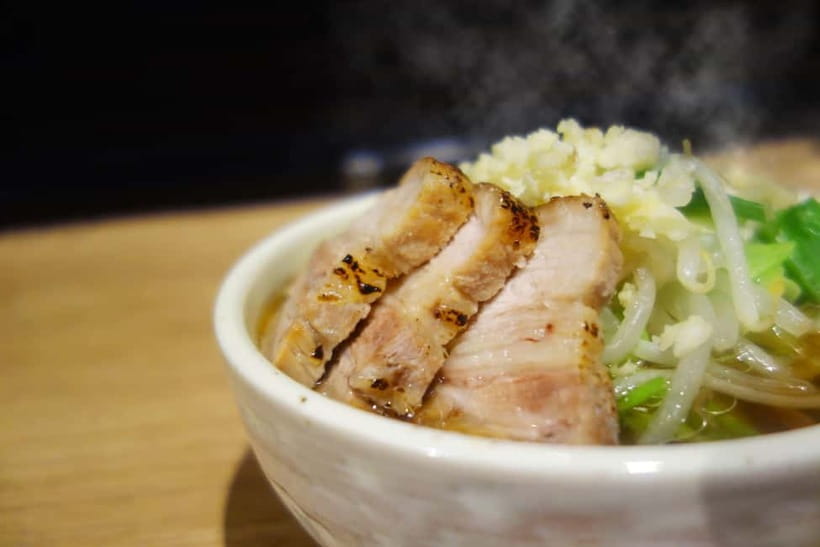
The cooking portion lasts about 90 minutes. With an English-speaking instructor, you prepare the main parts of the meal: fresh noodles, broth, and toppings.
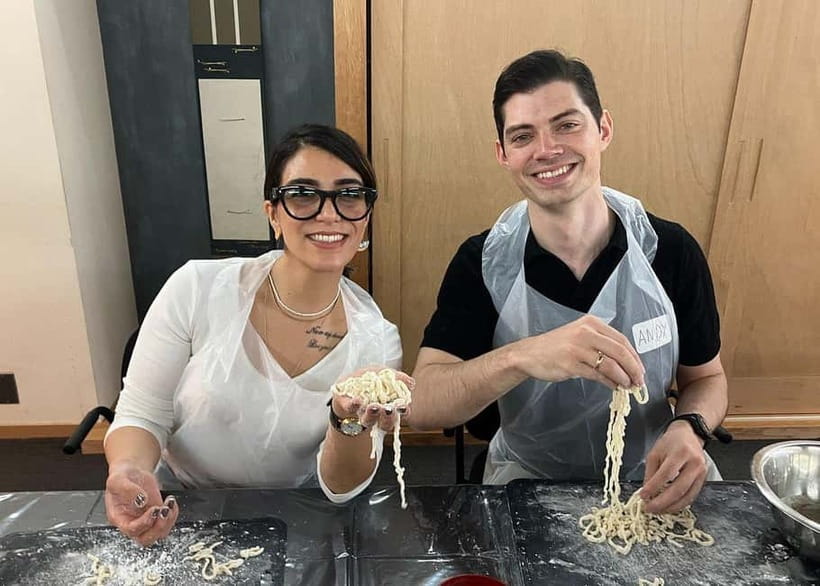
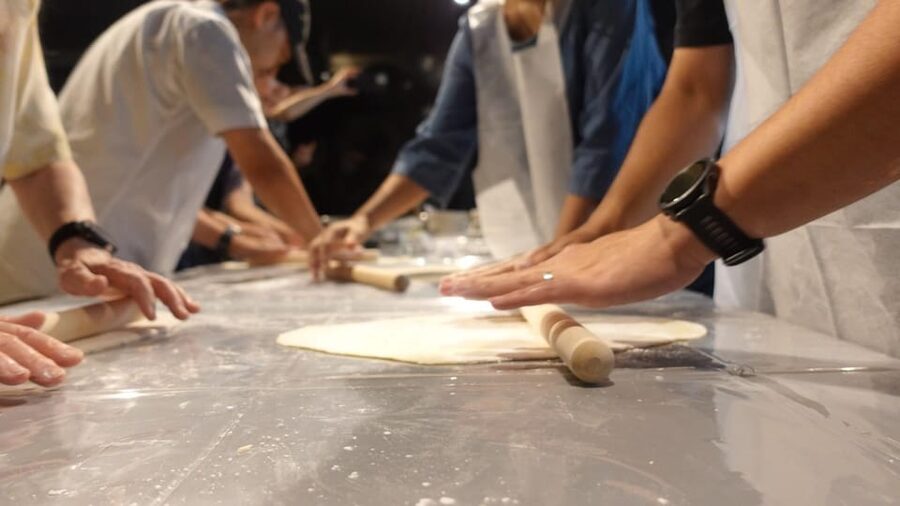
The noodles are the hands-on centerpiece. You work with flour and learn the basic process of turning it into ramen noodles. For many people, this is the part that makes the activity worth the price. A ramen lunch alone gives you a meal. Making the noodles gives you a skill and a clearer sense of how much work sits behind that meal.
You also prepare the broth. The information provided does not specify a particular broth recipe or cooking method for each date, so the exact ingredients can vary. The guide explains the ingredients used that day, and the class brings them together with the noodles and toppings.
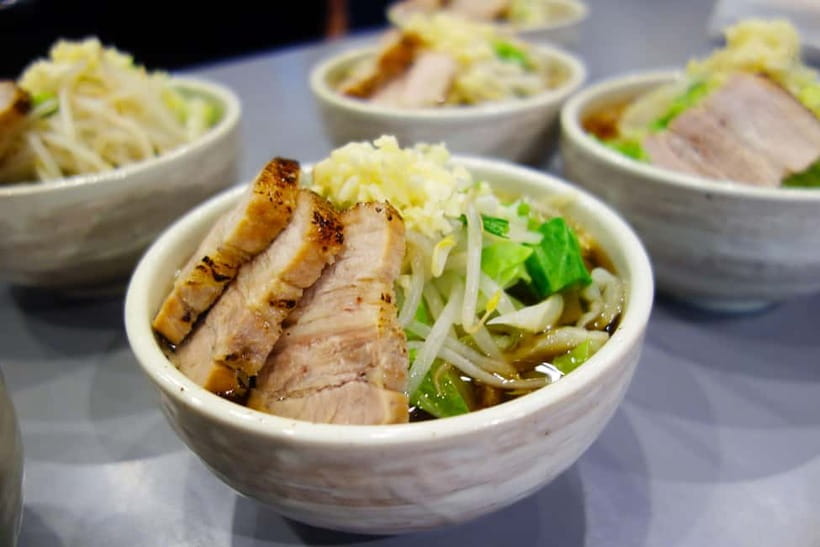
The result is Jiro-style ramen. This style is known here as the special focus of the class, and the experience is promoted as the only place where you can learn it in English. Since the class is limited to six participants, you should have a better chance of receiving direct help than you would in a large demonstration group.
The final step is eating the bowl you made. One published account described it as the best ramen of an entire Japan trip, while other feedback praised the guide and chef for being friendly and clear. I would treat those comments as a sign that the food and instruction are the strongest parts of the activity, but your result will still depend on how carefully you follow the steps.
What Jiro-style ramen means for your decision
The phrase Jiro-style will appeal to some diners more than others. This class is not presented as a general survey of every ramen style in Japan. It focuses on one particular approach, so you should book it because that style interests you, not because you want to compare several regional recipes.
The class covers broth, noodles, and toppings from scratch. That makes it a fuller cooking lesson than a simple ramen assembly class. You can expect to eat a substantial bowl, but the available information does not give a precise serving size or list every topping.
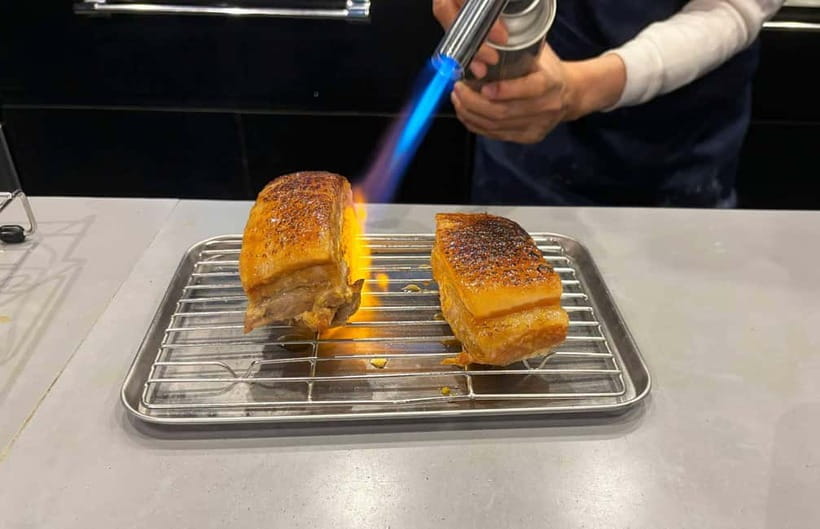
Pork chashu is part of the standard preparation. If you prefer chicken, you can request that change more than 48 hours before the experience. This is useful for diners who eat chicken but not pork. It does not solve the needs of vegetarians or vegans, since those options are not available.
Is $120 a fair price?
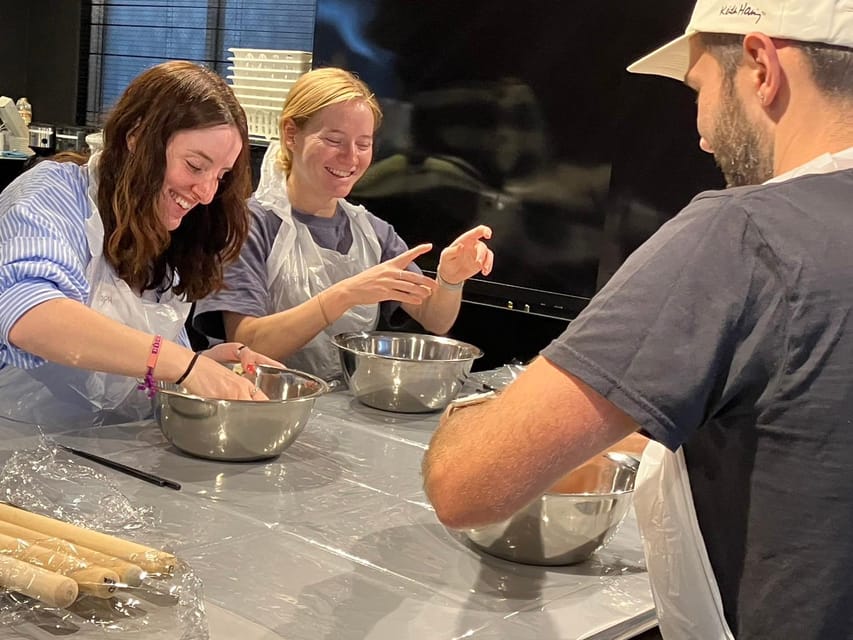
At $120 per person, this is not the cheapest way to eat ramen in Tokyo. You can find a bowl of ramen for far less. The value here comes from the full three-hour format, English instruction, the Akihabara walk, supermarket stop, hands-on cooking, food and drinks, and downloadable photographs from the experience.
The group size helps the price make more sense. With a maximum of six participants, you are paying for personal guidance as well as lunch. A large class could offer the same recipe for less, but it might give you less time with the dough, broth, and toppings.
The train fare is an extra cost, though it is a local journey rather than a major expense. You should also factor in the time needed to reach the meeting point and the fact that you finish at the studio.
I see the price as fair for visitors who genuinely want to learn. If you only want a quick, inexpensive ramen meal, this is poor value. If you want a compact food lesson with a neighborhood walk and a finished dish, the package is easier to justify.
Who will enjoy it most
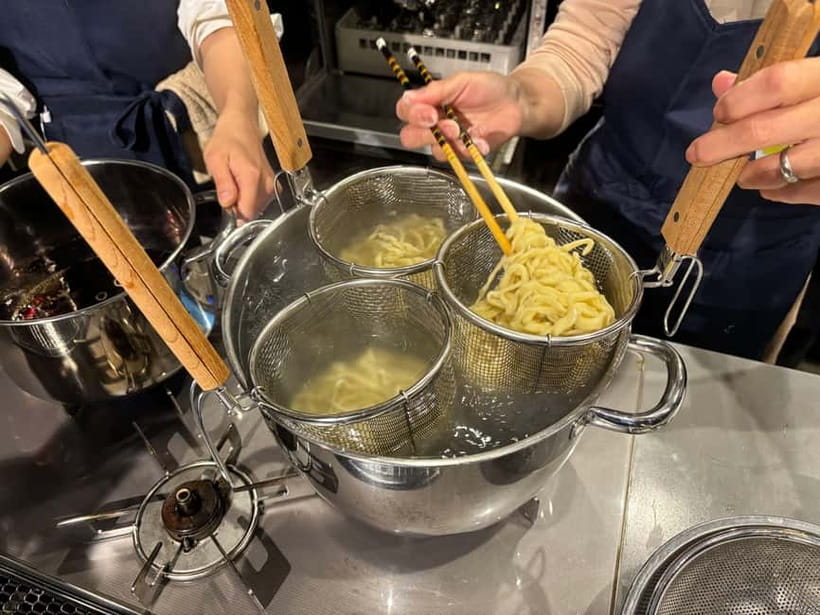
I would recommend this experience to adults, couples, friends, and small groups who like food and want to do more than take photographs of it. It also suits repeat visitors to Tokyo who have already seen the main Akihabara shopping streets and want a different way to spend part of the day.
The English instruction is a major benefit. You can ask questions and follow the cooking steps without relying on translation. The small group also suits anyone who wants a little help with the noodles rather than being left to copy a demonstration from across a room.
It is less suitable for very young children. Children under five are not accepted, and the class involves walking, train travel, standing, and food preparation. People with back problems should also avoid it, as should wheelchair users, because the activity is not listed as accessible.
Baby strollers are not allowed, and smoking is prohibited. These rules are simple, but families should know them before booking.
Timing, meeting point, and practical planning
The complete activity lasts about three hours. The stated schedule is:
- About 20 minutes walking through Akihabara
- About 20 minutes at the supermarket
- About 15 to 30 minutes by train to the studio
- About 90 minutes making and eating ramen
The timing leaves some room for transport variation, so avoid booking another fixed activity too close to the end. Since the class finishes at the kitchen studio, check your next destination before you go.
The meeting time is 11 AM at the outside central ticket gate of JR Akihabara Station. Akihabara has several station exits and rail lines, so allow enough time to find the correct gate. Being early is especially important here because the group departs after 10 minutes.
The activity includes food and drinks, the cooking class, the supermarket visit, and photographs that you can download later. Hotel pickup and drop-off are not included.
Free cancellation is available up to 24 hours before the start time for a full refund. You can also reserve the activity and pay later, which may help if you are still adjusting your Tokyo schedule.
Ramen class or ordinary Akihabara tour?
Choose this experience if you want a strong food focus. The Akihabara walk is short, and the supermarket visit supports the cooking lesson rather than replacing it.
Choose a regular Akihabara tour if your main goal is electronics, anime, arcades, or a longer look at the neighborhood. You will see some of that world here, but the real destination is the kitchen.
The best feature is the connection between place and plate. Akihabara gives you the setting, the supermarket shows you the ingredients, and the kitchen lets you turn them into a meal. That progression gives the three hours a clear shape.
Should you book this ramen experience?
Book it if you want to make noodles from scratch, prefer an English-speaking class, and are happy to spend three hours on one specific ramen style. The small group, supermarket visit, and hands-on preparation give it more substance than a standard lunch.
Skip it if you need vegan or vegetarian food, use a wheelchair, have serious back problems, or need to finish near Akihabara Station. Also skip it if you only want the cheapest bowl of ramen in town.
For most pork-eating visitors who enjoy cooking, this is a well-focused Tokyo activity. Come early, bring an IC card if you have one, wear comfortable clothes for the cooking session, and leave room in your schedule after the class.
FAQ
Where does the experience begin?
It begins at 11 AM outside the central ticket gate of JR Akihabara Station.
Where does the experience finish?
The class finishes at a Patia Kitchen Studio, which is different from the Akihabara meeting point.
How long does the activity last?
The experience lasts about three hours.
Is the cooking class taught in English?
Yes. The instructor language is English.
How many people can join the group?
The group is limited to six participants.
Do I make the ramen noodles myself?
Yes. You learn to make fresh ramen noodles from flour as part of the cooking class.
Is the train ride included in the price?
No. Transportation from Suehirocho Station to the studio is not included. You use your own Suica or another IC card, or the guide can help you buy a ticket.
Are vegetarian or vegan options available?
No. Vegan and vegetarian options are not available.
Can the pork chashu be changed to chicken?
Yes. You can request chicken instead of pork if you provide more than 48 hours’ notice.
Is hotel pickup included?
No. Hotel pickup and drop-off are not included.
More hands-on workshops in Tokyo
- Shinjuku Tokyo: Authentic Japanese Home-Style Culinary Class
★ 4.9 · 125 reviews - Shibuya Tokyo: Sushi Making Class (Vegan/Vegetarian/Halal)
★ 4.7 · 29 reviews - Authentic Pizza Making Class in Naples with Appetizers and Drink
★ 5.0 · 3,178 reviews - Ramen Cooking Class at Ramen Factory in Kyoto
★ 5.0 · 1,937 reviews
More Sushi and Ramen Tours in Tokyo
- Sushi Making Tokyo Roll and Authentic Japanese Sushi Class
★ 5.0 · 3,971 reviews - Best of Shinjuku: Izakaya Food Tour (4 Stops, 14+ Tastings)
★ 5.0 · 1,863 reviews - Sushi Making Tokyo! Popular Maki Sushi & Japanese Sushi(+Recipe!)
★ 5.0 · 1,314 reviews - Tokyo Night Foodie Tour in Shinjuku – Seasonal Sushi, Wagyu Beef
★ 5.0 · 1,161 reviews
New food tours we have reviewed in Tokyo
- Tokyo: West-Side Cycling and Food Tour with Guide★ 5.0 · 37 reviews
- Tokyo: Wagyu and Sushi Gastronomic Journey★ 4.3 · 24 reviews
- Tokyo Tsukiji Food & Culture Private Tour Licensed Guide★ 4.9 · 28 reviews
- Tokyo: Allstar Food Tour★ 4.7 · 29 reviews
- Tokyo: Togoshi Ginza Street Food Tour★ 5.0 · 34 reviews
- Tokyo: Sushi Making Class★ 4.9 · 390 reviews
- Tokyo: Best of Shibuya Food Tour★ 4.7 · 119 reviews
- Tokyo: Sushi and Ramen Cooking Class with Sake Pairing Set★ 5.0 · 81 reviews
Cooking Classes, compared.

Authentic Pizza Making Class in Naples with Appetizers and Drink
Read our review →
Tokyo: Roll and Authentic Sushi Making Class in Asakusa
Read our review →
Ramen Cooking Class at Ramen Factory in Kyoto
Read our review →
Small Group Cooking Class & Market Food Tour in Florence
Read our review →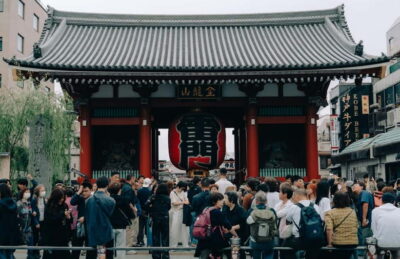
Tokyo: Sushi Making Class in a Happi Coat near a Famous Spot
Read our review →
Tokyo Sushi Making Class in Tsukiji with Professional Chef
Read our review →
Food Market Visit and Cooking Class with Wine
Read our review →