Review · COOKING CLASSES
Tokyo Sushi Making Class in Tsukiji with Professional Chef
The best part of this Tsukiji class comes before you touch the rice: a professional chef demonstrates how fish is prepared for sushi, including the careful work of Japanese knives. Then you make five pieces of nigiri and one rolled sushi, with the chef and English-speaking host helping at each step.
I like two things here. First, you eat what you make, so the lesson becomes lunch rather than another cooking demonstration. Second, the setting is a small traditional Japanese building near Tsukiji’s market streets, with market-sourced ingredients and proper sushi tools. The main catch is practical: the classroom is on the third floor with stairs only, and the 90-minute session can run a little over.
Key points
- Fish preparation comes first: Watch the sushi master break down fish and explain Japanese knives before making anything.
- You make a full tasting lunch: The class includes five different nigiri and one rolled sushi.
- English help is built in: Hosts such as Yuko, Yugo, Kanon, Emma, and AJ have guided past sessions, translating and helping with technique.
- Tsukiji adds useful context: The meeting point is close to Tsukiji Fish Market, Tsukiji Jogai Market, and the Nippon Fish Port Market.
- Good for first-timers: The chef demonstrates each movement, then helps you copy it at your own station.
- Plan for stairs and food restrictions: The room is on the third floor, and allergy requests may be possible, but halal and kosher requests cannot be accommodated.
A sushi lesson that begins with the knife
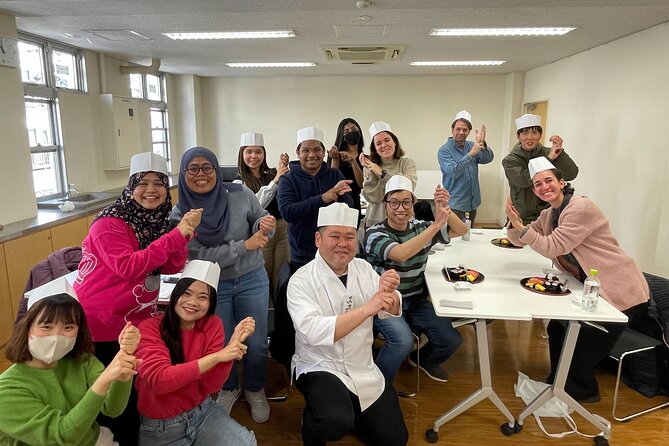
Many cooking classes rush straight to the fun part. This one starts with the fish. In the traditional classroom, the professional sushi chef gives a fish disassembly demonstration and explains the steps that turn a market ingredient into sushi-ready slices.
That opening matters. Sushi looks simple on the plate, but the shape depends on knife angle, pressure, grain, and thickness. You will also hear about Japanese knives, which gives the class a bit more substance than a basic rice-and-seaweed workshop.
The English-speaking host translates and keeps the instructions clear. Past sessions have been led by hosts including Yuko, Yugo, Kanon, Emma, and AJ, with chefs including Tanaka and Kate. The exact team can vary, but the format is consistent: the host handles English explanations while the sushi master focuses on the craft.
You do not need prior kitchen experience. The class is designed for beginners, and the chef shows the process before you try it. Expect help when your rice shape is uneven or your roll needs a little rescue. That is part of the fun, and it keeps the activity from becoming a test.
More Cooking Classes in Japan
- Tokyo: Roll and Authentic Sushi Making Class in Asakusa
★ 4.9 · 1,957 reviews - Tokyo: Sushi Making Class in a Happi Coat near a Famous Spot
★ 4.9 · 1,377 reviews - Ramen & Gyoza Cooking Class in Tokyo with Local Supermarket Visit
★ 5.0 · 823 reviews
From Tsukiji market streets to the classroom
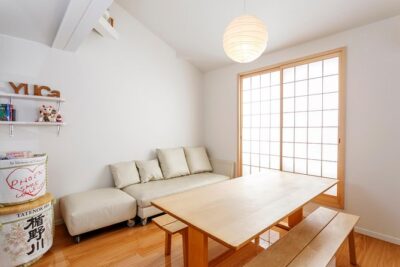
The class meets at 千社額棟4-chōme-16-2 Tsukiji, Chuo City, Tokyo 104-0045. You make your own way there, and the activity ends back at the same meeting point.
The location works well for a food-focused morning or afternoon. The classroom is near Tsukiji Fish Market, the Tsukiji Outer Market, and the Tsukiji Nippon Fish Port Market. The markets give you plenty to look at before or after class, from food stalls and shops to the wider atmosphere of old Tokyo’s seafood district.
Keep your expectations sensible. The class itself is indoors in a local building, not a walking tour through every market area. The market connection is useful because the ingredients and utensils are sourced locally, but the main event is the lesson upstairs.
The building has only stairs to the third floor. I would treat this as an important booking detail, not a footnote. Anyone who has trouble with stairs should contact the provider before reserving.
Making five nigiri and one rolled sushi
After the fish demonstration, the chef explains what sushi is and how the different forms are assembled. You then learn two basic styles: nigiri sushi and rolled sushi, often called maki.
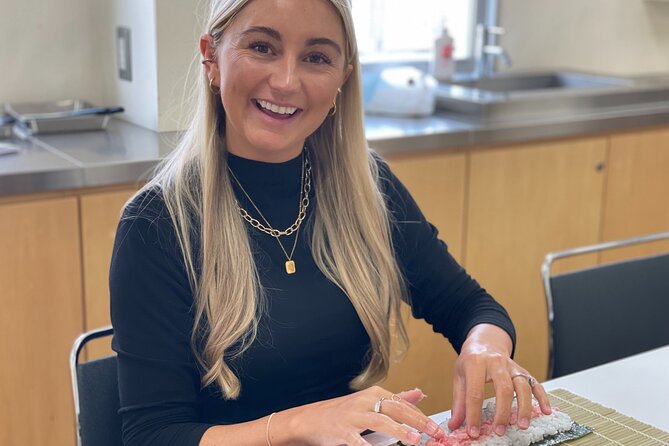
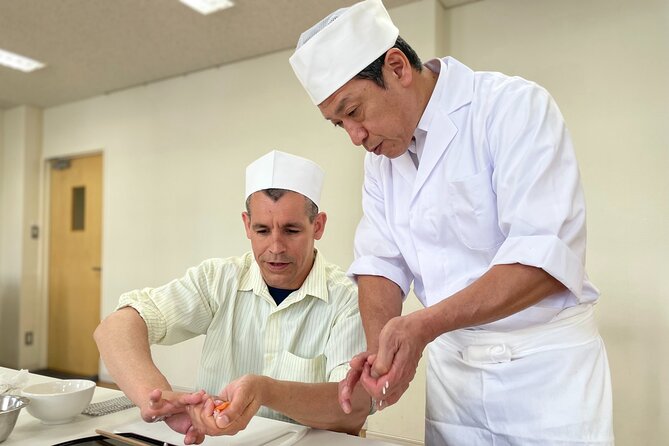
Nigiri looks modest, but it takes practice. You work with rice and fish, learning how to form the rice and place the topping so it holds together without becoming a heavy block. The chef demonstrates the correct steps, and assistants help you adjust your technique.
The class includes five different nigiri sushi. That variety gives you more than one chance to get comfortable. Your first piece may look a little lopsided, while the later pieces often improve as your hands learn the pressure needed.
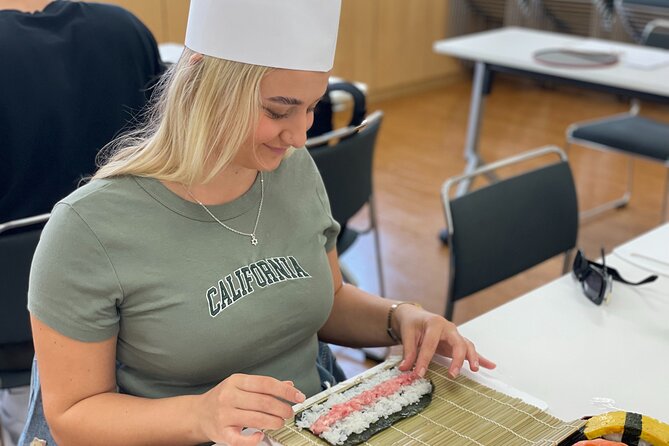
The rolled sushi offers a different task. You work with the filling, rice, and seaweed, then shape the roll and cut it into pieces. This is the part that tends to appeal to children and first-time cooks because the result becomes visible quickly.
You are not simply watching a chef work. The hands-on format is the point, and the staff stays involved throughout. You can expect a helpful nudge rather than a lecture if your sushi is not perfect.
Fresh wasabi, market ingredients, and your own lunch
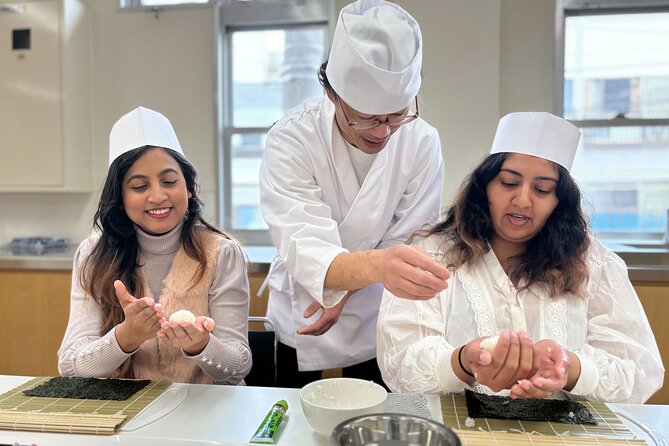
The food is part of the price, not an extra charge at the end. You eat the sushi you prepare, which turns the lesson into a compact lunch.
The ingredients are fresh and sourced from the market, and the class provides proper utensils and tableware. After you eat your own pieces, the sushi master also prepares another piece for you, using freshly prepared wasabi.
That small comparison is useful. Your handmade sushi shows you what the process feels like, while the chef’s piece lets you see the same ingredients handled by an expert. It is a pleasant reminder that sushi-making skill comes from repetition.
Arrive with a little room in your stomach. The serving is not described as a separate restaurant meal, but you will be eating five nigiri and one roll, along with the chef’s preparation. For many people, that is enough for a light lunch, especially when paired with time at the market.
The food also makes this a good choice for families. Several sessions have included children, with ages reported from 7 to 12. Making the food can encourage a cautious child to try sushi or sashimi for the first time, though you should share allergy information when booking.
More Cooking Classes in Tokyo
- Tokyo: Tsukiji Fish Market Sushi Making Class with Pro Chef
★ 4.9 · 506 reviews - Tokyo: Sushi Making Class
★ 4.9 · 390 reviews - Tokyo: Sushi and Ramen Cooking Class with Sake Pairing Set
★ 5.0 · 81 reviews - Shibuya Tokyo: Sushi Making Class (Vegan/Vegetarian/Halal)
★ 4.7 · 29 reviews
What the 90-minute schedule really gives you
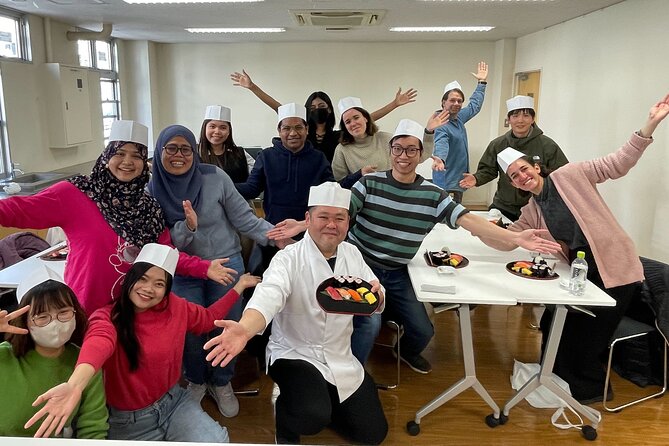
The advertised duration is about one hour and 30 minutes. That is short enough to fit neatly between sightseeing plans, but long enough for a proper demonstration and hands-on practice.
You will not leave as a sushi chef. You will leave with a clear introduction to fish preparation, sushi types, rice handling, nigiri, maki, and wasabi. The pace is intended for beginners, so the class spends time on basic technique instead of assuming you already know how to hold the ingredients.
There is one scheduling caution. The activity may run beyond its planned end time. If you have a train, restaurant reservation, or timed entry soon afterward, leave a buffer. I would avoid booking anything that requires you to cross Tokyo immediately after class.
The compact format is especially useful on a busy Tokyo itinerary. You can visit the market area, take the class, eat your handmade sushi, and continue sightseeing without giving up half a day.
Why the English support matters
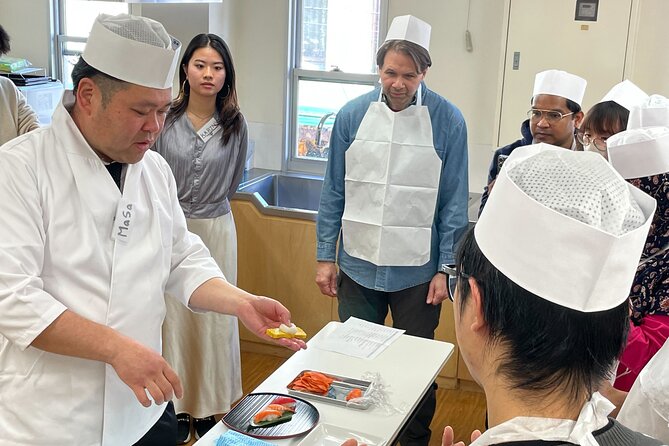
A sushi lesson depends on small instructions. How much rice should you use? Where should the fish sit? How tightly should you roll? A general translation is not enough if you miss one movement.
The English-speaking host stays with the presentation and translates the chef’s explanation. The host also helps keep the group moving and can step in when you need clarification. Names praised in past sessions include Yuko, Yugo, Kanon, Emma, AJ, and Miky, though you should not assume a particular host will lead your date.
This arrangement gives the lesson two useful voices. The chef demonstrates the traditional technique, while the host makes sure English-speaking participants can follow it. That is particularly helpful for families and mixed-age groups.
The group can include up to 20 people. That is a fairly broad maximum for a practical class, so the intimacy may depend on the number booked for your session. The classroom has been described as intimate and suitable for small groups, but a full group will naturally feel less personal than a small one.
A good family activity, with a few limits
Children can take part, and the class has worked well for families. The hands-on format gives younger participants something to do with their fingers and eyes, rather than asking them to sit through a long cultural talk.
The staff helps people make attractive sushi plates, and children can take photos of the finished food. That makes the activity memorable without turning it into a passive photo stop.
Still, sushi involves raw fish and ingredients that may not suit every child. The provider asks you to report allergies when booking and will try to help, but cannot promise every request can be met. Halal and kosher requests are not accommodated, so this is not the right class if strict dietary compliance is essential.
The stairs are another family consideration. Parents with small children, or anyone carrying bags, should plan for the third-floor classroom and stair access.
Price, timing, and what you receive
At $49.74 per person, the class offers reasonable value if you want instruction and lunch in one short activity. The price includes the five nigiri and one roll you make, fresh ingredients, utensils, tableware, the English-speaking host, and the professional chef.
It does not include hotel pickup, drop-off, transportation, extra food, or extra drinks. You also make your own way to Tsukiji, which is straightforward for anyone already planning to visit the market area but less convenient if you want a door-to-door tour.
The value is strongest for three kinds of visitors:
- First-time sushi makers who want clear instruction without committing to a full cooking day.
- Families looking for an activity that children can actively join.
- Sushi fans who want to understand the knife work and preparation behind the finished plate.
If you already have strong sushi-making skills, the class may feel basic. Its purpose is to introduce the craft, not provide advanced professional training.
How the market setting shapes the experience
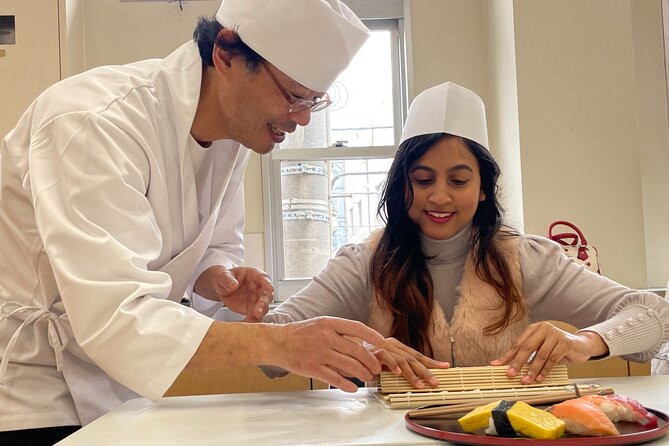
Tsukiji gives the lesson a useful sense of place. The market district is tied closely to seafood, and the class uses ingredients sourced from local shops. You are not making sushi in an abstract cooking studio far from the food trade.
The nearby Outer Market is also worth allowing time for. You can explore before or after the class, although the activity itself ends at the meeting point and does not include hotel transfers or a guided market walk.
I like this arrangement because you can build your own food-focused outing. Visit the market, take the class, then continue through the Tsukiji area. Just remember that the market visit is extra time you plan yourself, not a separate guided portion of the workshop.
Booking details worth knowing before you go
Confirmation is provided at booking, and the activity is near public transportation. You need to provide allergy information when making the reservation. The provider will try to accommodate allergy-related requests, but the information specifically says this may not be possible.
Free cancellation is available if you cancel at least 24 hours before the start time. Cancellations or changes made less than 24 hours ahead are not accepted for a refund, and the cut-off uses Tokyo local time.
The class accepts mobile tickets, which is handy when you are moving around Tokyo. Save the meeting address and allow time to find the building, especially if you are unfamiliar with Tsukiji’s smaller streets.
Should you book the Tsukiji sushi class?
I would book this if you want a short, hands-on food activity rather than another sightseeing stop. The fish preparation demonstration, English translation, five nigiri, one roll, and included lunch give the 90 minutes a clear purpose.
It is also a strong pick for families and beginners. The staff has helped children and first-time sushi makers, and the class gives you a skill you can try again at home.
I would pause if you need halal or kosher food, cannot manage three flights of stairs, or have a tight appointment immediately afterward. For everyone else, $49.74 is a fair price for a market-based lesson that teaches the basics and feeds you at the end.
FAQ
How long does the sushi-making class last?
The class lasts approximately one hour and 30 minutes. It may run beyond the scheduled ending time, so leave extra time before your next appointment.
Where does the activity begin and end?
It begins at 千社額棟4-chōme-16-2 Tsukiji, Chuo City, Tokyo 104-0045, Japan. The activity ends back at the same meeting point.
What types of sushi will I make?
You will make nigiri sushi and rolled sushi. The included food consists of five different nigiri pieces and one rolled sushi.
Is lunch included?
Yes. You eat the sushi you make during the class. The sushi master also prepares another piece with freshly prepared wasabi.
Is the class taught in English?
An English-speaking host leads the explanations and translates for the professional sushi chef.
Is the class suitable for beginners?
Yes. The chef demonstrates each step, and the staff helps you as you make the sushi. No previous sushi-making experience is listed as a requirement.
Can children join the class?
Yes. The experience is suitable for families, and children have taken part in sessions. The classroom is on the third floor and can only be reached by stairs.
Can the class accommodate allergies or dietary restrictions?
You should report allergies when booking. The provider will try to accommodate allergy-related requests, but this may not be possible. Halal and kosher requests cannot be accommodated.
What is included in the ticket price?
The price includes the sushi you make, fresh ingredients, proper utensils and tableware, an English-speaking host, and a professional sushi master. Hotel transfers, transportation, extra food, and extra drinks are not included.
More hands-on workshops in Tokyo
- Shinjuku Tokyo: Authentic Japanese Home-Style Culinary Class
★ 4.9 · 125 reviews - Ramen Making from Scratch +Akihabara Tour –Cooking Class
★ 5.0 · 25 reviews - Authentic Pizza Making Class in Naples with Appetizers and Drink
★ 5.0 · 3,178 reviews - Ramen Cooking Class at Ramen Factory in Kyoto
★ 5.0 · 1,937 reviews
More Sushi and Ramen Tours in Tokyo
- Sushi Making Tokyo Roll and Authentic Japanese Sushi Class
★ 5.0 · 3,971 reviews - Best of Shinjuku: Izakaya Food Tour (4 Stops, 14+ Tastings)
★ 5.0 · 1,863 reviews - Sushi Making Tokyo! Popular Maki Sushi & Japanese Sushi(+Recipe!)
★ 5.0 · 1,314 reviews - Tokyo Night Foodie Tour in Shinjuku – Seasonal Sushi, Wagyu Beef
★ 5.0 · 1,161 reviews
New food tours we have reviewed in Tokyo
- Tokyo: West-Side Cycling and Food Tour with Guide★ 5.0 · 37 reviews
- Tokyo Tsukiji Food & Culture Private Tour Licensed Guide★ 4.9 · 28 reviews
- Tokyo: Allstar Food Tour★ 4.7 · 29 reviews
- Tokyo: Wagyu and Sushi Gastronomic Journey★ 4.3 · 24 reviews
- Tokyo: Togoshi Ginza Street Food Tour★ 5.0 · 34 reviews
- Tokyo: Sushi Making Class★ 4.9 · 390 reviews
- Tokyo: Shibuya Food Tour (13 dishes and 4 Eateries)★ 5.0 · 178 reviews
- Tokyo: Best of Shibuya Food Tour★ 4.7 · 119 reviews
Cooking Classes, compared.
Authentic Pizza Making Class in Naples with Appetizers and Drink
Read our review →
Tokyo: Roll and Authentic Sushi Making Class in Asakusa
Read our review →
Ramen Cooking Class at Ramen Factory in Kyoto
Read our review →
Small Group Cooking Class & Market Food Tour in Florence
Read our review →
Tokyo: Sushi Making Class in a Happi Coat near a Famous Spot
Read our review →
Food Market Visit and Cooking Class with Wine
Read our review →
Naples: Neapolitan Pizza and Tiramisù Making Class
Read our review →