
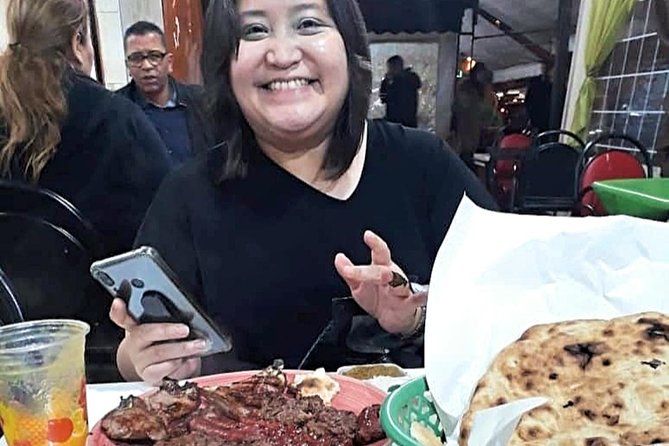
Review · STREET FOOD TOURS
Casablanca Food Tour – Moroccan Street Food Tour
Casablanca’s best food stories unfold in its markets, bakeries, public ovens, and little neighborhood stalls. This three-hour walk takes you through Habbous, then into nearby back streets where more than 10 tastings turn a simple meal into a look at daily Moroccan life.
I like the small maximum of eight people, which makes it easier to ask questions and follow a guide through crowded lanes. I also like the range of food, from pastries and grilled meat to cookies, fruit, nuts, olives, and desserts. Guides named Nezha, Naima, Hasna, and Hasma have led particularly well-regarded departures.
The main drawback is practical: you will be on your feet for about three hours, with no reliable bathroom access during most of the walk. The tour is also a poor fit for strict vegetarians, vegans, gluten-free diners, and anyone with severe food allergies unless substitutions can be arranged ahead of time.
Key points to know before booking
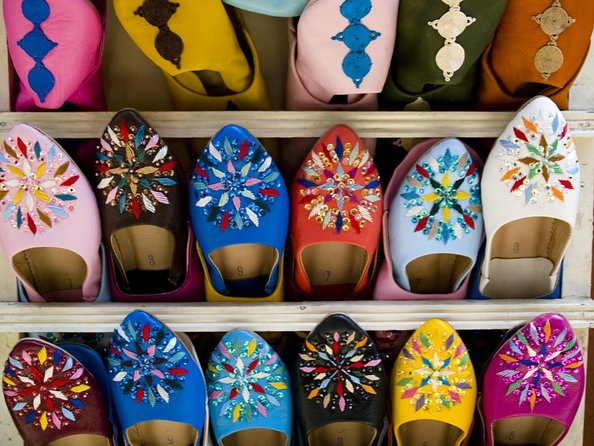
- Habbous is the opening chapter: Begin beneath the neighborhood’s arches, with crafts, housewares, bakeries, spice shops, and food tastings.
- More than six food stops: Expect over 10 samples, including savory pastries, fried breads, grilled meats, sweets, fruit, nuts, olives, and other local bites.
- A proper meal, not just nibbles: Dinner is included, and the food is intended to cover your main meal of the day.
- Small groups matter here: The maximum is eight people, useful in narrow lanes and crowded market areas.
- Local context comes with every bite: Your guide explains Moroccan food customs, language, traditions, markets, and neighborhood life.
- Plan your return ride: Transport is not included, and evening taxis can be hard to find in Habbous after the tour.
Why Habbous makes a smart starting point
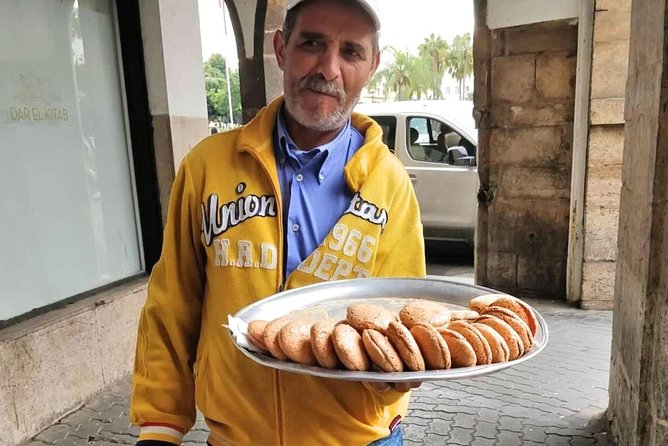
The tour begins at Cafe Malakiya (Royale), at the listed meeting point in Casablanca’s Habbous neighborhood. Arrive five to 10 minutes early. The group leaves on schedule, and finding the guide at the start is easier if you have your mobile ticket ready.
Habbous gives you a gentler introduction to local life than a straight plunge into a market. You walk under arched passages, pass shops selling crafts and housewares, and get a feel for the neighborhood’s architecture. Food appears early, but the setting matters just as much. A baker, spice seller, or olive merchant is not simply a photo stop. Each place helps explain how food is bought, prepared, and shared.
This is one reason I like doing the tour early in a Casablanca visit. You get useful food pointers before ordering meals on your own in Fez, Marrakesh, or elsewhere in Morocco. You also learn the difference between a food made for a family table and one designed to be eaten quickly from a market stall.
The Habbous portion is not a formal sightseeing circuit. It is a walking route tied to food, so expect the guide to shift between architecture, local customs, and whatever is being prepared nearby. That informal rhythm is part of the appeal. It also means you should not expect a fixed list of every dish in advance.
More Street Food Tours in Morocco:
- Marrakech: Street Food Tour with a Local Guide
★ 4.9 · 3,119 reviews - Marrakech: Street Food Tour by Night
★ 4.8 · 2,838 reviews - Marrakech Night Street Food Tour / Taste The Real Marrakech
★ 4.9 · 200 reviews
From bakeries to the covered market
After the first tastings, the route heads farther into back streets and a nearby city neighborhood. Here, the polished feel of the opening area gives way to a more active market setting. You may pass through a covered market and move among stalls used by local shoppers.
This is where the tour earns its price. Casablanca can feel difficult to read at street level, especially on a first visit. A guide helps you understand what you are seeing and makes it easier to pause at places you might otherwise pass. The route is designed around food, but it also gives you a window onto urban Moroccan routines.
Expect sensory overload in the best sense: the smell of olives, the sight of spices, warm bread, trays of sweets, and the sound of shopkeepers and shoppers around you. One especially memorable part for many people is the olive market, where the aroma becomes part of the experience. Prickly pears and the friendly seller behind them have also made a lasting impression on past guests.
You will not be sealed off from the neighborhood in a private dining room. That is the point. You are moving through working markets, so the pace can vary, the paths may be tight, and you need to stay with the group. Wear comfortable shoes and keep your belongings close.
What you are likely to eat along the way
The tour promises more than 10 tastings at over six stops. The exact order and selection can change, but the food covers a useful spread of Moroccan street and market fare.
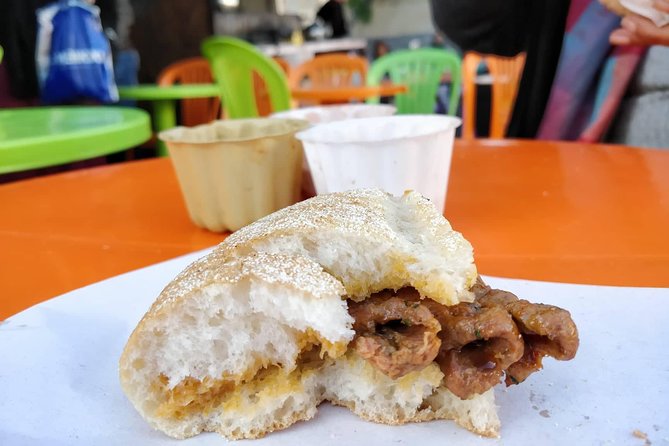
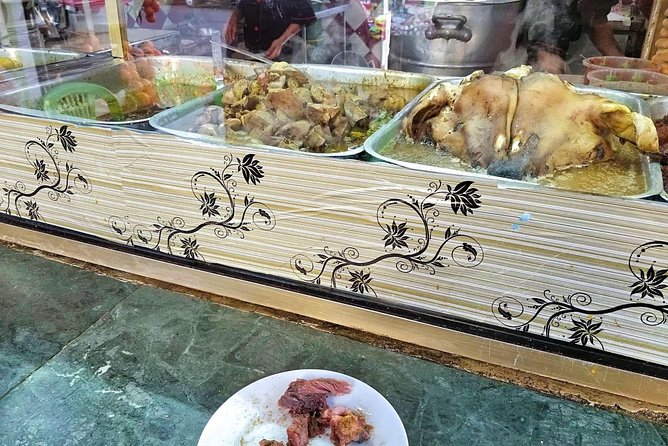
You can expect savory pastries, fried breads, grilled meats, sweets, cookies, desserts, fruit, nuts, olives, and tea. The selection gives you more than a quick taste of one famous dish. It shows how Moroccan eating moves between bakery food, snack food, sweets, market produce, and freshly prepared meat.
Savory pastries are a good early introduction because they show the balance of crisp pastry and seasoned filling that appears often in Moroccan food. Fried breads offer a different texture and make clear why bread remains central to everyday meals. Grilled meats bring a more substantial element, while cookies and desserts give the tour a sweet finish.
A particularly useful variation described by past participants involves buying fresh meat and vegetables in the market and taking them to a local restaurant to be cooked. This is not a guarantee for every departure, so treat it as a possible part of the route rather than a promised stop. If it happens, it gives you a rare look at the link between shopping and eating in Casablanca.
The meal is substantial enough to count as dinner or your main meal of the day. Do not eat a large meal immediately before you arrive. You want room for repeated samples, and the food keeps coming at a steady pace.
The public oven and the social side of food
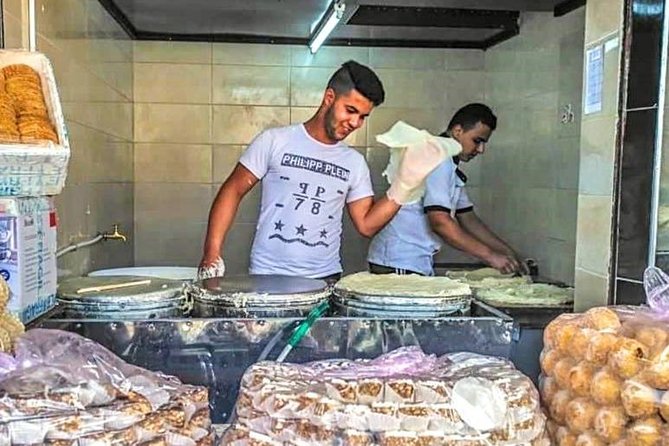
Food tours are most useful when they explain more than ingredients. This one places food inside Moroccan social life. Your guide discusses traditions, language, customs, and the role meals play in the community.
The public oven is a good example. It is not just an old-fashioned curiosity. It helps you picture how a neighborhood food system works and how cooking can be shared beyond one private kitchen. Even a short stop there adds context to the bread and baked goods you have already tasted.
A local guide can also explain small details that are hard to pick up alone: why certain stalls attract regulars, how produce is selected, and how market food differs from restaurant fare. Guides such as Nezha have been praised for pairing food knowledge with thoughtful answers about Casablanca and Morocco. Naima, Hasna, and Hasma have also been named as warm and capable guides on different departures.
Do keep in mind that a guide’s personality shapes the outing. The route is fixed in broad terms, but the conversation and pacing will vary. That is usually an advantage on a small food walk, though people who prefer a tightly scripted sightseeing tour may find it more relaxed than expected.
More food tours in Morocco:
- Authentic Moroccan Food Tour in Marrakech with Dinner
★ 5.0 · 1,423 reviews - Marrakech: Jemma El Fnaa Food Tour with Dinner
★ 4.7 · 394 reviews - Marrakech: Authentic Moroccan Food Walking Tour & Dinner
★ 4.8 · 261 reviews - Cooking Classes Farm to Table Marrakech
★ 5.0 · 165 reviews
Why the eight-person limit matters
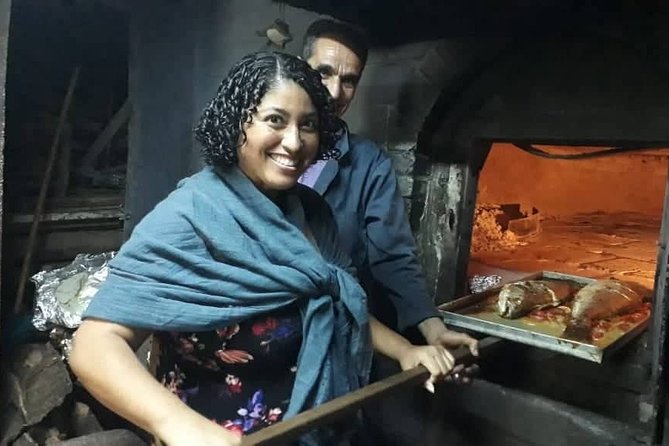
The maximum group size is eight people. That is a strong feature for this particular route. A large group would be harder to keep together in market lanes and would make it more difficult to hear explanations at food stalls.
A small group also gives you a better chance to ask about ingredients, customs, and dishes you do not recognize. If you are trying a new food, it is easier to pause and ask what it is, how it is eaten, or how spicy it might be.
The tradeoff is that a minimum of two adults is required for the tour to operate. If that minimum is not met, the operator may offer another date or a refund. The tour runs with rain or shine conditions in mind, but poor weather can also lead to a date change or full refund.
Is $107 a fair price?
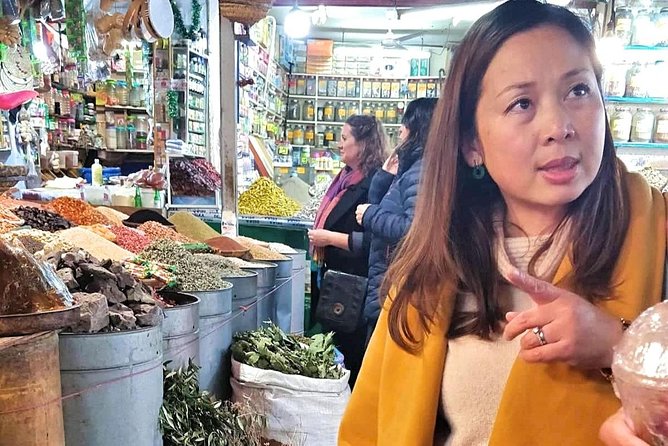
At $107 per person, this is not the cheapest way to eat in Casablanca. You can buy individual snacks for far less. The better question is what you are paying for beyond the food.
The price includes dinner, more than 10 tastings, a guide, and access to a route that would be hard to reproduce on your own in three hours. You are also paying for interpretation: where to go, what to try, how the market fits into local life, and how to move through the neighborhood with confidence.
I consider the value strongest for a first-time visitor who wants both a meal and orientation. If you already know Casablanca well and feel comfortable choosing market stalls without help, the cost may feel high. If you are in town briefly, the tour packs food, neighborhood walking, and cultural context into one outing.
It is also useful for cruise passengers. The tour lasts about three to three and a half hours and returns to the meeting point, so it can work as a shore excursion if your ship’s schedule allows enough time for taxis and unexpected delays. Build in a generous buffer. The tour does not include transportation from the port or back to your ship.
Practical details that affect your day
You will walk and remain on your feet for roughly three hours. A moderate fitness level is recommended. The route includes markets and back streets, so comfortable walking shoes are more useful than dress shoes.
Bathroom access is limited. There is a bathroom at the starting and ending point, but quick access is not guaranteed for most of the experience. This matters for families with children and anyone who needs regular facilities.
Dress modestly because the route enters a less tourist-oriented part of Casablanca. In warm weather, avoid bare shoulders, bare midriffs, and clothing that leaves the legs exposed above the knee. Light, practical clothing that covers you comfortably is the safest choice.
The operator also advises against carrying expensive cameras on a neck strap. A cross-body bag or backpack is preferable to a shoulder bag. Keep your phone and wallet secure, especially in crowded areas.
Food restrictions need advance attention. This is not an ideal choice for severe allergies or vegetarian, vegan, and gluten-free diets. Contact the operator before booking if you have a restriction. Substitutions may be possible, but they are not guaranteed.
The tour ends where it begins. That is convenient in daylight, but evening taxi service can be difficult to find in Habbous after the walk. Read the transport suggestions in your booking confirmation and arrange your return before the tour ends.
Free cancellation is available if you cancel at least 24 hours before the local start time. Late cancellations and changes are not refunded. The experience is also subject to weather and the minimum group requirement.
Who should book this Casablanca food walk?
I would choose this tour for someone who wants to eat like a local but does not yet know where to start. It suits curious first-time visitors, couples, small groups, and cruise passengers with enough time away from the ship.
It is especially good for people who enjoy asking questions and learning the story behind a dish. The best moments are not only the tastings. They are the small observations: the smells in the olive market, the public oven, the market purchases, and the way a guide connects food to Casablanca life.
I would hesitate to book it for anyone with strict dietary needs, limited walking ability, or a strong need for bathroom access. It is also not the right pick if you want a restaurant-based tasting menu with fixed dishes and formal seating.
Should you book it?
Book this Casablanca food tour if you want a full meal, a local market walk, and a practical introduction to Moroccan food in one compact outing. The small group, wide food selection, and guides such as Nezha and Naima add real value to a route that could be confusing on your own.
Skip it if $107 feels too high for a food experience, if you cannot manage three hours on foot, or if your diet makes substitutions essential. For most flexible eaters who want to see the less polished side of Casablanca, this is a strong use of an afternoon or evening.
FAQ
How long does the Casablanca food tour last?
The tour lasts approximately three to three and a half hours. Plan to walk and remain on your feet for most of that time.
Where does the tour begin?
It begins at Cafe Malakiya (Royale), at H9HV+4H4 in Casablanca 20250, Morocco.
Where does the tour end?
The tour ends back at the meeting point.
How much food is included?
The tour includes dinner and more than 10 tastings at more than six food stops. Tastings may include savory pastries, street food snacks, fried breads, grilled meats, fruit, nuts, sweets, and desserts.
How many people can join the tour?
The maximum group size is eight people. At least two adult guests are required for the tour to operate.
Is transportation included?
No. Transportation to and from the tour is not included. Evening taxi service can be difficult to find in Habbous, so plan your return in advance.
Is the tour suitable for dietary restrictions?
The tour is not ideal for severe food allergies or vegetarian, vegan, and gluten-free diets. You can contact the operator before booking, and substitutions may be possible.
Are bathrooms available during the tour?
A bathroom is available at the starting and ending point, but quick access is not guaranteed during most of the walk.
Can I cancel for a full refund?
Yes. You can cancel at least 24 hours before the local start time for a full refund. Poor weather or failure to meet the minimum number of guests may lead to another date or a full refund.
New food tours we have reviewed in Morocco
- Casablanca Food Tour★ 5.0 · 60 reviews
- Discovery of Moroccan Culinary Heritage, History and Secrets★ 4.5 · 48 reviews
- Authentic Food Tour in Agadir – Eat Like A Local★ 5.0 · 117 reviews
- Tangier: Food Walking Tour★ 4.9 · 43 reviews
- Rabat: Walking Food Tour★ 4.9 · 48 reviews
- Marrakech: Medina Stories Food Tour with 15+ Tastings★ 5.0 · 141 reviews
- Marrakech: Authentic Moroccan Food Walking Tour & Dinner★ 4.8 · 261 reviews
- Marrakech Night Street Food Tour / Taste The Real Marrakech★ 4.9 · 200 reviews
Street Food Tours, compared.
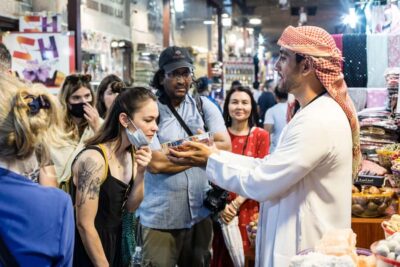
Dubai: Old Town, Creek, Museums, Souks, & Street Food Tour
Read our review →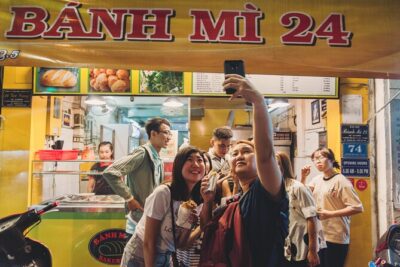
Ho Chi Minh City Street Food Tour & Sightseeing By Motorbike
Read our review →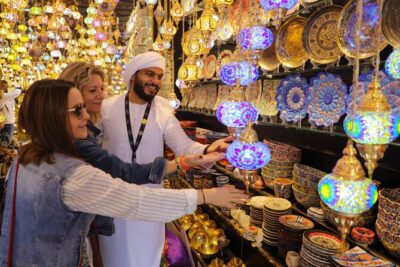
Dubai: Old Town, Souks, Street Food, Guided Tour & Abra Ride
Read our review →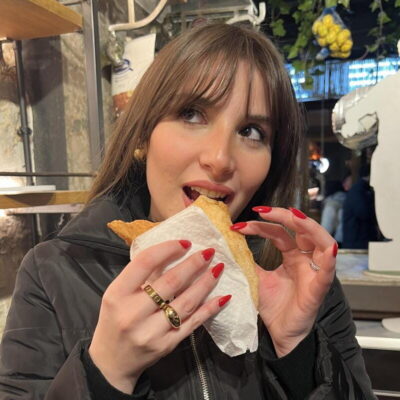
Naples: Street Food Walking Tour with Local Guide
Read our review →
Small Group Hanoi Street Food Tour with a Real Foodie
Read our review →
Saigon By Night and Street Food By Motorbike | Opt: Ao Dai Riders
Read our review →
Private Street Food Tour by Motorbike/Car with Local Students
Read our review →Browse the lists this tour appears in