
Review · HISTORICAL TOURS
Discovery of Moroccan Culinary Heritage, History and Secrets
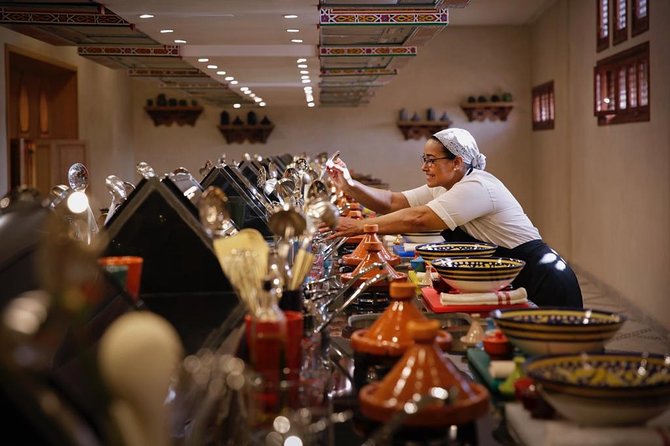
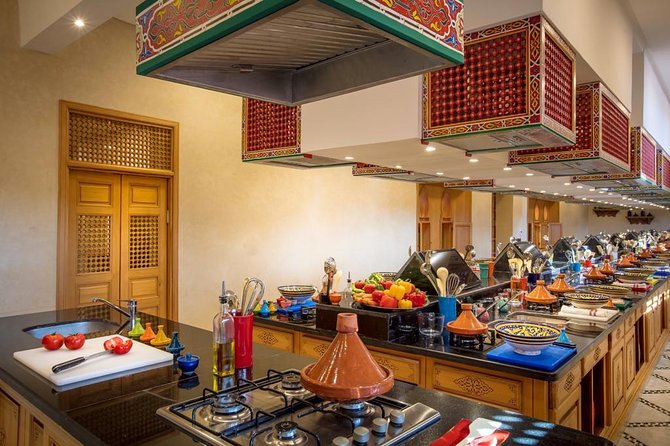
The best part of this experience is that it connects Moroccan food to the places and people behind it. You learn how bread is baked, where neighborhood spices come from, and how a traditional Dada cook handles tagine, couscous, salads, and dessert. I especially like the teaching kitchen with 34 stations and the chance to eat what you prepare on the riad terrace. The museum adds a useful cultural layer rather than leaving you with recipes alone.
I also like the setting. The restored riad gives the class a calm, traditional backdrop, and the Moroccan tea ceremony brings the lesson to a proper close. The main caution is that the advertised duration is about two hours, while the experience is also described as a half-day class, so confirm the timing when you book. Language delivery may also require care, since one English-language booking was conducted in French.
Key points to know before booking
- A hands-on class in a 34-station kitchen: You prepare Moroccan dishes with help from a Dada, a traditional cook, rather than simply watching a demonstration.
- Bread, spices, and neighborhood food culture: The program includes a bread-making demonstration, a visit to a bread oven, and a stop at a local herbalist.
- A restored riad houses the museum and class: You get an atmospheric setting, courtyard spaces, food displays, and a terrace meal.
- The meal is part of the lesson: You eat the dishes you prepare, with Moroccan tea and optional Moroccan wine.
- English support is advertised, but confirm it: French and English interpretation is available in principle, though language arrangements may vary.
- The $69.79 price includes food and soft drinks: Bottled water, lunch, coffee, and tea are included, but alcohol costs extra.
Why this Marrakech cooking class is more than a recipe lesson
Moroccan food can look simple on the plate: bread, vegetables, meat, spices, and slow cooking. The skill is in the balance. A little cumin changes a salad. Saffron, ginger, cinnamon, or preserved lemon can shift a tagine from ordinary to unmistakably Moroccan.
This experience lets you see those choices up close. You do not simply sit at a table while someone else cooks. You work at a dedicated station, follow the Dada’s instructions, and then eat the result. That makes the class useful for anyone who wants to bring a piece of Marrakech home.
The setting helps. The Moroccan Culinary Arts Museum is housed in a beautifully restored riad on Rue Riad Zitoun el Jdid, close to the Bahia Palace. The building itself is part of the experience, with traditional rooms, a courtyard, cooking displays, and a terrace. Some parts of the museum are more visually impressive than the exhibits, but the combination of architecture, food, and instruction gives your visit a clear purpose.
You should also know that the experience can feel different depending on what you book. The full cooking class includes practical work and a meal. A museum visit with tasting is a separate, shorter option, and it may include samples of Moroccan salads and other foods without the cooking lesson. Check that you are selecting the class rather than a museum-only or tasting ticket.
More history tours in Morocco:
- Barcelona: Tapas Walking Tour with Food, Wine, and History
★ 4.8 · 4,261 reviews - Sevilla Food Tour: Tapas, Wine, History & Traditions
★ 5.0 · 3,468 reviews - Madrid Tapas & Taverns Small Group Food & History Tour
★ 5.0 · 2,664 reviews
Beginning in the riad with tea and an introduction
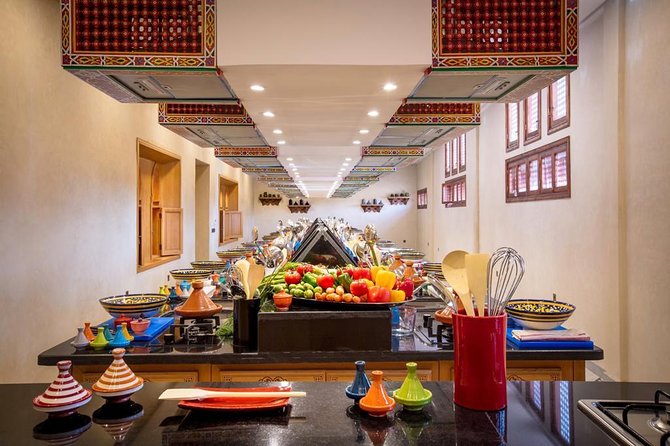
You meet at the Moroccan Culinary Arts Museum, where the activity also ends. Reception takes place on the second floor, in a Moroccan living room beside the teaching kitchen. This opening matters because it gives you a chance to understand the plan before handling ingredients.
A French or English interpreter introduces the class. The Dada then explains the basic ideas behind Moroccan cooking, including the careful use of spices, baking, and slow cooking. The teaching style is practical. Instructions are supported by staff, and help can be verbal or hands-on when needed.
That support is useful if you are not an experienced cook. One class included people with very different levels of confidence, and the kitchen was arranged to keep everyone involved. You do not need to arrive with professional skills. You need only be ready to chop, mix, season, and follow directions.
The 34-station kitchen is one of the strongest features here. It was designed for teaching, not just for display, so the cooking does not feel like a demonstration performed several feet away. A large class is possible, but the dedicated workstations make it easier to take part.
The one point to clarify is language. English interpretation is offered, but an English booking was reportedly delivered in French. That does not mean every session has the same issue, but if precise instructions matter to you, confirm the class language before arrival.
Bread first, then the spices behind Moroccan cooking
The bread demonstration gives the lesson a useful starting point. Bread is central to Moroccan meals, and learning how it is made helps you understand why it appears at the table so often. You also visit a bread oven, which connects the demonstration to the working food culture of the neighborhood.
The program includes a visit to a local herbalist. This is not just a shopping stop. It helps explain where spices and herbs enter everyday cooking, and why Moroccan recipes depend on measured combinations rather than one dominant seasoning.
The class focuses on the art of dosing spices. That phrase is important. Moroccan cuisine is not simply a matter of adding as much spice as possible. The Dada shows how small amounts can work together, and how seasoning affects the final dish.
The museum displays add more background. You may see information on traditional recipes, cooking methods, food preparation, serving customs, and the tableware used for meals. Some exhibits use images and video, while others show the process of making specific foods.
If your main aim is a serious museum visit, you may find the displays less absorbing than the building itself. If your aim is to understand what you are cooking, they provide helpful context. I would treat the museum as a supporting part of the class, not as a replacement for Marrakech’s larger historical museums.
Cooking tagine, couscous, salads, and dessert
The exact menu can vary, but the class has included chicken tagine, two Moroccan salads, couscous, and dessert. You may prepare three courses, and the food is made in the teaching kitchen under the Dada’s direction.
Tagine is a particularly good dish to learn in Morocco because the name refers both to the food and to the distinctive cooking vessel. The slow method encourages you to pay attention to layering, seasoning, and moisture. You also get a chance to understand how tagine differs from tangia, a separate Marrakech specialty that is prepared in a different way.
Couscous teaches another part of Moroccan food culture. It is not just a bowl of grains with toppings. The preparation, texture, and arrangement matter. The class gives you a chance to see the process rather than guessing from a restaurant plate.
The salads are useful for home cooks because they show how vegetables can carry a meal. Moroccan salads often depend on careful cooking, chopping, herbs, and seasoning rather than heavy sauces. They also make a good contrast with the slower, fuller flavors of tagine.
Dessert may be included as one of the prepared courses, though the supplied information does not specify a fixed recipe. That is another reason to confirm the menu if you have a particular dish in mind.
The strongest feature of the cooking portion is the staff support. The Dada leads the work, while helpers provide extra assistance. You are not left to interpret a recipe sheet on your own, and the meal gives you an immediate test of what you have learned.
More food tours in Morocco:
- Marrakech: Street Food Tour with a Local Guide
★ 4.9 · 3,119 reviews - Marrakech: Street Food Tour by Night
★ 4.8 · 2,838 reviews - Authentic Moroccan Food Tour in Marrakech with Dinner
★ 5.0 · 1,423 reviews - Marrakech: Jemma El Fnaa Food Tour with Dinner
★ 4.7 · 394 reviews
The Moroccan tea ceremony and terrace meal
After the cooking, you eat the dishes you made. This turns the class into a complete meal rather than a quick lesson followed by a rushed departure. Lunch is included, along with coffee or tea and bottled water.
The Moroccan tea ceremony is an important cultural detail. Tea is not treated as an afterthought here. It gives the class a social finish and shows how hospitality fits alongside food preparation.
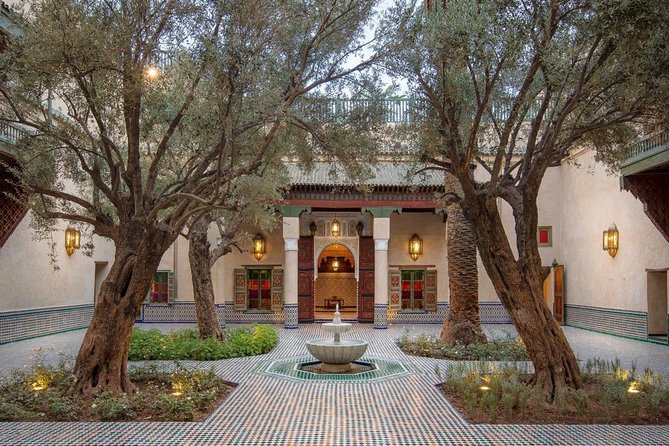
The meal takes place on the terrace, weather permitting. The terrace offers a change from the kitchen and lets you enjoy the riad’s architecture at a slower pace. The setting is one reason this experience feels different from a standard cooking studio.
Moroccan wine is available as an optional discovery, but alcohol is not included in the price. If you want wine with lunch, budget for it separately and confirm the current cost. Tea, coffee, and bottled water are included according to the tour details.
A small practical point: one person was charged for bottled water despite water being listed as included. It is reasonable to confirm what is covered when you arrive, especially if the optional wine is added to the bill.
The museum gives the food a cultural frame
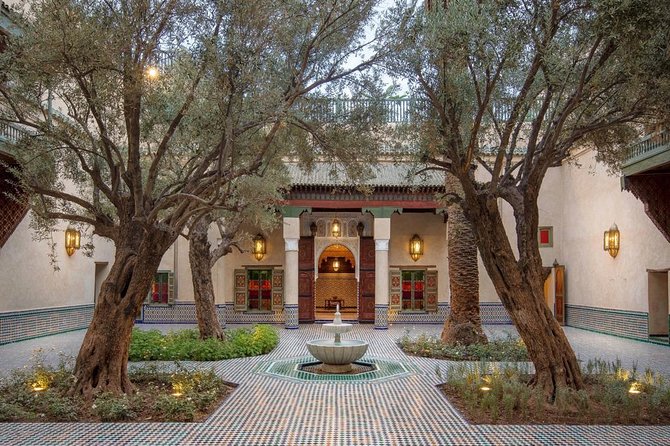
The Moroccan Culinary Arts Museum occupies a restored building close to Bahia Palace. Its former use included accommodating visitors connected with the palace, and the architecture has much of the appeal you associate with a traditional Marrakech riad.
The museum is arranged over several floors and includes a terrace. Exhibits cover Moroccan food, recipes, cooking methods, serving customs, and the story behind dishes. You may find photographs, video presentations, utensils, tables, chairs, and dinnerware.
I like this part best when it is used to answer practical questions. What is the bread you eat at breakfast? How is pastilla prepared? What separates tagine from tangia? How are foods served and shared? The displays help you connect everyday meals with Moroccan customs.
The museum can be quiet, which is useful after the crowded lanes around Bahia Palace. It is also a good alternative if the palace feels too busy. Still, the exhibits may seem modest if you are expecting a large national museum with extensive objects and long historical displays.
You can visit the museum separately, but the cooking class makes the displays more meaningful. Once you have handled spices and prepared food, the museum’s explanations have something concrete to attach to.
Group size, timing, and value at $69.79
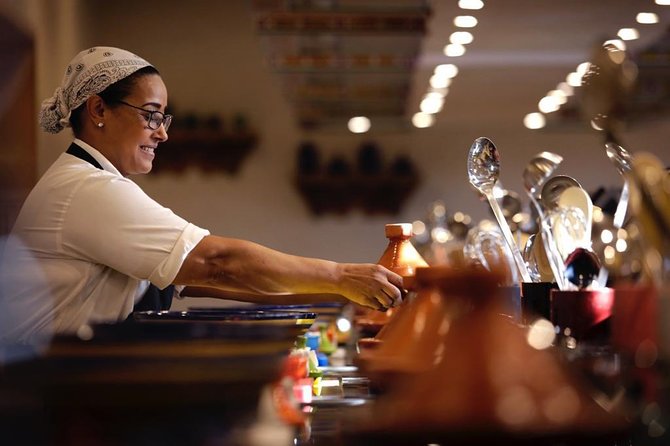
The maximum group size is 34 people. That sounds large, but the 34 kitchen stations are designed to match that capacity. You should not expect a private lesson, yet you should have a place to work rather than standing behind a counter.
The stated duration is approximately two hours. Elsewhere, the experience is described as a half-day traditional cooking class, and the full program includes the museum setting, bread demonstration, neighborhood visits, cooking, tea, and lunch. Those elements may take longer than two hours, so confirm the start and finish times before arranging another activity.
At $69.79 per person, the price is reasonable if you want the complete experience. You are paying for instruction, a meal, museum access, cultural interpretation, and the use of a purpose-built kitchen. It is less attractive if you only want a quick museum visit, since museum entry and tasting have been offered separately at lower local prices.
The value also depends on your interests. A food-focused visitor can use the class as both a meal and a lesson. A person who dislikes group activities may find the 34-person capacity less appealing. Families can work well here, and a 12-year-old has taken part successfully, but younger children may find the spice work and cooking instructions demanding.
The location near Bahia Palace is convenient for combining sights, though you will need to make your own way to the meeting point. The activity begins and ends at the museum, and it is near public transportation. No hotel pickup is listed.
Who will get the most from this experience
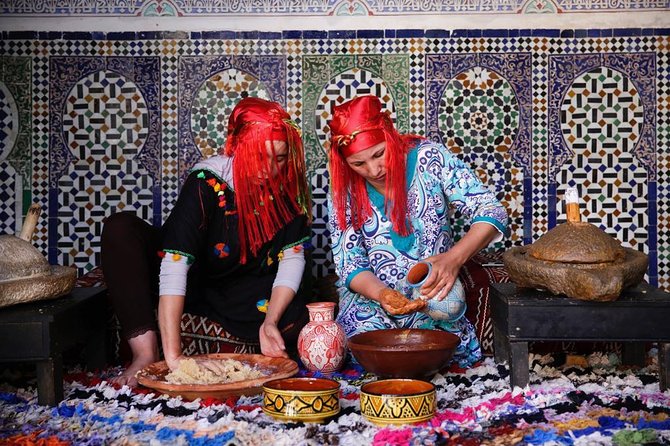
I would choose this class if you want to understand Moroccan food by making it yourself. It suits couples, families with older children, and curious home cooks who like a practical lesson more than a passive food tour.
It is also a good choice if you want an activity that mixes food with local culture. The bread oven, herbalist, museum, tea ceremony, and terrace meal give the class more range than a recipe-only workshop.
You might choose something else if you want a very small private class, a fixed menu guaranteed in advance, or a long specialist lecture on Moroccan culinary history. The group can reach 34 people, and the language arrangement should be confirmed.
The class also makes sense early in a Marrakech visit. You can learn about tagine, bread, spices, salads, and tea before sampling them elsewhere in the city. It may even help you order with more confidence later.
Booking advice and cancellation details
Confirmation is normally issued when you book, unless you reserve within one day of the activity. Last-minute bookings are confirmed as soon as possible, subject to availability. Because the class can fill up, booking ahead is wise if you want a specific date or English support.
Free cancellation is available up to 24 hours before the start time. Cancel at least 24 hours in advance for a full refund. Cancellations or changes made within 24 hours are not accepted for a refund.
Service animals are allowed, and the meeting point is near public transportation. If you have mobility concerns, ask the provider about the specific route through the riad, since the reception and kitchen are on the second floor and the activity takes place across several areas.
Should you book this Moroccan cooking experience?
Book it if you want to cook, eat, and understand the food at the same time. The strongest reasons are the purpose-built kitchen, the traditional Dada-led instruction, the bread and spice visits, and the chance to eat your own tagine, salads, couscous, or dessert in a riad setting.
Approach it with realistic expectations. This is a group class, not a private chef lesson, and the museum displays may interest you less than the cooking itself. Confirm the duration, class language, menu, and what is included in the bill, especially if you want Moroccan wine.
For food lovers, families, and anyone who wants more than a restaurant meal, the $69.79 price offers solid value. If you only want to see the museum, buy the shorter museum or tasting option instead.
FAQ
Where does the Moroccan cooking experience begin and end?
It begins and ends at the Moroccan Culinary Arts Museum on Rue Riad Zitoun el Jdid, Marrakesh 40000, Morocco.
How long does the activity last?
The stated duration is approximately two hours. The experience is also described as a half-day cooking activity, so confirm the exact timing when booking.
Is the cooking class offered in English?
French or English interpretation is advertised. Language arrangements may vary, so confirm that an English-supported class is available for your chosen date.
What food and drinks are included?
Lunch, bottled water, coffee, and tea are included. Alcoholic drinks are not included. Moroccan wine may be available as an optional extra.
How many people can join the class?
The maximum group size is 34 people. The kitchen has 34 cooking stations.
Can I cancel for a full refund?
Yes. Cancel at least 24 hours before the experience start time for a full refund. Cancellations and changes made less than 24 hours before the start time are not refundable.
New food tours we have reviewed in Morocco
- Casablanca Food Tour★ 5.0 · 60 reviews
- Casablanca Food Tour – Moroccan Street Food Tour★ 5.0 · 86 reviews
- Authentic Food Tour in Agadir – Eat Like A Local★ 5.0 · 117 reviews
- Tangier: Food Walking Tour★ 4.9 · 43 reviews
- Rabat: Walking Food Tour★ 4.9 · 48 reviews
- Marrakech: Medina Stories Food Tour with 15+ Tastings★ 5.0 · 141 reviews
- Marrakech: Authentic Moroccan Food Walking Tour & Dinner★ 4.8 · 261 reviews
- Marrakech Night Street Food Tour / Taste The Real Marrakech★ 4.9 · 200 reviews
Historical Tours, compared.
Barcelona: Tapas Walking Tour with Food, Wine, and History
Read our review →
Sevilla Food Tour: Tapas, Wine, History & Traditions
Read our review →
Madrid Tapas & Taverns Small Group Food & History Tour
Read our review →
Barcelona Tapas Walking Tour: Food, Wine & History
Read our review →
Boston Food & History: Pizza, North End & Freedom Trail
Read our review →Browse the lists this tour appears in