
Review · COOKING CLASSES
Naples: Pizza Making Class with Local Pizzaiolo
Naples takes pizza seriously, and this two-hour class puts you right in the middle of the process. You will mix dough, knead it by hand, shape the classic thin crust, add toppings, and watch a pizzaiolo bake it in a wood-fired oven. I like the hands-on work and the chance to eat your own pizza with a starter and drink. I also like the small, friendly feel, with instructors such as Martina, Antonio, Rafael, Alessandro, and Enrico offering patient help.
The main thing to know is that this is a restaurant-based workshop, not a full professional baking course. Dough needs hours to rest, so you may prepare fresh dough, then use dough that has already been proofed for the shaping and baking stage. Finding Gusto Marigliano can also take care, especially if building work obscures the entrance.
Key points at a glance
- Mix and knead the dough yourself: You learn the basic ingredients, mixing method, kneading, and proofing process.
- Shape pizza the Neapolitan way: The pizzaiolo shows you how to stretch the dough into a thin center with a raised edge.
- Bake in a real wood-fired oven: You prepare your pizza, then watch the pizza chef handle the hot oven and baking.
- Eat more than pizza: A local starter and a glass of wine, beer, or soft drink are included, and dessert has also been served during some sessions.
- Expect friendly English instruction: Martina, Antonio, Rafael, Alessandro, and Enrico have all led classes, with patient guidance especially useful for first-timers.
- Good value at $58: The price covers the class, ingredients, tools, apron, meal, drink, and pizza-making certificate.
Why this Naples pizza class works
The best part of the experience is that it treats pizza as food and craft, not just a quick meal. You do not simply sit down at Gusto Marigliano Pizzeria and watch someone else cook. You handle the dough, make choices about toppings, and see the final pizza go into the oven.
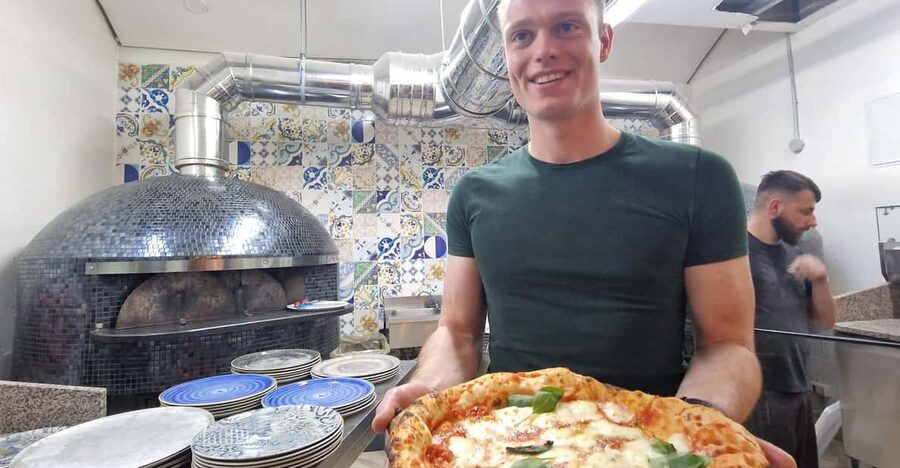
That matters in Naples. Neapolitan pizza depends on a few basic ingredients handled well. The dough should be soft and workable, the center thin, and the toppings simple. You will use familiar ingredients such as fresh basil and buffalo mozzarella, but the class shows why technique matters as much as the shopping list.
I like this format for a first visit to Naples because it gives you a meal, a local activity, and a useful skill in one sitting. You will leave with a better sense of why the city’s pizza is different from the thicker, heavier versions found elsewhere.
More Cooking Classes in Italy
- Authentic Pizza Making Class in Naples with Appetizers and Drink
★ 5.0 · 3,178 reviews - Naples: Neapolitan Pizza and Tiramisù Making Class
★ 4.8 · 839 reviews - Naples: Authentic Neapolitan Pizza Making Class
★ 4.7 · 97 reviews
Meeting your pizzaiolo at Gusto Marigliano
The meeting point is Gusto Marigliano Pizzeria. It is a working pizzeria rather than a purpose-built cooking school, which gives the class a more local feel. Several instructors lead the sessions, so your exact teacher may vary.
Martina has been praised for clear English, patience, and her willingness to answer questions about Naples. Antonio and Rafael have also led sessions, while Alessandro has been described as energetic and well connected with the group. Enrico is another instructor who gives careful explanations. The common thread is direct help at the work surface rather than a formal lecture.
Allow a little extra time to find the entrance. One participant had trouble spotting the front door because scaffolding covered part of the building and the usual access was not obvious. That issue may be temporary, but it is a useful reminder not to arrive at the last second.
The class is conducted in English. If you are traveling as a couple, you might find yourself in a very small group, and a private session is possible when only two people have booked. At other times, you will work alongside other participants and share the social side of the meal.
Mixing, kneading, and waiting for the dough
The class begins with the foundations: the ingredients and the dough. You will practice mixing and kneading, with the pizzaiolo explaining how the dough should feel as it comes together.
This is the part where you get your hands messy. Kneading teaches you more than a printed recipe can. You begin to notice whether the dough is stiff, sticky, smooth, or elastic, and you see why rushing this stage can make shaping harder later.
You will also hear about proofing. One important practical detail is that dough needs time to rest, and the dough made in class cannot be ready for baking within the two-hour session. The process may therefore work like this: you prepare dough to learn the method, then use dough that has already rested for several hours when it is time to make your pizza.
Do not treat that as a flaw. It is actually a useful lesson. A short class cannot show every stage of a long dough schedule unless the pizzeria prepares batches in advance. The tradeoff is that you get to learn the complete process while still eating a properly rested pizza before the session ends.
The instructors appear to keep the mood relaxed. Kneading can become a playful contest, and patient coaching helps if your dough handling is less graceful than expected. Families can take part too. A six-year-old was able to enjoy the activity, making this a workable choice for children who like food and practical tasks.
Stretching a thin Neapolitan crust
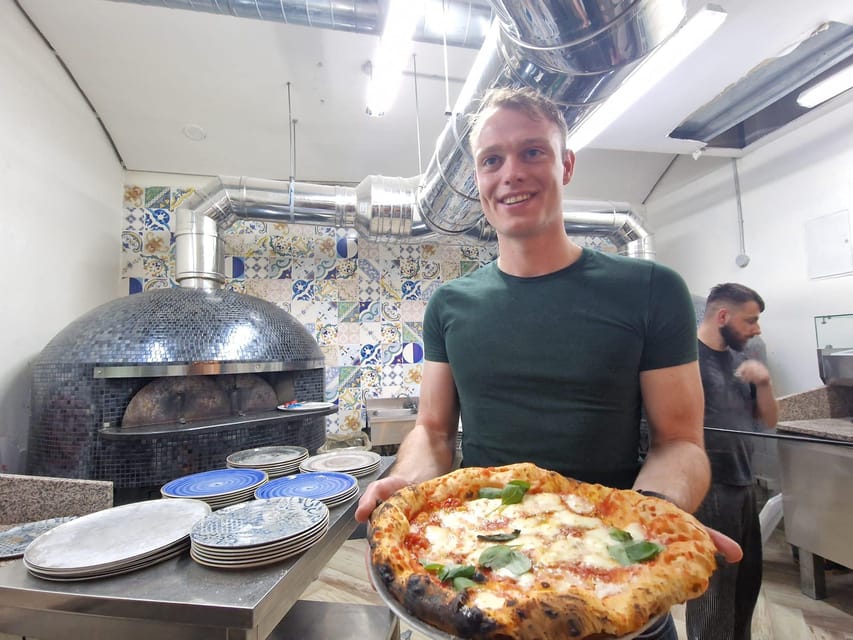
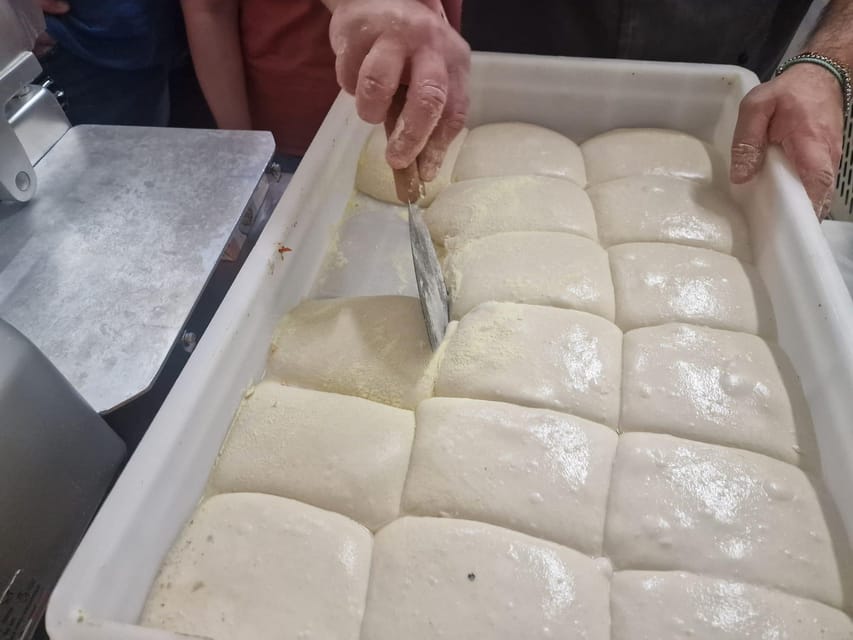
Once the rested dough is ready, you move on to stretching and shaping. This is where the class becomes visibly different from making a standard homemade pizza.
The goal is a thin middle with a fuller rim. You will learn the traditional way to open the dough without flattening all the air from the edge. The pizzaiolo guides your hands and helps if the dough becomes uneven or too thick.
This stage rewards patience. You may want to press hard and force the dough into a perfect circle, but the traditional method depends on light handling. The instructor can correct your technique as you work, which is more useful than watching a demonstration from across a room.
There is also a social element. You are shaping food in front of other people, and the results will not all look identical. That is part of the charm. The class is about learning the method, not producing a restaurant-perfect circle on your first attempt.
More Pizza and Pasta Tours in Naples
- Authentic Naples Food Tour with 8+ Tastings of Pizza, Wine & More
★ 5.0 · 824 reviews - Naples: Premium Pizza Class From Dough to Dessert & Wine
★ 4.9 · 346 reviews - Naples: Pizza and Beyond Food Tour
★ 4.8 · 75 reviews - Master Authentic Neapolitan Pizza & Tiramisu at Home
★ 4.8 · 75 reviews
Basil, buffalo mozzarella, and the final toppings
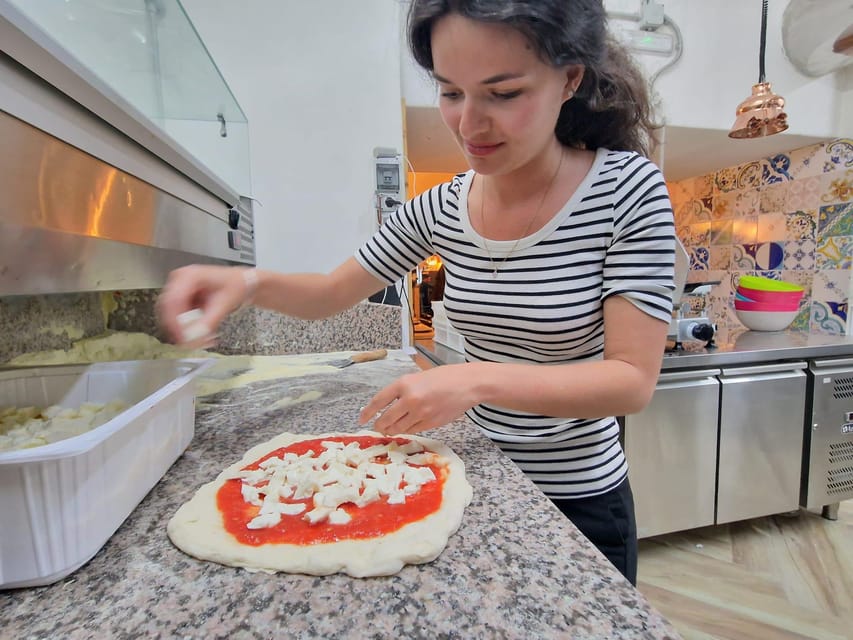
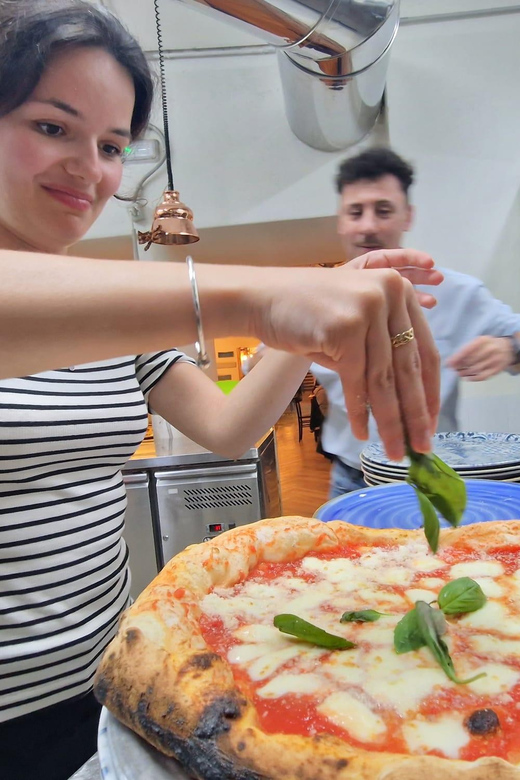
After shaping, you add the toppings. Fresh basil and buffalo mozzarella are specifically part of the traditional combination, and the emphasis is on keeping the pizza simple.
This is a good moment to pay attention to proportion. Too many toppings can weigh down the dough and hide the flavor of the crust. The class gives you a chance to see how a pizzaiolo builds a pizza that can bake quickly in a very hot oven.
One caution comes from the workshop format. The pizzaiolo may move quickly while adding ingredients, and one participant felt that some toppings were placed on the pizza without enough explanation. If you want to learn the reason behind each step, ask questions as you go. The instructors are there to help, and asking early is better than trying to catch every detail after the pizza is already dressed.
The wood-fired oven and your first bite
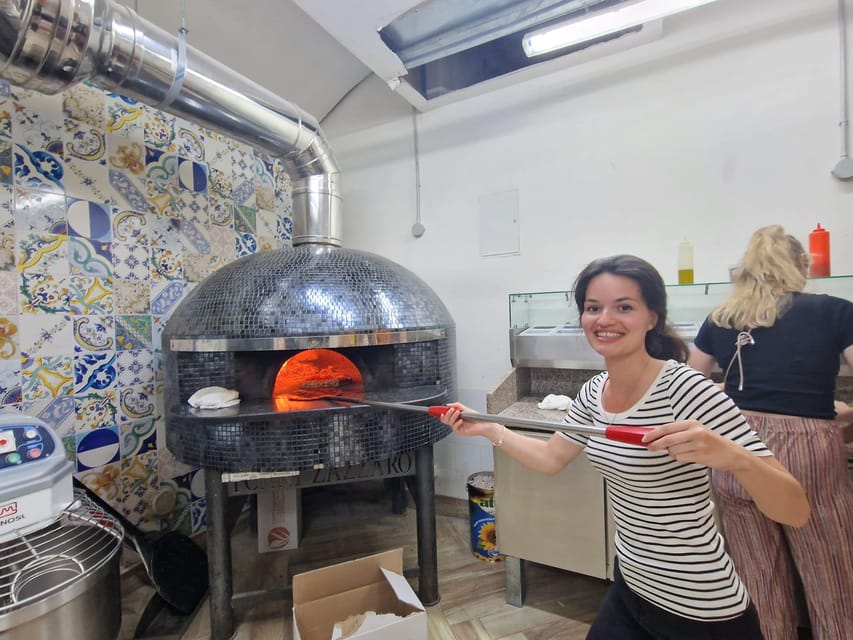
The pizza goes into the wood-fired oven under the pizzaiolo’s direction. You will not be expected to handle the hottest part of the process yourself. Instead, you prepare the pizza and watch the pizza chef manage the oven and baking.
This is one of the strongest parts of the class because the oven changes the food quickly. The thin dough, fresh toppings, and hot cooking surface come together in a short bake. Your pizza may not look exactly like the pizzaiolo’s, but it should give you a clear taste of the Neapolitan style.
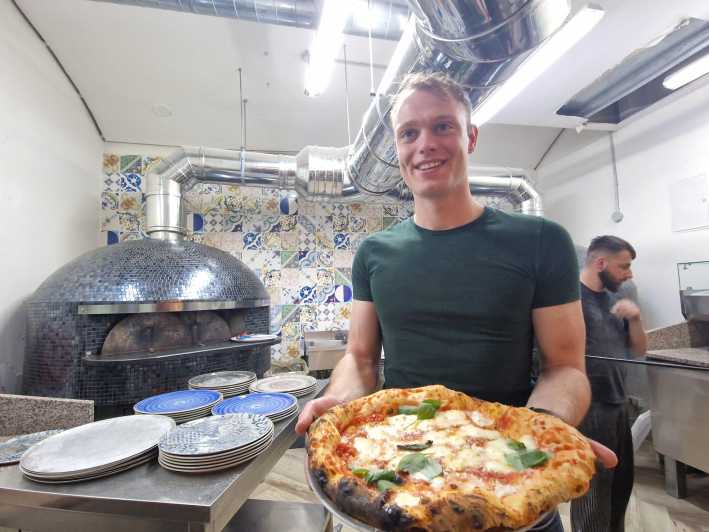
When it comes out, you eat your own creation. That gives the class a satisfying finish: you have handled the dough, shaped the crust, chosen the toppings, and then tasted the result.
The meal begins with a local starter, followed by your pizza and a drink. You can choose wine, beer, or a soft drink. Several sessions have also included dessert, turning the activity into something close to a three-course meal. Because the official inclusions name the starter and drink but not dessert, consider dessert a possible extra rather than something to book solely on the promise of receiving it.
What the $58 price really includes
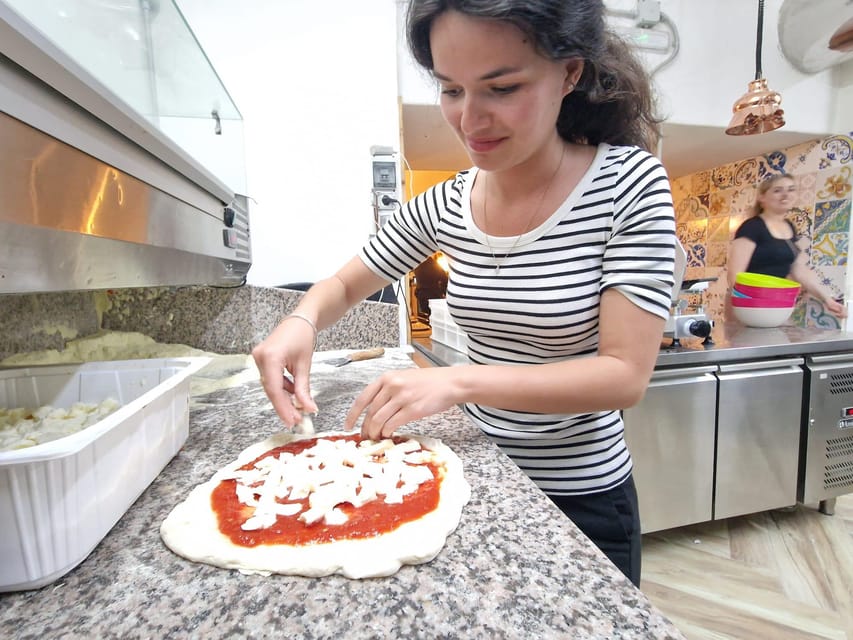
At $58 per person, this is not the cheapest pizza you will eat in Naples. It is also not just a restaurant lunch. The price includes the two-hour class, instructor, apron, kitchen tools, ingredients, starter, one drink, and a pizza-making certificate.
That package gives the experience good value if you want an activity as well as food. A regular pizza meal would cost less, but it would not teach you how to knead dough or shape the crust. A private cooking lesson would likely cost more, though this class does not promise the depth of a professional baking course.
The included drink helps the value. You are not paying for the class and then adding every part of the meal separately. The certificate is a small souvenir, but the real takeaway is the method you can try at home.
The main limitation is depth. You will learn the full sequence, but you will not spend six hours waiting for dough to proof or repeat the shaping process many times. If you want technical training for opening a pizzeria, this is too short. If you want a lively introduction with dinner included, the price is fair.
The setting, group size, and pace
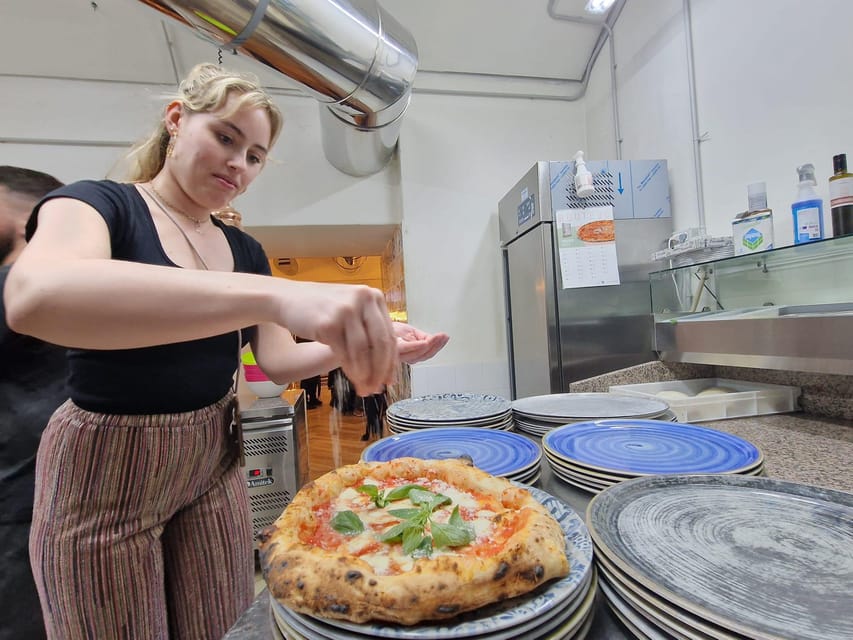
The class takes place in a real restaurant kitchen and dining setting, not a silent demonstration room. That can make the experience feel more natural, but it also means the staff are balancing class duties with restaurant work.
Small groups are possible. Couples may receive especially direct attention if they are the only people booked, while a fuller session gives you more people to chat with over the meal. I like the chance to meet other participants, but the pace and amount of individual instruction can vary with group size.
The tone is informal and social. One session became a friendly competition during the kneading stage, and the shared meal gives you time to talk. If you prefer a quiet, highly structured lesson with exact measurements and written technique notes, you may find this a little loose.
On the other hand, that relaxed format suits Naples. You are learning in a pizzeria with working pizzaiolos, eating food prepared in the same place, and seeing how the kitchen operates. It feels closer to a local food activity than a staged classroom.
Who should book this experience
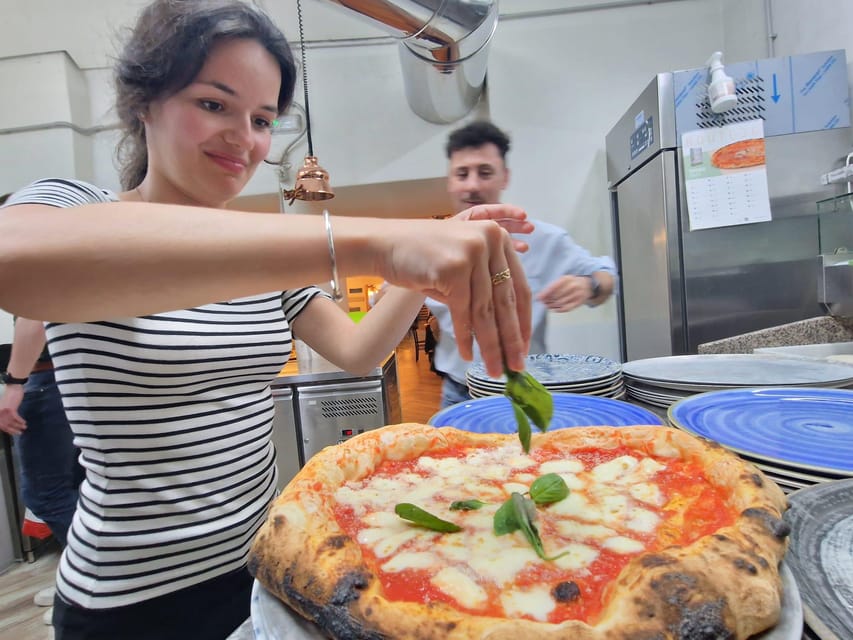
I would recommend this class to first-time visitors who want a hands-on introduction to Neapolitan food. It works well for couples, families, and solo participants who enjoy meeting people over a shared meal.
Children can take part, provided they are comfortable following instructions and working around a kitchen setting. The instructor handles the oven, so you are not responsible for the most dangerous step.
It is also a good choice if you want to learn enough to try pizza at home. You will understand the basic dough process, why proofing matters, how to stretch the crust, and how simple toppings work together.
You should look elsewhere if you have gluten or lactose intolerance. The activity is specifically not suitable for people with either condition. It is also not ideal if you want a long technical course focused on flour types, hydration percentages, oven temperatures, or repeated practice.
Practical details before you reserve
The activity lasts two hours, and starting times vary, so check the available slot when booking. Hotel pickup and drop-off are not included. You need to make your own way to Gusto Marigliano Pizzeria.
English instruction is provided. The instructor names may change from one session to another, but Martina, Antonio, Rafael, Alessandro, and Enrico have all guided classes there.
You can cancel up to 24 hours ahead for a full refund, and the reserve-now, pay-later option lets you hold a place without paying at the time of booking. These policies are useful if your Naples schedule still depends on day trips or changing arrival plans.
Most of all, arrive ready to participate. This is not a show where you sit back while someone else does the work. Your hands will touch the dough, your pizza may come out a little irregular, and that is exactly what makes the meal more satisfying.
Should you book the Naples pizza class?
Book it if you want a friendly, practical food experience with a real meal at the end. The strongest reasons are the hands-on dough work, the wood-fired oven, the local starter and drink, and the patient English-speaking instruction offered by people such as Martina, Antonio, Rafael, and Alessandro.
Skip it if you need gluten-free or lactose-free food, or if you expect a serious professional course with long proofing sessions and detailed technical study. Also allow extra time to find the entrance, since access to the pizzeria can be hard to spot.
For most visitors, $58 is a sensible price for two hours of activity, dinner, and a new pizza skill. You will not become a pizzaiolo in one afternoon, but you will understand why Naples treats pizza as a craft rather than just a convenient meal.
FAQ
Where does the pizza-making class meet?
The meeting point is Gusto Marigliano Pizzeria in Naples.
How long does the experience last?
The class lasts two hours.
What language is the class taught in?
The instructor provides the class in English.
What will I learn to do?
You will learn about the ingredients, mix and knead dough, understand proofing, stretch and shape the crust, add traditional toppings, and prepare the pizza for baking.
Is the pizza baked in a wood-fired oven?
Yes. Your pizza is baked in a wood-fired oven under the guidance of the pizzaiolo.
What food and drink are included?
The experience includes a local starter, your pizza, and one glass of wine, beer, or a soft drink. Dessert has also been served during some sessions, but it is not listed among the official inclusions.
Is the activity suitable for gluten or lactose intolerance?
No. The activity is not suitable for people with gluten intolerance or lactose intolerance.
Is hotel transportation included?
No. Hotel pickup and drop-off are not included, so you need to reach Gusto Marigliano Pizzeria yourself.
More hands-on workshops in Naples
- Sushi Making Tokyo Roll and Authentic Japanese Sushi Class
★ 5.0 · 3,971 reviews - Small Group Cooking Class & Market Food Tour in Florence
★ 5.0 · 1,574 reviews - Tokyo: Sushi Making Class in a Happi Coat near a Famous Spot
★ 4.9 · 1,377 reviews - Sushi Making Osaka Roll and Authentic Japanese Sushi Class
★ 5.0 · 1,220 reviews
More Cooking Classes in Naples
- Naples: Fresh Pasta Cooking Class and Dinner with a Local
★ 4.9 · 69 reviews - Naples: Pizza Making Class with Neapolitan Chef and drink
★ 4.6 · 25 reviews - Tokyo: Roll and Authentic Sushi Making Class in Asakusa
★ 4.9 · 1,957 reviews - Ramen Cooking Class at Ramen Factory in Kyoto
★ 5.0 · 1,937 reviews
New food tours we have reviewed in Naples
- Naples: Street Food and Guided Sightseeing Walking Tour★ 4.9 · 23 reviews
- Naples: Street Food Experience With 6 Stops★ 4.7 · 392 reviews
- From Naples: Pompeii and Wine Tasting Tour with Lunch★ 4.5 · 119 reviews
- Naples: Small Group Pizza Making with Drink Included★ 5.0 · 39 reviews
- Naples Street Food Scene Tour: Small-Group Tasting Adventure★ 4.7 · 112 reviews
- Naples: Food Tour with Davide★ 4.9 · 108 reviews
- Naples: Private Food Tour – 10 Tastings with Locals★ 4.7 · 135 reviews
- Naples: Pizza Making Class with Neapolitan Chef and drink★ 4.6 · 25 reviews
Cooking Classes, compared.
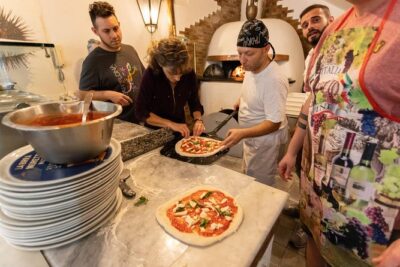
Authentic Pizza Making Class in Naples with Appetizers and Drink
Read our review →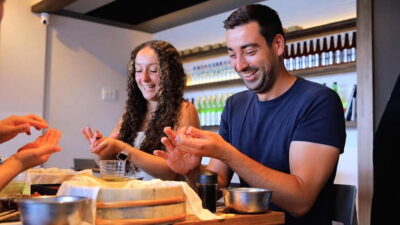
Tokyo: Roll and Authentic Sushi Making Class in Asakusa
Read our review →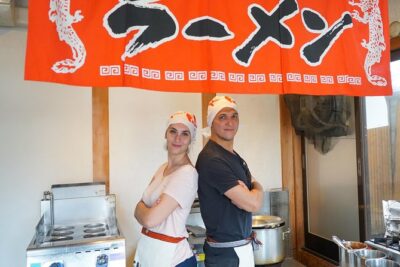
Ramen Cooking Class at Ramen Factory in Kyoto
Read our review →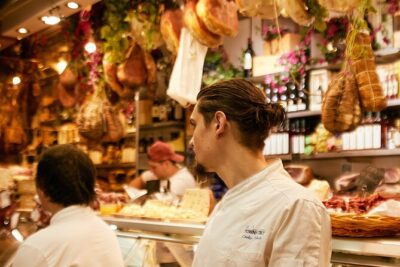
Small Group Cooking Class & Market Food Tour in Florence
Read our review →
Tokyo: Sushi Making Class in a Happi Coat near a Famous Spot
Read our review →
Tokyo Sushi Making Class in Tsukiji with Professional Chef
Read our review →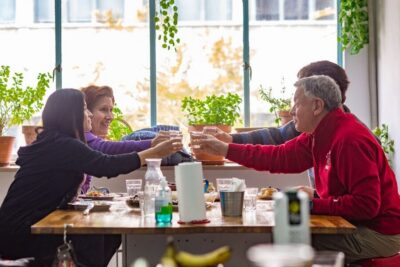
Food Market Visit and Cooking Class with Wine
Read our review →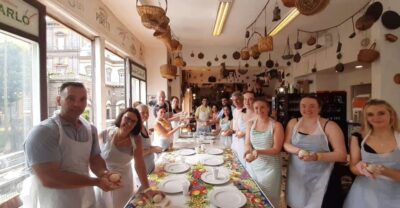
Naples: Neapolitan Pizza and Tiramisù Making Class
Read our review →Browse the lists this tour appears in