
Review · NEW ORLEANS FOOD TOURS
New Orleans: Beloved Bites & Famous Dishes Food Tour
New Orleans puts its food history on the plate, and this 2.5-hour walk lets you taste that story one stop at a time. You begin with a beignet, visit the French Market, and sample dishes shaped by French, African, Native American, and Cajun traditions.
I like the small group of no more than 12 and the fact that the guide chooses personal favorite spots rather than handing out the same generic bites. I also like the generous portions. Several past participants found the food equal to a full meal, so arrive hungry.
The main caution is dietary flexibility. Food stops and menus change with the season, and some establishments cannot handle vegetarian or other special requirements well. Tell the guide about your needs before you go, and understand that drinks and extra food are not included.
Key points to know before you book
- Four stops, five samples: Expect a beignet, a local dish, gumbo, a po’boy or muffuletta, hot sauce, and a sweet treat, with the exact menu changing by day.
- The French Market is part of the route: You get food and a look at America’s oldest public market.
- Guides bring a personal angle: Kaffey, Neil, Chip, Pepe, Denise, Simon, and others have been praised for food knowledge, local tips, and storytelling.
- Come very hungry: Portions can add up to a full meal, not just a few nibbles.
- The $76 price includes the food: It is a reasonable choice if you want several classic dishes and a guided introduction to the French Quarter.
- The tour is carbon neutral: It is run by a B Corp certified company that presents travel as a force for good.
Why this food walk works so well in New Orleans
A New Orleans food tour should do more than point you toward a plate of gumbo. It should explain why the food tastes the way it does, who shaped it, and how the city’s cultures met in kitchens, markets, and neighborhood restaurants.
That is the strength of this tour. The food gives the history a place to land. You hear about French, African, Native American, Cajun, and Creole influences while tasting dishes that grew from those traditions.
I like this approach because it keeps the history tied to real places and flavors. Instead of spending two and a half hours only looking at old buildings, you walk the French Quarter while stopping to eat. The result is a useful first look at New Orleans, especially if this is your first visit.
The experience is also personal by design. Your guide brings favorite dishes and local habits to the route. That means the stops are not presented as a fixed museum display. The choices can change, and the guide’s own enthusiasm helps shape the afternoon.
More food tours in the USA:
- New Orleans Food Walking Tour of the French Quarter with Small-Group Option
★ 5.0 · 6,118 reviews - Chef Guided Food Tour of Pike Place Market
★ 5.0 · 3,733 reviews - Savannah First Squares Culinary & Cultural Walking Food Tour
★ 5.0 · 3,229 reviews
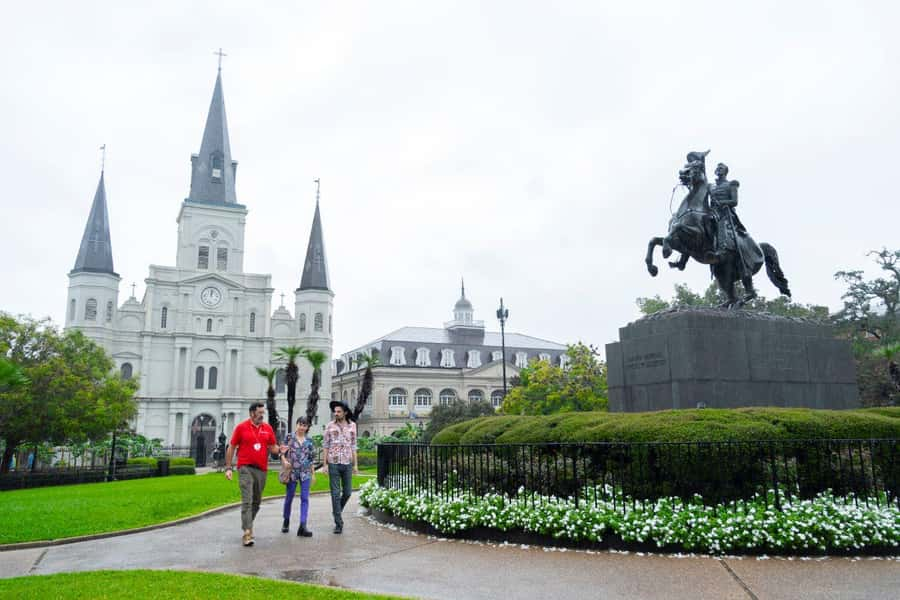
Starting at Jackson Square with a local guide
The meeting point is Jackson Square, next to the Andrew Jackson statue. This is a practical place to begin because you are already in the center of the French Quarter, surrounded by major sights and old streets.
Look for the guide at the statue. One past participant found the meeting point rather broad, but said the guide carried a sign, which made the group easier to identify. That is a useful detail if you are arriving in a crowded square.
The guides are a major part of the experience. Kaffey has been praised for learning everyone’s names, keeping teenagers involved, and following up with family-friendly ideas. Neil is repeatedly noted for explaining the origins of New Orleans dishes and connecting food with city history. Chip has been described as funny and well informed about local culture, while Pepe has been appreciated for clear speaking and an easy way with groups.
You may get one of these guides or another member of the team, so do not book based on a particular person unless the provider confirms it. Still, the pattern is clear: the guide is expected to do more than lead you from restaurant to restaurant.
Beignets and the sweet beginning
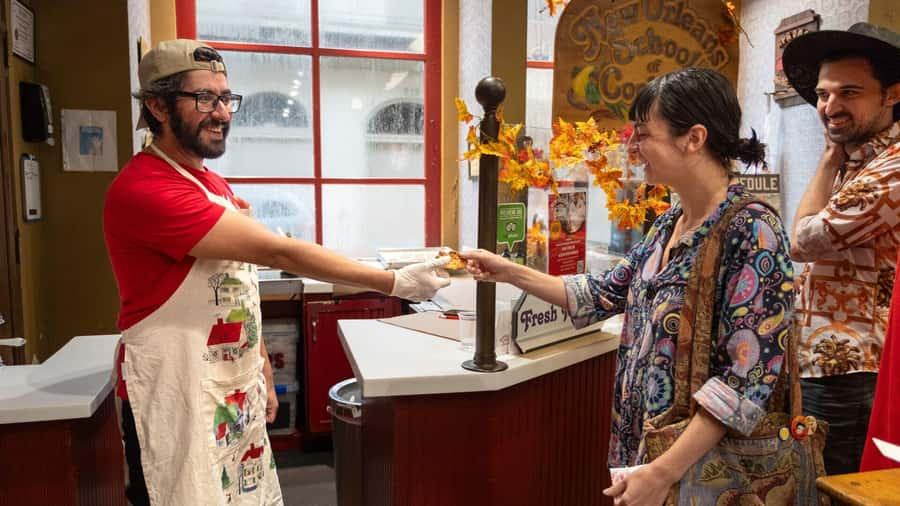
The first bite is a classic beignet. This fried pastry is one of the easiest New Orleans foods to recognize, but it is also a good opening because it gets you eating right away.
The route may include a traditional beignet or a variation such as a praline-filled or crawfish beignet. Past menus have also included calas, an older rice-based New Orleans sweet. Exact dishes depend on the day, so you should think of these examples as possibilities rather than promises.
This first stop also gives the guide a chance to explain local food terms and customs. One person even learned the local pronunciation of praline during the tour. Small details like that can make the food feel less like a checklist and more like part of the city’s daily life.
Do not eat a large breakfast before a morning departure. The samples are often much bigger than the word sample suggests, and the beignet is only the start.
Walking through the French Market
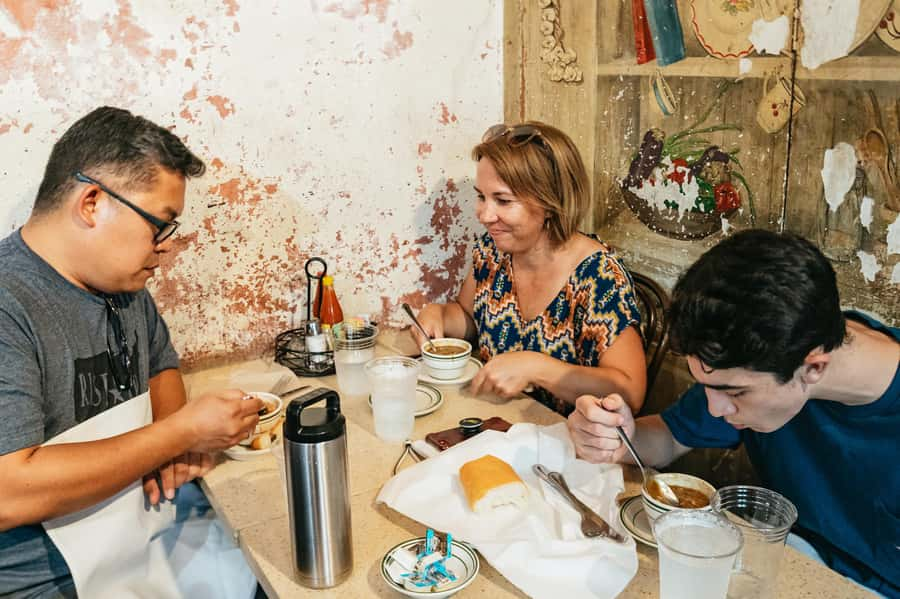
The route includes the French Market, described as America’s oldest public market. This is an important stop because markets help explain how food moves through a city.
You can expect a mix of food talk, local stories, and a look at the market itself. The market is not treated as a separate sightseeing lecture. It forms part of the walk, giving you a chance to connect New Orleans eating habits with commerce and neighborhood life.
The tour also covers the French Quarter and Old Town. You will walk between food stops rather than ride in a vehicle, so the outing has a practical sightseeing benefit. You see the streets at ground level, pass landmarks, and learn about buildings and local traditions as you move.
The pace is usually manageable. A family group with eight teenagers found it comfortable even in hot, humid conditions. Still, New Orleans weather can make walking tiring, particularly in summer. Wear shoes you can walk in and bring water, since drinks are not included.
Same appetite, a different neighbourhood:
- NYC: Chinatown & Little Italy Food Tour with 7 Flavorful Tastings
★ 5.0 · 2,733 reviews - Nashville: Food Tour with 5+ Tastings of Local Delicacies
★ 5.0 · 2,704 reviews - Historic Ybor City Food Walking Tour
★ 5.0 · 2,210 reviews - Original NYC Guided Food Tour of Chinatown and Little Italy
★ 5.0 · 2,194 reviews
Gumbo, hot sauce, and the main savory dishes
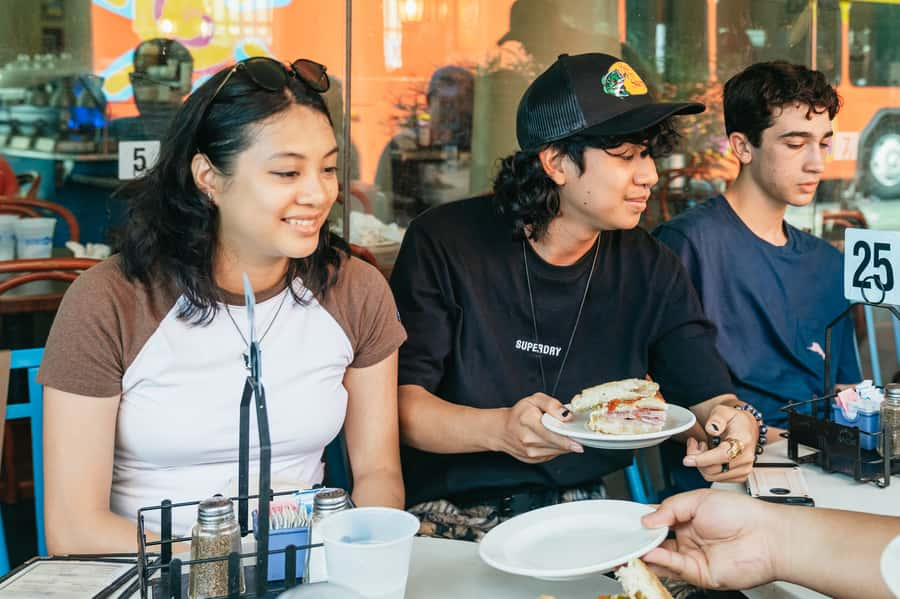
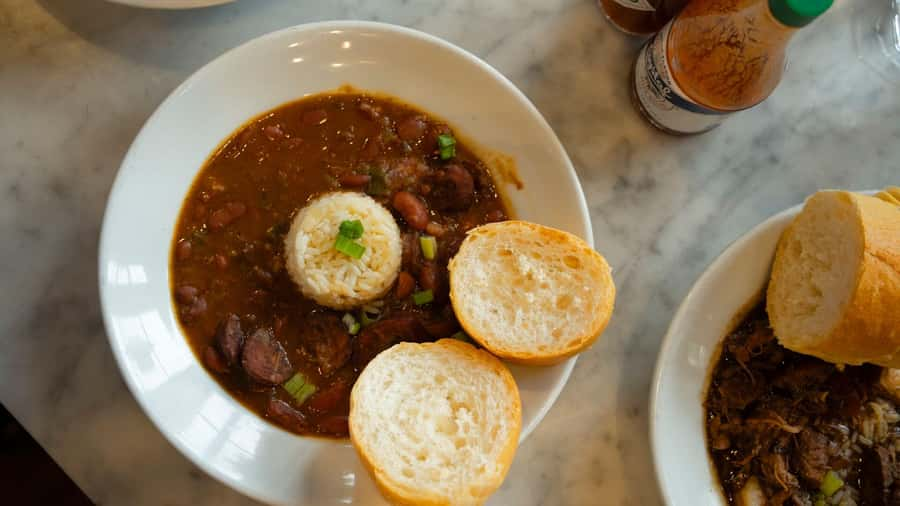
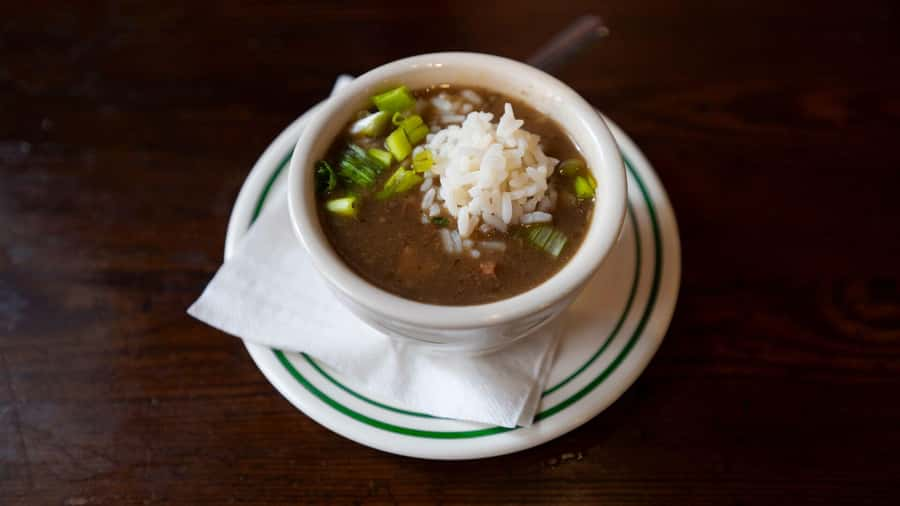
Gumbo is one of the central tastes on the route. You may receive a cup of gumbo paired with potato salad, a combination that helps show how a dish is eaten locally rather than simply what goes into it.
The guide also discusses hot sauce and Louisiana’s spice traditions. This is a useful part of the tour because spice in New Orleans is not just about making food hot. Different sauces and seasonings reflect local preferences, ingredients, and cooking traditions.
Other possible tastings include jambalaya, boudin, a local Cajun or Creole dish, and other specialties. These foods can vary from one stop to the next, but the aim is to show how New Orleans cuisine moves between rice dishes, stews, sausage, seafood, and strongly seasoned sauces.
The educational side matters here. A bowl of gumbo is more memorable when you understand the cultural influences behind it. The tour explains those connections without asking you to sit through a formal classroom talk.
Po’boys, muffulettas, and a filling middle stop
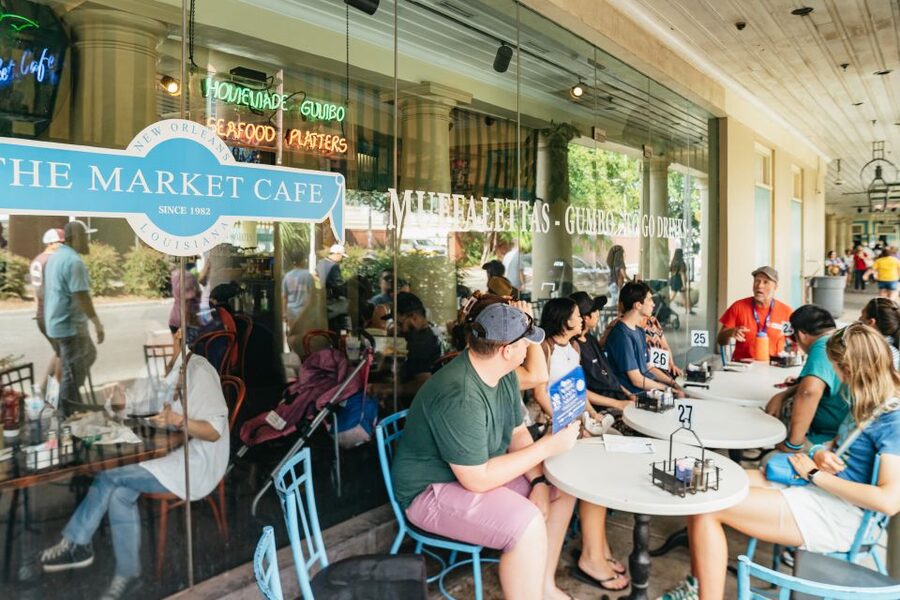
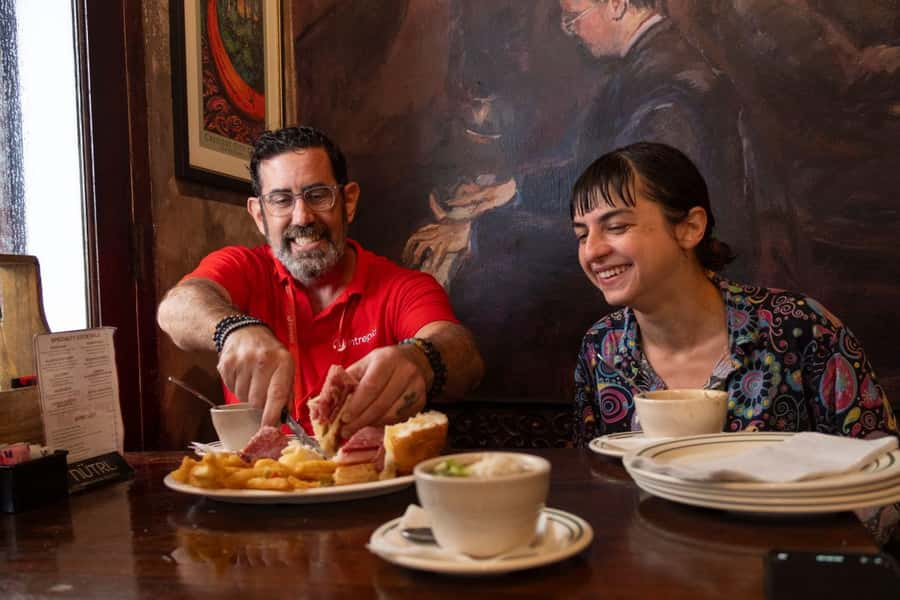
The itinerary includes either a New Orleans po’boy or muffuletta, along with other possible savory dishes. These are not minor tastes. Portions have been described as large enough to fill several people, and multiple past participants specifically warned against eating before the tour.
A po’boy gives you a taste of one of the city’s best-known sandwiches. A muffuletta brings a different style, with its own place in New Orleans food culture. The exact sandwich depends on the stop and the day, so you should not assume you will receive both.
You might also taste boudin or jambalaya. That variety is one reason I see value in the tour. Ordering one dish at a restaurant gives you one view of New Orleans cooking. Here, you can compare several styles in a single outing, without committing to full portions at multiple places.
The tradeoff is that you have less control over the menu. If you strongly dislike particular ingredients or follow a strict diet, this is not as flexible as planning your own restaurant meals.
The sweet finish and the meaning of generous portions
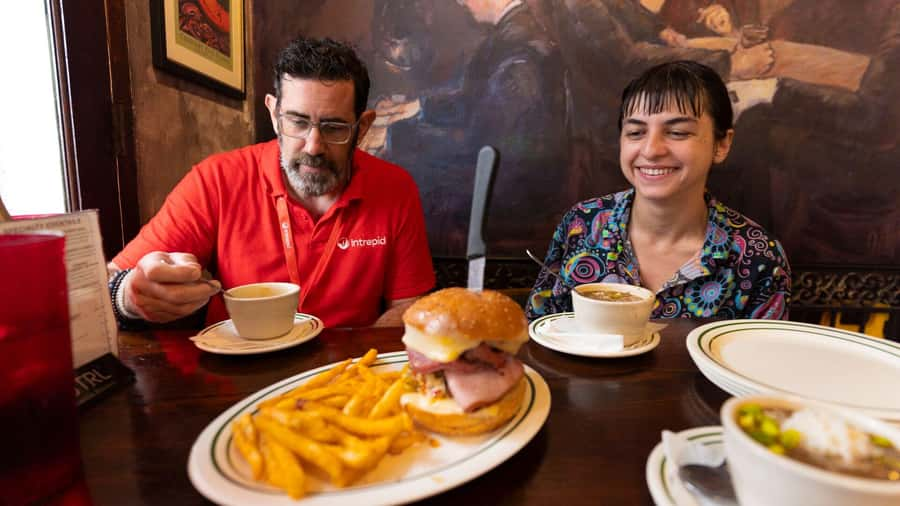
The tour ends with a local sweet treat, which may include pralines or another New Orleans dessert. Pralines are particularly useful for understanding the city’s French and Southern food connections, and the guide may explain how local pronunciation and preparation differ from what you know at home.
The generous food allowance is one of the best features for the price. At $76 per person, the tour is not simply a walking history lesson with one token snack. You receive five food samples across four stops, and the total amount is intended to equal a full meal.
That makes the price easier to justify for first-time visitors. You are paying for the guide, the walking route, the local context, and enough food to replace lunch or dinner. You also leave with ideas for places and dishes to order later.
The value is less obvious if you already know New Orleans well or prefer to choose every restaurant yourself. In that case, you may spend less by ordering a single meal. But for a first visit, the range of food and local guidance makes the cost fair.
What the tour teaches about New Orleans food
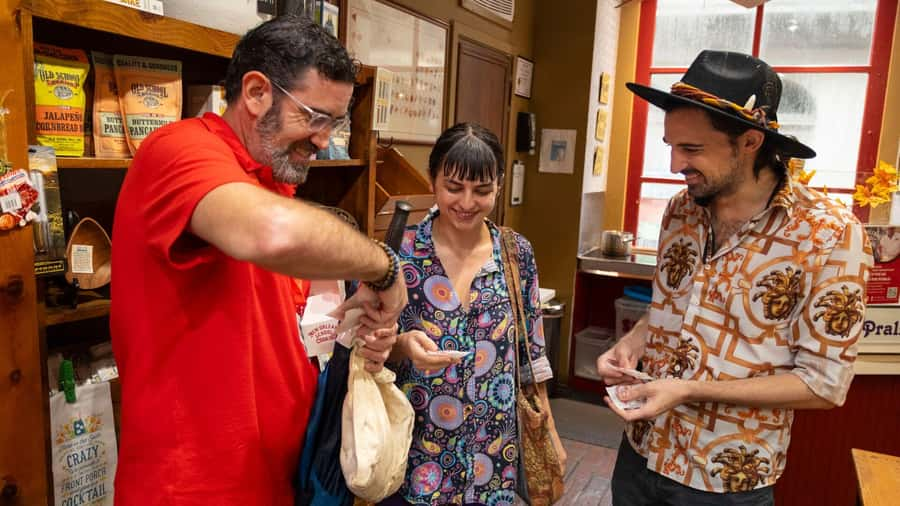
The strongest part of the experience is the link between food and culture. New Orleans cuisine did not come from one tradition. It developed through contact among French settlers, African communities, Native American foodways, Caribbean influences, and later Cajun and Creole cooking.
Your guide explains those connections while you eat. The result is practical rather than academic. You learn why gumbo matters, how hot sauce fits into local cooking, and why dishes such as muffuletta, jambalaya, boudin, and pralines belong in a New Orleans food conversation.
The stories also extend beyond food. Guides have discussed the development of New Orleans, the French Quarter, local buildings, and the people who shaped the city. Several guides have also offered suggestions for the rest of the visit.
I especially like taking a food tour early in a trip. The guide can point you toward dishes and restaurants to revisit, and you gain a clearer sense of what to order later. A past participant who took the tour near the end wished they had done it sooner for exactly this reason.
Group size, families, and dietary needs
The maximum group size is 12 people. That is small enough for direct questions and conversation, but it is not a private tour unless you book the private option.
A small group also helps with restaurant seating and street movement. The guide can learn names, keep the group together, and adjust the pace more easily than on a large bus-style food outing.
The tour is child-friendly, and children under six can join free. Families have found that teenagers can stay interested because the food arrives at regular intervals and the guide includes them in the conversation.
Dietary needs need more planning. Some stops are not always able to cater to vegetarians or other requirements. Other guides have made adjustments for guests who avoided beef or pork, and one guide worked around food allergies, but you should not assume every stop can do so.
Tell the provider and guide ahead of time. If your diet is strict, ask exactly what can be changed before booking. The menu changes by season and location, which makes flexibility helpful but also makes guarantees difficult.
Timing, weather, and practical comfort
The tour lasts about two and a half hours and is usually available in the morning and afternoon. A morning tour can work as a late breakfast and early lunch, while an afternoon departure can replace lunch and carry you toward dinner.
The walking is outdoors, and New Orleans heat and humidity can be serious. Choose light clothing, comfortable shoes, and a pace that works for you. The route is described as child-friendly, but you still need to be ready for city walking.
Rain does not necessarily end the experience. One guide kept a rainy outing moving by changing plans and maintaining the group’s energy. Still, weather can affect the route and the comfort of the walk.
Drinks are not included. Bring water or budget for beverages along the way. Extra food is also not included, though most people will not need it during the tour because the portions are substantial.
The B Corp and carbon-neutral angle
This tour is carbon neutral and operated by a B Corp certified company. That matters if you want your sightseeing choices to reflect environmental and social standards rather than only convenience.
The certification does not change the food or walking route, and it should not be the only reason to book. But it adds a useful layer for people who prefer companies that measure their wider effect and present tourism as a force for good.
The format itself also supports local spending. You visit food businesses in the French Quarter and hear about the city from a local guide rather than experiencing the area only through a large group transfer.
Should you book this French Quarter food tour?
I would book it early in a New Orleans visit if you want a guided introduction to local food and history. The combination of four stops, five samples, a small group, and a full-meal quantity of food gives the $76 price solid value.
It is especially suitable for first-time visitors, families with older children and teenagers, and anyone who wants help choosing what to eat in New Orleans. The guides, including Kaffey, Neil, Chip, Pepe, Denise, and Simon, have been praised for making the history clear and keeping the food at the center of the experience.
I would think twice if you need a tightly controlled vegetarian, allergy-safe, or special diet menu. I would also skip it if you prefer exploring restaurants alone or already have a detailed New Orleans food plan.
For most people, the best strategy is simple: book it near the start of your stay, skip the meal beforehand, and use the guide’s advice for the days that follow.
FAQ
How long does the New Orleans food tour last?
The tour lasts 2.5 hours.
How much does the tour cost?
The listed price is $76 per person.
Where does the tour meet?
Meet the guide at Jackson Square, next to the Andrew Jackson statue.
How many people can join the group?
The maximum group size is 12 passengers. A private group option is also available.
What food is included?
The tour includes four food stops and five samples. Possible foods include a beignet, a local dish, Cajun or Creole specialties, a po’boy or muffuletta, gumbo, hot sauce, and a local sweet treat.
Are the exact dishes guaranteed?
No. Food options, portion sizes, and stops vary by season and by the establishments visited that day. The total food included is intended to equal a full meal.
Are drinks included?
No. Drinks are not included.
Is the tour suitable for children?
Yes. The tour is child-friendly, and children under six can join for free.
Can vegetarians or people with dietary requirements join?
Some establishments cannot always cater to vegetarians or other dietary requirements. Contact the provider before booking and explain your needs.
Is the tour available in English?
Yes. The tour is conducted in English with a live English-speaking guide.
Can I cancel the tour?
You can cancel up to 24 hours in advance for a full refund. Reserve now and pay later is also available.
New food tours we have reviewed in the USA
- ChattaBrunch Food Tour★ 5.0 · 87 reviews
- Downtown Chattanooga Food Tour★ 5.0 · 290 reviews
- Historic Southside Food Tour in Chattanooga★ 5.0 · 32 reviews
- Tastes Through Time – Charleston’s Best Food & History Tour★ 4.5 · 95 reviews
- Charleston’s Savor the Flavors of Upper King Street Walking Food Tour★ 4.5 · 130 reviews
- Charleston Farm-to-Table Food Tour and Chef’s Challenge★ 5.0 · 110 reviews
- Private Charleston Walking Food Tour at the French Quarter★ 5.0 · 201 reviews
- Charleston Private Brunch Tour: Biscuits, Shrimps, Grits and More★ 5.0 · 48 reviews
New Orleans Food Tours, compared.
New Orleans Food Walking Tour of the French Quarter with Small-Group Option
Read our review →
Airboat and Plantations Tour with Gourmet Lunch from New Orleans
Read our review →
New Orleans French Quarter Food Tour: Cajun, Creole and Culture
Read our review →
French Quarter walking Food Tour Famous Flavors of New Orleans
Read our review →
French Quarter walking Food Tour: Signature Tastes of New Orleans
Read our review →
French Quarter Small-Group Cocktail and Foodie Crawl
Read our review →
New Orleans: Food Tour with Seafood Boil in French Quarter
Read our review →Browse the lists this tour appears in