
Review · CHIANG MAI FOOD TOURS
Northern Flavours Chiang Mai Food Tour with 15+ Tastings
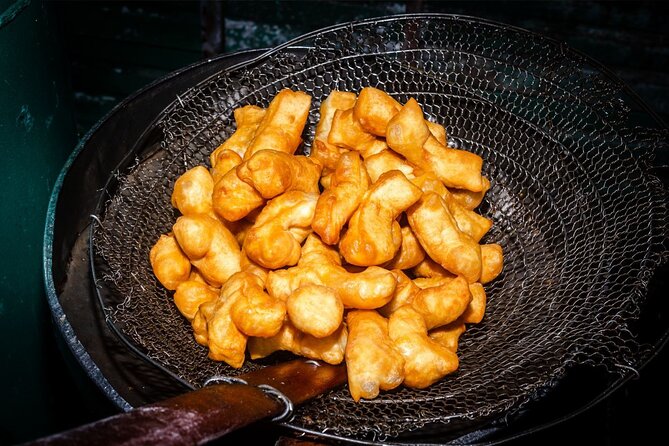
Chiang Mai’s best food lesson may come one small plate at a time. This four-hour tour moves beyond pad Thai and green curry to northern dishes shaped by Lanna traditions, local plants, and Burmese influence. You’ll ride in a red songthaew truck and stop at street stalls, markets, and tucked-away eateries for 15 or more tastings.
I like the small group of no more than eight, which makes it easier to ask questions and keep the pace comfortable. I also like the mix of food and cultural context: guides such as Aim, Moui, Muoy, Tree, and Indy explain not only what you’re eating, but how people eat it and where the recipes come from.
The main drawback is the menu. This tour is not suitable for vegetarians, pescatarians, or people avoiding pork, and severe shellfish or peanut allergies are a serious concern. You also need to arrive hungry, since the food adds up quickly.
Key points before you book
- More than 15 tastings: Expect enough food to replace a meal, with some groups trying 15 to 20 items.
- Northern Thai focus: Look for dips, curries, noodles, jungle greens, fruit, crispy pork, salads, and unusual local bites rather than standard central Thai dishes.
- A dedicated red songthaew: The truck carries the group between several food stops, cutting down on long walks.
- Eight people maximum: The small size gives you more time with the guide and makes shared tasting easier.
- Strong guide element: Aim, Moui, Muoy, Tree, and Indy are all named in the supplied experiences, with food, culture, and Chiang Mai history at the center of the tour.
- Important food limits: Alcohol costs extra, hotel pickup is not included, and the tour cannot safely handle severe peanut or shellfish allergies.
Why Northern Thai food deserves its own tour
Chiang Mai food is not simply a northern version of the dishes you find in Bangkok. Lanna cooking uses a different balance of herbs, chiles, fermented flavors, dips, greens, noodles, and meats. Burmese influence has also shaped the region, adding another layer to the food you’ll taste.
That difference is the reason this tour works. Instead of spending four hours sampling familiar dishes, you get a guided introduction to food that can be hard to identify from a menu. Your guide can explain what a dip is for, which vegetables are eaten with it, and how local diners combine several tastes in one meal.
I especially like the way the tour uses food as a route into Chiang Mai’s past. You may hear about Lanna culture, the background of vendors, and the links between northern Thailand and neighboring food traditions. The history is not presented as a lecture. It comes in short pieces while you eat, which keeps the evening moving.
The company has hosted more than 2,000 people and received a 4.9 rating from 514 ratings, with 99 percent recommending the experience. Those numbers do not guarantee a perfect evening for every palate, but they do point to a well-tested format. The strongest praise centers on the food variety, guide preparation, and the amount of useful explanation along the way.
More food tours in Thailand:
- Bangkok: Backstreets Food Tour with 15+ Tastings
★ 4.9 · 2,880 reviews - Bangkok: Midnight Food Tour by Tuk-Tuk
★ 4.9 · 2,054 reviews - Southern Flavors Phuket Food Tour with 15+ Tastings
★ 5.0 · 1,933 reviews
Meeting at Wat Lok Moli
The tour starts at Wat Lok Moli, at 298/1 Manee Nopparat Road. This is a practical meeting point near public transport, but you should leave enough time to find the exact spot and arrive ready to eat.
The group then boards a red songthaew, Chiang Mai’s familiar shared truck taxi. Here, the vehicle is arranged for the tour group rather than used as a random ride across town. That matters because the itinerary includes several food locations, and you can rest between stops instead of walking in the heat or rain.
The ride is part of the experience, not just a transfer. You see different parts of the city while your guide links the next dish to the places you pass. It also helps the tour cover more ground than a walking food crawl.
There is some walking at the food stops. You may need to stand at stalls, move through market areas, and eat in casual surroundings. This is not a polished restaurant tasting with a chair and table at every stop. Bring comfortable shoes, and carry an umbrella during the rainy season. The tour operates in all weather.
The first tasting stops and how the evening builds
The opening section introduces the style of the tour: small portions, several locations, and plenty of explanation. The exact dishes can vary, but the stated range includes spices, dips, curries, noodles, jungle greens, fruit, and regional snacks.
This variety is more important than any single signature dish. A bowl of noodles gives you one idea of northern cooking. A chile dip with vegetables shows another. A salad, curry, or grilled item adds a different texture and level of heat.
The tasting portions are designed to let you continue. Still, do not treat the word tasting as a promise of tiny samples. Several people have eaten 15 to 20 items and left very full. One useful strategy is to take a small first bite of everything, ask questions, and pace yourself before reaching the later stops.
The guides make a real difference here. Aim is described as funny, organized, and good at explaining ingredients and food history. Moui is praised for her understanding of northern food and culture. Tree brings local perspective from growing up in Chiang Mai, while Indy is noted for taking the group to places that might otherwise be missed.
Guide assignments can change, so you should not book only for one named person. The consistent benefit is the guide’s role in choosing, presenting, and explaining the food.
Street stalls, markets, and family-run food spots
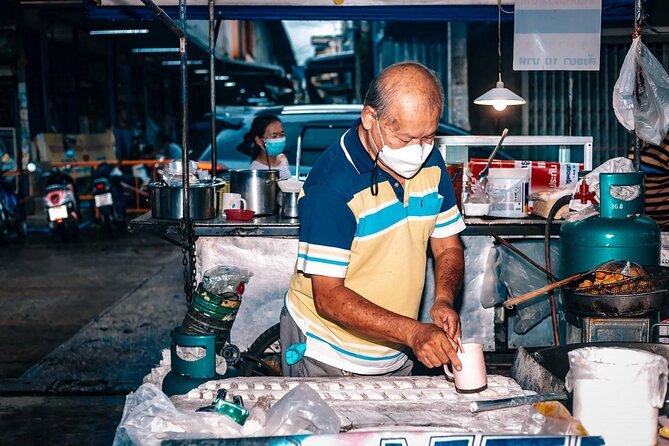
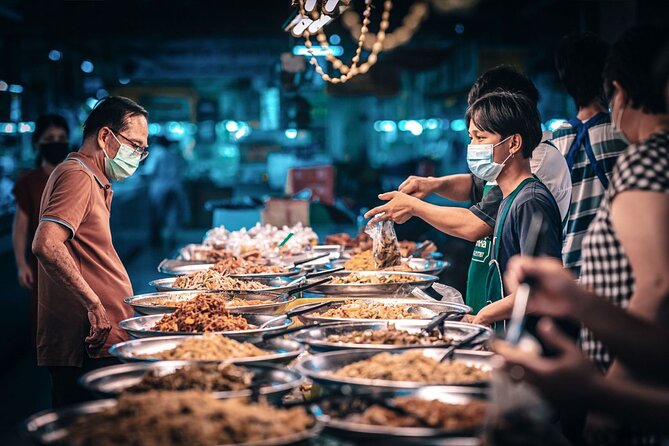
The tour visits roughly 15 different restaurants and street stalls, with the route moving through fresh markets and local food areas. Some stops have been family-run for several generations, adding a human side to the meal that you would miss by ordering randomly from a food court.
This is where the tour earns its price. At $59 per person, you are not paying only for plates of food. You are paying for a four-hour route, a dedicated vehicle, a small group, bottled water, local soft drinks, and someone who can make sense of unfamiliar dishes.
If you tried to copy the route alone, you would need to find each vendor, decide what to order, manage portion sizes, and work out how to get from one place to another. You would also miss much of the background behind the food. The tour is particularly useful early in your Chiang Mai stay because you can return to favorite stops later for a full meal.
One especially useful detail is that several people have gone back to restaurants they discovered on the tour. That suggests the route is not built only around novelty. It can give you practical food addresses for the rest of your visit.
The setting is casual, and that comes with trade-offs. Street food may mean limited seating, heat, traffic noise, and menus with few substitutions. If you prefer air-conditioned restaurants and carefully plated dishes, this may feel rough around the edges. If you want to see how ordinary meals are bought and eaten, those same conditions are part of the appeal.
Same appetite, a different neighbourhood:
- Bangkok Backstreets Food Tour with 15+ Tastings
★ 5.0 · 1,926 reviews - Bangkok: Michelin Guide Street Food Tour by Tuk Tuk
★ 4.4 · 1,274 reviews - Old Siam Bangkok Food Tour with 15+ Tastings
★ 5.0 · 867 reviews - Bangkok Authentic Tasting Thai-Chinatown Walking Food Tour
★ 4.9 · 852 reviews
Burmese influence, Lanna culture, and what the guide adds
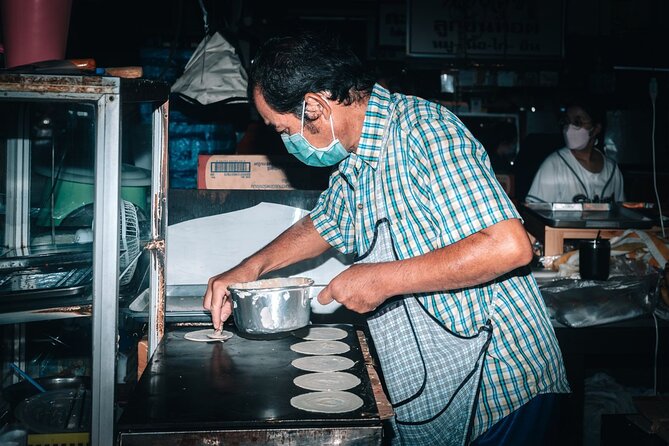
A good food tour should tell you why a dish tastes the way it does. This one puts clear weight on Burmese influence and the wider food exchange around northern Thailand. The guide may also explain Lanna traditions, vendor stories, and how certain ingredients fit into local meals.
That context helps you notice details. A dip is no longer just spicy. A green may reflect the plants available in the region. A noodle dish may point to a different culinary tradition than the food most visitors associate with Thailand.
The guides also explain how dishes are eaten. This is valuable because northern meals often work as a group of shared flavors rather than one large main course. You may learn which items go together, how to balance heat, or what to try first.
The food education is informal and practical. You can ask about ingredients, spice levels, preparation, and local customs while the dish is in front of you. That makes the information easier to remember than a general talk about Thai cuisine.
The middle of the tour: pace yourself
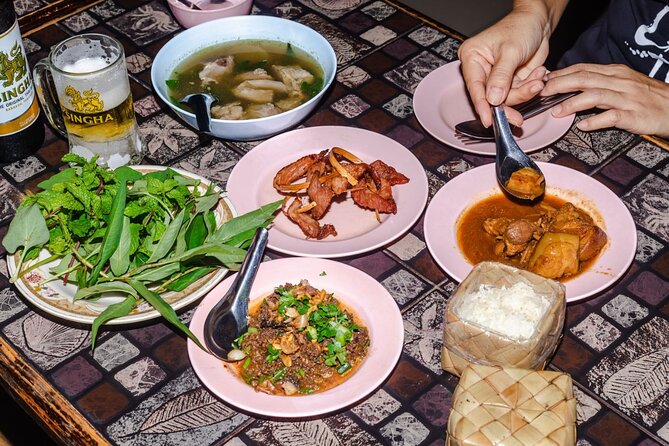
By the midpoint, the biggest challenge is usually not finding enough food. It is saving room. The tour includes generous amounts for a tasting route, and the selections may continue to arrive even after you think you have eaten plenty.
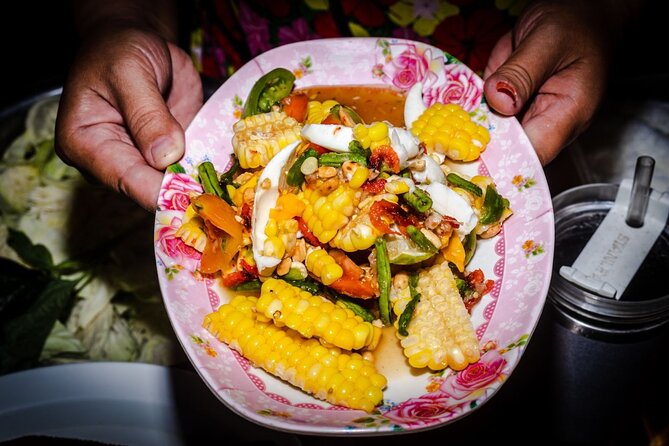
Crispy pork belly, mangosteen, corn salad, fruit, noodles, and different regional preparations are among the types of dishes described in the experience. Some adventurous bites may appear, including insects such as silkworm or grasshopper. You can ask what each item is before trying it, and you do not need to force yourself to finish something you dislike.
Bottled water is included, and local soft drinks are also provided. Water is available throughout the route, which is useful in Chiang Mai’s warm weather and after spicy food. Alcohol is not included, so budget separately if you want a beer or another drink.
There are practical comforts, too. Guides carry napkins and sanitizer, and bathroom advice is available along the way. Those details sound small, but they matter during a long food route through markets and street stalls.
Warorot Market and the final stop
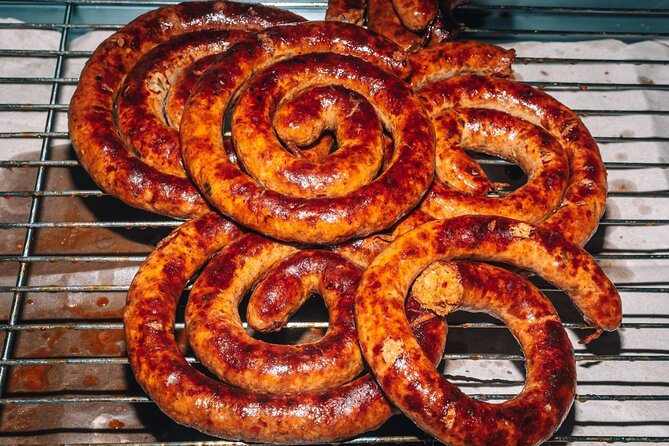
The tour is described as ending at Warorot Market beside the Ping River. This is a fitting finish because Warorot is one of Chiang Mai’s major local markets, with food products and everyday goods rather than a setting designed only for sightseeing.
Ending there gives you a chance to keep exploring after the formal tasting ends. You may leave with a better idea of what to buy, what ingredients to look for, and which northern flavors you want to try again.
There is one point to check before booking: the detailed route says the tour concludes at Warorot Market, while the meeting-point information says the activity ends back at the meeting point. Since those details conflict, confirm the final drop-off location with the operator. Do not assume the end point if you have an evening reservation or transport connection.
Who will enjoy this food tour most
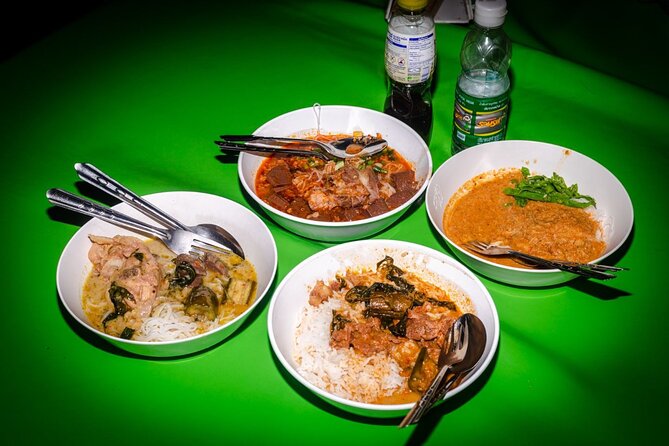
I would choose this tour for someone who wants to eat widely and learn while doing it. It suits first-time visitors who want a fast introduction to Chiang Mai food, as well as returning visitors who have already tried the obvious dishes.
It is also a good fit for people who enjoy trying foods they would not order alone. The guide removes much of the uncertainty, and the small group makes it easier to ask what something is before tasting it.
The tour is less suitable for anyone with strict dietary limits. It is specifically not suitable for vegetarians, pescatarians, or people who do not eat pork. Other restrictions may mean missing some dishes. Severe peanut and shellfish allergies are a concern because food is prepared and served in busy street settings with limited control over ingredients and cross-contact.
You should also be comfortable with a substantial meal, a little walking, shared tastings, and weather exposure. Most people can participate, and service animals are allowed, but this is not a quiet, formal dining experience.
Is $59 a fair price?
For four hours and more than 15 tastings, $59 is a reasonable price if you value guidance and variety. The cost includes food, bottled water, local soft drinks, and transport between stops in the red truck. That makes the comparison fairer than looking only at the cost of individual dishes.
You could eat cheaply in Chiang Mai without booking a tour. The advantage here is access to a planned route and local interpretation. You also reduce the risk of spending your evening at restaurants aimed mainly at visitors or ordering dishes that do not show much of northern Thailand.
The value is strongest when you take the tour near the start of your visit. You can note which dishes you like, ask about other places to eat, and return to the best stops later. If you have only one evening for food activities, the tour gives you a broad sample in one booking.
Hotel pickup and drop-off are not included. Alcohol is extra, and the free cancellation window closes 24 hours before the start time. Cancel at least a day ahead if your plans may change.
Should you book it?
Book this tour if you want a full meal’s worth of northern Thai food, prefer local stalls to standard tourist menus, and like having a guide explain every unfamiliar bite. The small group, red songthaew, broad menu, and strong guide focus make it a useful introduction to Chiang Mai eating.
Skip it if you need vegetarian or pork-free food, have a severe peanut or shellfish allergy, or prefer a fixed restaurant meal with plenty of personal choice. For everyone else, arrive very hungry, wear light comfortable clothes, and treat the evening as both dinner and a practical lesson in what to eat next in Chiang Mai.
FAQ
How long does the Chiang Mai food tour last?
The experience lasts approximately four hours.
How many food tastings are included?
More than 15 tastings are included. Depending on the route and group, the total may reach 15 to 20 items.
What kind of food will I try?
The tour focuses on Northern Thai food, including spices, dips, curries, noodles, jungle greens, salads, fruit, and other local dishes. Burmese influence on Chiang Mai cuisine is also explained.
How large is the group?
The maximum group size is eight people.
Is transportation included during the tour?
Yes. The group travels between food stops in a red songthaew truck. Hotel pickup and drop-off are not included.
Is the tour suitable for vegetarians or people who do not eat pork?
No. The tour is not suitable for vegetarians, pescatarians, or people following a no-pork diet because street vendors have limited menus.
Are drinks included?
Bottled water and local soft drinks are included. Alcoholic drinks are not included.
Where does the tour start and finish?
The tour starts at Wat Lok Moli, 298/1 Manee Nopparat Road, Chiang Mai. The route information says it concludes at Warorot Market, while the meeting-point information says it ends back at the meeting point, so confirm the final location before booking.
New food tours we have reviewed in Thailand
- Bangkok 3-in-1 Tour: Longtail Boat,TukTuk & Street Food Adventure★ 5.0 · 73 reviews
- 4-Hour Hidden Bangkok TukTuk Street Food Guided Tour★ 5.0 · 23 reviews
- Private Tuktuk Authentic Food Tour (Chinatown-Flower Market)★ 5.0 · 75 reviews
- Train & Floating Market Food Adventure + Scenic train ride★ 5.0 · 102 reviews
- Bangkok Tuk Tuk Food Tour By Night★ 5.0 · 198 reviews
- Timeless Thonburi Canal and Food Tour★ 5.0 · 31 reviews
- Authentic Street Food Tour in China Town Bangkok★ 5.0 · 25 reviews
- Night Street Food Tour of Bangkok’s Chinatown★ 5.0 · 173 reviews
Chiang Mai Food Tours, compared.
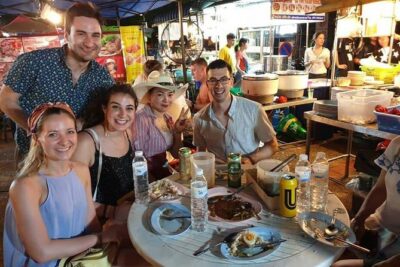
Small-Group Chiang Mai Evening Street Food Tour
Read our review →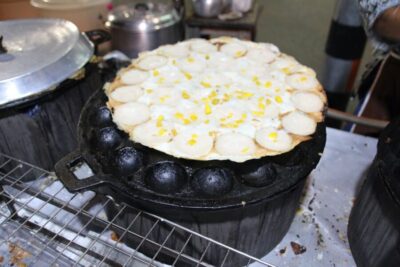
Chiang Mai: Evening Local Street Food Market Tour
Read our review →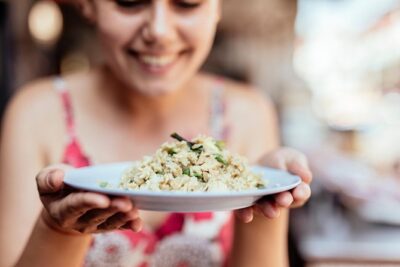
The 10 Tastings of Chiang Mai With Locals: Private Street Food Tour
Read our review →
Taste of Chiang Mai: Michelin Guide & Street Food Tour
Read our review →
Chiang Mai: Food Tour by Songtheaw Truck with 15+ Tastings
Read our review →
Fresh Local Market Tour – Food tour in Chiang Mai
Read our review →
Chiang Mai: Tuk-Tuk Evening Tour with Temples & Street Foods
Read our review →Browse the lists this tour appears in