
Review · WINE TOURS
Olive Oil Museum: Extravirgin school – Food & wine tasting
The most useful part of this Sardinian food experience is not simply tasting oil. Francesco Locci shows you how to tell good extra virgin olive oil from ordinary oil, then puts that lesson to work with several samples, local foods, and sparkling wine. You also get a look at a modern mill and an old underground cistern filled with oil lamps and tools.
I like the mix of practical instruction and local tradition. You leave with a skill you can use at home, not just a pleasant memory. I also like the tasting of Limolio, made with organic olives and lemons, and Rogo del Tempio, a spicy oil scented with nine Sardinian herbs. The main consideration is time: the full experience lasts only one hour, so the museum visit, class, and tasting move at a brisk pace.
Key points to know before booking
- A working oil mill and museum in one stop: See modern production methods, then compare them with centuries-old equipment.
- A real olive oil lesson: Learn to identify fruitiness, bitterness, and spiciness in high-quality extra virgin olive oil.
- Two distinctive flavored oils: Try lemon-infused Limolio with salads or fish, and herb-filled Rogo del Tempio with meat or baked dishes.
- Sardinian food served with the tasting: Expect cured meats, natural olives, carasau bread, regional snacks, and fresh sparkling wine.
- Easy access from Cagliari: Free parking is available, and bus line 108 takes about 54 minutes from central Cagliari.
- A flexible, welcoming setup: The experience is wheelchair accessible, dog-friendly, and offered in English, French, or Italian.
Why an oil mill makes a good Sardinian food stop
Olive oil is not just a bottle on a restaurant table in Sardinia. It is tied to farming, family customs, preserving food, lighting homes, and cooking everyday meals. This experience gives you a short, direct way to see that connection.
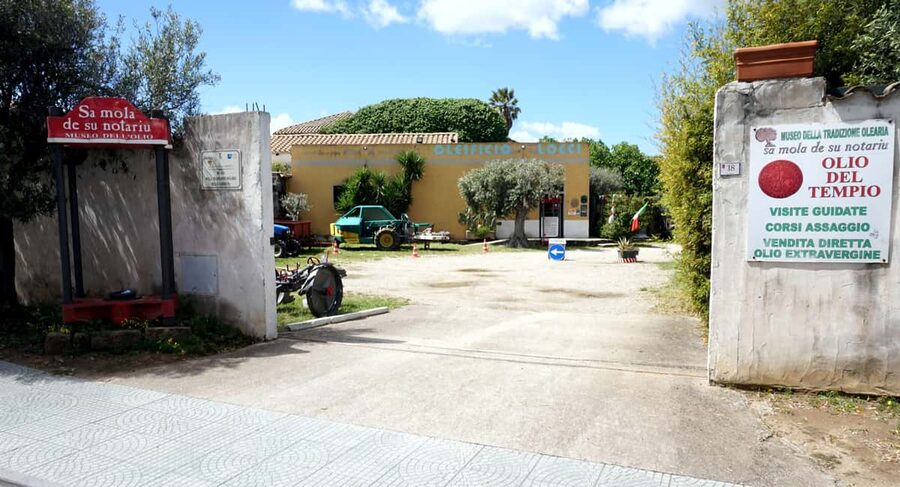
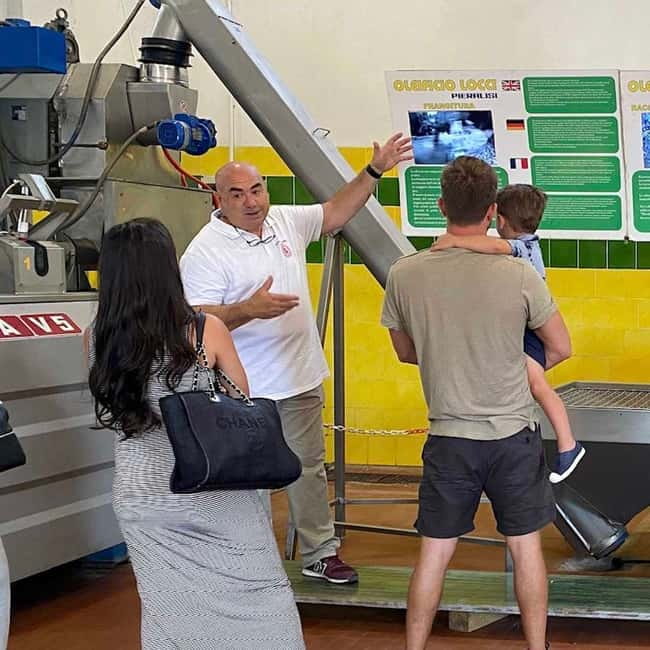
You start at Olio del Tempio, a modern oil mill and sales point. Video presentations explain the stages of harvesting and processing. The 10-minute guided visit is not long, but it gives you a useful frame for the tasting that follows. Instead of treating olive oil as a vague luxury product, you see how olives become the oil you are about to sample.
I particularly like the contrast between the new and old sides of the visit. The modern mill explains current production. The museum, called Sa mola de su notariu, connects the same product to older Sardinian tools and customs. That contrast gives the hour more substance than a simple shop tasting.
The short format can also work in your favor. If you are fitting this into a day near Cagliari, you do not need to give up half a day. But you should arrive ready to pay attention. With only an hour, there is little spare time for a slow, wandering visit.
More Wine Tours in Italy
- Winner 2025 Florence Sunset Food & Wine Tour by Eating Europe
★ 5.0 · 5,015 reviews - From Florence: Small Group Wine Tasting Tour to Tuscany
★ 4.9 · 3,902 reviews - Rome Food Tour: Unlimited Tastings with Fine Wine & Barolo
★ 5.0 · 3,365 reviews
The modern mill: from harvest to bottle
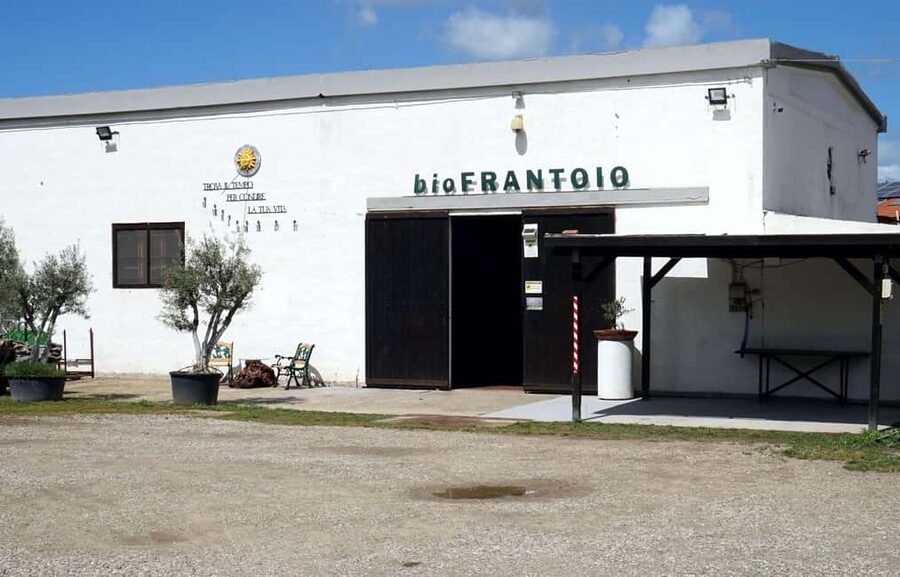
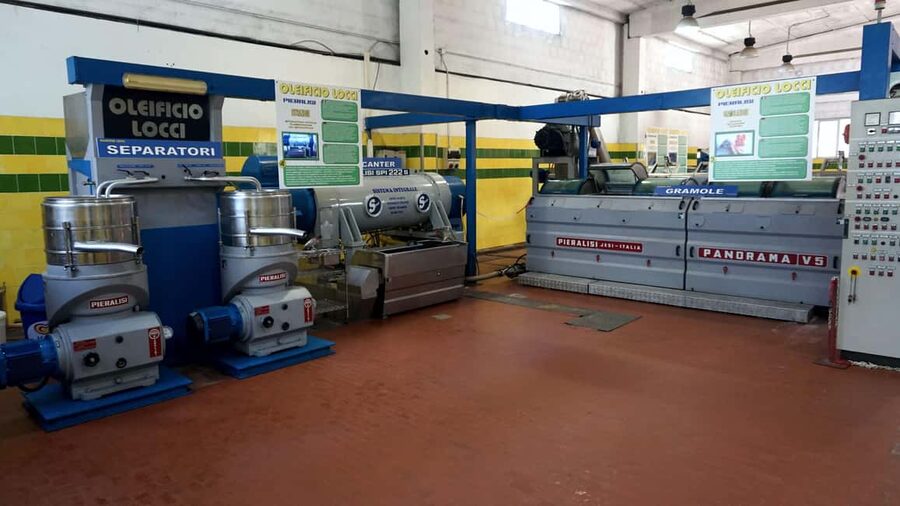
The first part takes place at the oil mill, where you learn how extra virgin olive oil is produced. Video material shows the stages of harvesting and processing. That matters because quality begins well before the tasting glass reaches your hand.
You will hear about the production process, then see the setting where the oil is made and sold. The visit is guided, and Francesco Locci leads the experience in English, French, or Italian. His enthusiasm for the subject is a major part of the tone. He is not simply handing out samples. He explains what you should notice and why it matters.
The mill stop lasts about 10 minutes. Think of it as an introduction rather than a technical factory tour. The supplied information does not promise a long production-floor visit or a full harvest demonstration, so do not book this expecting hours of machinery and processing detail.
Still, the stop does an important job. It makes the tasting more convincing. Once you understand that olive oil has a production method, you can better appreciate why two oils made from olives may smell, taste, and perform differently.
Sa mola de su notariu and the underground cistern
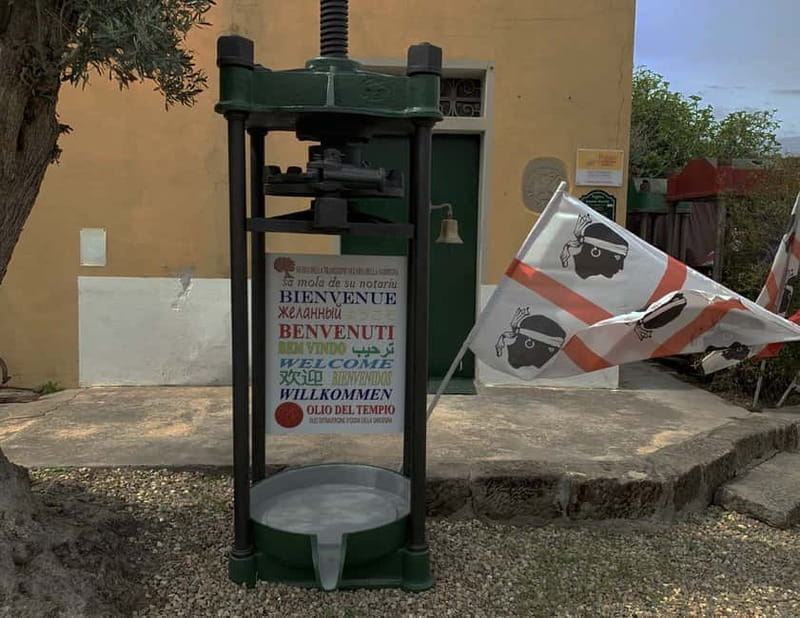
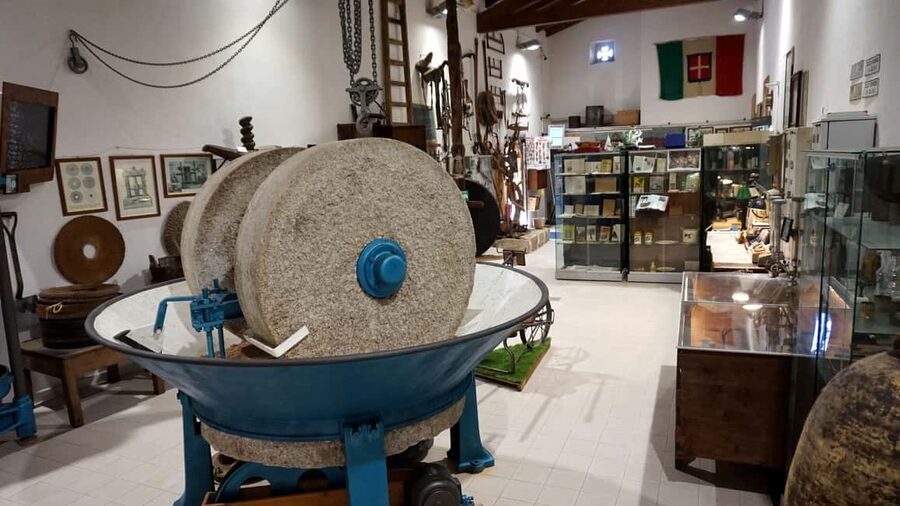
After the mill, Francesco guides you through the Oil Museum, Sa mola de su notariu. The collection includes old lamps and other objects linked to olive oil across the centuries. These items show how important oil once was beyond cooking.
The most unusual feature is the old underground cistern. You can go down into this historic space and see oil lamps and ancient artifacts connected with oil production and use. It is a memorable change of pace from the modern mill. The cistern also gives the museum a stronger sense of place than a room of isolated objects would provide.
I like this section because it connects food with daily life. Olive oil helped light homes, not just dress bread or flavor vegetables. You get a glimpse of the work, tools, and habits that surrounded the product before modern equipment changed the process.
The museum stop is included in the price, so you do not need to choose between the tasting and the cultural portion. The tradeoff is again time. You will not have an entire afternoon to study every artifact. If old agricultural tools and local history are a major interest, plan to ask questions early and keep an eye on the one-hour schedule.
The 20-minute lesson that changes how you taste oil
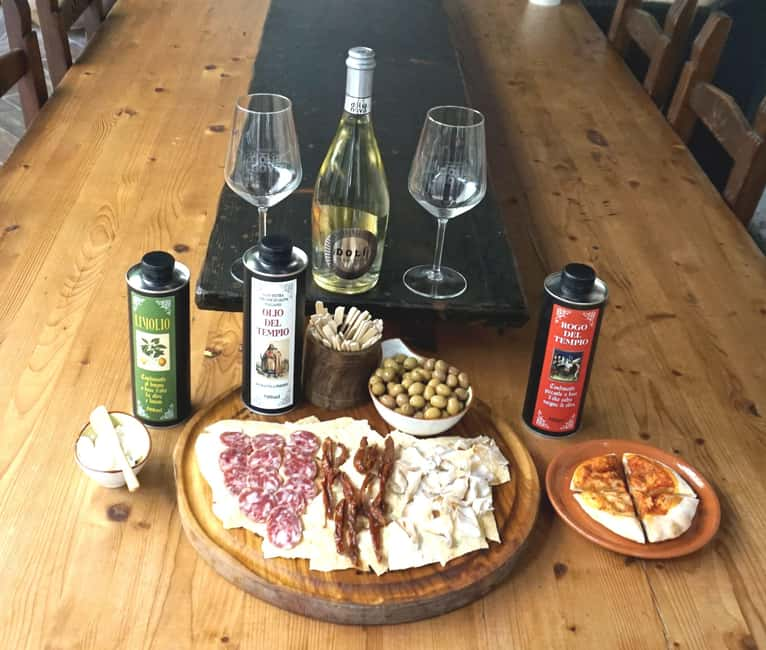
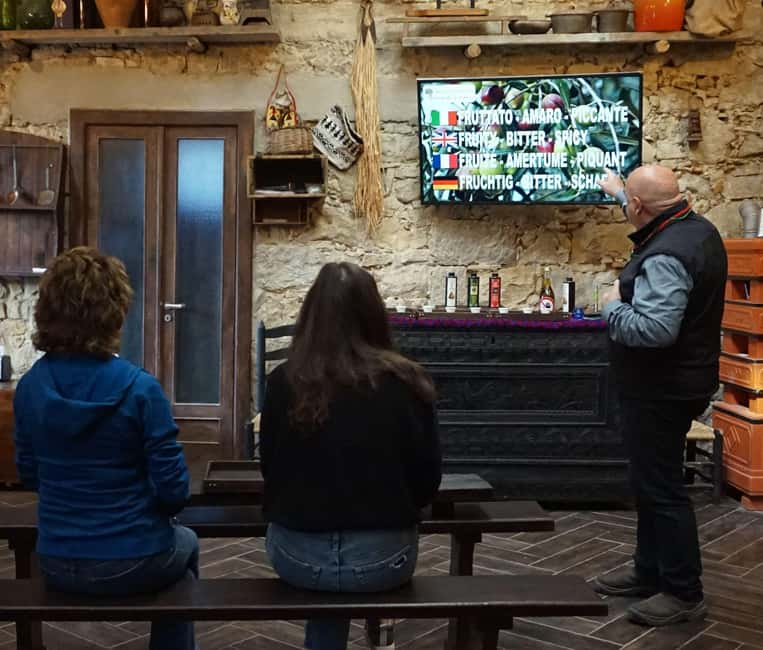
The tasting class is the heart of the experience. You learn to recognize three basic qualities in extra virgin olive oil: fruitiness, bitterness, and spiciness.
That lesson is useful because people often judge oil only by how mild it tastes. Here, bitterness and a peppery finish are not automatically flaws. They can be signs of the olive variety, freshness, and character of the oil. The class gives you a vocabulary for comparing what is in your glass.
The lesson includes slides and guided sampling. Francesco helps you focus on taste rather than label design or price. You may come away more alert to stale, flat, or overly bland oils in your own kitchen.
The experience is not presented as professional certification, and it does not claim to turn you into an olive oil judge in an hour. It does give you a solid starting point. For most visitors, that is the right level: practical knowledge you can use when shopping, cooking, or ordering food.
Take your time with each sample if the schedule allows. Notice the smell first, then the flavor, then the finish. Ask about serving ideas. The tasting is designed to teach you, so it is worth treating it as a class rather than quickly sampling a row of products.
More olive oil tastings in Italy:
- Sorrento Farm and Food Experience including Olive Oil, Limoncello, Wine tasting
★ 5.0 · 2,524 reviews - Sorrento: Lemon, Olive Oil and Wine Tasting Tour with Lunch
★ 5.0 · 300 reviews - Ostuni: Olive Oil Tasting Tour
★ 4.4 · 171 reviews - From Chania: Olive Oil, Wine, Cheese & Honey Tasting Tour
★ 4.6 · 490 reviews
Limolio and Rogo del Tempio
The flavored oils make this tasting more distinctive. Limolio combines organic olives and lemons. It is suggested for salads and fish, where the citrus note can add brightness without requiring a separate lemon dressing.
Rogo del Tempio takes the other direction. It is a spicy oil made with a bouquet of nine traditional Sardinian herbs. It is recommended with meat or baked dishes. This is a good reminder that flavored oil does not have to mean a novelty product. The right oil can be matched to a specific type of food.
You taste these oils alongside the plain extra virgin oils, which helps you compare them. The flavored versions are also useful if you want an easy souvenir. A bottle of oil takes up less room than many food products, though you should check your airline rules and luggage space before buying.
Special discounted prices are available to people taking part in the experience. The information does not specify the exact discount, so ask Francesco about current prices before you decide how much to purchase.
Sardinian snacks, cured meats, and sparkling wine
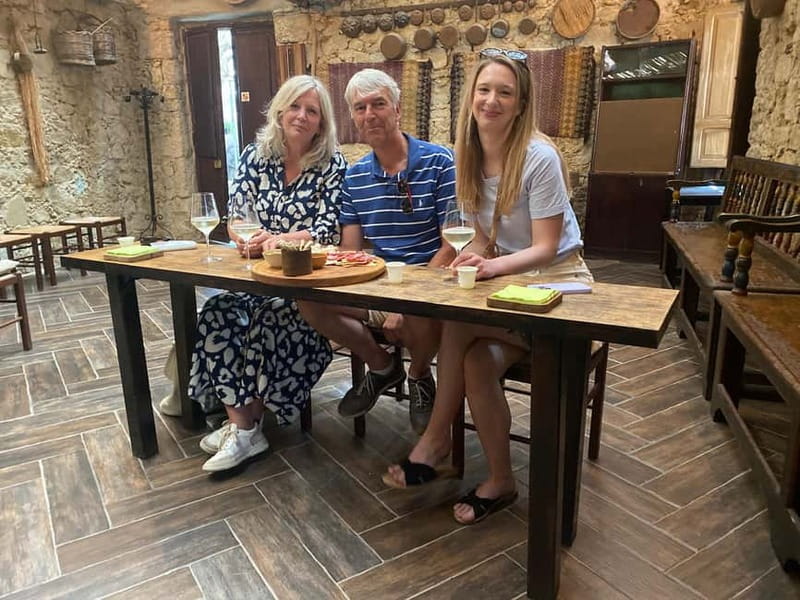
The food portion lasts about 20 minutes. You are served a platter of cured meats, natural olives, carasau bread, and other regional foods. Fresh sparkling wine and water are included.
Carasau bread is especially fitting here. This thin, crisp Sardinian bread works well with olive oil and gives you a plain base for tasting. The cured meats add salt and richness, making it easier to see how the oils behave with food rather than on their own.
The sparkling wine keeps the tasting relaxed and social. It is not a full meal, so you should not arrive expecting lunch or dinner. The portion is better described as a generous snack or light food pairing. If you need a substantial meal afterward, plan for one elsewhere.
I like that the food is local and simple. You are not distracted by elaborate dishes. The oil remains the focus, while the bread, olives, and cured meats show how it fits into Sardinian eating.
The combination also makes this a good activity for people who do not usually seek out food tours. You can learn something, eat well, and enjoy a drink without committing to a long, formal tasting menu.
What the one-hour schedule feels like
The schedule is compact:
- About 10 minutes for the guided oil mill visit
- About 20 minutes for the olive oil lesson and food tasting
- About 20 minutes for wine, local snacks, regional food, and tapas
- The remaining time is used for the museum visit and transitions
The exact order may vary, but the format is clear. You move from production, to heritage, to tasting. There is no complicated route or multiple meeting points. You start and finish at the museum and mill.
That simplicity is helpful if you are driving around southern Sardinia. You can park free in the museum lot, take part, and continue your day. Bus line 108 connects the location with central Cagliari in about 54 minutes. The bus ride is not quick, but it gives visitors without a car a direct option.
Transfers from other parts of southern Sardinia are not included. If you need a pickup, that service is available separately, but you should arrange and price it before booking.
The activity is wheelchair accessible. It is also dog-friendly, with a bowl of water available for dogs. Free Wi-Fi is provided, though the main reason to come is the food, museum, and lesson rather than internet access.
Is $60.35 a fair price?
At $60.35 per person, this is more than a basic shop tasting. The price covers a guided visit to a working mill, admission to the Oil Museum, a lesson with slides, several oil samples, Sardinian foods, sparkling wine, and access to discounted oil purchases.
I see the value most clearly if you care about food, local culture, or useful travel experiences. You are paying for instruction as well as consumption. The museum and underground cistern add a cultural element, while the tasting gives you something practical to take home.
The value is weaker if you only want a quick sample of olive oil. A one-hour experience may feel expensive if your sole goal is to taste a few flavored oils. It makes more sense when you treat the mill, museum, class, and food pairing as one package.
The price also depends on your transport. Parking is free, but transfers are not included. From Cagliari, the bus offers a budget-friendly alternative, although the 54-minute ride each way makes the outing longer than the tasting itself.
Who will enjoy this experience most?
I would recommend it to food-minded visitors who want more than a postcard view of Sardinia. It suits couples, small groups, families interested in food, and anyone who likes bringing home edible souvenirs with a story behind them.
It is also a smart choice for a rainy or very hot day, since much of the activity takes place indoors. The museum and mill offer a change from beaches and outdoor sightseeing.
The experience works well for first-time olive oil tasters because the lesson gives you a simple method. You do not need prior knowledge. If you already buy premium oils and attend formal tastings, the class may feel introductory, but the museum and Sardinian setting still add interest.
People with limited time should note the compact schedule. You will get a clear introduction, not an exhaustive course. Visitors who want a long production tour, a full meal, or an all-day cultural program should choose something else.
The atmosphere also sounds personal rather than corporate. Francesco Locci is the named experience provider, and the emphasis is on his guidance, explanations, and hospitality. That can make the visit feel warm and direct, though the quality of the experience will naturally depend on the schedule and group on your chosen day.
Booking details that matter
You can cancel up to 24 hours before the activity for a full refund, and you can reserve now while paying later. Starting times vary, so check availability before arranging your bus or other plans.
The experience is offered in English, French, and Italian. Confirm your preferred language when booking if that matters to you.
Bring enough room in your luggage if you expect to buy oil. The special prices are available during the visit, and the sales area gives you a convenient chance to purchase the products you have just tasted.
Should you book the Olio del Tempio experience?
Book it if you want a compact Sardinian food experience that combines a working mill, a traditional museum, useful tasting skills, and local snacks. The underground cistern and the two unusual flavored oils give it more character than a standard retail tasting.
I would be especially keen to book this near Cagliari if I had a car, wanted a one-hour activity, and enjoyed taking home regional food products. The main caution is the short schedule and the extra effort required if you need a transfer. If you expect a full meal or an extensive factory tour, your expectations may be too high.
For most food-focused visitors, the combination of Francesco Locci’s lesson, the museum, sparkling wine, and Sardinian foods makes the $60.35 price reasonable. It is a small, focused experience, but it gives you both a taste of the island and a skill you can use long after your trip.
FAQ
How long does the olive oil experience last?
The activity lasts one hour. Starting times vary, so you should check availability before booking.
Where does the activity begin and end?
You start and finish at Museo dell’olio Sa mola de su notariu, at Olio del Tempio. Free parking is available in the museum parking lot.
Can I reach the museum by public transportation?
Yes. Bus line 108 runs from central Cagliari, and the journey takes about 54 minutes.
What food and drinks are included?
The tasting includes cured meats, natural olives, carasau bread, regional snacks, other Sardinian foods, sparkling wine, and water.
Which flavored olive oils will I taste?
You can taste Limolio, made with organic olives and lemons, and Rogo del Tempio, a spicy oil made with nine traditional Sardinian herbs. Other extra virgin olive oils are also included in the tasting.
Is the activity available in English?
Yes. The live guide service is available in English, French, and Italian.
Is the experience wheelchair accessible and dog-friendly?
Yes. The activity is wheelchair accessible and welcomes dogs. A bowl of water is available for dogs.
More museum visits in Italy
- Parmesan and Balsamic Food Tour with Ferrari Museum
★ 5.0 · 28 reviews - Parmesan and Balsamic Food Tour with Ferrari Museum
★ 4.8 · 25 reviews - Dubai: Old Town, Creek, Museums, Souks, & Street Food Tour
★ 4.8 · 10,816 reviews - Munich: Beer and Food Tour with Dinner & Oktoberfest Museum
★ 4.7 · 1,086 reviews
New food tours we have reviewed in Italy
- Private tour of Etna and Winery Visit with Food and Wine Tasting from Taormina★ 5.0 · 221 reviews
- Street food tour of Catania by night★ 4.5 · 31 reviews
- Catania Sicilian Street Food Tour: Small Group by Do Eat Better★ 5.0 · 293 reviews
- Mt Etna and Wine tasting tour from Catania★ 5.0 · 282 reviews
- Cagliari: A Full Meal Sardinian Food Tour with Do Eat Better★ 5.0 · 265 reviews
- Small-Group Food and Wine Tour from Cagliari★ 5.0 · 237 reviews
- Taste Bolzano: Food Tour with Full Meal by Do Eat Better★ 5.0 · 21 reviews
- Bologna Food & Wine tour with a local Chef★ 3.0 · 30 reviews
Wine Tours, compared.
Montserrat Half-Day Tour with Tapas and Gourmet Wines
Read our review →
Winner 2025 Undiscovered Lisbon Food & Wine Tour by Eating Europe
Read our review →
From Porto: 2 Wine Regions, Farm-to-Table Lunch & Boat
Read our review →
Winner 2025 Florence Sunset Food & Wine Tour by Eating Europe
Read our review →
Authentic Parisian Gourmet Food Tour with 10 Local Dishes & Wines
Read our review →
Barcelona: Tapas Walking Tour with Food, Wine, and History
Read our review →
Lisbon: Food and Wine Small Group Walking Tour
Read our review →
Lisbon Small-Group Portuguese Food and Wine Tour
Read our review →Browse the lists this tour appears in