
Review · MALAYSIA FOOD TOURS
Penang Plates Food Tour with 15+ Tastings
Penang’s food culture makes the most sense when you taste it across communities, not from one restaurant menu. This four-hour walk through old George Town moves between Little India, Chinatown, and local food stops, with more than 15 tastings ranging from sizzling noodles to banana leaf curry and colorful Nyonya sweets.
I like the small group limit of eight, which makes it easier to fit into compact food stalls and hear your guide. I also like the range: Chinese, Indian, Malay, and Peranakan food all appear in one sitting. The main catch is simple: this is a lot of food, and the tour is not suitable for vegetarians, vegans, people with serious allergies, or strict halal and no-pork diets.
Key points to know before you book
- Expect a full four hours of eating: This is not a quick snack walk. Several light bites and full meals are served along the route.
- The food crosses George Town’s cultures: Try Hokkien char, char ho fun, lok lok, Indian street food, banana leaf dishes, and Nyonya kueh.
- Eight people is the maximum: A small group helps the guide manage orders and use smaller food stalls.
- Guides add place and people to the food: Grace, Sandy, Ken, Rachel, Dandy, CE, Mint, and others have led recent tours.
- Bring an empty stomach and comfortable shoes: The quantity is generous, and you will be walking through old George Town.
- Check dietary suitability carefully: Lactose intolerance and a no-beef diet are listed as suitable, but several other restrictions are not.
Four hours to eat across old George Town
The best feature of this experience is its range. Penang food is not one single cuisine. It reflects Chinese, Indian, Malay, and Peranakan traditions, shaped by the people who settled and traded on the island.
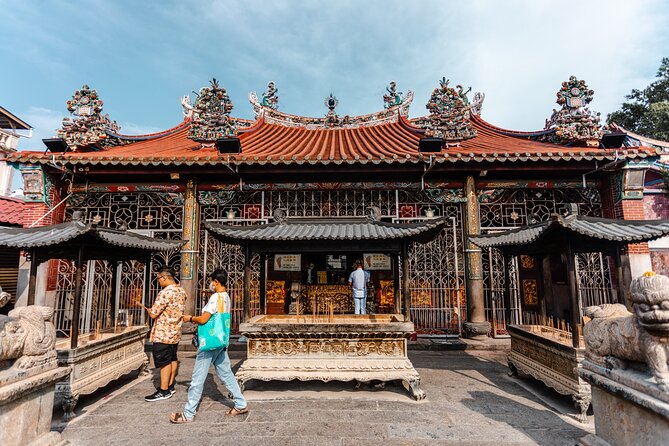
You begin at the courtyard of the Pinang Peranakan Mansion, a central meeting point in George Town. From there, the tour takes you through the old city, including Little India and Chinatown. The route combines street food with small restaurant stops, and some indoor venues offer air conditioning when the heat starts to wear you down.
I like this format because it solves a common problem in George Town. You can find food almost anywhere, but it is harder to know what to order, how much to order, and which dishes belong to which local tradition. Here, you taste small portions across several stops instead of committing to one large meal.
The exact order and selection may vary by day, but you should plan for a steady parade of food. One recent description of the meal included four light bites and three full meals. That gives you a better idea of the scale than the phrase 15+ tastings alone.
More food tours in the world:
- Reykjavik Food Walk – Local Foodie Adventure in Iceland
★ 5.0 · 18,952 reviews - Dubai: Old Town, Creek, Museums, Souks, & Street Food Tour
★ 4.8 · 10,816 reviews - Ho Chi Minh City Street Food Tour & Sightseeing By Motorbike
★ 5.0 · 9,413 reviews
Chinese dishes: noodles, wok heat, and lok lok
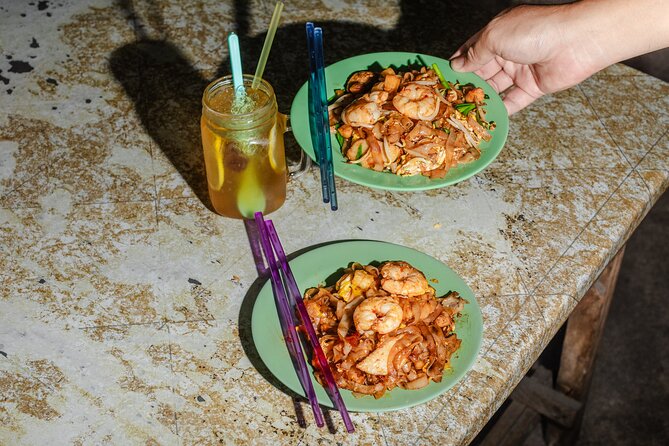
The Chinese portion of the experience includes Hokkien char and char ho fun. These dishes give you two different ways to understand Penang’s noodle culture.
Hokkien char is served from a hot wok, with the sort of smoky, savory flavor that comes from quick cooking at high heat. Char ho fun offers a different texture through broad rice noodles. The tour gives you a chance to compare dishes rather than treating all noodles as interchangeable.
Lok lok adds a more hands-on stop. You dip skewered foods into a simmering hot pot, then eat them with the sauce or seasoning provided. It is casual, social food, and a useful introduction to the way many Penang residents eat at simple stalls.
The small group helps here. Eight people is still enough to share a table and talk, but not so many that the guide has to shout over the room. It also makes ordering a broad selection more practical.
You should use chopsticks if you can, but do not worry if your technique is shaky. The food is meant to be enjoyed, not performed. A good guide can also explain what you are eating and how locals approach each dish.
Little India brings spice, crunch, and banana leaf meals
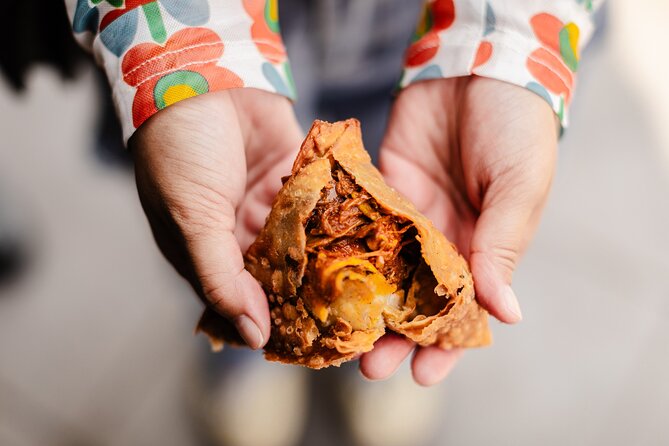
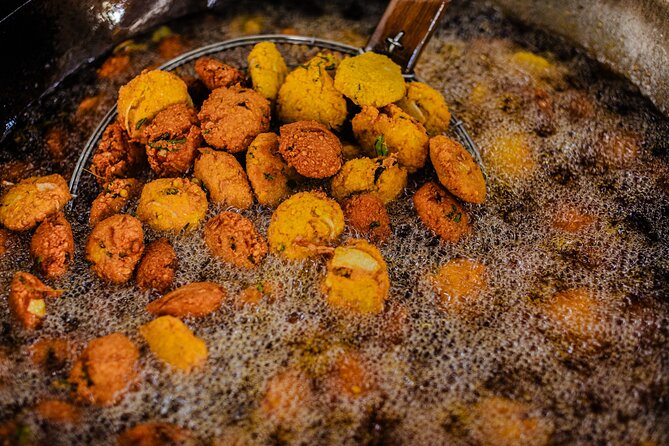
The route through Little India gives the tour some of its strongest contrast. You may try dishes such as curry samosas and pani puri, along with daals and vegetable curries served on banana leaf thalis.
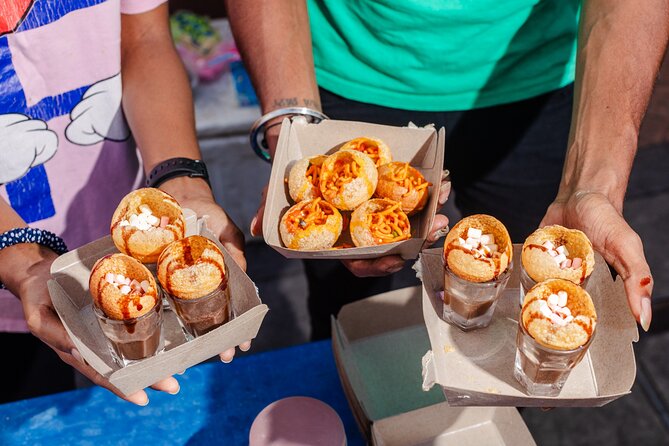
Pani puri is a small, crisp shell filled with a mixture of flavors and textures. It is a quick bite, but it shows how Indian street food can pack plenty into a tiny serving. Samosas offer a more familiar entry point, while daals and curries slow the pace down with a fuller meal.
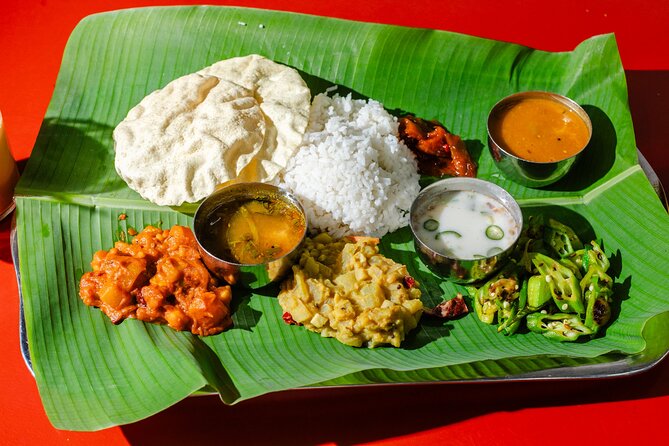
The banana leaf presentation is part of the experience. Rather than receiving a plate in the usual Western style, you eat from a leaf with several accompaniments placed around the rice or curry. Your guide can explain local customs, including how to approach the meal and which items to combine.
Spice levels can matter. One guide, Sandy, was specifically praised for checking preferences such as spice tolerance and meat choices at each stop. If you are sensitive to heat, tell the guide at the beginning, then repeat the request when necessary.
This section is also where the tour feels most useful for first-time visitors. You get to try food in a supported setting, then return later with a better sense of what you want to order. Several people used the tour early in their stay for exactly that reason.
Chinatown and Peranakan flavors
Chinatown adds another layer to George Town’s food story. The route is not only about eating Chinese dishes. It also shows how different communities and food traditions sit close together in the old city.
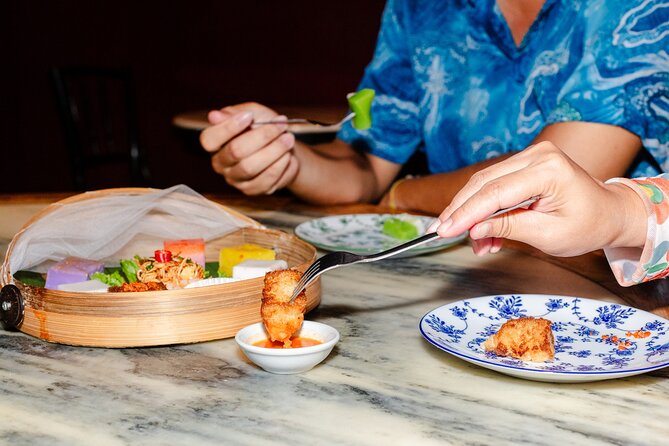
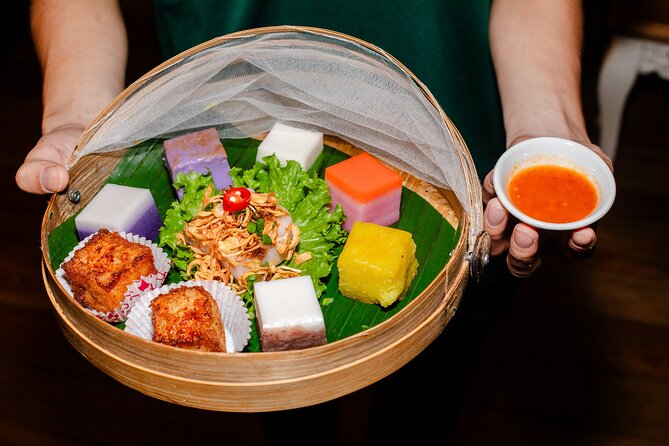
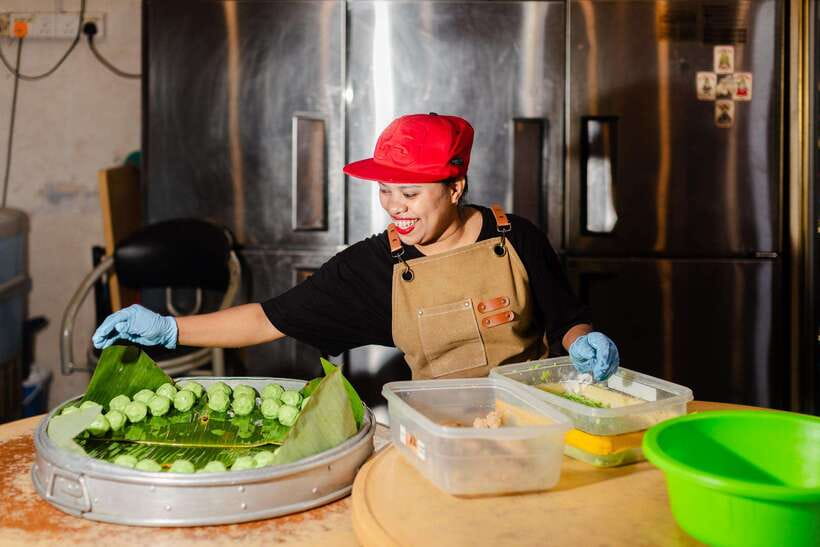
The Peranakan element is especially appealing. Nyonya cuisine blends Chinese and Malay influences, often with careful use of herbs, spices, and coconut. The tasting may include Nyonya dishes and colorful Nyonya kueh, small sweets and snacks that bring bright colors and varied textures to the end of the meal.
For many people, the Nyonya food becomes the most memorable part of the tour. That is partly because it can be harder to identify and order on your own. A plate of familiar noodles is easy to recognize. Nyonya food benefits more from explanation about ingredients, traditions, and the people who kept the cooking alive.
The food stops also connect to George Town itself. Guides point out neighborhood history, architecture, local businesses, and the way food has been shaped by migration. This makes the walking portion more than a transfer between restaurants.
You should not expect a formal architecture tour. The focus stays on food, but the street commentary adds useful context. It helps explain why several food traditions can appear within a short walk.
Same appetite, a different neighbourhood:
- Montserrat Half-Day Tour with Tapas and Gourmet Wines
★ 5.0 · 7,359 reviews - Dubai: Old Town, Souks, Street Food, Guided Tour & Abra Ride
★ 4.9 · 7,170 reviews - Bateaux Parisiens Seine River Gourmet Dinner & Sightseeing Cruise
★ 4.5 · 6,930 reviews - Tokyo: Shinjuku Food Tour (13 Dishes at 4 Local Eateries)
★ 5.0 · 6,603 reviews
What the guides add to the experience
The guide can make or break a food tour, and this experience has a strong record in that area. Guides named in recent bookings include Grace, Sandy, Ken, Rachel, Dandy, CE, Mint, and others.
Grace is often described as warm, lively, and good at linking food with local culture and architecture. Sandy is noted for her energy, humor, and care with food preferences. Ken is praised for keeping a comfortable pace and explaining the city in a friendly way.
Those details matter because four hours is a long time to follow someone from stop to stop. You want a guide who can explain a dish without turning every bite into a lecture. You also want someone who notices if the group needs a break, more water, or a change in spice level.
The best part of the guiding style here is the mix of personal insight and practical help. You hear about ingredients and customs, but also about the people running the food businesses and how the neighborhood works today.
The group can include solo visitors, couples, families, and people from several countries. Food gives everyone an easy subject to discuss. If you are traveling alone, the eight-person limit makes this a comfortable way to meet people without joining a large coach group.
Is $49 good value for the amount of food?
At $49 per person, this is not the cheapest way to eat in Penang. You can buy individual street dishes for much less. If your only goal is to fill up as cheaply as possible, explore hawker stalls independently.
The value comes from the structure. The fee covers four hours, 15 or more tastings, an English-speaking guide, bottled water, and local soft drinks. It also saves you from ordering full portions of unfamiliar dishes that may not suit you.
The quantity is generous enough that the price can feel reasonable, especially if you would otherwise pay for several meals during the same period. The tour is not just a series of samples. It may include several proper meals, and many people finish with little room left.
I would compare it with the cost of a guided introduction, not just the price of a bowl of noodles. You are paying for access to a planned sequence, explanations, local navigation, and the chance to sample dishes without guessing.
Still, the value depends on your appetite and interests. Someone who knows George Town well and enjoys choosing their own stalls may prefer to spend $49 over several independent meals. Someone visiting for only a few days will get more from the tour, especially if they book it near the start of their stay.
How to prepare for the food and the weather
Come hungry. That advice appears again and again for good reason. Do not schedule a large lunch immediately before the tour, and leave room for the later tastings. The food keeps arriving, and the final dessert can be difficult if you have already eaten too much.
Wear comfortable shoes. You will spend four hours walking and stopping to eat around old George Town. An umbrella and weather-appropriate clothing are also sensible because Penang weather can change, and the route is not an indoor-only experience.
Bring water, even though bottled water and local soft drinks are included. George Town can feel hot while you are walking and eating, and one recent participant specifically advised carrying water and wearing comfortable shoes.
Traffic can be unpredictable, so allow plenty of time to reach the Pinang Peranakan Mansion. Hotel pickup and drop-off are not included. The meeting point is central and easy to reach from many George Town hotels, but a late arrival could be stressful.
The tour is offered in English. Cancellation is free up to 24 hours before the start, and you can reserve now and pay later, which helps if your schedule is still moving around.
Dietary restrictions need careful attention
This is the most important limitation. The experience is listed as unsuitable for vegans, vegetarians, people with food allergies, people with nut allergies, severe gluten intolerance, halal diets, and no-pork diets.
A no-beef diet is listed as suitable, and lactose intolerance is also listed as suitable. Other restrictions may mean missing some dishes rather than receiving a replacement.
There is some evidence that guides can be helpful when told in advance. One participant with gluten restrictions received alternatives at many stops, and another group with a severe allergy contacted the company before booking so the food could be checked and arrangements made.
That does not change the formal warning. If you have a severe allergy, do not assume substitutions will make the tour safe. Ask before booking, explain the risk clearly, and be prepared to skip dishes. Soy sauce contains traces of gluten, so this is not a good choice for someone who must avoid even small traces.
Who will enjoy this George Town food walk?
I would choose this tour if you want a broad first taste of Penang and prefer guidance over trial and error. It suits people who enjoy trying several small dishes, hearing local stories, and eating with a compact group.
It is also a good match for solo visitors. The group is small enough for conversation, and the shared tastings create an easy way to meet people from different countries. Families can also enjoy it, and one recent group included two small children, though every child’s appetite and comfort with spice will be different.
Book it early in your George Town stay if you can. You will learn which dishes you like and gain confidence for later meals. You may also discover streets and food stops that are easy to miss when you are exploring without a guide.
I would skip it if you prefer long, quiet meals, dislike eating on a schedule, or want to control every ingredient. The pace is described as comfortable rather than rushed, but four hours still requires stamina. With so much food, you may feel full well before the final stop.
Should you book the Penang Plates Food Tour?
Book this $49 tour if you want one organized introduction to George Town’s Chinese, Indian, Malay, and Nyonya food. The strongest reasons are the generous amount of food, the small group, and the guides who connect each dish to local history, neighborhoods, and daily life.
The biggest caution is the meal size and the dietary limits. You need an empty stomach, good walking shoes, and a willingness to try dishes that may be unfamiliar. For visitors with strict food restrictions, the tour is not a safe default.
For most omnivorous eaters spending a short time in Penang, I think the experience offers solid value. It gives you a useful food map for the rest of your stay, and you leave with more than a full belly. You leave knowing what to look for when you return to George Town’s stalls on your own.
FAQ
Where does the Penang Plates Food Tour start?
The tour starts in the courtyard of the Pinang Peranakan Mansion in central George Town.
How long does the tour last?
The experience lasts four hours.
How many tastings are included?
You receive 15 or more tastings during the food tour.
What areas of George Town does the tour visit?
The experience includes old George Town, Little India, and Chinatown.
What types of food will I try?
The tastings include Chinese, Indian, Malay, and Nyonya food. Examples include Hokkien char, char ho fun, lok lok, banana leaf dishes, daals, vegetable curries, samosas, pani puri, and Nyonya kueh.
Is the tour suitable for vegetarians or vegans?
No. The tour is listed as unsuitable for vegetarians and vegans.
Can I join if I do not eat beef?
Yes. A no-beef diet is listed as suitable, though you should tell the guide about your restriction before the tour.
Are drinks included?
Bottled water and local soft drinks are included. Alcoholic drinks are not included.
Can I cancel the booking?
Yes. You can cancel up to 24 hours in advance for a full refund. You can also reserve now and pay later.
New food tours we have reviewed in the world
- ChattaBrunch Food Tour★ 5.0 · 87 reviews
- Downtown Chattanooga Food Tour★ 5.0 · 290 reviews
- Charlottetown waterfront SOLAR PartyBike food & drink experience!★ 4.0 · 92 reviews
- Historic Southside Food Tour in Chattanooga★ 5.0 · 32 reviews
- Tastes Through Time – Charleston’s Best Food & History Tour★ 4.5 · 95 reviews
- Charlottetown Food Walking Tour★ 5.0 · 59 reviews
- Charleston’s Savor the Flavors of Upper King Street Walking Food Tour★ 4.5 · 130 reviews
- Charleston Private Brunch Tour: Biscuits, Shrimps, Grits and More★ 5.0 · 48 reviews
Malaysia Food Tours, compared.
Sambal Streets Kuala Lumpur Food Tour with 15+ Tastings
Read our review →
Kuala Lumpur: Sambal Street Food Tour with 15+ Tastings
Read our review →
Good Morning Penang Food Tour with 15+ Tastings
Read our review →
Kuala Lumpur: Private Food Tour – 10 Tastings with Locals
Read our review →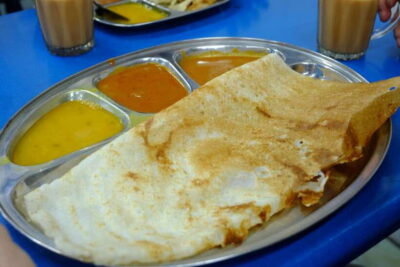
Kuala Lumpur: Nightlife Street Food Tour with 6 Tastings
Read our review →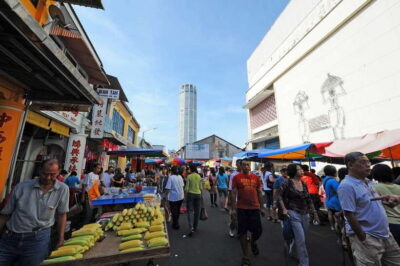
Private Half Day Penang Tasty Local Street Food Tour
Read our review →Browse the lists this tour appears in