
Review · BEIJING FOOD TOURS
Beijing: Hutong Breakfast Food Tour
Beijing’s best breakfast stories are found in its hutong lanes, not behind a hotel buffet. This three-hour food walk takes you through local markets, small stalls, and family-run food spots for 12 or more tastes, from handmade pork zongzi to crispy meat pies and cheese-filled jianbing. You also get a look at stone doorways, courtyard entrances, and the small signs that reveal how these old neighborhoods work.
I like the wide range of food here. You can try familiar comfort foods, such as beef flatbread and tofu pudding, alongside harder-to-find specialties like douzhi, a tangy fermented mung bean drink. I also like the human side of the tour, especially the visits tied to Aunt Jie’s generations-old zongzi recipe and Mr. Yu’s childhood favorites.
The main consideration is pace. Five or more food stops in three hours means steady walking and frequent tasting, not long meals. Some flavors are bold, and the tour is not suitable for people with mobility impairments. Vegetarians can join, but substitutions are not available for every dish.
Key points at a glance
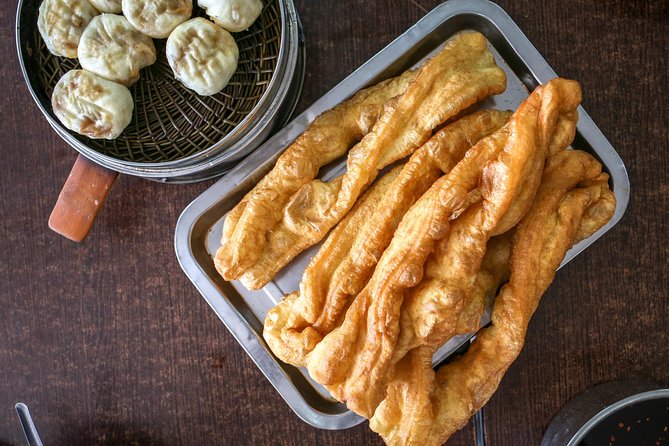
- 12 or more breakfast tastes: Sample jianbing, zongzi, beef flatbread, tofu pudding, douzhi, sweets, and more.
- A local market stop: See everyday food shopping and try Aunt Jie’s handmade pork zongzi.
- A taste of Beijing’s bold side: Douzhi is tangy, fermented, and far removed from a standard tourist breakfast.
- Stories in the hutongs: Your guide points out stone doorways, signs, courtyards, and less obvious details.
- Small, local food businesses: The route favors hole-in-the-wall stalls and family-run spots over polished restaurants.
- A practical morning outing: The tour lasts three hours, meets at Line 8’s Zhongguo Meishuguan Station, and includes food, drinks, and an English-speaking guide.
Why a hutong breakfast beats a standard Beijing meal
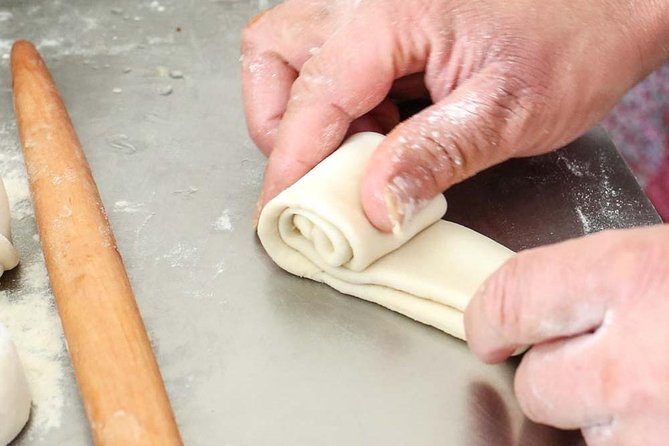
Breakfast gives you a useful view of Beijing. The city is not presenting itself for an evening banquet here. You are seeing the foods people grab early in the day, the dishes that work as cheap fuel, and the old recipes that still have a place in modern neighborhoods.
The route moves through historic hutongs, where narrow lanes and courtyard homes create a very different setting from Beijing’s grand museums and wide avenues. The food is only half the point. As you walk, your guide explains the clues around you: stone door frames, old signs, and courtyard entrances. These details can be easy to miss when you explore alone.
I especially like this combination of food and place. A plate of flatbread tells you one story. Eating it near the lane where it was bought, after seeing the neighborhood’s doors and shop fronts, gives it more meaning.
The three-hour length is sensible. You have enough time to reach several stops without giving up an entire morning. Still, this is a tasting walk, not a relaxed brunch. Expect to eat a little at each stop, listen to short explanations, and keep moving.
More food tours in Beijing:
- Beijing: Hidden Gems Guided Food Tour with Beer and Tastings
★ 4.9 · 306 reviews - Beijing Private Hutong Food Walking Tour
★ 5.0 · 299 reviews - Beijing: Hutong Culinary Walking Tour with 15+ Tastings
★ 5.0 · 162 reviews
Meeting your guide at National Art Museum Station
The meeting point is outside Exit B of Zhongguo Meishuguan, or National Art Museum, Subway Station, on Line 8. Your guide carries a bright yellow Lost Plate tote bag, which should make the meeting easier once you reach street level.
Use the subway if you can. It is the clearest option, and the directions specifically point you to Line 8 and Exit B. If you use a taxi or Didi, show the driver this Chinese text: 地铁8号线中国美术馆地铁站 B出口. Traffic can be heavy around the area during rush hour, so allow extra time.
The meeting instructions deserve care. Exit B is the important detail, not simply the museum name. If you use a map service, check that it has taken you to the station exit. Google Maps may require a VPN in China, while a Chinese map link is also provided.
Wear comfortable shoes. Do not bring luggage or a large bag. The route passes through narrow lanes and food stalls, so traveling light will make the morning easier.
The market and Aunt Jie’s pork zongzi

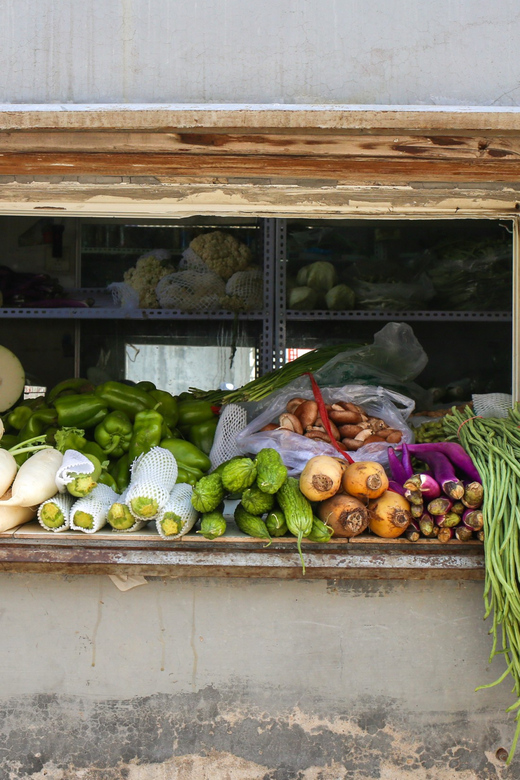
The local market gives the tour an immediate sense of place. This is not just a backdrop for photographs. It is where you begin to see the ingredients, shopping habits, and small food businesses that support daily life in the neighborhood.
One of the first memorable tastes is Aunt Jie’s handmade pork zongzi. Zongzi are glutinous rice parcels wrapped in leaves, and this version follows a recipe passed down through generations. The pork filling gives the dish a savory center, while the sticky rice makes it filling even in a small portion.
Aunt Jie’s story matters because it places the food in the hands of a person, not just on a menu. You are not merely being told that a dish is traditional. You are being shown how a local maker keeps a family recipe in use.
If you are cautious about unusual food, zongzi is a friendly starting point. It is substantial, familiar in texture, and less challenging than douzhi. If you are vegetarian, note that this is a pork dish and substitutions are not guaranteed.
Douzhi and the boldest taste of the morning
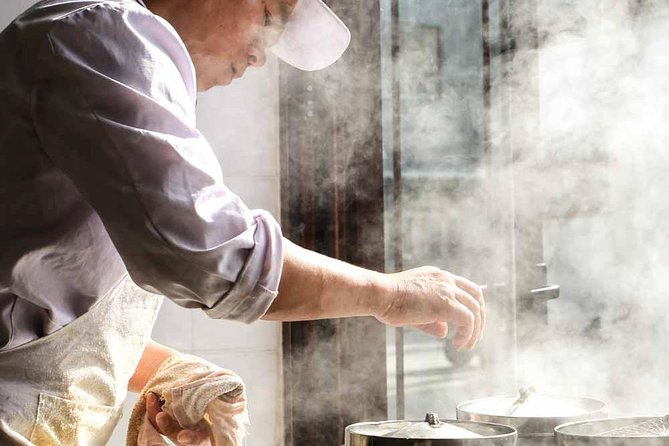
Douzhi is the tour’s most daring stop. This fermented mung bean drink has a sour, tangy flavor that can surprise anyone expecting a sweet breakfast beverage. It is one of those Beijing traditions that makes more sense as part of the city’s food culture than as a universally loved taste.
The experience is valuable even if you do not enjoy the flavor. Your guide can explain why it matters, and you get a chance to try a food that is strongly tied to Beijing identity. It has also received Michelin recognition, which gives you a useful reminder that traditional food does not need to be mild or familiar to be important.
Approach douzhi with an open mind and a small sip first. This is not the moment to expect a fruit drink or a café-style breakfast. It is sour, fermented, and distinctive. The tour works well here because you can taste it in context, hear the story, and move on to other foods if it is not for you.
This stop also helps balance the sweeter dishes later. Beijing breakfast is not one-note. The route includes savory, crispy, soft, tangy, and sweet flavors.
Same appetite, a different neighbourhood:
- Beijing Hutong Breakfast Food Tour
★ 5.0 · 155 reviews - Beijing Hutong Breakfast Food Tour
★ 5.0 · 120 reviews - Beijing Walking Food Tour with a Local Friend
★ 5.0 · 73 reviews - Beijing: Dumpling Making Workshop with Meal and Tea
★ 4.7 · 69 reviews
Mr. Yu’s beef flatbread and tofu pudding
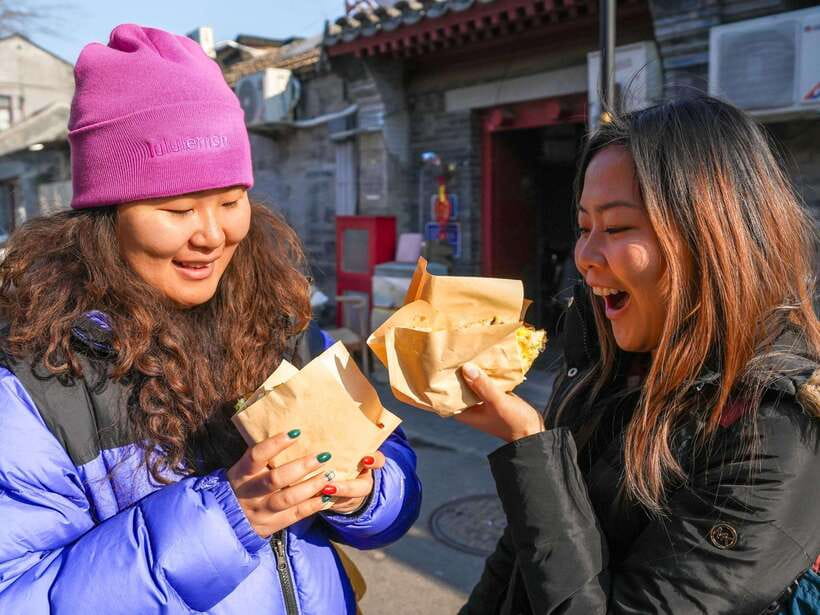
At another stop, Mr. Yu serves beef flatbread and tofu pudding, two examples of Beijing comfort food. The beef flatbread gives you a savory, meaty bite with a crisp or firm exterior, while tofu pudding offers a softer contrast.
The value here is not simply the number of dishes. It is the chance to compare textures and understand how ordinary breakfast foods can carry personal memories. Mr. Yu’s offerings are tied to childhood favorites, so your guide can connect the meal to the food people grow up eating, rather than presenting it as a rare specialty made only for visitors.
I would pay attention to the order of the meal. After zongzi and other filling bites, even a small portion can add up. The tour includes unlimited food and drinks, but that does not mean you need to eat a full serving at every stop. Save room, take smaller portions when possible, and tell your guide if you are getting full.
Jianbing with a cheesy twist
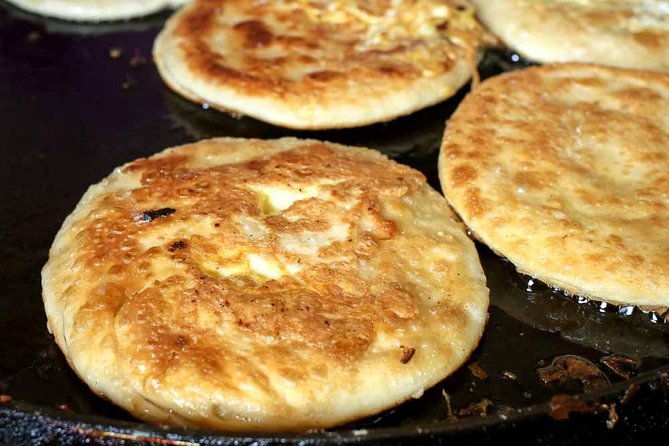
Jianbing is one of China’s most useful breakfast foods. It is made as a thin pancake and folded around fillings, creating a quick meal that is easy to eat on the go. This tour includes a version with a cheesy twist at a small, hole-in-the-wall favorite spot.
That addition gives you a good comparison between old and new. Jianbing remains a familiar street breakfast, but the cheese shows how local food changes without losing its basic form. You still get the pleasure of watching a simple pancake become a layered, portable meal.
This was one of the most praised parts of the experience, along with the sweet pancake and egg-and-bacon pancake. The egg and bacon combination should feel approachable if you are new to Beijing food, while the cheese version adds a playful change.
The one thing to watch is the amount of sweet food later in the route. Several red bean paste desserts may appear close together, and that can feel repetitive if you prefer savory tastes. A drink can also help balance the meal, so use the included water or soft drinks as you go.
Imperial sweets and the final stretch
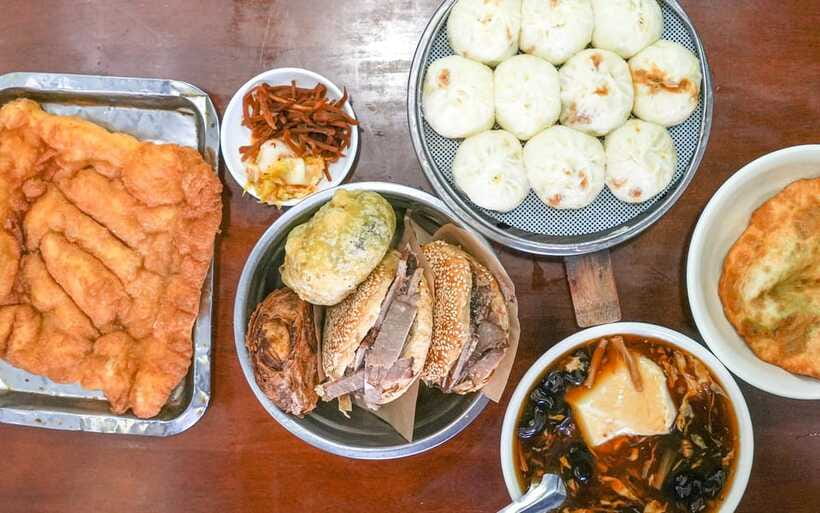
The tour includes sweets once made for emperors, giving the breakfast route a link to Beijing’s courtly past. This is a useful contrast with the street food. The morning moves between food made for ordinary daily life and recipes associated with the imperial household.
Expect red bean paste desserts among the sweet offerings. Red bean paste is a common filling in Chinese sweets, but its dense, sweet character can become a lot when several desserts arrive in succession. If you enjoy bean-based pastries, this may be a highlight. If not, sample rather than filling up.
The sweets also make the tour feel like a proper tasting sequence. You begin with savory foods, encounter the sharp edge of douzhi, eat more substantial flatbread and tofu, and finish with sugar and pastry. The exact balance may depend on the day and the stops, but the range is the central appeal.
Your guide is important here. Kelly, Lynn, and Yoyo are among the guides associated with this experience, and the strongest guide moments come through clear food explanations and stories about the people who make the dishes. Kelly received particular praise for making the morning easy to follow and for sharing plenty of background. Yoyo was noted for linking each food to a story before serving it.
What the hutong details add
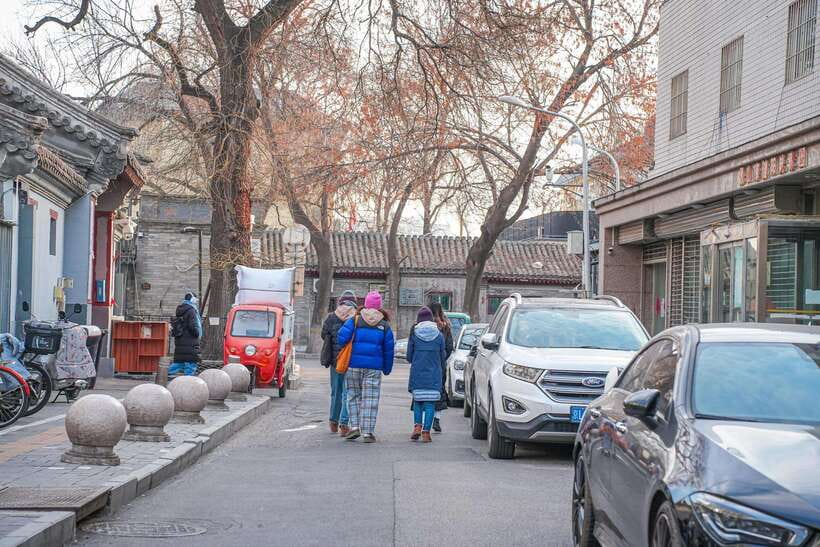
It would be easy to treat the walking sections as time between food stops. That would miss a major part of the tour. The hutong details help you read the neighborhood instead of simply passing through it.
Look at the stone doorways. Notice the signs. Pay attention to the entrances of courtyards. Your guide points out the less obvious features that can reveal how homes and businesses fit together. These details are small, but they turn a food walk into a lesson in the daily structure of old Beijing.
The route also helps you see the difference between a famous sight and a lived-in neighborhood. You are not only collecting photographs of old lanes. You are watching people buy breakfast, seeing small food shops at work, and connecting traditional dishes with a place where they still belong.
Because the tour operates rain or shine, dress for the forecast. Wet lanes, cold mornings, or summer heat can affect your comfort. Good shoes matter more than stylish shoes.
Is $45 a fair price?
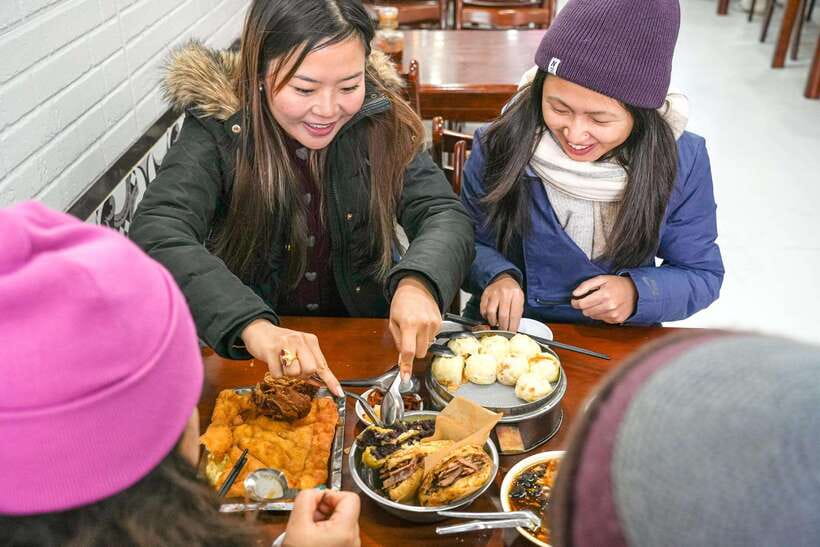
At $45 per person, this is not the cheapest way to eat breakfast in Beijing. You could spend far less buying one or two street dishes on your own. The price makes more sense when you count the food variety, English-speaking guide, neighborhood orientation, market visit, and access to small food spots that can be hard to identify without help.
You receive unlimited food and drinks across more than six eateries and street stalls, with 12 or more dishes included in the overall tasting. That is a lot of coverage in three hours. You are paying for access and interpretation as much as for the food itself.
The value is strongest for a first visit to Beijing, especially if you want to try local dishes but do not read Chinese menus or feel confident ordering at small stalls. It is also useful early in your stay because you can learn which foods you might want to seek out again.
The value is weaker if you already know Beijing’s breakfast scene, dislike eating while walking, or want one long, quiet meal. In that case, the steady pace and many small portions may feel less satisfying than choosing one restaurant and settling in.
Who should book this breakfast walk?
I would recommend it to curious eaters who want more than the usual tourist menu. You get familiar foods such as jianbing and beef flatbread, but also more challenging tastes such as douzhi. The mix makes it a good choice for people who want to test their palate without arranging a full food plan alone.
It suits couples, friends, and small groups who enjoy walking and sharing dishes. It can also work well for solo visitors because the guide provides structure and makes it easier to approach unfamiliar stalls.
You should think twice if you have limited mobility. The experience is not suitable for people with mobility impairments, and the hutong setting means walking between several stops. Large bags and luggage are not allowed.
Vegetarians can take part, but substitutions are not available for every dish. If you need a fully vegetarian menu, this is not the safest choice. The same applies to anyone with strict dietary restrictions, since the included dishes are varied and the menu is built around local specialties.
The tour requires at least two people to operate. If that minimum is not met, an alternative date or full refund is offered after confirmation.
My verdict on the three-hour route
Book this tour if you want Beijing explained through breakfast, not just sampled through a list of dishes. The best parts are the local market, Aunt Jie’s handmade zongzi, the chance to face douzhi, Mr. Yu’s comfort food, and the hutong details between stops.
Go with realistic expectations. You will eat a lot of small portions, walk at a steady pace, and encounter flavors that may not suit you. The sweet red bean desserts may feel repetitive, and the meeting point requires careful attention to Exit B.
For $45, I think the tour offers solid value for first-time visitors who want a guided introduction to Beijing’s everyday food. Bring comfortable shoes, arrive at the correct subway exit, leave your luggage behind, and come hungry enough to sample widely without trying to finish everything at once.
FAQ
How long does the Beijing Hutong Breakfast Food Tour last?
The tour lasts three hours.
Where does the tour meet?
It meets at street level outside Exit B of Zhongguo Meishuguan, or National Art Museum, Subway Station, on Line 8.
How will I identify the guide?
The guide will carry a bright yellow Lost Plate tote bag.
What food is included?
The tour includes 12 or more dishes at five or more food stops, with examples including pork zongzi, douzhi, beef flatbread, tofu pudding, jianbing, meat pies, pancakes, and imperial-style sweets.
Are drinks included?
Yes. Food and drinks are included at the eateries and street stalls, along with unlimited water and soft drinks.
Is the tour vegetarian-friendly?
Yes, the tour is vegetarian-friendly, but substitutions are not available for every dish.
What should I bring?
Bring comfortable shoes and dress appropriately for the weather. The tour operates rain or shine.
Can I bring luggage?
No. Luggage and large bags are not allowed.
Can I cancel the booking?
You can cancel up to 24 hours in advance for a full refund. The tour also offers a reserve-now-and-pay-later option.
New food tours we have reviewed in Beijing
- Experience Beijing Walking Food Tour Private★ 5.0 · 56 reviews
- Online Cooking Class Beijing Dumplings and Cuisine by Sunflowerli Renowned Chef★ 5.0 · 65 reviews
- 4-Hour Private Tour: Lama Temple, Confucius Temple, Guozijian Museum with Dim Sum★ 5.0 · 21 reviews
- Half-Day Private Beijing Hutong Walking Tour with Dim Sum★ 5.0 · 48 reviews
- Authentic Local Food Tour in Center Beijing★ 5.0 · 26 reviews
- Beijing Hutong Breakfast Food Tour★ 5.0 · 120 reviews
- Beijing Walking Food Tour with a Local Friend★ 5.0 · 73 reviews
- 3-Hour Private Night Tour: Beijing Foodie Experience★ 5.0 · 53 reviews
Beijing Food Tours, compared.
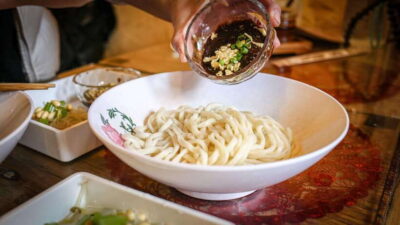
Beijing: Hidden Gems Guided Food Tour with Beer and Tastings
Read our review →
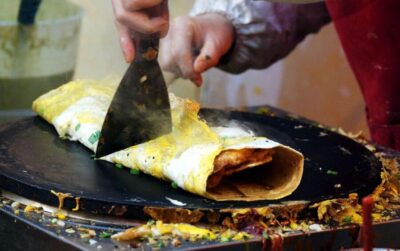
Beijing: Hutong Culinary Walking Tour with 15+ Tastings
Read our review →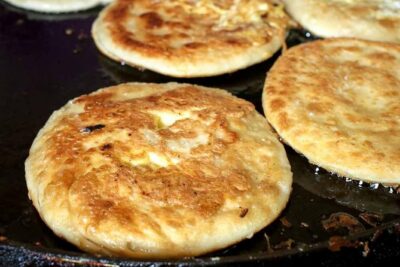
Beijing: Dumpling Making Workshop with Meal and Tea
Read our review →
Online Cooking Class Beijing Dumplings and Cuisine by Sunflowerli Renowned Chef
Read our review →Browse the lists this tour appears in