
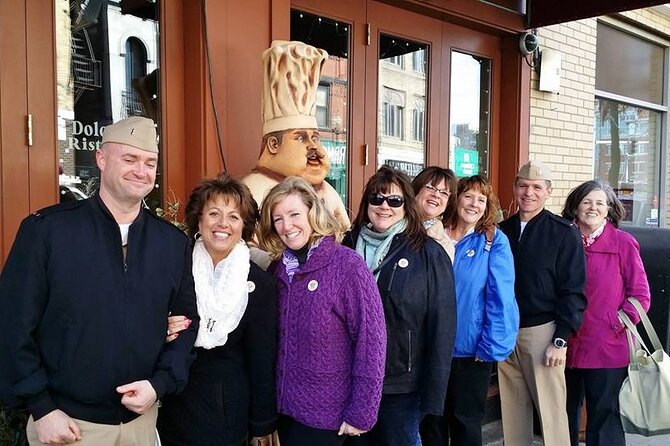
Review · SEAFOOD TOURS
Boston Seafood Lovers Food and History Walking Tour
Boston’s best feature on this tour is the way seafood and revolutionary history share the same route. You move from the North End to the harbor, Long Wharf, Old State House, Faneuil Hall, and Quincy Market while eating the city’s signature dishes along the way.
I like the full-size lobster roll, rather than a token taste, and the small group limit of 12. I also like the balance of food and walking: you get time to eat, sit, and listen instead of rushing from one sample to the next.
The main consideration is pace. At each restaurant, you may wait to order and be served, so this is not a tightly timed march. Allow nearly three hours, wear good shoes, and arrive hungry.
Key points to know before booking
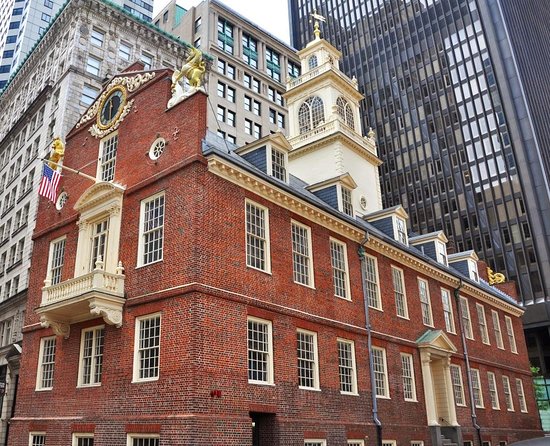
- Full lunch, not just nibbles: The tour includes a cup of clam chowder, oysters, jumbo shrimp, and a full-size lobster roll.
- A useful Boston route: Walk through the North End, waterfront, Long Wharf, Old State House, Faneuil Hall, and Quincy Market.
- Small groups help: The maximum is 12 people, which gives the guide room to answer questions and keep the group together.
- Dan is a memorable guide when scheduled: His humor, upbeat style, Boston history, and restaurant tips receive especially strong praise.
- Plan for a leisurely pace: Restaurant service takes time, and the route includes stops for sitting and eating.
- Cannoli finishes the meal: The final treat comes from Modern Pastry in Boston’s North End.
A seafood lunch threaded through old Boston
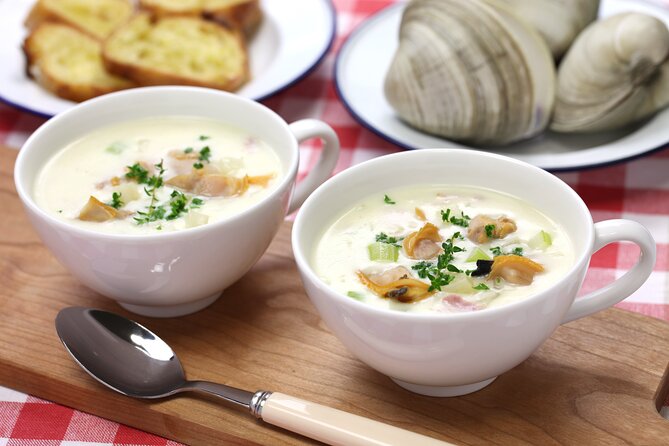
This is not a food crawl built around quick bites and constant motion. It is a walking tour with a substantial lunch built into the route.
You begin underground at Modern Pastry on Hanover Street, in the North End. The meeting point puts you in Boston’s oldest neighborhood at once, with narrow streets and historic sites close by. From there, the route heads through the North End, toward the waterfront, and then into the Freedom Trail area around Faneuil Hall and Quincy Market.
The tour lasts about two hours and 45 minutes, though it is marketed as a three-hour experience. That small difference is not important, but the relaxed pace is. You walk, hear a short history lesson, eat, and repeat.
The group limit of 12 is useful here. Boston sidewalks can be tight, and restaurant stops work better when you are not trying to move a large crowd through a doorway. A smaller group also gives you a better chance to ask about food, architecture, or the city’s past.
More Seafood Tours in Boston:
- Boston Seafood Private Tasting Tour
★ 5.0 · 102 reviews - Tokyo Tsukiji Fish Market Food and Culture Walking Tour
★ 5.0 · 3,184 reviews - Tsukiji Fish Market Guided Tour and Sushi Making with Pro Chef
★ 5.0 · 775 reviews
Starting in the North End at Modern Pastry
Modern Pastry is both the starting point and the finish for the tour. You do not begin with seafood. Instead, the North End provides the setting for the first part of the walk, and cannoli comes at the end.
The neighborhood is central to Boston’s food identity, but this tour uses it for more than pastry shops. You pass through North Square, the oldest section of the city’s oldest neighborhood, and hear about the first settlers in 1630.
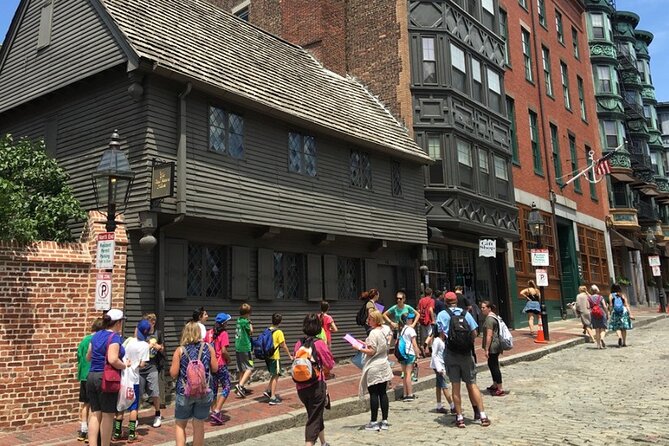
You also stop near the Paul Revere House, the oldest home in downtown Boston, dating to 1680. The tour connects the building with Paul Revere and his 16 children, a detail that makes the famous patriot feel less like a statue and more like a real person with a crowded household.
The history stops are fairly brief. That is good if you want food first and a light dose of history. If you want long talks inside every historic building, this is not that kind of tour. The Paul Revere House and other sites are viewed from the route, and admission is not included.
Clam chowder beside Boston Harbor
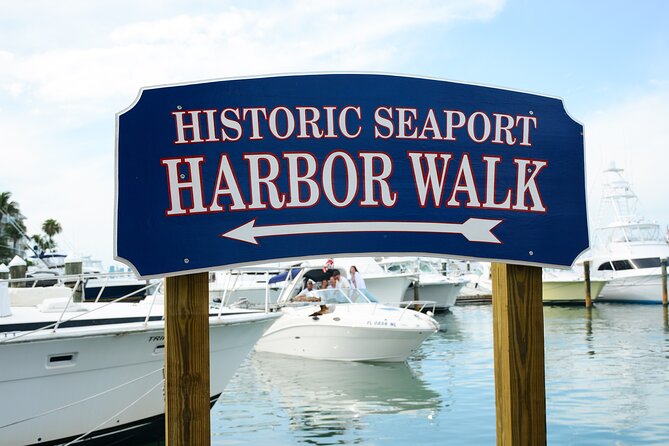
The first major food stop comes along the HarborWalk. This is one of the prettiest stretches of the tour, with views across Boston Harbor and a chance to slow down after walking through the North End.
Here you taste a cup of New England clam chowder described as award-winning and very thick. The sample is small enough to fit into a progressive meal, but substantial enough to set the tone. If you are serious about chowder, you may wish you had room for a full bowl. One useful tip from the experience is to save your appetite, since the food keeps coming.
The chowder is an important part of understanding Boston food. It is creamy, filling, and tied to the area’s coastal identity. You are not simply checking off a famous dish. You are tasting the style that locals and visitors associate with New England.
The waterfront stop also gives the guide a natural place to explain Boston’s port, trade, and shoreline. The views are a welcome break from city streets, though wind and weather can make this part feel cooler than expected. Bring a layer even in mild weather.
Oysters and shrimp at Long Wharf

Long Wharf dates to the early 1700s and was Boston’s oldest commercial port. It is another good place to connect what you are eating with where the city made its living.
At a local raw bar, you get oysters on the half shell and peel-and-eat jumbo shrimp. The oysters are served raw, so this stop is best for seafood fans who are comfortable with oysters. If raw shellfish is not your thing, the tour may be less satisfying because the meal is designed around classic seafood rather than broad substitutions.
This is also where the tour feels most like a restaurant-hopping lunch. You may wait for the order, eat at a measured pace, and then move on. That is not a flaw, but it changes expectations. You are not receiving a tray of prepared samples the instant you arrive.
The wait can work in your favor. It gives you time to talk with the guide and the other people in the group, and it provides a seated pause during the walk. Still, anyone hoping to cover lots of ground quickly should know that the meal controls the schedule.
More history tours in Boston:
- Boston Food & History: Pizza, North End & Freedom Trail
★ 5.0 · 1,772 reviews - Boston’s North End Food Tour: Italian Flavors & Heritage Walk
★ 5.0 · 1,322 reviews - Boston Pizza Lovers Food and History Walking Food Tour
★ 4.5 · 1,082 reviews - Boston’s North End Food and History Walking Tour
★ 5.0 · 459 reviews
Old State House and the Freedom Trail
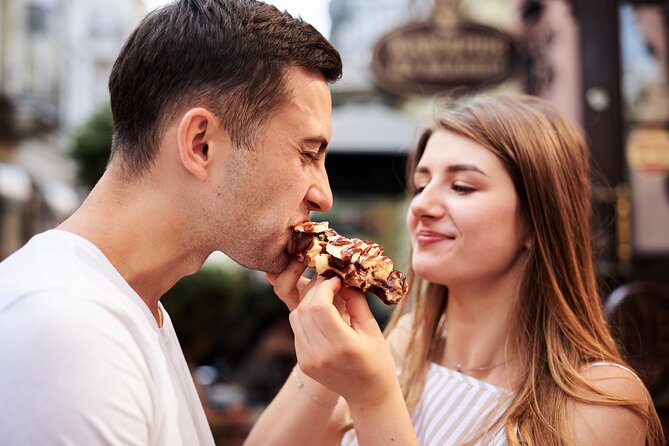
After the waterfront and raw bar, the route moves into Boston’s historic center. The Old State House is the oldest building in the country east of the Mississippi River, and the cobblestone circle outside marks the site of the Boston Massacre.
This part of the tour helps explain why Boston’s history feels so close to everyday city life. You are not walking through a separate museum district. Historic buildings, busy streets, restaurants, and market halls all overlap.
The tour also reaches Faneuil Hall, which dates to 1742 and is known as the Cradle of Liberty. You hear about Peter Faneuil and the creature perched atop the building. These short stories are well suited to a food tour because they give you memorable details without stopping the meal for a long lecture.
The Freedom Trail sites provide context, but the history portion remains light. You will hear useful background about colonial Boston and the Revolution, yet the main purpose is still to eat well and see the city on foot.
Quincy Market and the full-size lobster roll
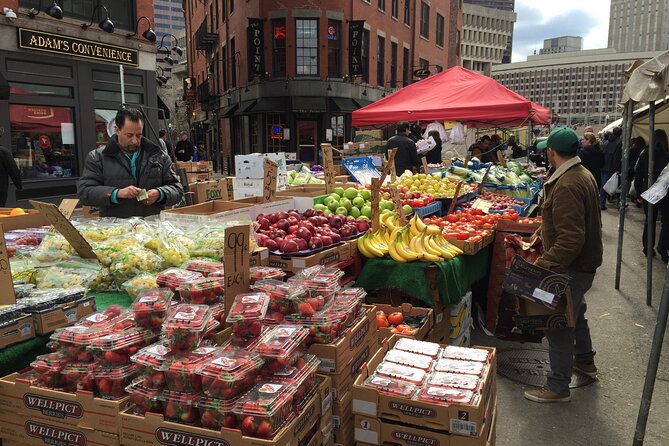
Quincy Market was built in 1823 and served food wholesalers for 150 years. Today, its food hall atmosphere gives the tour a lively middle section, with international food stalls, smells, and people moving through the market.
The main meal comes at the Union Oyster House, a National Historic Landmark and America’s oldest restaurant, operating since 1826. Here you get a full-size lobster roll. That matters. Many food tours offer a few bites of lobster roll and call it lunch. This one provides a proper serving.
The lobster roll may be served warm or cold. A warm version uses butter, while a cold New England style comes with lemon, mayonnaise, and chives. If you have a preference, tell the guide or restaurant staff when the order is taken.
The lobster roll is likely to be the tour’s most filling stop. You should not plan a large dinner immediately afterward. The meal already includes chowder, oysters, shrimp, lobster roll, and dessert.
Eating at a historic restaurant adds atmosphere, but it can also mean a slower meal and a busier setting. The value comes from combining the restaurant, the historic location, and the generous serving in one stop.
Cannoli back at Modern Pastry
The final stop returns you to Modern Pastry in the North End for fresh cannoli. It is a smart ending: after several savory seafood courses, you finish with a classic Boston pastry.
You may be quite full by this point. One person described taking the cannoli back to the hotel because there was no room left to enjoy it immediately. That is a useful warning, not a complaint. The dessert is included, but you may need to pace yourself earlier in the tour.
The North End setting also makes the finish practical. You are back where you started, close to public transportation, restaurants, and the rest of Boston’s historic center.
How much food do you get for $159?
At $159 per person, this is not a cheap way to grab lunch. The price makes more sense if you value the combination of a guide, several restaurant stops, a full lobster roll, raw bar selections, chowder, dessert, and nearly three hours of sightseeing.
You are paying for more than the food itself. The guide handles the route, explains what you are tasting, and connects the dishes with Boston’s port and history. You also avoid having to choose among seafood restaurants in an unfamiliar city.
The full-size lobster roll is the key value point. Add the oysters and jumbo shrimp, and the meal is more substantial than many tasting tours. If you only want a lobster roll and chowder, you can spend less on your own. If you want help finding several local specialties while seeing historic Boston, the price is easier to justify.
Gratuity is not included, so budget for a tip. The tour is commonly booked well ahead, with an average booking lead time of about 40 days. That suggests planning early, especially if your Boston dates are fixed.
Walking, weather, and group size
Expect roughly a mile or more of walking, with frequent stops for food and history. The route is easy enough for most people who can take part in a normal city walking tour, but restaurant lines, sidewalks, and standing periods are part of the day.
Wear comfortable walking shoes. Bring a rain layer and dress for changing conditions. The tour information says it operates in rain, shine, or snow, while the cancellation terms also allow cancellation for poor weather. Because those statements do not fully match, check the provider’s weather decision if the forecast looks rough.
Service animals are allowed, and the meeting point is near public transportation. Most people can participate. A stroller was manageable for one family because the slower pace included sitting time, but the restaurant and sidewalk layout may still require patience.
The minimum group size is four. If that number is not reached, the provider may offer another date or a full refund. One solo booking was canceled for this reason, with another tour offered instead. If you are traveling alone, keep your schedule flexible until the tour is confirmed.
The guide can shape the whole experience
The strongest part of the tour is often the guide’s personality. Dan is repeatedly praised for humor, a relaxed pace, Boston stories, food knowledge, and restaurant suggestions. Big Al has also led the experience, with a focus on American history.
You may not receive the same guide on every date, so do not book solely on the promise of one person. Still, the format gives a lively guide plenty to work with. There are stories about Paul Revere, the first settlers, the Boston Massacre, Faneuil Hall, Long Wharf, and the city’s seafood culture.
The best guides keep the history short enough that you do not lose interest before the next plate arrives. They also help explain the food, such as the difference between warm buttered lobster and cold lobster with mayonnaise, lemon, and chives.
Who should book this Boston food tour?
I would choose this tour if you want a hearty introduction to Boston and do not want to spend your first day researching restaurants. It suits seafood lovers, couples, families with older children, and solo visitors who enjoy meeting a small group.
It is also a good choice for a first Boston visit because the route covers several major sights in one outing. You see the North End, waterfront, Long Wharf, Old State House, Faneuil Hall, and Quincy Market without giving up a full lunch.
I would hesitate if you dislike raw oysters, want a fast-paced historical tour, or have strict dietary needs that cannot accommodate seafood. I would also skip it if you prefer choosing each restaurant yourself or if $159 feels too high for a guided meal.
Should you book it?
Book it if you want a generous seafood lunch paired with a practical introduction to historic Boston. The chowder, raw bar, full lobster roll, and cannoli make this far more than a snack tour, while the small group and personable guides keep it friendly.
Go in expecting restaurant service to take time. Wear good shoes, arrive hungry, and keep your afternoon open. For a first visit to Boston, this is a useful way to eat the city’s classic seafood while getting your bearings in the oldest parts of town.
FAQ
How long does the Boston Seafood Lovers Food and History Walking Tour last?
The tour lasts approximately two hours and 45 minutes. It is also described as a three-hour experience.
Where does the tour begin?
It begins at Modern Pastry, Underground, at 263 Hanover Street in Boston’s North End.
Where does the tour end?
The activity ends back at the meeting point at Modern Pastry.
What food is included?
The tour includes New England clam chowder, oysters, jumbo shrimp, a full-size lobster roll, and cannoli.
Is the lobster roll a full serving?
Yes. The tour includes a full-size lobster roll rather than a small sample or half portion.
Does the tour include historic Boston sights?
Yes. The route includes the Paul Revere House, North Square, HarborWalk, Long Wharf, the Old State House, Quincy Market, and Faneuil Hall.
How many people can join the tour?
The maximum group size is 12 travelers.
What happens if fewer than four people book?
If the minimum of four travelers is not reached, the provider will offer an alternative date or a full refund.
Can I cancel for a refund?
You can cancel at least 24 hours before the start time for a full refund. Cancellations within 24 hours are not refunded.
New food tours we have reviewed in Boston
- Sweet & Savory South End: Explore Boston’s Best Food Neighborhood★ 5.0 · 72 reviews
- North End Boston Food Tour★ 5.0 · 147 reviews
- Boston’s North End Food and History Walking Tour★ 5.0 · 459 reviews
- Boston Private Food Tour of 6+ Tastings, Cannoli, Lobster Roll★ 5.0 · 165 reviews
- Sushi Making Class at a Local Distillery in Boston★ 5.0 · 22 reviews
- Boston Freedom Trail History and Food Tour★ 4.5 · 22 reviews
- Boston: Food and History of The Freedom Trail Private Tour★ 5.0 · 159 reviews
- Boston Seafood Private Tasting Tour★ 5.0 · 102 reviews
Seafood Tours, compared.
Tokyo Tsukiji Fish Market Food and Culture Walking Tour
Read our review →
Tsukiji Fish Market Guided Tour and Sushi Making with Pro Chef
Read our review →
Tokyo: Tsukiji Fish Market Food and Culture Walking Tour
Read our review →
Tsukiji Fish Market: Street Food & Culture Walking Tour
Read our review →
Tsukiji Fish Market Small-Group Food Walking Tour
Read our review →
Tokyo: Tsukiji Fish Market Sushi Making Class with Pro Chef
Read our review →Tsukiji Fish Market: Street Food & Culture Walking Tour
Read our review →Browse the lists this tour appears in