Review · STREET FOOD TOURS
Tsukiji Fish Market: Street Food & Culture Walking Tour
Tsukiji is best understood with your eyes, ears, and appetite. This two-hour walk takes you through food stalls, a fish-cutting demonstration, a seafood bowl stop, the working market, and Tsukiji Hongwanji Temple. You get a useful glimpse of Tokyo’s food culture without spending half a day on a formal tour.
I like the hands-on food focus, since your guide helps you make sense of ingredients and points out places you might otherwise pass. I also like the fish-cutting demonstration, where a whole fish becomes a meal through careful traditional knife work. The catch is that crowds and waiting can make the outing feel less smooth, and some guides may not explain as much history as you expect.
Key points at a glance
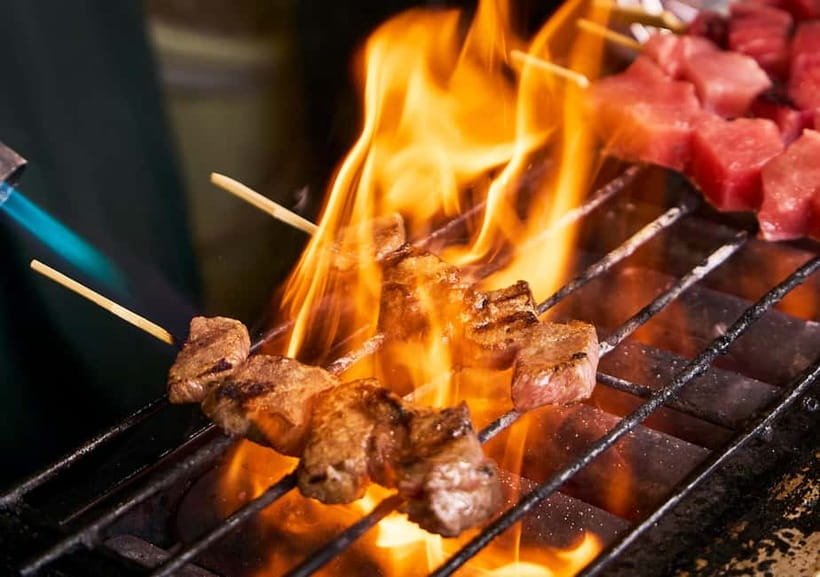
- Watch a whole fish being filleted using traditional Japanese techniques, then enjoy a seafood bowl.
- Eat your way through Tsukiji Jogai Market with help choosing stalls and ingredients.
- Visit Tsukiji Hongwanji Temple for a short introduction to Buddhism, architecture, and local culture.
- Expect about two hours, with the tour beginning and ending at Tsukiji Hongwanji Temple.
- Budget extra for food, since meals are not included in the tour price.
- Check your crowd tolerance, as the maximum group size is 30 people even though the experience is presented as small-group.
Why Tsukiji Works Better With a Guide
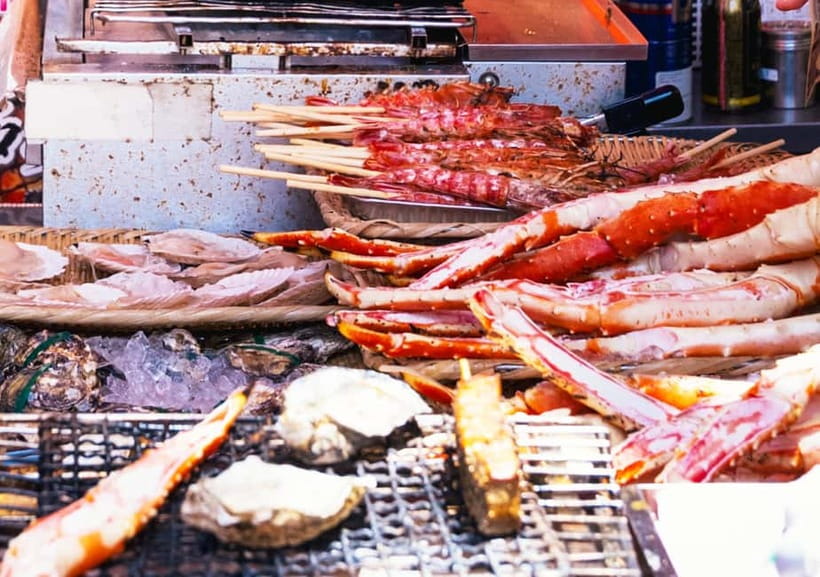
Tsukiji is not the old inner wholesale market that many visitors remember from photos. The public-facing Tsukiji Jogai Market is where you can browse food stalls, seafood counters, kitchen shops, and small eateries. The appeal is not a grand monument. It is the chance to see how Japanese food is displayed, prepared, and eaten in a tight urban market.
I like having a guide here because the market can feel like a wall of choices. You may see grilled seafood, sushi, tamagoyaki, fruit, sweets, and unfamiliar ingredients packed into a few busy lanes. A local guide can explain what you are looking at and help you decide what is worth trying.
The food is also a practical way into Japanese culture. Instead of receiving a long lecture, you learn through ingredients, preparation, and eating habits. Your guide is expected to share information about Japanese cooking, local customs, Tokyo’s past, and the role of the market.
The experience is not a deep historical tour. Its center of gravity is food. If you want a careful explanation of every street and building, you may find the commentary light. If you want help getting oriented and trying several market foods, the format makes more sense.
More Market Food Tours in Japan
- Tokyo Tsukiji Fish Market Food and Culture Walking Tour
★ 5.0 · 3,184 reviews - Tsukiji Fish Market Guided Tour and Sushi Making with Pro Chef
★ 5.0 · 775 reviews - Tokyo: Tsukiji Fish Market Food and Culture Walking Tour
★ 4.7 · 757 reviews
Starting at Tsukiji Hongwanji Temple
The meeting point is the main hall of Tsukiji Hongwanji Temple, at 3-chome-15-1 Tsukiji. The tour begins and ends here, which makes the temple an easy landmark for arrival and departure. It is also near public transportation, so you do not need to build a complicated transfer into your morning.
The temple visit comes at the end of the route, but knowing the meeting point helps you plan. Allow enough time to find the main hall rather than rushing in at the start. Confirmation arrives when you book, and the activity uses a mobile ticket.
Tsukiji Hongwanji Temple receives about 15 minutes of the tour. Your guide introduces its appeal, Buddhist culture, and history. That is a short visit, so think of it as a compact cultural frame around the market rather than a full temple tour.
Some people will find the temple a welcome change from food stalls. Others may feel it adds little, especially if they booked mainly for the market. I would not choose this tour solely for the temple, but the stop gives you a few quiet minutes and a different view of the neighborhood.
Eating Through Tsukiji Jogai Market
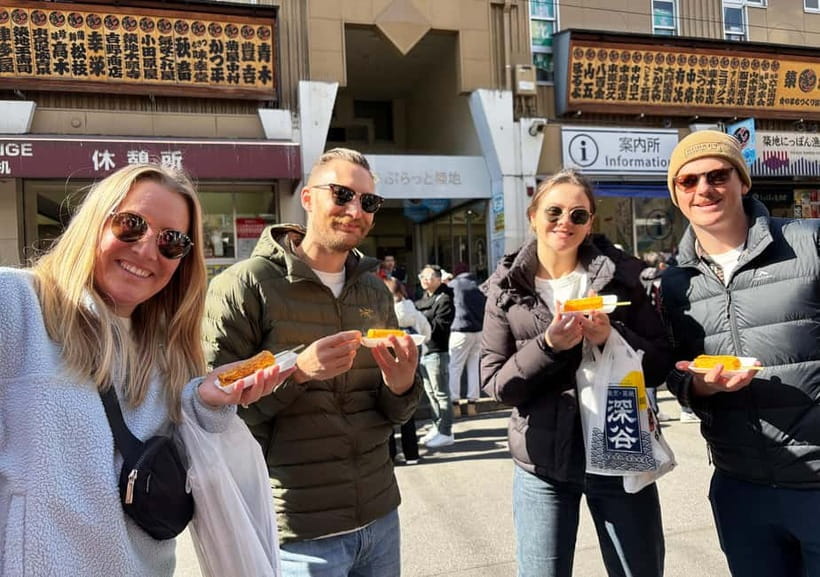
The first main section takes about 45 minutes in Tsukiji Jogai Market. This is where the tour earns its price, provided you are willing to sample food and listen as you go.
Your guide leads you through the public market and points out Japanese ingredients, cooking ideas, and local food customs. The goal is not simply to walk past stalls. You are encouraged to look closely, ask questions, and decide what you want to taste.
At about $33.16 per person, the guiding fee is reasonable for visitors who want orientation in a crowded food district. The price is less compelling if you plan to stroll independently, avoid eating, or already know Tsukiji well. The tour does not include meals, so your final cost depends on what you buy.
Plan for food spending beyond the booking price. The exact dishes and number of tastings are not fixed in the information provided, so do not assume that every food item you see is included. A guide can show you good options, but your own appetite and budget still shape the morning.
The strongest part of a food tour is often the small explanation beside the food. You might learn why an ingredient is used, how it is prepared, or how a certain item fits into Japanese eating culture. That kind of context is harder to pick up while walking alone.
Still, the market can slow the tour down. There may be pauses while the guide gathers the group, waits for space, or helps people choose food. If you are hoping to cover every lane quickly, the group format may frustrate you.
The Fish-Cutting Demonstration and Seafood Bowl
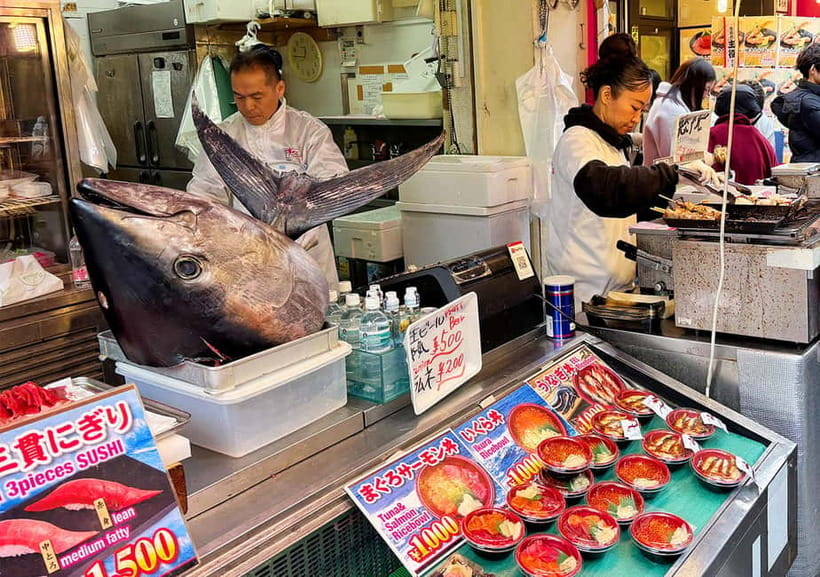
The fish-cutting show lasts about 30 minutes and is the most distinctive scheduled feature. A skilled chef fillets a whole fish using traditional techniques, showing the control and precision behind Japanese seafood preparation.
This is more useful than a generic cooking demonstration because the fish itself is the subject. You see how a whole ingredient is handled before it reaches the plate. The demonstration connects the working market to the food you eat afterward.
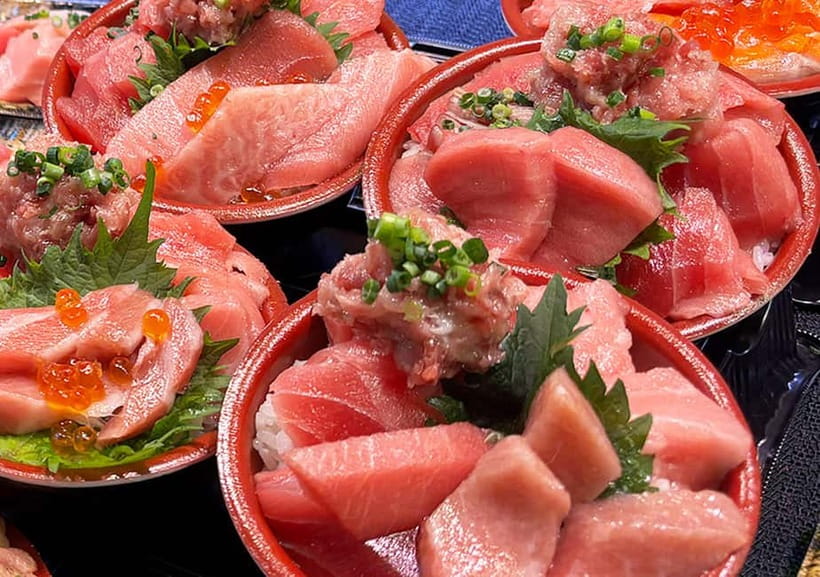
A fresh seafood bowl follows the demonstration. The meal itself is not included in the tour price, so be prepared to pay separately. The combination of watching the preparation and then eating seafood gives this part a clear beginning and end.
I would pay close attention here even if you are not especially interested in cooking. Fish-cutting is a skilled craft, and it helps explain why Japanese seafood presentation can be so exact. You also get a better sense of the labor behind a dish that may appear simple once it reaches the table.
This stop can be crowded, and the viewing experience may depend on where you stand or sit. Keep expectations practical. It is a short market demonstration, not a private culinary class. The tour information also does not promise hands-on participation, so expect to watch rather than handle the fish yourself.
More Market Food Tours in Tokyo
- Tsukiji Fish Market Small-Group Food Walking Tour
★ 5.0 · 621 reviews - Tokyo: Tsukiji Fish Market Sushi Making Class with Pro Chef
★ 4.9 · 506 reviews - Tsukiji Fish Market: Street Food & Culture Walking Tour
★ 4.8 · 259 reviews - Tokyo: Toyosu Tuna Auction &Tsukiji Market Gourmet Adventure
★ 4.8 · 187 reviews
Seeing the Market at Work
Another 30-minute section takes you through Tsukiji Fish Market, where professional traders operate. This is valuable because it shifts the focus from food as a tourist purchase to food as a working business.
You may see the market’s professional side rather than only the stalls aimed at passersby. Your guide explains what you are seeing and helps connect the trade to Tokyo’s wider food culture. For a first visit, that explanation can make the market feel less like a random collection of shops.
The distinction between the public Jogai Market and the working fish market matters. The first is easier to browse and eat through. The second offers a look at the commercial activity that supports restaurants and food sellers.
The pace may not suit everyone. The tour has a maximum of 30 participants, and that is a sizable group for narrow market areas. Even if the actual group is smaller, you may need to stay close to the guide and wait while everyone catches up.
A few practical habits help. Wear shoes that are easy to walk in, keep your belongings close, and remain aware of people working around you. The market is not only a sightseeing backdrop. Professionals are trying to do their jobs.
Guides, Group Size, and the Pace of the Walk
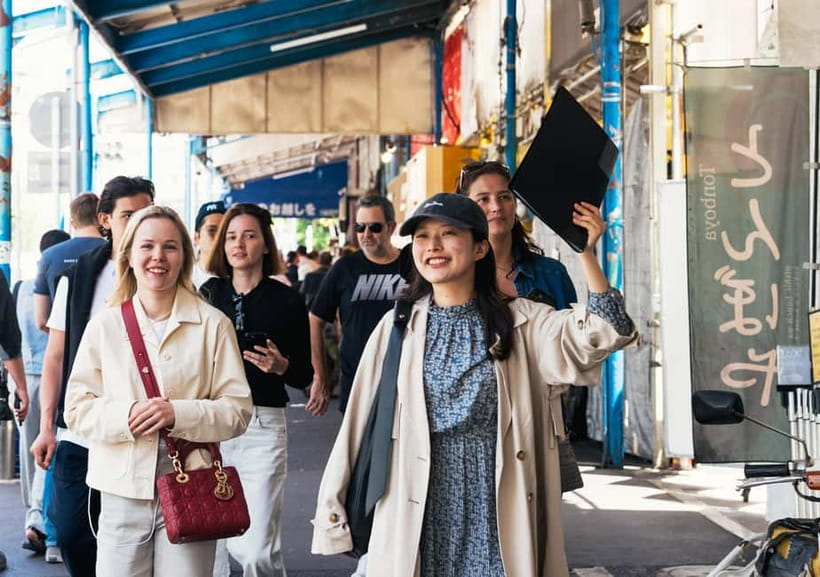
The experience is promoted as small-group, with a maximum of 30 people. That upper limit is worth noting. A group of 30 does not offer the same personal attention as a walk with six or eight people, especially in crowded lanes.
The quality of the morning also depends heavily on the guide. Guides named George and Tomo have led particularly strong outings, with clear English, useful explanations, and good food choices. A good guide can keep the route moving, help you understand unfamiliar dishes, and make the market feel manageable.
There is less consistency when the market is crowded. One account describes a guide who did not always wait for the group, while another describes a guide who spoke so quietly that the surrounding noise made the commentary hard to follow. These are important concerns, not small flaws, because the guide is the main reason to pay for the tour.
You can help by staying close, speaking up if you cannot hear, and telling the guide early if you need shade or a slower pace. The experience may be wheelchair and stroller accessible, but the practical ease of moving through a busy market can still vary with crowd levels and the day’s layout.
The tour lasts about two hours, which is a sensible length for a food market. It is long enough to see several parts of Tsukiji without turning into an exhausting half-day commitment. It can also feel rushed if you want lengthy temple time or extended shopping.
What the $33.16 Price Really Buys
The $33.16 fee pays for guidance and access to the organized experience, not a full meal package. You should add money for the food you choose, including the seafood bowl after the fish-cutting demonstration.
The value is strongest in three situations. First, you are visiting Tsukiji for the first time and want help making sense of it. Second, you enjoy sampling food but do not know which stalls or ingredients to choose. Third, you want the fish-cutting show and market context without arranging the morning yourself.
The value is weaker if you are comfortable exploring alone. Tsukiji Jogai Market can be walked independently, and you may prefer setting your own pace, choosing every food stop, and avoiding group waits. Some parts of the tour are simply guided walks through public areas, not reserved attractions.
The food costs can also change the total. If you taste several items, the outing will cost more than the advertised tour price. That is not a problem, but it is better to see the $33.16 as the cost of the guide and structure rather than the cost of breakfast.
With 669 ratings and a 99 percent recommendation figure, the experience has a strong overall record. Still, the lower-rated experiences point to a real issue: the tour is only as good as its guide, group handling, and crowd conditions on the day.
When This Tour Makes Sense
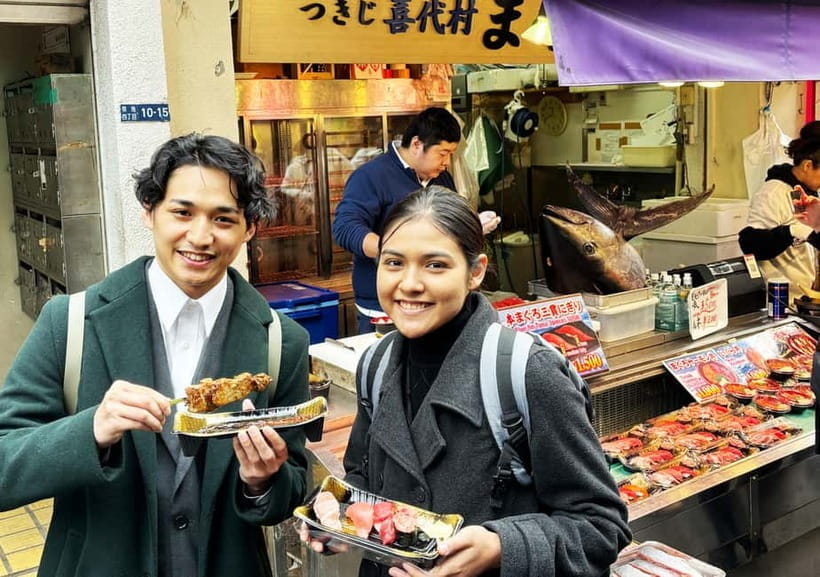
I would choose this tour for a first morning in Tsukiji, especially if you want food and culture in one short outing. It suits curious eaters, couples, families, and visitors who prefer a local guide to explain what is on the counter.
It also works well if you want a fixed route. The combination of market stalls, fish-cutting, a seafood bowl, professional trading areas, and a temple gives the morning some shape. You do not have to decide where to go next every five minutes.
Families may appreciate the variety, although young children may find the waiting and crowded lanes tiring. The wheelchair and stroller accessibility is a useful feature, but you should still allow for the realities of a busy market and ask the guide for help if movement becomes difficult.
I would hesitate if you dislike food sampling, have limited patience for crowds, or want a detailed Buddhist or Tokyo history tour. I would also think twice if you prefer complete independence. The public market is available without a guide, and the tour does not include meals or special access to every part of Tsukiji.
Because the experience requires good weather, keep your plans flexible. If poor weather causes cancellation, you are offered another date or a full refund. You can also cancel for a full refund up to 24 hours before the start time. Changes or cancellations inside that window are not accepted.
Should You Book the Tsukiji Walk?
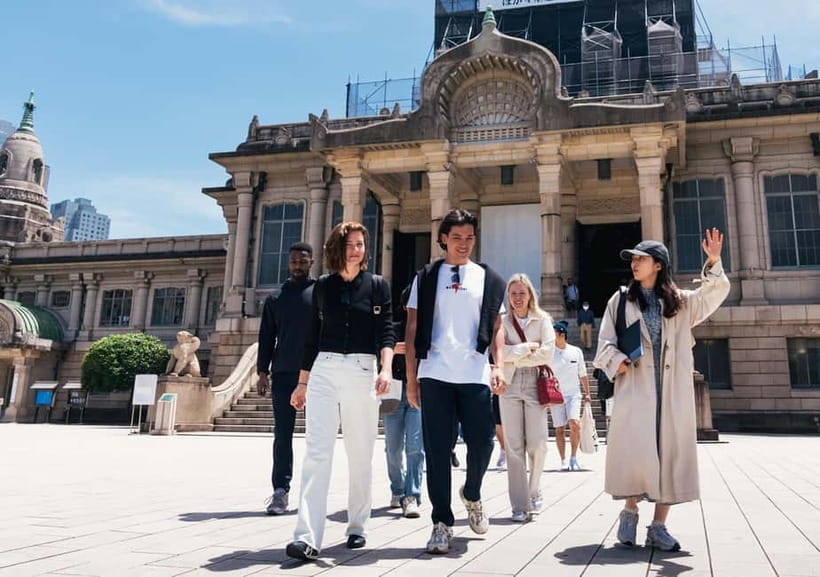
Book it if you want a compact, food-led introduction to Tsukiji and like having someone point out what deserves your attention. The fish-cutting demonstration, seafood bowl, and market guidance give the morning more purpose than a simple wander, especially on a first visit.
Skip it if you already know Tsukiji, want a quiet private tour, or would rather spend your money directly on food. If you book, arrive ready to walk, budget extra for eating, stay close to the guide, and speak up if you cannot hear.
For the best fit, think of this as a guided market orientation with a cooking demonstration and short temple visit. It is not a full culinary course and not a detailed historical tour. At the listed price, it can be good value for the right kind of morning, provided you accept the crowds and the variable pace of a group experience.
FAQ
Where does the Tsukiji Fish Market tour start?
The tour starts at the main hall of Tsukiji Hongwanji Temple, at 3-chome-15-1 Tsukiji, Chuo City, Tokyo 104-0045, Japan.
Where does the tour end?
The activity ends back at the meeting point at Tsukiji Hongwanji Temple.
How long does the experience last?
The tour lasts approximately two hours.
Is food included in the tour price?
No. Meals are not included, so you should bring extra money for food purchases, including the seafood bowl after the fish-cutting demonstration.
What happens during the fish-cutting demonstration?
A skilled chef fillets a whole fish using traditional techniques. A seafood bowl follows the demonstration.
Does the tour visit Tsukiji Hongwanji Temple?
Yes. The tour includes about 15 minutes at Tsukiji Hongwanji Temple, where a local guide discusses Japanese culture, Buddhism, and the temple’s history.
Is the tour wheelchair and stroller accessible?
Yes. The experience is described as wheelchair and stroller accessible.
How many people can join the tour?
The activity can include a maximum of 30 participants.
Can I cancel for a full refund?
Yes. You can cancel at least 24 hours before the experience start time for a full refund. If poor weather causes the activity to be canceled, you will be offered another date or a full refund.
More Street Food Tours in Japan
- Tokyo: Togoshi Ginza Street Food Tour
★ 5.0 · 34 reviews - Hungry Osaka Street Food Tour:15 Tastings & 3 Drinks with a Local
★ 5.0 · 1,727 reviews - Hungry Osaka Street Food Tour: 15 Dishes & 3 Drinks
★ 4.9 · 694 reviews - [1 Group Only] Osaka Street Food Tour for Family
★ 5.0 · 208 reviews
More Seafood Tours in Japan
- Tokyo: Sushi Making with Pro Chef & Tsukiji Fish Market Tour
★ 4.6 · 49 reviews - Osaka: Wakayama Cat Train, Seafood market, Hot Springs Tour
★ 4.6 · 24 reviews
New food tours we have reviewed in Tokyo
- Tokyo: West-Side Cycling and Food Tour with Guide★ 5.0 · 37 reviews
- Tokyo Tsukiji Food & Culture Private Tour Licensed Guide★ 4.9 · 28 reviews
- Tokyo: Allstar Food Tour★ 4.7 · 29 reviews
- Tokyo: Wagyu and Sushi Gastronomic Journey★ 4.3 · 24 reviews
- Tokyo: Togoshi Ginza Street Food Tour★ 5.0 · 34 reviews
- Tokyo: Sushi Making Class★ 4.9 · 390 reviews
- Tokyo: Shibuya Food Tour (13 dishes and 4 Eateries)★ 5.0 · 178 reviews
- Tokyo: Best of Shibuya Food Tour★ 4.7 · 119 reviews
Street Food Tours, compared.
Dubai: Old Town, Creek, Museums, Souks, & Street Food Tour
Read our review →
Ho Chi Minh City Street Food Tour & Sightseeing By Motorbike
Read our review →
Dubai: Old Town, Souks, Street Food, Guided Tour & Abra Ride
Read our review →
Naples: Street Food Walking Tour with Local Guide
Read our review →
Small Group Hanoi Street Food Tour with a Real Foodie
Read our review →
Saigon By Night and Street Food By Motorbike | Opt: Ao Dai Riders
Read our review →