

Review · WINE TOURS
Gastronomy tour and wine tasting in traditional villages
Cretan food is the heart of this outing, but the best part may be how far you get from Chania’s busy center. You move through small villages, stop at a coffeehouse beneath trees and beside streams, watch olive oil being made, and eat beside Lake Kournas. Greek coffee cooked slowly in hot sand is an especially memorable touch.
I like the mix of food and place. You are not simply seated in one restaurant for an afternoon. You taste sheep-milk ice cream, carob, graviera, olive oil, local wine, and raki while Yiannis explains the island’s customs. I also like the small-group setting, with a maximum of 12 people and pickup from your chosen spot.
The main concern is the amount of food and, at times, the vehicle. Two large meals arrive within a fairly short period, and some groups have found the sedan cramped. Come hungry, and confirm the pickup and vehicle details if comfort matters to you.
Key points at a glance
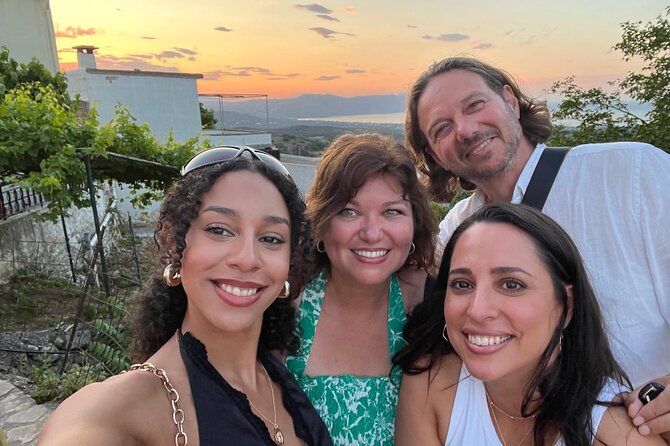
- Greek coffee cooked in hot sand: Begin with a slow, traditional preparation at a village coffeehouse in Armeni.
- Sheep-milk ice cream in Fres: Try a local specialty with carob and cherry flavors, along with graviera and strong raki.
- Two full Cretan meals: Eat traditional dishes at Lake Kournas and in Apokoronas, with vegetarian, vegan, and gluten-free choices.
- Four local wines: The Lake Kournas meal includes a tasting of four wines from the area.
- Olive oil made in front of you: Antonis guides you through a working olive oil mill and offers tastings.
- A small-group countryside ride: Pickup, drop-off, and an air-conditioned vehicle let you see villages you may not reach without a car.
Why this Chania food tour feels different
Many food outings keep you in the city. This one uses food as a reason to explore the countryside around Chania. Over roughly five to six hours, you pass through Armeni, Fres, Georgioupolis, and Apokoronas, with the driving time linking a series of village stops.
I see this as a good choice if you want a taste of rural Crete without renting a car. You get transport, a local guide, several food stops, and enough time at each place to understand what you are eating. Yiannis is the guide most often named in the feedback, and his role goes beyond carrying you from table to table. He talks about Cretan food, customs, history, and mythology, and he is happy to take photos with your phone.
The experience earned a five-star rating from all 32 ratings provided, which points to a very consistent outing. Still, the same practical issues come up more than once: the food portions are generous, and a larger vehicle would make the road time easier for some groups.
More Wine Tours in Greece
- Athens: Food Market Visit and Cooking Class with Wine
★ 4.9 · 1,087 reviews - Santorini: Wine Tasting Tour with Snacks
★ 5.0 · 693 reviews - From Chania: Olive Oil, Wine, Cheese & Honey Tasting Tour
★ 4.6 · 490 reviews
Armeni and the slow art of Greek coffee
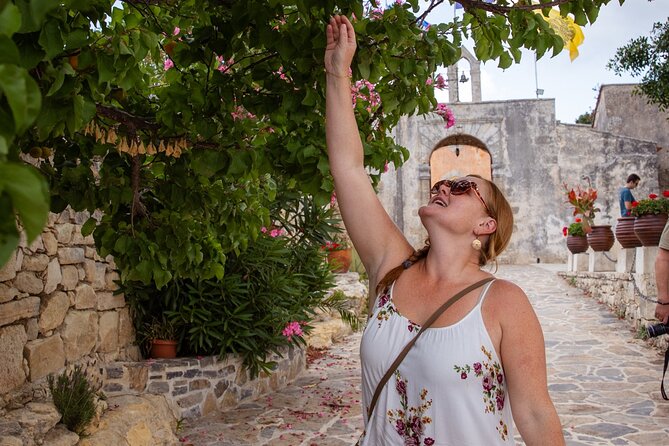
The first stop is Armeni, where you visit a traditional coffeehouse surrounded by trees and streams. The coffee is cooked slowly in hot sand rather than brewed quickly on a modern machine.
That method gives the coffee a fuller flavor and turns a simple drink into a small demonstration of older village life. You have about 30 minutes here, so this is a relaxed opening rather than a rushed photo stop.
Greek coffee is strong and unfiltered, with grounds settling at the bottom of the cup. If you do not usually drink it, you may want to sip slowly. The setting matters as much as the drink: the shade, water, and greenery offer a calm introduction to the countryside.
Fres brings ice cream, carob, cheese, and raki
In Fres, the food becomes more varied. You can try sheep-milk ice cream, a specialty associated with Chania, and sample the unusual flavor of carob. The carob and cherry ice cream flavors are worth considering if both are available, especially if you want something beyond standard vanilla or chocolate.
Carob has long been used in Cretan cooking, and its flavor is earthy and slightly sweet. This is a chance to taste it in a familiar form without needing to commit to a full dish.
You also try graviera, one of Crete’s best-known cheeses. It is the cheese used for saganaki, the familiar fried cheese dish. The shop owner offers raki, the clear Cretan spirit that often closes a meal or welcomes a visitor. It can be quite strong, so you do not need to drink it simply because it is offered.
The stop lasts about 30 minutes. If you have dietary restrictions, mention them when booking or before the food is served. Vegetarian, vegan, and gluten-free options are available on the tour, though the exact choices at each stop may vary.
A 500-year-old church in Apokoronas
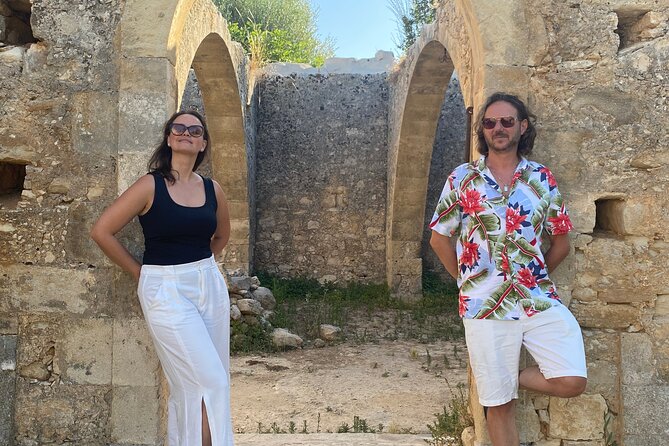
The next stop takes you to an old church in Apokoronas, at least 500 years old. You can see its interior and exterior, then walk through a garden filled with flowers, herbs, and fruit trees.
The garden includes apricot, fig, banana, carob, walnut, and quince trees. That detail makes the stop more than a quick look inside a historic building. You get a sense of how food plants fit into everyday Cretan life, from fruit and nuts to herbs and carob.
Allow about 45 minutes here. The setting offers a useful change of pace after the coffee and sweets. The church is also connected with an ancient olive mill, adding another link between Cretan religious sites, village work, and olive oil production.
A separate village stop includes a river passing through it. The exact village is not specified, so think of this as a scenic countryside pause rather than a guaranteed named attraction. The tour’s strength is the collection of ordinary local places, not a checklist of major monuments.
Same appetite, a different neighbourhood:
- Greek Food Walking Tour in Athens
★ 5.0 · 4,740 reviews - Athens: Street Food Tasting Tour
★ 4.9 · 3,343 reviews - Athens: Guided Greek Food Walking Tour with Tastings
★ 4.9 · 2,859 reviews - Small Group Greek Traditional Food Tour in Athens 20+ Tastings
★ 5.0 · 1,759 reviews
Georgioupolis and a working olive oil mill

In Georgioupolis, you visit a modern olive oil mill. Antonis, the producer, explains how olive oil is made and answers questions about the process.
This is one of the most useful stops for anyone who buys olive oil at home. You can connect the finished bottle on a shop shelf with the work behind it. The visit includes a tasting of virgin olive oil and olives, and you can browse traditional products such as oil, olives, and handmade cooking pots.
You have about 45 minutes here. The stop is hands-on in the simple sense: you see the facility, listen to the producer, taste the oil, and have time to ask questions. It is not presented as a formal technical class, so expect a friendly explanation rather than a long lecture.
You may also buy souvenirs and local products. That is convenient, but do not feel pressured to shop. The value of this stop is still there if you only taste and listen.
Lake Kournas turns lunch into a long meal
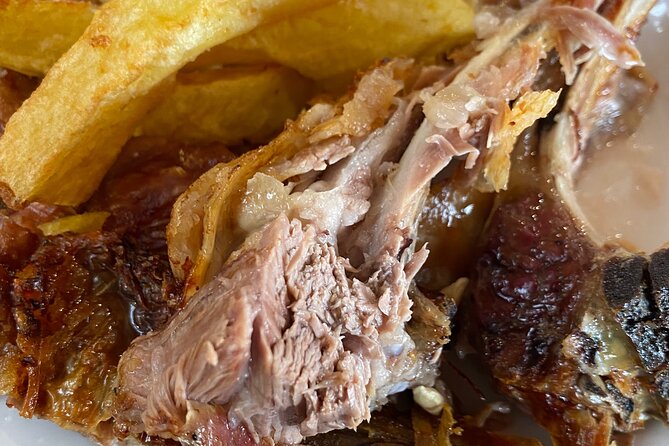
The first full meal takes place at Lake Kournas, Crete’s biggest lake, with views toward the lake, mountains, and sea. The setting is one of the strongest reasons to choose this tour over a meal in Chania.
This is not a quick lunch. You have about one hour and 15 minutes, and the table includes several traditional dishes. Possible plates include tsigariasto arni, lamb cooked with oil and wine; antikristo arni, lamb slow-cooked over fire; dolmadakia, grape leaves filled with rice; kolokithoanthous, zucchini flowers filled with rice; and imam baildi, eggplant cooked with garlic, onion, fresh tomato sauce, cream cheese, and olive oil.
The meal also includes four local wines. That makes the stop especially useful if you want to compare Cretan wine with the food rather than simply order one glass at dinner. Alcoholic beverages are restricted to those aged 18 and above.
The menu favors sampling. You get to try several dishes rather than choose one plate and miss the rest. The catch is portion size. The meal can be large even before the second meal arrives, so pace yourself and do not treat every dish as something you must finish.
Vegetarian, vegan, and gluten-free food choices are available. If you follow one of these diets, state it clearly before eating so the restaurants can guide you through the suitable dishes.
Apokoronas serves a second, very different meal
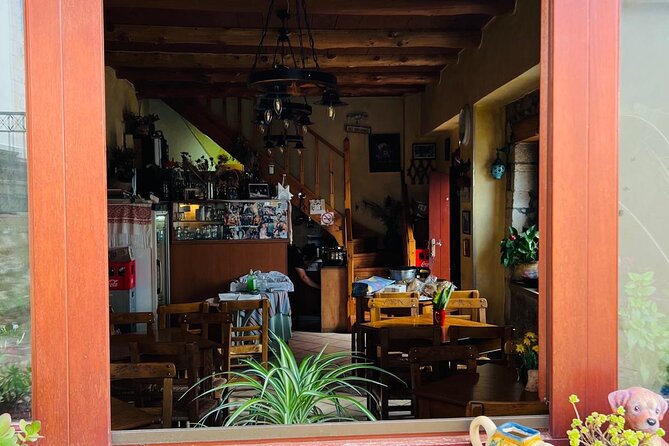
The second meal takes place in Apokoronas and focuses on another group of traditional dishes. You may find chicken cooked with grape juice, pork with tomato sauce and peppers, smoked pork with oregano and sage, and mushrooms marinated with beer.
The contrast with the first meal is useful. At Lake Kournas, you focus more on lamb, stuffed vegetables, eggplant, and wine. In Apokoronas, the food shifts toward pork, chicken, smoked meat, herbs, and mushrooms.
This meal also lasts about one hour and 15 minutes. In practical terms, lunch and dinner are close together. That arrangement lets you taste a wide range of Cretan cooking in one afternoon, but it is also the tour’s clearest drawback.
Several people have found that the portions were too large to finish, even though the food was excellent. I would rather see smaller tasting portions here, since the whole point is variety. You can help yourself by taking modest amounts at the first meal and leaving room for the second.
What the $216.25 price includes
At $216.25 per person, this is not a cheap meal out. It is also much more than a restaurant reservation. The price includes pickup and drop-off, an air-conditioned vehicle, the guide, the olive oil mill visit, the old church visit, snacks, alcoholic drinks, and two substantial meals.
The four-wine tasting adds value for anyone interested in local drinks. So does the transport, especially if you are staying in Chania and do not plan to rent a car. Reaching small villages, the olive mill, and Lake Kournas independently would take more planning, and you would need to arrange a designated driver if you wanted to taste wine and raki.
I would judge the price by how much of the day you want handled for you. If you only want a single Cretan meal, it is expensive. If you want countryside transport, a local guide, several tastings, two restaurants, and a broad introduction to Cretan food, the package is easier to justify.
The tour is commonly booked about 63 days ahead. That does not guarantee it will sell out on your dates, but it is a useful sign to plan ahead during a busy Chania visit.
Group size, car comfort, and timing
The maximum group size is 12, which keeps the experience smaller than a large coach tour. Yet the actual vehicle can matter more than the official group limit. Some outings have used a sedan for four people plus the guide, and the back seat felt tight.
If you are tall, broad-shouldered, or uncomfortable sitting for long periods, ask about the vehicle before booking. One person ended up sitting in the middle for the whole drive. The air conditioning helps in warm weather, but it cannot create extra legroom.
The schedule lasts five to six hours, with the remaining time used for driving between stops. You should expect a moving day rather than a long stay in any one village. The experience suits you if you enjoy changing scenery and short visits. It may frustrate you if you prefer one slow meal with plenty of free time.
Pickup is offered from your designated spot, and drop-off is included. One meeting point was considered inconvenient, so use the pickup option when possible and confirm the exact arrangement in advance.
Who should book this experience
I would choose this tour if you want to see more of Crete than Chania but do not want to drive. It is particularly useful during a short stay, since one half-day covers food, villages, a church, an olive mill, Lake Kournas, and local wine.
It also suits people who enjoy trying unfamiliar dishes. Lamb cooked over fire, carob ice cream, grape leaves, zucchini flowers, sheep-milk ice cream, raki, and smoked pork give you a broad taste of the island.
Families with adults, couples, small groups of friends, and solo visitors can all fit the format. Yiannis has been described as friendly, professional, personable, and happy to share both local culture and everyday life in Crete. A solo booking may feel especially personal if the group is small.
I would hesitate if you dislike large meals, need plenty of personal space in a car, or want a tour centered on major archaeological sites. This is a food-and-countryside day, not a formal history tour.
Final call: book it for food and rural Crete
Book this experience if you want Cretan food served in local settings and you value a guide who can connect the dishes with village life. The coffee in Armeni, the olive oil mill, the Lake Kournas meal, and the four wines give the outing real variety.
Skip it if two full meals in one afternoon sound excessive or if cramped transport would spoil your day. For everyone else, bring a serious appetite, tell the guide about dietary needs, and leave room for sheep-milk ice cream. Free cancellation is available up to 24 hours before the start time, which gives you some flexibility if your plans change.
FAQ
How long does the gastronomy tour last?
The experience lasts approximately five to six hours. The remaining time is used for driving between the villages and food stops.
Is pickup and drop-off included?
Yes. Pickup and drop-off from your designated spot are included.
What food and drinks are included?
The tour includes snacks, lunch, dinner, virgin olive oil, olives, sheep-milk ice cream, graviera, raki, and four local wines. The exact dishes may vary, but the planned meals include traditional lamb, pork, chicken, stuffed vegetables, eggplant, mushrooms, and other Cretan foods.
Are vegetarian, vegan, or gluten-free options available?
Yes. Vegetarian, vegan, and gluten-free food options are available.
Can children drink the wine or raki?
No. Alcoholic beverages are limited to people aged 18 and above.
How many people can join the tour?
The maximum group size is 12 people. The vehicle used for the outing may still feel compact, so you can ask about transport arrangements before booking if space is important to you.
New food tours we have reviewed in Greece
- Walking “Food tasting tour” in the town of Chania★ 5.0 · 297 reviews
- Sunset Craft Beer & Food Tour – Chania Old Port★ 5.0 · 86 reviews
- Cruise Ship Guest Beer & Food Tour – Chania Old Port★ 5.0 · 26 reviews
- The Delicious Chania Street Food Tour★ 5.0 · 138 reviews
- Eat & Crete Food Tour [non-touristy] Chania Villages★ 5.0 · 25 reviews
- Chania Walking Food Tours Crete with a local!★ 4.5 · 61 reviews
- Chania Walking Food And Wine Night Tour★ 4.5 · 31 reviews
- Best Food Tasting Tour of Athens, taste 18+ iconic Greek foods!★ 5.0 · 448 reviews
Wine Tours, compared.
Montserrat Half-Day Tour with Tapas and Gourmet Wines
Read our review →
Winner 2025 Undiscovered Lisbon Food & Wine Tour by Eating Europe
Read our review →
From Porto: 2 Wine Regions, Farm-to-Table Lunch & Boat
Read our review →
Winner 2025 Florence Sunset Food & Wine Tour by Eating Europe
Read our review →
Authentic Parisian Gourmet Food Tour with 10 Local Dishes & Wines
Read our review →
Barcelona: Tapas Walking Tour with Food, Wine, and History
Read our review →
Lisbon: Food and Wine Small Group Walking Tour
Read our review →
Lisbon Small-Group Portuguese Food and Wine Tour
Read our review →Browse the lists this tour appears in