
Review · GERMANY FOOD TOURS
Hamburg: Culinary Insider Tour of St. Georg
St. Georg is one of Hamburg’s most revealing neighborhoods because its contrasts sit close together: queer nightclubs, mosques, churches, schools, restaurants, and old streets with a darker past. This three-hour walk uses food to explain the quarter, beginning at Heidi-Kabel-Platz and moving through the area with five tastings at local places.
I like the small-group feel and the way the tour connects ordinary streets with St. Georg’s story as a former plague isolation zone. I also like that guides such as Henning, Martin, and Patricia have made a strong impression with clear stories and easy conversation. The main consideration is that the $589 price is for a group of up to 10, so it makes the most sense when shared by a full group. Drinks cost extra, and some food may be eaten standing or outdoors.
Key points at a glance
- Five tastings in local bars and restaurants: Food is spread across several stops rather than served as one fixed meal.
- St. Georg’s unusual mix: The route passes through a quarter where queer nightlife, mosques, churches, and schools occupy the same compact area.
- A past shaped by disease control: You hear how St. Georg once served as a plague exclusion zone before joining Hamburg proper.
- Guides who know how to tell the story: Henning, Martin, and Patricia are among the guides praised for informative, engaging walks.
- Vegetarian-friendly format: The tour is suitable for vegetarians, though the exact tasting selection is not specified.
- Three hours at a gentle pace: This is a neighborhood walk with time for food and conversation, not a race between landmarks.
Why St. Georg makes such a good food walk
St. Georg gives you a more complicated picture of Hamburg than the postcard sights alone. It is close to Hamburg Central Station, yet it has its own strong character and a history that reaches well beyond shopping streets and railway traffic.
The quarter was once used as a plague isolation zone. That fact changes how you read the neighborhood. St. Georg was not simply another district that grew around Hamburg. It was set apart for a practical and frightening reason, then later incorporated into the city.
Today, the area is known for its open-minded and multicultural character. The tour brings you through streets where different religious, social, and cultural communities sit close together. You may pass queer clubs beside mosques, churches, and schools. That mix is not presented as a polished theme park version of Hamburg. It is the everyday character of the quarter.
I find that setting especially useful for a food tour. Restaurants and bars reveal who lives in a neighborhood, who works there, and what kinds of traditions have taken root. You are not just looking at buildings. You are using the food stops to understand how St. Georg became the place it is now.
More food tours in Germany:
- Hamburg: Schanzenviertel Culinary Tour
★ 4.6 · 2,051 reviews - Hamburg: Elbphilharmonie Plaza and HafenCity Food Tour
★ 4.7 · 1,711 reviews - Berlin Center Food Tour with 8+ Authentic Local Tastings
★ 5.0 · 1,227 reviews
Starting at Heidi-Kabel-Platz
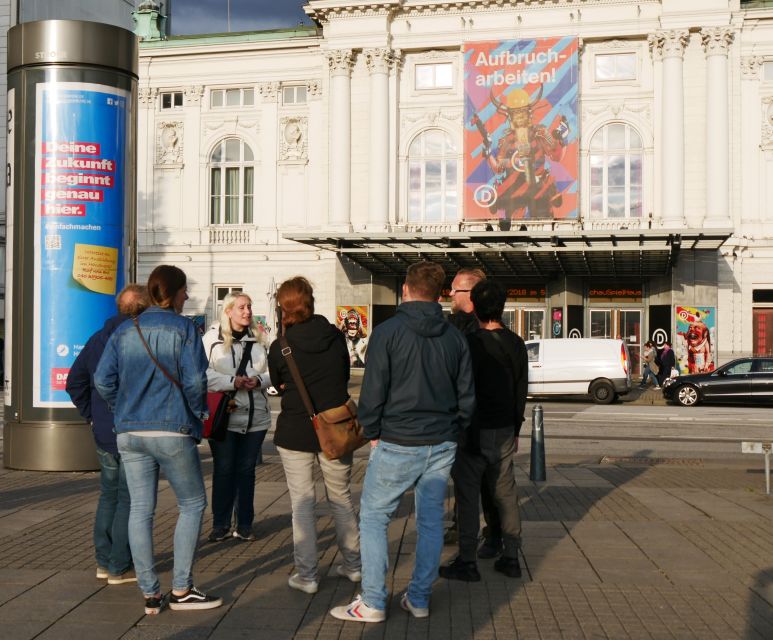
The meeting point is Heidi-Kabel-Platz 1, in front of the Ohnsorg Theater. The location gives you a clear, central place to begin, and the theater provides an easy landmark.
From there, your guide sets the pace. The walk is described as gentle, so you should expect a relaxed neighborhood outing rather than a strenuous hike. Three hours is long enough to cover the quarter properly, pause for five tastings, and ask questions without cramming everything into a short circuit.
That slower pace matters in St. Georg. The point is not only to reach each restaurant. Your guide is there to explain what you are seeing between stops, including the area’s social mix and its past. If you prefer tours where the guide responds to the group instead of delivering a rigid speech, this format should suit you.
The experience is available in English or German. The named guides who have led recent tours include Henning, Martin, and Patricia. Henning was praised for answering questions and telling stories in an approachable way. Martin was described as motivated, while Patricia received strong marks for both the walk and the food tastings.
Guide quality matters more than usual here. St. Georg’s character is not captured by a single famous monument. Much of the value comes from knowing what to notice and how to connect the quarter’s past with its current identity.
Walking through a quarter of sharp contrasts
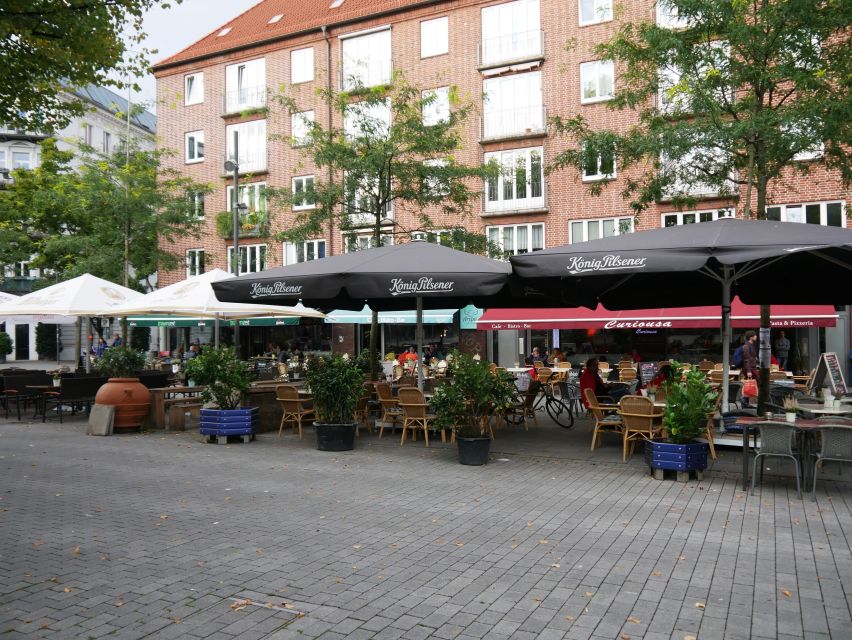
The central part of the tour is the walk itself. You move through colorful streets and hear how St. Georg functions as a diverse, open-minded part of Hamburg.
The most interesting feature is the close proximity of different worlds. The gay and queer scene, including nightclubs, sits near mosques, churches, and schools. That does not mean every street looks dramatically different from the next. Instead, the interest comes from seeing how many kinds of community life share the same small area.
Your guide provides the context that turns this into more than a casual stroll. You learn what makes St. Georg trendy, why its identity is different from other Hamburg quarters, and how its past still helps explain its present.
I would pay attention to the transitions between stops. Food tours can sometimes become a string of snacks with a few facts added on top. Here, the neighborhood itself is the main subject, and the tastings support that subject. Listen for the connections between migration, local habits, restaurants, nightlife, and the quarter’s reputation.
The route is also a good choice if you want to see Hamburg beyond the most familiar sights. You are not spending the full three hours in a museum or around a single landmark. You are getting a close look at a lived-in district, with all the variety and rough edges that implies.
The plague exclusion zone and St. Georg’s darker past
The historical section gives the tour weight. Before it became part of Hamburg, St. Georg was used as a plague isolation zone. That is a sobering detail, but it helps explain why the quarter developed separately from the city for a time.
Your guide tells this part while you are walking through present-day streets, which creates a useful contrast. The cafés, restaurants, nightclubs, religious buildings, and schools you see now occupy an area once associated with fear and exclusion.
The tour does not present history as a list of dates. Its strength is the connection between place and change. A neighborhood can shift from being kept apart to becoming one of Hamburg’s most mixed and socially active quarters. That long change is more memorable when you are standing in the area itself.
If you prefer a light food outing with no serious historical material, this tour may feel more thoughtful than expected. The dark history is not the entire experience, but it is an important part of the story. I see that as a plus for anyone who wants a neighborhood tour with substance.
Same appetite, a different neighbourhood:
- Munich: Viktualienmarkt Food Tour
★ 4.5 · 1,127 reviews - Munich: Beer and Food Tour with Dinner & Oktoberfest Museum
★ 4.7 · 1,086 reviews - Kreuzberg: Culinary Food Tour
★ 4.5 · 770 reviews - Cologne: Südstadt Guided Foodie Walking Tour
★ 4.6 · 624 reviews
Five tastings across local places
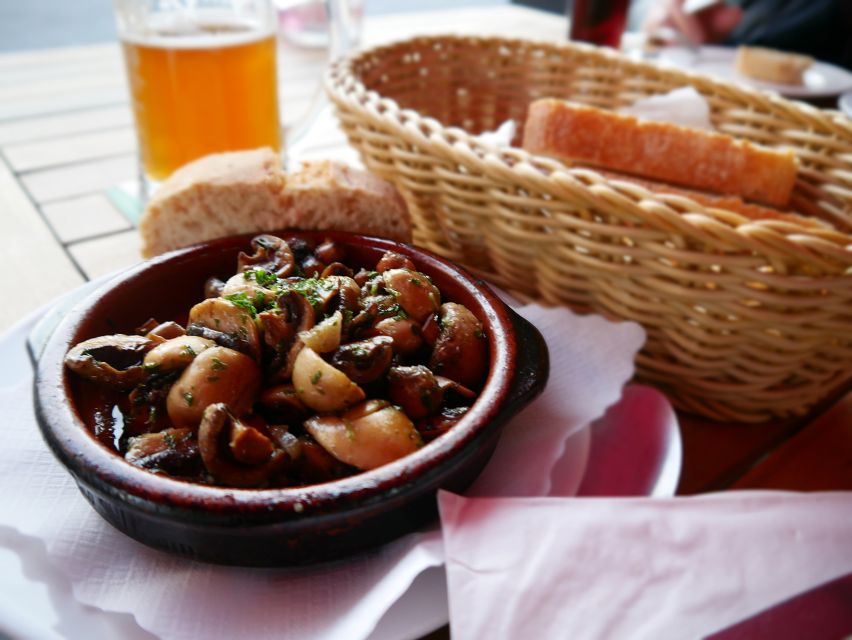
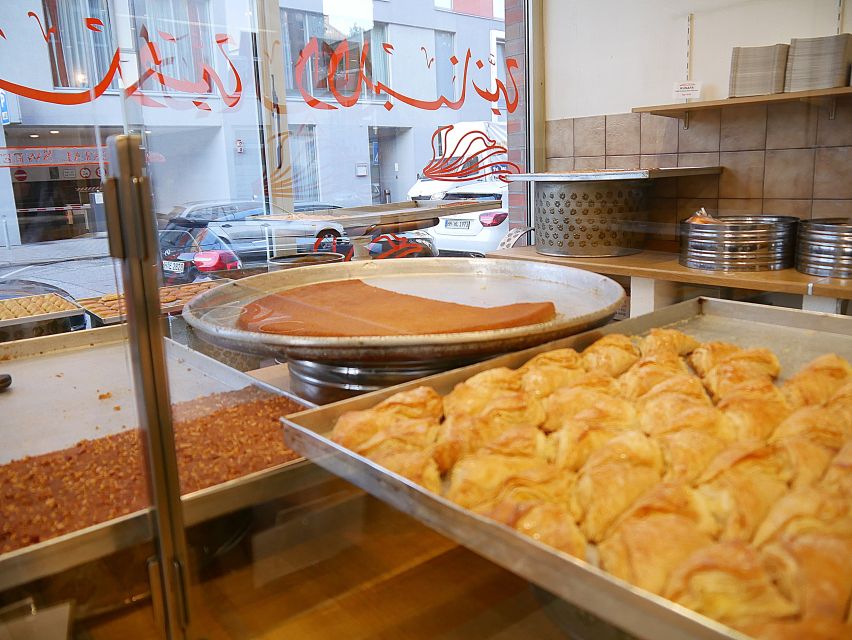
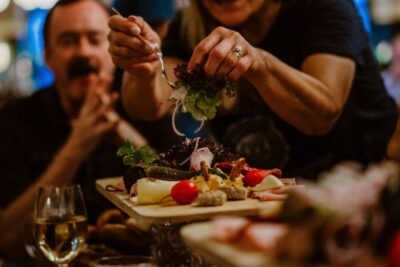
The food portion includes five different tastings at several local bars and restaurants. The exact dishes are not listed, so you should not book this expecting a guaranteed menu of named Hamburg specialties. Instead, think of the tastings as a sample of St. Georg’s local food culture.
That format has several advantages. You try small portions in more than one setting, and the stops can show different sides of the quarter. One place may offer a traditional bite, while another reflects the wider mix of cultures that gives St. Georg its identity.
Five tastings over three hours should also leave room for conversation. This is not designed as a large, heavy meal eaten at one table. You will be moving between places, hearing stories, and sampling as you go.
The food selection is suitable for vegetarians. Still, the information does not specify how many of the five tastings are vegetarian or whether substitutions are available. If you have a strict dietary requirement, ask about the current selection before booking.
Drinks are not included. This is easy to overlook because the tour visits bars and restaurants. Budget separately if you want beer, wine, soft drinks, coffee, or anything else along the route.
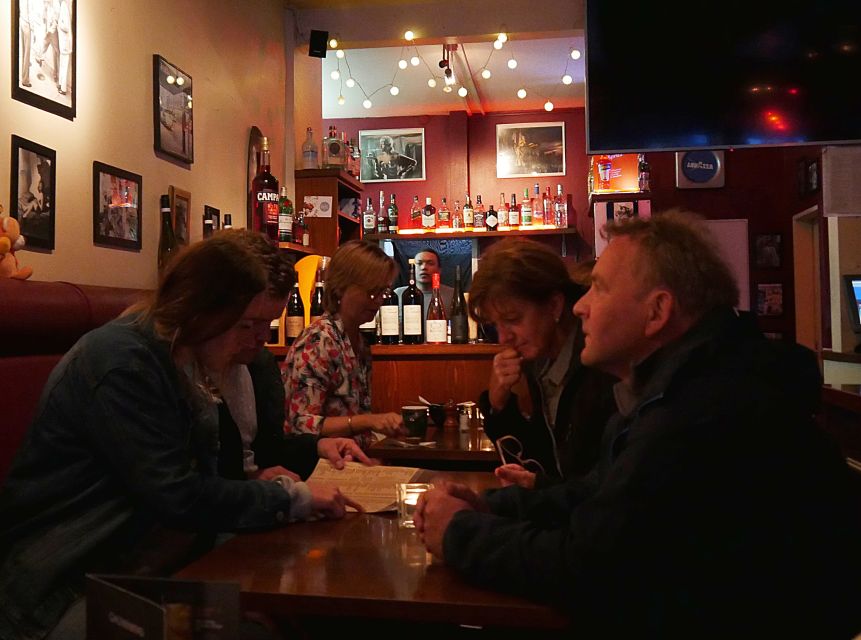
You may eat while standing or seated, depending on the stop. At some restaurants, the group may need to take the food outside. That makes the tour less suitable if you need a guaranteed table at every tasting, but it also reflects the casual nature of the outing.
What the guide adds to the experience
A local guide makes the difference between sampling food and understanding the neighborhood. The strongest feedback about this experience centers on the guides, especially their ability to keep the walk interesting and answer questions.
Henning is praised for being friendly, telling good stories, and taking time with questions. One group that expected to join other people ended up touring alone with him, which shows that the group size can sometimes be smaller than expected. Martin is described as motivated, and Patricia is singled out for making the tour informative and enjoyable.
Those details are useful because they point to the kind of guiding you can expect: personal, conversational, and focused on the quarter rather than on memorized facts alone. Of course, the guide assigned to your date may be different, and no walking tour can guarantee a particular person.
A private group option is available. If you are traveling with family or friends, that can make the $589 group price more reasonable and give you more control over the conversation. For a full group of 10, the listed cost works out to about $58.90 per person before drinks. For two people, it becomes a much more expensive outing.
Is the $589 group price good value?
The price needs careful thought. At $589 per group of up to 10, this is not a bargain-priced public food walk. It is best viewed as a private or small-group experience that combines guiding, neighborhood history, and five tastings.
For a group of 10, the cost is easier to justify. Each person is paying less than $60 for three hours, five food samples, and a local guide. That compares more favorably with booking several separate meals and trying to learn the quarter’s story on your own.
For a couple, the value is harder to judge. You are paying the group minimum rather than a low per-person rate. The food alone will not justify the price. You are paying for the guide’s time, the route, the local context, and the convenience of moving between several places without planning it yourself.
I would book it for a group that values a private outing and wants a guide to shape the experience. I would hesitate if your main goal is simply to eat as much as possible for the least money. The portions are tastings, not a promised full lunch or dinner.
The overall rating is 4.5 from 272 reviews, which supports the idea that the experience usually delivers well. The strongest praise is directed at the guides, the useful information, the restaurants, and the five food samples. That tells you where the value lies.
Who will enjoy this St. Georg walk?
This tour is a good match for you if you like food with a story attached. It suits first-time visitors who want a guided introduction to St. Georg, as well as Hamburg residents who want to learn more about a familiar quarter.
Several people who knew Hamburg already found new information on the walk. That is a good sign for anyone who has visited the city before but has not explored St. Georg closely.
You should also consider it if you enjoy social and cultural context. The tour does not avoid the neighborhood’s unusual mix of nightlife, religion, schools, and local restaurants. It gives you a way to discuss how those parts of the quarter fit together.
Vegetarians can join, but ask ahead if you need precise ingredients or guaranteed substitutions. People who want to sit at a table for every course should also think twice. The format includes standing and possibly eating outside.
This is less ideal for someone seeking famous sights, a formal restaurant meal, or a tightly timed historical tour. St. Georg is the subject, and the food is the way into it.
Practical advice before you book
Allow the full three hours. The tour is designed as a complete neighborhood experience, not a quick stop between major attractions.
Wear comfortable shoes, since the route is a walking tour. The pace is gentle, but you will still spend a good part of the afternoon or evening on your feet.
Meet at the Ohnsorg Theater on Heidi-Kabel-Platz. Confirm the starting time when you book, since start times depend on availability.
Bring room in your budget for drinks. The five tastings are included, but beverages are not.
If you are part of a larger group, calculate the cost per person before deciding. The group price becomes more attractive as your party gets closer to 10 people.
You can cancel up to 24 hours in advance for a full refund, and you can reserve now and pay later. Those options help if your Hamburg plans are still shifting.
Should you book this St. Georg food tour?
Book it if you want to understand one of Hamburg’s most distinctive quarters through its food, stories, and social contrasts. The strongest reason to choose it is the combination of five tastings with a guide who can explain why St. Georg looks and feels the way it does.
I would especially recommend it for a group of friends, couples who value guided local context, and repeat visitors who want something beyond Hamburg’s standard sights. Henning, Martin, and Patricia have all been praised for making the walk informative and enjoyable, though your guide may be someone else.
Skip it if you want a cheap meal, a fixed menu, or guaranteed seating at every stop. For everyone else, this is a thoughtful way to spend three hours in a quarter that rewards curiosity.
FAQ
Where does the St. Georg culinary tour meet?
The meeting point is Heidi-Kabel-Platz 1, 20099 Hamburg, in front of the Ohnsorg Theater.
How long does the tour last?
The guided walking and culinary tour lasts three hours.
How many tastings are included?
Five different tastings at various local bars and restaurants are included.
Are drinks included?
No. Drinks are not included in the tour price.
Is the tour suitable for vegetarians?
Yes. The tour is also suitable for vegetarians.
Can I take the tour in English?
Yes. The live tour guide is available in English or German.
Is this a private tour?
A private group option is available. The listed price is $589 for a group of up to 10 people.
Do I need to sit down for every tasting?
No. Food can be enjoyed standing or seated, depending on the location. At some restaurants, the group may need to eat outside.
Can I cancel the booking?
Yes. You can cancel up to 24 hours in advance for a full refund. You can also reserve now and pay later.
New food tours we have reviewed in Germany
- East Meets West: Berlin Food Culture & Street Art★ 5.0 · 157 reviews
- Classic Bites and Culinary Trends Neighborhood Food Tour in Berlin★ 5.0 · 191 reviews
- Private Tour: Daytime Food Tour Trends & Classics★ 5.0 · 24 reviews
- Small-Group Berlin Sightseeing and Food Tour of Prenzlauer Berg and Mitte★ 5.0 · 25 reviews
- Private Berlin Street Food Tour by Bike★ 5.0 · 87 reviews
- The 10 Tastings of Berlin Kreuzberg Private Food Tour With Locals★ 4.5 · 31 reviews
- Berlin Evening Culinary Tour – Award Winning★ 5.0 · 118 reviews
- The Berlin Culinary Experience: A Regional & Cultural Food Tour★ 5.0 · 79 reviews
Germany Food Tours, compared.
Hamburg: Elbphilharmonie Plaza and HafenCity Food Tour
Read our review →
Berlin Center Food Tour with 8+ Authentic Local Tastings
Read our review →
Munich: Beer and Food Tour with Dinner & Oktoberfest Museum
Read our review →


Browse the lists this tour appears in