
Review · WINE TOURS
Mykonos: Cooking Class with Food and Wine
The best part of this Mykonos cooking class is that you leave the beach-and-bar version of the island behind and spend time in a real local home. You’ll visit the organic garden, hear about Mykonian food and culture, and work alongside a host such as Teta or Martina. I especially like the hands-on menu and the relaxed meal at the end, where you eat the food you helped prepare. The main drawback is the price: at $176 per person, this is not a budget meal, and the fixed menu may not suit picky eaters.
I also like the easy pickup service, the chance to meet people from other countries, and the balance between cooking instruction and Greek hospitality. Just note the timing carefully: the booking information lists five hours, while the description also refers to a six-hour program. Pickup must be arranged by 3 pm the day before, and late arrivals can disrupt the whole schedule.
Key points at a glance
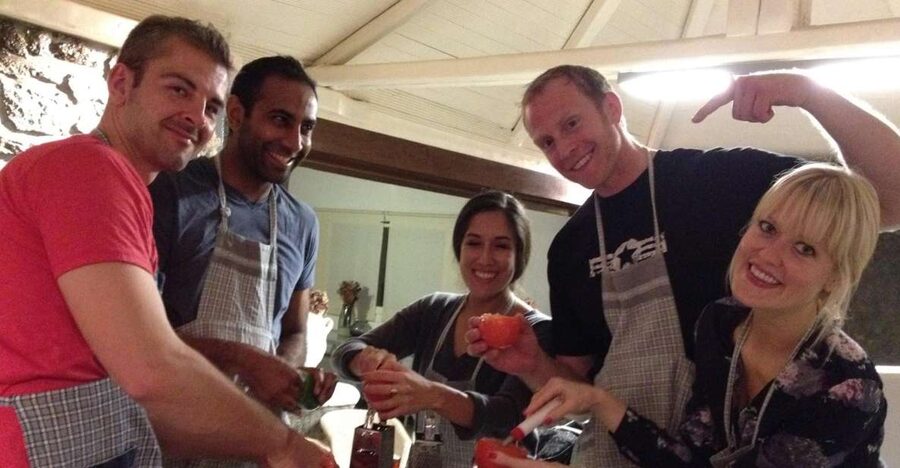
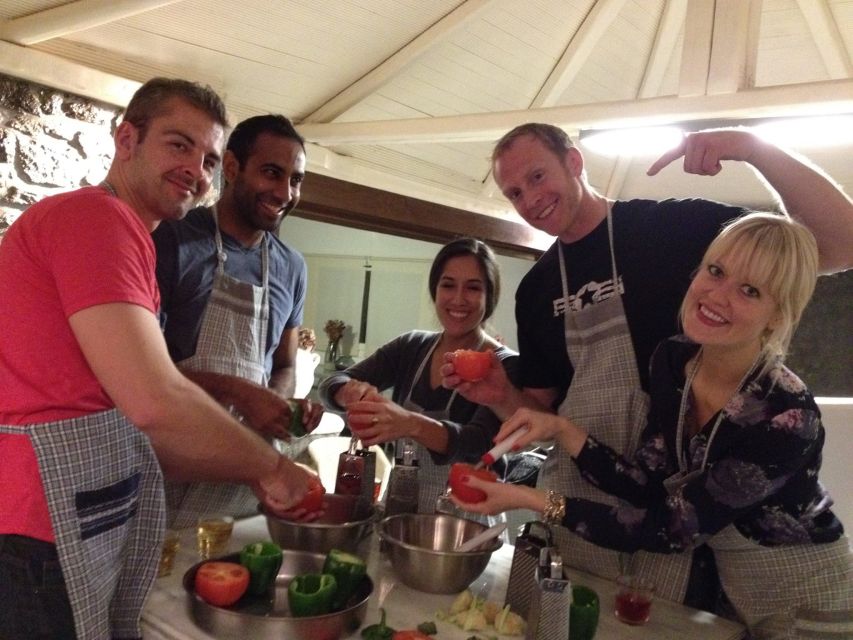
- A home kitchen rather than a restaurant: You cook and eat in a welcoming Mykonian home, with the setting doing much of the cultural work.
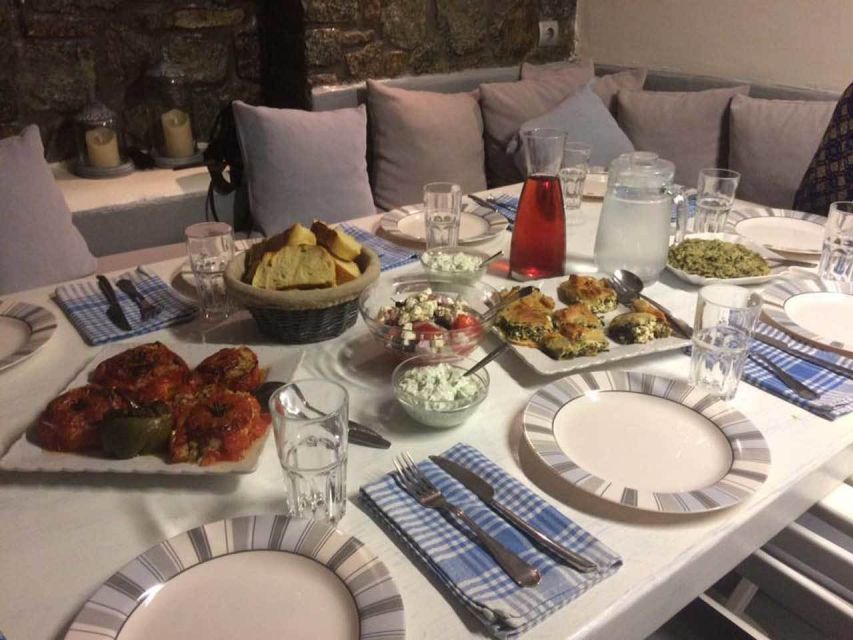
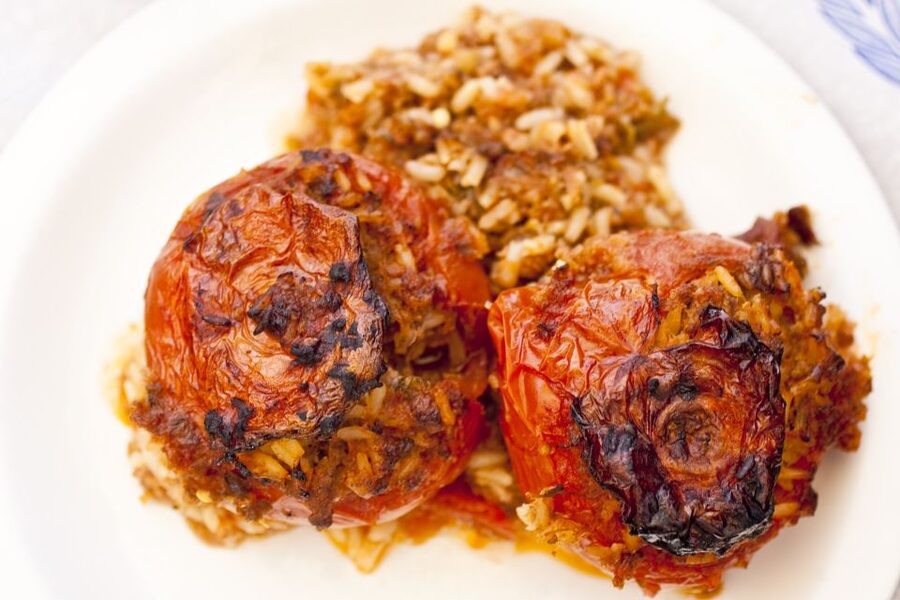
- A full traditional menu: Expect tzatziki, spinach pie, stuffed peppers and tomatoes, beef with orzo, and other Greek dishes.
- Food before the cooking starts: Dakos with kopanisti and tomato, louza, wine, and Cretan raki get the afternoon or evening going.
- Hosts who shape the experience: Teta, Martina, Matina, Eleni, Helena, and other members of the team have led classes, depending on the date.
- Transport is part of the deal: Pickup and drop-off cover most of Mykonos, but remote areas may cost an extra €10 per person round trip.
- Best for social, food-minded visitors: The class suits couples, families with children, solo visitors, and anyone who wants more than another taverna meal.
Why a Mykonos home kitchen matters
Mykonos is famous for whitewashed lanes, expensive beach clubs, and dramatic summer crowds. Those are part of the island, but they do not tell you much about how people eat at home. This class offers a useful change of pace. You see the island through its pantry, cooking habits, family hospitality, and local produce.
The setting is Mykonian Spiti, a home-style venue run by the Mykonian Spiti team. The house is described as charming and comfortable, with indoor and outdoor furnishings that make the cooking and meal feel informal rather than staged. You are not simply watching a chef prepare a demonstration meal. You take part, then sit down together to eat it.
That difference matters. A restaurant can show you what Greek food tastes like. A cooking class can show you how it comes together, why certain ingredients are used, and which simple methods you can repeat at home. I would not expect a professional culinary-school lesson, but you should expect practical instruction aimed at ordinary home cooking.
The group setting adds another layer. The class brings together couples, families, solo visitors, and people from several countries. The cooking gives everyone an easy reason to talk. By the time the meal is served, the room often feels more like a shared dinner than a formal tour.
More Cooking Classes in Greece
- Athens: Food Market Visit and Cooking Class with Wine
★ 4.9 · 1,087 reviews - Rhodes Wine & Food Tour: 10 Meal Course Lunch, Wine Tasting, Cooking Class
★ 5.0 · 109 reviews - Santorini Family Farm Food & Wine Tour with Cooking Class
★ 5.0 · 107 reviews
Starting with dakos, louza, wine, and raki
The experience begins with local snacks and drinks before you head fully into the kitchen. Dakos, a Cretan-style barley rusk topped with tomato and kopanisti cheese, introduces you to the salty, sharp side of Greek island food. Louza, made from sun-dried pork fillets, gives you a taste of a traditional preserved meat.
Wine accompanies the meal, and Cretan raki is included as a small local tasting. Additional alcoholic drinks are not included, so do not assume the package covers every bottle or spirit served during the day. Water is also available during the class, which is welcome during Mykonos’s warmer months.
This opening snack is more than filler. It lets you taste before you cook and gives the host a natural way to explain ingredients and food customs. The amount of time spent here may vary with the group and the host, but it helps set an easy pace rather than rushing straight to chopping boards.
If you do not drink alcohol, the food and instruction remain the main point of the experience. The included wine is part of the social rhythm, not the sole attraction. Families should also be comfortable with the presence of wine and raki, even though children are welcome when accompanied by an adult.
A visit to the organic garden
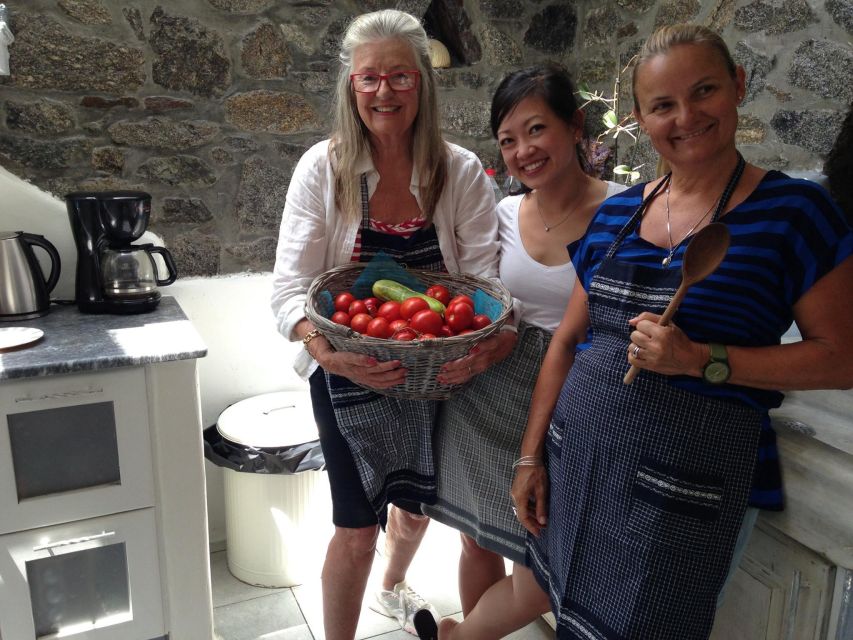
Before or around the cooking session, you can visit the property’s organic vegetable garden. This is a small but valuable part of the program because it links the menu to the place where ingredients grow. It also gives you a break from the kitchen and a clearer sense of the home setting.
Do not expect a farm tour with a long agricultural lecture. The garden visit is best understood as a short look at the produce and domestic life behind the meal. It helps explain why Greek cooking often relies on a small number of fresh ingredients, treated simply and seasoned with care.
The garden is also one reason to allow the full afternoon or evening. This is not an in-and-out class squeezed between two sightseeing stops. The pace includes food, conversation, preparation, and sitting down together. That slower format is a strength if you want a social experience, but it may feel too long if you are looking only for a quick cooking lesson.
What you cook: tzatziki, spanakopita, gemista, and orzo
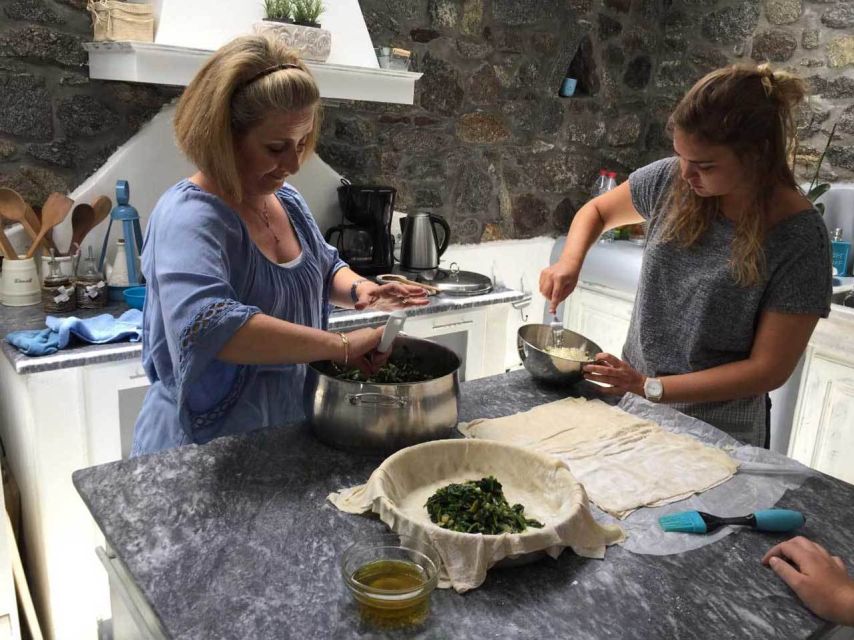
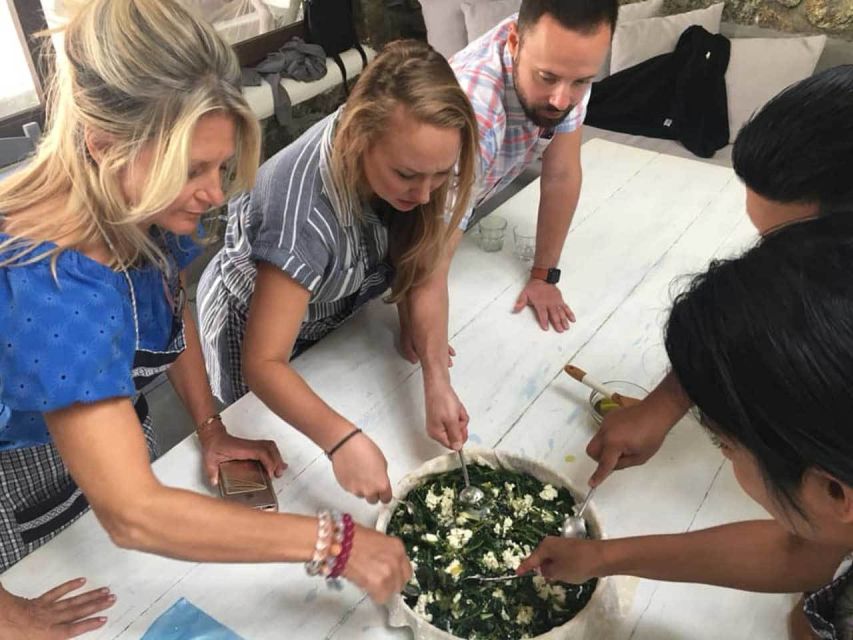
The main lesson covers several familiar Greek dishes. You make tzatziki, prepare spinach pie, stuff peppers and tomatoes, and work on beef with orzo. The menu gives you a broad look at Greek cooking rather than focusing on one dish.
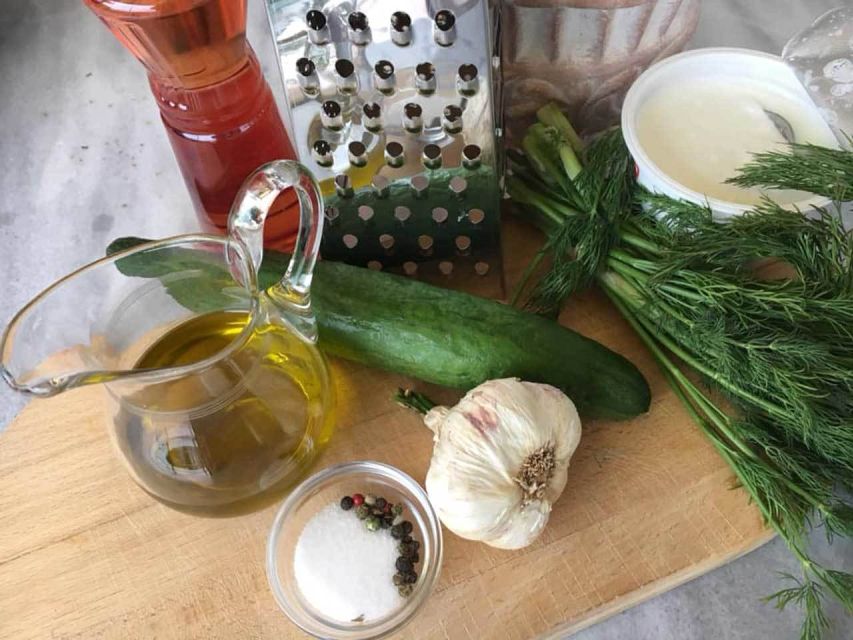
Tzatziki is a useful starting point because it is simple enough to make at home but still depends on details such as texture, seasoning, and the balance between yogurt, cucumber, garlic, and herbs. The spinach pie, or spanakopita, introduces pastry and filling. Stuffed peppers and tomatoes, often called gemista, show how vegetables can become the main structure of a meal.
Beef with orzo gives the class a warmer, more substantial dish. Together, these recipes create a proper Greek meal with dips, vegetables, pastry, and a main course. You are not just preparing snacks for a demonstration. You help assemble a dinner that feels complete.
The instruction is designed to keep everyone involved without overwhelming beginners. The hosts explain the steps, demonstrate techniques, answer questions, and move around the group. The level should also suit more experienced home cooks, since the value comes from seeing the Greek approach to familiar ingredients rather than mastering complicated restaurant methods.
The menu is fixed, but alterations can be made for known allergies. Tell the operator about allergies when booking, not when you arrive. The class can adapt when necessary, but it is not presented as a custom menu service. If you dislike several of the listed dishes, ask before paying, since special menus are not part of the standard package.
More Wine Tours in Greece
- Santorini: Wine Tasting Tour with Snacks
★ 5.0 · 693 reviews - From Chania: Olive Oil, Wine, Cheese & Honey Tasting Tour
★ 4.6 · 490 reviews - Mykonos: Winery Vineyard Experience with Food & Wine Tasting
★ 4.9 · 446 reviews - PREMIUM Semi-Private Athens Afternoon Food Tour & Wine Tasting
★ 5.0 · 363 reviews
The hosts make the difference
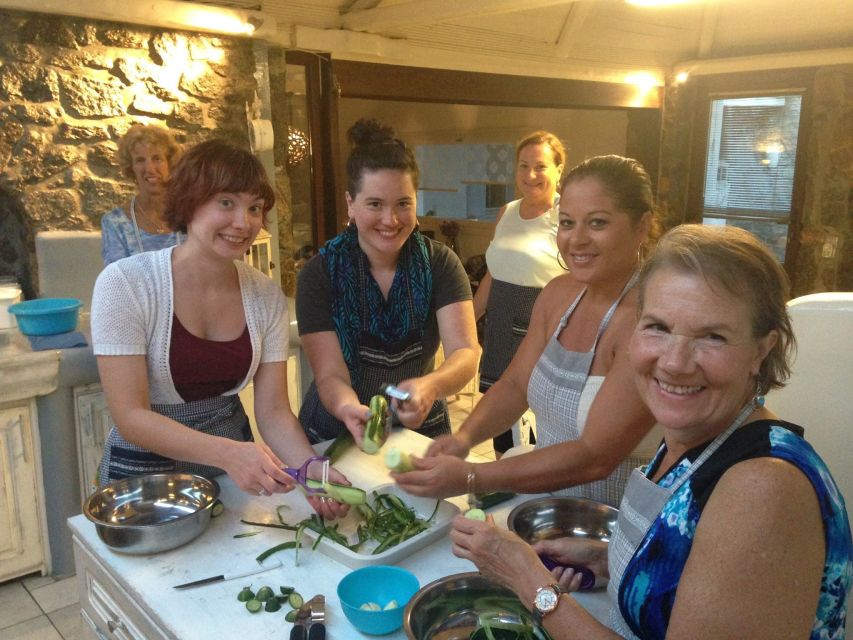
The activity is hosted by a rotating team, so the person leading your class may not always be Teta. Teta is named as the main hostess and chef, while Martina, Matina, Eleni, Helena, Rita, Christina, Kristina, and others have also led sessions at different times.
That matters because the host provides much of the personality. Teta is associated with practical cooking tips, stories about Mykonos, and a lively sense of humor. Martina has been praised for keeping the group involved while explaining Greek food and culture. Other hosts, including Eleni and Helena, have also led classes for adults and children.
You should expect the teaching style to be warm and conversational rather than formal. The host may ask about your own cooking, compare food traditions, and explain how dishes fit into Greek life. The cultural material is not a separate lecture. It comes out naturally while you prepare food and share the table.
The assistant cook also helps keep the kitchen moving and makes sure wine and water are available. This is useful in a group class because one host cannot chop, teach, answer questions, and monitor every dish at once.
The class size can vary. One particularly small session had six people and felt much like cooking in a friend’s kitchen. A larger group may feel more like a social workshop, with less individual attention. If you want a private lesson, do not assume the standard booking guarantees one. A small group may happen in quieter periods, but it is not promised.
The meal you helped make
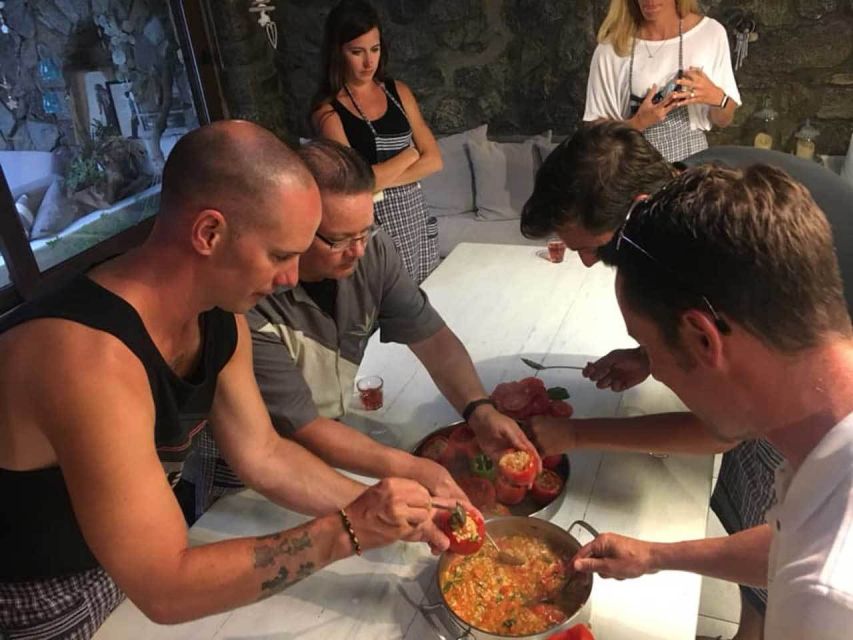
The sit-down meal is the payoff, but it is also where the social side of the class becomes clearest. You share the dishes with the group, continue the conversation, and have wine with the food. The setting is part of the pleasure: a home-style room and outdoor space feel different from a busy restaurant dining room.
I like this format because it makes the food memorable. You remember not only the taste of the spanakopita or stuffed tomatoes, but also the work that went into them. At home, you may not reproduce every recipe perfectly, yet you leave with enough understanding to try the dishes again.
The class is also a good choice for a solo visitor. Cooking gives you a natural way into the group, and the shared dinner removes the awkwardness that can come with eating alone. Couples and honeymooners can enjoy the setting as a relaxed evening activity, while families can use the hands-on work to keep children involved.
Children are welcome with an adult. The suitability will depend on the child’s age, attention span, and comfort around a kitchen, but the experience has hosted a party that included a nine-year-old and a teenager. Parents should treat it as a real cooking class, not a children’s entertainment program.
Is $176 per person good value?
At $176 per person, this is a premium activity. You are paying for more than ingredients and instruction. The price includes hotel transport in most areas, the cooking class, lunch or dinner, unlimited wine, selected raki, local treats, a small bag of local products per couple, kitchen protective equipment, accident insurance within the estate, liability coverage, taxes, and commemorative photos.
The transport has real value on Mykonos, where getting around can be awkward and taxis are not always simple to arrange. Pickup is included from hotels across most of the island, as well as the old port and new port. Remote places such as Elia, Kalafatis, Agrari, Panormos, Super Paradise, Paradise, and Kanalia may not be covered by the standard service. Remote villas, apartments, or houses can incur an extra €10 per person round trip, paid in cash to the driver.
I would call the price fair for someone who values a full cultural activity, a substantial meal, and door-to-door transport. It is less compelling if you mainly want to learn one or two recipes cheaply. You could eat well for less at a local restaurant, but you would not get the garden visit, instruction, social meal, or home setting.
The small bag of local products is provided one per couple, not one per person. Purchases of extra traditional products and cookbooks are separate. Custom decoration and a special menu for an event are also available only by special order, so those should not be assumed to be part of the normal booking.
Getting pickup right on Mykonos
The transfer is convenient, but only if you send clear information. Provide your preferred pickup point and location by 3 pm the day before. A hotel name is enough for a hotel pickup. If you are arriving by cruise ship, provide the ship name and specify the old port or new port as needed.
For an apartment, house, villa, or accommodation without a clear name, send a Google Maps location or identify a nearby hotel. The company may select the most practical meeting point, and an extra cost may apply for remote properties.
Your ride waits only up to 15 minutes. A late departure does not affect just your own schedule. It can delay the transfer for other participants and shorten the cooking program. I would be ready early, especially if your pickup point is on a busy road or at a large resort.
The precise pickup time is provided after confirmation. Since the published information refers to both five and six hours, check the confirmed schedule rather than planning another fixed activity immediately afterward. A cooking class with food, wine, and a shared meal deserves some breathing room.
Who should book this class?
Book it if you want to understand Mykonos through food rather than only see its famous sights. It is especially suited to:
- Couples looking for a relaxed half-day or evening activity
- Solo visitors who enjoy meeting people over a shared meal
- Families with children who can take part in supervised kitchen work
- Home cooks who want practical Greek recipes
- Visitors who value local contact more than a polished restaurant setting
- Anyone tired of repeating the same beach, shopping, and nightlife routine
Think twice if you need a fully custom menu, dislike group activities, or want a short demonstration with no social meal. The fixed menu and rotating hosts mean the experience can vary in personality, even though the basic structure stays the same.
The English-language format works well for international visitors. The host or greeter speaks English, and the cooking is shown as well as explained, which helps keep the lesson accessible even when kitchen terms move quickly.
Final verdict: book it for the table, not just the recipes
I would book this class if I had several days on Mykonos and wanted one experience that combined food, culture, transport, and conversation. The strongest feature is the feeling of being welcomed into a home setting, followed by a meal that you helped create.
The $176 price is high, but the package is substantial and includes transport, food, wine, instruction, and local touches. Set aside at least five hours, confirm your pickup carefully, report allergies early, and arrive on time.
If your idea of a great Mykonos day includes learning something useful, laughing with people you just met, and eating a traditional Greek dinner in a comfortable home, this is a strong choice. If you want a low-cost activity or a tightly timed cooking lesson, spend your money elsewhere.
FAQ
How long does the Mykonos cooking class last?
The booking information lists the activity as five hours, while the program description also refers to six hours. Check the confirmed start and end times before booking other activities on the same day.
What dishes will I prepare?
The menu includes tzatziki, spinach pie, stuffed peppers and tomatoes, and beef with orzo. The exact presentation may vary, but the menu and recipes are generally fixed.
Is food and drink included?
Yes. Lunch or dinner is included, along with unlimited wine, selected Cretan raki, and local snacks such as dakos with kopanisti and tomato and louza. Other alcoholic drinks are not included.
Is hotel pickup included?
Pickup and drop-off are included from most areas of Mykonos, as well as hotels, the old port, and the new port. Remote locations and some villas, apartments, and houses may require a €10 per person round-trip payment in cash.
What information is needed for pickup?
Send your preferred meeting point and location by 3 pm the day before the activity. Provide your hotel name, cruise ship name, or a Google Maps location for an unnamed accommodation.
Can children join the cooking class?
Yes. Children are welcome when accompanied by an adult. The class has hosted parties including children, but it remains a hands-on cooking activity rather than a dedicated children’s program.
Can the menu be changed for allergies?
Known allergies should be provided when booking. The menu is fixed, but alterations can be made when necessary. Custom menus for personal preference or special events are not part of the standard package.
More hands-on workshops in Greece
- Naxos: Food Walking Tour & Cooking Class with Meal & Drinks
★ 4.9 · 86 reviews - Sushi Making Tokyo Roll and Authentic Japanese Sushi Class
★ 5.0 · 3,971 reviews - Authentic Pizza Making Class in Naples with Appetizers and Drink
★ 5.0 · 3,178 reviews - Tokyo: Roll and Authentic Sushi Making Class in Asakusa
★ 4.9 · 1,957 reviews
New food tours we have reviewed in Greece
- Walking “Food tasting tour” in the town of Chania★ 5.0 · 297 reviews
- Sunset Craft Beer & Food Tour – Chania Old Port★ 5.0 · 86 reviews
- Cruise Ship Guest Beer & Food Tour – Chania Old Port★ 5.0 · 26 reviews
- Gastronomy tour and wine tasting in traditional villages★ 5.0 · 32 reviews
- The Delicious Chania Street Food Tour★ 5.0 · 138 reviews
- Eat & Crete Food Tour [non-touristy] Chania Villages★ 5.0 · 25 reviews
- Chania Walking Food Tours Crete with a local!★ 4.5 · 61 reviews
- Chania Walking Food And Wine Night Tour★ 4.5 · 31 reviews
Wine Tours, compared.
Montserrat Half-Day Tour with Tapas and Gourmet Wines
Read our review →
Winner 2025 Undiscovered Lisbon Food & Wine Tour by Eating Europe
Read our review →
From Porto: 2 Wine Regions, Farm-to-Table Lunch & Boat
Read our review →
Winner 2025 Florence Sunset Food & Wine Tour by Eating Europe
Read our review →
Authentic Parisian Gourmet Food Tour with 10 Local Dishes & Wines
Read our review →
Barcelona: Tapas Walking Tour with Food, Wine, and History
Read our review →
Lisbon: Food and Wine Small Group Walking Tour
Read our review →
Lisbon Small-Group Portuguese Food and Wine Tour
Read our review →Browse the lists this tour appears in