
Review · FOOD WALKING TOURS
Tangier: Food Walking Tour
Tangier’s best meal may not arrive at a single restaurant. This three-hour walk leads you from Sour Meêgazine through M’Sallah, Grand Socco, the old town, and Place de la Kasbah, stopping for local food along the way. You might taste caliente, bissara, stuffed dates, bread, olives, pastries, smoothies, and tagine before finishing near Café Hafa.
I like the mix of food stops: market vendors, small eateries, cafés, and sit-down places each show a different side of Tangier. I also like the way the guides connect every bite to daily life, religion, family cooking, and the city’s past. Guides such as Rabab, Mohammed, Ismail, Ahmed, and Anas have been praised for adjusting the pace and food choices to suit their groups.
The main consideration is the walking surface. Narrow old-town lanes, steps, and uneven ground make this a poor fit for wheelchair users or anyone with a serious mobility limitation. Come hungry, wear comfortable shoes, and remember that transport to the meeting point is not included.
Key points to know before you book
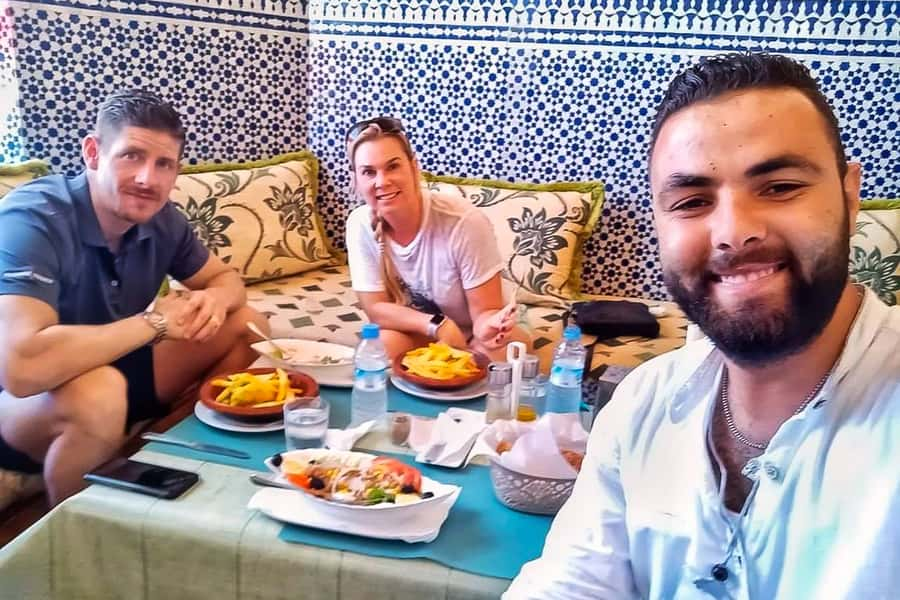
- Six tasting stops plus a full meal: This is more than a few sample bites. Plan on eating steadily for three hours.
- A walk through real Tangier districts: The route covers M’Sallah, Grand Socco, the old town, and Place de la Kasbah.
- Local foods with useful context: You may try caliente, bissara, dates, olives, pastries, smoothies, and tagine while learning how they fit into Moroccan life.
- Guides who adjust to the group: Rabab, Mohammed, Ismail, Ahmed, and Anas have all led praised tours, with dietary and family needs taken into account.
- A practical first-day activity: The route gives you food ideas, market bearings, and suggestions for where to buy more after the tour.
- A flexible Ramadan format: During Ramadan, the experience may change into an iftar meal with the guide and the guide’s family.
Starting at Sour Meêgazine
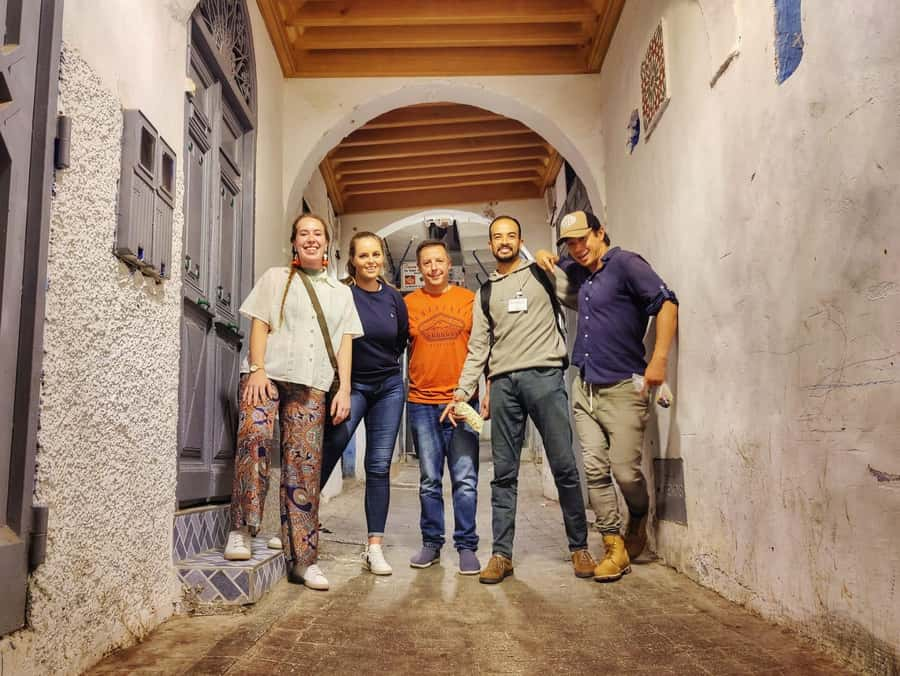
Your meeting point is next to the third cannon, the one in the middle, at Sour Meêgazine in Tangier. That detail matters because old-city meeting points can be easy to miss, so give yourself time to find the cannon rather than arriving at the last minute.
The walk begins with the city around you, not with a long formal introduction. You start moving through the historic districts and learn about the food as you encounter it. That keeps the three hours active and gives you a quick sense of how Tangier works beyond its main sights.
Your guide speaks English. The individual guide can vary, but the people who have led this experience include Rabab, Mohammed, Ismail, Ahmed, and Anas. Their role is more than ordering food. They explain customs, local ingredients, family habits, religion, and the parts of town you are passing through.
This is especially useful in Tangier, where a market stall or modest café may tell you more about ordinary life than a polished restaurant. You can ask questions as you walk, and the more specific your questions are, the more useful the experience becomes.
More Food Walking Tours in Morocco:
- Marrakech: Authentic Moroccan Food Walking Tour & Dinner
★ 4.8 · 261 reviews - Rabat: Walking Food Tour
★ 4.9 · 48 reviews - Reykjavik Food Walk – Local Foodie Adventure in Iceland
★ 5.0 · 18,952 reviews
M’Sallah: a first taste of local life
The first major stop is M’Sallah, where you spend about 45 minutes on guided exploration and food tasting. This is a good opening section because you are still fresh and can pay attention to the setting as well as the food.
M’Sallah is part of the old Tangier area, with traditional buildings, narrow streets, and local activity. You may see fresh produce sellers, artisans, and residents handling the ordinary business of the day. The point is not simply to pass through a market. It is to see how food moves from vendor to kitchen and how people shop for everyday meals.
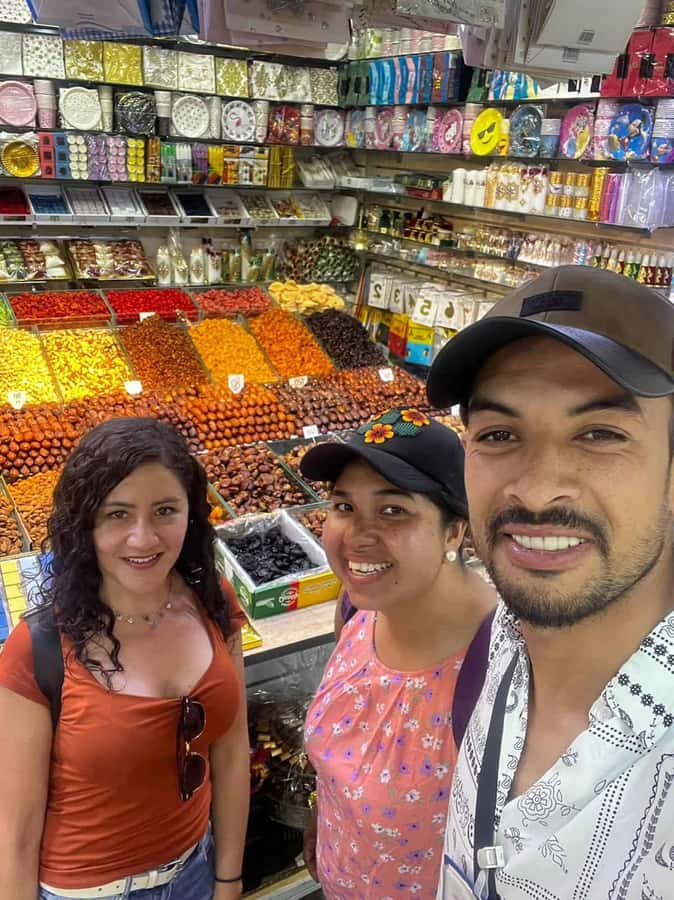
Possible tastes include caliente, a warm chickpea-based dish often served as a simple local snack, and bissara, a filling soup made from fava beans. The tour also highlights handmade products such as stuffed dates. Exact dishes can change, but you should expect food with a strong local identity rather than international restaurant fare.
This first section can help you decide how adventurous you want to be for the rest of the afternoon. If you have questions about ingredients, ask before eating. The guides are used to handling dietary needs, including vegetarian, gluten-free, and lactose-free requests, but you should give those details in advance.
Grand Socco and the market rhythm
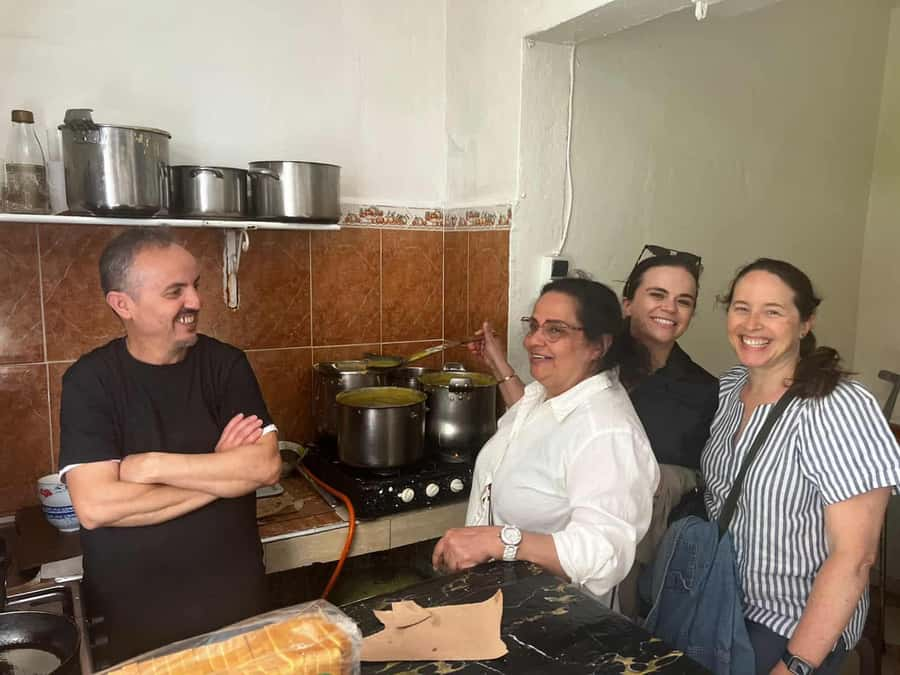
The route continues to Grand Socco for another 45 minutes of sightseeing and tasting. This is one of the points where the city opens up, and it gives you a different feel from the tighter lanes of the old town.
Grand Socco is a useful place to watch the mix of local movement, shopping, and street activity. Your guide helps you read the scene, pointing out what people buy, how products are prepared, and which foods are common in Tangier homes. You are not just being taken from one snack to the next. You are learning what belongs to a normal day in the city.
A food walk works well here because the tastings break up the sightseeing. You might sample bread, olives, a meat pastry, or a drink such as a fresh smoothie. These are small details, but they help you understand the range of Moroccan eating habits, from quick market food to a slower shared meal.
I also like this part for practical reasons. You can ask where to return later, what to buy as an edible souvenir, and which local products travel well. One guide has helped visitors find additional food after the tour, which is useful if you want to continue exploring on your own.
The route is not described as a race. Several people who took it with children found that the pace could be adjusted, and the food was spaced between views and walking. Still, you should expect to stand, walk, and eat several times rather than settle into one place for the whole morning.
Place de la Kasbah and the main meal
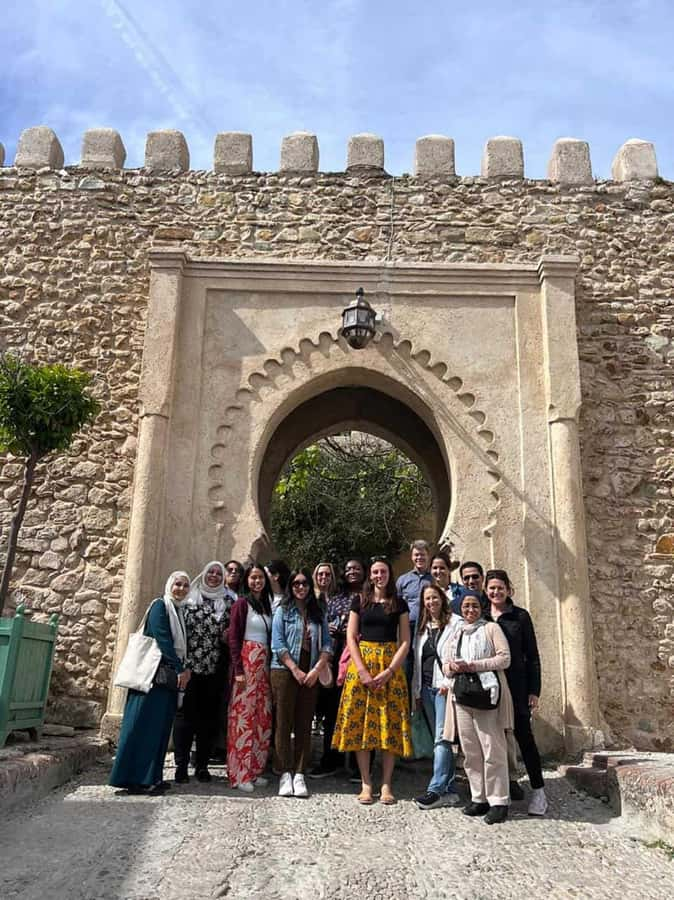
The longest section lasts about an hour at Place de la Kasbah. Here, the food stops and the setting carry equal weight. The Kasbah’s old lanes, architecture, and elevated views give you some of the most appealing photo opportunities on the route.
Your guide discusses Tangier’s past, traditions, and modern lifestyle while leading you through the district. The conversation may touch on why certain foods are eaten, how dishes differ between home kitchens and restaurants, and how religious customs shape the daily schedule.
This is also where the meal becomes more substantial. The experience includes six tasting stops and a full meal, so do not think of the tour as a light snack crawl. You may already feel full before lunch arrives. One guide handled this by keeping the food moving at a comfortable pace, and a previous group still found room for a delicious tagine after several earlier tastings.
Examples of foods enjoyed on the route have included soup, local bread, olives, meat pastry, smoothies, and tagine. These examples should give you a sense of the range, but the exact menu is not guaranteed. Availability, season, dietary needs, and the guide’s choices can all affect what you eat.
The Kasbah portion is likely to be the highlight for anyone who wants more than food. You get the old city, local stories, views, and a proper meal in one stretch. The tradeoff is that the lanes may be tight and uneven, with walking that is not suitable for wheelchair users or people with significant mobility problems.
More food tours in Morocco:
- Marrakech: Street Food Tour with a Local Guide
★ 4.9 · 3,119 reviews - Marrakech: Street Food Tour by Night
★ 4.8 · 2,838 reviews - Authentic Moroccan Food Tour in Marrakech with Dinner
★ 5.0 · 1,423 reviews - Marrakech: Jemma El Fnaa Food Tour with Dinner
★ 4.7 · 394 reviews
A café break before Café Hafa
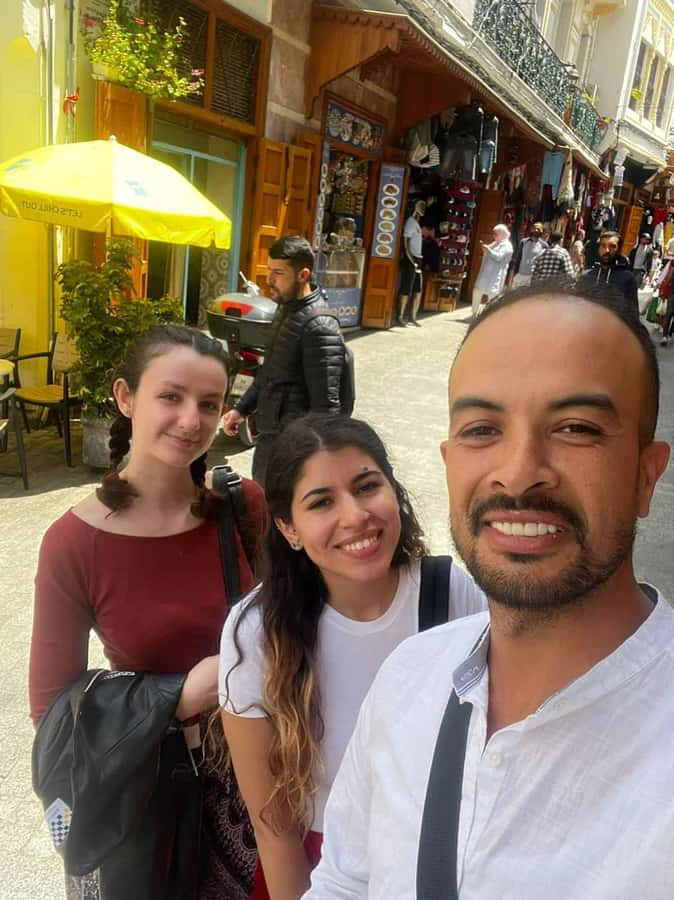
The itinerary includes a 30-minute stop at a local café. This is a welcome pause after several food tastings and gives you time to sit, talk, and digest.
The café is also part of the cultural lesson. Moroccan cafés are social places, and your guide can explain what people order and how the café fits into daily life. Because the guide remains with you, this is a chance to ask follow-up questions that may not occur while you are crossing a market.
After the café, the tour finishes at Café Hafa. The finish is well chosen for a walking tour because it leaves you in a place associated with views and a relaxed end to the route. You are not returned to your starting point, so plan your onward route before you begin.
Transportation is not included. You are responsible for getting to Sour Meêgazine and arranging your way onward from Café Hafa. For a first day in Tangier, this can work nicely because you can continue exploring from the finish, but it requires a little planning.
What the food tells you about Tangier
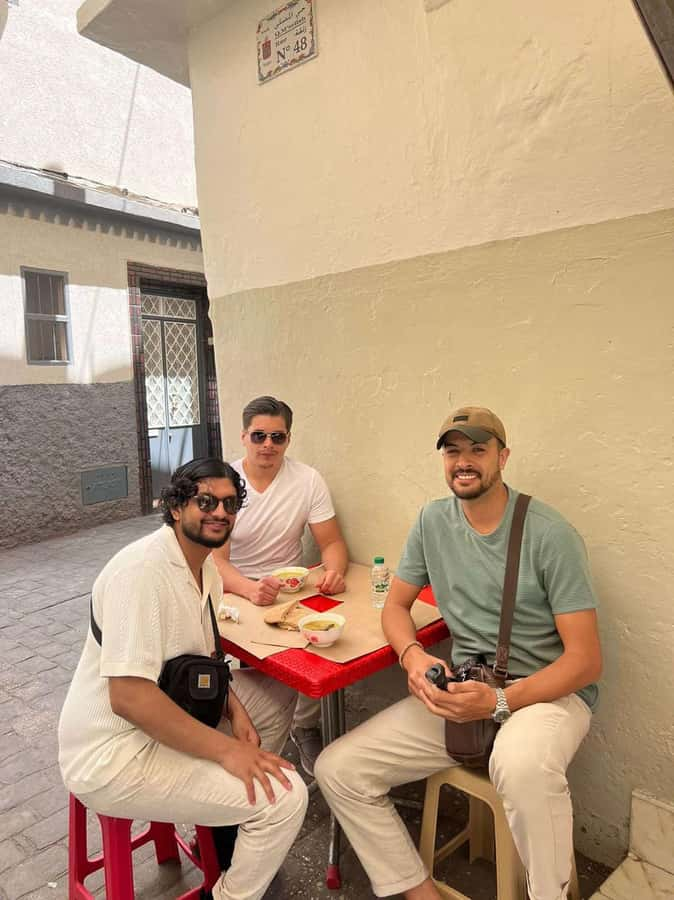
The strongest part of this experience is the connection between eating and place. A dish such as bissara is not just a soup to sample. It is a way to talk about humble ingredients, comfort food, and what people eat during an ordinary day.
Caliente and stuffed dates show another side of the city’s food culture: small handmade foods that are easy to eat while moving through town. Bread, olives, pastries, smoothies, and tagine widen the picture. You get quick bites, market produce, sweet foods, drinks, and a shared main dish.
You may also learn that Moroccan food is not one fixed menu. Families prepare dishes differently, and guides can explain those differences from personal experience. That is why asking about home cooking is worthwhile. You may hear how a dish changes from one household to another, rather than receiving a standard restaurant explanation.
The tour is particularly useful for cautious eaters. You can see food being sold and served in context, ask what is in it, and have a guide help you choose. At the same time, adventurous eaters get access to small places and local products they might not find alone.
Guides and the personal side of the walk
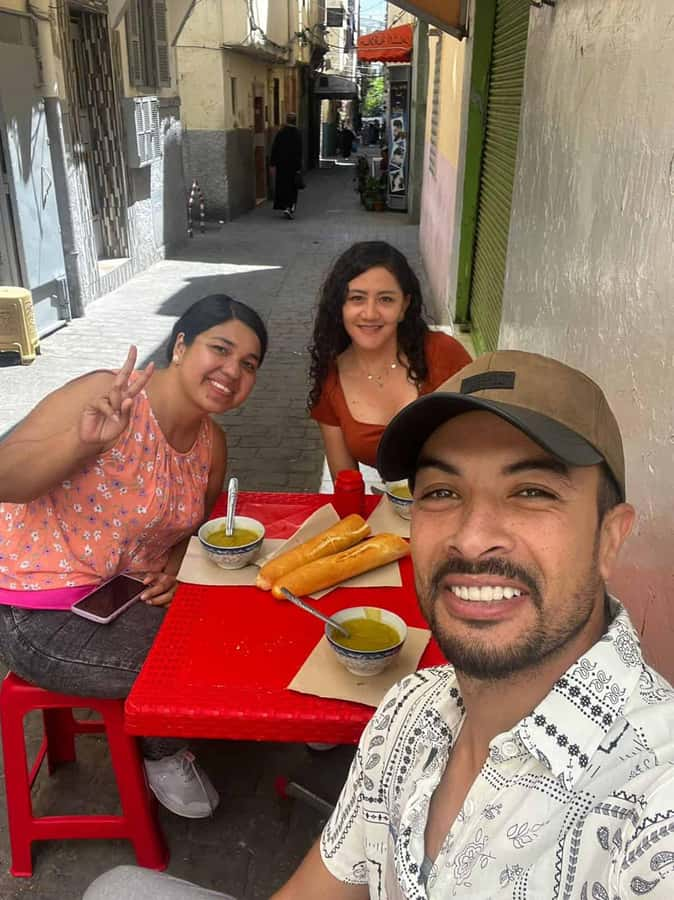
A good food walk depends heavily on the guide, and this one has several named guides associated with strong experiences. Rabab has been praised for knowing the vendors, adjusting the route for children, and offering special Ramadan arrangements. Mohammed has been described as engaging and well informed about the Medina, local foods, and the region’s past.
Ismail is known for connecting each food stop with a story about Tangier, while Ahmed has led groups at a calm pace. Anas has been praised for his affection for the city and for helping visitors feel comfortable in places that may be unfamiliar.
The guide’s local relationships matter. You are not simply handed a printed list of foods. The guide knows the people at the stalls, cafés, and restaurants, which can make the stops feel more natural and personal.
Do keep your expectations realistic. The guide’s exact personality, route, and food choices will vary. The reliable part is the format: an English-speaking guide, six tasting stops, a full meal, market walking, and cultural explanation.
Price, timing, and who gets good value
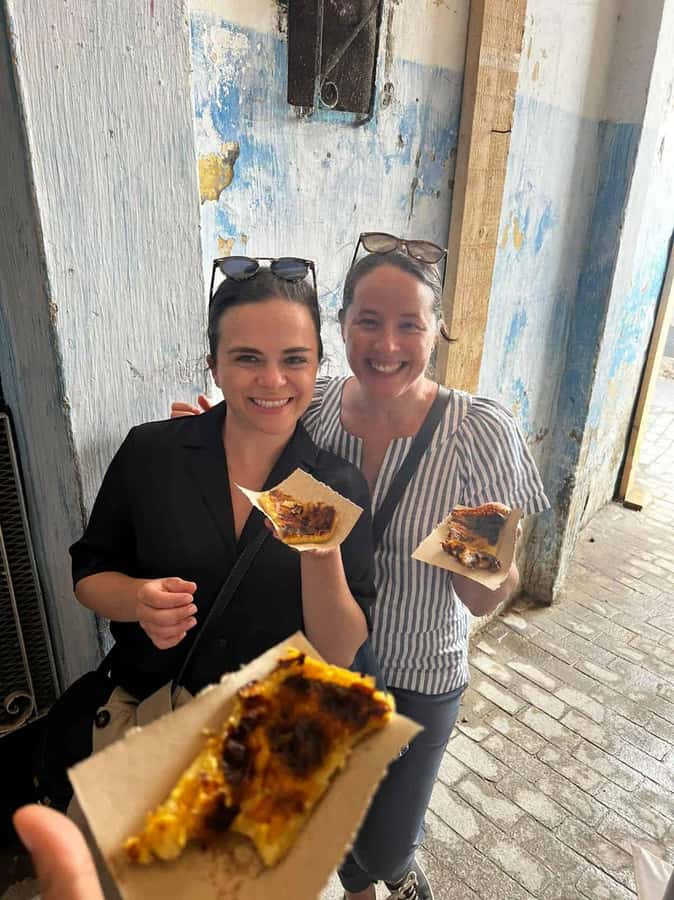
At $73 per person, this is not the cheapest way to eat in Tangier. But the price includes six tasting stops, a full meal, bottled water, the guide, and three hours of walking and explanation. If you would otherwise pay for lunch, several snacks, drinks, and a private orientation to the old city, the cost is easier to justify.
You are also paying for access and judgment. A guide can help you choose foods, explain unfamiliar dishes, and point out places to return to later. That has real value on a first visit, especially if you have only a short stay.
Come on an empty stomach. The amount of food is generous, and the full meal comes after several earlier tastes. Comfortable shoes are essential, as the route runs through old streets and market areas.
This tour suits curious eaters, first-time visitors, families whose children can manage a three-hour walk, and anyone who wants history with lunch. It is less suitable for people seeking a quiet restaurant meal, a strictly fixed menu, or a fully accessible route.
The activity offers free cancellation up to 24 hours before the start and allows you to reserve now and pay later. Those terms help if your Tangier plans are still shifting, but the main practical issue remains the same: arrange your own transportation to the starting point and from Café Hafa.
Dietary needs and Ramadan changes
Vegetarian, gluten-free, and lactose-free needs can be accommodated when you provide them ahead of time. Do not wait until the first stop to mention a serious allergy or dietary restriction. The guide needs a chance to adjust the choices.
During Ramadan, the format can change. One reported arrangement turned the experience into an iftar meal with the guide and the guide’s family. That is a much more personal format, but it also means the usual sequence of market tastings may not apply in the same way.
If you are booking during Ramadan, ask what version of the experience will operate on your date. The information provided confirms that the format may change, but it does not promise the same stops or menu year-round.
Should you book the Tangier Food Walking Tour?
Book it if you want to understand Tangier through food, local streets, and conversation rather than through a list of monuments. The mix of market stalls, small eateries, cafés, views, and a full meal gives you a useful introduction to the city in just three hours.
I would especially recommend it early in your stay. You can learn what foods to seek out, where to shop, and how the old districts fit together before exploring alone.
Skip it if uneven streets are a serious problem, if you dislike eating a large amount over several hours, or if you want a set menu with no changes. For everyone else, $73 is a fair price for a food-led city orientation, especially when you value a local guide who can explain what is on your plate and why it matters.
FAQ
Where does the Tangier Food Walking Tour start?
It starts next to the third cannon, the cannon in the middle, at Sour Meêgazine in Tangier, Morocco.
Where does the tour finish?
The tour finishes at Café Hafa. Transportation to the finish is not included.
How long does the food tour last?
The experience lasts three hours. The listed route includes about 45 minutes in M’Sallah, 45 minutes at Grand Socco, one hour at Place de la Kasbah, and a 30-minute café stop.
What food is included?
The tour includes six tasting stops and a full meal. Foods associated with the experience include caliente, stuffed dates, bissara, bread, soup, olives, meat pastry, smoothies, and tagine. The exact choices can vary.
Can dietary restrictions be accommodated?
Yes. Vegetarian, gluten-free, and lactose-free needs can be accommodated when you tell the provider about them. It is best to share your requirements before the tour.
Is the tour suitable for wheelchair users?
No. The experience is not suitable for wheelchair users or people with mobility impairments. Comfortable shoes are recommended, and you should expect to walk through old streets and narrow lanes.
New food tours we have reviewed in Morocco
- Casablanca Food Tour★ 5.0 · 60 reviews
- Casablanca Food Tour – Moroccan Street Food Tour★ 5.0 · 86 reviews
- Discovery of Moroccan Culinary Heritage, History and Secrets★ 4.5 · 48 reviews
- Authentic Food Tour in Agadir – Eat Like A Local★ 5.0 · 117 reviews
- Rabat: Walking Food Tour★ 4.9 · 48 reviews
- Marrakech: Medina Stories Food Tour with 15+ Tastings★ 5.0 · 141 reviews
- Marrakech: Authentic Moroccan Food Walking Tour & Dinner★ 4.8 · 261 reviews
- Marrakech Night Street Food Tour / Taste The Real Marrakech★ 4.9 · 200 reviews
Food Walking Tours, compared.
Reykjavik Food Walk – Local Foodie Adventure in Iceland
Read our review →
New Orleans Food Walking Tour of the French Quarter with Small-Group Option
Read our review →
Naples: Street Food Walking Tour with Local Guide
Read our review →

Savannah First Squares Culinary & Cultural Walking Food Tour
Read our review →
Rome: Guided Food Walking Tour with Wine in Trastevere
Read our review →
Rome: Trastevere & Campo de Fiori Street Food Walking Tour
Read our review →Browse the lists this tour appears in