
Review · SUSHI AND RAMEN TOURS
Osaka Dotonbori: Sushi Making Experience
Osaka’s Dotonbori is famous for eating, but this 90-minute sushi class gives you something better than another meal at a counter: you learn how the meal comes together. The instructors explain sushi, ingredients, rice, toppings, and basic technique before helping you make 12 pieces of your own.
I like the friendly English instruction and the playful extras, especially the sushi cosplay, photo session, sake tasting, and certificate. I also like that vegan and halal sushi can be arranged, and that gluten-free soy sauce has been provided when needed.
The main caution is simple: this is an introductory class, not a professional sushi apprenticeship. One recent participant found the seafood less fresh than expected, and the meeting location can be a little hard to find, so allow extra time and check the map carefully.
Key points at a glance
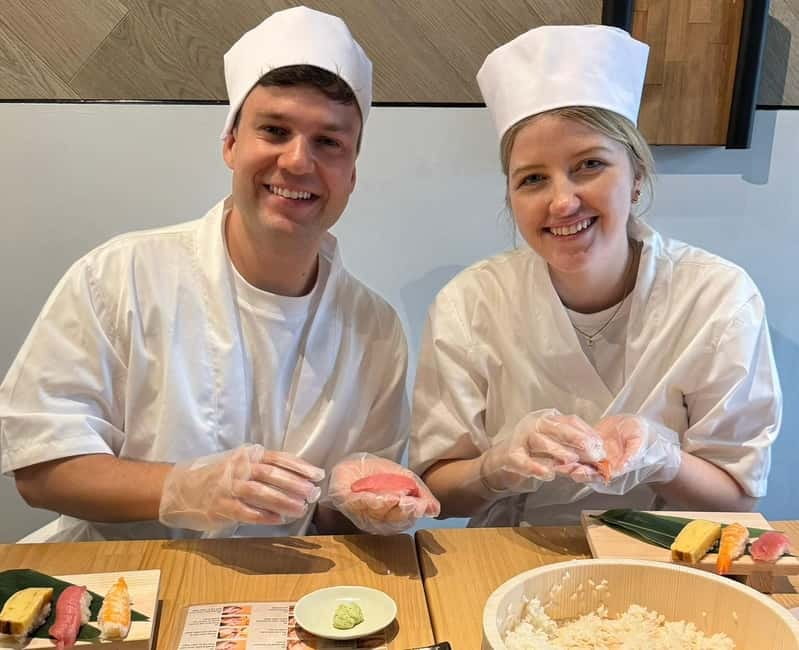
- Make 12 pieces yourself: Learn the basic steps from sushi rice to finished nigiri-style pieces, then eat what you prepare.
- English-speaking instructors: Mako, Mika, Saki, Yumiko, Kosei, and other instructors have led sessions, depending on the date and group.
- More than a cooking lesson: Add Japanese sake, sushi cosplay, photos, Japanese language tips, and a sushi master certificate.
- Good for beginners and families: The process is broken into clear stages, and a 15-year-old participant enjoyed the class with family.
- Dietary choices are possible: Vegan and halal sushi are available, and gluten-free soy sauce has been provided on request.
- Useful Dotonbori location: The class fits neatly into an afternoon or evening around Osaka’s best-known food district.
Why this Dotonbori class is worth your time
Sushi is easy to eat and surprisingly hard to shape well. The rice must hold together without becoming a heavy lump. The topping needs to sit neatly on top. Too much wasabi overwhelms everything, while too little disappears. This class lets you see those small choices instead of treating sushi as a mysterious finished product.
I like the hands-on format because you are not simply watching a chef work. You handle the rice, topping, and wasabi yourself. The class explains what sushi is, introduces the ingredients, and then shows you how to put each part together.
The activity costs $45 per person. That is more than a basic sushi lunch, but the price includes all ingredients for 12 pieces, instruction, sake, sushi cosplay, and a certificate. You are paying for a meal plus a short cultural activity, rather than just buying food.
The value is strongest if you want a memory you can talk about later. If your only goal is to eat the largest amount of sushi for $45, you can probably find better food value elsewhere. If you want to learn, laugh with a small group, and make the meal yourself, the price is easier to justify.
More Sushi and Ramen Tours in Osaka
- Sushi Making Osaka Roll and Authentic Japanese Sushi Class
★ 5.0 · 1,220 reviews - Osaka: Five Must-See Highlights Walking Tour & Ramen Lunch
★ 4.7 · 411 reviews - Osaka Sushi Making Experience
★ 5.0 · 400 reviews
Arriving in Osaka’s famous food district
The class takes place in Dotonbori, one of the most convenient areas in Osaka for an activity before or after dinner. The location is useful, but the exact meeting point can be tricky to navigate. One participant specifically noted that the Google Maps location needed improvement, while another called the place hard to find.
I would not arrive at the last minute. Give yourself extra time to locate the entrance, especially if you are coming through the crowded streets around Dotonbori. Keep the booking details open on your phone and confirm the meeting point before setting off.
The experience lasts 90 minutes, so it fits well between sightseeing plans. You can schedule it as a midday activity, an afternoon break, or an early evening start before exploring Dotonbori’s restaurants and neon signs.
The class is listed as wheelchair accessible. English is the stated teaching language, which makes the activity practical for international visitors who want clear explanations rather than a demonstration they can only partly follow.
Meeting Mako, Mika, Saki, and the other instructors
The instructors are one of the strongest parts of the experience. Names connected with different sessions include Mako, Mika, Saki, Yumiko, Kosei, Toshiki, Anri, and Yui. You should not expect the same teacher every time, but the pattern is consistent: cheerful staff, clear English, and plenty of encouragement for first-time sushi makers.
Mako is repeatedly described as a lively leader who explains both sushi and Osaka. Mika, Yumiko, Saki, Kosei, and the other instructors are also praised for patient demonstrations and an easygoing manner. The tone is informal rather than stiff. That matters when your first rice shape looks more like a small snowball than sushi.
The class also leaves room for conversation. Instructors have offered Osaka tips, explained Japanese words, and shown participants how to use chopsticks. If you enjoy asking questions, this is a better choice than a silent cooking demonstration.
The teaching style may vary slightly by instructor. One participant wanted closer attention to individual technique and more correction during the shaping process. That is a fair point. The class teaches beginners successfully, but you may need to ask for extra help if you want detailed feedback on every piece.
Step one: seasoning and shaping the sushi rice
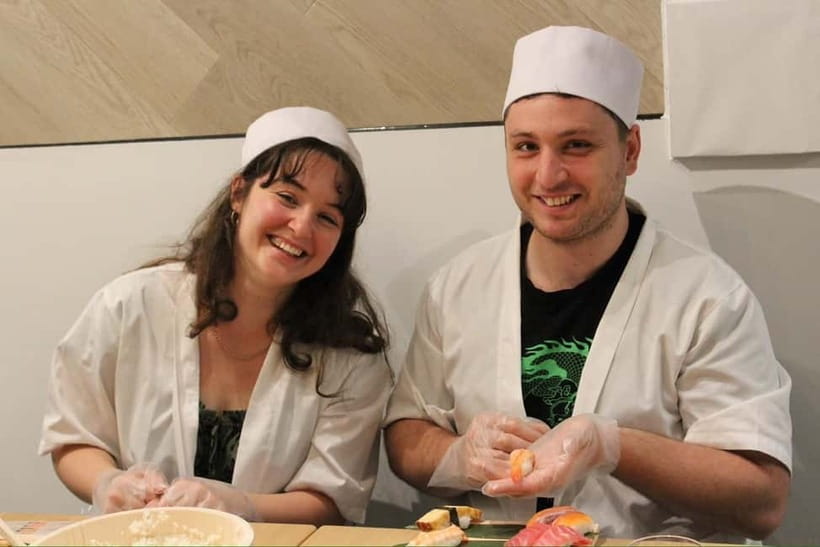
The first practical stage is making shari, the seasoned sushi rice. You pour sushi vinegar over the rice and learn how this changes plain rice into the slightly sweet, sharp base used for sushi.
This step has more importance than it first appears. Sushi rice is not just ordinary rice with fish placed on top. Its seasoning balances the topping, and its texture lets the piece hold together in your hand or with chopsticks.
You then shape the rice into a small rice ball. The instructors guide you through the basic form and help you understand how much pressure to use. Beginners should expect a little trial and error. The aim is not perfect restaurant presentation on the first attempt. The useful part is learning how the rice should feel.
This section makes the class suitable for people who rarely cook. The steps are short, physical, and easy to follow. You do not need specialist equipment or prior sushi experience.
Same appetite, a different neighbourhood:
- Osaka: Shinsekai Food Tour with 13-15 Dishes at 5 Eateries
★ 4.8 · 2,204 reviews - Osaka Food Tour: 13 Dishes at 5 Local Eateries
★ 5.0 · 2,149 reviews - Hungry Osaka Street Food Tour:15 Tastings & 3 Drinks with a Local
★ 5.0 · 1,727 reviews - Osaka Local Foodie Walking Tour in Dotonbori and Shinsekai
★ 5.0 · 985 reviews
Step two: adding wasabi and the neta
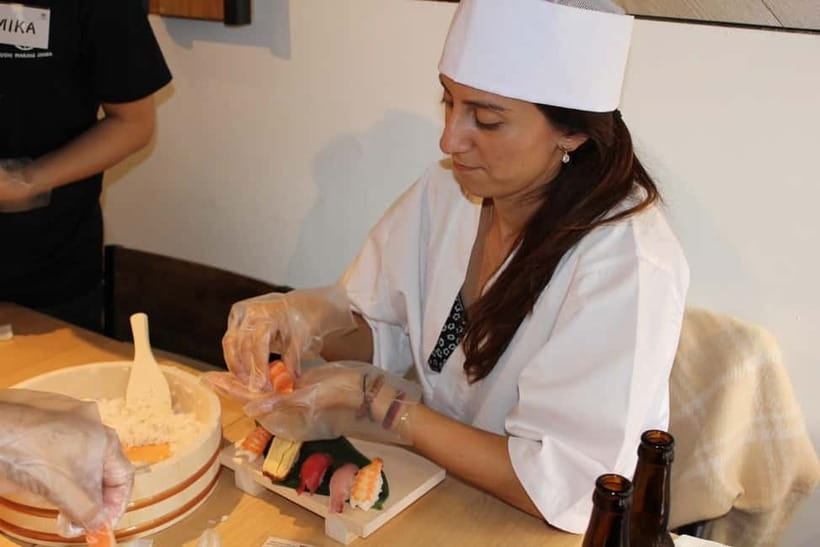
Next comes neta, the sushi topping. You put wasabi on the topping, bring it together with the rice, and begin forming the finished piece.
The instructors explain the order of the ingredients rather than leaving you to guess. That helps you understand why the sushi does not simply get assembled in any random order. The class is basic, but it gives you a working picture of how the components relate.
Wasabi is part of the lesson and also a matter of personal taste. If you are sensitive to heat, use a small amount. You can always add more later, but you cannot easily remove it once it is on the rice.
The ingredients have generally been praised for quality, with one participant noting that the sushi ingredients are bought from the markets daily. At the same time, one recent assessment found the seafood less fresh than expected. That is the only clear reservation in an otherwise very strong set of feedback, but it is worth keeping expectations realistic. This is a casual teaching class, not an elite sushi counter.
The selection may also suit people who do not usually eat fish. One participant who dislikes fish still enjoyed the sushi. The exact pieces can vary, but the class offers enough variety that fish-averse diners may find something manageable.
Step three: shaping the finished pieces
The final technique is using your fingers to shape the sushi. This is where the lesson becomes most satisfying. You can see the rice, topping, and wasabi turn into a recognizable piece that you made yourself.
The instructors demonstrate the hand position and guide you through the motion. You will probably make a few uneven pieces. That is part of the fun, and the certificate at the end is not a claim that you have replaced a professional chef.
Still, the technique gives you a new respect for sushi. A good piece looks simple because the work is controlled. The class shows you just enough of that control to make restaurant sushi seem less effortless.
The activity is especially good for families and mixed-age groups. A family with a 15-year-old found the format enjoyable for everyone, which makes sense: the task is active, the instructions are short, and the finished food provides an immediate reward.
Twelve pieces, sake, and the best part of the class
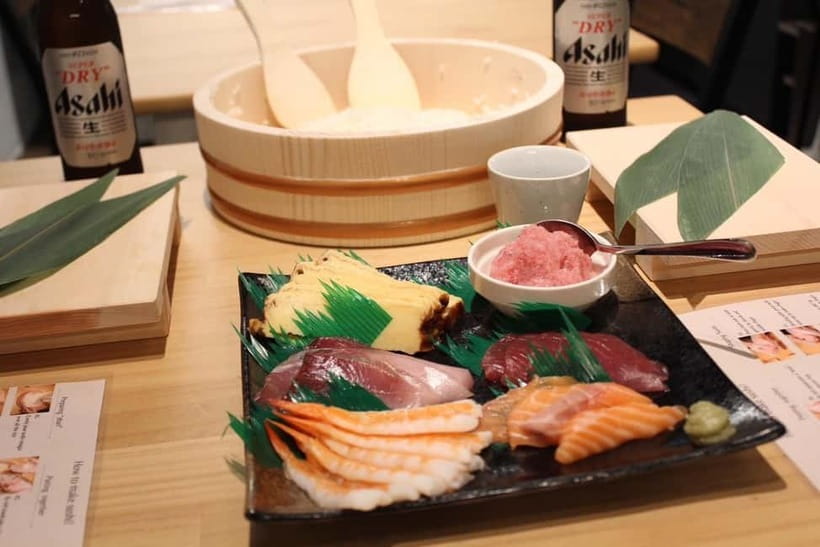
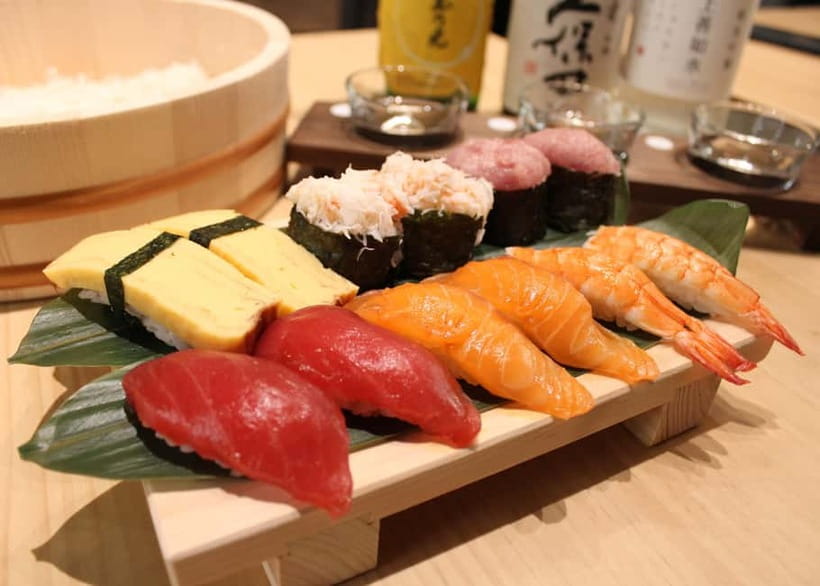
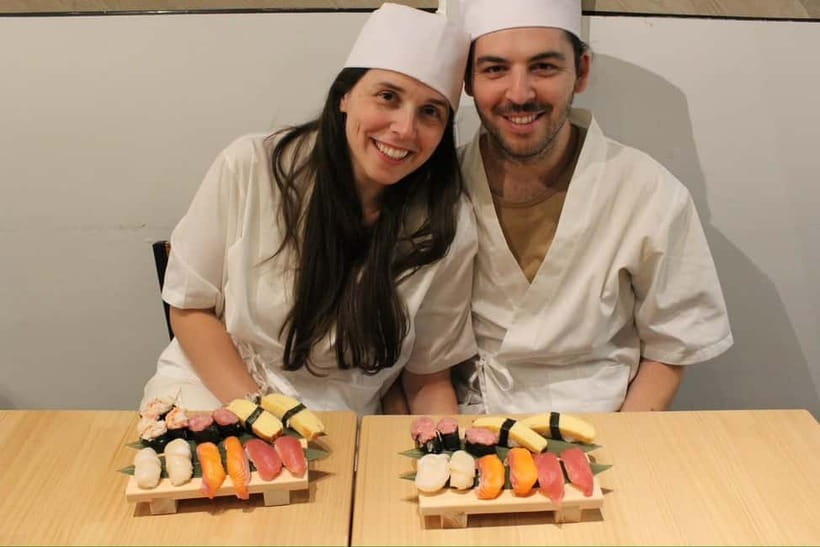
Once the preparation is finished, you eat the 12 pieces you made. That number is enough to feel like a proper snack or light meal, though you may want another meal afterward if you arrive hungry.
I like this arrangement more than a class that ends with a single sample. Twelve pieces give you enough practice to notice improvement from the first attempt to the last. You also get to taste the result of your work instead of leaving with a recipe and no proof that it worked.
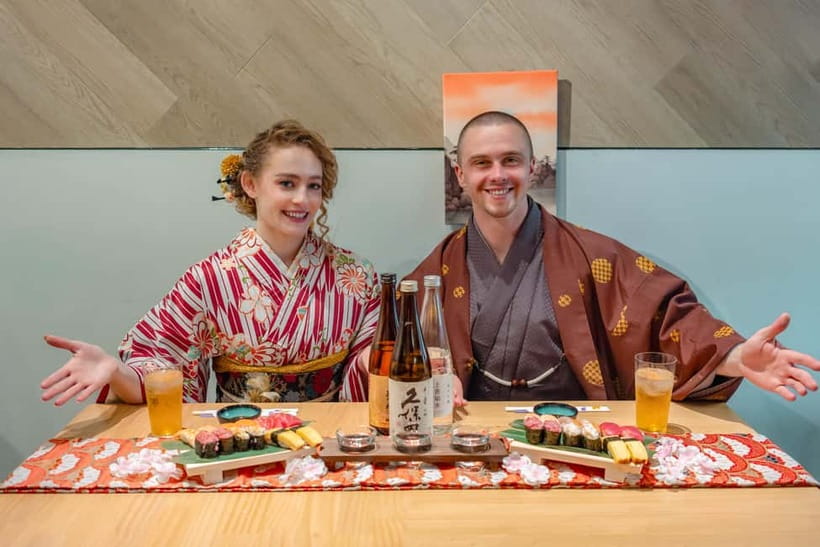
Japanese sake is included as part of the experience. It adds cultural context and gives the class a small tasting element, but this is not presented as a full sake seminar. If you do not drink alcohol, confirm the available alternative when booking.
The sushi and sake combination works well because it connects the food to Japanese dining customs without turning the class into a lecture. You learn by doing, then sit down and enjoy the result.
Sushi cosplay, photos, and the certificate
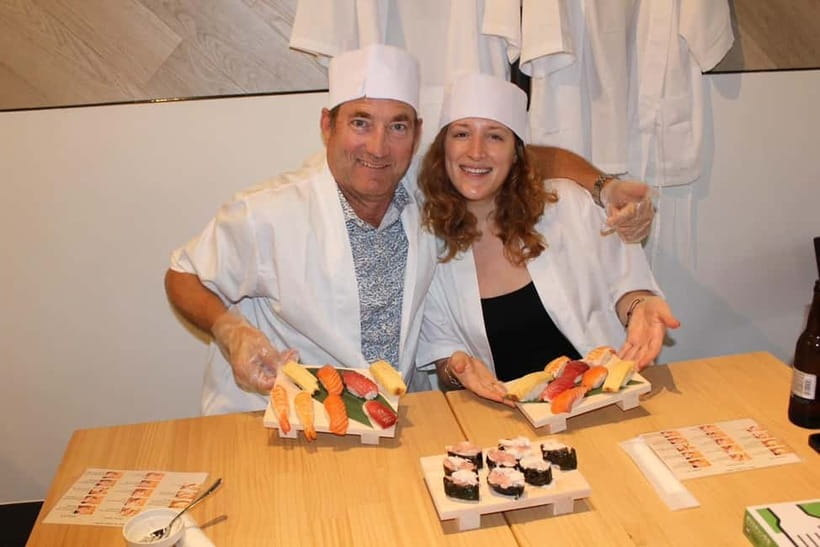
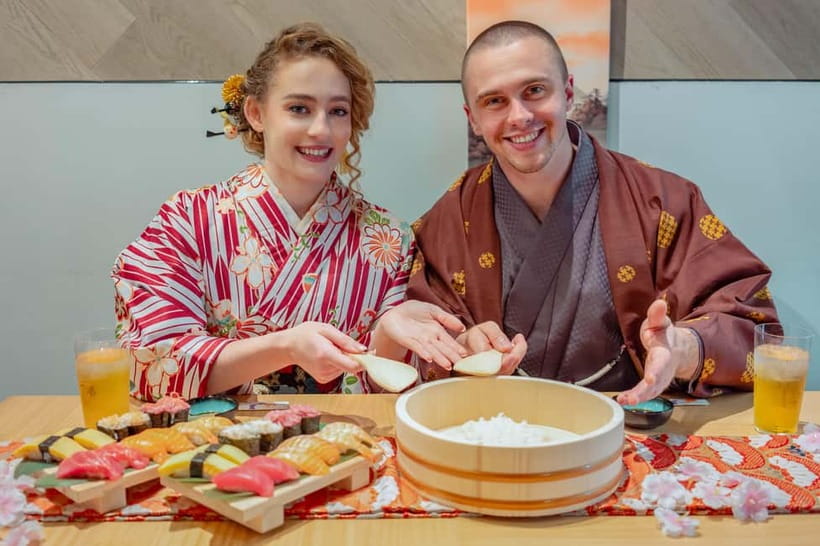
The playful extras give the activity its personality. You can wear sushi cosplay and take photos during the session. This may sound silly on paper, but it suits the relaxed tone and gives families, couples, and friends something memorable to do together.
You also receive a certificate identifying you as a sushi master. It is clearly a fun souvenir, not a professional qualification, but children and first-time cooks will likely enjoy taking it home.
A special gift is also included. The exact gift is not specified, so do not book the class expecting a particular item. Think of it as an extra keepsake rather than a central reason to attend.
These additions matter because the class is designed as a cultural outing, not only a food lesson. If you prefer a serious culinary workshop with no costumes or photos, the tone may feel too playful. If you want a light activity during an Osaka holiday, the extras fit nicely.
Dietary needs and practical limits
Vegan and halal sushi are available, which gives this class broader appeal than many seafood-centered activities. If you follow one of these diets, mention it clearly when booking so the staff can prepare the appropriate version.
A gluten-free soy sauce has also been provided for a participant with a gluten allergy. That is encouraging, but the available information does not promise a fully gluten-free kitchen or menu. Anyone with a serious allergy should contact the provider before attending and explain the requirement in detail.
The class is taught in English. That is useful for learning the process and asking questions, especially when discussing unfamiliar ingredients. It also helps with the social side of the activity, since the instructors make conversation part of the session.
Because the class lasts only 90 minutes, it does not cover every type of sushi or every regional tradition. You will learn the core process and make a set number of pieces. For a first lesson, that focused length is a strength. For an advanced cook, it may feel limited.
Cancellation, payment, and who should book
You can cancel up to 24 hours before the activity for a full refund. The reserve-now, pay-later option also helps if your Osaka schedule is still changing. Starting times vary, so check the available slot that fits your day.
I would recommend this class to:
- First-time sushi makers who want clear guidance
- Families with older children or teenagers
- Couples and friends looking for a shared food activity
- Visitors who want an English-language cultural experience
- Diners who want vegan, halal, or possible gluten-free support
- Anyone staying near Dotonbori with 90 minutes to spare
I would be more cautious if you want a serious chef-training course, a long sake tasting, or a guaranteed high-end seafood meal. The instruction is beginner-friendly and social. It is not built around advanced knife skills or an extensive menu.
Should you book the Osaka Dotonbori sushi class?
Yes, if you want to make your own lunch, learn a few useful sushi basics, and enjoy a cheerful activity in central Osaka. The strongest reasons to book are the friendly English-speaking staff, the 12 pieces you prepare, and the mix of food, sake, photos, and Japanese culture.
Book with two practical notes in mind. First, check the exact meeting point carefully because navigation has caused trouble for some people. Second, treat the seafood as part of a casual class rather than expecting the precision and freshness of a top sushi restaurant.
For $45, the class offers good value when you count the meal, instruction, sake, certificate, and extras. It is particularly appealing on a rainy afternoon, for families, or for anyone who has already eaten plenty of restaurant sushi and wants to understand the craft a little better.
FAQ
How long does the Osaka Dotonbori sushi class last?
The activity lasts 90 minutes. Starting times vary, so you need to check availability for the date you want.
How many pieces of sushi will I make?
You will make 12 pieces of sushi using the provided ingredients, then enjoy what you prepare.
Is the class taught in English?
Yes. English is the listed language, and the instructors explain the ingredients and sushi-making steps in English.
Is sake included?
Yes. Japanese sake is part of the experience and can be enjoyed with the sushi you make.
Are vegan and halal sushi options available?
Yes. Vegan and halal sushi are available. You should state your dietary requirement when booking.
Can I cancel for a refund?
Yes. You can cancel up to 24 hours in advance for a full refund. The activity also offers a reserve-now, pay-later option.
New food tours we have reviewed in Osaka
- Hidden Osaka – Yukaku Red Light Tour & Culinary Adventure★ 4.8 · 96 reviews
- Eat Like a Local in Osaka – Private Custom Street Food Tour★ 4.3 · 33 reviews
- Osaka: Sushi Class in Dotonbori★ 4.9 · 160 reviews
- Osaka: Sushi Making in Spacious Studio (SAME-DAY OK!)★ 5.0 · 75 reviews
- Osaka: Local Foodie Tour in Dotonbori and Shinsekai★ 4.7 · 95 reviews
- Osaka: Kuromon Market Food Walking Tour (6 stops, 6 tastes)★ 4.6 · 272 reviews
- Osaka: Roll and Authentic Sushi Making Class in Dotonbori★ 4.9 · 239 reviews
- Osaka: 2-Hour Local Street Food Tour – Dotonbori & Namba★ 4.6 · 95 reviews
Sushi and Ramen Tours, compared.
Sushi Making Tokyo Roll and Authentic Japanese Sushi Class
Read our review →
Tokyo: Roll and Authentic Sushi Making Class in Asakusa
Read our review →
Ramen Cooking Class at Ramen Factory in Kyoto
Read our review →
Best of Shinjuku: Izakaya Food Tour (4 Stops, 14+ Tastings)
Read our review →
Tokyo: Sushi Making Class in a Happi Coat near a Famous Spot
Read our review →
Sushi Making Tokyo! Popular Maki Sushi & Japanese Sushi(+Recipe!)
Read our review →
Sushi Making Osaka Roll and Authentic Japanese Sushi Class
Read our review →
Tokyo Sushi Making Class in Tsukiji with Professional Chef
Read our review →Browse the lists this tour appears in