
Review · COOKING CLASSES
Osaka: Gluten-Free Ramen and Gyoza Cooking Class
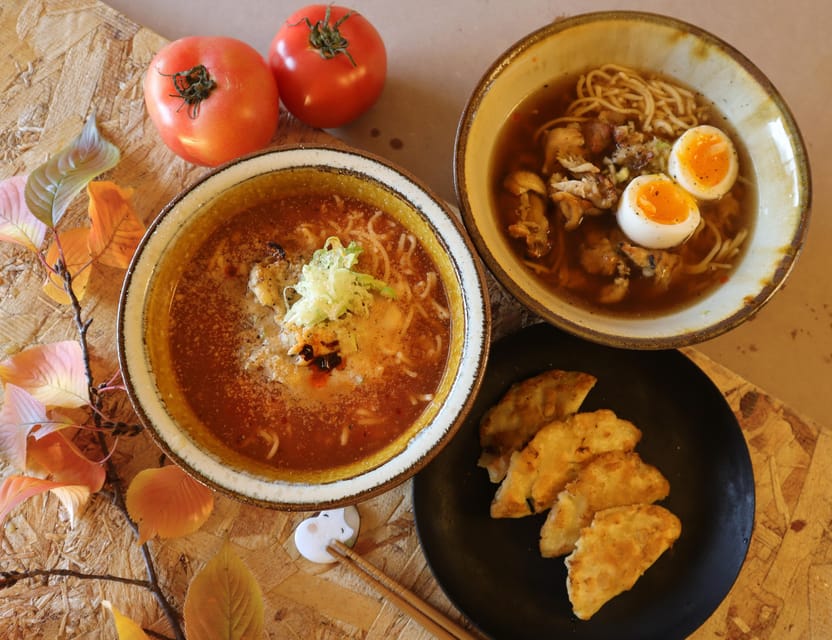
The clever part of this Osaka cooking class is that gluten-free diners make the noodles themselves, rather than simply being handed a safe-looking bowl. In three hours, you work with rice flour, prepare soy sauce and tomato ramen, shape gyoza wrappers, and pan-fry the dumplings in chef Yuki’s Japanese-style home.
I like the small four-person limit, which gives Yuki time to correct your folding technique and answer questions. I also like that you leave with recipes and practical skills, not just a meal. The main consideration is location: the class is in a quiet residential area, not central Osaka, so you need to allow time to reach Nukata Station and find the home.
Key points to know before booking
- Two ramen styles in one class: Make handmade gluten-free noodles for both savory soy sauce ramen and the less common tomato version.
- Rice-flour gyoza from scratch: Prepare the wrappers, mix the filling, fold the dumplings, and pan-fry them until crisp.
- A very small group: The class is limited to four participants, with Yuki as the sole instructor.
- A real home setting: You cook and eat in a calm Japanese-style residence in Osaka, five minutes from Nukata Station.
- Useful take-home skills: Recipes and cooking tips are included, so you can try the dishes again at home.
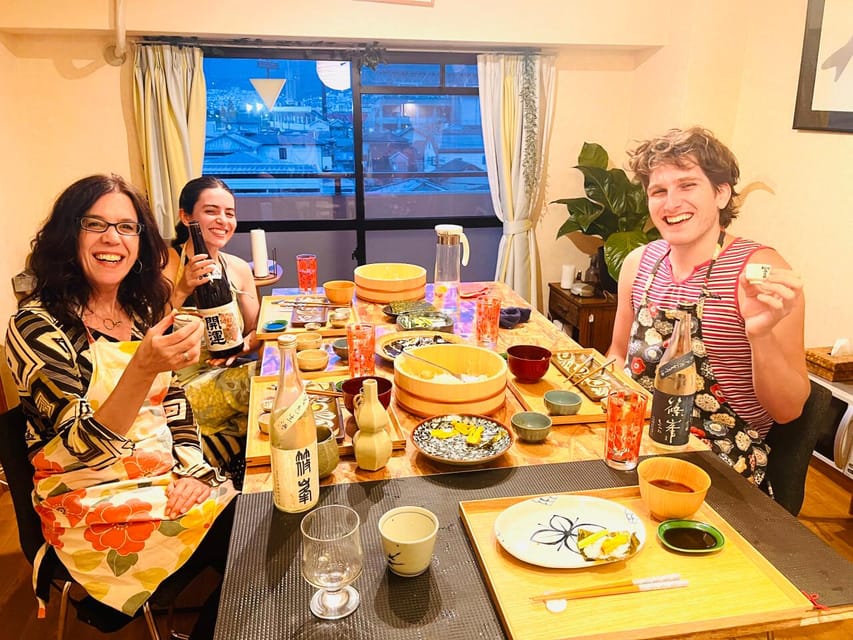
- Optional sake pairing: Add three 45-milliliter servings, including chilled Junmai, chilled Junmai Ginjo, and warm Junmai.
Why this gluten-free class is different
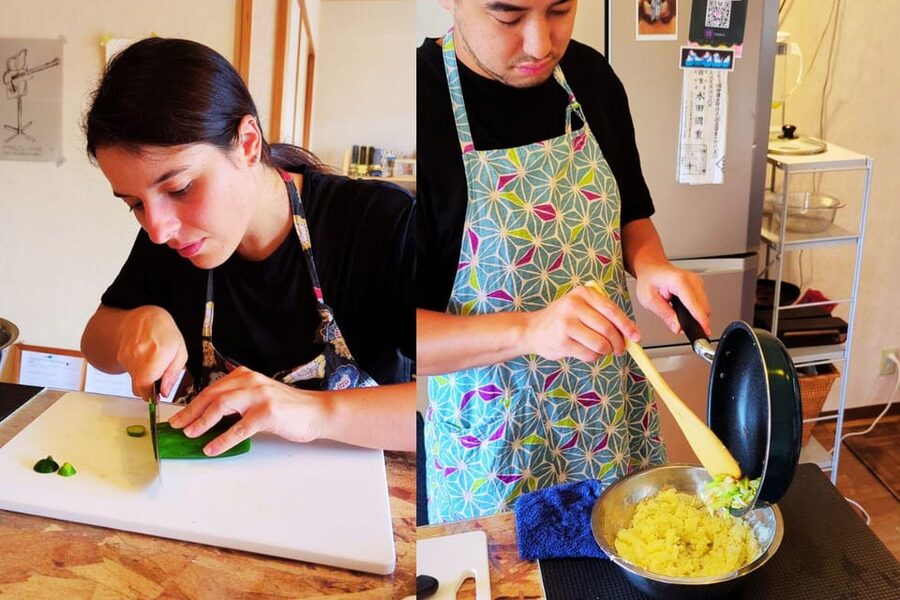
Many Japanese food classes focus on sushi, tempura, or matcha. This one tackles two dishes that are usually difficult for people avoiding wheat: ramen and gyoza.
That matters because ramen noodles and dumpling wrappers are traditionally made with wheat flour. Here, rice flour is used instead. You do not simply watch Yuki prepare a substitute. You handle the dough, learn how the texture develops, and see how traditional dishes can be adapted without losing their character.
I like the practical nature of the class. If you are gluten-free, eating out in Japan can require careful planning, and restaurant menus may not offer many choices. This class gives you a meal you can eat during the experience and recipes you can use after returning home.
The class also works for people who are not gluten-free. You get a focused lesson in Japanese cooking, with the added challenge of making noodles and wrappers from a different flour. That makes the experience useful rather than merely decorative.
Yuki brings more than ten years of professional cooking experience and has taught international visitors for over a year. She teaches in English and Japanese, and the small format allows her to explain each step without rushing through it.
More Cooking Classes in Japan
- Osaka: Ramen and Gyoza Cooking Class in Dotonbori
★ 5.0 · 378 reviews - Osaka: Roll and Authentic Sushi Making Class in Dotonbori
★ 4.9 · 239 reviews - Osaka: Cooking Class Ramen & Gyoza Course in Nanba
★ 4.9 · 86 reviews
Arriving at Yuki’s home near Nukata Station
The meeting point is 4-19 Nukata-cho, Osaka, about a five-minute walk from Nukata Station. This is a residential part of Osaka, rather than a restaurant district or a large commercial cooking school.
That setting shapes the experience. You enter a home with a welcoming sign at the entrance, then cook in a personal space instead of a busy classroom. It is a good choice if you want a quieter activity with direct contact with your instructor.
Give yourself enough time to reach the address. The venue is described as easy to find, and detailed directions are provided after booking, but a residential neighborhood can still require more attention than a shopfront on a main road.
Wear comfortable clothes suitable for cooking. You do not need previous cooking experience, but you should arrive ready to work with your hands. Three hours includes preparation, cooking, and eating, so come hungry.
Starting with gluten-free ramen noodles
The class begins with an introduction to the ingredients, tools, and cooking methods. Yuki explains how recipes normally made with wheat are changed to work with rice flour.
The noodle-making section is the technical heart of the class. You work step by step toward a chewy texture, which is not automatic when wheat flour is removed. This gives the lesson real value because you learn more than a list of ingredients. You learn what to watch for while preparing the dough.
For a beginner, this is a friendly way to approach Japanese noodle-making. Yuki’s teaching style is described as patient and clear, and the group size means you can ask about texture, timing, and technique as you go.
For an experienced home cook, the rice-flour method offers a useful challenge. You may already know how to make ordinary pasta or wheat noodles, but gluten-free dough behaves differently. The class lets you practice the method under guidance rather than guessing at home.
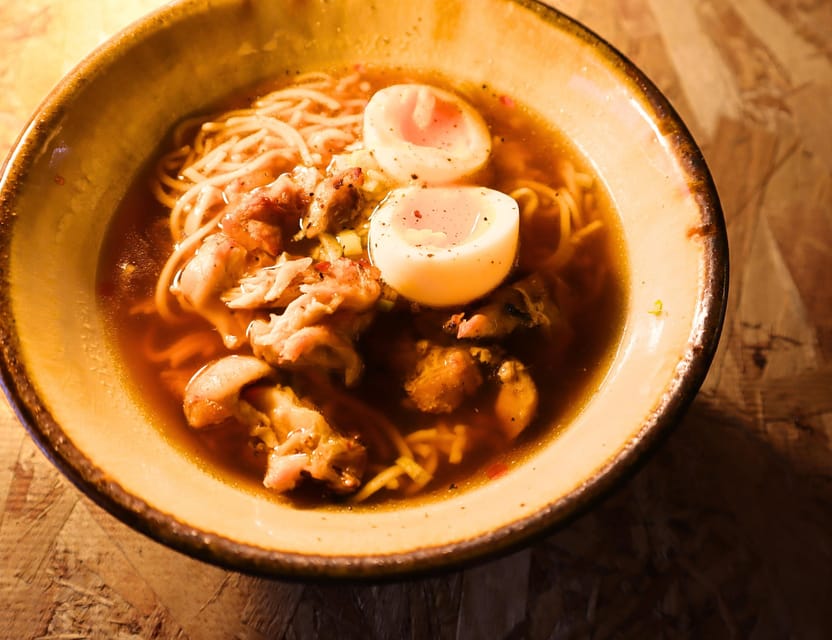
The finished noodles are used in two ramen dishes. That gives you a chance to see how the same basic product works with different broths and toppings.
Soy sauce ramen gives the class its classic center
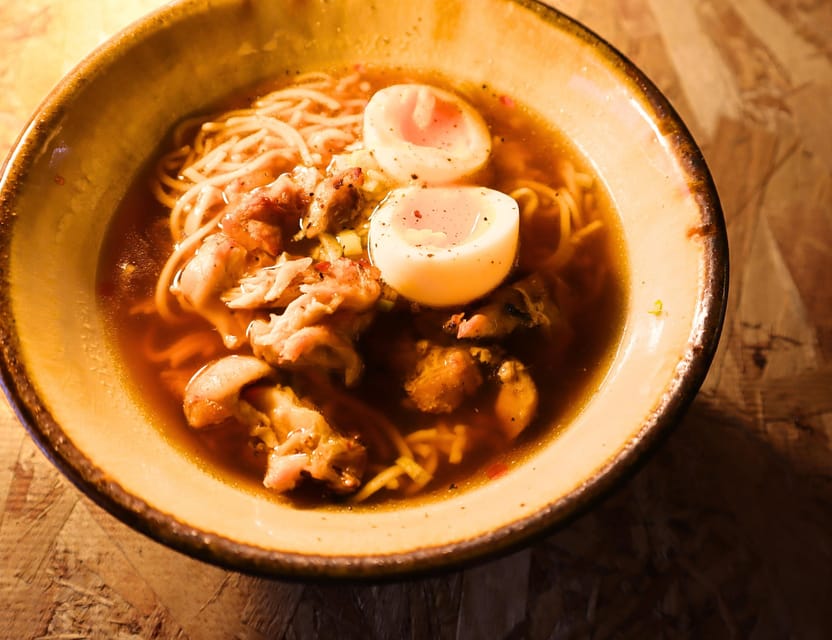
Next, you prepare a savory soy sauce ramen. This is the most familiar flavor in the class and provides a good connection to classic Japanese cooking.
The point is not only the final bowl. Yuki explains Japanese flavoring and the balance needed for a broth that works with handmade noodles. The soy-based soup gives the rice-flour noodles a traditional partner, while the hands-on preparation helps you understand how the parts of ramen come together.
This section should suit first-time cooks particularly well. Ramen can look simple when it arrives at a restaurant, but the dish depends on several elements coming together at the right time. In class, you can see the process in manageable stages.
The soy sauce version is also likely to be the easiest dish to recreate at home because it follows a familiar flavor pattern. Your recipes and tips are included, giving you a reference after the trip.
More Sushi and Ramen Tours in Osaka
- Sushi Making Osaka Roll and Authentic Japanese Sushi Class
★ 5.0 · 1,220 reviews - Osaka: Five Must-See Highlights Walking Tour & Ramen Lunch
★ 4.7 · 411 reviews - Osaka Sushi Making Experience
★ 5.0 · 400 reviews - Osaka: Sushi Class in Dotonbori
★ 4.9 · 160 reviews
Tomato ramen adds a useful modern twist
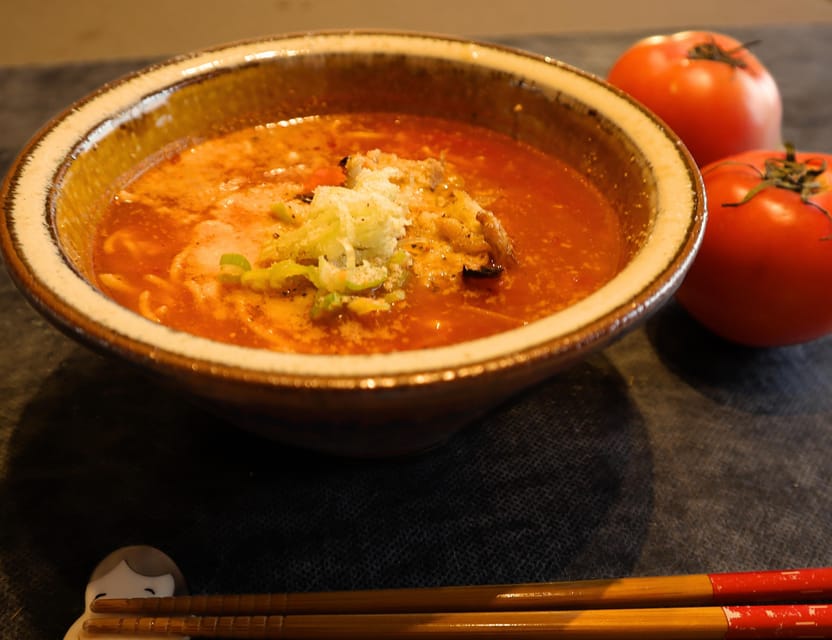
The second ramen is tomato-based. It is described as a refreshing and tangy style that remains unusual in Japan, which makes it a more surprising part of the menu.
I like this choice because it keeps the class from becoming a strict exercise in copying old recipes. Japanese cooking has strong traditions, but home cooks and professional chefs also adapt ingredients and flavors. Tomato ramen shows that Japanese food can change while still using familiar techniques.
Preparing two broths also makes the three-hour format feel worthwhile. You are not repeating the same bowl twice. You learn how one handmade noodle can be paired with two different flavor profiles.
For someone booking mainly because of a gluten-free diet, the tomato ramen is a bonus. For someone interested in food culture, it shows how a local chef approaches innovation without turning the class into a generic international cooking lesson.
Making rice-flour gyoza wrappers
After the ramen work, you turn to gyoza. The wrappers are made from rice flour, just as the ramen noodles are, and you handle the dough yourself.
Gyoza wrappers can be fiddly. They need to be thin enough to fold, but strong enough to hold the filling and survive cooking. A small class helps here because Yuki can show you how to work with the dough and offer corrections before the dumplings reach the pan.
The wrapper-making section is one of the most useful parts for people with gluten-free cooking needs. Store-bought gluten-free wrappers may not always be easy to find, while a rice-flour method gives you another option.
You should expect this stage to take patience. The class is hands-on, not a quick demonstration, so your first wrapper may not look perfect. That is part of the appeal. You get to practice the technique and learn what makes a wrapper usable.
Filling, folding, and pan-frying the dumplings
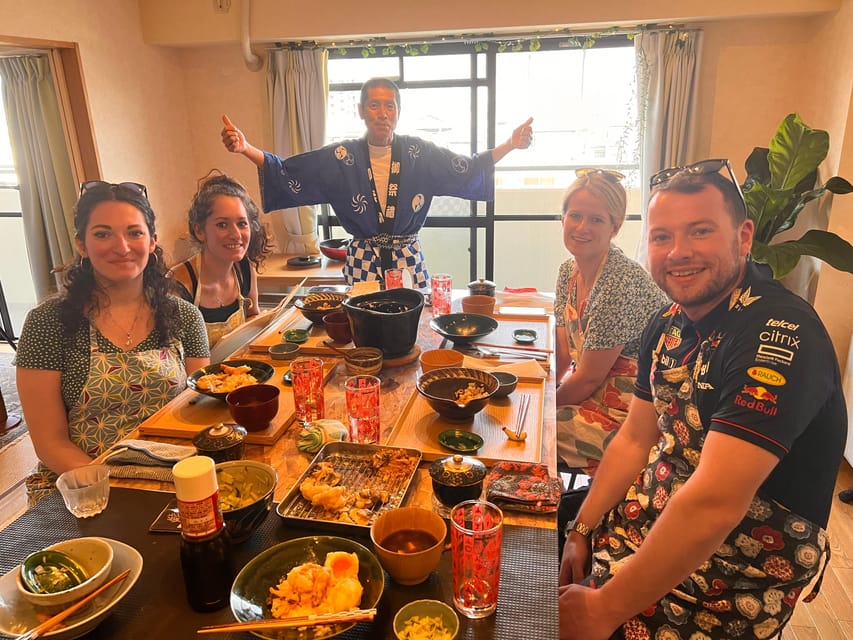
Once the wrappers are ready, you prepare a savory filling and fill the gyoza. Then comes the part many people look forward to: folding the dumplings.
Yuki teaches you how to create the pleats and seal each gyoza. The goal is not simply a pretty shape. A well-sealed dumpling holds the filling and cooks properly, while the folding pattern gives you a repeatable method to use at home.
The dumplings are pan-fried until the outside is golden and crisp, with a tender center. This contrast is the key reward for the work. You see how heat and timing affect the final texture rather than treating the cooking stage as an afterthought.
This is also where the small-group format matters most. With four or fewer participants, you have room to work and time to ask for help. In a bigger class, folding can become a race to keep up. Here, the pace is more personal.
Expect conversation as you cook. The class is designed to be social as well as instructive, but it remains focused on the food. You are not just sitting at a table while a chef performs.
Sitting down to eat what you made
After the cooking is finished, you gather in the dining area for a meal of your own ramen and gyoza. This is a satisfying end to the session because you can judge the results immediately.
The meal also gives you a chance to compare the two ramen styles. The soy sauce bowl offers a classic savory profile, while the tomato version brings a sharper, lighter note. The gyoza adds a different texture and turns the meal into more than a single-dish lesson.
Yuki guides you through the flavors and explains how the optional sake pairing works with the food. The meal is included in the $103 price, along with the instruction, recipes, and cooking tips.
You should think of the cost as payment for both a meal and a private-style lesson. It is not the cheapest way to eat ramen in Osaka, but it offers three hours of activity, a very small group, specialist gluten-free techniques, and skills you can take home. For someone who has struggled to find gluten-free Japanese dishes, that package can be good value.
The optional sake pairing
The sake pairing includes three servings of 45 milliliters each:
- Chilled Junmai
- Chilled Junmai Ginjo
- Warm Junmai
These are small pours rather than a large drinking session. They are intended to complement the food and introduce a few different sake styles during the meal.
The pairing is optional, so you can skip it if you do not drink alcohol or prefer to focus on the cooking. If you choose it, the three styles give the final meal an extra cultural element without taking over the class.
Because the cooking itself is the main event, I would treat the sake as an add-on rather than the reason to book. The class remains worthwhile without it.
Who will get the most from this experience
This class is a strong match for you if you have a gluten-free diet and want more than a restaurant meal. It is also suited to couples, friends, and solo visitors who enjoy making food with a small group.
You do not need cooking experience. Yuki’s instruction is designed for different skill levels, and the limited group size gives beginners room to ask questions.
It also suits home cooks who want recipes that can be repeated after the trip. The dishes are not just plated for photographs. You take away methods for rice-flour noodles, dumpling wrappers, fillings, and folding.
The experience may be less suitable if you prefer a fast sightseeing stop or want a large, energetic group class. You spend three hours on preparation and eating, and the venue is in a home near Nukata Station. That is the point for some people, but it will not suit every Osaka schedule.
The activity is also listed as not suitable for people over 95. Comfortable clothing is required, and transportation to the venue is not included.
Timing, booking, and value
The experience lasts three hours, with starting times based on availability. The price is $103 per person.
The group is limited to four participants, and that is central to the value. You get direct access to Yuki rather than standing at the back of a large demonstration. The class includes the full meal, recipes, cooking advice, and the instruction needed to make two ramen styles and gyoza.
You can cancel up to 24 hours in advance for a full refund, and reserve now while paying later. Those terms are useful if your Osaka plans are still shifting.
Plan your day around the location rather than trying to squeeze the class between distant attractions. Since the venue is five minutes from Nukata Station, the final walk is short, but you still need to allow time for the journey across Osaka.
My verdict: book it if gluten-free food matters to your trip
I would book this class if you want a personal food experience and care about learning how Japanese dishes are made. The strongest reasons are the rare gluten-free focus, the four-person limit, and the chance to prepare every major part of the meal yourself.
I would also recommend it to anyone who has already seen plenty of Osaka restaurants and wants a quieter activity with a local teacher. Yuki’s professional cooking background, clear English instruction, and patient approach suit beginners as well as confident home cooks.
Skip it if you only want a quick bowl of ramen, dislike hands-on cooking, or have no room in your schedule for a three-hour class outside the busiest tourist areas. Otherwise, the combination of rice-flour ramen, handmade gyoza, a home setting, and useful recipes makes this one of the more distinctive food activities available in Osaka.
FAQ
Where does the cooking class take place?
The class takes place at 4-19 Nukata-cho, Osaka, in a Japanese-style home about a five-minute walk from Nukata Station. A welcoming sign marks the entrance, and detailed directions are provided after booking.
How long does the experience last?
The cooking class lasts three hours, including preparation, cooking, and the meal.
How many people can join the class?
The group is limited to four participants, creating a small setting with direct access to the instructor.
Who teaches the class?
The instructor is Yuki from yuki Japanese cooking class. She has over ten years of professional culinary experience and teaches in English and Japanese.
What dishes will I make?
You will make gluten-free ramen noodles, soy sauce ramen, tomato ramen, rice-flour gyoza wrappers, gyoza filling, and pan-fried gyoza dumplings.
Do I need previous cooking experience?
No. The class is suitable for beginners and experienced cooks, and no prior cooking experience is required.
Is the meal included?
Yes. You eat a full meal made from your cooking, including the ramen and gyoza. Recipes and cooking tips are also included.
Is sake included?
Sake is optional. The pairing includes three 45-milliliter servings: chilled Junmai, chilled Junmai Ginjo, and warm Junmai.
More hands-on workshops in Osaka
- Sushi Making Tokyo Roll and Authentic Japanese Sushi Class
★ 5.0 · 3,971 reviews - Tokyo: Sushi Making Class in a Happi Coat near a Famous Spot
★ 4.9 · 1,377 reviews - Tokyo Sushi Making Class in Tsukiji with Professional Chef
★ 5.0 · 1,177 reviews - Athens: Food Market Visit and Cooking Class with Wine
★ 4.9 · 1,087 reviews
More Cooking Classes in Osaka
- Authentic Pizza Making Class in Naples with Appetizers and Drink
★ 5.0 · 3,178 reviews - Tokyo: Roll and Authentic Sushi Making Class in Asakusa
★ 4.9 · 1,957 reviews - Ramen Cooking Class at Ramen Factory in Kyoto
★ 5.0 · 1,937 reviews - Small Group Cooking Class & Market Food Tour in Florence
★ 5.0 · 1,574 reviews
New food tours we have reviewed in Osaka
- Hidden Osaka – Yukaku Red Light Tour & Culinary Adventure★ 4.8 · 96 reviews
- Eat Like a Local in Osaka – Private Custom Street Food Tour★ 4.3 · 33 reviews
- Osaka: Sushi Class in Dotonbori★ 4.9 · 160 reviews
- Osaka: Sushi Making in Spacious Studio (SAME-DAY OK!)★ 5.0 · 75 reviews
- Osaka: Local Foodie Tour in Dotonbori and Shinsekai★ 4.7 · 95 reviews
- Osaka: Kuromon Market Food Walking Tour (6 stops, 6 tastes)★ 4.6 · 272 reviews
- Osaka: Roll and Authentic Sushi Making Class in Dotonbori★ 4.9 · 239 reviews
- Osaka: 2-Hour Local Street Food Tour – Dotonbori & Namba★ 4.6 · 95 reviews
Cooking Classes, compared.
Authentic Pizza Making Class in Naples with Appetizers and Drink
Read our review →
Tokyo: Roll and Authentic Sushi Making Class in Asakusa
Read our review →
Ramen Cooking Class at Ramen Factory in Kyoto
Read our review →
Small Group Cooking Class & Market Food Tour in Florence
Read our review →
Tokyo: Sushi Making Class in a Happi Coat near a Famous Spot
Read our review →
Tokyo Sushi Making Class in Tsukiji with Professional Chef
Read our review →
Food Market Visit and Cooking Class with Wine
Read our review →
Naples: Neapolitan Pizza and Tiramisù Making Class
Read our review →Browse the lists this tour appears in