
Review · SUSHI AND RAMEN TOURS
Osaka: Sushi Making in Spacious Studio (SAME-DAY OK!)
Making sushi in Namba is less about watching a chef work and more about getting your hands busy. In 90 minutes, an English-speaking instructor such as Naho, Aki, Seina, or Matsuri introduces Japanese food culture, shows you how to handle sushi rice, and guides you through 8 or 10 pieces of sushi that you eat on the spot.
I like the friendly, patient teaching and the useful location, only about three minutes from Namba Station. I also like that the class works for solo visitors, families, and first-timers, with a certificate and small souvenir at the end. The main consideration is that drinks cost extra, and vegetarians need to contact the class before arrival so the fish toppings can be replaced.
Key points at a glance
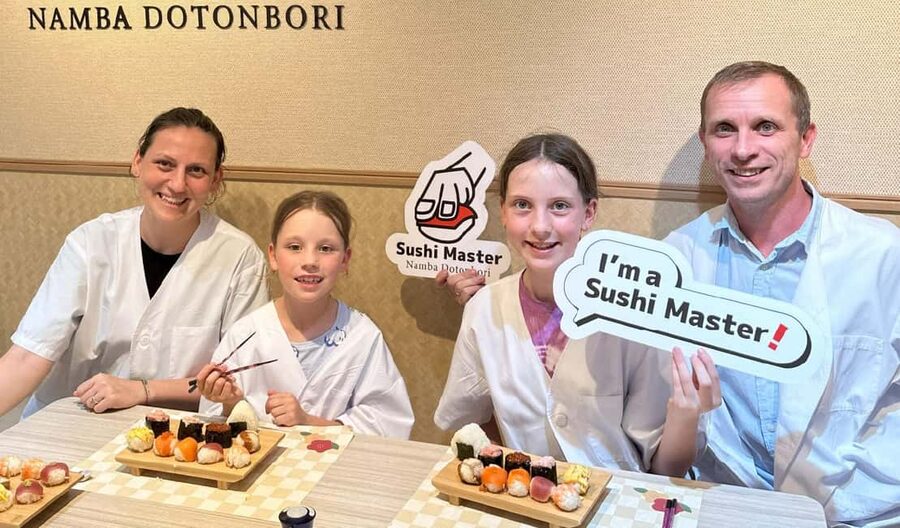
- Three minutes from Namba Station: An easy stop to fit between sightseeing, shopping, and dinner.
- Choose 8 or 10 pieces: The standard course includes 8 pieces, while the premium course includes 10.
- Learn more than rolling: The class covers sushi rice and basic forms such as nigiri, gunkan, and temari sushi.
- English instruction: Guides including Naho, Aki, Seina, Tsuki, and Matsuri have helped make the class easy to follow.
- Eat what you make: Your sushi becomes the meal, with soft drinks and alcohol available to order separately.
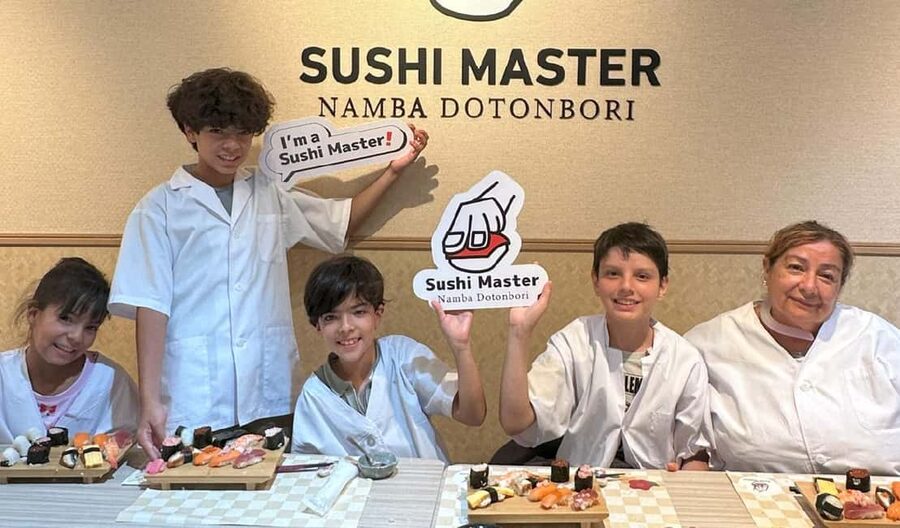
- Take home a keepsake: You receive a Sushi Master Certificate and a small Japanese souvenir.
Why this Namba sushi class works well
Osaka is full of excellent places to eat sushi, but ordering a plate only gives you the final result. This class lets you see how the food comes together. You handle the rice, arrange the toppings, and learn why sushi needs a light touch rather than a firm squeeze.
That difference matters. Sushi looks simple, but the rice can fall apart if you handle it badly, and the finished pieces can look untidy when the proportions are off. The instructor breaks the process into manageable steps, so you can make something presentable even if this is your first attempt.
The class also gives you a small cultural window. The opening welcome includes an introduction to Japanese food culture, and an informative video may be used before the hands-on work begins. You are not signing up for a formal chef-training session, but you do get enough explanation to understand the basics behind the meal.
At $25 per person, the value is strong. You receive the instruction, ingredients, a meal, a certificate, and a souvenir. Add in the central Namba location and the short 90-minute schedule, and this is easier to fit into an Osaka itinerary than a long cooking course. The tradeoff is that the class is designed for a fun introduction, not advanced sushi technique or a professional kitchen apprenticeship.
More Sushi and Ramen Tours in Osaka
- Sushi Making Osaka Roll and Authentic Japanese Sushi Class
★ 5.0 · 1,220 reviews - Osaka: Five Must-See Highlights Walking Tour & Ramen Lunch
★ 4.7 · 411 reviews - Osaka Sushi Making Experience
★ 5.0 · 400 reviews
Finding the studio near Namba Station
The meeting point is about three minutes from Namba Station. Search for Sushi Master Namba on Google Maps, but keep your eyes open because the map marker can be slightly misaligned.
The studio is on the second floor of a narrow orange-colored building. That detail is more useful than it may sound. Namba has plenty of signs, shops, and side streets, and a small building can be easy to pass if you rely only on the map pin.
If you have trouble finding the entrance, call 0664848070. I would save the number before leaving your hotel, especially if you are arriving close to the start time. There is no hotel pickup or drop-off, so you make your own way to the studio.
The classroom is described as spacious and welcoming. That gives the class a more relaxed feel than a cramped demonstration counter, especially if you are traveling with children or a small group. Smoking is not allowed.
The welcome: food culture before the ingredients
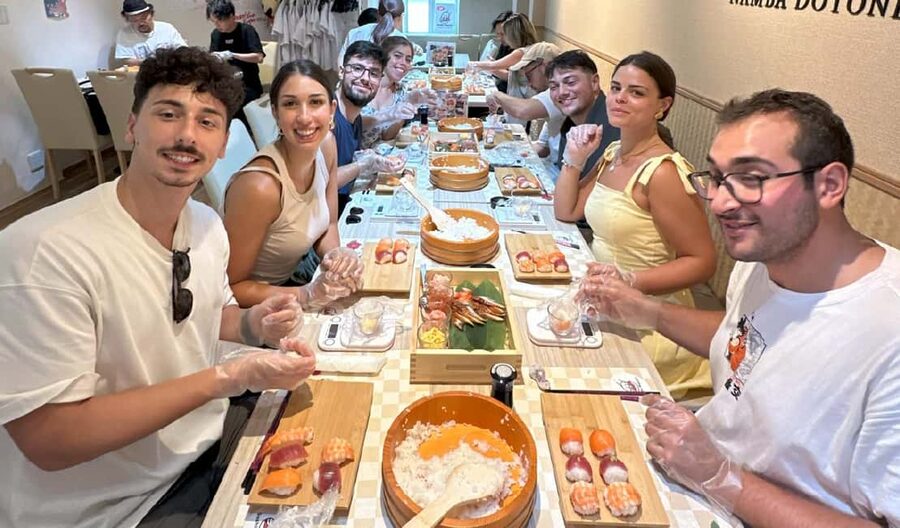
The class begins with a welcome and a short introduction to Japanese food culture. This gives the activity some meaning beyond making a few attractive pieces for a photograph.
You can expect the instructor to explain the basic idea of sushi and set out the steps for the session. English is used alongside Japanese, and the instructors are selected to work with international visitors. The teaching style is practical. You watch, copy the movement, and ask questions as you go.
Several instructors have led this class, including Naho, Aki, Seina, Tsuki, and Matsuri. The strongest pattern in the feedback is not one particular recipe, but the patient and personal way the teachers work with people. Naho, in particular, has been praised for taking time to explain each part clearly, while Aki has been noted for making solo participants feel comfortable.
That personal attention is important. Sushi is a hands-on food, so you may need a quick correction to your grip or the amount of rice you use. A good instructor can fix that without making you feel clumsy.
Sushi rice is the real lesson
The most useful skill in this class is learning how to make and handle sushi rice. Fish may get the attention, but rice determines whether the final piece holds together and tastes right.
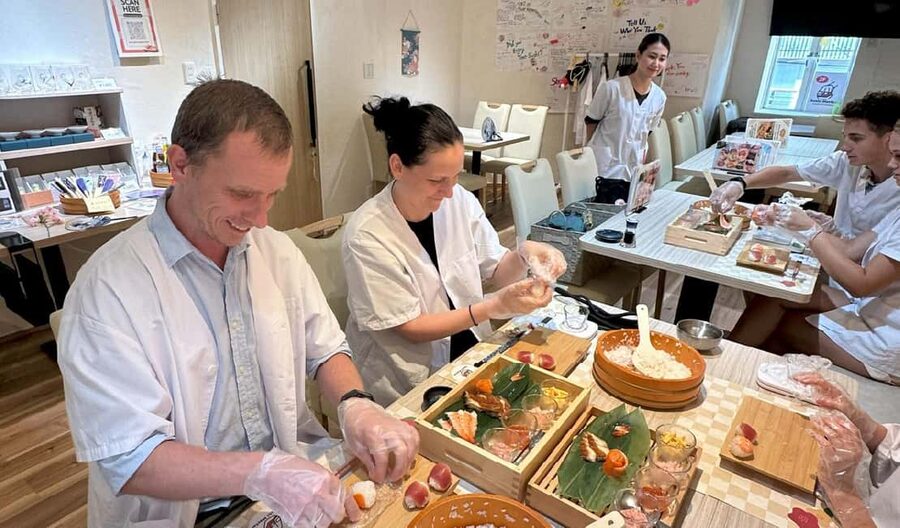
The class includes instruction on making perfect sushi rice, followed by practice preparing it for the sushi shapes. In some sessions, the rice is already cooked, allowing you to focus on cooling and shaping it. This is sensible for a 90-minute class because properly preparing rice from raw ingredients would take much longer and would leave little time for assembling the sushi.
You will learn that sushi rice needs care. Press too hard and it becomes dense. Handle it too roughly and it loses its shape. The instructor shows the process step by step, making this part useful even if you want to repeat the recipe at home.
This is also where the experience feels more authentic than a simple food craft activity. You are not just placing toppings on rice. You are learning the foundation of the dish and seeing how small differences in texture and shape affect the finished bite.
Same appetite, a different neighbourhood:
- Osaka: Shinsekai Food Tour with 13-15 Dishes at 5 Eateries
★ 4.8 · 2,204 reviews - Osaka Food Tour: 13 Dishes at 5 Local Eateries
★ 5.0 · 2,149 reviews - Hungry Osaka Street Food Tour:15 Tastings & 3 Drinks with a Local
★ 5.0 · 1,727 reviews - Osaka Local Foodie Walking Tour in Dotonbori and Shinsekai
★ 5.0 · 985 reviews
Making nigiri, gunkan, and temari sushi
The exact combination can vary, but the class covers basic sushi styles such as nigiri and gunkan. Some sessions have also included temari sushi, the small rounded style that can be especially fun to shape and decorate.
Nigiri is the familiar form with a topping placed over a small bed of rice. Gunkan has a seaweed wrapper around the rice, creating a space for a topping. Temari sushi is compact and rounded, making it a good option for beginners who want a neat result without mastering the long rolling motion used for makizushi.
The ingredients can include fish, egg, and seaweed, with the preparation arranged before you begin. That keeps the class moving and gives you time to assemble your food rather than waiting for every ingredient to be cut.
You may find that the finished pieces look better than expected. The instructor helps you create attractive shapes, but you still do the work yourself. That balance is the appeal: enough guidance to prevent frustration, enough control to make the meal feel like your own.
The standard course provides 8 pieces. The premium course provides 10. Eight pieces can be enough for a light meal, while ten gives you a little more food and practice. If you are very hungry, remember that this is still a small sushi meal rather than an all-you-can-eat session.
Eating your own sushi
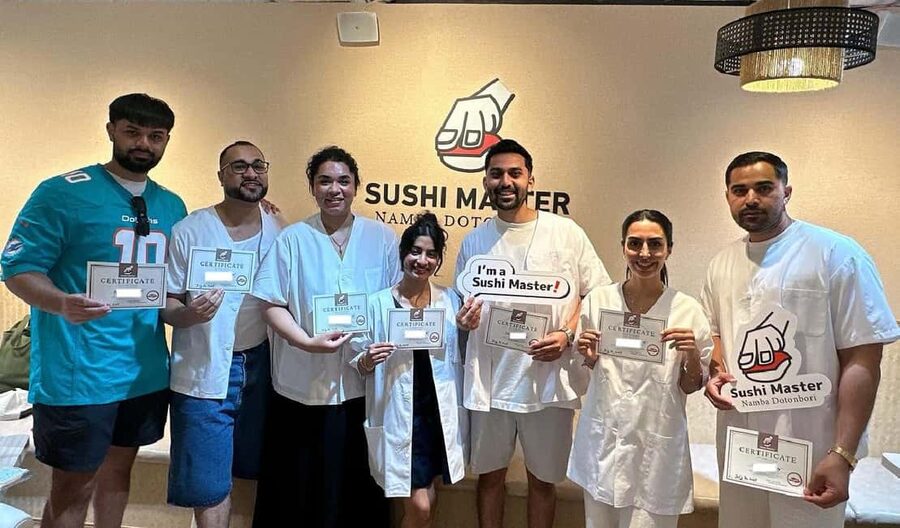
Once the pieces are finished, you eat them in the studio. This is the reward for the careful rice work and the slightly awkward first attempts.
The ingredients are included, and the sushi you make is your meal. The quality and portion size have been praised repeatedly, with several people finding the food delicious and more filling than expected. That is a good sign for a $25 activity, since the class is not charging only for the lesson. You also receive a proper meal at the end.
Soft drinks and alcohol can be ordered during the class, but they are not included in the price. Carefully selected sake is mentioned as an option, which can add a traditional touch to the meal. You should budget extra if you want a drink, and you should not bring outside food or beverages.
The eating portion also makes this a social activity. A solo participant can chat with the instructor and work at an easy pace. Couples can compare their finished pieces. Families get a meal that children helped prepare, rather than another restaurant stop where adults do all the ordering.
Vegetarian requests need advance notice
Vegetarian options are available, but you need to send a direct message before the class. The fish toppings can be replaced with vegetable-based ingredients.
Do not wait until you arrive to mention this. The class prepares ingredients in advance, so early notice gives the team time to make the right substitutions. You should also report any allergies ahead of time.
The provided information confirms fish, egg, and seaweed as possible ingredients, but it does not list every item used in every session. If you have a serious allergy, ask about the ingredients before booking and make the instructor aware again when you arrive.
Certificate, souvenir, and photographs
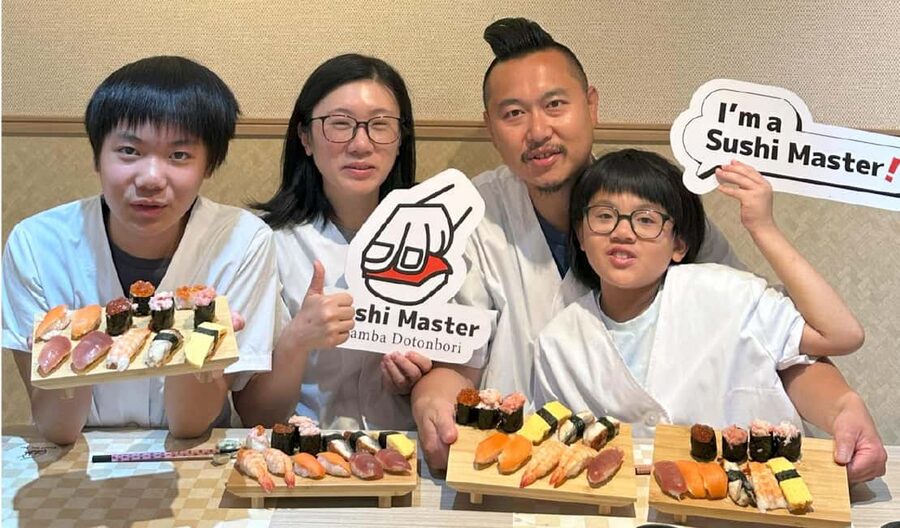
At the end, you receive a Sushi Master Certificate. It is a playful keepsake rather than a professional cooking qualification, but it adds a nice finish to the class.
You also receive a small Japanese souvenir. The gift has been a memorable touch for many participants, particularly because it arrives after you have made and eaten the sushi. It turns the experience into something you can show friends at home, rather than an activity that disappears as soon as the meal is over.
The instructor may be able to take photographs during the class. This is useful if you are traveling alone or if you want a picture of the finished sushi without asking another group. Do not assume that every moment will be photographed, but you can ask the teacher when the food is ready.
Who should book this experience
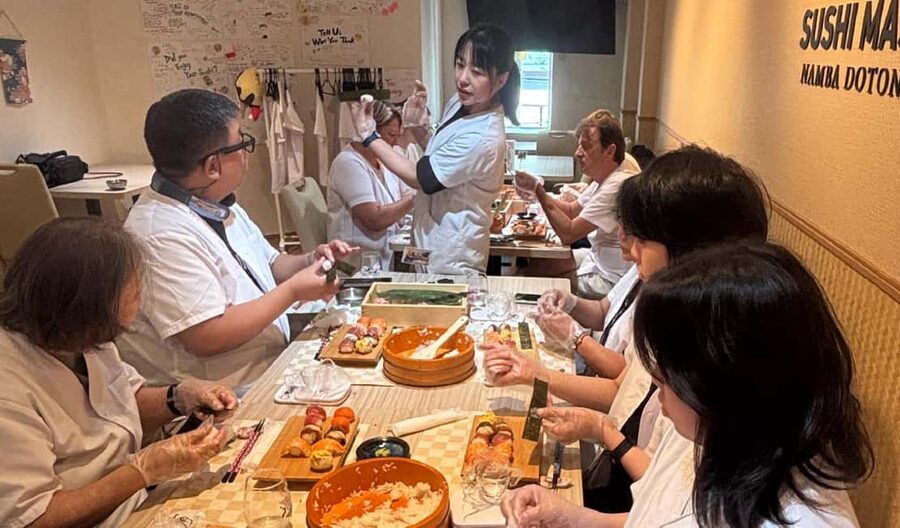
I would choose this class for anyone who wants a short, hands-on food activity in central Osaka. It is particularly well suited to:
- First-time sushi makers: The instruction starts with basics and moves at a friendly pace.
- Solo visitors: The English-speaking instructors help create an easy setting for people arriving alone.
- Families: The 90-minute length is manageable, and children can take part in assembling the food.
- Couples and friends: You can make the meal together and compare the finished pieces.
- Food-focused visitors: The rice lesson gives you more useful information than a simple tasting.
- Visitors with a spare afternoon or evening: The central location makes it easy to pair with other Namba plans.
I would not choose it if you want a long, technical lesson on knife skills, fish preparation, or restaurant-level sushi work. The fish and other ingredients are prepared for you, so the focus is assembly, rice, and basic sushi forms.
I would also think carefully if you have strict dietary needs and have not contacted the provider in advance. Vegetarian substitutions are available, but the class needs notice. The same applies to allergies.
Timing, booking, and practical value
The activity lasts 90 minutes, with different starting times depending on availability. Same-day booking is advertised, which can help if the weather changes or your Osaka plans shift. Still, you should check for an open place before walking over, especially during busy travel periods.
The cancellation policy allows a full refund when you cancel at least 24 hours in advance. You can also reserve and pay later, which helps if you are still arranging your schedule. These terms are useful, but the main practical advantage is the short format. You get a complete activity without giving up half a day.
At $25, the class sits in a comfortable middle ground. You are paying more than the price of a simple supermarket meal, but you receive instruction, ingredients, food, a certificate, and a souvenir. Compared with a longer cooking course, it is inexpensive. Compared with simply eating sushi, it gives you a skill and a memory along with the meal.
The Namba address adds to the value. You do not need a long ride across Osaka, and the activity can fit around shopping, sightseeing, or an evening meal. Just remember that the sushi you make is the meal included, so schedule it at a time when that portion will suit your appetite.
Should you book the Namba sushi class?
Yes, if you want an affordable and friendly introduction to making sushi in English. The best parts are the patient instructors, the rice lesson, the hands-on preparation, and the fact that you eat the results instead of leaving with only a demonstration.
Book it with realistic expectations. You will make basic sushi, not train as a professional chef. You need to arrange your own transport, pay extra for drinks, and give advance notice for vegetarian ingredients or allergies.
For most visitors, the combination is hard to beat: a central Osaka location, 90 minutes of activity, 8 or 10 pieces of sushi, and a certificate for $25. If you have a free slot near Namba and want more than another restaurant meal, this is a smart choice.
FAQ
Where is the sushi-making class located?
The class is in Namba, Osaka, about three minutes from Namba Station. The studio is on the second floor of a narrow orange-colored building.
How do I find the meeting point?
Search for Sushi Master Namba on Google Maps. The map may be slightly misaligned, so look for the orange-colored narrow building and the second-floor studio.
What should I do if I cannot find the studio?
Call 0664848070 if you have difficulty locating the building.
How long does the activity last?
The sushi-making experience lasts 90 minutes.
What languages are available?
Instruction is available in English and Japanese.
How many pieces of sushi will I make?
The standard sushi-making course includes 8 pieces. The premium course includes 10 pieces.
What types of sushi might I learn to make?
The class covers basic styles such as nigiri and gunkan. Some sessions also include temari sushi.
Are vegetarian options available?
Yes. Fish toppings can be replaced with vegetable-based ingredients, but you must contact the provider in advance.
Are drinks included?
No. Soft drinks and alcohol can be ordered during the class for an additional cost.
What is included in the price?
The price includes the sushi ingredients, the sushi meal you make, a Sushi Master Certificate, and a small Japanese souvenir.
Can I cancel for a full refund?
Yes. You can cancel up to 24 hours in advance for a full refund.
Is hotel pickup available?
No. Hotel pickup and drop-off are not included.
New food tours we have reviewed in Osaka
- Hidden Osaka – Yukaku Red Light Tour & Culinary Adventure★ 4.8 · 96 reviews
- Eat Like a Local in Osaka – Private Custom Street Food Tour★ 4.3 · 33 reviews
- Osaka: Sushi Class in Dotonbori★ 4.9 · 160 reviews
- Osaka: Roll and Authentic Sushi Making Class in Dotonbori★ 4.9 · 239 reviews
- Osaka: Local Foodie Tour in Dotonbori and Shinsekai★ 4.7 · 95 reviews
- Osaka: Kuromon Market Food Walking Tour (6 stops, 6 tastes)★ 4.6 · 272 reviews
- Osaka: 2-Hour Local Street Food Tour – Dotonbori & Namba★ 4.6 · 95 reviews
- Osaka: Gluten-Free Ramen and Gyoza Cooking Class★ 5.0 · 42 reviews
Sushi and Ramen Tours, compared.
Sushi Making Tokyo Roll and Authentic Japanese Sushi Class
Read our review →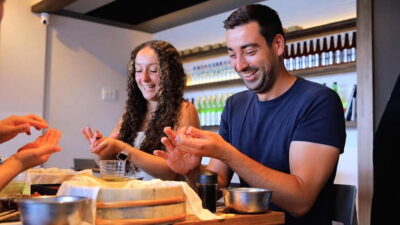
Tokyo: Roll and Authentic Sushi Making Class in Asakusa
Read our review →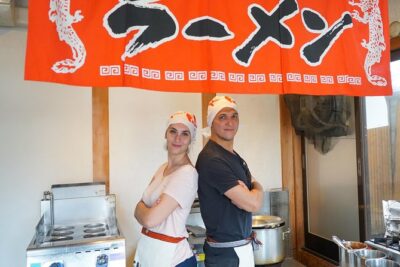
Ramen Cooking Class at Ramen Factory in Kyoto
Read our review →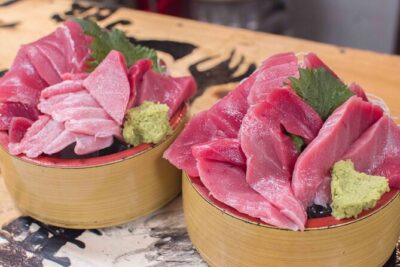
Best of Shinjuku: Izakaya Food Tour (4 Stops, 14+ Tastings)
Read our review →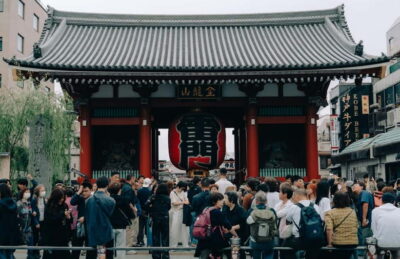
Tokyo: Sushi Making Class in a Happi Coat near a Famous Spot
Read our review →
Sushi Making Tokyo! Popular Maki Sushi & Japanese Sushi(+Recipe!)
Read our review →
Sushi Making Osaka Roll and Authentic Japanese Sushi Class
Read our review →
Tokyo Sushi Making Class in Tsukiji with Professional Chef
Read our review →Browse the lists this tour appears in